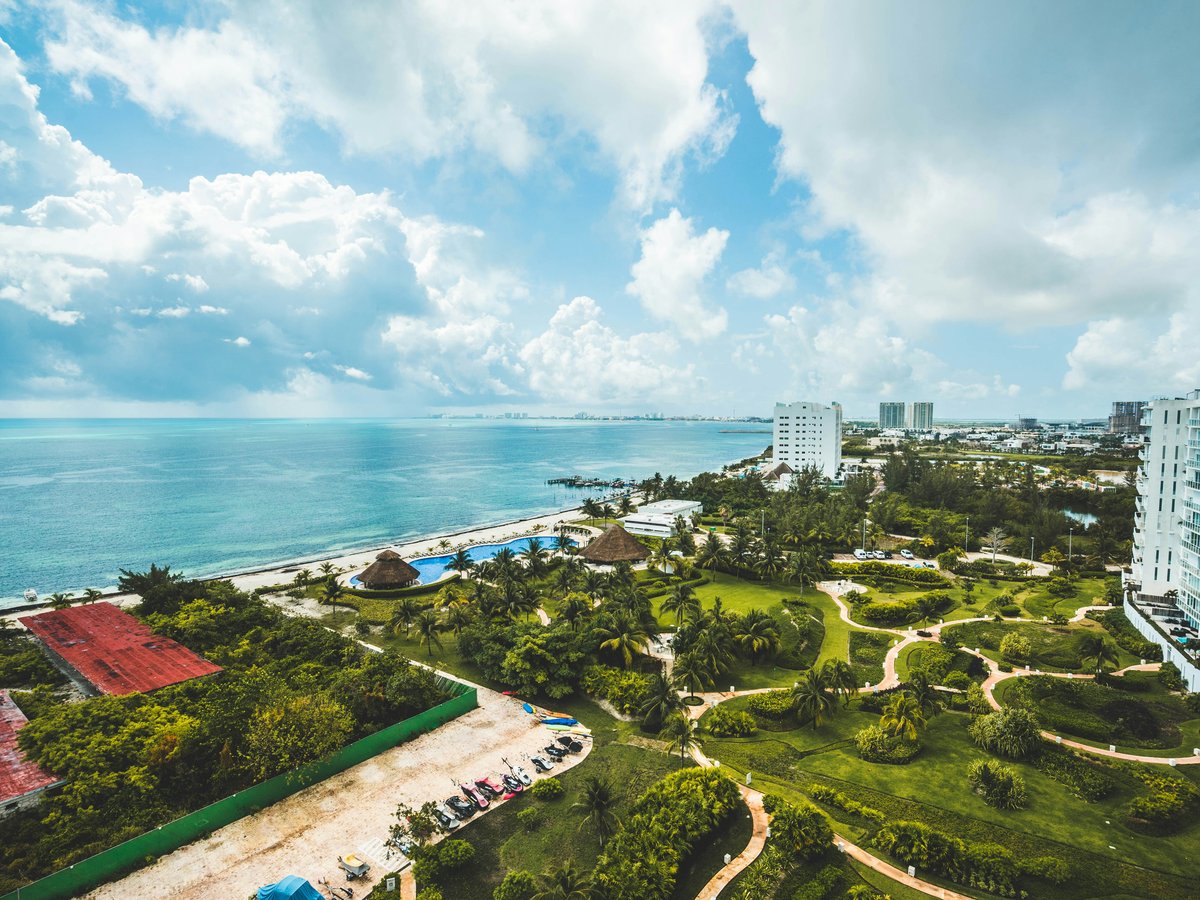
Cancun's nightlife runs on two parallel tracks that rarely cross. The Zona Hotelera, a 23-kilometer strip of sand between the Laguna Nichupté and the Caribbean, caters to tourists with mega-clubs that hold 2,000 or more people and stay open past 5 AM. Then there's the city itself, Cancun proper, where 800,000 locals live and drink on their own terms. The local scene tends to start later than you'd expect. Dinner wraps around 10 PM, pre-gaming at someone's house goes until midnight, and bars in the centro fill between 12:30 and 1 AM on weekends. Friday and Saturday are the big nights, though Thursday has been gaining ground in certain neighborhoods. The drinking culture leans toward cerveza (Montejo, León, Victoria, or Pacífico over the tourist-default Corona) and tequila or mezcal sipped neat. Cubas, the Mexican term for rum and Coke made with dark rum and lime, might be the most-ordered mixed drink in the city. Worth noting, Cancun sits in the Zona Horaria del Sureste, meaning it's permanently on EST with no daylight saving, so sunset hits around 7:30 PM in summer and 5:45 PM in winter.
The Bar Scene in Cancun
Cocktail culture has grown in Cancun's downtown over the past 5 or 6 years, though it still feels more casual than what you'd find in Mexico City's Roma Norte or Guadalajara's Chapultepec. The Parque de las Palapas area in SM 22 has a few spots mixing drinks with local ingredients. Xtabentún, the anise-honey liqueur from the Yucatán, shows up in a lot of menus alongside regional citrus and habanero-infused syrups. Prices for craft cocktails downtown typically land between 150 and 250 pesos. The Zona Hotelera bar scene is a different animal entirely. You'll find rooftop bars at the resort hotels along Boulevard Kukulcán, mostly between Km 9 and Km 12, where a single cocktail can run 300 to 450 pesos and the view is the real product. Sunset is the draw. People show up around 6 PM, watch the sky turn orange over the lagoon side, and leave by 9. The dive bar tradition in Cancun lives in the older colonias, SM 23 through SM 28 in particular. These are cervecerías and cantinas with plastic chairs, TV screens tuned to Liga MX, and buckets of beer for 120 to 180 pesos. They tend to close by 2 AM. Mind you, these spots rarely appear on tourist maps. That's part of the appeal. Wine bars exist but remain niche. A handful have opened along Avenida Bonampak in SM 10 in the past 3 years, serving Mexican labels from Valle de Guadalupe alongside Argentine Malbecs. Glasses start around 120 pesos.
Clubs in Cancun
The mega-clubs in the Zona Hotelera still define what most visitors think of when they hear Cancun nightlife. These large-format venues sit along Boulevard Kukulcán between Km 9 and Km 11.5, clustered near the curve of Punta Cancún. The format is familiar. International DJs or resident DJs play EDM, reggaetón, and hip-hop. Open bar packages typically range from 800 to 1,500 pesos depending on the night and whether you're buying at the door or through a promoter. Without open bar, cover alone often sits between 400 and 700 pesos. Things don't start filling up until midnight, and peak hours run from about 1:30 AM to 4 AM. Closing time is officially 5 AM for most. Dress codes in the Zona tend toward casual resort wear. No flip-flops, no tank tops for men, no torn clothing. Women face almost no restrictions. That said, enforcement varies by night and by how busy the club is. Slower weeknights get more lenient. The reggaetón and Latin music circuit is where locals tend to go. These clubs exist both in the hotel zone and increasingly in SM 17 and SM 20 downtown. The crowd skews younger, early 20s, and the music leans heavily toward perreo, dembow, and regional Mexican corridos tumbados. Thursday is a popular night for the local university crowd. Cover downtown rarely tops 200 pesos, and many spots waive it for women before midnight. One thing that catches visitors off guard is the table-service culture. Groups of 4 to 8 often buy a bottle, 1,500 to 3,000 pesos for domestic spirits, which comes with mixers, ice, and a table. It's more economical than ordering individual drinks, and it's how most Mexican groups prefer to go out.
Live Music After Dark
Cancun is not a city known for originating musical movements, but live music has a steady presence, particularly in the downtown colonias. Trova and bolero, the romantic guitar-vocal tradition rooted in the Yucatán, still draws an older crowd on weekend nights. You'll find tríos playing at restaurants and bars around Parque de las Palapas, usually starting around 9 PM on Fridays and Saturdays. Norteño and banda have their audience in the working-class neighborhoods, particularly along Avenida Tulum and in the mercados area of SM 28. These shows start late, sometimes not until 11 PM, and go past 3 AM. The energy is loud. The crowd sings along to every chorus. Salsa nights happen midweek at several spots in SM 22 and SM 25, usually on Wednesdays or Thursdays. These are social-dance focused. Expect a mixed crowd of experienced dancers and beginners, with recorded music giving way to a live band after 11 PM on the better nights. In the Zona Hotelera, hotel lobby bars and beachside restaurants often feature cover bands playing classic rock, reggae, or Top 40 from about 8 PM to midnight. These are background-music affairs rather than dedicated music venues. Jarana, the traditional music of the Yucatán Maya, occasionally surfaces at cultural events in the Parque de las Palapas, though you're more likely to encounter it during Carnival in February or Día de Muertos events in late October.
Nightlife neighborhoods
-
Zona Hotelera, Punta Cancún (Km 9 to Km 11.5)
The tourist-facing party strip. Neon signage, promoters on the sidewalk, bass frequencies leaking from every doorway, and the salt smell of the Caribbean between buildings. Loud, crowded, unapologetically commercial after 11 PM.
- Best for
- First-time visitors who want the big-club experience, spring breakers, groups celebrating something specific
- Standouts
- The cluster of mega-clubs sits within a 3-block radius of Punta Cancún, all walkable from one another.
-
SM 22, Parque de las Palapas
Cancun's downtown cultural center. Open-air food stalls, families early in the evening, then a shift after 10 PM to groups of friends drinking at surrounding bars. The noise is conversational, not thumping. Warm night air carries the smell of marquesitas and elotes from the cart vendors.
- Best for
- People who want a local night out without the tourist markup, couples, anyone who'd rather talk than shout
- Standouts
- Several cocktail bars and mezcalerías line the streets immediately south and east of the park.
-
SM 17 and SM 20, Avenida Nader area
A newer going-out strip that has been developing over the past 4 to 5 years. Younger crowd, more reggaetón and hip-hop, some gastro-bars with craft beer taps. Still rough around the edges, which gives it character. The taco stands at 2 AM are half the reason to be here.
- Best for
- Locals in their 20s and 30s, Thursday-night university crowd, anyone who wants to eat well between drinks
-
Boulevard Kukulcán, Km 12 to Km 16 (mid-zone)
Quieter section of the hotel zone where beachfront restaurants transition into bars after 9 PM. More of a dinner-and-drinks crowd than a clubbing one. The lagoon side has a few open-air bars overlooking the water, less frantic than Punta Cancún.
- Best for
- Couples staying in the hotel zone who want something low-key, sunset drinks with a view, late dinners that become long nights
-
Puerto Cancún and Malecon Tajamar
The upscale marina development north of the hotel zone has been drawing a wealthier crowd to its restaurants and bars. Cleaner, newer, more controlled. The sound is clinking glasses and lounge playlists rather than club music. Still developing its nightlife identity at the moment.
- Best for
- Splurge-worthy date nights, the over-35 crowd, people who want good cocktails without the chaos of Punta Cancún
Safety after dark
The Zona Hotelera is generally safe for tourists after dark, with private security and police patrols along Boulevard Kukulcán. That said, drink-spiking happens. Never leave your cup unattended in a club, and stick to drinks you watch being poured. The promoters who approach you on the street outside clubs in Punta Cancún work on commission. Their open-bar deals are usually legitimate but sometimes come with strings, like a mandatory 2-hour time limit or a switch to cheap spirits after the first hour. Ask specifically what's included before paying. Taxis from the Zona Hotelera back to downtown late at night run between 200 and 400 pesos depending on how far into the hotel zone you are. Agree on the fare before getting in. Ride-hailing apps like Uber and InDriver operate in Cancun, though drivers can be scarce in the hotel zone after 3 AM due to pushback from the taxi union. In downtown neighborhoods like SM 23 or SM 28, stick to well-lit main streets after midnight. Avoid walking alone through poorly lit residential blocks. Petty theft, particularly phone snatching, does occur. Keep your phone in a front pocket. If you're drinking in the centro, make sure you know your hotel's address in Spanish, not the resort name. Taxi drivers in the city proper don't always know hotel-zone properties by their English marketing names.
Practical tips
- Cover charges and open bar
- In the Zona Hotelera clubs, buying an open-bar package through a promoter beforehand tends to save 100 to 300 pesos over door price. Promoters congregate along the strip starting around 9 PM. Downtown bars rarely charge cover except on special-event nights. If you see a cover of 50 to 100 pesos downtown, it usually includes one drink.
- Tipping at bars
- Tipping 10 to 20 pesos per drink is standard at bars in Mexico. At table service, 15 percent on the bottle and mixers is normal. Bartenders in the Zona Hotelera expect tips from tourists and often provide faster service to those who tip on the first round. In the centro, tipping is appreciated but lower, 10 pesos per round is fine.
- Drinking age and ID
- Legal drinking age in Mexico is 18. Clubs in the Zona Hotelera check ID at the door, and they accept passports, Mexican INE cards, or driver's licenses. Bring a photocopy of your passport rather than the original, as many venues will accept it, and losing a passport at 3 AM in a club is a miserable problem to solve.
- What locals drink
- Beer dominates. Montejo, Victoria, and Pacífico are the preferred local choices over Corona, which most Mexicans consider an export brand. Mixed drinks lean toward cubas, palomas (tequila and grapefruit soda), and micheladas. Mezcal has grown in popularity over the past 5 years but still trails tequila. Ordering mezcal neat with orange slices and sal de gusano marks you as someone who knows what they're doing.
- When to arrive
- If you show up to a club at 11 PM, you'll be nearly alone. Locals start appearing around 12:30 to 1 AM, and the floor fills by 1:30 AM. For bars downtown, 10 PM is reasonable on Fridays and Saturdays. Thursday university nights start earlier, around 9:30 PM, and wind down by 2 AM.
- Cash versus card
- Smaller bars downtown are cash-only. Clubs in the hotel zone accept cards but sometimes add a 3 to 5 percent surcharge. ATMs along Boulevard Kukulcán charge 50 to 80 pesos per withdrawal. It's better to pull cash from a bank-affiliated ATM during the day in the centro, where fees drop to 30 to 45 pesos.
FAQ
What night of the week is best for going out in Cancun?
Saturday is the biggest night across both the Zona Hotelera and downtown. Friday is close behind. Thursday has become the go-to for the local university crowd, and many downtown bars have their best promotions that night. Sunday through Wednesday is quiet unless a holiday falls midweek.
Is the nightlife in Cancun safe for solo travelers?
The Zona Hotelera is well-patrolled and the big clubs have security staff. Solo travelers should watch their drinks, use ride-hailing apps rather than hailing cabs on the street after 2 AM, and keep their phone and wallet secured. Downtown is safe on main streets but requires more awareness in quieter residential blocks late at night.
How much money should I budget for a night out in Cancun?
In the Zona Hotelera, expect to spend 1,200 to 2,500 pesos per person for a club night with open bar, a few extra drinks, and a taxi. Downtown is significantly cheaper. A full night of bar-hopping with food runs 400 to 800 pesos. Table service with a bottle for a group of 4 lands around 2,500 to 4,000 pesos total.
Do clubs in Cancun play anything other than EDM and reggaetón?
The mega-clubs in the hotel zone rotate between EDM, reggaetón, and hip-hop depending on the night and the resident DJ's preference. Downtown you'll find more variety. Latin house, cumbia, salsa nights, and even rock en español at certain bars. Thursday tends to be hip-hop and trap focused. Regional Mexican music, particularly corridos tumbados, has been growing in the local clubs over the past 2 years.
Can I get into clubs wearing shorts and sneakers?
In the Zona Hotelera, clean sneakers are usually fine. Athletic shorts or board shorts might get turned away at the door, but tailored or chino-style shorts generally pass. Downtown bars have almost no dress code. Tank tops on men are the one item that gets consistently rejected at hotel-zone clubs.
Is Cancun nightlife only for spring breakers and tourists?
The Punta Cancún strip caters heavily to visitors, particularly between February and April during spring break season. But Cancun has a resident population of over 800,000, and the downtown neighborhoods have their own thriving nightlife that operates year-round regardless of tourist seasons. SM 22 and SM 17 on a Saturday night are overwhelmingly local.
Last verified by automated review (v1.7.2) on June 21, 2026. What is automated review?