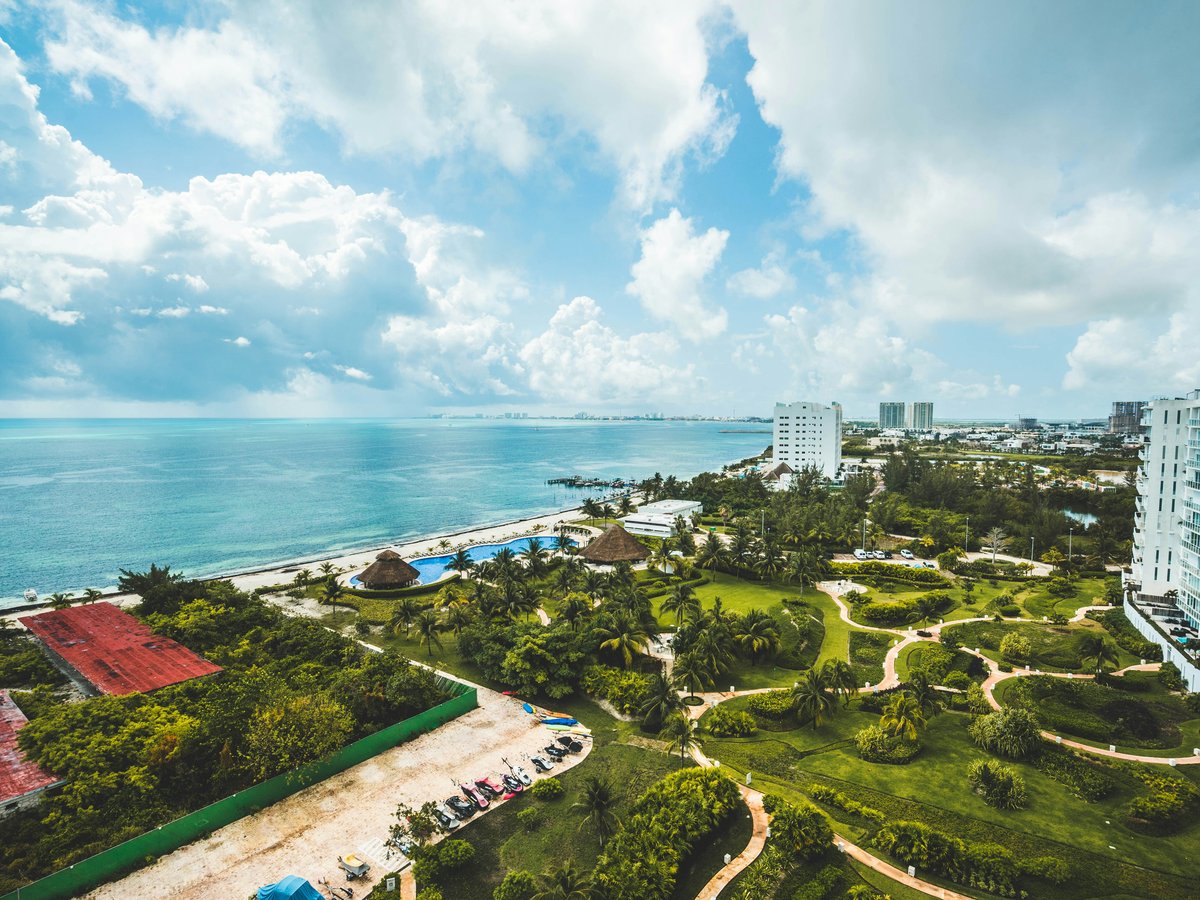
Cancun tends to split into two shopping worlds that barely overlap. The Zona Hotelera, that 23-kilometer strip of sand and concrete along Boulevard Kukulcán, leans heavily toward international brands and duty-free perfume counters. Downtown Cancun, centered on Avenida Tulum and the SM 28 neighborhood, is where residents actually buy things. The split matters because prices can differ by 40 to 60 percent on identical items. Cancun sits in Quintana Roo, which still operates as a partial free-trade zone, so imported goods like liquor, cosmetics, and electronics have historically carried lower taxes than the Mexican interior. That advantage has narrowed over the years, but you'll still find competitive prices on tequila, mezcal, and Mexican vanilla at downtown shops compared to, say, Mexico City. The Yucatán Peninsula's craft traditions, from hammocks woven in Mérida to black pottery from Oaxaca sold by migrant artisans, show up in Cancun's markets alongside mass-produced resort souvenirs. Sorting the genuine from the generic takes a bit of legwork, but the real stuff is here if you know where to look.
Shopping districts
-
Boulevard Kukulcán, Zona Hotelera
luxury to mid-rangeThe hotel zone's main artery runs from Km 0 near downtown all the way to Km 25 at Punta Nizuc. Shopping malls cluster between Km 8 and Km 13, where you'll find La Isla Shopping Village, Kukulcán Plaza, and Forum by the Sea stacked within a few minutes of each other. The crowd is mostly tourists, and the retail mix reflects that. Think Zara, Guess, Swarovski, and a rotating cast of duty-free liquor shops. La Isla sits partially over the Nichupté Lagoon, so the setting is genuinely pleasant, even if the prices run 30 to 50 percent above downtown for comparable goods. Forum by the Sea skews younger and louder, with a Hard Rock Cafe anchoring one end and open-air bars spilling onto the sidewalk at night.
Best for: International brands, duty-free liquor, resort-wear, and air-conditioned browsing when the humidity hits 90 percent
-
Avenida Tulum, Downtown
budget to mid-rangeAvenida Tulum is the commercial spine of downtown Cancun. It runs roughly north-south through the city center, flanked by banks, pharmacies, taco stands, and a handful of mid-range clothing shops. The avenue itself is not glamorous. But it connects to side streets like Avenida Uxmal and Avenida Cobá where you'll find fabric stores, shoe shops, and electronics retailers that cater to local families. Prices here reflect the local economy, not the resort economy. A pair of huarache sandals that might cost 800 pesos in the Zona Hotelera could be 350 pesos on a side street off Tulum.
Best for: Everyday goods at local prices, pharmacies, shoes, and clothing without the tourist markup
-
Plaza Las Américas and Gran Plaza
mid-rangeThese two malls sit on Avenida Tulum near the northern end of downtown. Plaza Las Américas is the larger of the two and functions as Cancun's primary local mall, with a Liverpool department store, Coppel, C&A, and a large Cinépolis cinema. Gran Plaza is next door and slightly quieter. Together they represent where Cancun families spend Saturday afternoons. You'll find Mexican mid-range brands alongside fast fashion. The food courts serve decent tortas and tacos alongside the usual chains. Neither mall targets tourists specifically, which is part of the appeal. Prices land at standard Mexican retail levels.
Best for: Mexican department stores, local fashion brands, electronics, and seeing how non-tourist Cancun shops
-
Avenida Bonampak, SM 3 to SM 10
mid-rangeRunning parallel to Avenida Tulum about 6 blocks east, Bonampak has become a secondary commercial corridor. Car dealerships and office buildings line parts of it, but you'll also find wedding dress shops, furniture stores, and a few good fabric merchants. The stretch near SM 4 and SM 5 has small plazas with independent boutiques selling Mexican designer clothing at prices well below what the same quality would cost in the hotel zone. It is not a browsing destination in the way Avenida Tulum is. You go here because you know what you want.
Best for: Mexican designer clothing, specialty fabric, and wedding attire at local prices
-
Puerto Cancún Marina Town Center
luxuryThis newer development sits on the northern tip of the hotel zone near Km 1, built around a marina and residential towers. The shopping is upscale and curated, with a smaller footprint than La Isla. You'll find Mexican jewelry designers, a few international labels, and waterfront restaurants. The crowd skews toward affluent Mexican families from Mérida and Cancun's growing expat community. It is quieter than the hotel zone malls and feels less like a tourist pipeline. Weekend evenings bring a pleasant atmosphere along the marina boardwalk.
Best for: Upscale Mexican jewelry, marina-side dining, and a calmer alternative to hotel-zone malls
Markets
-
Mercado 28
artisan and souvenirMercado 28 is Cancun's most visited craft market, located in Supermanzana 28 downtown, about a 15-minute taxi ride from the hotel zone. The market fills a city block with narrow stalls selling hammocks, silver jewelry, ceramic skulls, lucha libre masks, embroidered blouses, and every flavor of hot sauce bottled in Yucatán. The quality ranges widely. Some vendors sell factory-stamped "silver" that's actually alpaca metal, while others carry legitimate .925 sterling from Taxco, Guerrero. The surrounding streets add to the commercial density, with more souvenir shops, leather goods, and a handful of food stalls where you can get panuchos and salbutes for 15 to 25 pesos each. Bargaining is expected here. Start at about 60 percent of the asking price and expect to settle around 70 to 75 percent. Vendors are experienced negotiators, so don't feel awkward about it.
Daily, roughly 9:00 to 18:00, though some stalls close earlier on Sundays
-
Mercado 23
food and everyday goodsIf Mercado 28 is the tourist market, Mercado 23 is the local one. Located in SM 23, this covered market is where Cancun residents buy their produce, chiles, herbs, piñatas, and bulk spices. The butcher stalls sell cuts you won't find at Walmart, and the flower vendors stock cempoalxóchitl marigolds by the bucket during Día de Muertos season. You might notice fewer English-speaking vendors here. The food section is worth a visit on its own. Several comedores serve cochinita pibil tortas, agua de chaya, and panuchos with pickled red onion for under 50 pesos. It smells like a proper Mexican market. Lime, cilantro, raw meat, and copal incense from the herb stalls all mixing together.
Daily, roughly 6:00 to 17:00, busiest on Saturday mornings
-
Coral Negro Flea Market
flea and souvenirThis open-air market sits right on Boulevard Kukulcán near Km 9 in the hotel zone, across from the convention center. It sells much of the same inventory as Mercado 28, but at higher prices given the location. Silver jewelry, hammocks, blankets, ceramic figurines, and T-shirts fill the stalls. The convenience factor is real though. If you are staying in the hotel zone and want souvenirs without the taxi ride downtown, Coral Negro delivers. Bargaining works here too, though vendors know their captive audience and tend to hold firmer on price. Quality varies stall to stall. The silver vendors on the north side of the market have historically carried better stock than the ones near the entrance.
Daily, roughly 7:00 to 23:00, with the fullest vendor presence between 10:00 and 19:00
-
Tianguis at Parque de las Palapas
night and street foodParque de las Palapas is downtown Cancun's main public square, in SM 22. On weekend evenings, a tianguis (open-air market) sets up around the park's perimeter. Vendors sell elote, marquesitas (those crispy crepe-like rolls filled with Edam cheese and Nutella), esquites, and churros. Craft vendors appear too, often selling handmade jewelry, leather goods, and clothing from other parts of Mexico. The atmosphere leans more festive than commercial. Families bring kids to the playground, teens skateboard, and the whole thing feels like a neighborhood gathering that happens to have shopping attached. Prices are low and bargaining is gentle.
Strongest on Friday and Saturday evenings, roughly 18:00 to 22:00, with some activity on other evenings
-
Ki Huic Market
artisanA smaller artisan market along Avenida Tulum, Ki Huic caters to tourists walking the downtown strip. The stalls carry typical Yucatecan souvenirs. Hammocks, guayabera shirts, huipil blouses, and vanilla extract in glass bottles. It is calmer than Mercado 28 and less aggressive in its salesmanship. Some vendors here have been in place for decades and take pride in explaining the difference between henequen and nylon hammocks, or between real vanilla and the synthetic coumarin-laced versions sold at cheaper stalls. Worth a stop if you are already walking Avenida Tulum.
Daily, roughly 9:00 to 20:00
Souvenirs worth bringing home
The Yucatán Peninsula has a few genuinely local products worth carrying home. Hammocks are the big one. A proper Yucatecan hammock is woven from cotton or nylon thread in Mérida or the surrounding pueblos, and a matrimonial-size (which fits two people comfortably) might run 600 to 1,500 pesos depending on material and weave density. Cotton is softer but stretches over time. Nylon lasts longer but can feel slippery at first. The test locals use is to hold the hammock up to light. A tight, even weave with no holes is a sign of quality. Avoid the thin, loosely woven ones that cost 150 pesos. They will sag within a month. Vanilla extract from Papantla, Veracruz is another solid buy, though you need to be careful. Real vanilla should list vanilla bean extract and alcohol on the label. If it smells like vanilla but the label mentions coumarin or tonka bean, skip it. Coumarin is banned in food products in several countries. Taxco silver jewelry, stamped .925, shows up at Mercado 28 and Ki Huic. A real Taxco piece will have the .925 stamp and often a maker's mark. Xtabentún, a Yucatecan anise liqueur made with fermented honey, makes a distinctive gift. It is sweet, herbal, and tends to cost between 150 and 300 pesos for a 750ml bottle. Recado negro and recado rojo (the spice pastes used in cochinita pibil, papadzules, and relleno negro) travel well and cost almost nothing, usually 20 to 40 pesos per block at Mercado 23. Huipil blouses with hand-embroidered flowers are traditional to the Yucatán. The hand-embroidered versions can take weeks to complete and might cost 800 to 2,000 pesos. Machine-embroidered versions look similar at a glance but cost a quarter of the price. Turn the garment inside out. Hand embroidery has slightly uneven stitching and visible knots on the reverse.
Practical tips
- Bargaining norms
- Bargaining is standard at Mercado 28, Coral Negro, and most open-air markets, but not at malls, department stores, or branded shops. A reasonable opening offer is 50 to 65 percent of the asking price. You will likely settle somewhere around 70 to 80 percent. Be polite but firm. Walking away is a legitimate tactic and vendors will often call you back with a lower number. At Mercado 23 and food markets, prices on produce and prepared food are generally fixed and low enough that haggling feels inappropriate.
- Tax refunds
- Mexico operates a VAT refund program for foreign tourists on purchases over 1,200 pesos made at participating stores. The tax is called IVA and runs at 16 percent. You need to request a tax-free invoice (factura) at the time of purchase and present your passport. The refund is processed at the airport before departure, at designated tax-refund kiosks in Cancun International Airport Terminal 3 and Terminal 4. Keep your receipts and the goods accessible. The process can take 30 to 45 minutes, so plan accordingly. Not all shops participate, so ask before buying if the refund matters to your budget.
- Opening hours
- Malls in the Zona Hotelera typically open at 10:00 and close at 22:00. Downtown shops on Avenida Tulum open earlier, often by 9:00, and many close by 19:00 or 20:00. Markets open early, with Mercado 23 seeing its first vendors by 6:00. Sunday hours are shorter across the board. Some downtown shops close entirely on Sundays, while mall stores stay open but may reduce hours to 11:00 to 20:00.
- Payment methods
- Credit and debit cards are accepted at malls, department stores, and most hotel-zone shops. Market vendors at Mercado 28 and Coral Negro deal primarily in cash, though a growing number now accept card payments through mobile terminals. Mercado 23 is almost entirely cash. ATMs are widely available downtown and in the hotel zone, but use bank-attached ATMs rather than standalone machines to avoid skimming. Pesos get you better prices than dollars at markets. Vendors who accept USD typically use an exchange rate 2 to 3 pesos below the bank rate.
- Getting downtown from the hotel zone
- The R-1 and R-2 public buses run along Boulevard Kukulcán from the hotel zone into downtown Cancun. The fare is currently around 12 to 15 pesos per person. Buses run frequently from roughly 5:30 to 0:30 and stop along the boulevard when flagged down. A taxi from the mid-hotel zone to Mercado 28 typically costs 200 to 350 pesos depending on your negotiation and whether you catch a hotel taxi or flag one on the street. Hotel taxis are the most expensive option. Walking to the boulevard and flagging a cab there tends to save 30 to 40 percent.
- What to avoid buying
- Cuban cigars sold on the street or in market stalls are almost universally counterfeit. Black coral jewelry is illegal to export under CITES, and buying it fuels reef destruction along the Mesoamerican Barrier Reef. Vanilla bottles without ingredient labels or with suspiciously low prices likely contain coumarin rather than real vanilla extract. Prescription medications sold without a prescription at border pharmacies may be counterfeit or improperly stored. Stick to established pharmacies like Farmacias del Ahorro or Farmacias Similares for over-the-counter needs.
FAQ
Is shopping in Cancun's hotel zone significantly more expensive than downtown?
Yes, and the gap is wider than most visitors expect. Identical souvenir items at Mercado 28 downtown tend to cost 30 to 50 percent less than the same items at Coral Negro in the hotel zone. Branded goods at malls are priced similarly regardless of location, but restaurants and services around hotel-zone malls carry a clear premium. The R-1 bus downtown costs under 15 pesos and takes about 20 to 30 minutes from the mid-hotel zone, so the savings on a few purchases can easily cover transportation.
Are the hammocks sold in Cancun markets authentic Yucatecan hammocks?
Some are, some are not. The genuine Yucatecan hammocks are woven in and around Mérida, Tixkokob, and other towns in Yucatán state. They come in cotton, nylon, or a blend, and a quality matrimonial-size hammock weighs noticeably more than a cheap imitation. At Mercado 28, ask to see the full hammock unfolded and check the weave density. A good cotton hammock should have tightly packed threads with no visible gaps when held up to light. Vendors who can explain the weaving origin and material honestly tend to carry better stock. Budget 800 to 1,500 pesos for a quality piece.
What are the best local food products to bring home from Cancun?
Recado rojo and recado negro spice pastes from Mercado 23 are lightweight, cheap (20 to 40 pesos per block), and essential for cooking Yucatecan dishes like cochinita pibil at home. Habanero hot sauces from Yucatecan producers travel well. Xtabentún liqueur is distinctive to the region. Real vanilla extract with proper labeling from Papantla is another solid option. Dried chiles, especially habaneros and chile de árbol, pack easily. All of these clear customs in most countries without issues, though check your home country's rules on bringing in meat or dairy products.
Is it safe to shop in downtown Cancun as a tourist?
Downtown Cancun is a working city, not a resort. The areas around Avenida Tulum, Mercado 28, and Parque de las Palapas see heavy foot traffic during the day and are generally safe for visitors. Use the same urban awareness you would in any mid-size city. Keep your phone in your front pocket, don't flash large amounts of cash, and stick to well-lit streets after dark. The area around Parque de las Palapas is lively on weekend evenings with families and food vendors. Taxis are readily available throughout downtown if you prefer not to walk back to the bus stop at night.
Can I negotiate prices at Cancun's shopping malls?
No. Malls like La Isla, Plaza Las Américas, and Kukulcán Plaza operate on fixed pricing, same as department stores and branded boutiques. Bargaining is limited to open-air markets and independent vendor stalls. At Mercado 28, Coral Negro, and Ki Huic, negotiation is expected and part of the buying process. Some downtown shops on Avenida Tulum may offer small discounts for cash payment or bulk purchases, but this is at the shopkeeper's discretion rather than a cultural norm.
What time should I arrive at Mercado 28 for the best experience?
Weekday mornings between 9:30 and 11:00 tend to be the calmest. Vendors are set up, the heat has not peaked yet, and cruise-ship groups have not arrived. By early afternoon the narrow aisles get crowded and the temperature inside the market can climb well above 35 degrees Celsius. Saturday mornings are busier but still manageable before noon. If you want to combine Mercado 28 with lunch, the surrounding streets have small restaurants serving Yucatecan dishes at local prices. Budget about 90 minutes for a thorough browse of the market itself.
Last verified by automated review (v1.7.2) on June 21, 2026. What is automated review?