July in Cancun means one thing above all else. Whale sharks. Hundreds of these 8-meter filter feeders gather in the waters between Isla Mujeres and Isla Contoy from mid-June through September, and July tends to be the peak month for reliable sightings. Tour boats leave from Puerto Juárez and the Isla Mujeres marina daily around 7 a.m., carrying small groups of snorkelers out to swim alongside the largest fish on earth. It is a wildlife encounter worth planning a trip around, and it is the single strongest reason to tolerate everything else July in Cancun throws at you.
That everything else is considerable. The average high reaches 31.4°C (89°F) with lows of 25.7°C (78°F), but 80% humidity makes the heat feel substantially worse. You step outside your hotel in the Zona Hotelera at 9 a.m. and the warm, wet air settles on your skin like a second shirt. Afternoon rain is nearly a daily event, with roughly 113mm falling across 18 rainy days. The storms follow a pattern, though. Clear skies most mornings, dark clouds rolling in around 2 or 3 p.m., a heavy downpour lasting 30 to 90 minutes, then partial clearing by sunset. Mind you, this is also Atlantic hurricane season. July is statistically lower-risk than August through October, but the possibility of a tropical storm reshaping your trip is real.
To be fair, Cancun handles its rainy season well. Hotels along Boulevard Kukulcán offer covered pools, spas, and indoor dining for the wet hours. Restaurants that require reservations in January will seat you on arrival. Room rates in July typically run 30-50% below December and January prices. And the Caribbean water temperature hovers around 28-29°C (82-84°F), warm enough that the afternoon rain barely registers when you're already chest-deep in the sea.
Why visit in July
- Whale shark season peaks in July off Isla Mujeres and Isla Contoy. Swimming with 8-meter filter feeders in open Caribbean water is a wildlife experience available only during this narrow June-to-September window.
- Hotel rates in the Zona Hotelera drop 30-50% below December and January peak-season prices. Low-season discounts apply across most beachfront properties, from boutique hotels to large all-inclusive resorts.
- Fewer international tourists than the December-April peak means shorter lines at Museo Maya de Cancún, easier restaurant seating along Boulevard Kukulcán, and more space on popular beaches like Playa Delfines.
- Caribbean water temperature sits at 28-29°C (82-84°F). No wetsuit needed for snorkeling at MUSA or diving the Manchones reef off Isla Mujeres.
- Sea turtle nesting season is underway, and hatchling release programs begin along Zona Hotelera beaches in mid-to-late July. Several conservation groups allow visitors to participate in evening releases.
Worth knowing
- Humidity averages 80% and rarely drops below 75%, even at night. The 25.7°C (78°F) overnight low still feels sticky, and air conditioning becomes a necessity rather than a comfort.
- Sargassum seaweed accumulates on east-facing Zona Hotelera beaches from April through August. Some stretches pile up with brown, sulfur-smelling weed that makes beach lounging unpleasant. Cleanup varies sharply by hotel.
- Atlantic hurricane season runs June 1 through November 30. While July is statistically less active than August or September, a named storm can cancel excursions and ground flights with 48-72 hours notice.
- Afternoon rainstorms hit on roughly 18 of the month's 31 days. If your entire trip is 5 days, you might lose 2-3 afternoons to heavy downpours that keep you indoors.
Best for
Think twice if
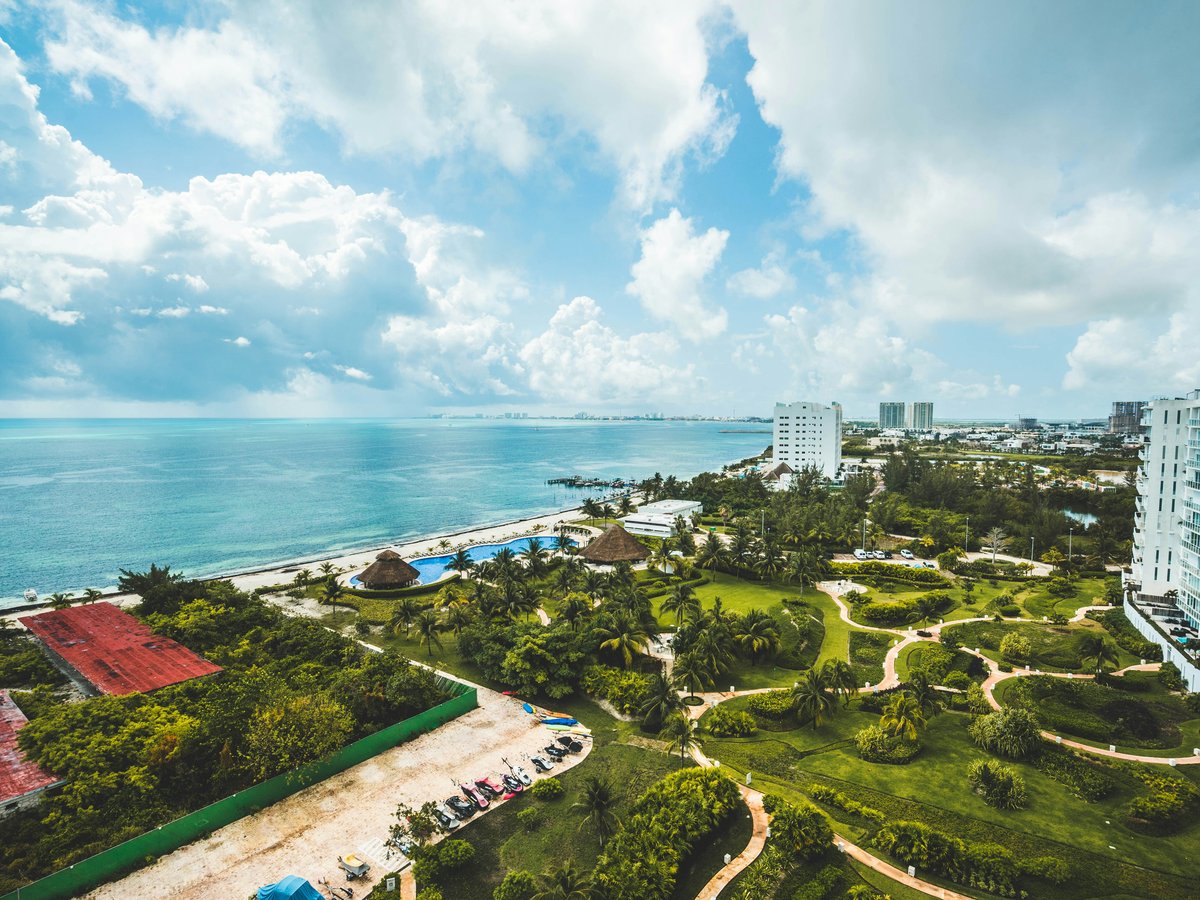
July in Cancun is hot, humid, and punctuated by afternoon thunderstorms. Mornings typically start clear and sunny with temperatures climbing quickly through 28-30°C by 10 a.m. By early afternoon, dark cumulus clouds build over the Nichupté Lagoon and the Caribbean, often delivering heavy but short-lived downpours between 2 and 5 p.m. Evenings tend to clear partially, with warm, breezy conditions settling in after sunset. The 80% humidity is the defining feature. It makes 31°C feel closer to 37-38°C on the heat index, and the moisture rarely relents, even overnight. Worth noting, July actually receives less rain than June (220mm) and September (181mm), so it sits in a relative trough within the wet season.
Seasonal caution
- Atlantic hurricane season is active from June 1 through November 30. July is historically less active than the August-October peak, but named storms can form with limited advance warning. Monitor the US National Hurricane Center forecasts and keep your airline's rebooking policy accessible.
- UV index in Cancun in July regularly reaches 11-12, classified as 'extreme' by the WHO. Cloud cover does not significantly reduce UV exposure. Sunburn can occur in under 15 minutes of midday exposure without protection.
- Mosquito activity rises during the rainy season. Dengue, Zika, and chikungunya are present in the Yucatán Peninsula. Use DEET-based repellent, particularly around dawn and dusk and near standing water in El Centro and residential neighborhoods.
- Sargassum seaweed accumulation peaks between April and August on east-facing Caribbean beaches. The decomposing weed releases hydrogen sulfide, which has a distinct rotten-egg smell. Conditions vary daily and by location.
Year-round climate
Averages from the last 5 years.
| Month | Avg high (°C) | Avg low (°C) | Rainfall (mm) |
|---|---|---|---|
| Jan | 27 | 22 | 82 |
| Feb | 27 | 22 | 52 |
| Mar | 29 | 23 | 37 |
| Apr | 30 | 24 | 34 |
| May | 31 | 25 | 59 |
| Jun | 30 | 25 | 220 |
| Jul | 31 | 26 | 113 |
| Aug | 32 | 26 | 136 |
| Sep | 31 | 25 | 181 |
| Oct | 30 | 24 | 129 |
| Nov | 28 | 23 | 120 |
| Dec | 27 | 22 | 98 |
Headline events
Whale Shark Season Peak
Throughout July, daily departures weather permitting
July is typically the most reliable month for whale shark encounters in the waters north of Isla Mujeres and around Isla Contoy. Boats depart Puerto Juárez and Isla Mujeres marina by 7 a.m. daily, carrying groups of 10 snorkelers to swim within meters of 8-meter filter feeders. The season runs mid-June through September, but July concentrations tend to be the densest.
Best things to do in July
Whale shark snorkeling off Isla Mujeres
wildlifeSmall boats carry groups of 10 snorkelers from Puerto Juárez or Isla Mujeres marina to open water north of Isla Contoy, where whale sharks congregate to feed on plankton. You slip into 25-meter-deep Caribbean water and swim alongside fish that can reach 12 meters. The water is warm, around 28°C, and the visibility on calm mornings runs 10-15 meters.
July is the statistical peak for whale shark density in the feeding grounds. Daily sighting rates tend to run above 90% in calm conditions.Booking tipBook with a CONANP-permitted operator at least 2-3 days ahead. Only 10 snorkelers per boat are allowed in the water at a time, per federal regulation.
Snorkeling at MUSA (Museo Subacuático de Arte)
water sportsOver 500 life-size sculptures sit on the sandy seafloor between Cancun and Isla Mujeres at depths of 3-6 meters. The warm July water means you can spend 45-60 minutes floating over the installation without a wetsuit. Coral and algae have colonized many of the figures, and sergeant majors and parrotfish weave between the sculptures.
Water temperature at 28-29°C allows extended snorkel sessions. Morning visibility between afternoon storm cycles can reach 15-20 meters.Booking tipMorning departures from the Zona Hotelera tend to have calmer water and better visibility than afternoon trips.
Sea turtle hatchling releases
wildlifeSeveral conservation programs along the Zona Hotelera and Playa del Carmen coast collect eggs from nesting sites and incubate them. By mid-to-late July, the first hatchlings of the season emerge, and organized releases happen at sunset. You kneel in the sand and watch dozens of 5-centimeter green and loggerhead turtles scramble toward the surf.
July marks the beginning of the hatching season. Nesting happens May through October, but the 45-to-60-day incubation means July releases come from the earliest nests.Booking tipAsk your hotel concierge or check with Flora, Fauna y Cultura de México for scheduled release events. They happen at dusk, usually between 6 and 7 p.m.
Cenote swimming at Ruta de los Cenotes
natureThe Ruta de los Cenotes runs along a 30-kilometer stretch of road west of Puerto Morelos, about 35 minutes south of Cancun. Dozens of cenotes line the route, from open-air swimming holes ringed by jungle to cavern systems with stalactites. The water stays around 24-25°C year-round, which in July's heat feels bracingly cool the moment you jump in.
July's heat and humidity make the constant 24-25°C cenote water feel refreshing rather than cold. Rain-fed water levels are rising, which opens some cenotes that are too shallow earlier in the year.Booking tipArrive before 10 a.m. to have the smaller cenotes mostly to yourself. Weekdays are quieter than weekends, when families from Cancun drive out.
Diving the Manchones reef
water sportsManchones is a shallow reef (8-12 meters depth) off the southern tip of Isla Mujeres, home to eagle rays, nurse sharks, barracuda, and dense coral formations. July's warm water and lighter boat traffic compared to winter make for relaxed 2-tank morning dives. You might spot a turtle resting under a coral ledge at 10 meters.
Fewer dive boats than December-March means less fin-stirred sediment and better visibility windows. Water temperature at 29°C allows comfortable dives in a 3mm shorty or even a rashguard.Booking tipIsla Mujeres-based dive shops tend to reach Manchones faster than Zona Hotelera operators. The 20-minute ferry from Puerto Juárez runs every 30 minutes.
Kayaking the Nichupté Lagoon at sunset
natureThe Nichupté Lagoon separates the Zona Hotelera from mainland Cancun. Guided kayak tours launch from several points along Boulevard Kukulcán in the late afternoon, paddling through mangrove channels where herons, frigatebirds, and the occasional crocodile appear at the waterline. The water is flat, warm, and brackish.
July sunsets fall around 7:20 p.m., giving you a long golden-hour paddle. The afternoon rain typically clears by 5 or 6 p.m., leaving calm, steamy conditions on the lagoon.Booking tipLate afternoon departures (4:30-5 p.m.) tend to catch the best light and avoid the midday heat. Bring insect repellent for the mangrove sections.
Day trip to Isla Contoy
natureIsla Contoy is a protected island 30 km north of Isla Mujeres, limited to 200 visitors per day. The island is a nesting site for frigatebirds, brown pelicans, and double-crested cormorants. A small beach on the leeward side has calm, gin-clear water for snorkeling over a patch reef. Boats depart Isla Mujeres around 9 a.m. and return by 3 p.m.
July falls within the frigatebird nesting season. Males display their inflated red throat pouches from perches in the mangroves. The 200-person daily cap is rarely hit in July, so permits are easier to secure.Booking tipOnly authorized operators with CONANP permits can land on the island. Book through your hotel or a licensed Isla Mujeres tour company at least a day in advance.
What to eat in July
In season: fruit
Mango
Mexican mango season peaks from May through July. Street vendors along Avenida Tulum sell mangos on a stick dusted with Tajín and lime. The Manila and Ataulfo varieties are at their sweetest and most fragrant in early July.
On menus now
Ceviche de caracol
Queen conch is in season through the summer months in Quintana Roo. Market stalls in Mercado 28 and Puerto Juárez serve it raw with lime, habanero, red onion, and cilantro. The texture is firm and slightly chewy, nothing like fish ceviche.
Cochinita pibil
Slow-roasted pork marinated in achiote and sour orange, wrapped in banana leaves. The Yucatecan staple appears at breakfast taco stands in Mercado 23 by 7 a.m. The meat is tender, tangy, and stained deep red-orange from the achiote paste.
Street food peaks
Marquesitas
These crispy rolled crepes filled with Edam cheese and Nutella or cajeta are a Yucatecan street food staple. Vendors set up carts in Parque de las Palapas in El Centro after 7 p.m., and the warm evening air carries the sweet, buttery smell from half a block away.
What to drink
Agua de chaya
Chaya, a leafy green native to the Yucatán, gets blended with lime and pineapple into a bright green drink sold at juice stands across El Centro. It is earthy, tart, and cold. July's heat makes it a 3-times-a-day habit.
Regular events in July
Noche de Estrellas (Planetarium Cancun)Free
Monthly stargazing event at the Ka'Yok' Planetarium in El Centro, with telescope viewings and astronomy talks. July evenings after the rain clears can offer decent sky conditions, though cloud gaps are hit-or-miss.
Usually one Saturday evening per monthCancun Jazz Festival (if scheduled)
The annual jazz festival has historically fallen in late May or June, but spillover concerts and related events sometimes extend into early July at venues along Boulevard Kukulcán and in El Centro's Parque de las Palapas.
Early July (varies by year)Mercado 28 weekend marketFree
The covered market in El Centro operates daily, but weekends see expanded vendor stalls spilling into the surrounding streets with handicrafts, Yucatecan textiles, and food stalls serving panuchos and salbutes. The smell of grilled meat and fresh tortillas carries through the humid air.
Saturdays and SundaysBest places this July
Playa Delfines
beachThe widest public beach in the Zona Hotelera, at Km 17.5 of Boulevard Kukulcán. No hotel blocks the view. The sand is coarse and white, and the surf can be rough on the Caribbean side. July mornings before the afternoon storms are the best window. The iconic Cancun sign sits at the top of the dune.
Zona HoteleraMuseo Maya de Cancún
museumThe museum at Km 16.5 of Boulevard Kukulcán houses over 400 Mayan artifacts across 2 floors, plus an adjacent archaeological site (San Miguelito) included in the admission. July's lower visitor count means you can linger at the jade masks and carved stelae without crowds. The air-conditioned galleries are a welcome escape from the 31°C heat outside.
Zona HoteleraParque de las Palapas
plazaThe central plaza in El Centro, surrounded by food carts, juice vendors, and families. Evenings here are warm and loud. Kids play on the open concrete, marquesita vendors fire up their griddles around 7 p.m., and the occasional live music act sets up under the palapas. It feels like the Cancun that tourists rarely see.
El CentroIsla Mujeres
islandA 20-minute ferry ride from Puerto Juárez, this 7-km-long island has a quieter pace than the Zona Hotelera. Playa Norte, on the island's northwest tip, is sheltered from the open Caribbean and tends to have less sargassum than east-facing Cancun beaches. Golf carts are the main transport. The southern tip has a sculpture garden on the cliffs above the sea.
Mercado 23
marketA working-class market in El Centro where locals buy produce, meat, piñatas, and herbal remedies. The cochinita pibil taco stands open by 7 a.m. and sell out by noon. The aisles are narrow, the lighting is fluorescent, and the smell is a mix of fresh cilantro, raw meat, and damp concrete. It is not curated for tourists, which is the point.
El CentroPunta Nizuc
snorkelingThe southern tip of the Zona Hotelera, where the Caribbean meets the Nichupté Lagoon. A shallow reef sits close to shore, and snorkeling here reveals brain coral, sea fans, and schools of blue tang in 2-4 meters of water. July mornings with calm conditions offer the best visibility. The area is less developed than the central Zona Hotelera strip.
Zona HoteleraPuerto Morelos
townA small fishing town 35 minutes south of Cancun's Zona Hotelera. The Puerto Morelos Reef National Park protects a barrier reef 500 meters offshore, with guided snorkel tours departing from the town dock. The town square has a leaning lighthouse and a handful of seafood restaurants. July's lower tourist count means the reef tours run with smaller groups.
Your packing checklist
Tick items off as you pack. Your progress saves in this browser.
Insider tips
The whale shark boats leave at 7 a.m. from Puerto Juárez, not from the Zona Hotelera. Budget 20-30 minutes for the taxi ride, and confirm your pickup time with the operator the evening before. Boats that leave late miss the calm morning water window.
Sargassum conditions change beach by beach and day by day. Playa Norte on Isla Mujeres faces north rather than east and tends to accumulate less weed than the Zona Hotelera's east-facing beaches. Check social media or ask your hotel front desk for same-day reports before committing to a beach.
Parque de las Palapas in El Centro comes alive after 7 p.m. on weeknights, with marquesita carts, elote vendors, and families. It is the best free evening activity in Cancun and you will likely be the only tourist there on a Tuesday.
The R-1 and R-2 public buses run the length of Boulevard Kukulcán through the Zona Hotelera for a fraction of the cost of a taxi. They run roughly every 5-10 minutes during the day. Pay in pesos at the front.
If the afternoon storms cancel your outdoor plans, the Museo Maya de Cancún and the Ka'Yok' Planetarium in El Centro are both air-conditioned and rarely crowded in July. The museum typically closes on Mondays.
The cenotes along the Ruta de los Cenotes near Puerto Morelos stay at 24-25°C regardless of the weather above. On a stormy afternoon, when the beach is out, a cenote swim feels like a private underground pool.
Avoid these mistakes
- Booking a hotel solely on price without checking its sargassum cleanup policy. Some Zona Hotelera properties have daily mechanical removal, others let it pile up. A lower rate means nothing if the beach smells of sulfur.
- Scheduling every outdoor activity for the afternoon. July's weather pattern is clear mornings, storms from 2-5 p.m. Snorkeling, boat trips, and beach time should go before noon. Save indoor activities for the afternoon rain.
- Forgetting that whale shark tours depart from Puerto Juárez or Isla Mujeres, not from the Zona Hotelera piers. Missing the 7 a.m. departure because you assumed a Zona Hotelera pickup is a common and expensive mistake.
- Packing only cotton clothing. Cotton absorbs humidity and takes hours to dry in Cancun's July air. Quick-dry and linen fabrics are far more practical for a week of 80% humidity and daily rain.
- Skipping insect repellent because you associate Cancun with a resort bubble. The Zona Hotelera is heavily sprayed, but El Centro, the mangroves around the Nichupté Lagoon, and cenotes have active mosquito populations during the rainy months.
Practical tips for July
Plan each day around the July weather cycle. Schedule boat trips, beach time, and outdoor excursions for 7 a.m. to 1 p.m., when skies are typically clear. Keep a museum visit, spa appointment, or shopping trip at Mercado 28 on reserve for the 2-5 p.m. storm window. The rain usually clears by 6 p.m., leaving warm, humid evenings for outdoor dining in El Centro or sunset drinks along Boulevard Kukulcán. Always carry a rain layer and your phone in a waterproof pouch. Book whale shark tours at least 2-3 days ahead, as permitted boats have a 10-person cap and fill up even in low season. If you are renting a car for cenote day trips, the road between Cancun and Puerto Morelos floods in spots during heavy rain. Drive slowly and avoid unfamiliar back roads after a downpour.
FAQ
Is July a good time to visit Cancun for a beach vacation?
It depends on your flexibility. Mornings are typically sunny and the Caribbean water is warm at 28-29°C, but afternoon storms hit on roughly 18 of the month's 31 days. Sargassum seaweed is also a factor on east-facing Zona Hotelera beaches. If you are willing to shift your schedule around the weather and check sargassum reports daily, the lower prices and thinner crowds can make it worthwhile. Playa Norte on Isla Mujeres tends to have less sargassum than the mainland beaches.
How do I book a whale shark tour in Cancun in July?
Book through a CONANP-permitted operator at least 2-3 days in advance. Tours depart from Puerto Juárez or the Isla Mujeres marina around 7 a.m. and last about 5-6 hours. Federal regulations limit groups to 10 snorkelers in the water at a time, and only 2 swimmers plus a guide approach a whale shark simultaneously. Your hotel concierge can recommend licensed operators. Bring motion sickness medication if you are prone to it, as the boat ride to the feeding grounds can take 45-90 minutes over open water.
How bad is the sargassum seaweed in Cancun in July?
It varies sharply by location and day. East-facing Zona Hotelera beaches between Km 8 and Km 16 of Boulevard Kukulcán tend to get the heaviest accumulation. Some hotels invest in daily mechanical removal, others do not. Playa Norte on Isla Mujeres faces north and typically collects less weed. The seaweed smells of sulfur when it decomposes. Check social media hashtags and ask your hotel about current conditions before choosing a beach for the day.
Will a hurricane hit Cancun if I visit in July?
July falls within the Atlantic hurricane season (June 1 to November 30), but it is historically one of the less active months. The peak of hurricane season comes in August, September, and October. The risk is real but relatively low in July. Monitor the US National Hurricane Center forecasts, purchase travel insurance that covers weather disruptions, and confirm your airline's rebooking policy before you fly.
What should I wear in Cancun in July?
Lightweight, breathable fabrics. Linen and quick-dry technical blends handle the 80% humidity far better than cotton or denim. Pack a packable rain jacket or compact umbrella for the daily afternoon storms. Reef-safe sunscreen is required by Quintana Roo state law at cenotes and marine parks, so bring SPF 50 or higher. A wide-brimmed hat is worth the suitcase space given that the UV index reaches 11-12.
Things to Do in Cancun in July
 Free cancellation
 Chichen Itza, Cenote, and Valladolid Tour
Day trip — 12 hours, free cancellation.
via Viator Free cancellation
 Chichen Itza, Cenote & Valladolid Tour with Tequila and Lunch
Day trip — 12 hours, free cancellation.
via Viator Free cancellation
 Early morning Chichen Itza Tour: Cenote and Tequila Tasting
Day trip — 12 hours, free cancellation.
via Viator Free cancellation
 Tulum, Reef Snorkeling, Cenote & Mayan Ceremony
Outdoor experience — free cancellation.
via Viator Free cancellation
 Chichen Itza Early Access All Inclusive & optional Hotel Pick up
Day trip — 9 hours, free cancellation.
via Viator Free cancellation
 Isla Mujeres Luxury Sailing: Adults Only or Family Friendly
Cruise — 5.5 hours, free cancellation.
via ViatorLast verified by automated review (v1.7.2) on June 21, 2026. What is automated review?