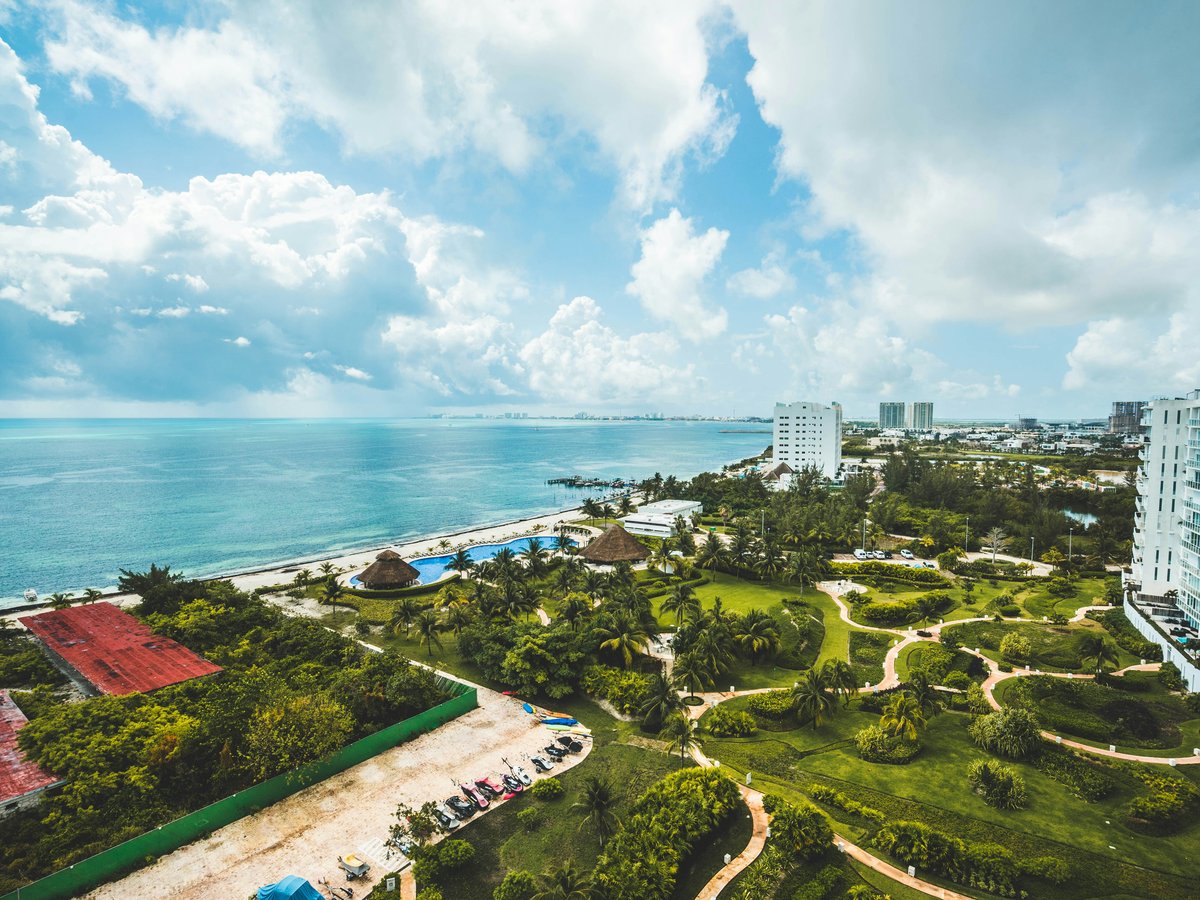
January is Cancun's priciest month. North Americans fleeing sub-zero winters fill the Zona Hotelera from the first week onward, and hotel occupancy in Cancún typically sits above 85% for the full 31 days. Beachfront rooms commonly run 50-80% above their September rates. That said, visitors are paying for genuinely pleasant conditions. Daytime temperatures average 26.5°C (80°F) with lows around 21.7°C (71°F), and the Caribbean holds at roughly 26°C (79°F). Rain falls on about 5 days through the month, and January showers tend to be brief afternoon bursts that clear within 20-30 minutes.
The Yucatán's dry season is well underway, with total monthly rainfall typically around 50mm. Norte cold fronts roll in from the Gulf of Mexico 3-4 times per month, each lasting 1-2 days. When a norte hits, the sky turns grey, the wind picks up, and temperatures can drop to 18-19°C (64-66°F). North-facing beaches in the Zona Hotelera get choppy during these fronts, while the east-facing Playa Delfines tends to stay a bit calmer thanks to its orientation along the southern arm of the hotel zone's "7" shape. Between nortes, the days are warm, bright, and marked by a steady trade wind that keeps the 77% humidity from feeling oppressive.
January 6 brings Día de los Reyes Magos, when bakeries across El Centro and Supermanzana 28 stock Rosca de Reyes, the ring-shaped cake with a tiny plastic figurine hidden inside. Whoever finds it hosts the tamales party on February 2 for Día de la Candelaria. It's a window into Mexican family life that most Zona Hotelera visitors miss entirely. The nightlife along Kukulcán Boulevard runs at full tilt through January, with Coco Bongo drawing long lines after 11pm and beach clubs on the lagoon side open until sunrise.
Why visit in January
- Daytime highs averaging 26.5°C (80°F) with warm Caribbean water around 26°C (79°F), making January one of the most reliable beach months anywhere in the hemisphere
- The dry season means rain falls on roughly 5 days rather than the 15-20 rain days typical of June through October
- Every restaurant, tour operator, and water sport outfit in the Zona Hotelera runs at full capacity, so nothing is closed or understaffed
- A direct escape from genuine winter. When Chicago sits at -15°C or Toronto at -20°C, Cancún's 22°C lows feel like a different planet
- Underwater visibility at sites like MUSA and the Mesoamerican Reef tends to peak during the dry season, averaging 15-20 meters versus 8-10 meters in September
Worth knowing
- Hotel rates in the Zona Hotelera run 50-80% above annual averages, and popular beachfront resorts book out weeks in advance
- Norte cold fronts arrive 3-4 times per month, each bringing 1-2 days of grey skies, wind, and temperatures dropping to 18-19°C (64-66°F). You might lose 2-3 beach days on a week-long trip
- Day trips to Chichén Itzá, Tulum, and Isla Mujeres run heavily subscribed, with larger group sizes and less scheduling flexibility than shoulder season
- The Zona Hotelera beaches closest to the nightlife strip, particularly Playa Gaviota Azul and Playa Chac Mool, are packed by 10am and stay that way until sunset
Best for
Think twice if
January sits in the middle of the Yucatán dry season, with warm days, mild nights, and only occasional rain. Humidity hovers around 77%, which you'll notice the moment you step off the plane at Cancun International Airport. The air has that thick, salt-tinged warmth even early in the morning. Daytime highs average 26.5°C (80°F) and rarely top 30°C, while nights cool to a comfortable 21.7°C (71°F). Rain falls on roughly 5 days through the month, totaling about 50mm, and most showers pass in under 30 minutes. The real weather story in January is the nortes. These cold fronts blow in from the Gulf 3-4 times per month, dropping temperatures by 5-8°C and stirring up whitecaps on the north-facing hotel zone beaches. Each norte lasts 1-2 days. Between them, the trade winds keep things pleasant.
Seasonal caution
- Norte cold fronts from the Gulf of Mexico arrive 3-4 times during January, each lasting 1-2 days. These bring strong winds, rough surf on north-facing beaches, and temperatures dropping to 18-19°C (64-66°F). Red or yellow beach flags go up during nortes, and swimming becomes dangerous at exposed stretches
- Riptides are a year-round risk on Cancún's Caribbean coast but worsen during and after norte fronts. Follow the flag system at lifeguarded beaches. Playa Delfines, despite its beauty, has some of the strongest currents in the Zona Hotelera due to its exposed east-southeast facing position
Year-round climate
Averages from the last 5 years.
| Month | Avg high (°C) | Avg low (°C) | Rainfall (mm) |
|---|---|---|---|
| Jan | 27 | 22 | 82 |
| Feb | 27 | 22 | 52 |
| Mar | 29 | 23 | 37 |
| Apr | 30 | 24 | 34 |
| May | 31 | 25 | 59 |
| Jun | 30 | 25 | 220 |
| Jul | 31 | 26 | 113 |
| Aug | 32 | 26 | 136 |
| Sep | 31 | 25 | 181 |
| Oct | 30 | 24 | 129 |
| Nov | 28 | 23 | 120 |
| Dec | 27 | 22 | 98 |
Best things to do in January
Snorkeling at MUSA (Museo Subacuático de Arte)
water_sportsThe underwater sculpture museum sits in the waters between Cancún and Isla Mujeres, with over 500 permanent sculptures installed on the seabed at depths of 3-6 meters. Boats depart from the Zona Hotelera marina and from Puerto Juárez. The sculptures are covered in coral growth that changes year to year, so repeat visits actually look different.
January's dry season brings underwater visibility to 15-20 meters, compared to 8-10 meters during the rainy months. Calmer seas between norte fronts make for smoother boat crossings.Booking tipMorning departures from Punta Nizuc tend to have smaller groups than afternoon runs from the main marina.
Day trip to Chichén Itzá
culturalThe UNESCO World Heritage site sits about 200km west of Cancún, a 2.5-hour drive through the Yucatecan scrubland. El Castillo (the Kukulcán pyramid) dominates the complex, but the Ball Court, the Temple of Warriors, and the Sacred Cenote each need at least 20 minutes. The site opens at 8am and the first tour buses from Cancun arrive around 10:30am.
January's lower temperatures (26°C vs 35°C in May) make the shadeless ruins far more bearable. The dry season also means the dirt paths stay firm rather than muddy.Booking tipPrivate drivers from Cancún charge less than resort-booked tours and let you arrive before the crowds. Leaving by 6am gets you there near opening.
Isla Mujeres by ferry
beachThe 13km-long island sits a 20-minute Ultramar ferry ride from Puerto Juárez. Playa Norte on the island's northwest tip consistently ranks among Mexico's top beaches, with shallow turquoise water that stays calm even when the Zona Hotelera is choppy. Golf carts are the main way to get around. The southern tip has the Punta Sur sculpture garden and the remains of a small Ixchel temple.
Dry-season clarity makes the water at Playa Norte especially photogenic in January. The ferry runs every 30 minutes and rarely gets delayed by weather outside of norte fronts.Booking tipThe first ferry at 5:30am from Puerto Juárez is mostly locals. By 9am the terminal fills with tour groups.
Diving the Mesoamerican Reef
water_sportsThe world's second-longest barrier reef system runs along the Yucatán coast, with dive sites starting about 30 minutes by boat from Cancún's marina. Punta Nizuc's shallow reef (8-12 meters) works for beginners, while the deeper walls near Isla Mujeres drop to 25-35 meters. Sea turtles, nurse sharks, barracuda, and spotted eagle rays are all common sightings in January.
Visibility typically reaches 15-20 meters in January, and water temperatures at 26°C mean a 3mm shorty wetsuit is comfortable for 2-tank dives.Booking tipPADI-certified shops in the Zona Hotelera outnumber the ones downtown, but Puerto Juárez operators often charge 20-30% less for the same sites.
Cenote swimming at Ruta de los Cenotes
naturePuerto Morelos, 35km south of Cancún, marks the start of the Ruta de los Cenotes, a jungle road with over a dozen accessible cenotes. Some are open-air sinkholes, others are cave systems with stalactites. Water temperature in the cenotes stays at roughly 24-25°C year-round. Siete Bocas and Verde Lucero are two of the more popular stops.
January's lower humidity makes the jungle walk to remote cenotes more comfortable than in summer months. The cooler cenote water feels refreshing rather than cold after the warm Caribbean air.Booking tipRenting a car and driving the route yourself costs less than a guided tour and lets you skip the crowded cenotes.
Sunset at Playa Delfines
beachPlaya Delfines sits on the east-southeast facing stretch at the bottom of the Zona Hotelera's "7" shape, with the famous CANCUN sign and an unobstructed view of the open Caribbean. The beach has no hotels directly on it, so the sand stays relatively uncrowded even in peak season. Lifeguards are on duty daily. The current is strong here, so swimming beyond waist depth is risky.
January sunsets paint the sky behind the lagoon to the west while the Caribbean stays lit in front of you. The 5:45pm sunset time means you can catch it without staying out late.Booking tipThe R-2 bus from the Zona Hotelera stops right at the entrance. No need for a taxi.
Walking food tour in El Centro
foodDowntown Cancún's El Centro neighborhood runs along Avenida Tulum and spills into the surrounding supermanzanas. Mercado 28 is the tourist-facing market (haggling expected), but the real food finds are at Mercado 23, where locals eat. Tacos de cochinita pibil, panuchos, papadzules, and fresh fruit aguas frescas fill the stalls from early morning.
January's peak-season energy means all the market stalls and street carts are operating at full capacity. Nothing is closed for low-season maintenance.Booking tipSelf-guided works fine. Walk from Parque de las Palapas south to Mercado 23, eating at stalls along the way.
What to eat in January
On menus now
Sopa de Lima
This Yucatecan lime soup is a year-round staple, but the lima agria (sour lime) that gives it its distinctive bitter-citrus bite is at its peak in the cooler winter months. The broth is turkey-based, with shredded poultry, fried tortilla strips, and a hit of lime that cuts through the humidity. You'll find it at almost every sit-down restaurant in El Centro and at market stalls near Parque de las Palapas.
Street food peaks
Marquesitas
These thin, crispy rolled crepes are a Yucatecan street food you'll find at carts near Parque de las Palapas and along Avenida Tulum in the evenings. Filled with Edam cheese (queso de bola, a Yucatán tradition dating to Dutch trade routes) and Nutella or cajeta, they're made fresh on a waffle-iron press. January's cooler evenings make standing at the cart while yours is prepared a genuinely pleasant 5 minutes.
Festival food
Rosca de Reyes
The ring-shaped sweet bread appears in every bakery and supermarket across Cancún from late December through January 6. Baked with candied fruit and a tiny plastic figurine hidden inside, the Rosca is central to the Día de los Reyes Magos celebration. Finding the figurine means you host the tamales party on February 2. Panaderías in El Centro sell them by the kilo, fresh from the oven, at a fraction of what resort restaurants charge.
Tamales
Tamales appear everywhere in Cancun through January, tied to the Rosca de Reyes tradition. Whoever finds the figurine in the Rosca owes tamales on February 2 for Día de la Candelaria, so January becomes a month of tamale prep and early celebrations. The Yucatecan version, vaporcitos, uses a banana-leaf wrapping instead of corn husk and fills the steam with a smoky, earthy scent. Market vendors in Supermanzana 28 sell them from early morning.
Regular events in January
Día de los Reyes MagosFree
January 6 marks Three Kings Day across Mexico. In Cancún, families gather to share Rosca de Reyes and children receive gifts. Parque de las Palapas in El Centro usually hosts a small community celebration with live music.
January 6Cancún International Boat Show
Marina-based exhibition typically held in mid-to-late January at Puerto Cancún Marina. Yacht dealers, fishing outfitters, and marine equipment vendors set up along the docks. Smaller than the Miami show but draws the regional boating community.
Mid to late JanuarySunday concerts at Parque de las PalapasFree
El Centro's main public park hosts free live music on Sunday evenings through January, with local bands playing cumbia, salsa, and regional Yucatecan trova. Food vendors set up around the perimeter. It's a family gathering spot that most Zona Hotelera tourists never find.
Every Sunday eveningBest places this January
Playa Delfines
beachThe widest public beach in the Zona Hotelera, sitting on the east-southeast facing arm below the elbow of the hotel zone's "7" shape. Strong currents make deep swimming risky, but the sand is broad and the water color is striking. Home to the CANCUN letters sign. No resort clutter, free parking.
Zona HoteleraMUSA (Museo Subacuático de Arte)
museumOver 500 underwater sculptures installed at 3-6 meter depths between Cancún and Isla Mujeres. Accessible by snorkel or scuba from boats departing the Zona Hotelera marina or Puerto Juárez. Dry-season visibility in January makes this one of the best months to visit.
offshoreParque de las Palapas
parkEl Centro's main public square surrounded by food vendors, marquesita carts, and balloon sellers. Live music on Sundays. The park anchors downtown Cancún's social life and sits a 10-minute walk from Mercado 23.
El CentroMercado 23
marketThe locals' market, smaller and less tourist-oriented than Mercado 28. Cochinita pibil tacos, fresh produce, piñatas, and herbal remedies fill the narrow aisles. Stall prices run considerably lower than the tourist corridor.
El CentroIsla Mujeres
islandA 20-minute Ultramar ferry from Puerto Juárez. Playa Norte is the headline draw, with calm shallow water and white sand. Golf carts for rent at the ferry terminal. The southern tip offers the Punta Sur cliff sculpture garden and views back toward Cancún's skyline.
offshoreEl Rey Archaeological Zone
ruinsA compact Maya ruin site inside the Zona Hotelera, at Km 18 on Kukulcán Boulevard. Dozens of iguanas sun themselves on the stone platforms. The site is small enough for a 30-40 minute visit and provides a counterpoint to the resort towers visible behind the ruins.
Zona HoteleraPuerto Morelos
townA quieter fishing village 35km south of Cancún with a section of the Mesoamerican Reef directly offshore. The town square faces the water. The national reef park limits visitor numbers, keeping the snorkeling relatively uncrowded compared to Cancún sites.
Riviera MayaLaguna Nichupté
natureThe large lagoon separating the Zona Hotelera strip from mainland Cancún. Kayak and paddleboard rentals operate from several points along the lagoon side. The mangrove edges shelter crocodiles, herons, and pelicans. January's calmer winds make the lagoon glassy in the early mornings.
Zona Hotelera
Your packing checklist
Tick items off as you pack. Your progress saves in this browser.
Insider tips
The R-2 public bus runs the entire length of Kukulcán Boulevard through the Zona Hotelera for about 13 pesos (less than a dollar). It connects to El Centro, Mercado 28, and Parque de las Palapas. Taxis from the hotel zone to downtown charge 200-400 pesos for the same route.
Mercado 23 in El Centro is where Cancún locals actually shop and eat. It's less photogenic than Mercado 28 but the cochinita pibil tacos cost about a third of the price and taste better.
Check Cancún's beach flag system every morning before swimming. Green means calm, yellow means moderate current, red means stay out. Flags change throughout the day, especially during and after norte fronts.
Ultramar ferries to Isla Mujeres depart from both Puerto Juárez and the Zona Hotelera's Playa Tortugas terminal. Puerto Juárez is cheaper and less crowded, with departures every 30 minutes starting at 5:30am.
January's whale shark season is over (it runs May to September), so ignore any operators still advertising whale shark tours. The boats won't find them.
The sunset side of Cancún is the lagoon, not the ocean. The Zona Hotelera faces east. For sunset views, head to a lagoon-side restaurant or the western end of Playa Delfines where you can see the sky light up over Nichupté.
Avoid these mistakes
- Booking only a Zona Hotelera all-inclusive and never crossing the boulevard to eat in El Centro. Downtown Cancún has better Yucatecan food at a fraction of the resort price. Mercado 23 alone is worth the bus ride.
- Assuming every day will be sunny. Norte cold fronts hit 3-4 times in January and each lasts 1-2 days. Building at least one non-beach backup plan (cenotes, Chichén Itzá, downtown food tour) saves a trip from a grey-sky disappointment.
- Using non-reef-safe sunscreen at cenotes or snorkel sites. Park rangers at Xcaret, Xel-Há, and the Puerto Morelos reef park will confiscate banned brands at the entrance. Buying compliant sunscreen at the park gift shop costs significantly more.
- Swimming at beaches with red flags flying. Riptides along the Zona Hotelera's north-facing beaches intensify during norte fronts. Playa Delfines in particular has strong currents even on calm days.
- Paying Zona Hotelera taxi prices without checking first. Cancún taxis don't use meters, and the hotel-zone rate card inflates fares. Agree on the price before getting in, or use the R-2 bus.
Practical tips for January
Book Zona Hotelera accommodation at least 6-8 weeks ahead for January travel. Walk-up availability is rare and last-minute rates tend to climb rather than drop. All-inclusive packages generally offer better value than room-only bookings during peak season, since restaurant prices in the tourist corridor run 10-15% above their low-season menus. Carry pesos for El Centro and the R-2 bus. Most Zona Hotelera businesses accept US dollars but give unfavorable exchange rates. ATMs inside banks along Avenida Tulum offer better rates than airport or hotel exchange counters. If a norte front hits during your trip, use the grey day for a cenote visit or a Chichén Itzá day trip. Cenote water stays at 24-25°C regardless of surface weather, and overcast skies make the shadeless ruins far more comfortable.
FAQ
Is January a good time to visit Cancun for beach weather?
January is one of Cancún's best beach months overall. Daytime highs average 26.5°C (80°F) and the Caribbean water sits at about 26°C. The main disruption is norte cold fronts, which arrive 3-4 times in January and each brings 1-2 days of grey skies and choppy surf. Between fronts, the conditions are warm, dry, and consistently sunny.
How crowded is Cancun in January compared to other months?
January is one of the 2-3 busiest months in Cancún, alongside March (spring break) and December (holidays). Hotel occupancy in the Zona Hotelera typically runs above 85%. Beaches near the nightlife corridor fill by mid-morning. Day trips to Chichén Itzá and Isla Mujeres operate at peak group sizes. If you want a quieter version of similar weather, November or early May are worth considering.
Does it rain a lot in Cancun in January?
Not much. January falls in the dry season, with rain on roughly 5 days and total accumulation around 50mm for the month. When it does rain, the showers are typically brief afternoon bursts lasting 20-30 minutes. The bigger weather variable is norte cold fronts, which bring wind and grey skies rather than sustained heavy rainfall.
What should I wear in Cancun in January?
Light, breathable fabrics for the daytime warmth and a long-sleeve layer for norte fronts and air-conditioned restaurants. Temperatures range from about 22°C at night to 27°C during the day, so a thin hoodie or pullover covers the cooler moments. Bring reef-safe sunscreen and a hat that won't blow off in the trade winds.
Is the ocean warm enough to swim in January in Cancun?
The Caribbean off Cancún holds at roughly 26°C (79°F) in January. That's comfortable for extended swims without a wetsuit. The exception is during norte fronts, when the wind chill on wet skin can make the walk back to your towel feel cold, even though the water temperature itself doesn't change significantly.
Things to Do in Cancun in January
 Free cancellation
 Chichen Itza, Cenote, and Valladolid Tour
Day trip — 12 hours, free cancellation.
via Viator Free cancellation
 Chichen Itza, Cenote & Valladolid Tour with Tequila and Lunch
Day trip — 12 hours, free cancellation.
via Viator Free cancellation
 Early morning Chichen Itza Tour: Cenote and Tequila Tasting
Day trip — 12 hours, free cancellation.
via Viator Free cancellation
 Tulum, Reef Snorkeling, Cenote & Mayan Ceremony
Outdoor experience — free cancellation.
via Viator Free cancellation
 Chichen Itza Early Access All Inclusive & optional Hotel Pick up
Day trip — 9 hours, free cancellation.
via Viator Free cancellation
 Isla Mujeres Luxury Sailing: Adults Only or Family Friendly
Cruise — 5.5 hours, free cancellation.
via ViatorLast verified by automated review (v1.7.2) on June 21, 2026. What is automated review?