Compare every Greece city in February →
Stay in Athens in February
111 hotels in the Trip.com pool for Athens, from US$15 a night.
Opens Trip.com on Fri 5 Feb to Sun 7 Feb 2027; change the dates there.
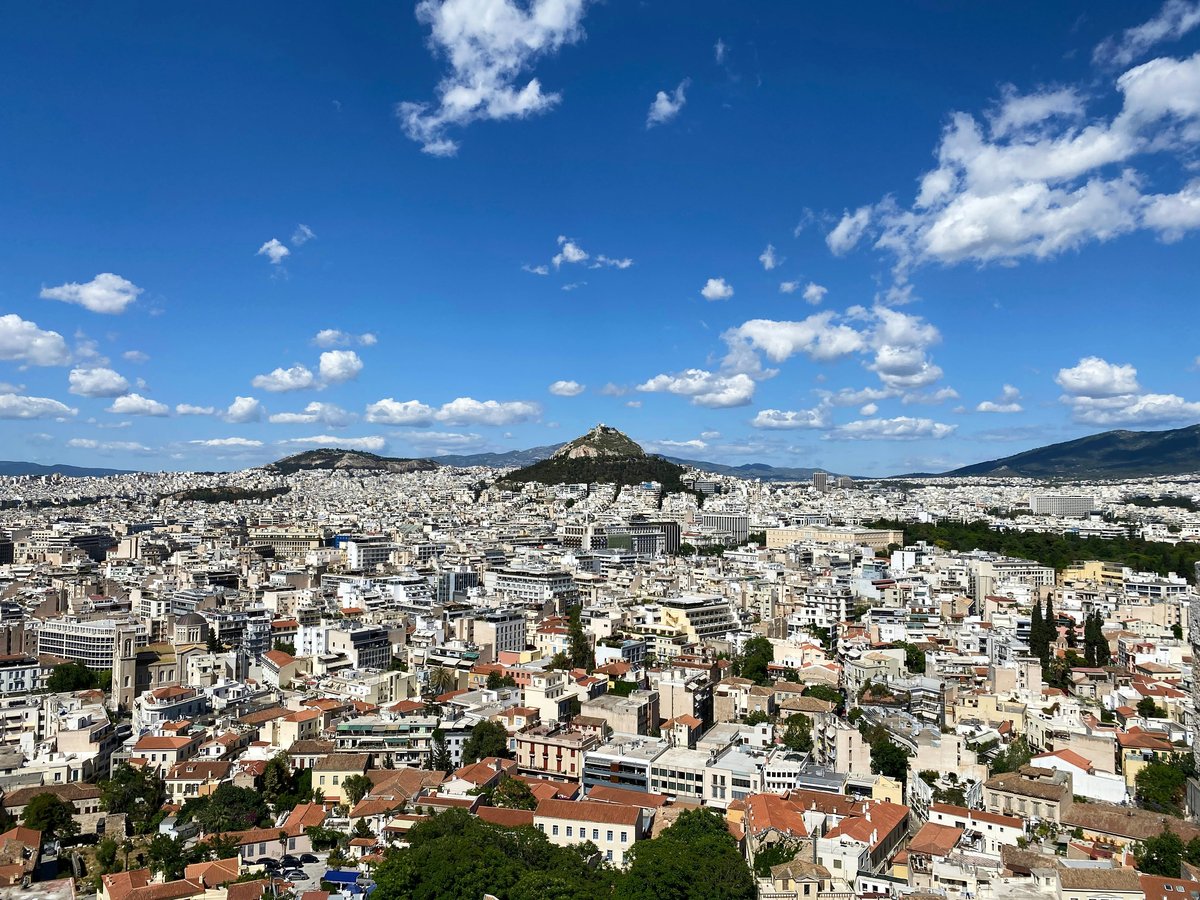
February in Athens is defined by Apokries, the Greek Carnival season. The weeks-long build toward Clean Monday fills Monastiraki Square with costume vendors, sends weekend parades through the narrow lanes of Plaka, and on Tsiknopempti, the Thursday when Greeks grill as much meat as they can before Lent, the smell of charcoal and lamb fat drifts across sidewalks from Psyrri to Pangrati. Temperatures typically sit around 13°C (56°F) during the day and drop to about 6°C (43°F) after dark. That feels colder than the numbers suggest when February wind funnels down Syngrou Avenue or across the open slopes of the Acropolis hill.
To be fair, this is still winter. You'll get around 6 rainy days and stretches of flat grey sky that can run 2 or 3 days straight. The Saronic Gulf is far too cold for swimming, and ferry services to the islands run reduced schedules. But the tradeoff is real. The Acropolis, which sees roughly 4 million visitors a year, might have 30 people on a weekday morning instead of 3,000. The National Archaeological Museum on 28is Oktovriou Street, normally packed through its Mycenaean gold galleries, feels like a private showing. Hotel rates in Koukaki and around Syntagma Square tend to drop 40-50% compared to July.
If you want to stand alone with the Caryatids at the Erechtheion or photograph the Parthenon without a single selfie stick in frame, February is one of the few months where that is still possible. Mind you, you'll need a warm jacket to enjoy it.
Why visit in February
- The Acropolis and major museums see a fraction of peak-season crowds. On a Tuesday morning in February, you might share the Parthenon viewing platform with 20 other visitors instead of the 2,000-plus common in July.
- Hotel rates across Athens drop 40-50% from summer peaks. Neighborhoods like Koukaki and Plaka become genuinely affordable, and you'll find far more availability at well-reviewed properties that book out months ahead in high season.
- Apokries (Greek Carnival) brings costume parades, live music in Thissio, and Tsiknopempti grilled-meat feasts that give February a genuine cultural personality most winter months lack.
- Taverna dining is at its best. Winter menus feature slow-cooked stews, lahanodolmades, and fresh wild horta greens that you won't find on the lighter summer menus.
- Free admission to state-run museums and archaeological sites on the first Sunday of each month from November through March, including the Acropolis and its museum.
Worth knowing
- Grey, overcast stretches of 2-3 consecutive days are common. February averages 73% humidity and 45mm of rainfall spread across about 6 rainy days.
- Daylight is limited to roughly 10 hours and 30 minutes, with sunset around 18:00. Late-afternoon sightseeing gets cut short.
- Many island ferries operate on reduced winter schedules. A spontaneous day trip to Hydra or Aegina requires advance schedule checking, and rough seas can cancel sailings.
- Some restaurants and shops in tourist-heavy Plaka close entirely for the winter months or switch to reduced hours, giving parts of the old town a shuttered feel.
Best for
Think twice if
February in Athens is cool and damp without being harsh. Daytime temperatures typically reach about 13°C (56°F), which feels pleasant enough in direct sun but chilly the moment you step into shade or a breeze picks up. Nights and early mornings drop to around 6°C (43°F). Rain comes in periodic bursts rather than sustained downpours. You might get 3 dry days followed by a day of intermittent showers, then another dry spell. The humidity tends to sit around 73%, which gives the air a mild dampness that you'll notice on stone surfaces inside churches and museums. Snowfall in central Athens is rare, maybe once every 4-5 years, though you can often see snow on Mount Parnitha (1,413m) north of the city.
Seasonal caution
- Occasional cold snaps can drop nighttime temperatures to near 0°C (32°F), particularly in late February. These typically last 2-3 days and bring strong northerly winds that make the wind chill feel significantly colder. Check the forecast before planning full-day outdoor walks.
- The marble surfaces on the Acropolis and at the Ancient Agora become genuinely slippery in rain. Rubber-soled shoes are a safety concern, not a comfort preference.
Year-round climate
Averages from the last 5 years.
| Month | Avg high (°C) | Avg low (°C) | Rainfall (mm) |
|---|---|---|---|
| Jan | 13 | 6 | 62 |
| Feb | 14 | 6 | 45 |
| Mar | 16 | 8 | 34 |
| Apr | 20 | 11 | 38 |
| May | 25 | 16 | 36 |
| Jun | 31 | 21 | 25 |
| Jul | 35 | 24 | 8 |
| Aug | 33 | 24 | 16 |
| Sep | 29 | 20 | 18 |
| Oct | 23 | 15 | 27 |
| Nov | 19 | 12 | 85 |
| Dec | 15 | 9 | 101 |
Headline events
Apokries (Greek Carnival)
Three weeks before Clean Monday, typically falling across February
Greece's 3-week carnival season builds toward Clean Monday with costume parades, street parties, and the famous Tsiknopempti meat-grilling Thursday. While Patras hosts the country's largest carnival (drawing over 600,000), Athens holds its own celebrations with parades through Plaka and Thissio, live music stages in Technopolis in Gazi, and costume contests for children in public squares across the city. The exact dates shift each year with the Orthodox Easter calendar, but Apokries typically runs from late January through late February or early March.
Best things to do in February
Visit the Acropolis with minimal crowds
sightseeingThe Parthenon, the Erechtheion with its Caryatid porch, and the Temple of Athena Nike sit on the limestone plateau above the city. In February, you'll likely have stretches of several minutes with no other visitors in your sightline, something that happens on maybe 15-20 days per year total.
February visitor numbers are a fraction of the summer peak. Weekday mornings in particular can feel almost private.Booking tipArrive when gates open at 08:00 for the emptiest experience. The combined ticket covers the Acropolis plus 6 other sites and is valid for 5 days.
Explore the National Archaeological Museum
museumThe collection on 28is Oktovriou Street spans 11,000 years of Greek art. The Mycenaean galleries hold the Mask of Agamemnon and gold cups from Vaphio. The Egyptian collection fills an entire wing. In February, the rooms are quiet enough that you can stand with the Antikythera mechanism for as long as you want.
Winter means fewer tour groups, and you can spend unhurried time in galleries that become standing-room-only by June.Walk the Tsiknopempti street feasts
food and cultureOn Tsiknopempti Thursday, Athenians spill onto sidewalks grilling lamb, pork, and loukaniko. The smoke is visible from blocks away. Psyrri, Monastiraki, and Gazi are the liveliest neighborhoods. You'll hear bouzouki from open taverna doors and smell charcoal mixed with oregano and lemon.
Tsiknopempti falls only once a year, always 11 days before Clean Monday, and it's typically in February.Hike Mount Lycabettus
outdoorThe 277m hill in the center of Athens offers 360-degree views from the Chapel of St. George at the summit. The path starts near Kolonaki and takes about 30 minutes to climb. On a clear February day, you can see all the way to Aegina in the Saronic Gulf, and the light has a low, golden quality that summer's haze washes out.
Cool temperatures make the uphill walk comfortable, and winter light gives the clearest long-distance views of the year.Browse the Monastiraki flea market
shoppingThe Sunday flea market spreads from Monastiraki Square down Adrianou Street and through the side alleys toward Thissio. Vendors sell vintage records, brass lamps, old maps of Athens, and communist-era memorabilia. The weekday antique shops in the narrow streets off Avyssinias Square stay open year-round.
Fewer tourists means more room to browse, and vendors are more willing to talk and negotiate when foot traffic is low.Attend a performance at the Megaron Mousikis
cultureThe Athens Concert Hall on Vasilissis Sofias Avenue hosts its densest classical and jazz programming between November and March. The Christos Lambrakis Hall seats 1,961 and has acoustics ranked among the best in Europe. February typically brings 15-20 performances across the two main halls.
February sits in the heart of the winter concert season, with the widest variety of scheduled performances.Day trip to the Temple of Poseidon at Cape Sounion
day tripThe 5th-century BC temple sits on a cliff 65m above the sea at the southern tip of Attica, roughly 70 km from central Athens. In February, you might have the site nearly to yourself. The wind can be fierce at the cape, but the view down the coast is stark and dramatic, with winter waves breaking on the rocks below.
Summer brings tour buses by the dozen. February visitors often share the temple with fewer than 10 other people.What to eat in February
In season: fruit
Nerantzia (Seville orange) spoon sweet and marmalade
Athens has roughly 40,000 bitter orange trees lining its streets, and they fruit in January and February. Bakeries across Exarchia and Kolonaki sell nerantzi marmalade and the traditional spoon sweet (gliko tou koutaliou) made from the peel. The fruit itself is too bitter to eat raw, but the preserves carry a sharp, floral citrus flavor you won't find at any other time of year.
On menus now
Lahanodolmades (cabbage rolls)
Winter cabbage reaches its peak sweetness in February. Tavernas across Pangrati and Petralona serve lahanodolmades, cabbage leaves stuffed with rice and mince, simmered in egg-lemon (avgolemono) sauce. The dish tends to disappear from menus by April when the cabbage season ends.
Street food peaks
Bougatsa
Not strictly seasonal, but Athens bakeries in Monastiraki and Omonia serve bougatsa, crisp phyllo filled with semolina custard and dusted with cinnamon and powdered sugar, all day from early morning. On a cold February morning, the warmth of fresh phyllo straight from the oven is hard to beat.
In markets
Wild horta greens
February is prime foraging season for wild greens in Attica. Vlita, radikia, and stamnagathi appear on taverna menus boiled and dressed with lemon and olive oil. The slightly bitter, earthy flavor of fresh-picked horta from the hills around Hymettus is noticeably different from the cultivated greens served in summer.
Festival food
Tsiknopempti grilled meats
The Thursday of the second carnival week, roughly 11 days before Clean Monday. Tavernas and homes across Athens fire up charcoal grills on sidewalks and patios. The smell of souvlaki, lamb chops, and loukaniko sausage is thick through Psyrri and Monastiraki from midday onward. The name itself translates to "smoke Thursday," and the haze of charcoal that settles over the old town is part of the experience.
Regular events in February
Athens Carnival ParadesFree
Weekend parades through Plaka and Thissio feature floats, marching bands, and costumed groups. Children's costume contests take place in Syntagma Square and neighborhood plateia across the city.
Weekends during the 3-week Apokries periodFirst Sunday free museum admissionFree
All state-run archaeological sites and museums, including the Acropolis, the Ancient Agora, and the National Archaeological Museum, offer free entry on the first Sunday of February.
First Sunday of FebruaryTechnopolis winter music programming
The converted gasworks complex in Gazi hosts live music events and cultural exhibitions throughout February, with Carnival-themed concerts during Apokries weekends.
Throughout FebruaryBest places this February
Acropolis
archaeological siteThe Parthenon, the Erechtheion, and the Temple of Athena Nike on the limestone plateau above the city. February mornings can feel like a private visit.
AcropoliNational Archaeological Museum
museumOver 11,000 exhibits spanning Neolithic to Roman periods, including the Mask of Agamemnon and the Antikythera mechanism. Housed at 28is Oktovriou Street since 1889.
ExarchiaAcropolis Museum
museumThe Bernard Tschumi-designed museum at the base of the Acropolis hill houses the original Caryatids and the Parthenon Gallery on its top floor, aligned with the temple itself.
MakrigianniAncient Agora and the Stoa of Attalos
archaeological siteThe reconstructed 2nd-century BC Stoa of Attalos houses a museum of daily Athenian life. The Temple of Hephaestus on the hill above is the best-preserved ancient Greek temple in the world.
MonastirakiPsyrri neighborhood
neighborhoodNarrow streets packed with mezedopolia, street art, and small bars. On Tsiknopempti, the outdoor grilling here is some of the liveliest in Athens.
PsyrriCentral Market (Varvakios Agora)
marketThe 1876 iron-and-glass market hall on Athinas Street sells fresh fish, meat, spices, and olives. The surrounding streets have nut vendors, dried-herb stalls, and small ouzeri. The noise and smell hit you from half a block away.
OmoniaBenaki Museum of Greek Culture
museumThe Koumbari Street building covers Greek civilization from prehistory through the 20th century. The rooftop terrace offers views toward the National Garden and Lycabettus.
KolonakiAnafiotika
neighborhoodA cluster of Cycladic-style whitewashed houses tucked into the north slope of the Acropolis. Built by stonemasons from the island of Anafi in the 1840s, the 45 or so remaining houses feel like a village dropped into the city.
Plaka
Your packing checklist
Tick items off as you pack. Your progress saves in this browser.
All packed — have a great trip.
Insider tips
The south slope of the Acropolis catches the most February sun. After visiting the ruins, walk down to the Dionysiou Areopagitou pedestrian street and sit on one of the marble benches facing south. On a clear day, the stone warms enough that you can sit comfortably for an hour.
Athens tap water comes from the Mornos Reservoir, about 200 km west, and is clean and drinkable. Skip the bottled water and fill a reusable bottle at any tap or public fountain.
For Tsiknopempti, avoid the tourist-facing restaurants on the main Monastiraki Square. Walk 2 blocks into Psyrri, where the grilling tends to be run by the taverna staff themselves, cooking on portable charcoal grills set up on the pavement.
The Athens Metro doubles as an archaeology museum. Syntagma Station has a glass-walled display of artifacts and stratigraphy uncovered during construction, spanning from the 4th century BC through the Ottoman period. Monastiraki Station has a similar excavation window.
The combined archaeological ticket covers the Acropolis, the Ancient Agora, the Roman Agora, Kerameikos, the Temple of Olympian Zeus, and Hadrian's Library. It's valid for 5 days, which gives you time to revisit sites in different light.
Avoid these mistakes
- Wearing smooth-soled shoes to the Acropolis. The marble surfaces are polished by 2,500 years of foot traffic and become dangerously slick in rain. Several visitors are treated for falls each winter month.
- Assuming Plaka restaurants are open year-round. Some of the more tourist-oriented spots close entirely from November to March, or reduce hours to weekends only. Check before walking across the city for a specific taverna.
- Packing only for mild Mediterranean weather. February nights in Athens sit around 6°C, and the wind chill on exposed sites like the Acropolis or Lycabettus can make it feel several degrees colder. A proper jacket is not optional.
- Skipping the National Archaeological Museum because it's not in the tourist center. The 15-minute walk from Omonia up 28is Oktovriou Street passes through a residential neighborhood that gives you a different view of the city, and the museum itself holds one of the world's most important ancient collections.
- Trying to visit all the major sites on the first Sunday for free admission. Everyone has the same idea, and the Acropolis in particular can see lines even in February on that specific day. The other 27 days of the month are likely to be quieter.
Practical tips for February
February daylight runs roughly from 07:15 to 18:00, giving you about 10.5 hours. Plan outdoor sightseeing for midday when temperatures are highest and save museum visits for early morning or late afternoon when the light fades. The Athens Metro runs from 05:30 to 00:30 (until 02:30 on Fridays and Saturdays), and the 3 lines cover all major tourist areas. Monastiraki and Acropoli stations are the most useful for sightseeing. Bus and tram schedules can be unreliable in winter, so the Metro is the most dependable option. Athens International Airport sits about 33 km east of the center, connected by Metro Line 3 in roughly 40 minutes. Carnival dates shift annually with the Orthodox calendar, so check the specific year's dates before booking if Apokries is a draw. Most museums close on Mondays year-round.
FAQ
Is February too cold to enjoy Athens?
Not really. Daytime temperatures around 13°C feel comfortable in the sun, and Athens gets less rain than most northern European cities in February. You'll want a proper jacket for evenings, but this isn't Northern Europe cold. The trade-off is empty archaeological sites and significantly lower hotel rates.
Does it rain a lot in Athens in February?
February averages about 45mm of rain across roughly 6 rainy days. The rain tends to come in short bursts rather than all-day downpours, so you can usually wait out a shower in a kafeneio and be back outside within 30-45 minutes.
Are the Greek islands worth visiting in February?
Most islands are very quiet, with reduced ferry schedules and many hotels and restaurants closed until April. Hydra and Aegina in the Saronic Gulf are the easiest to reach and have some year-round tavernas, but don't expect the lively island atmosphere of summer. The ferry from Piraeus to Aegina takes about 40 minutes.
What is Tsiknopempti and when does it happen?
Tsiknopempti, or Smoke Thursday, falls 11 days before Clean Monday. It's the day Greeks grill as much meat as possible before the Lenten fast begins. The date shifts with the Orthodox calendar but usually falls in February. Tavernas across Psyrri, Monastiraki, and Gazi set up outdoor grills, and the smell of charcoal and lamb fills the streets from midday.
Can I visit the Acropolis in February?
Yes. The Acropolis is open year-round, typically 08:00-17:00 in winter months. February is one of the quietest times to visit. Weekday mornings might see only a few dozen visitors on the entire site, compared to thousands per hour in July and August. Watch for slippery marble in wet weather.
Things to Do in Athens in February
 Free cancellation
 Best of Athens Half Day Private Tour
Day trip: free cancellation.
via Viator Free cancellation
 Cape Sounion and Temple of Poseidon Half-Day Small-Group Tour from Athens
Day trip: free cancellation.
via Viator Free cancellation
 Athens Full Day Private Tour
Day trip: 8 hours, free cancellation.
via Viator Free cancellation
 Athens All Included: Acropolis and Museum Guided Tour with Ticket
Day trip: 3 hours, free cancellation.
via Viator Free cancellation
 Athens cruise: Agistri, Moni/Metopi, Aegina with lunch & drinks
Day trip: 10 hours, free cancellation.
via Viator Free cancellation
 Delphi Experience With live Official Guide in the museum and site
Day trip: 10 hours, free cancellation.
via ViatorFind a flight to Athens
Live fares to Athens appear here once cookies are accepted.
Last verified by automated review (v1.7.2) on . What is automated review?