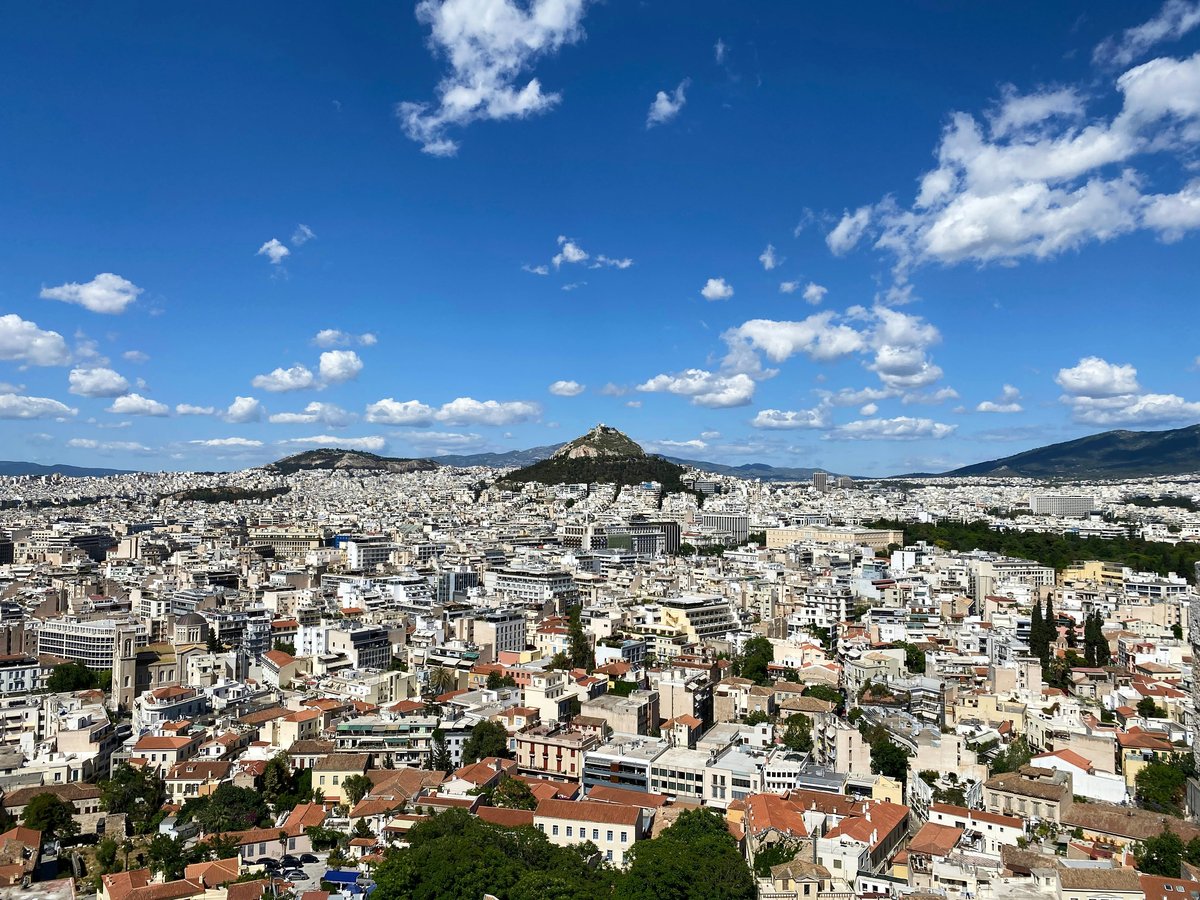
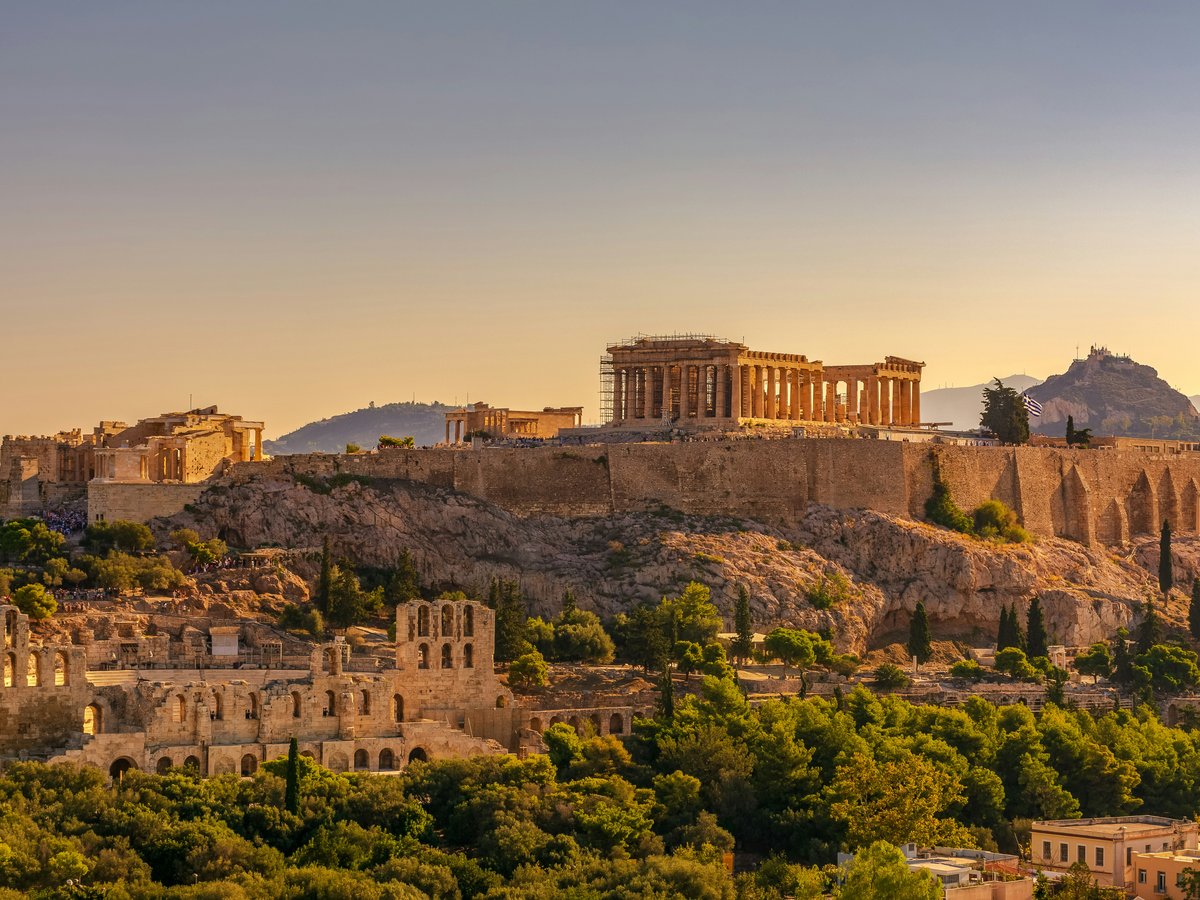
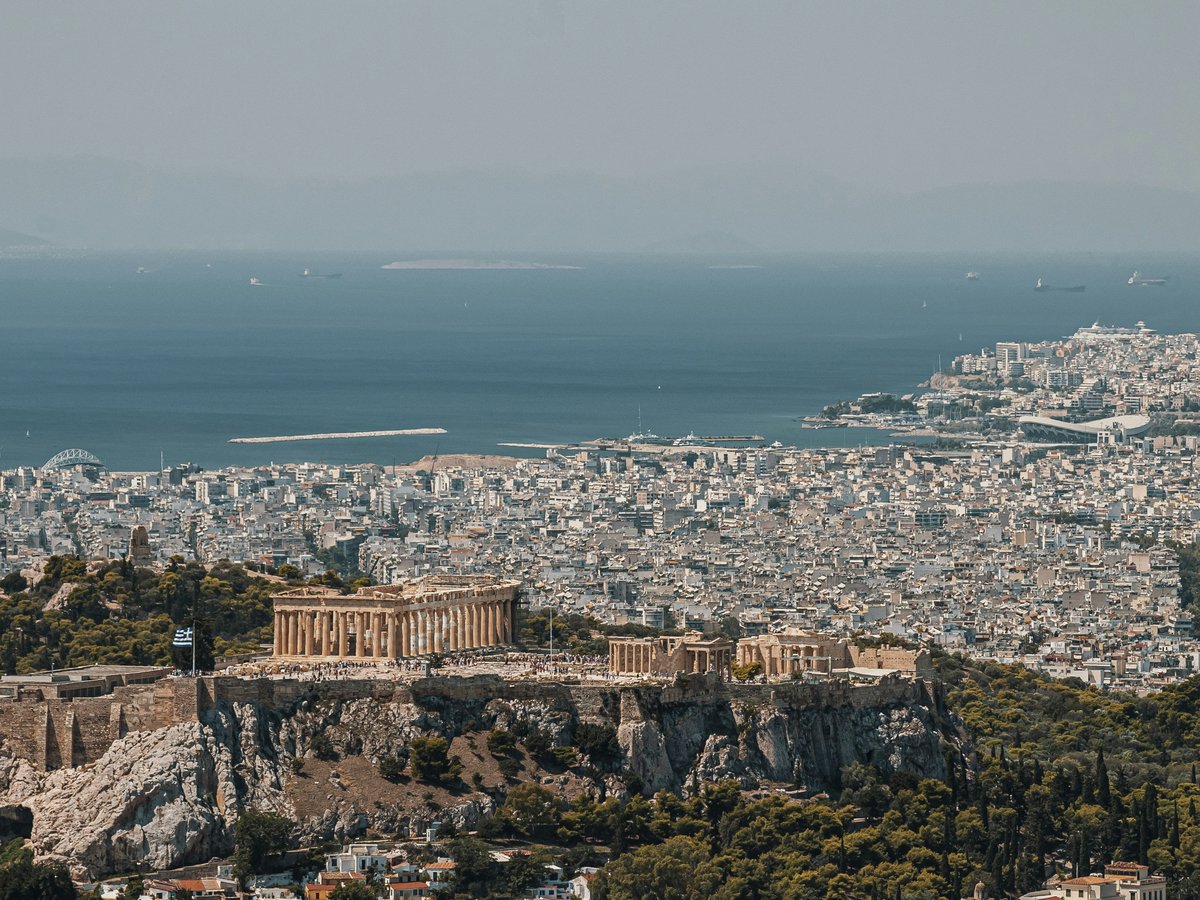
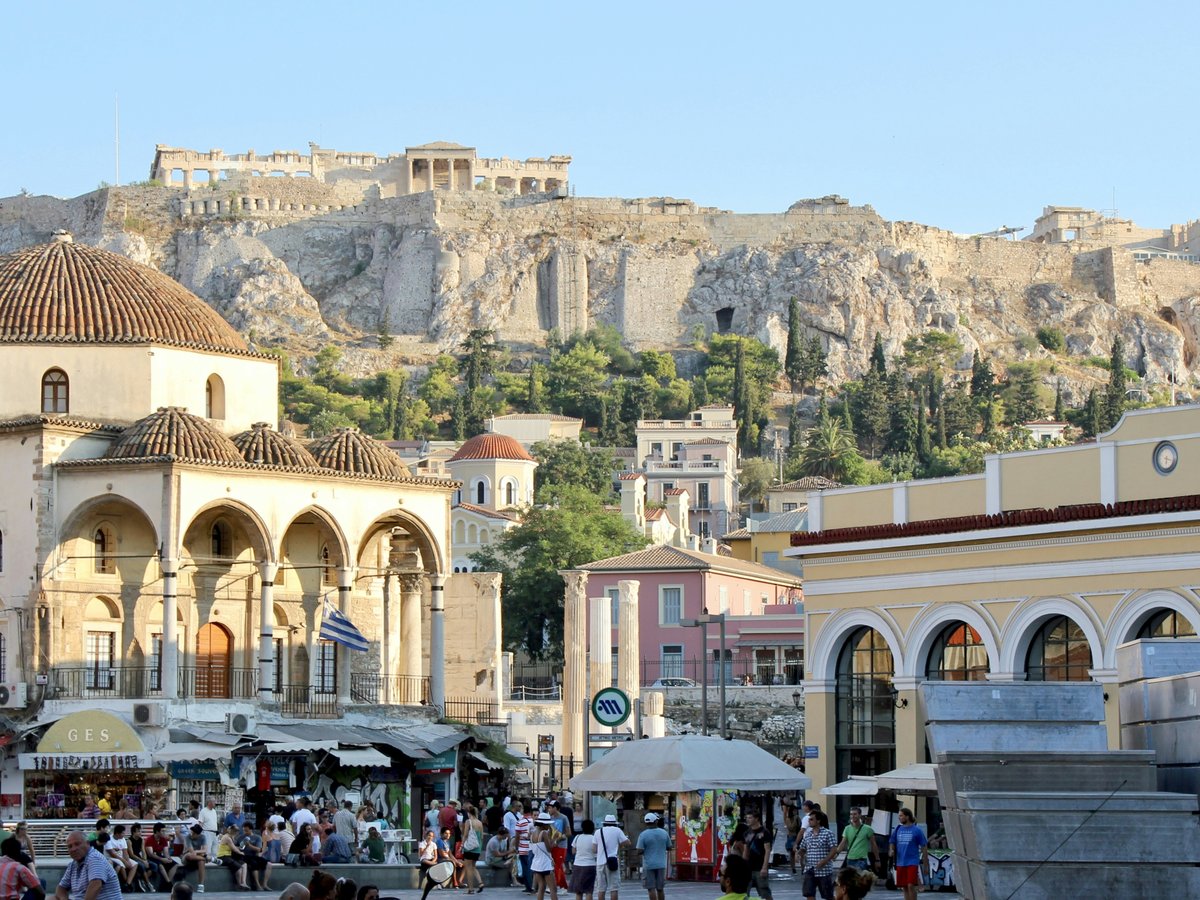
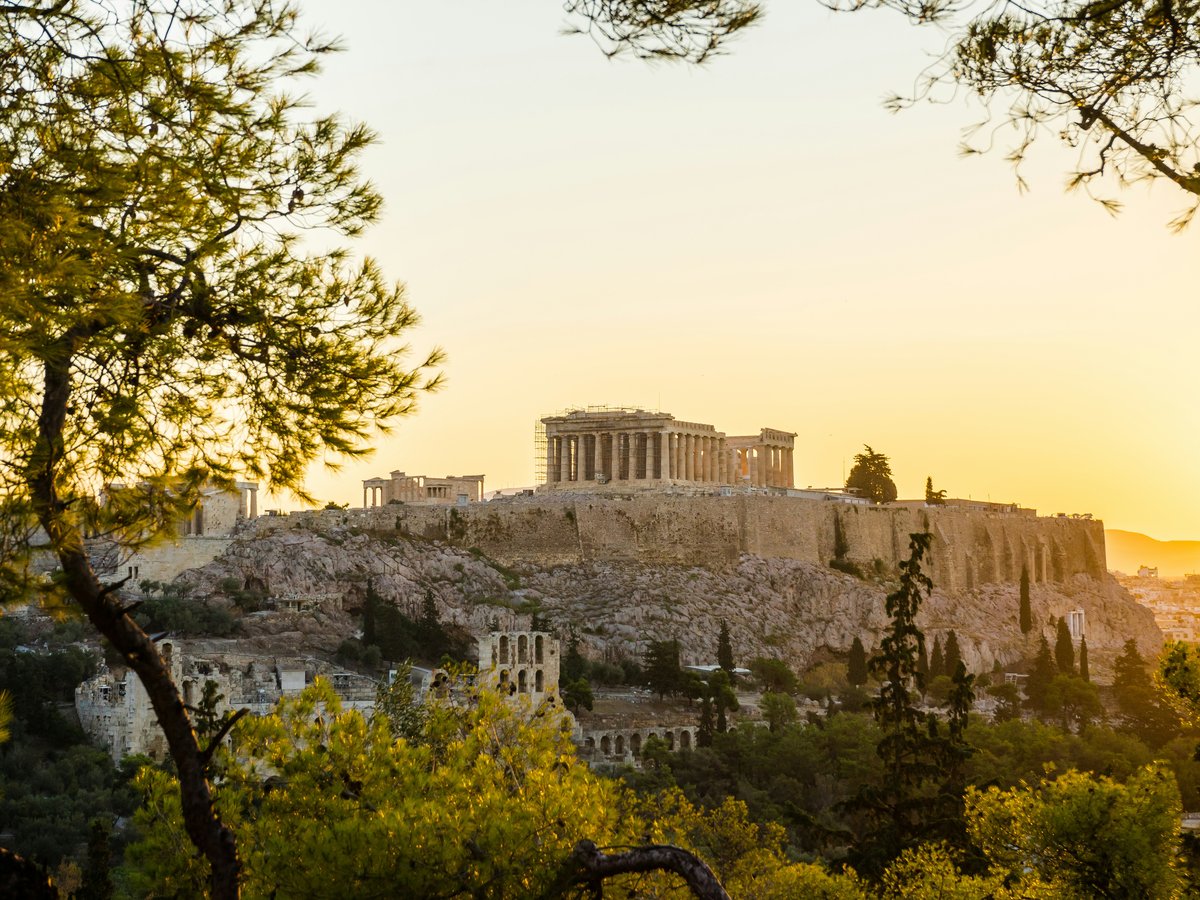
Athens sits on the Attic Plain between Mount Hymettus and Mount Aigaleo, a city where the Acropolis rises roughly 150 metres above the surrounding streets and remains visible from almost every rooftop terrace in the centre. The population within city limits is around 664,000, but the greater metropolitan area reaches nearly four million, which explains the traffic and the noise and the sheer density of life pressed into narrow streets that were old when Rome was young. Your first morning will probably start in Plaka, the oldest continuously inhabited neighbourhood in Europe according to locals who will tell you this with total certainty, where neoclassical houses painted in faded ochre line pedestrianised lanes that climb toward the rock. From there Monastiraki spreads west, its flea market spilling around an Ottoman mosque now used as a ceramics museum, and on Sunday mornings the whole square fills with vendors selling everything from brass knockers to secondhand bouzoukis. Psyrri, just north, has shifted from a leather-workers' district to the city's densest concentration of small bars and live music spots, and by midnight on a Thursday the tables have migrated fully into the street. The Athenian day runs later than almost any other European capital: dinner rarely begins before nine, and the afternoon pause between roughly two and five is still observed by enough shops to catch out visitors who planned a post-lunch errand. The light here is particular, a dry Mediterranean clarity that turns the Pentelic marble of the Parthenon almost golden in the hour before sunset. Two metro lines cut beneath archaeological layers that delayed construction for years, and the stations at Syntagma and Acropolis double as small museums displaying artefacts found during excavation. The warm sea at Piraeus is just twenty minutes south by rail, close enough for a weeknight swim.
Athens in photos
Athens right now
Answers about Athens
-
Airport to city
Take Metro Line 3 from Athens International Airport (ATH) to Syntagma Square. The ride costs €9 ($10), takes 40 minutes, and drops you at the center of the city. Trains run from 6:30am to 11:30pm. After midnight, the X95 bus runs 24 hours for €5.50, or take a taxi at the fixed €55 nighttime fare.
Read the full answer → -
Best time to visit
April, May, and October deliver the best conditions for Athens. Daytime temperatures sit between 20°C and 26°C, the Acropolis is not yet swamped by cruise-ship groups, and hotel rates in Plaka and Koukaki run 30-40% below July peaks. Mid-October tends to be the sweet spot if you can pick one week.
Read the full answer → -
Cost per day
Athens costs €40-55 ($46-63) per day at the budget floor, €90-120 ($104-138) at midrange, or €300+ ($346+) for luxury. The Acropolis combo ticket covers seven sites for €30. Free museum Sundays run November through March, and souvlaki in Monastiraki starts at €2.50.
Read the full answer → -
Cultural etiquette
Greeks take offense at the open-palm "moutza" gesture more than almost anything else visitors do. Greet with "yia sas" before asking questions, cover shoulders and knees in Orthodox churches, and expect dinner to start around 9:30pm. Tipping 5-10% at tavernas is appreciated but not mandatory. Meals are slow here. Don't rush them.
Read the full answer → -
Best day trips
Cape Sounion (70 km south, €6.50 KTEL bus) is the best couples day trip from Athens. Watch sunset behind Kea from the 5th-century BC Temple of Poseidon. Hydra is a car-free island 90 minutes by hydrofoil from Piraeus. Aegina works as a half-day pistachio-and-beach run, 40 minutes by fast ferry, with time to get back for dinner in Psyrri.
Read the full answer → -
Digital nomads
Athens works well for digital nomads, held back mainly by summer heat and inconsistent building-level wifi. Furnished apartments in Koukaki or Pangrati run €650-900/month with 100-Mbps fiber now standard in newer buildings. Greek cafe culture means nobody rushes you over a single freddo espresso. Monthly all-in sits around $1,900. The Greece Digital Nomad Visa (launched 2021) requires €3,500/month income proof.
Read the full answer → -
Family-friendly
Athens is family-friendly, 7 out of 10, with heat and steep hills as the main caveats. The Acropolis demands sturdy shoes and a carrier for under-4s, but the National Garden, Stavros Niarchos Foundation Cultural Center, and pedestrianized Plaka keep younger kids content without the climb. Greek food is inherently kid-compatible. Souvlaki solves most picky-eater standoffs.
Read the full answer → -
Food culture
Athens eats late, eats pork, and eats standing up more than visitors expect. Lunch lands around 2pm, dinner rarely before 9:30pm. The city's best food sits in €3 souvlaki wraps from unmarked counters in Monastiraki and Psyrri, not in the tablecloth restaurants below the Acropolis. Feta, olive oil, and oregano carry nearly every plate.
Read the full answer → -
Getting around
Walk the central triangle between Syntagma, Monastiraki, and the Acropolis. Athens Metro's 3 lines cover everything beyond walking distance for €1.20 per 90-minute ticket. Load an anonymous Ath.ena card at any station. Bolt or Uber fill the gaps after midnight or to the coast, with fares shown upfront.
Read the full answer → -
How to get there
Athens International Airport (ATH), 33 km east of the city center, handles nearly all commercial flights. Direct service runs from New York (10 hours on Delta and United, seasonal), London (3.5 hours on BA, Aegean, easyJet), and most European capitals. Round-trip fares from the US run $650-1,200. Metro Line 3 connects ATH to Syntagma Square in 40 minutes for €9.
Read the full answer → -
Is it safe?
Athens scores 7.2 out of 10 for solo-traveler safety (see the TTDI Solo-Safety Index). Violent crime against tourists is rare. The real risks are pickpocketing on Metro Line 1 near Monastiraki, taxi-meter scams at the airport, and the Omonia Square area after midnight. Dial 112 for emergencies or 1571 for English-speaking Tourist Police.
Read the full answer → -
Language basics
Greek. Modern Greek specifically, written in the Greek alphabet, 24 letters, some familiar from math class, most not. English proficiency in the Plaka-Syntagma-Monastiraki tourist triangle sits around 6 out of 10. Staff under 40 at hotels and restaurants handle English fine. Taxi drivers and kiosk owners over 55 tend not to. Learn 'efcharistó' (thank you) and 'parakaló' (please) and you'll cover most daily interactions.
Read the full answer → -
Layover guide
Yes, with 7 or more hours between flights. Metro Line 3 from Athens Eleftherios Venizelos to Syntagma Square runs about 40 minutes, leaving enough city time for the Acropolis and a meal in Plaka before heading back. Greece is in the Schengen Area, so many passports enter visa-free. Verify yours.
Read the full answer → -
LGBTQ-friendly
Athens scores 7.5/10 for LGBTQ+ friendliness (sourced from TTDI's editorial rubric). Greece legalized same-sex marriage in February 2024. It was the first Orthodox-majority European nation to do so. The Gazi district near Kerameikos metro has been the queer nightlife center for over 15 years, and same-sex couples hold hands freely in Plaka and Monastiraki.
Read the full answer → -
Where locals go
Exarcheia's Plateia Exarcheion and Valtetsiou Street cafes after 9:30pm, Pangrati's tavernas around Plateia Varnava, Petralona's Troon Street for €10 dinners with house wine, and Kypseli's Fokionos Negri pedestrian strip. Saturday morning laiki agoras in Exarcheia (Kallidromiou Street) and Friday in Pangrati are where Athenians shop for groceries.
Read the full answer → -
Must-see
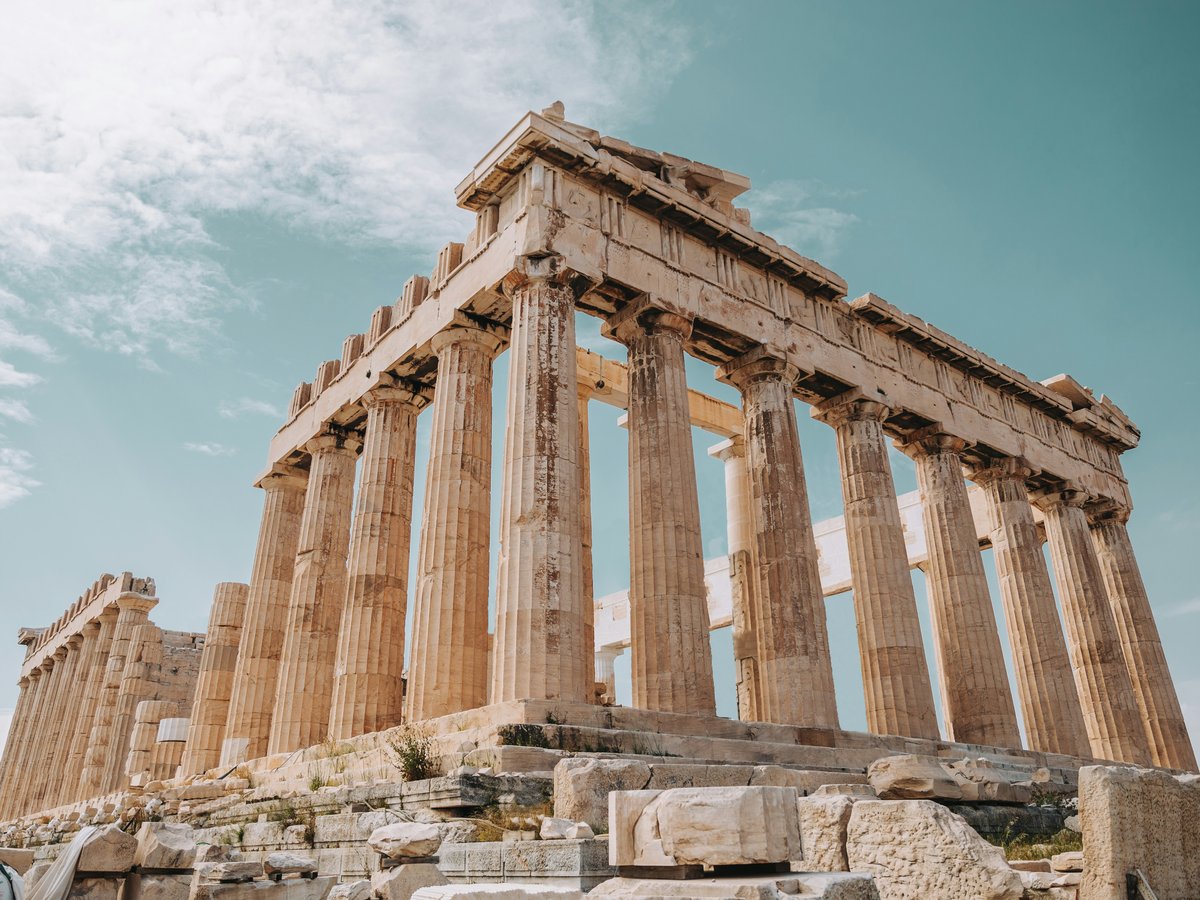
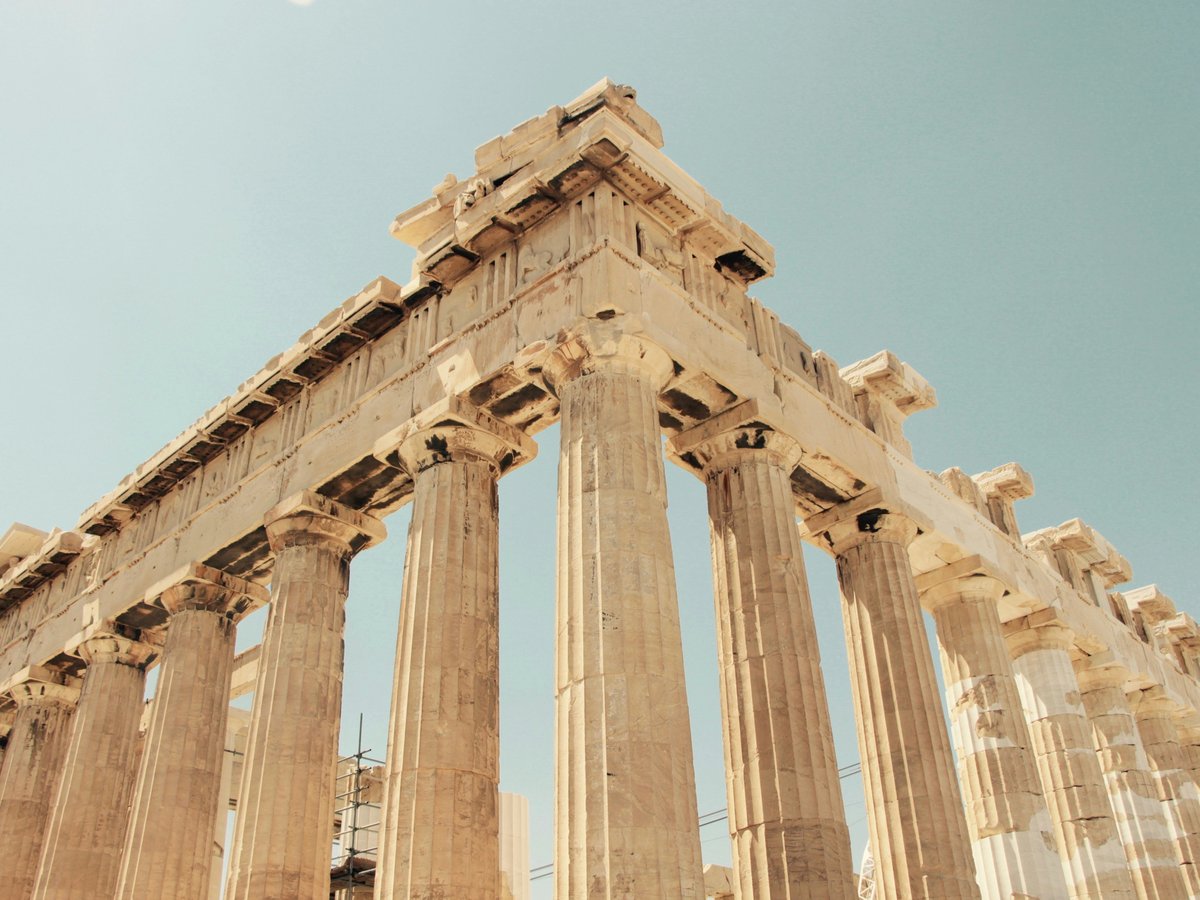
The Acropolis at 8am, before the tour groups and the heat. The Parthenon has stood 156 metres above the city since the 5th century BC, and morning light turns its Pentelic marble warm ivory. Peak-season tickets cost €30, cover 7 sites over 5 days, and require a timed entry slot booked online the night before.
Read the full answer → -
Solo travel
Athens is one of the more comfortable solo destinations in southern Europe (sourced from Wikivoyage safety and transit coverage). The metro runs until midnight, tavernas welcome single diners without awkwardness, and hostel rooftop bars in Monastiraki and Koukaki make meeting people simple from day one. Single-occupancy rooms in Koukaki run €45-70 per night in June 2026. Women report feeling comfortable walking Plaka, Pangrati, and Koukaki after dark.
Read the full answer → -
This week
Athens this week runs on a heat schedule. Mornings before 10am belong to the Acropolis and the Ancient Agora. By noon, duck into any air-conditioned museum. Evenings open around 9pm in neighborhoods like Psyrri and Plaka. Sunday morning's Evzone guard-change ceremony is the week's best free spectacle, no ticket needed.
Read the full answer → -
3-day itinerary
Day 1 covers the Acropolis and Plaka on foot, starting at 8 AM before the heat builds. Day 2 moves north to the National Archaeological Museum, Exarchia, and Lycabettus Hill. Day 3 heads west through Kerameikos, the Central Market, and the Panathenaic Stadium. About 25 kilometres of walking across three days.
Read the full answer → -
What to avoid
Skip the Acropolis between 11am and 3pm, the tout-fronted tavernas on Adrianou Street in Plaka, and any bar a friendly stranger near Syntagma Square recommends. Book an 8am Acropolis slot, take Metro Line 3 or a fixed-fare taxi from the airport, and eat around the Varvakios market or in Psyrri instead.
Read the full answer → -
What to pack
Rubber-soled shoes with real grip are the single most important item for Athens. The Acropolis's 2,500-year-old marble paths are polished glass-smooth and slippery even when dry. Pack for 30 to 38°C dry heat from June through September, a light cover-up for Orthodox church entry, and a European Type C plug adapter for 230V outlets.
Read the full answer → -
Where to stay
Stay in Koukaki, the residential neighborhood south of the Acropolis. Hotels run $75-130 per night, the Acropolis Metro station is a 7-minute walk, and you sleep without the tourist-street noise that fills Plaka after dark. Plaka works if you book a courtyard-facing room. Both put the Parthenon and Acropolis Museum within 12 minutes on foot.
Read the full answer →
Deep guides for Athens
Curated lists for Athens
accommodation
-
Best boutique hotels
Athens spreads its hotel inventory across a tight grid between Syntagma Square and the Acropolis hill, with pockets running north toward Omonia and south past the Panathenaic Stadium. Most visitors default to Plaka or Monastiraki for the postcard proximity, but the price gap between those central blocks and the quieter neighborhoods farther on foot is real. Omonoia and Place Vathi hold the budget-friendly stretch along Patision and 3is Septemvriou, where the metro connects everywhere but nightly rates start near $112. South of the Acropolis, Gargaretta and Kynosargous sit in residential Athens, closer to the Filopappou trails than to the rooftop-bar circuit. Psyri trades monument quiet for bar noise and street art, and Akademia lines Panepistimiou with neoclassical facades and university foot traffic. The mid-range tier dominates the city's boutique inventory, with ratings clustering between 8.3 and 9.5 across all areas; the real decision is not quality but character: morning coffee below the Parthenon walls, or a cheaper room near Varvakios market where the neighborhood wakes louder and earlier.
See the picks → -
Best hostels
Athens spreads its hostel inventory across neighborhoods that differ more in altitude and noise level than in distance; the Acropolis sits close enough to most of them that walkability is a question of hills, not kilometers. The budget core runs from Omonia's commercial grid south through the Psiri warehouse streets to Monastiraki's flea market edge, where rates drop below $25 a night and ratings still clear 9.0. Farther out, Piraeus trades Plaka's foot traffic for a working port and ferry access, while the train station quarter around Gare de Larissa serves overland arrivals who want a bed before the metro opens. Residential pockets like Ambelókipi and Agios Panteleimonas sit northeast of the center, quieter and cheaper than the tourist spine, with metro connections that keep the Acropolis within a few stops. The neighborhoods below are ranked by hostel density; each editorial grounds the area in the landmarks and transit stops a traveler will use, not the postcard view they will photograph. Drop the centrally-located filter and read for the radius that matches how you move through a city.
See the picks → -
Best luxury hotels
Athens carries its luxury hotels the way it carries its ruins: scattered across neighborhoods that feel nothing alike, each reflecting a different idea of what comfort means in a city this old. The 12 properties on this list span a nightly range from USD 230 to USD 1216, and they sit in zones as varied as Omonoia, the Psiri and Monastiraki quarter, Plaka, and Syntagma Square. Some deliver rooftop pools and full spa floors; others bet everything on a single well-placed balcony and staff who remember your name. The useful question is not which hotel is best. It is which neighborhood, which pace, and which trade-off between price and proximity suits the trip you are planning. This list is built to answer that.
See the picks → -
Where to stay
Athens spreads its hotels across neighborhoods that differ more in character than in distance; a short walk connects the Acropolis slopes to Omonia's market grid, but the two feel like different cities after dark. The historic center clusters most of the inventory around Syntagma, Plaka, and Monastiraki, where pedestrian lanes and metro lines keep transit easy and prices firm. South of the Acropolis, Makrygianni trades rooftop-bar noise for museum mornings and quieter side streets. The Omonia corridor runs cheaper; it is louder, rougher at the edges, and closer to the central market than to any postcard view, but the metro hub means nothing in Athens is far. Piraeus sits apart, useful for ferry schedules and little else. Price tiers overlap across nearly every neighborhood: budget beds start at $22 near Monastiraki, mid-range rooms hold strong ratings in the $85 to $186 range from Omonia to Makrygianni, and luxury properties push past $400 near Syntagma and Plaka. The right neighborhood depends on whether you want the Acropolis lit up outside your window or a quiet street and a lower bill.
See the picks →
attractions
-

Best free attractions
Athens gives away more than most capitals its size. The free layer of the city is not a consolation prize for skipping the ticketed monuments: it is where Athenians spend their afternoons, and it is where the argument between the ancient city and the modern one is loudest. What follows is a shortlist of twelve public squares, parks, and open ruins that cost nothing to enter, ranked in the order a curious resident would recommend them to a friend with a week and comfortable shoes. Expect two kinds of place: the central and neighbourhood squares (Syntagma, Monastiraki, Omonoia, Kotzia, Klafthmonos, Kolonaki, Avdi, Viktoria) that hold the daily choreography of the city, and the green rooms (the National Garden, Pedion tou Areos, and the new Ellinikon coastline) where the pressure of the pavement drops away. One archaeological square (the Roman Agora) is included because its perimeter reads as clearly from the street as from inside the fence. Skip the guided-walk versions; these are places to arrive at your own pace.
See the picks → -

Best museums
Athens is a city where the museum calendar matters as much as the museum. The big state institutions keep seasonal hours, private foundations stay open late one evening a week, and the doors that close on Tuesdays are not the ones that close on Mondays. This list is for the visitor who wants to plan those hours rather than be caught out by them. It runs from the National Archaeological Museum, which Wikidata dates to 1829, to the Acropolis Museum, dated to 2009, with private collections, a coin museum, a war museum, a mosque dated to 1759 and a cemetery dated to 1837 in between. We picked these for range, not for headcount. Skip the plan of doing all of them in two days; pick three, fit them around their late openings, and give each one a proper morning or evening. Where we hold no verified opening hours for a venue, we say so plainly, and you should check the official site before you set out.
See the picks → -
Must-see attractions
Athens is the capital and largest city of Greece, and the must-see list here reaches further than one famous hill. The Acropolis, the ancient citadel above the city, and the Parthenon, the former temple of Athena that stands on it, earn their places: the Acropolis is a UNESCO World Heritage Site, and the Parthenon is part of one. The rest of this list is where Athens stops being a postcard, taking in a stadium that is also an archaeological site, a synagogue dating from 1904, a Byzantine church, a conservatory dating from 1871, the ground of the academy Plato founded, and a concert hall dating from 1991 that is already listed as an architectural heritage monument. This list is for the visitor who wants the ancient city in the morning and the living one at night, who will trade one more ruin for an evening in a theatre. Read the opening hours closely: several of these places keep short ones.
See the picks →
food
-

Best cafes
Athens does not do cafe culture the way Vienna or Paris do it; it does something older and more stubborn. The Greek frappé is a summer sport, the freddo espresso is a religion, and the sidewalk chair: whether it faces a Byzantine church, a scooter-clogged boulevard, or a Plaka staircase: is treated as a legitimate office. The twelve places below are the ones worth carving an hour out of a sightseeing day for: a mix of specialty roasters pouring third-wave espresso to a standard that would embarrass most European capitals, corner kafeneia in the Monastiraki grid where breakfast bleeds into lunch, a themed tearoom that treats Psyrri like a stage set, and yes, a couple of the domestic chains that Greeks drink at, dressed up here in their better addresses. Skip the postcard terraces with the Acropolis view and a four-euro cover; the coffee is bad and the people watching is worse. Head instead for a Themistokleous bar stool at 06:00, a Panormou brunch counter at midday, or a Karaiskaki courtyard after dark. This is a working city's coffee, not a set-dressed one.
See the picks → -

Best restaurants
Athens eats on a long clock, and this list is built around that fact. The 12 addresses here run from Greek kitchens to sushi, Indian and burgers, and the hours matter more than the decor. One closes at 22:00; another serves until 04:00. Some shut on Sunday, and some open at 08:00 every day of the week. We have kept to what can be verified: where each place is, what it cooks, when the doors open and how to reach it. That is less romantic than a paragraph about grandmothers and olive oil, and far more useful at the moment you are hungry and holding a phone. The list is for visitors who plan a day around meals: the early lunch, the late dinner, the plate after midnight. Skip the laminated photo menus waved at you on the pedestrian streets; the locals know that the right table depends on the hour, and so should you. Read the times before you read anything else, then ring ahead where a number is given.
See the picks →
Browse by traveler type
- For foodies
Athens for foodies
- For families with kids
Athens for families
- For digital nomads
Athens for digital nomads
- For solo travelers
Athens for solo travelers
- For couples
Athens for couples
- For budget travelers
Athens on a budget
- For luxury travelers
Athens for luxury travelers
- For first-timers
Athens for first-time visitors
Book experiences in Athens
 Free cancellation
 Best of Athens Half Day Private Tour
Day trip: free cancellation.
via Viator Free cancellation
 All Day Cruise -3 Islands to Agistri,Moni, Aegina with lunch and drinks included
Day trip: 10 hours, free cancellation.
via Viator Free cancellation
 Cape Sounion and Temple of Poseidon Half-Day Small-Group Tour from Athens
Day trip: free cancellation.
via Viator Free cancellation
 Athens Full Day Private Tour
Day trip: 8 hours, free cancellation.
via Viator Free cancellation
 Athens All Included: Acropolis and Museum Guided Tour with Ticket
Day trip: 3 hours, free cancellation.
via Viator Free cancellation
 Athens cruise: Agistri, Moni/Metopi, Aegina with lunch & drinks
Day trip: 10 hours, free cancellation.
via Viator Free cancellation
 Delphi Experience With live Official Guide in the museum and site
Day trip: 10 hours, free cancellation.
via Viator Free cancellation
 Historical Delphi One Day Tour with Arachova Stop & Expert Guide
Day trip: 10 hours, free cancellation.
via Viator Free cancellation
 Athens: Meteora Monasteries Tour, Caves, Beachfront Stops & Lunch
Day trip: 14 hours, free cancellation.
via Viator Free cancellation
 Biblical Tour Letters ToThe Corinthians St Paul’s Footsteps 6Hour
Day trip: 6.2 hours, free cancellation.
via Viator Free cancellation
 Luxury Athens Catamaran Cruise with Greek Meal & Drinks
Day trip: 5 hours, free cancellation.
via Viator Free cancellation
 Premium Delphi Day Trip with an Expert Guide, Museum & Lunch
Day trip: 11 hours, free cancellation.
via ViatorBrowse by interest
Compare Athens with
Find a flight to Athens
Live fares to Athens appear here once cookies are accepted.
Last verified by automated review (v1.7.2) on . What is automated review?