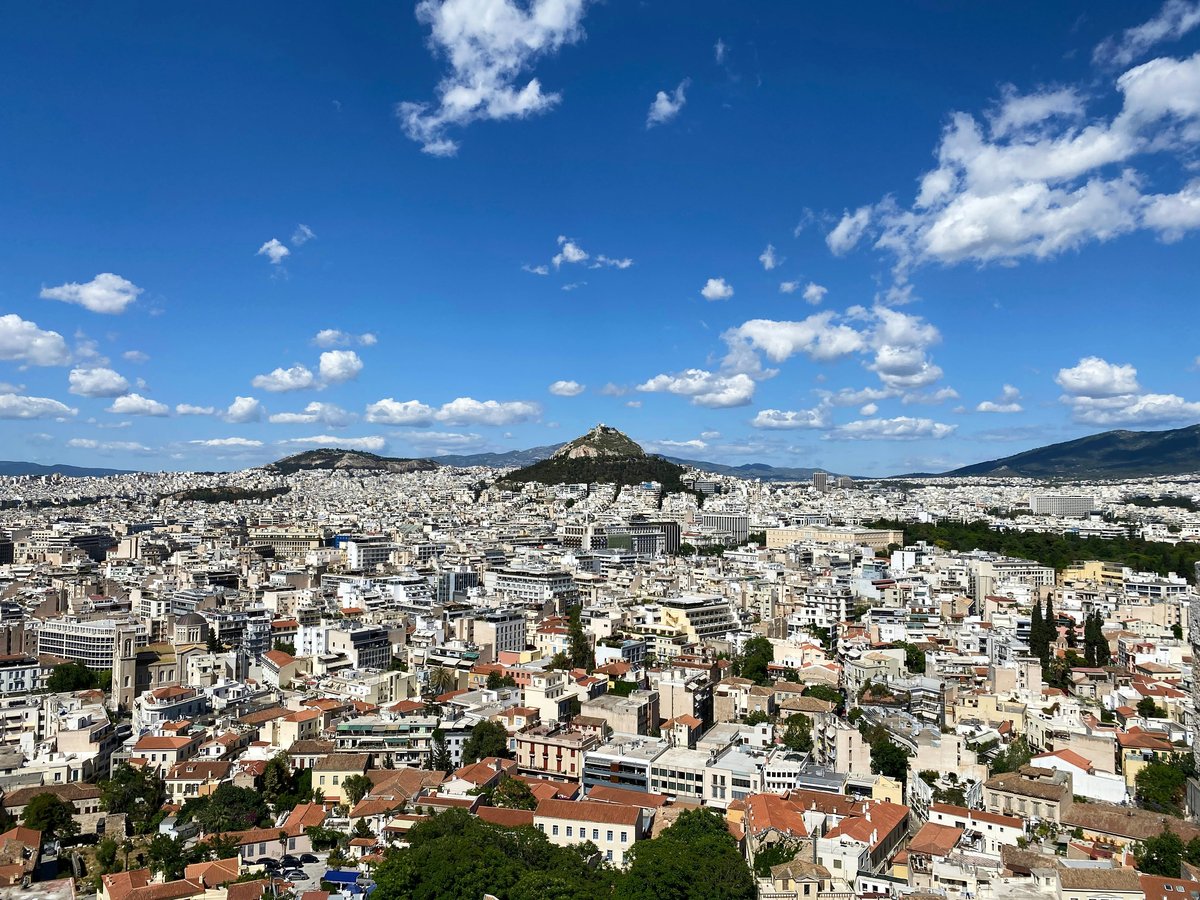
Athens is a city where the museum calendar matters as much as the museum. The big state institutions keep seasonal hours, private foundations stay open late one evening a week, and the doors that close on Tuesdays are not the ones that close on Mondays. This list is for the visitor who wants to plan those hours rather than be caught out by them. It runs from the National Archaeological Museum, which Wikidata dates to 1829, to the Acropolis Museum, dated to 2009, with private collections, a coin museum, a war museum, a mosque dated to 1759 and a cemetery dated to 1837 in between. We picked these for range, not for headcount. Skip the plan of doing all of them in two days; pick three, fit them around their late openings, and give each one a proper morning or evening. Where we hold no verified opening hours for a venue, we say so plainly, and you should check the official site before you set out.
-

1 National Archaeological Museum of Athens
28is Oktovriou (Patission) 44Long summer days from 08:00 to 20:00, and a Tuesday that runs 13:00 to 20:00 all year
The National Archaeological Museum of Athens at 28is Oktovriou (Patission) 44 is where an Athens museum week should start, not where it should end, and Wikidata dates the institution to 1829. Skip the habit of squeezing it into a spare afternoon, because the hours shift with the season and the visit rewards proper time. From 14 May to 31 October the doors open 08:00 to 20:00; from 1 April to 13 May they run 09:00 to 16:00; and from 1 November to 31 March they close at 15:30. Tuesdays follow their own pattern all year, opening at 13:00 and running to 20:00, which suits a late riser. It closes on 1 January, 25 March, 1 May, 25 and 26 December, and Orthodox Easter. Check namuseum.gr before a holiday visit.
Dates from 1829
-

2 Acropolis Museum
Διονυσίου Αρεοπαγίτου 15Friday evenings, when the doors stay open until 22:00
The Acropolis Museum, at Διονυσίου Αρεοπαγίτου 15 (Dionysiou Areopagitou 15), opens at 08:00 every day and draws most of its visitors in the morning. We'd skip that rush and head in on a Friday, when the museum stays open until 22:00. Monday closes early at 16:00, while Tuesday to Thursday and the weekend run to 20:00. With a Wikidata inception of 2009, it is the newest building on this list by some distance, conceived as the modern counterpart to the older state collections. For group bookings or accessibility questions, the front desk is on +30 21 0900 0900, and theacropolismuseum.gr carries current notices.
Dates from 2009
Hours: Mo 08:00-16:00; Tu-Th, Sa-Su 08:00-20:00; Fr 08:00-22:00
-
3 Benaki Museum
Коумбари 1, АтинаThursday opening that runs from 10:00 until 24:00
Wikidata dates the Benaki Museum to 1930, and the museum carries the unhurried manner of a private foundation in Kolonaki, at number 1 on Koumbari. If your week allows any flexibility, skip the daytime visit and come on a Thursday, when the doors open at 10:00 and stay open until 24:00. Not many museums anywhere let you finish a gallery at midnight, and the late hours shift the atmosphere considerably. The rest of the week is straightforward: Monday, Wednesday, Friday and Saturday run 10:00 to 18:00, Sunday closes at 16:00, and Tuesday is closed. That Tuesday closure is the one to plan around, since it catches out visitors who assume every Athens museum takes the same day off.
Dates from 1930
-
4 Museum of Cycladic Art
4 Νεοφύτου Δούκα, Αθήνα, 10674Thursday hours stretched to 20:00
The Museum of Cycladic Art, at 4 Neofytou Douka in the 10674 postal area, stays open until 20:00 on Thursdays, and that is the evening we'd choose. It isn't a museum to rush through at the end of a long day; the late opening gives you time for a proper look. On Monday, Wednesday, Friday and Saturday the hours are 10:00 to 17:00, Sunday starts later at 11:00 and closes at 17:00, and Tuesday is closed. Wikidata dates the museum to 1986, which makes it one of the younger institutions here, and the collection feels focused rather than encyclopedic. The official site at cycladic.gr carries the current programme; check it before you go, since temporary exhibitions can change what a visit feels like.
Dates from 1986
-

5 National Historical Museum
Κολοκοτρώνη, Αθήνα, 10561A museum of modern Greek history on Kolokotroni
The National Historical Museum sits on Kolokotroni street in the 10561 postal area, and it's the right stop when you want Athens past the classical era. Its Wikidata inception is given as 1960. The assumption that Athens stops at the Parthenon is worth shedding, because the modern story of the city explains the streets you walk every day far better than the ancient one does. We hold no verified opening hours for this museum, so check nhmuseum.gr before you set out rather than trusting a hotel leaflet. The central address means you can reach it on foot from most hotels, and it works well as a shorter visit slotted between longer ones. Come with a question about independence or the modern state, and you'll leave with a clearer sense of the city you're standing in.
Dates from 1960
-

6 Numismatic Museum of Athens
Iliou Melathron, El. Venizelou (Panepistimiou) 12, GR-106 71A coin museum housed in Iliou Melathron
Iliou Melathron, at El. Venizelou (Panepistimiou) 12, GR-106 71, is where the Numismatic Museum of Athens is based, and with a Wikidata inception of 1838, the institution predates most of the city around it. On a hot afternoon, a small specialist museum like this is exactly what you want: fewer crowds, and enough space to look at what's in front of you. Coins sound like a niche interest until you hold a century of trade and politics in your palm, and the building name alone tells you this is no ordinary storeroom. Hours run Tuesday to Sunday, 09:00 to 16:00, with Monday and public holidays closed. Arrive by 14:00 to give yourself room. Current exhibitions and notices are on nummus.gr.
Dates from 1838
-

7 Byzantine and Christian Museum
22 Λεωφόρος Βασιλίσσης Σοφίας, Αθήνα, 10675The Athens museum for the Byzantine and Christian centuries, open 09:00 to 16:00
The Byzantine and Christian Museum stands on Leoforos Vasilissis Sofias in the 10675 postal area, open 09:00 to 16:00 on Monday and from Wednesday to Sunday. Tuesday is not in its schedule, so if that's your day in Athens, you'll need a different museum. Wikidata dates the institution to 1914. Athens carried on for many centuries between antiquity and the modern state, and this museum is built for those centuries, though most visitors walk straight past that period. We'd give it a morning, because the 16:00 close comes sooner than you expect once you're inside. Pair it with a slow coffee on the avenue afterwards and you'll have seen a side of the city the usual tourist circuit leaves out.
Dates from 1914
Hours: Mo,We-Su 09:00-16:00
-

8 Athens War Museum
Βασιλίσσης Σοφίας & Ριζάρη 2Long summer weekday hours, 09:00 to 19:00 from April to October
Wikidata gives the Athens War Museum's inception year as 1975, and it sits at the corner of Vasilissis Sofias and Rizari 2, making it the most generous timekeeper on this list. From April to October it opens 09:00 to 19:00, Monday to Saturday; from November to March it closes at 17:00. Sundays and public holidays run 09:00 to 15:00, which makes it one of the few options on a holiday, though the early close cuts the visit short and we wouldn't save it for a Sunday afternoon. Come on a weekday evening in summer, when the other state museums have already closed, and give it the last two hours of light. The official site, warmuseum.gr, lists current notices.
Dates from 1975
-
9 Tzistarakis Mosque
ΠανδρόσουA mosque dated to 1759, protected as an archaeological site
Street noise on Pandrosou fades once you stand before the Tzistarakis Mosque. Wikidata dates it to 1759, and it carries a Greek heritage designation as an archaeological site. The building is the exhibit. No guided tour needed; read the structure yourself, slowly, and think about which centuries of Athens it represents. It is a reminder that the city was not always Greek-governed, and that its skyline once included minarets as well as columns. We hold no verified opening hours, so treat any visit inside as a bonus and the exterior as the guaranteed part. A short stop is enough. Fold it into a walk on Pandrosou rather than making a special trip, and keep your eyes up.
Dates from 1759 · Archaeological site in Greece
-

10 Kerameikos Archaeological Museum
148 Ermou streetSummer opening until 20:00, with an 08:00 start on most days
Wear good shoes to 148 Ermou street, where the Kerameikos Archaeological Museum runs some of the longest summer hours in the city. From April to October it opens 08:00 to 20:00 on Monday and from Thursday to Sunday, with Tuesday running 10:00 to 20:00. From November to March the closing time moves to 17:00. The schedule lists no Wednesday hours, so leave that day for somewhere else. Wikidata dates the museum to 1937. Skip the midday heat and go at 08:00, when the place is quiet and the light is kind. Ermou is better known for shopping, which is exactly why this end of the street feels like a reprieve. Check the culture ministry page before you go.
Dates from 1937
-
11 National Gallery of Athens
50 av. Vassileos KonstantinouThe national gallery of Greece
Allow time to reach 50 av. Vassileos Konstantinou, the address of the National Gallery of Athens, the national gallery of Greece, which Wikidata dates to 1900. The souvenir-print shops sell a postcard version of Greek art; here you see what the country's own painters made of the place. Most visitors spend their whole trip on antiquity, and the National Gallery is the correction. We hold no verified opening hours, so confirm them before you leave your hotel, because arriving at a closed door after a long walk ruins an afternoon. Give it two unhurried hours, more if a temporary show is on, and go in with an open mind about what Greek art means after the classical era.
Dates from 1900
-
12 First Cemetery of Athens
Open every day from 08:00 to 19:00
The city noise drops away the moment you enter the First Cemetery of Athens, open every day from 08:00 to 19:00. Wikidata dates it to 1837, which puts its founding in the first years of Athens as a modern capital. Forget the idea that a cemetery is a morbid detour; it is an open-air record of the people who built the modern city, and it asks nothing of you but quiet. This is a working cemetery, so dress and behave as you would at any burial ground, and keep your camera discreet near mourners. Come in the late afternoon, after the museums have closed, and walk without a plan. The city of Athens publishes visitor information at cem.cityofathens.gr.
Dates from 1837
Hours: Mo-Su 08:00-19:00
Last verified by automated review (v1.7.2_fame1017d-1015-2387-20261017143419) on . What is automated review?