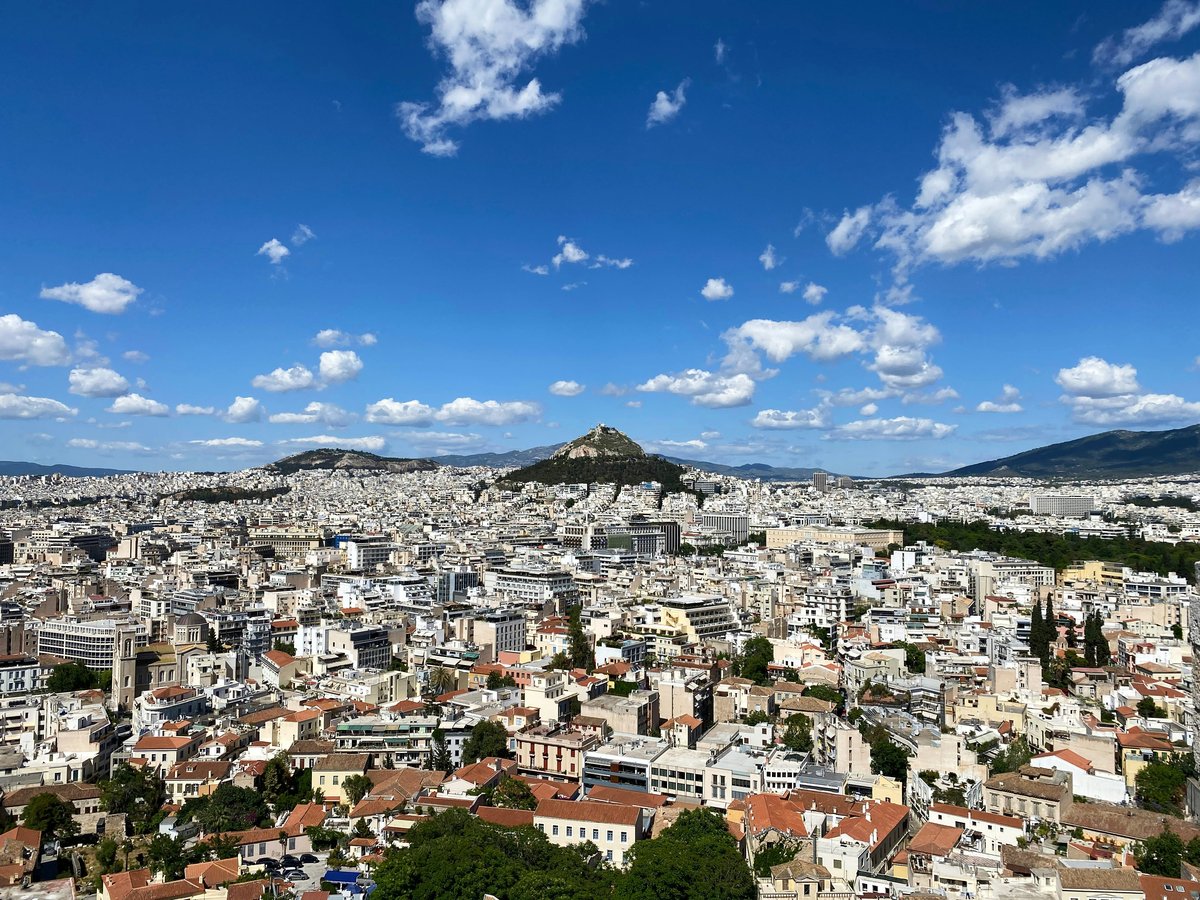
Is Athens safe?
Athens scores 7.2 out of 10 for solo-traveler safety (see the TTDI Solo-Safety Index). Violent crime against tourists is rare. The real risks are pickpocketing on Metro Line 1 near Monastiraki, taxi-meter scams at the airport, and the Omonia Square area after midnight. Dial 112 for emergencies or 1571 for English-speaking Tourist Police.
The risks that find solo travelers in Athens are not the ones Hollywood suggests. Two-person pickpocket teams work the green line (Piraeus to Kifissia) during the 8-9am crush, with one blocking the car doors while the other lifts phones from back pockets. The Syntagma station escalators are a second vector. At Eleftherios Venizelos Airport, taxi drivers sometimes quote €50-60 for a daytime ride to the center, where the fixed fare is €38. Plaka's pedestrian-strip restaurants charge €18-22 for a Greek salad that costs €6-8 two blocks uphill in Anafiotika, where the whitewashed houses smell like oregano drying in window boxes. Protests near the parliament building happen most weeks. They tend to be loud rather than violent, with police in riot gear forming cordons by 7pm. Keep 200 meters back and you'll catch the sharp sting of tear gas on the breeze without it reaching your eyes.
After dark, Athens splits into clear zones. Koukaki, the residential neighborhood south of the Acropolis, stays calm past midnight with narrow streets that smell like jasmine and grilled lamb from the tavernas along Veikou Street. Kolonaki feels safe at any hour, with police presence near the Evangelismos station. Pagrati, east of the Panathenaic Stadium (built in 328 BC and still hosting events), is where younger Athenians eat on weeknights, and solo diners fit right in at the small mezedopolia around Varnava Square. The area between the Omonia and Metaxourgeio stations is a different story. Drug activity and aggressive panhandling intensify after shops close at 9pm. Exarcheia, the self-described anarchist quarter north of the National Archaeological Museum, is not dangerous. That said, the mood shifts around 1am and broken glass on Navarinou Square tells you the evening had an edge.
Solo women in Athens report less street harassment than in Rome or Istanbul, though catcalling from older men along Ermou Street still happens during afternoon shopping hours. The Metro runs until 12:30am on weekdays, extending to 2:30am on Friday and Saturday nights. Lines 2 and 3 have better lighting and CCTV than the older green line. After service ends, the BEAT app (the local ride-hail) is more reliable than flagging cabs on the street, where a few drivers will try the broken-meter routine on solo passengers. Night buses cover main corridors, but the 500-series routes run through rougher patches near Sepolia. Taxis are metered by law at €0.74 per kilometer by day and €1.29 after midnight. If a driver refuses the meter, step out at the next traffic light.
Meeting other travelers on Day 1 is straightforward. City Circus hostel in Monastiraki runs communal dinners on Wednesdays and Saturdays for €12, and the rooftop fills with solo backpackers sharing Mythos beers by 8pm. Free walking tours leave from the parliament steps daily at 10am, putting 15-25 people together for a 3-hour loop. Single-occupancy rooms run 30-40% cheaper here than in Paris or Amsterdam. In Kypseli or Mets, expect €45-65 per night for a private room with air conditioning, which you will need from June through September when nighttime lows still sit around 28°C. To be fair, Athens might be the easiest European capital for solo dining. Meze plates run €3-6 each, and you order 3-4 to build your own meal. You might find the waiter brings an extra plate of grilled halloumi he forgot to charge you for.
For medical emergencies, SOS Doctors (dial 1016) make hotel visits for €60-80. Pharmacies marked with a green cross rotate 24-hour duty, and the schedule posts on each pharmacy's door in Greek and English. Tap water is drinkable and comes from the Mornos reservoir 200km northwest. Heat is the health risk most visitors to Athens underestimate. From July through August, midday temperatures reach 38-40°C, and the marble walkways around the Acropolis radiate enough stored warmth to burn through thin-soled sandals. Carry 2 liters of water on any hill climb. At the current rate of 1 USD to 0.87 EUR, a pharmacy visit for sunburn cream or rehydration salts costs €4-8.
Emergency number: 112
Official travel advisories
Normal precautions the most cautious of 3 government assessments
- Government of CanadaLevel 1Take normal security precautions View advisory
- UK Foreign OfficeLevel 1No FCDO travel restriction View advisory
- US State DepartmentLevel 1Exercise Normal Precautions View advisory
Verified from the issuing governments' own feeds.
Areas to avoid
- Omonia Square area after 11pm
- Between Omonia and Metaxourgeio stations after dark
- Exarcheia after 1am
- Vathis Square at night
- Pedion tou Areos park after dark
Common concerns
- Pickpocketing on Metro green line during rush hour
- Taxi drivers quoting flat fares instead of using the meter
- Tourist-trap pricing at Plaka restaurants
- Protest tear gas near Syntagma Square
- Summer heat exhaustion from July through August (38-40°C midday)
- Stray dogs near archaeological sites (noisy but not typically aggressive)
- Motorcycle traffic ignoring pedestrian crossings
Last verified by automated review (v1.7.2) on . What is automated review?