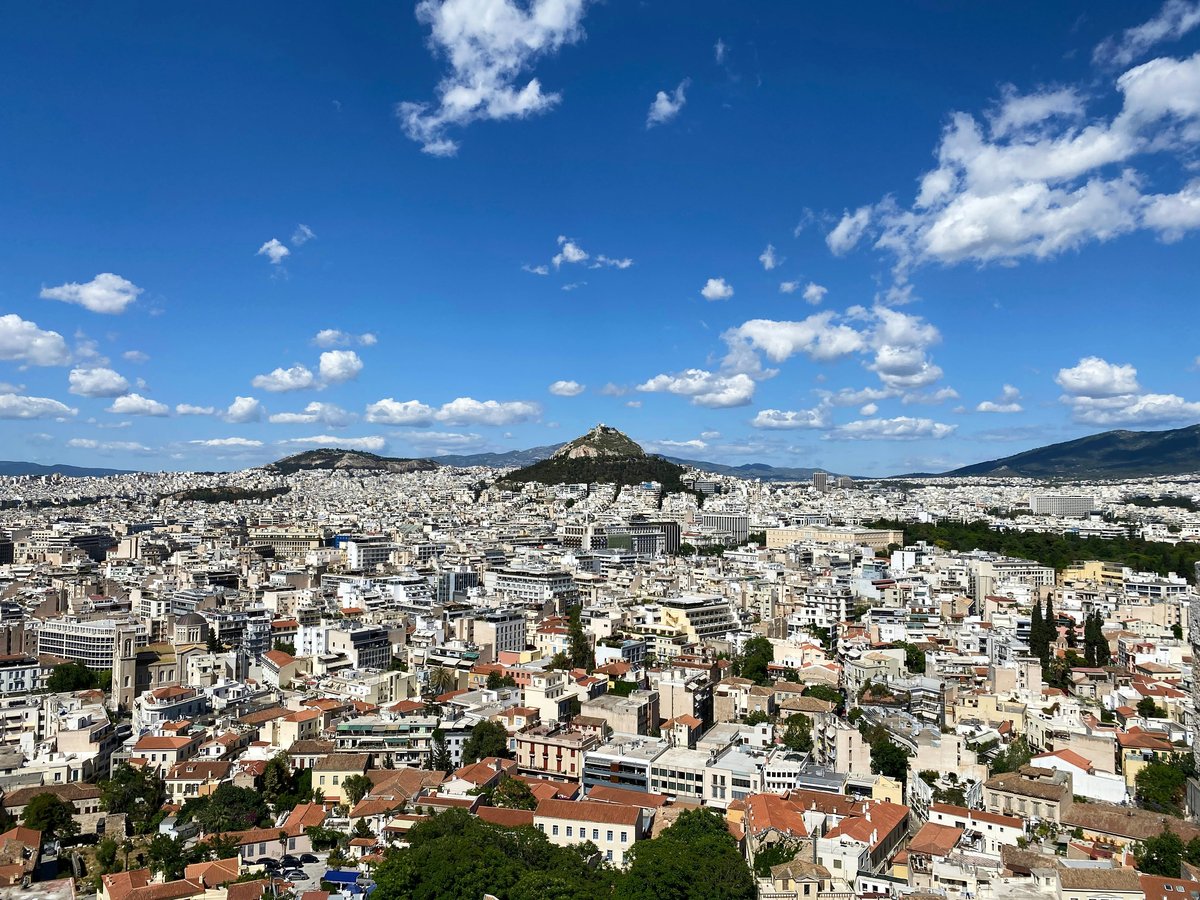
Athens With Kids: What Works
A verified family-friendliness score of 6.8 sounds middling, and the Acropolis in August with a three-year-old confirms the suspicion. But Athens hides genuinely great family days behind its hot marble and broken sidewalks, if you run the right schedule.
Published · Updated
1 A 6.8 Out of 10 Sounds Middling, and Athens Earns Every Decimal
The smell of grilled corn hits you first at Monastiraki Square, right around the moment your toddler goes boneless on the cobblestones. Athens earns its family-friendliness score of 6.8 out of 10 in exactly this kind of moment, where the city is simultaneously generous and punishing.
That 6.8 sits below cities like Copenhagen or Singapore that were designed for stroller geometry, but above destinations where the infrastructure actively fights you. Athens falls in the middle because it has real strengths and real weaknesses in close proximity. The National Garden offers 15.5 hectares of shade and a free playground, 400 meters from the exhaust-choked intersection at Syntagma Square. Tavernas in Koukaki welcome children past midnight, but the walk there from Acropolis Metro involves a sidewalk half-blocked by parked motorbikes.
The food is arguably the strongest single pillar in that 6.8. Street souvlaki runs €2.50-3 per pita, tiropita from a bakery costs €1.50-2, and every taverna serves plain rice and roasted potatoes that toddlers will eat without a fight. The National Archaeological Museum on 28is Oktovriou Street charges €6 for adults and nothing for visitors under 18. The practical infrastructure, the part that drags the score down, is the last 300 meters to any given destination. Cracked sidewalks, no curb cuts, motorbikes on pedestrian lanes.
What the 6.8 does not capture is that Athens responds dramatically to scheduling. Morning sights before 10 AM, a long midday retreat to green space, and a late taverna dinner around 7 PM is the rhythm that turns a difficult city into a cooperative one. Families who import a packed Northern European schedule get the worst version of Athens. Families who adopt the Greek pace get something closer to a 7.5 or 8. A mid-range family dinner in Koukaki for two adults and two children, with souvlaki, salad, and house wine, runs €35-50 and wraps up before the locals arrive at 9 PM.
That 6.8 sits below cities like Copenhagen or Singapore, but above destinations where the infrastructure actively fights you.
2 The Acropolis With a Three-Year-Old Is Precisely as Bad as You Think
You hear the whining before you see the Parthenon. Not from the children, initially, but from every parent in the ticket queue at 11 AM, all realizing the same thing. There is no shade between the Propylaea and the Erechtheion, roughly 200 meters of exposed Pentelic marble that reaches surface temperatures above 50°C by midday in July and August.
The Acropolis is a meltdown trap for anyone under six. The climb from Acropolis Metro station takes 15-20 minutes uphill on uneven stone. The path is not stroller-accessible past the first ramp. There are stretches with no guardrails that drop 50 meters to rock. The on-site water kiosk charges €3 a bottle and has minimal shade.
That said, skipping it entirely feels wrong, and it should. The Parthenon has stood for roughly 2,500 years. A four-year-old might not remember it, but the scale of the Propylaea genuinely impresses children old enough to grasp "very, very old."
The fix is operational. Buy the combined ticket online for €30, which covers the Acropolis and six other archaeological sites over 5 days. Arrive at 8 AM when the gates open from April through October. You get roughly 90 minutes before the heat and the tour-bus groups make the site unbearable. Use the south slope entrance near the Acropolis Museum, which is less steep than the main western approach from Monastiraki.
The Acropolis Museum is the real family move. Air-conditioned, €10 for adults, free for children under 5. The glass floor on the ground level shows the excavation directly beneath your feet and holds small children's attention in a way the outdoor ruins rarely manage. The ground-floor café serves proper food at close-to-normal prices. Budget 45 minutes on the hill, 90 in the museum. For families who want the Parthenon in photos without the climb, Filopappou Hill offers the view. Free entry, tree-lined paths, and a 10-minute walk south from the Acropolis Museum.
Budget 45 minutes on the hill, 90 in the museum.
3 The National Garden Is the Best Free Attraction in Athens for Under-Eights
The sound changes the moment you step through the wrought-iron gates on Vasilissis Amalias Avenue. Traffic noise from Syntagma Square drops to a muffle, replaced by pigeons and the low splash of a fountain your toddler will attempt to scale within 30 seconds.
The National Garden covers 15.5 hectares directly behind the Hellenic Parliament on Syntagma Square. Entry is free. It opens at sunrise and closes at sunset, which in June means roughly 6 AM to 9 PM. There is a playground near the Zappeion hall, a duck pond that two-year-olds find hypnotic, a small botanical museum, and a miniature zoo with goats and peacocks that has operated in some form since the 1920s.
For families with children under eight, this is the single most valuable space in Athens. Not the Acropolis, not the archaeological museums. The National Garden. The shaded paths stay cool even when Syntagma hits 36°C in July, because the tree canopy is dense enough to drop the temperature 5-7 degrees beneath the branches. Benches appear every 40-50 meters. The ground is flat, packed earth, stroller-friendly on every path except the narrow eastern trails.
The Zappeion, the neoclassical exhibition hall on the garden's south edge, hosts rotating shows, some on children's themes. The café beside the Zappeion has €3 fresh orange juice and €2 koulouri, the sesame bread rings sold everywhere in Athens but somehow better consumed under a plane tree while your child chases a pigeon across the gravel.
The runner-up for free green space is Stavros Niarchos Foundation Cultural Center in Kallithea, 4 kilometers south. SNFCC has a purpose-built playground, a wading channel, and 21 hectares of Renzo Piano-designed parkland. It requires a 25-minute ride on the 550 bus from Syntagma, or the free SNFCC shuttle. The National Garden is a 2-minute walk from Syntagma Metro, open daily, and currently the closest major green space to any hotel in the Syntagma district.
Not the Acropolis, not the archaeological museums. The National Garden.
4 Stavros Niarchos Foundation Cultural Center Solves the Problem Athens Had for Decades
Water. Shallow, running water in a long pebble-bottomed channel, and your child is shin-deep before you finish reading the depth sign. The channel at Stavros Niarchos Foundation Cultural Center runs about 8 centimeters deep and 100 meters along the south terrace. SNFCC opened in 2016 in the Kallithea district, roughly 4 kilometers south of the Acropolis, and it filled a gap Athens had carried since the National Garden was fenced off as a royal park in the 1830s. The city had no purpose-built, free, modern family destination.
SNFCC sits on 21 hectares of landscaped parkland designed by Renzo Piano Building Workshop. The Great Lawn slopes upward to the building's roof, which doubles as a public park with Saronic Gulf views on clear days. Entry to the grounds is free, every day of the year. The National Library of Greece occupies the east wing and has a children's section on the ground floor with picture books in Greek and English, plus free story sessions on Saturday mornings at 11 AM from September through June.
The playground is the draw for the under-five set. It is large, shaded by the building's canopy, and maintained to a standard that most central Athens playgrounds do not match. In July and August, when the Acropolis hill feels hostile and the Plaka streets radiate stored heat, SNFCC's grass and water feel like a different city. Families tend to arrive around 10 AM and stay 3-4 hours.
Getting there is the cost. The 550 bus from Syntagma takes 25 minutes. The free SNFCC shuttle departs Syntagma Square on a schedule posted at snfcc.org. The Faliro tram stop is a 12-minute walk from the grounds. None of these are quick with a loaded stroller and bags. But once you arrive, SNFCC delivers something the central Athens sites do not. Clean, free, well-stocked restrooms on every floor. With small children, that is not a minor convenience. The terrace café serves €3.50 coffee and lunch plates for €5-7.
5 Plaka's Cobblestones Will Snap Your Stroller Wheel. Base in Koukaki.
The clatter of a front-wheel stroller on Adrianou Street in Plaka is unmistakable. The wheels catch every 2-3 meters on the joins between irregular flagstones, and the front axle takes the punishment. Plaka is the most photographed neighborhood in Athens, and for couples it delivers. For families pushing a stroller, it is a 15-minute obstacle course to reach any restaurant.
The issue is not charm. Plaka has it. The neoclassical houses on Kydathineon Street date to the 1830s. The Anafiotika quarter, a cluster of whitewashed Cycladic-style houses built by masons from the island of Anafi in the 1840s, feels like stepping onto a Greek island without the ferry. But Plaka's streets are stepped, narrow, and have no curb ramps. Tavernas set their tables across the full width of pedestrian lanes, leaving passage gaps of 40-50 centimeters. A double stroller does not fit.
Koukaki, the neighborhood directly south of the Acropolis, offers a better base for families. The streets are wider, mostly paved, and flat enough for a stroller without constant lifting. Acropolis Metro station sits on its northern edge, with elevator access to the platform. Veikou Street and its side lanes have bakeries, small playgrounds, and calmer traffic than Plaka or Monastiraki. A two-bedroom apartment in Koukaki currently runs €90-140 per night on booking platforms, roughly €30-50 less than the equivalent in Plaka.
The third option is the Syntagma area, which puts you within 2 minutes of the National Garden and 5 minutes of the Metro interchange. Hotels near Syntagma Square tend to run €120-180 per night for a family room, and the neighborhood has pharmacies, a supermarket, and the Attica department store on Panepistimiou Street. What Syntagma lacks is character. It is a commercial district with efficient logistics.
Koukaki is a 4-minute walk from Acropolis Metro. Plaka is 6 minutes from Monastiraki Metro. Both stations sit on Line 2.
Plaka has charm. And no curb ramps.
6 Greek Food Might Be the Most Toddler-Friendly Cuisine in the Mediterranean
Oregano and lemon from a taverna grill on Falirou Street in Koukaki at 7 PM. That smell tells you something useful about Athens with small children. The food here is not a problem. It might be the single strongest factor in the city's 6.8 family-friendliness score.
Greek cuisine runs on a handful of ingredients that children under five tend to accept without negotiation. Plain grilled chicken souvlaki, €2.50-3 per stick, is unseasoned protein. Tiropita, the filo-and-feta cheese pie, costs €1.50-2 at any bakery and works as a portable, mostly mess-free meal. Plain rice and roasted potatoes appear as side dishes at every taverna in Plaka, Koukaki, and Psyrri. Greek yogurt with honey sits on every dessert menu for €3-4. Horiatiki, the village salad with thick-cut tomato, cucumber, and a feta slab, is a shareable table item that even fussy eaters can pick through.
The taverna culture helps. Athenian restaurants expect children. Not in a high-chair-at-every-table sense, but in the Mediterranean way where a child wandering between tables at 9 PM draws no disapproval. Most tavernas in Koukaki and Plaka have outdoor seating that lets kids move without the acoustic pressure of indoor dining. A family meal for two adults and two children at a mid-range Koukaki taverna, with souvlaki platters, salad, bread, and house wine, runs €35-50.
The timing catch matters. Athenian families eat dinner at 9-10 PM. At 7 PM, you will have the taverna largely to yourself, which with small children is the point. By 9:30, the noise rises.
Two specific spots on Monastiraki Square. Thanasis has served souvlaki pitas since 1964 and currently does a €3 wrap that children tend to finish. Bairaktaris, operating from the same square since 1879, has similar prices, more seating, and outdoor tables where kids can watch the foot traffic on Ermou Street without anyone minding.
7 The Three-Block Day Is the Only Schedule That Survives Small Children in Athens
Your child falls asleep in the stroller at 1:15 PM on the walk back from the Acropolis Museum to your apartment in Koukaki. This is the pivot point of every successful family day in Athens, and you need to have planned around it.
The itinerary that works with children under five in Athens has three blocks, not the continuous sightseeing march that functions in Amsterdam or London. Block one runs from 8 to 11 AM. One sight, one activity. The Acropolis at 8 AM opening, or the National Archaeological Museum at its 9 AM gate on 28is Oktovriou Street, or SNFCC if the morning is already above 30°C. Block two, from 11 AM to 3 PM, is retreat. Back to your apartment for lunch and a nap, or settle into the National Garden's playground for 2-3 hours with shade and a €2 koulouri from the Zappeion café. Block three, from 5 to 8 PM, is the evening walk. A stroll through Koukaki or along the Dionysiou Areopagitou pedestrian street below the south slope of the Acropolis, ending at a taverna around 7 PM.
This schedule works because Athens's geography cooperates. The historic center spans roughly 2 kilometers from Monastiraki to the National Garden. Most major sights sit within a 15-minute walk of each other. Line 2 of the Athens Metro connects Syntagma to Acropolis station in 2 minutes. You do not need a car. Taxis are only necessary to reach SNFCC in Kallithea or the southern coastal suburbs at Glyfada and Vouliagmeni.
What collapses is four sights in one day. The Acropolis plus the Acropolis Museum plus the Ancient Agora plus the National Archaeological Museum is a common first-day plan that falls apart by 1 PM in any month above 28°C. Two sights per day is the limit with children under five, and one of those should involve grass and running space.
The 6.8 family-friendliness score for Athens assumes this adjustment. A three-block day, two sights maximum, one green-space session, dinner at 7 PM. Line 1 of the Athens Metro currently runs until 12:30 AM on Fridays and Saturdays, and until 11:30 PM on other nights.
Last verified by automated review (v1.7.0_onboard-athens-flagship-2026-06-20) on . What is automated review?