Compare every Greece city in August →
Stay in Athens in August
111 hotels in the Trip.com pool for Athens, from US$15 a night.
Opens Trip.com on Fri 6 Aug to Sun 8 Aug 2027; change the dates there.
August in Athens is hot, and honestly so. Daytime temperatures average 33.3°C (92°F), and heat waves can shove the thermometer past 40°C (104°F) for 3 to 5 days running. The marble of the Acropolis stores that heat and radiates it back at you, and by noon the rock feels like standing inside a kiln. The saving grace is low humidity, around 45%, which makes the air feel drier and less suffocating than the same temperature in Southeast Asia. Still, between 11:00 AM and 5:00 PM, you'll likely find yourself retreating into air-conditioned museums or lingering over a second freddo espresso.
The other defining fact of August is Dekapentavgoustos, the Feast of the Assumption on August 15. This is Greece's biggest summer holiday, and Athenians treat it like a second Easter. Families leave for ancestral villages or the islands, and a noticeable number of restaurants, bakeries, and small shops in neighborhoods like Psyrri and Exarchia shutter for 1 to 2 weeks. You might walk streets that felt lively in June and find padlocked doors and hand-scrawled signs reading "See you in September."
That said, August has real draws if you plan around the heat. The Athens Epidaurus Festival fills the ancient Odeon of Herodes Atticus with opera, theater, and symphonic performances against the lit Acropolis. The Full Moon event in mid-August opens archaeological sites for free after dark. And because Athens functions more as a transit hub for island-bound travelers this month, hotel availability is better than you'd expect for peak season, even if the prices are still at their annual ceiling.
Why visit in August
- The Athens Epidaurus Festival runs through August with world-class performances at the 2nd-century Odeon of Herodes Atticus, often several shows per week
- Virtually no rain. Athens averages 16mm across maybe 3 days in August, so outdoor plans rarely get disrupted
- The August Full Moon event opens the Acropolis and other archaeological sites for free after sunset, typically drawing thousands under a warm night sky
- Hotel availability is often better than July despite peak pricing, since many travelers pass through Athens for 1-2 nights en route to the islands
- Sunset from the Temple of Poseidon at Cape Sounion, about 70 km south of central Athens, is at its most dramatic with late-summer light lingering past 8:30 PM
Worth knowing
- Heat waves are common and can push temperatures above 40°C (104°F) for multiple consecutive days. The Acropolis has temporarily closed to visitors during recent August heat events
- The week around August 15 empties the city. Neighborhood tavernas in Koukaki, Pangrati, and Exarchia may close entirely, leaving tourist-facing Plaka restaurants as your main options
- Peak-season pricing on flights, hotels, and island ferries. Central Athens hotel rates can run 50-80% above the annual average, and popular island ferry routes often double in price compared to shoulder months
- Wildfire smoke from fires in Attica or the Peloponnese can drift over Athens with little warning, reducing air quality for days
Best for
Think twice if
August in Athens typically brings dry, persistent heat. The average high sits at 33.3°C (92°F), though heat waves can push well past 40°C (104°F). Nights offer limited relief, with lows around 23.6°C (74°F). The air tends to feel less punishing than the numbers suggest, thanks to humidity averaging around 45%. Rain is unlikely, with roughly 16mm across perhaps 3 scattered days. The meltemi wind from the north occasionally cools things down, though in the Athens basin, hemmed in by Hymettus, Penteli, and Parnitha, the breeze doesn't always penetrate the city center. You'll notice the light is fierce and flat at midday, softening to a golden amber around 7:30 PM.
Seasonal caution
- Heat waves in August can push Athens above 40°C (104°F) for several consecutive days. The Greek national weather service (EMY) issues red alerts during these events, and exposed archaeological sites including the Acropolis may close temporarily when temperatures exceed safety thresholds.
- Wildfire smoke from fires in Attica or the Peloponnese can reduce air quality in Athens with little warning. In recent summers, fires near Penteli and Marathon sent visible haze over central Athens for days. Check air quality indexes daily if you have respiratory conditions.
- The UV index in Athens regularly reaches 10 to 11 in August, classified as extreme by the WHO. Unprotected skin on the Acropolis can burn in under 15 minutes at midday.
Year-round climate
Averages from the last 5 years.
| Month | Avg high (°C) | Avg low (°C) | Rainfall (mm) |
|---|---|---|---|
| Jan | 13 | 6 | 62 |
| Feb | 14 | 6 | 45 |
| Mar | 16 | 8 | 34 |
| Apr | 20 | 11 | 38 |
| May | 25 | 16 | 36 |
| Jun | 31 | 21 | 25 |
| Jul | 35 | 24 | 8 |
| Aug | 33 | 24 | 16 |
| Sep | 29 | 20 | 18 |
| Oct | 23 | 15 | 27 |
| Nov | 19 | 12 | 85 |
| Dec | 15 | 9 | 101 |
Holidays and festivals in August
Public holidays
- Assumption Day(Κοίμηση της Θεοτόκου)15 August 2027
Headline events
Athens Epidaurus Festival
Runs from early June through late August, with final performances closing out the month
Greece's premier performing arts festival, running since 1955, fills the ancient Odeon of Herodes Atticus beneath the Acropolis with opera, theater, dance, and symphonic concerts. The program also includes performances at the 4th-century BC Theater of Epidaurus, about 2 hours from Athens. August typically features several headline performances per week.
Best things to do in August
Evening performance at the Odeon of Herodes Atticus
cultureThe 2nd-century Roman theater seats about 5,000 beneath the lit Acropolis walls. Athens Epidaurus Festival performances start after sunset, around 9:00 PM, when the stone has cooled enough to sit comfortably. The acoustics carry unamplified voices to the back rows.
The festival's final August performances often feature headline acts, and the warm evening air makes the open-air setting feel ideal.Booking tipTickets go on sale weeks in advance through the festival's official site and sell out quickly for popular acts. Book as early as possible.
Full Moon visit to the Acropolis
cultureThe Ministry of Culture opens the Acropolis and select archaeological sites for free on the night of the August full moon. The Parthenon under moonlight, with the city glittering below, is a different experience from a daytime visit. Expect crowds at the entrance on Dionysiou Areopagitou by 8:00 PM.
The Full Moon event is specifically an August tradition, usually falling around the 15th, and is free of charge.Booking tipNo ticket needed, but arrive early. The queue at the Beulé Gate can stretch for 45 minutes by 9:00 PM.
Morning hike up Lycabettus Hill
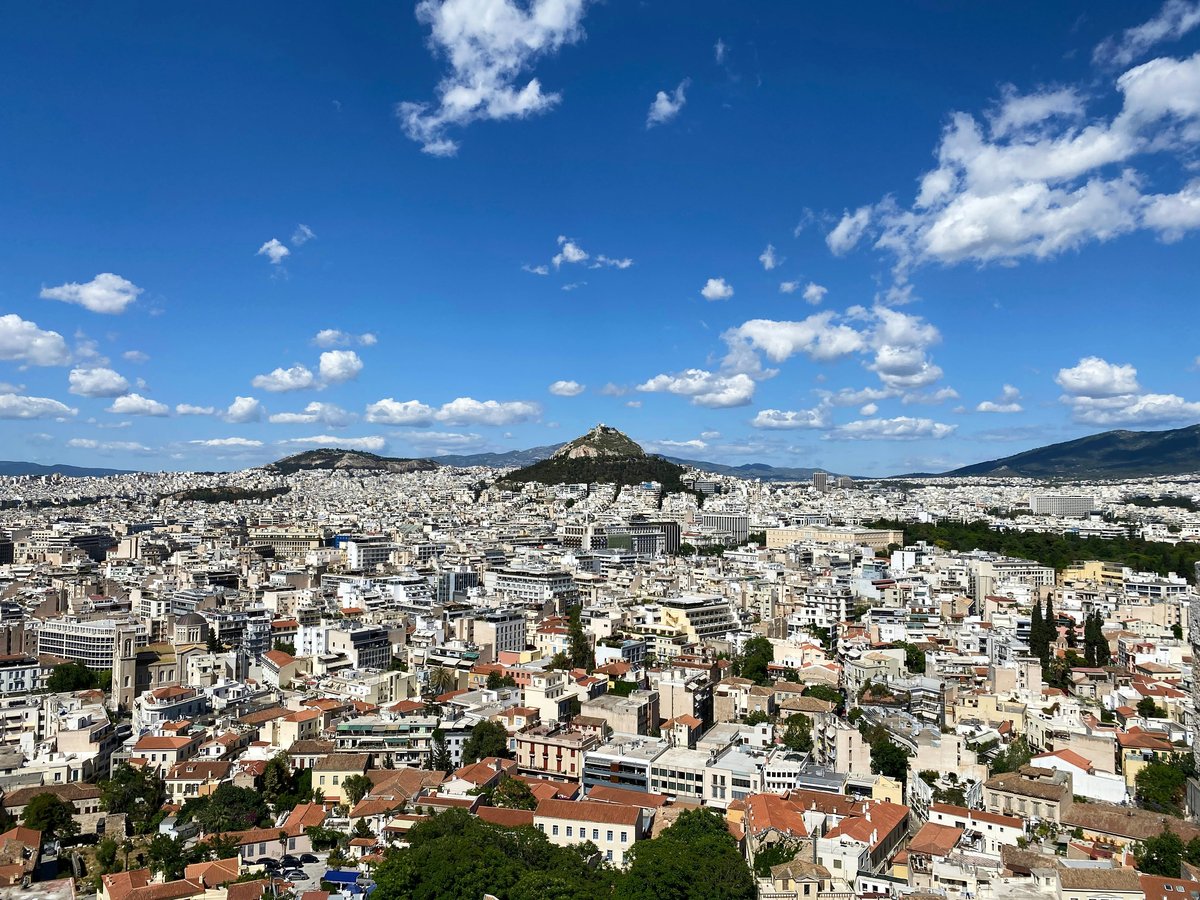
outdoorThe 277-meter limestone hill offers a 360-degree view of Athens, from the Acropolis to the Saronic Gulf. The path from Kolonaki takes about 30 minutes. Start by 7:00 AM before the heat builds, and you'll have the summit nearly to yourself. The whitewashed Chapel of St. George sits at the top.
August's cloudless skies mean visibility from the summit can reach Aegina island, roughly 30 km across the water. The early morning air is still cool enough to make the climb comfortable.Booking tipThe funicular runs from Aristippou Street in Kolonaki if you prefer to skip the hike.
Day trip to Aegina island
day_tripFerries from Piraeus reach Aegina in about 40 minutes. The island's Temple of Aphaia, a 5th-century BC Doric temple on a pine-covered hill, rivals anything on the mainland. The port town sells pistachios from Aegina's own groves, roasted and salted in paper bags. The water at Agia Marina beach on the east coast is shallow and warm.
August water temperatures in the Saronic Gulf reach 26-27°C, and the short ferry ride means you can swim and return the same evening.Booking tipHigh-speed ferries fill up on weekends. Weekday departures before 9:00 AM are less crowded.
Swim at Vouliagmeni Lake
outdoorA thermal lake fed by underground springs, sitting in a collapsed cave formation on the Athenian Riviera. The water stays around 24°C year-round, slightly warmer than the sea, and the mineral content gives it a silky texture. Pine trees and rock walls surround the shoreline. The small Garra rufa fish that live in the lake will nibble at your feet if you stand still.
The lake's shaded rock walls and constant temperature make it more comfortable than open beaches during August heat waves.Booking tipThe site has limited capacity. Arriving before 10:00 AM on weekdays avoids the midday crowd.
Explore the National Archaeological Museum
cultureThe largest archaeological museum in Greece holds over 11,000 exhibits spanning 5,000 years. The Mycenaean gold collection, including the Mask of Agamemnon, fills Room 4. The Antikythera mechanism, an ancient analog computer recovered from a 1st-century BC shipwreck, sits in Room 38. Air-conditioned halls make this a natural midday refuge.
August midday temperatures make outdoor sightseeing uncomfortable between 11:00 AM and 5:00 PM. The museum's collection warrants at least 3 hours and fills the heat gap perfectly.Sunset at Cape Sounion
outdoorThe Temple of Poseidon stands on a cliff 60 meters above the Aegean at the southern tip of Attica, about 70 km from central Athens. Lord Byron carved his name into one of the columns in 1810. The sunset drops directly into the sea from this vantage point.
August sunsets at Sounion last well past 8:30 PM, and the late-summer light turns the 5th-century BC marble columns a deep amber. The drive south along the coast road passes beaches where you can swim beforehand.Booking tipKTEL buses run from Pedion tou Areos in central Athens to Sounion. The last return bus leaves shortly after sunset, so check the schedule.
Evening stroll through Anafiotika
cultureA cluster of about 45 whitewashed houses clinging to the north slope of the Acropolis, built by 19th-century stonemasons from Anafi island. The narrow stepped paths, bougainvillea-draped walls, and cats sleeping on doorsteps feel more Cycladic than Athenian. The quarter is quiet and largely residential.
After 7:00 PM, the Acropolis casts shade over Anafiotika's alleys and the temperature drops noticeably. The contrast between the tourist bustle of Plaka below and the stillness here is sharpest in August, when the permanent residents have mostly left for the islands.What to eat in August
In season: fruit
Fresh figs (syka)
August is the peak of fig season in Attica. Street markets like the Varvakeios Agora sell dark-skinned Kalamata and green Smyrna varieties by the kilo. The flavor is entirely different from dried figs, with a honey-like sweetness and soft, seedy flesh.
Watermelon (karpouzi)
Sold from pickup trucks on roadsides and at every periptero kiosk, Greek watermelons in August are cold, dense, and almost aggressively sweet. Restaurants often serve thick slices as a free dessert after meals.
On menus now
Grilled octopus (htapodi)
Tavernas along the Mikrolimano harbor in Piraeus hang octopus to dry on lines before charring it over coals. The tentacles come out smoky and tender, served with a squeeze of lemon and a slick of olive oil. August's catch tends to be plentiful in the Saronic Gulf.
Spoon sweets (glyka tou koutaliou)
Preserved whole fruits in thick syrup, served on a tiny spoon alongside a glass of cold water. August brings sour cherry, grape, and green walnut varieties to kafeneia in Plaka and Anafiotika. The texture is somewhere between jam and candied fruit.
What to drink
Freddo espresso
Not a seasonal invention, but August in Athens makes this iced espresso feel essential. Baristas pull a double shot, froth it with ice, and serve it in a tall glass. You'll see Athenians nursing one for an hour at sidewalk cafes along Aiolou Street, waiting for the heat to break.
Regular events in August
August Full Moon EventFree
The Greek Ministry of Culture opens archaeological sites and museums for free on the night of the August full moon. In Athens, the Acropolis, the Roman Agora, and Kerameikos cemetery typically participate. Live music performances sometimes accompany the openings.
The night of the full moon, usually mid-AugustDekapentavgoustos (Assumption of the Virgin Mary)Free
Greece's most important summer holiday on August 15. Church services at the Athens Cathedral on Mitropoleos Square draw large crowds. Neighborhood panigiri (street festivals) with live music and food sometimes take place in the days surrounding the feast, though many are on the islands rather than in Athens.
August 15Moonlight Cinema screenings
Athens has several open-air cinemas (therina sinema) that screen films under the stars through August. Cine Thissio near the Acropolis and Cine Paris in Plaka are among the most atmospheric, with the Parthenon visible from the seats. Films screen in their original language with Greek subtitles.
Nightly throughout August, typically starting around 9:00 PMBest places this August
Acropolis and Parthenon
archaeological_siteVisit before 8:30 AM or after 6:00 PM to avoid both the crowds and the worst of the heat. The marble paths become dangerously hot and slippery underfoot at midday. The south slope offers partial shade from the Erechtheion in the late afternoon.
AcropolisNational Archaeological Museum
museumOver 11,000 exhibits across 8,000 square meters. The Mycenaean gold hall and the Antikythera mechanism are the standout draws. Air-conditioned and uncrowded compared to the Acropolis, even in August.
ExarchiaVarvakeios Agora (Central Market)
marketAthens' central food market on Athinas Street. The meat hall is pungent and theatrical, with butchers calling out to passersby. The fish side is quieter. The surrounding streets sell spices, olives, and dried herbs. August figs and stone fruit pile high on the fruit stalls outside.
MonastirakiStavros Niarchos Foundation Cultural Center
cultural_centerRenzo Piano's 2016 complex in Kallithea houses the Greek National Library and the National Opera. The rooftop park has a free public swimming pool that opens in summer, plus views across to Piraeus. The grounds stay green and irrigated even in August, a rarity in Athens.
KallitheaTemple of Poseidon at Cape Sounion
archaeological_siteA 5th-century BC temple on a cliff 60 meters above the sea at the southern tip of Attica. 15 of the original 34 Doric columns still stand. The site closes at sunset, so time your visit accordingly.
Sounion (Attica)Vouliagmeni Lake
natural_siteA thermal brackish-water lake in a collapsed cave on the Athenian Riviera. The mineral-rich water stays around 24°C year-round. Pine and eucalyptus trees shade the surrounding deck areas.
VouliagmeniCine Thissio
entertainmentOne of Athens' oldest open-air cinemas, operating since 1935. Screens face the Acropolis, which looms above the seats. Films screen nightly through August in original language with Greek subtitles.
ThissioAnafiotika
neighborhoodA tiny Cycladic-style neighborhood of about 45 whitewashed houses on the north slope of the Acropolis rock. Built in the 1840s-1860s by workers from Anafi island who replicated their home architecture. Quiet, shaded, and largely overlooked by visitors heading up to the Parthenon.
Plaka
Your packing checklist
Tick items off as you pack. Your progress saves in this browser.
All packed — have a great trip.
Insider tips
The Acropolis ticket is valid for 5 days and covers 7 sites, including the Ancient Agora, Kerameikos, and the Temple of Olympian Zeus. Most visitors buy it at the Acropolis entrance and wait in the longest queue. Buy it instead at the Kerameikos entrance on Ermou Street, where there's rarely a line, then walk to the Acropolis with your ticket in hand.
Athens tap water comes from the Mornos reservoir and is clean and drinkable. You'll see locals filling bottles at public fountains throughout the center. Skip bottled water.
The metro stations at Syntagma and Acropolis double as free archaeological museums. Glass cases display artifacts found during tunnel excavation, including 5th-century BC pottery and Roman-era aqueduct sections. Worth 10 minutes while you wait for a train.
Greek pharmacies (farmakeia) operate on a rotating overnight schedule. A green cross sign outside each pharmacy indicates whether it's currently on duty. For sunburn treatment or heat-related supplies after hours, check the posted rotation list on any pharmacy door.
Restaurants that post photos of their food outside and have English-only menus clustered along Adrianou Street in Plaka tend to be tourist-priced. Walk 2 blocks uphill into Anafiotika or downhill into Psyrri for places where locals eat.
The coast tram from Syntagma runs south to Glyfada and the Athenian Riviera beaches. The ride takes about 50 minutes and passes through Paleo Faliro and Alimos. It's a cheap, air-conditioned way to reach the water without renting a car.
Avoid these mistakes
- Attempting the Acropolis climb between noon and 4:00 PM. The exposed marble reflects heat, there is no shade on the main path, and surface temperatures can exceed the air temperature by 10-15°C. The site has closed entirely during recent heat waves when air temperatures passed 40°C.
- Assuming all restaurants and shops are open around August 15. The Dekapentavgoustos holiday triggers 1-2 week closures across residential neighborhoods. Check with your hotel or look for handwritten signs on doors before walking across the city to a specific taverna.
- Not booking Epidaurus Festival tickets in advance. Popular performances at the Odeon of Herodes Atticus sell out weeks ahead. The festival website releases tickets on a rolling schedule, so check early.
- Packing only sandals. The Acropolis marble is polished smooth by millions of visitors and becomes slick in the heat. Rubber-soled closed-toe shoes prevent slips on the ancient stone paths.
- Underestimating the August sun. The UV index regularly reaches 10-11, classified as extreme. Even 20 minutes of unprotected exposure on the Acropolis at midday can cause visible sunburn, particularly on shoulders and the tops of feet.
Practical tips for August
Book accommodation and island ferry tickets at least 6-8 weeks before your August arrival. The week of August 15 sees the heaviest domestic travel, and popular Cyclades routes sell out. Structure your days around the heat. Visit outdoor sites before 10:00 AM or after 6:00 PM, and use the midday hours for air-conditioned museums, long lunches, or a siesta. Carry at least 1 liter of water when walking outdoors. The Athens metro is air-conditioned and connects Piraeus port, the city center (Syntagma, Monastiraki), and the airport on a single network. If you're catching an early ferry from Piraeus, the metro starts running at 5:30 AM. Check the EMY weather service site for heat-wave warnings, as the Acropolis and other exposed sites may adjust hours or close temporarily when temperatures exceed safety limits. Restaurants in Athens rarely serve dinner before 8:00 PM in August, and locals typically eat between 9:30 and 11:00 PM. Adjust your meal timing accordingly, or you'll find yourself eating alone at 7:00 PM in an otherwise empty dining room.
FAQ
Is August a good time to visit Athens?
August is one of the least comfortable months for sightseeing in Athens, with average highs of 33.3°C and heat waves that can push past 40°C. The city partly empties around the August 15 holiday, and prices are at their peak. That said, the Athens Epidaurus Festival, the Full Moon event, and easy ferry access to the Saronic islands give August real appeal if you plan around the midday heat.
How hot does Athens get in August?
The average high is 33.3°C (92°F), but heat waves can push temperatures above 40°C (104°F) for 3-5 consecutive days. Nighttime lows hover around 23.6°C (74°F), so evenings are warm but manageable. Humidity around 45% keeps the air drier than coastal cities at similar latitudes.
What is the Full Moon event in Athens?
Each August, the Greek Ministry of Culture opens the Acropolis and other archaeological sites for free on the night of the full moon. The event typically falls around mid-August. Visitors can walk among the Parthenon columns under moonlight, often accompanied by live music. Expect long queues at the entrance from around 8:00 PM.
Are restaurants open in Athens during August?
Many locally oriented restaurants, bakeries, and shops in residential neighborhoods close for 1-2 weeks around the August 15 holiday. Tourist-facing areas like Plaka, Monastiraki, and Thissio stay open. Hotel restaurants and spots near major attractions operate normally. By late August, most places reopen.
Can you swim near Athens in August?
The Athenian Riviera stretches south from Paleo Faliro to Vouliagmeni, with organized beaches accessible by tram or bus. Vouliagmeni Lake offers thermal spring swimming in a sheltered cove. For island beaches, Aegina is a 40-minute ferry ride from Piraeus. Sea temperatures reach 26-27°C in August.
Is the Acropolis open during August heat waves?
The Acropolis has temporarily closed during extreme heat events in recent summers when temperatures exceeded safety thresholds. The Greek culture ministry announces closures through the EMY weather service and local media. Morning hours before 10:00 AM and evening hours after 6:00 PM are the safest windows for a visit during hot spells.
Things to Do in Athens in August
 Free cancellation
 Best of Athens Half Day Private Tour
Day trip: free cancellation.
via Viator Free cancellation
 All Day Cruise -3 Islands to Agistri,Moni, Aegina with lunch and drinks included
Day trip: 10 hours, free cancellation.
via Viator Free cancellation
 Cape Sounion and Temple of Poseidon Half-Day Small-Group Tour from Athens
Day trip: free cancellation.
via Viator Free cancellation
 Athens Full Day Private Tour
Day trip: 8 hours, free cancellation.
via Viator Free cancellation
 Athens All Included: Acropolis and Museum Guided Tour with Ticket
Day trip: 3 hours, free cancellation.
via Viator Free cancellation
 Athens cruise: Agistri, Moni/Metopi, Aegina with lunch & drinks
Day trip: 10 hours, free cancellation.
via ViatorFind a flight to Athens
Live fares to Athens appear here once cookies are accepted.
Last verified by automated review (v1.7.2) on . What is automated review?