Compare every Spain city in January →
Stay in Seville in January
98 hotels in the Trip.com pool for Seville, from US$16 a night.
Opens Trip.com on Fri 1 Jan to Sun 3 Jan 2027; change the dates there.
January in Seville belongs to the sevillanos. The Christmas crowds have gone home, the summer tour buses are months away, and you'll find the city in a rare state of calm. Daytime temperatures hover around 16°C (61°F), dropping to about 7°C (45°F) after dark. That's cool enough for a proper jacket but warm enough to sit outside at midday with a copa de manzanilla in the Plaza de San Francisco. The bitter orange trees lining the streets of Santa Cruz and Triana are heavy with fruit through January, filling whole blocks with a sharp, citrus-peel smell that's become the unofficial scent of Seville in winter.
The month starts with a bang, though. Cabalgata de Reyes Magos on the evening of January 5th is one of the largest Three Kings parades in Spain, with elaborate floats rolling from the Parque de María Luisa through the historic center. Tens of thousands of sevillanos line the route, and children scramble for the sweets tossed from the floats. By January 7th, the holiday energy fades and the city settles into its quietest stretch of the year. Expect about 6 rainy days through the month, typically brief afternoon showers rather than all-day soakings, and humidity sits around 78%. Some restaurants in tourist-heavy areas near the Catedral de Sevilla might keep shorter hours or close for annual holidays in the first two weeks.
To be fair, this is not Seville at its most theatrical. You won't see the cofradías of Semana Santa or hear the casetas of Feria de Abril. But January offers something those months cannot. You can walk into the Real Alcázar at 10 a.m. on a Tuesday and have the Patio de las Doncellas nearly to yourself, the morning light catching the muqarnas ceilings with nobody's selfie stick in your peripheral vision. If your idea of a good trip involves fewer crowds, lower prices, and a city moving at its own unhurried rhythm, January in Seville is worth the cooler evenings.
Why visit in January
- Hotel rates in the Barrio de Santa Cruz drop 40-50% compared to April's Semana Santa peak, and 3-star hotels near the Alameda de Hércules can run under 60 EUR per night
- The Real Alcázar, Catedral de Sevilla, and Casa de Pilatos have short or no queues. Timed-entry tickets that sell out weeks ahead in spring are available same-day in January
- Daytime temperatures around 16°C (61°F) make walking the 4 km loop from Plaza de España through Parque de María Luisa to Triana bridge comfortable without the brutal 38°C summer heat
- Bitter oranges ripen on the 40,000-odd trees lining the city's streets through January, and seasonal Andalusian winter dishes like espinacas con garbanzos appear on nearly every tapas menu in Triana
- Cabalgata de Reyes Magos on January 5th is one of Spain's largest Three Kings parades. It's free, it's loud, and it's a side of Seville most foreign visitors never see
Worth knowing
- Evening temperatures fall to 7°C (45°F) or lower, which can feel raw after a mild afternoon. Outdoor terraza dining after 8 p.m. requires real layers, and some rooftop bars in El Arenal close for the season
- About 6 days of rain and 66mm of precipitation through the month. Showers tend to be short, but a grey, damp day in Seville feels genuinely dreary without indoor backup plans
- Daylight runs from roughly 8:00 a.m. to 6:15 p.m., cutting golden-hour photography and late-afternoon sightseeing shorter than the 9:45 p.m. summer sunsets
- Some family-run restaurants and smaller shops take their annual vacation (cierre por vacaciones) in the first two weeks of January, particularly in residential neighborhoods like San Lorenzo and Macarena
Best for
Think twice if
Seville's January is the coolest month of the year, though still mild by northern European standards. Mornings tend to start cool and sometimes foggy along the Guadalquivir, burning off by 11 a.m. to reveal blue sky. Afternoons can feel surprisingly pleasant in the sun, warm enough for a single layer, but the temperature drops sharply once the sun dips behind the buildings of Triana around 5:30 p.m. Rain arrives in short, sometimes intense bursts rather than all-day drizzle. You might get 3-4 dry days in a row, then two wet ones back to back. The 78% average humidity makes the cooler mornings feel a bit damp, though nothing like the oppressive summer mugginess.
Year-round climate
Averages from the last 5 years.
| Month | Avg high (°C) | Avg low (°C) | Rainfall (mm) |
|---|---|---|---|
| Jan | 16 | 7 | 66 |
| Feb | 19 | 9 | 40 |
| Mar | 20 | 10 | 129 |
| Apr | 24 | 13 | 40 |
| May | 29 | 16 | 18 |
| Jun | 33 | 20 | 16 |
| Jul | 38 | 22 | 0 |
| Aug | 37 | 23 | 3 |
| Sep | 31 | 19 | 34 |
| Oct | 27 | 17 | 111 |
| Nov | 20 | 11 | 52 |
| Dec | 17 | 8 | 92 |
Holidays and festivals in January
Public holidays
- New Year's Day(Año Nuevo)1 January 2027
- Epiphany(Día de Reyes / Epifanía del Señor)6 January 2027
Headline events
Cabalgata de Reyes Magos
January 5 (evening)
Seville's Three Kings parade is one of the largest in Spain. Elaborate floats, marching bands, and performers travel a 4 km route from Parque de María Luisa through the historic center to Plaza de San Francisco, tossing sweets to the crowds. The route fills with families hours before the 5 p.m. start time, and the atmosphere feels closer to Carnival than a solemn procession. It's the emotional peak of the Spanish Christmas season.
Best things to do in January
Visit the Real Alcázar without the crowds
cultureThe Alcázar receives over 2 million visitors annually, and in April the timed-entry slots sell out weeks ahead. In January, you can often walk up and buy a ticket on the spot. The Patio de las Doncellas, the Salón de Embajadores, and the gardens all benefit from fewer bodies. The low winter sun casts long shadows through the horseshoe arches that you won't see in summer's overhead light.
January visitor numbers are a fraction of spring's. Same-day tickets are available, and the gardens feel contemplative rather than congested.Booking tipMorning slots before 11 a.m. are still quieter than afternoons, even in low season. Buy online the night before to skip the ticket window.
Flamenco at an intimate tablao
cultureSeville is the spiritual home of flamenco, and January's smaller audiences bring a different energy to the tablaos. Casa de la Memoria in Santa Cruz seats about 100 people in a converted 15th-century courtyard. The performers are close enough that you can hear the dancer's breathing between footwork passages. The sound of palmas and the smell of old stone fill that small room in a way a 500-seat theatre cannot replicate.
Tourist season is over, so performances feel more local. Tickets are easier to get, and some venues run discounted winter prices.Booking tipBook 2-3 days ahead for weekend evening shows. Weeknight performances often have walk-up availability.
Walk the Cabalgata de Reyes Magos route
festivalThe Three Kings parade on January 5 draws tens of thousands of sevillanos to the streets. The floats are elaborate, the energy is festive, and children line the route holding bags open for thrown sweets. It starts near Parque de María Luisa and winds through the center to Plaza de San Francisco. Arrive by 3 p.m. to secure a spot along the barriers on Avenida de la Constitución.
January 5 only. This is Spain's equivalent of Christmas morning, and Seville's version is one of the country's largest and most theatrical.Booking tipNo tickets needed. Free and open to all. Wear warm layers for the evening start time.
Explore the Museo de Bellas Artes
cultureSpain's second-largest fine art museum after the Prado, housed in the 17th-century Convento de la Merced in the Museo neighborhood north of El Arenal. The Murillo and Zurbarán collections are world-class. In January, the echoing galleries are often nearly empty. You can stand alone in front of Murillo's Inmaculada Concepción for as long as you like.
Minimal crowds, comfortable indoor activity for rainy January afternoons, and free entry for EU citizens year-round.Booking tipFree for EU residents. Non-EU visitors pay 1.50 EUR. Closed Mondays.
Tapas crawl through Triana
foodCross the Puente de Isabel II into Triana and work your way down Calle Betis and into the side streets around Calle San Jacinto. Bar-hopping for tapas is a year-round activity, but January's cooler temperatures make walking between bars more comfortable than summer's 38°C trudge. Try the cazón en adobo (marinated dogfish) and papas aliñás (dressed potatoes) that are Triana staples. The smell of frying fish drifts from doorways along Calle Pureza.
Cooler walking temperatures, no waiting for tables at popular spots, and winter dishes like espinacas con garbanzos appear on menus.Booking tipNo reservations needed for tapas bars. Start around 1:30 p.m. for lunch or 8:30 p.m. for dinner to match local timing.
Day trip to Córdoba
excursionThe Mezquita-Catedral in Córdoba sits 45 minutes from Seville by AVE high-speed train. January means near-empty arches inside the Mezquita's hypostyle hall, where the forest of red-and-white double arches stretches in every direction. The winter light through the building's doors creates long streaks across the marble floor. Tickets from Seville's Santa Justa station run about 12-20 EUR each way on Renfe.
The Mezquita receives a fraction of its spring and summer visitors. Córdoba's January highs are similar to Seville's 16°C, making the walk through the Judería comfortable.Booking tipBook the AVE train 2-3 weeks ahead for the cheapest fares. Morning departures around 8:30 a.m. give a full day.
Climb the Giralda tower at sunset
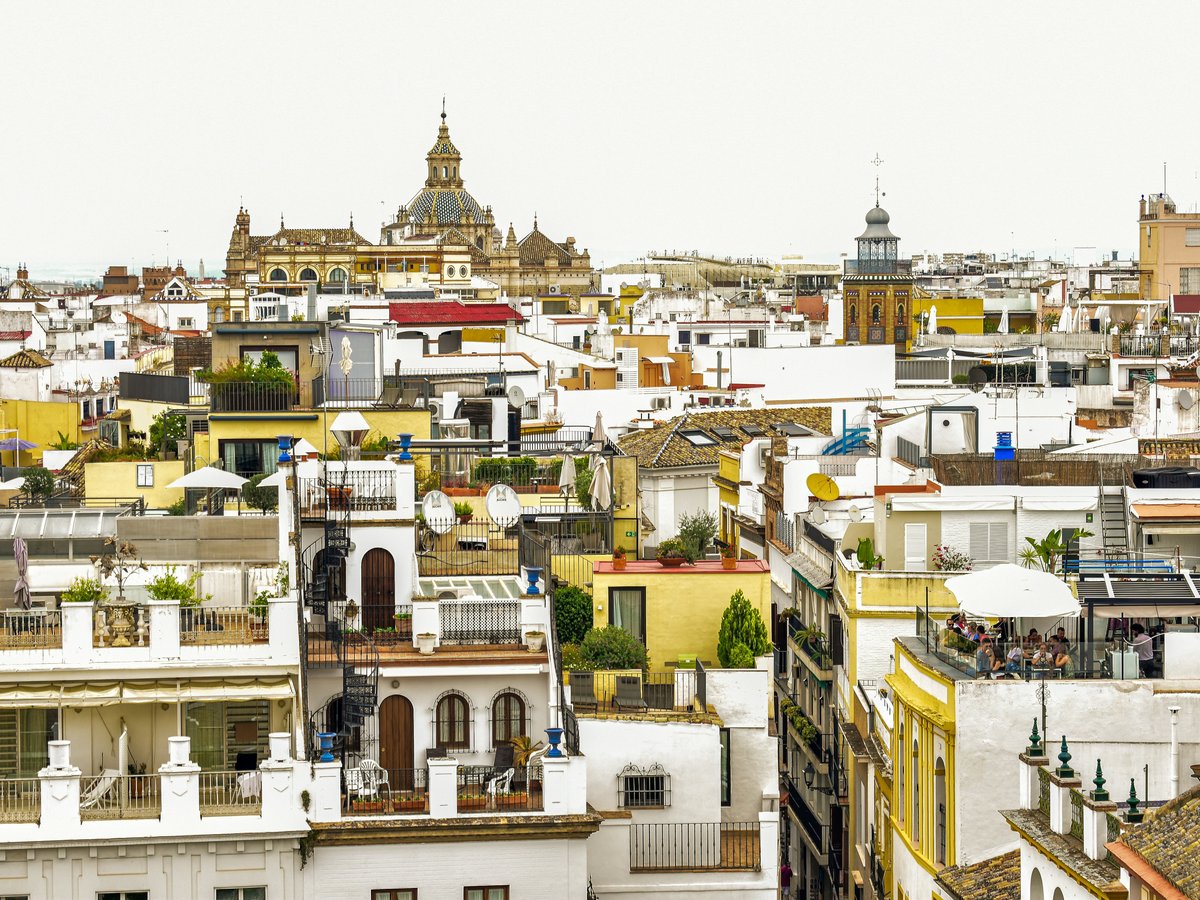
sightseeingThe 104-meter bell tower of the Catedral de Sevilla has 35 ramps (not steps) spiraling to the top. January sunset hits around 6:15 p.m., and the views from the top catch the last warm light across the rooftops of Santa Cruz and the Guadalquivir river. In summer you'd need to time your visit for 9:30 p.m. to see sunset. In January, a late-afternoon entry puts you up top for the golden hour.
The early 6:15 p.m. sunset lines up with afternoon visiting hours, so you can catch golden-hour views without a late-night visit.Booking tipEntry is included with the Catedral ticket (12 EUR). Buy online to avoid the ground-floor queue.
Browse the Mercado de Triana
foodThe covered market on the Triana side of the Puente de Isabel II sits on the site of the former Castillo de San Jorge (the Inquisition's headquarters, and there's a small free museum in the basement about it). January mornings bring locals shopping for seasonal produce, salt cod, and olives. The stalls selling fried fish and cold beer make for a good mid-morning stop. The scent of jamón ibérico and dried herbs hits you at the entrance.
Winter citrus from the Guadalquivir valley is at its peak. The market is lively but not tourist-packed in January.Booking tipOpen mornings through early afternoon. Go before noon on weekdays for the quietest experience.
What to eat in January
In season: fruit
Naranjas amargas (bitter oranges)
January is harvest month for the 40,000-odd bitter orange trees lining Seville's streets. The fruit is too sour to eat raw, but it goes into marmalade (Seville is the origin of British-style orange marmalade), liqueurs, and the local mermelada de naranja amarga. The smell of citrus peel hangs over whole neighborhoods in Santa Cruz and Macarena during the January harvest.
On menus now
Espinacas con garbanzos
Seville's signature winter tapa. Slow-cooked spinach and chickpeas spiced with cumin and a touch of vinegar, served warm in a small clay cazuela. You'll find versions at nearly every tapas bar in Triana and Santa Cruz from October through March, but January is peak season. The dish likely traces back to the Moorish kitchens that shaped so much of Andalusian cooking.
Puchero andaluz
A hearty Andalusian stew of chickpeas, pork belly, morcilla (blood sausage), chorizo, and root vegetables, served in two courses. The broth comes first with thin noodles, then the meat and vegetables on a separate plate. It's cold-weather comfort food that appears on set-lunch menus across the city from November through February, typically priced at 10-14 EUR for the full menú del día.
Festival food
Roscón de Reyes
A ring-shaped brioche studded with candied fruit, filled with whipped cream or pastry cream, eaten around January 6 for Three Kings Day. Every panadería in Seville sells them, and the better ones hide a small figurine inside. Confitería La Campana on Calle Sierpes has been making them for over 130 years. They disappear from bakery cases by mid-January.
Mantecados and polvorones
Crumbly, lard-based shortbread cookies dusted with powdered sugar, originally from the nearby town of Estepa (about 110 km east of Seville). Production peaks for Christmas, but January stocks linger in every supermarket and confitería. The texture is almost sandy, falling apart on your tongue. Almond polvorones are the classic, but cinnamon and lemon versions show up too.
Regular events in January
Día de Reyes (Three Kings Day)Free
January 6 is a national public holiday in Spain. Families exchange gifts in the morning (the main gift-giving day of Spanish Christmas, more significant than December 25 for many families). Roscón de Reyes is eaten at breakfast. Most shops, museums, and restaurants close for the day, though some reopen in the afternoon.
January 6Rebajas (winter sales season)Free
Spanish law traditionally sets the winter sales starting date in early January. Shops along Calle Sierpes, Calle Tetuán, and the Nervión Plaza shopping center in the Nervión neighborhood drop prices 30-70% on winter stock. The first week tends to have the best selection, the last weeks of January the deepest discounts.
Early January through late FebruaryFlamenco performances at Museo del Baile Flamenco
Cristina Hoyos's museum and performance space in Santa Cruz runs nightly shows year-round, but January's programming sometimes features younger, emerging artists in a more experimental format. The building itself is a restored 18th-century house with a central courtyard stage.
Nightly, year-roundBest places this January
Parque de María Luisa
parkSeville's largest park is green and pleasant in January, when the midday temperatures around 16°C make a long walk comfortable rather than punishing. The 34-hectare park holds the Plaza de España, the Museo Arqueológico, and tree-lined paths along old carriage roads. Morning fog sometimes hangs over the duck ponds, lifting by 10 a.m. to reveal sharp winter light on the tiled benches.
Parque de María LuisaBarrio de Santa Cruz
neighborhoodThe former Jewish quarter's narrow alleys and whitewashed walls feel almost private in January. Orange trees hang low over Calle Agua and Plaza de Santa Cruz. Without summer's tour groups filling the passages, you can hear the sound of your own footsteps on the cobblestones and the occasional guitar from an open window.
Santa CruzMetropol Parasol (Las Setas)
landmarkThe wooden waffle-grid structure in Plaza de la Encarnación looks its most dramatic under grey January skies, when the pale timber contrasts with dark clouds. The rooftop walkway (3 EUR entry) gives a 360-degree view of the city. On clear January afternoons, you can see all the way to the Sierra Norte foothills from the top level.
EncarnaciónAlameda de Hércules
plazaSeville's oldest public garden, now the center of the city's bar and cafe scene. In January, the outdoor terraces are quieter, but the bars along the east side still pull a local crowd on weekend evenings. The 2 Roman columns at the south end (reportedly the oldest public monuments in Europe still standing in their original location) look good in low-angle winter light.
AlamedaIglesia de San Luis de los Franceses
churchA Baroque church on Calle San Luis in the Macarena neighborhood, often overlooked because it's off the tourist circuit. The interior is one of the most ornate in Seville, with gilded columns and a painted dome. January's thin visitor numbers mean you might have the place to yourself. Free entry.
MacarenaCasa de Pilatos
palaceA 15th-century Mudejar palace in the San Bartolomé area that draws a fraction of the Alcázar's visitors even in peak season. In January it's nearly deserted. The tilework rivals the Alcázar's, the courtyard garden is quiet enough to hear the fountain, and the 8 EUR entry fee covers both floors.
San BartoloméCalle Betis, Triana
streetThe riverside promenade on the Triana bank of the Guadalquivir faces east, catching the full morning sun. On a clear January day around 11 a.m., the warmth off the water and the views of the Torre del Oro and the Giralda across the river make this one of the most pleasant walks in the city. Several of Triana's best tapas bars line the street.
Triana
Your packing checklist
Tick items off as you pack. Your progress saves in this browser.
All packed — have a great trip.
Insider tips
The Alcázar is free for Seville residents on Monday afternoons, which means the paying-visitor sections are emptier then. Aim for Tuesday or Wednesday mornings for the quietest experience overall.
Tapas bars in Triana along Calle San Jacinto and Calle Castilla serve locals year-round and keep January hours more reliably than the tourist-facing spots near the Catedral. Look for the places with handwritten menu boards and plastic-topped tables.
If you're in Seville for Reyes on January 6, buy your Roscón de Reyes the day before. The good panaderías sell out by mid-morning on the 6th, and the supermarket versions are noticeably drier.
The free basement museum under the Mercado de Triana covers the Castillo de San Jorge and the Inquisition in Seville. Most tourists walk right past the entrance next to the market's south door. It takes about 30 minutes and gives weight to the neighborhood's history.
January's winter rebajas sales make Calle Sierpes and Calle Tetuán worth walking even if you're not a shopper. Spanish brands like Zara, Mango, and Massimo Dutti discount 50-70% on winter lines by mid-January, often cheaper than outlet prices.
Avoid these mistakes
- Packing for summer because it's southern Spain. January nights at 7°C (45°F) surprise visitors who expect Mediterranean warmth year-round. Shorts and a t-shirt won't work after 5 p.m.
- Planning a full itinerary for January 6 (Día de Reyes). It's a national holiday and most of Seville shuts down. Museums, shops, and many restaurants close. Plan it as a rest day or stick to open-air sightseeing in Parque de María Luisa.
- Eating dinner at 7 p.m. Sevillanos eat late year-round. Most kitchens don't open for dinner until 8:30 or 9 p.m., even in January. Showing up at 7 means empty dining rooms and, in some cases, a locked door.
- Skipping Triana because it's 'across the river.' The walk from the Catedral to the Mercado de Triana takes 10 minutes over the Puente de Isabel II. Triana has better tapas, lower prices, and fewer tourists than Santa Cruz in January.
Practical tips for January
Book accommodation in the Barrio de Santa Cruz or Alameda de Hércules for walking access to most sights. January rates are low enough that you can often upgrade to a boutique hotel for what you'd pay for a hostel in April. The Alcázar, Catedral, and Casa de Pilatos all sell timed-entry tickets online, and while January rarely sells out, buying ahead saves 10-15 minutes in line. Restaurants in tourist zones may close for 1-2 weeks in early January for annual holidays. Check Google Maps hours or call ahead, especially in the first week after Reyes. The Seville metro line runs from Montequinto to Ciudad Expo but doesn't serve the historic center. Within the casco antiguo, everything is walkable. Taxis are metered and inexpensive by European standards. A ride from Santa Justa train station to Santa Cruz runs about 8-10 EUR. Tipping in tapas bars is not expected, though rounding up or leaving small change is appreciated. Dress codes are relaxed even in January, but Spaniards tend to dress up more than northern Europeans for dinner. Smart casual is the safe choice for sit-down restaurants in El Arenal and Santa Cruz.
FAQ
Is January a good time to visit Seville?
It depends on what you're looking for. January is Seville's quietest and cheapest month, with temperatures around 16°C (61°F) during the day. You can walk into the Real Alcázar without a long wait, eat at popular tapas bars without reservations, and pay 40-50% less for hotels than in April. The tradeoff is cooler evenings at 7°C (45°F), shorter daylight hours, and about 6 rainy days. You'll also miss the city's signature spring events like Semana Santa and Feria de Abril. For culture, food, and budget travel, January is a solid choice. For warm evenings on rooftop terraces or the full Seville spectacle, wait for April or May.
What is the weather like in Seville in January?
January averages 16°C (61°F) for daytime highs and 7°C (45°F) at night. That's cool but rarely cold by northern European standards. Expect about 66mm of rain spread over 6 days, typically in short bursts rather than all-day downpours. Humidity sits around 78%, which can make mornings feel damp. Sunny spells are common, and a clear January afternoon in Parque de María Luisa can feel surprisingly warm in direct sunlight. Frost is rare in the city center. Pack layers, a rain jacket, and closed-toe shoes.
Is Seville crowded in January?
No. January is the lowest-traffic month for tourism in Seville. The exception is the first week, when Spanish families visit for the Cabalgata de Reyes Magos (January 5) and Día de Reyes (January 6). After that, the city is noticeably quiet. You'll share the Catedral and the Alcázar with a fraction of the visitors who fill them in April or August. Restaurants in Triana and Santa Cruz seat walk-ins easily. The tradeoff is that some smaller shops and family-run bars close for annual holidays in early-to-mid January.
What should I do in Seville on Three Kings Day (January 6)?
January 6 is Día de Reyes, a national holiday. Most museums, shops, and some restaurants close. The big event is the evening before: the Cabalgata de Reyes Magos on January 5, when elaborate floats parade from Parque de María Luisa through the historic center. On the 6th itself, join the locals by picking up a Roscón de Reyes from a panadería (buy it on January 5 to avoid sell-outs) and spending a relaxed morning. Parque de María Luisa and the Guadalquivir riverbank are open for walking. By late afternoon, some cafes and tapas bars reopen.
How many days do you need in Seville in January?
Three full days covers the core well. Day 1 for the Catedral, Giralda, and Real Alcázar. Day 2 for Triana, the Mercado de Triana, and a tapas crawl along Calle San Jacinto. Day 3 for the Museo de Bellas Artes, Casa de Pilatos, and the Alameda de Hércules neighborhood. A 4th day opens up a day trip to Córdoba (45 minutes by AVE train) or a slower pace exploring the Macarena neighborhood and Iglesia de San Luis de los Franceses. If you're here for Reyes (January 5-6), add an extra day for the parade and the holiday itself.
Things to Do in Seville in January
 Free cancellation
 White Villages and Ronda Day Tour from Seville
Day trip: 10 hours, free cancellation.
via Viator
Alcazar, Cathedral and Giralda Guided Tour with Priority Tickets
City tour: 3.5 hours.
via Viator Free cancellation
 Cordoba & Carmona with Mezquita, Synagoge & Patios from Seville
Day trip: free cancellation.
via Viator Free cancellation
 3 Cities in One Day: Cordoba, White Village & Ronda from Sevilla
Day trip: 13 hours, free cancellation.
via Viator Free cancellation
 Alcazar of Seville: Exclusive Early Access Tour
City tour: 1.5 hours, free cancellation.
via Viator Free cancellation
 Tour Welcome to Seville in Eco Tuk Tuk Private with Local Guide
City tour: free cancellation.
via ViatorFind a flight to Seville
Live fares to Seville appear here once cookies are accepted.
Last verified by automated review (v1.7.2) on . What is automated review?