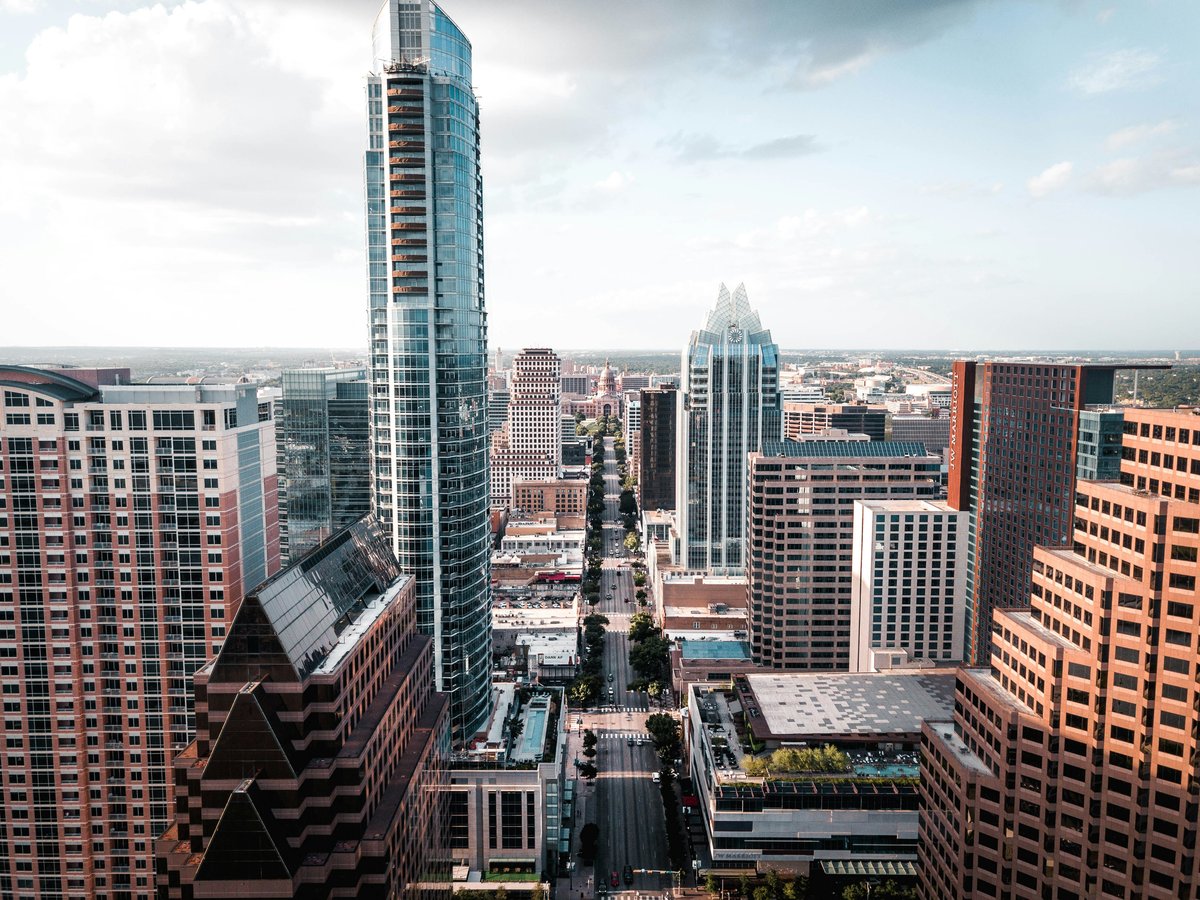
Stay in Austin in January
79 hotels in the Trip.com pool for Austin, from US$44 a night.
Opens Trip.com on Fri 1 Jan to Sun 3 Jan 2027; change the dates there.
January in Austin is, above all else, cedar fever season. Ashe juniper trees across the Hill Country release thick clouds of pollen starting in late December, and January is when counts peak. On heavy days, pollen readings in the Austin area regularly top 20,000 grains per cubic meter. Even visitors who have never had allergies in their lives report watery eyes, sinus pressure, and a thick fatigue within 48 hours of landing at Austin-Bergstrom. If you are sensitive to pollen, this alone might be reason enough to choose a different month.
The weather tends to hover around 15.5°C (60°F) during the day and drops to about 5°C (41°F) at night. That qualifies as genuinely cold for central Texas. Day-to-day swings are the real story, though. You might get a sunny 21°C (70°F) afternoon on Tuesday and wake to freezing drizzle on Thursday. Austin has limited ice-treatment infrastructure, so when temperatures dip below 0°C, overpasses on I-35 and MoPac become hazardous fast. Schools close. H-E-B shelves empty out. The city pauses until things thaw.
On the upside, January is one of the cheapest and quietest months to visit Austin. Hotel rates downtown and along South Congress drop 30-40% compared to SXSW in March or ACL Festival in October. You will find shorter waits at Franklin Barbecue on East 11th Street, easier reservations at Uchi on South Lamar, and the Ann and Roy Butler Hike-and-Bike Trail around Lady Bird Lake practically to yourself on weekday mornings.
Why visit in January
- Hotel rates drop 30-40% from Austin's peak months of March and October, making downtown and South Congress stays notably affordable.
- Crowds thin out after New Year's, so popular spots like Zilker Park, the Barton Creek Greenbelt, and 6th Street feel relaxed and walkable.
- Daytime highs near 15°C (60°F) make January one of the best months for hiking and trail running, far more comfortable than the 36°C (97°F) average in August.
- The live music scene on 6th Street, Rainey Street, and at venues like The Continental Club runs full tilt year-round, and January means fewer tourists competing for standing room.
Worth knowing
- Cedar fever peaks in January, with Ashe juniper pollen counts reaching 20,000+ grains per cubic meter on bad days. Even people without prior allergies are affected.
- Cold snaps can drop Austin below 0°C (32°F) with little warning, and the city's limited ice infrastructure means elevated sections of I-35 and MoPac become dangerous.
- Overcast, gray days are common, with roughly 8 rainy days and 88mm of total rainfall. Not torrential, but enough to disrupt outdoor plans.
- Barton Springs Pool sits at a constant 20°C (68°F), but January air temperatures make the walk from the changing room feel genuinely frigid. Only the committed regulars swim.
Best for
Think twice if
January in Austin brings mild but unpredictable conditions. Daytime highs average 15.5°C (60°F) and overnight lows settle around 5°C (41°F), though blue-sky days in the low 20s°C (low 70s°F) and sudden drops below freezing both happen within the same week. Rainfall averages 88mm across about 8 days, typically arriving as steady frontal rain rather than summer-style thunderstorms. Humidity sits around 65%, noticeable in the mornings but rarely uncomfortable. Wind from the north can make 10°C (50°F) feel closer to 5°C (41°F), particularly along the Lady Bird Lake corridor where gusts channel between the downtown buildings.
Seasonal caution
- Austin occasionally experiences ice storms in January when Arctic fronts push south. Freezing rain on elevated highways, especially overpasses on I-35, MoPac, and US-183, creates dangerous driving conditions. The city owns minimal salt and sand trucks, so roads can stay icy for 24-48 hours.
- Cedar pollen reaches its annual peak in January. Counts above 20,000 grains per cubic meter trigger what locals call cedar fever, with symptoms that mimic a bad cold or flu. Over-the-counter antihistamines help, but sensitive individuals may want to avoid Austin entirely from late December through mid-February.
Year-round climate
Averages from the last 5 years.
| Month | Avg high (°C) | Avg low (°C) | Rainfall (mm) |
|---|---|---|---|
| Jan | 16 | 5 | 88 |
| Feb | 18 | 6 | 60 |
| Mar | 24 | 12 | 75 |
| Apr | 27 | 16 | 131 |
| May | 30 | 20 | 213 |
| Jun | 34 | 24 | 106 |
| Jul | 35 | 25 | 122 |
| Aug | 36 | 25 | 107 |
| Sep | 33 | 23 | 58 |
| Oct | 29 | 18 | 97 |
| Nov | 22 | 12 | 83 |
| Dec | 19 | 10 | 51 |
Holidays and festivals in January
Public holidays
- New Year's Day(New Year's Day)1 January 2027
- Martin Luther King, Jr. Day(Martin Luther King, Jr. Day)18 January 2027
Best things to do in January
Hiking the Barton Creek Greenbelt
outdoorThe Greenbelt stretches roughly 12 kilometers through southwest Austin, following Barton Creek past limestone cliffs, swimming holes, and dense juniper-oak woodland. January's cooler temperatures, typically 10-15°C (50-60°F) in the morning, make the rocky terrain far more comfortable than summer's punishing heat. The trail from the Gus Fruh entrance to Sculpture Falls covers about 3 kilometers one way.
Temperatures in the 10-15°C (50-60°F) range mean less heat exhaustion risk and fewer crowds on the trail compared to spring and fall weekends.Booking tipNo reservation needed. Parking at the Gus Fruh and Hill of Life trailheads fills by mid-morning on weekends, so arrive before 9 AM or use the Spyglass entrance.
Live music on Red River Cultural District
nightlifeThe 3-block stretch of Red River Street between 6th and 9th holds some of Austin's most important independent music venues. Mohawk, Stubb's, Cheer Up Charlies, and Empire Control Room host acts most nights of the week. January lineups tend toward local and regional bands rather than touring headliners, which means smaller rooms and a more intimate feel. The sound at Mohawk's indoor stage is particularly good for a venue of its size.
Fewer tourists in January means you can often walk into shows that would require advance tickets during SXSW or ACL season.Booking tipCheck individual venue calendars. Most Red River venues post their January lineups by late December.
Visiting the Blanton Museum of Art
cultureThe Blanton sits on the University of Texas campus at the intersection of MLK Boulevard and Congress Avenue. Its permanent collection holds over 21,000 works, with particular strength in Latin American art and Italian Renaissance paintings. Ellsworth Kelly's 'Austin,' a 2,715-square-foot stone chapel with colored glass windows, stands in the museum's grounds and catches the low January sun in a way that changes the interior light throughout the afternoon.
A cold or rainy January day is ideal for spending 2-3 hours inside. The museum is less crowded in January than during the school year's peak months.Booking tipFree admission on Thursdays. The Ellsworth Kelly chapel is open during regular museum hours and does not require a separate ticket.
Exploring South Congress Avenue
shoppingSouth Congress between Oltorf Street and the Ann W. Richards Congress Avenue Bridge is roughly 1.5 kilometers of restaurants, vintage shops, and boot stores. Allen's Boots has stocked Western wear at this location since 1977. January foot traffic is noticeably lighter than spring or fall, so you can browse without fighting the crowd. The murals along the storefronts, including the 'I love you so much' wall outside Jo's Coffee, are easier to photograph without people in the frame.
Lower foot traffic and cooler temperatures make window-shopping and walking the strip more pleasant than peak months.Booking tipStreet parking on South Congress is metered. The paid lot near the corner of South Congress and Monroe Street tends to have openings on weekday mornings.
Trail running at McKinney Falls State Park
outdoorMcKinney Falls sits about 20 minutes southeast of downtown Austin at the confluence of Onion Creek and Williamson Creek. The Onion Creek Trail loops about 5 kilometers through post-oak savannah and crosses limestone ledges where the creek drops over two named falls. January water levels vary, but you will likely see at least a trickle over the Upper and Lower Falls. The trail surface is a mix of packed dirt and exposed rock.
Cool January mornings in the 5-10°C (41-50°F) range are ideal for running the rocky trail without overheating. Summer temperatures above 37°C (99°F) make this route dangerous.Booking tipTexas State Parks require either a day-use entry fee or a Texas State Parks Pass. Arrive before 10 AM on weekends to avoid the lot filling up.
Browsing the SFC Farmers' Market at Republic Square
foodThe Sustainable Food Center runs this Saturday morning market at Republic Square Park, at the corner of 4th Street and Guadalupe, year-round. January vendors include local farms selling winter greens, root vegetables, pecans, and Rio Grande Valley citrus. You will also find tamale vendors, breakfast tacos, and locally roasted coffee. The market runs from 9 AM to 1 PM.
January brings peak-season Texas citrus, winter greens like kale and collards, and leftover holiday tamales from local families selling at the market.Booking tipNo reservation needed. The market is busiest between 10 AM and noon. Bring cash for some of the smaller vendors.
Catching a show at The Continental Club
nightlifeThe Continental Club has operated at 1315 South Congress Avenue since 1955, making it one of Austin's oldest live music venues. The narrow room holds around 200 people, and the stage sits at floor level, so performers are close enough to hear their shoes on the monitor wedges. January bookings lean toward blues, roots rock, and country. Happy Hour shows start in the late afternoon and are typically free.
January's thin crowds mean you can claim a good spot near the stage without arriving an hour early, which is rarely possible during festival months.Booking tipCheck the venue's website for the January calendar. Evening headliner shows sometimes charge a cover at the door.
What to eat in January
In season: fruit
Rio Grande Valley grapefruit
Texas red grapefruit from the Rio Grande Valley reaches peak sweetness from December through March. January is prime season. You will find them at the SFC Farmers' Market Downtown at Republic Square Park and at most H-E-B locations for a fraction of what they cost outside Texas.
On menus now
Tamales
The holiday tamale tradition in Austin extends well into January. Families and taquerias across East Austin make large batches through the new year. Pork in red chile and chicken in green salsa are the most common fillings, wrapped in corn husks and steamed. You will find them at the SFC Farmers' Market Downtown on Saturday mornings and at neighborhood spots along East Cesar Chavez.
Texas chili
January cold makes this peak season for Texas-style chili, which uses chunks of beef and dried chiles without beans. Chili cook-off culture runs deep in central Texas, and several Austin restaurants run seasonal chili specials through the winter months. The Tex-Mex spots along East 6th Street tend to have their own house versions.
Smoked brisket
Austin's BBQ joints run year-round, but cool January air makes standing in an outdoor line far more bearable than July's 35°C (95°F). The lower humidity also tends to produce a firmer bark on the brisket. Franklin Barbecue on East 11th Street still draws a line, but you might wait closer to 2 hours in January rather than the 4-hour summer queue. la Barbecue on East Cesar Chavez and Micklethwait Craft Meats on Rosewood are solid alternatives with shorter waits.
Hot queso
January is prime queso weather in Austin. Nearly every Tex-Mex restaurant serves its own version of this melted cheese dip, typically made with Velveeta-style processed cheese and Ro-Tel tomatoes with green chiles. Torchy's Tacos runs multiple locations across Austin, and their queso has a dedicated following. The warmth of the bowl in your hands on a cold evening is part of the appeal.
Street food peaks
Kolaches
These Czech-Texan pastries are available year-round, but a warm kolache on a cold January morning hits differently. The sausage-and-cheese version, technically called a klobasnek, is the savory go-to. East Austin bakeries keep them coming fresh from about 6 AM, and the lines are short this time of year.
Regular events in January
Free First Fridays at the Blanton MuseumFree
The Blanton Museum of Art on the UT Austin campus offers free general admission on the first Thursday of each month. January's event typically includes live music in the atrium, a cash bar, and guided gallery talks starting around 6 PM.
First Thursday of JanuaryAustin Restaurant Weeks (Winter Edition)
A rotating group of Austin restaurants participates in this winter dining promotion, typically running through mid-to-late January. Participating spots offer prix-fixe lunch and dinner menus, with a portion of proceeds going to local food banks. The restaurant list is published on the event's website each year.
Mid-to-late JanuaryUT Longhorns basketball at the Moody Center
The University of Texas men's and women's basketball teams play Big 12 conference games through January at the Moody Center, which opened in 2022 and seats about 15,000. The arena sits on the UT campus along Red River Street. Game days bring a noticeable bump in foot traffic along Guadalupe Street and The Drag.
Multiple dates throughout JanuaryBest places this January
Zilker Park
parkZilker Park covers 141 hectares along the south bank of Lady Bird Lake. In January, the park is noticeably quieter than during Zilker Kite Festival in March or ACL Festival in October. The Zilker Botanical Garden, at the park's north end, has a winter display of native Texas plants. The park connects to the Ann and Roy Butler Hike-and-Bike Trail.
ZilkerThe HOPE Outdoor Gallery (East Austin murals)
artThe original HOPE Outdoor Gallery on Baylor Street closed, but the street art culture it spawned has spread across East Austin. Walls along East 6th Street, East Cesar Chavez, and the blocks around Springdale Road carry rotating murals from local and international artists. January's overcast skies produce better conditions for photographing murals, with less glare and more even lighting.
East AustinLady Bird Johnson Wildflower Center
natureLocated about 15 minutes south of downtown on La Crosse Avenue, the Wildflower Center covers 284 acres of Hill Country landscape. January is between bloom seasons, but the center's architecture, stone paths, and winter-adapted native grasses still make for a calm visit. The agarita shrubs typically start budding in late January, one of the first signs of the approaching Texas spring.
South AustinMount Bonnell
viewpointMount Bonnell rises about 240 meters above sea level on the western edge of Austin, overlooking Lake Austin and the Hill Country. The climb is 106 stone steps from the parking area on Mount Bonnell Road. January mornings offer clear views when the air is cool and dry, and you will likely have the overlook to yourself on a weekday. Sunset visits are popular, but arrive 30 minutes early to claim a spot.
West AustinThe Bullock Texas State History Museum
museumThe Bullock sits at 1800 Congress Avenue, 3 blocks north of the State Capitol. Three floors of exhibits cover Texas history from pre-Columbian era through the space program. The IMAX theatre on the ground floor runs a rotating selection of films. January is one of the quieter months, so you can spend time with the exhibits without navigating school groups.
DowntownCongress Avenue Bridge (bat colony, off-season)
landmarkThe Ann W. Richards Congress Avenue Bridge is famous for its Mexican free-tailed bat colony, the largest urban bat colony in North America at roughly 1.5 million bats. In January, the bats are in Mexico for the winter and typically do not return until March. Worth noting, though. The bridge still offers one of the best views of Lady Bird Lake and the downtown skyline, and the pedestrian walkway is uncrowded in January.
Downtown
Your packing checklist
Tick items off as you pack. Your progress saves in this browser.
All packed — have a great trip.
Insider tips
H-E-B, the dominant Texas grocery chain, stocks local cedar fever remedies that most pharmacies outside Texas do not carry. The store on West Oltorf and South 1st is one of the closest to downtown and tends to keep the allergy aisle well-stocked through January.
The bat colony under Congress Avenue Bridge migrates to Mexico for winter and typically does not return until mid-March. If bats are a reason for your trip, January is the wrong month.
Franklin Barbecue's line on a January weekday is still substantial, but it tends to move faster than summer lines because fewer tourists are in town. Arriving by 9 AM on a Tuesday or Wednesday gives you the best chance of getting brisket before they sell out.
The low-angle January sun hits Ellsworth Kelly's 'Austin' chapel at the Blanton Museum in a way that is visually different from any other season. The colored glass panels cast longer, more saturated bands of light across the stone interior during the late afternoon.
Austin's food truck parks, particularly the cluster on South 1st Street and the Meanwhile Brewing lot on Manchaca Road, tend to keep shorter hours in January. Check social media for individual truck schedules before making the trip.
Uber and Lyft availability can drop sharply during an ice event, as drivers pull off the road. If a winter storm is forecast, stock your hotel or rental with groceries from H-E-B a day in advance rather than counting on rideshare.
Avoid these mistakes
- Underestimating cedar fever. Visitors from outside Texas often assume their lack of allergy history means they are safe. Ashe juniper pollen is aggressive enough to trigger symptoms in people who have never reacted to any other allergen. Pack antihistamines regardless.
- Driving on icy overpasses. Austin does not salt roads the way northern cities do. When freezing rain hits, the elevated sections of I-35, MoPac, and US-183 become skating rinks within minutes. Locals know to stay off the roads. Visitors sometimes do not.
- Expecting warm swimming weather. Barton Springs Pool stays at 20°C (68°F) year-round, but the air temperature in January makes the experience bracing at best. The San Marcos River and Lake Travis are too cold for casual swimming until at least April.
- Planning outdoor activities without checking the weather the morning of. January forecasts in Austin shift frequently, and a day that starts sunny can turn overcast and cold by afternoon. Checking the National Weather Service Austin forecast at weather.gov the morning of your activity saves you from getting caught out.
- Assuming all food trucks are open. Several popular food trucks along South Congress and in East Austin run reduced winter hours or close entirely for parts of January. Check individual social media accounts before making the trip.
Practical tips for January
January in Austin calls for flexibility. Pack for temperatures anywhere from 0°C to 21°C (32°F to 70°F) in the same week, and keep a rain jacket within reach. Book hotels in downtown or South Congress for the best January rates, which sit 30-40% below the SXSW and ACL Festival peaks. If you plan to hike the Greenbelt or McKinney Falls, start early. Trailhead parking fills by mid-morning on weekends even in low season. For dining, January is the easiest month to get into popular restaurants without advance reservations, but confirm hours first, as some spots take a post-holiday break in early January. Pick up antihistamines before you arrive or at an H-E-B within a day of landing. Cedar pollen hits fast, and you do not want to spend your first 2 days adjusting. If a winter storm warning appears in the forecast, rearrange your outdoor plans. Austin's ice events are infrequent but genuinely disruptive, with limited road treatment and widespread closures that can last 24-48 hours.
FAQ
Is January a good time to visit Austin, Texas?
January is a fair month for visiting Austin. The main draws are low prices, thin crowds, and comfortable hiking weather in the 10-15°C (50-60°F) range. The main drawbacks are cedar fever pollen, which peaks in January and affects even people without prior allergies, and the possibility of ice storms that can shut the city down for a day or two. If you are not pollen-sensitive and can handle unpredictable weather, January offers a quieter, cheaper Austin.
How bad is cedar fever in Austin in January?
Cedar fever is significant in January. Ashe juniper pollen counts regularly top 20,000 grains per cubic meter on peak days, and the season runs from late December through mid-February. Symptoms include watery eyes, sinus congestion, fatigue, and sore throat. Over-the-counter antihistamines like cetirizine help, but they work best if you start taking them before symptoms appear. Some visitors with no prior allergy history still develop symptoms within 48 hours of arriving.
What should I wear in Austin in January?
Layers. January daytime highs average 15.5°C (60°F) but can reach 21°C (70°F) on warm days or drop below 0°C (32°F) during cold snaps. A warm jacket for mornings, a lighter layer for midday, and a rain jacket for the roughly 8 rainy days is the standard setup. Closed-toe shoes are important if you plan to hike the Greenbelt or McKinney Falls, where the limestone trails get slippery when wet.
Are the bats under Congress Avenue Bridge active in January?
No. The Mexican free-tailed bat colony, which numbers roughly 1.5 million bats in peak season, migrates to Mexico for the winter. They typically begin returning in March and reach full numbers by June. If bat-watching is a priority, plan your trip for April through October.
What is there to do in Austin in January if it rains?
Austin has strong indoor options. The Blanton Museum of Art on the UT campus holds over 21,000 works and offers free admission on Thursdays. The Bullock Texas State History Museum on Congress Avenue covers Texas history across 3 floors plus an IMAX theatre. The live music scene on Red River Cultural District and 6th Street runs regardless of weather. And January is an excellent month for eating your way through Austin's restaurant scene, as reservations are easier to get than any other time of year.
Things to Do in Austin in January
 Free cancellation
 Best of Austin Small-Group Driving Tour with Local Guide
City tour: 2 hours, free cancellation.
via Viator Free cancellation
 Austin Biker Gang E-Bike Tour
City tour: 1.5 hours, free cancellation.
via Viator Free cancellation
 Double Decker Austin Single Loop Sightseeing Tour
City tour: free cancellation.
via Viator Free cancellation
 Austin Electric Bike Tour: Let it Ride
City tour: free cancellation.
via Viator Free cancellation
 Austin in a Nutshell Bike Tour with a Local Guide
City tour: 2 hours, free cancellation.
via Viator Free cancellation
 Lake Austin Sunset Boat Cruise – 1 - Hour Scenic Tour BYOB
Cruise: 1 hour, free cancellation.
via ViatorFind a flight to Austin
Live fares to Austin appear here once cookies are accepted.
Last verified by automated review (v1.7.2) on . What is automated review?