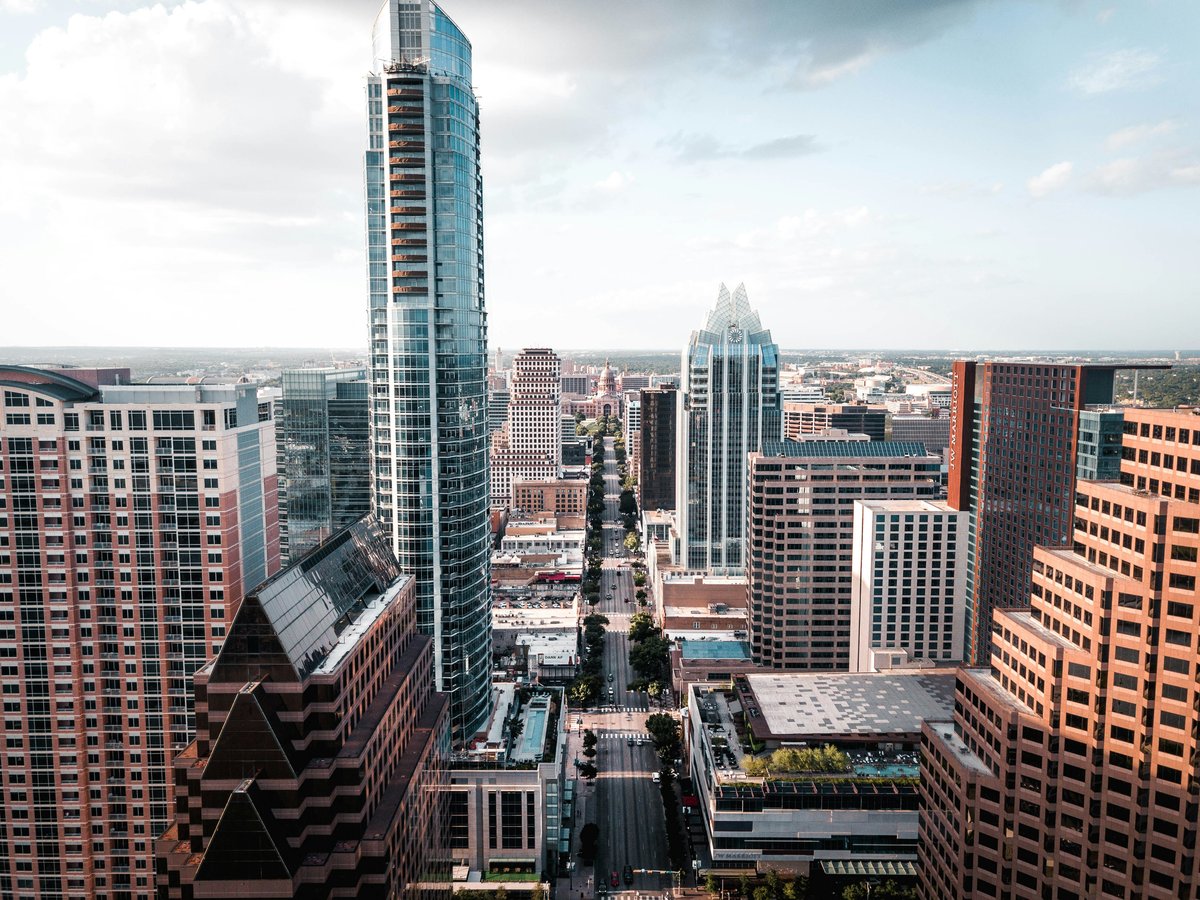
Austin on a budget
Austin has 12 budget-tier hotels in the Trip.com pool from US$45 a night. The 2 lists picked for budget travelers in Austin carry 12 places. Microtel Inn & Suites by Wyndham Austin Airport and La Quinta Inn by Wyndham Austin Capitol / Downtown lead the picks.
Austin for budget travelers, in numbers
- Picks on this page
- 12 places across 2 lists, led by Microtel Inn & Suites by Wyndham Austin Airport, La Quinta Inn by Wyndham Austin Capitol / Downtown
- budget-tier hotels
- 12 in the Trip.com poolfrom US$45 a night
Questions budget travelers ask about Austin
-
Cost per day
Budget $70 per day in Austin covers a hostel dorm, $4 breakfast tacos, and CapMetro day passes. Midrange runs $160 with a three-star hotel south of the river. Luxury hits $400 at The Driskill on Brazos Street. Hotel occupancy tax, tipping norms, and event-week rate spikes during SXSW or ACL Fest inflate every tier.
Read the full answer → -
What to avoid
Skip Dirty Sixth Street after midnight, avoid I-35 at rush hour, and never eat BBQ at a place with no line. Austin's summer heat tops 105°F in July and August. Pedicabs on 6th Street charge $40 for 3 blocks. Cedar fever hits hard from December through February.
Read the full answer → -
Getting around
Uber and Lyft for anything beyond walking distance. Austin has no subway. CapMetro's 801 MetroRapid bus runs every 12 minutes on South Congress and North Lamar for $1.25, and the app sells a $2.50 day pass for all routes. Electric scooters fill gaps downtown. South Congress, East 6th, and the 2nd Street district are walkable, but between neighborhoods, rideshare is the realistic answer.
Read the full answer → -
Airport to city
Take a rideshare from Austin-Bergstrom (AUS) to downtown. The trip runs 15-20 minutes and costs $15-25 on Uber or Lyft. Pickup is on the lower level outside baggage claim. Capital Metro's Route 20 bus costs $1.25 and takes 35-40 minutes to Republic Square, but runs limited hours after midnight. No rail link exists.
Read the full answer → -
Food culture
Austin's food identity sits on Central Texas brisket smoked over post oak, Tex-Mex built on yellow cheese and cumin, and the breakfast taco that locals eat before 8am. Franklin Barbecue on East 11th draws 3-hour lines for brisket at $32 a pound. Over 1,000 licensed food trucks keep prices competitive across East Cesar Chavez and South Congress.
Read the full answer →
Curated for budget travelers
-
Best hostels
Austin's hostel-price inventory spreads across four distinct zones, and only one puts you within walking distance of live music and the Capitol dome. Budget beds sort into a tight downtown core where Congress Avenue anchors the action, a pair of freeway-adjacent strips north of US-183 where rates drop below $50, and a quieter southern pocket off I-35 near Slaughter Lane. Transit connections matter here: Capital Metro's rail line threads through downtown and the northern corridors, but service thins out after midnight, so your neighborhood choice sets your evening radius. Rates across all four zones stay under $80 a night, which means the real decision is not price tier: it is whether you want bar-crawl proximity or a parking lot and a car. Austin's tourist core is walkable but small, and everything outside it is a driving city. Book downtown if you want to leave the car parked. Book north or south if you want space, a kitchenette, and lower nightly cost, and accept that you will need wheels for Sixth Street.
See the picks → -
Best free attractions
Austin's free layer is mostly green: state park, city park, greenbelt, botanical garden, wildflower research center; the kind of civic inventory a visitor can string together for a week without opening a wallet. What follows is not a checklist of every mowed lawn inside the loop; it is ten places that Wikidata records as actual, mapped destinations in Travis County and its immediate southeast and northwest edges, ranked in the order a first-time visitor should meet them. Some sit downtown on Guadalupe and Barton Springs Rd; others require a short drive out past the airport or into the hills northwest of town. Skip the paid attractions on the first pass: Austin's most defensible entertainment has always been its parkland, and the free tier is deep enough that you can spend three full days outside without repeating a coordinate. Bring water. Bring sun cover. The rest of this list assumes you did.
See the picks →