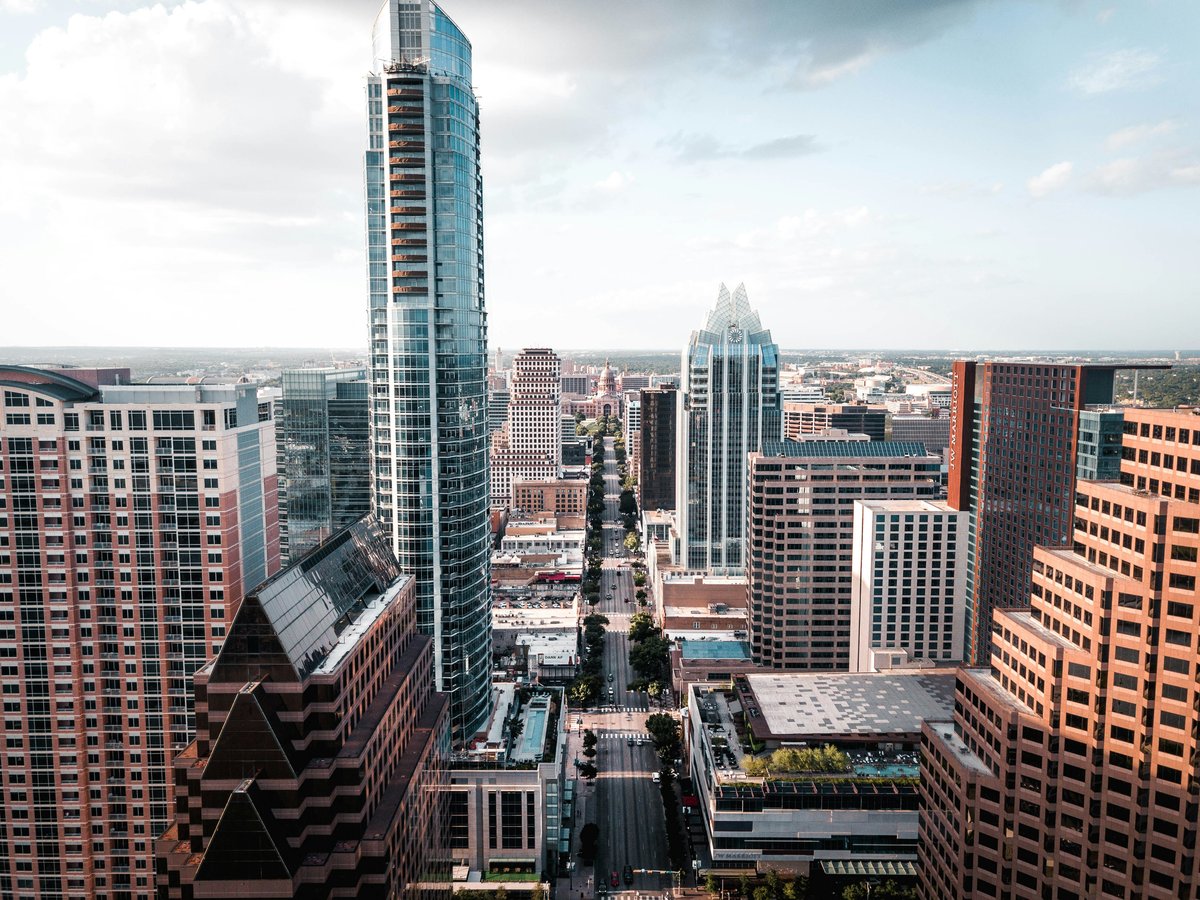
Austin's museum bench is deeper than its skyline lets on, and it leans on the University of Texas as much as on the state itself. Two of the strongest holdings, the Harry Ransom Center at 300 West 21st Street and the Lyndon Baines Johnson Library and Museum at 2313 Red River Street, sit on campus and treat archives and objects as primary sources rather than props. Downtown carries the civic weight: the Bullock Texas State History Museum at 1800 Congress Avenue frames the state's story, while The Contemporary Austin at 700 Congress Avenue keeps the argument current with a second location and a rolling program. Around the edges, smaller houses do specific work well, from the Elisabet Ney Museum at 304 E. 44th St. to the Texas Military Forces Museum at 2200 West 35th Street. This list is for visitors who would rather spend two hours with a real thing than two hours with a lobby.
-
1 Lyndon Baines Johnson Library and Museum
2313 Red River Street, Austin, TX 78705The presidential archive of Lyndon B. Johnson, treated as source material rather than shrine.
At 2313 Red River Street, 78705, the Lyndon Baines Johnson Library and Museum treats a single presidency as a working archive, not a memorial. Skip the impulse to rank presidents before you walk in; the museum's own case is built from paperwork, phone recordings, and objects that argue with each other. It is a presidential library and museum for Lyndon B. Johnson, which means the Johnson years are the frame, and civil rights, Vietnam, and the Great Society sit inside it rather than beside it. The official site at lbjlibrary.org is worth checking before you go, and the front desk answers at +1-512-721-0212 if you need to confirm a program. Give it a slow two hours.
-
2 Blanton Museum of Art
Martin Luther King Jr. 200 E.The University of Texas art museum, with a collection that rewards a full afternoon.
The Blanton Museum of Art sits on Martin Luther King Jr. 200 E., an art museum built into the University of Texas fabric rather than dropped onto it. Skip the reflex to treat a university museum as a warm-up act; the Blanton is the anchor visit in this quadrant of the city, and the campus around it is the walk, not the detour. The website at blantonmuseum.org carries the current program, and the front desk answers at (512) 471-7324 for hours and access questions. Give it two hours if you are moving through, longer if a special exhibition is up. Pair it with a walk to the LBJ complex a few blocks east and you have a coherent half day of ideas, paperwork, and paint.
-
3 The Contemporary Austin
700 Congress Avenue, Austin, TX 78701A two-site contemporary program that argues across downtown and a lakeside sculpture park.
From the sidewalk at 700 Congress Avenue, 78701, The Contemporary Austin looks like a downtown gallery and behaves like a museum with two addresses. Treat it as one institution across two locations rather than a single stop, which changes how you plan the visit. This is a contemporary art museum with two locations in Austin, and the program moves between them in ways worth checking on the official site at thecontemporaryaustin.org before you commit an afternoon. If you have the time, do both sites in a single day; if you have an hour, take the downtown room seriously and come back for the other. The Congress Avenue address puts you on foot for a coffee before or after, which is the correct way to see contemporary work.
-
4 Harry Ransom Center
300 West 21st Street, Austin, TX 78705An archive, library, and museum whose exhibitions are drawn from the vault itself.
Enter at 300 West 21st Street, 78705, and the Harry Ransom Center behaves less like a museum and more like a working research library that puts pieces of its vault on view. The ground-floor galleries earn the visit when a rotating exhibition is up, because this is an archive, library, and museum at the University of Texas at Austin, and the shows are built from primary material rather than loans. Don't bother treating it as a background stop; give it 90 minutes minimum, and check the current program at hrc.utexas.edu before you walk over. The reception desk answers at +1 (512) 471-8944 for exhibition hours and reader access. It is a specific kind of pleasure to see the object, not a reproduction of it.
-
5 Bullock Texas State History Museum
1800 Congress Avenue, 78701The state's own museum, argued from Congress Avenue in three floors.
At 1800 Congress Avenue, 78701, the Bullock Texas State History Museum takes a state's story and turns it into three floors of exhibits. Resist the urge to speed-run it in an hour; the museum in Austin is built for the slow walk, and the payoff is in the middle rooms, not the entrance atrium. The official site at thestoryoftexas.com posts the current special exhibitions, which are worth checking before you buy a ticket, because the temporary shows often carry the visit. Congress Avenue puts you within a short walk of the Capitol, which is the pairing most visitors want; do the Bullock first, then the Capitol, in that order. Two and a half hours is the honest floor.
-
6 Texas Memorial Museum
2400 Trinity Street, 78705The state's natural history collection on the University of Texas campus.
The Texas Memorial Museum sits at 2400 Trinity Street, 78705, a natural history museum in Austin that reads as a campus institution rather than a downtown attraction. Skip the assumption that natural history museums are for children only; the geology and paleontology cases here reward an adult hour, and the campus setting keeps the visit calm on weekdays. Check the current exhibits and access status on the official page at utexas.edu/tmm/exhibits/index.html before you build a plan, because a university museum's schedule is not a downtown museum's schedule. The Trinity Street address puts you close enough to the LBJ complex and the Blanton that a UT-museums half day is a defensible way to spend a morning. Bring water; the walk between buildings adds up.
-
7 George Washington Carver Museum and Cultural Center
1165 Angelina St.A city-run museum and cultural center anchoring East Austin's cultural memory.
The address 1165 Angelina St. puts the George Washington Carver Museum and Cultural Center in a residential grid rather than a museum district, and that is the point. The locals prefer this address over the downtown circuit when they want a museum experience rooted in East Austin, because it is a museum in Austin whose programming is tied to the neighborhood it stands in. The city runs it, and the operations page sits on the city site at austintexas.gov/department/george-washington-carver-museum-cultural-and-genealogy-center, which is where the current schedule lives. Give it 60 to 90 minutes, and read the exhibit text carefully rather than skimming; the argument is in the wall labels, not the object counts. Pair it with a walk in the surrounding blocks to understand the setting.
-
8 Elisabet Ney Museum
304 E. 44th St.A sculptor's Hyde Park studio, kept as an art museum.
Housed at 304 E. 44th St., the Elisabet Ney Museum is a small art museum in Austin operating out of a former studio building. Don't bother trying to plan a half day here; the honest visit is 45 to 75 minutes, and the pleasure is in the specificity of the rooms rather than the volume of the collection. The city runs it and posts current hours and program notes at austintexas.gov/Elisabetney, which is the only reliable schedule source before a visit. Skip the impulse to compare it to the larger downtown museums; that is not the argument this address is making. What it offers is a working sculptor's rooms, kept close to how they were used, at a residential remove from the downtown grid. Come on a weekday morning if you can.
-
9 Texas Military Forces Museum
2200 West 35th Street, Austin, TX 78703The state's military history, mounted at Camp Mabry.
Out at 2200 West 35th Street, 78703, the Texas Military Forces Museum repays visitors who came for the objects, not the mood. Skip the assumption that a military museum has to be solemn or slow; this one is dense, specific, and better on a weekday when you can read the placards without a crowd. It sits well outside the downtown museum grid, which means it is a car or rideshare trip and not a walk from the Capitol, and that reality shapes the visit. Check the current program at texasmilitaryforcesmuseum.org before you drive over, because access is tied to base operations. Give it 90 minutes for the interior, longer if you want to walk the outside displays with unhurried attention.
This is an early version of the Austin list. We add picks as we test more places.
Last verified by automated review (v1.7.2_austin-museums-20260916173020) on . What is automated review?