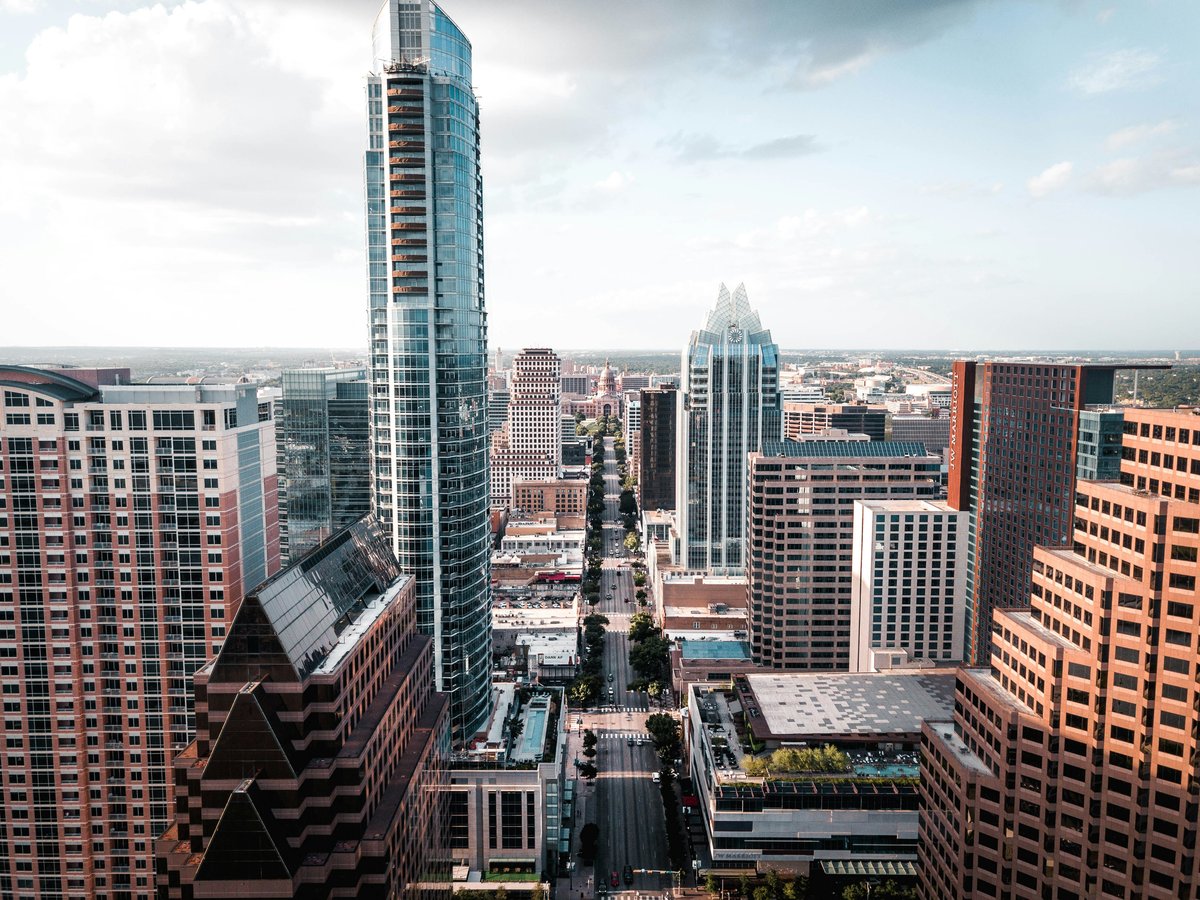
Is Austin good for digital nomads in 2026?
Austin scores 7.2/10 for digital-nomad suitability (sourced from TTDI's editorial rubric). Google Fiber and AT&T Fiber deliver 1-Gbps symmetric for $70/mo across central neighborhoods. Coworking at Capital Factory runs $325/mo with 24/7 access. Monthly all-in budget sits around $3,200. The two honest downsides are total car dependency and a 5-month summer that currently feels like 36.5°C.
The 7.2 and not an 8 comes down to two things. You need a car, and summer heat will restructure your entire workday from May through October. Google Fiber and AT&T Fiber cover most central neighborhoods, delivering 1-Gbps symmetric for around $70/mo in residential units. Airbnb wifi claims in Austin tend to be more honest than in Southeast Asia, but still test on arrival. The real risk is older East Austin houses with 50-Mbps AT&T DSL marketed as "high-speed internet." Ask for a Speedtest screenshot before you book anything east of I-35 in a pre-2010 build. Austin's tech-sector backbone means fewer of the rolling outages you'll hit in Bali or Medellín.
Capital Factory on San Jacinto Boulevard runs hot-desks at $325/mo with 24/7 badge access and doubles as Austin's biggest tech meetup venue. You'll hear pitch practice through the glass walls by 4 pm most Tuesdays. Createscape on East 6th Street offers day passes at $35 in a quieter, smaller room. For cafe work, Houndstooth Coffee on Congress Avenue has solid wifi and won't pressure you after one pour-over. Mozart's Coffee Roasters on Lake Austin Boulevard has outdoor seating on the water where afternoon light hits the cypress trees, but wifi dips during weekend crowds and live music starts at 7 pm. Bennu Coffee on MLK Boulevard stays open 24 hours. That matters when you're fielding a midnight call with a client in Tokyo.
Skip downtown and 6th Street for anything longer than a weekend. The bass from Dirty Sixth rattles windows until 2 am Thursday through Saturday, and there's no H-E-B grocery within walking distance. Mueller, the redeveloped Robert Mueller Municipal Airport district northeast of UT campus, has an H-E-B, a farmers market on Sundays, a laundromat on Manor Road, and 1-bedroom Airbnbs for $1,800-2,200/mo. The trade-off is that Mueller feels suburban and planned. East Cesar Chavez is livelier, cheaper at $1,500-1,900/mo for a 1-bedroom, and walkable to Franklin Barbecue on East 11th and a dozen taco trucks where corn tortillas are still pressed to order. The older housing stock along East Cesar Chavez means variable wifi, though. North Loop near the 51st Street corridor runs $1,300-1,700/mo with the Fiesta Mart on I-35 for groceries. Quieter, and you'll drive 15 minutes to reach most coworking spots.
Monthly all-in for a single nomad runs around $3,200. That breaks down to roughly $1,800 rent, $300 coworking, $600 food (cooking at home with occasional runs to la Barbecue on East Cesar Chavez or Micklethwait Craft Meats on Rosewood Avenue), $200 for rideshare or a beater car's gas and insurance, and $300 for weekend activities. Mind you, July currently sits at 30°C with a feels-like of 36.5°C and 71% humidity. At those numbers the heat reshapes your entire schedule. Most nomads here shift to a 6 am start, break from noon to 4 pm when the pavement radiates visible shimmer, then resume in the evening. Air conditioning is non-negotiable in any workspace or apartment from May through October. The Harry Ransom Center on the UT campus, founded in 1957, is free and fully climate-controlled. Decent emergency workspace on a 40°C afternoon.
The US has no digital nomad visa. Visitors from 40 Visa Waiver Program countries get 90 days on ESTA ($21 fee, apply at least 72 hours before departure). B-1/B-2 tourist visas allow stays up to 180 days. Working remotely for a non-US employer on a tourist entry is a legal gray area that US Customs and Border Protection has not formally addressed. Worth noting, the 90-day ESTA has no extension mechanism. You leave, or you overstay, and overstaying triggers a 3-year or 10-year re-entry bar depending on duration. The E-2 treaty investor visa requires $100K+ in capital and a US business entity. Most nomads do the honest 90-day rotation and spend the other quarters in Mexico City or Lisbon.
Composite of cafe + coworking download speeds and reliability.
Apartment, coworking membership, food, and transit at a comfortable level.
Coworking spaces
- Capital Factory
- Createscape
- WeWork (Congress Avenue)
- Industrious (2nd Street District)
- Regus Austin
Visa options
No US digital nomad visa exists. ESTA gives 90 days for 40 Visa Waiver Program countries ($21 fee, no extension). B-1/B-2 tourist visa allows up to 180 days. Remote work for a non-US employer on tourist entry remains a legal gray area. E-2 treaty investor visa requires $100K+ capital and a US business entity. Overstaying ESTA triggers a 3-to-10-year re-entry bar.
Last verified by automated review (v1.7.2) on . What is automated review?