Compare every Spain city in August →
Stay in Seville in August
98 hotels in the Trip.com pool for Seville, from US$16 a night.
Opens Trip.com on Fri 6 Aug to Sun 8 Aug 2027; change the dates there.
August in Seville is, to put it directly, one of the harshest summer experiences in Western Europe. The average high reaches 37.3°C (99°F), and thermometers regularly push past 40°C (104°F) during the peak afternoon hours between 2pm and 6pm. This is the month when Seville empties. Shops along Calle Sierpes pull their shutters down for weeks at a time, family-run bars in Triana tape handwritten 'cerrado por vacaciones' signs to their doors, and the narrow streets of Santa Cruz go eerily quiet compared to the packed spring season.
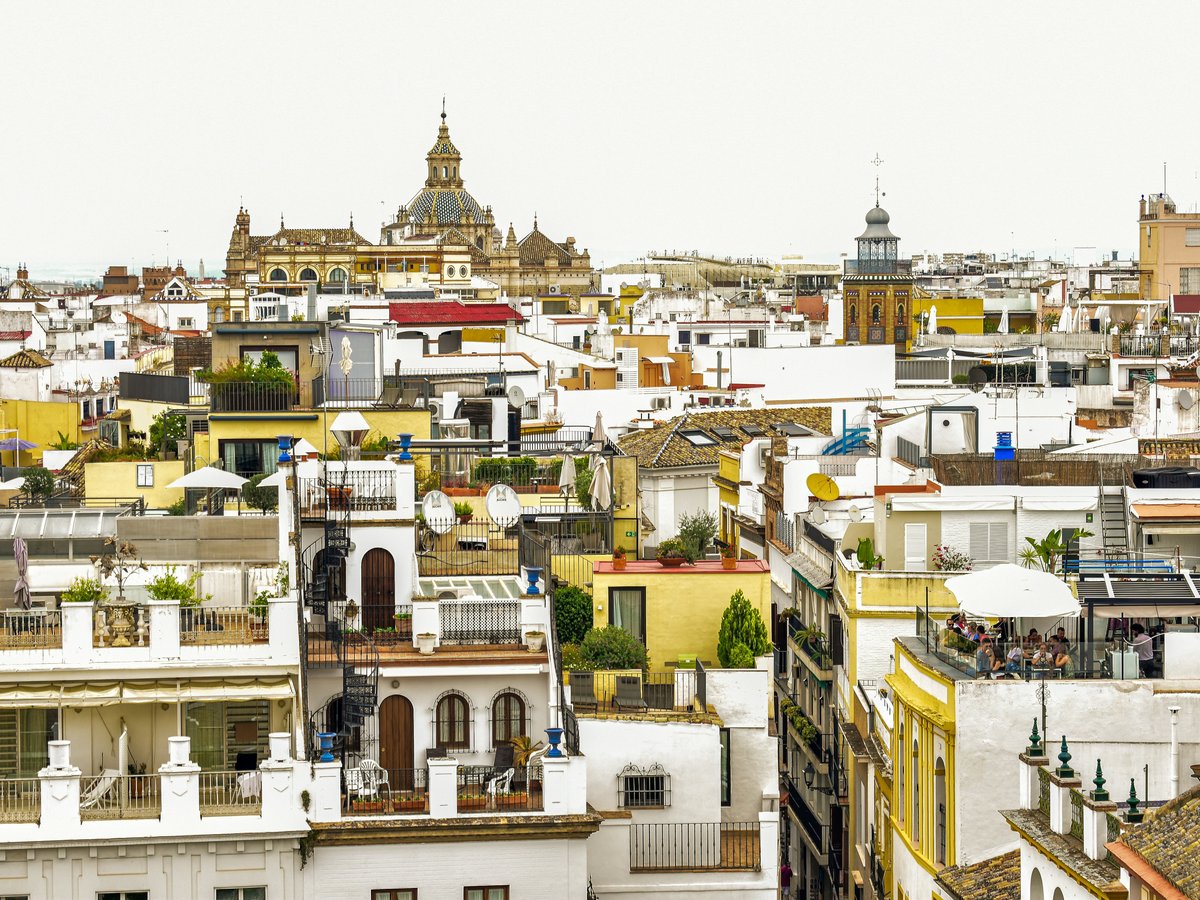
The upside of this mass departure is tangible. Hotel rates in August tend to drop 30-50% compared to Semana Santa or Feria de Abril in April. The Real Alcázar, which draws 45-minute queues in spring, might let you walk straight in on a weekday morning. You'll share the Catedral de Sevilla with perhaps a third of its April crowd. The Guadalquivir catches golden light in the evenings, and rooftop terraces across the Alameda de Hércules neighbourhood fill with locals who've stayed behind, nursing tinto de verano well past midnight.
But you need to want this version of Seville. The city still functions on a shifted summer schedule, with dinner rarely starting before 10pm, and the rhythm demands patience and tolerance for heat that settles into your skin like a weight. If you handle high temperatures well, keep late hours, and appreciate the trade-off of extreme conditions for bargain prices and elbow room at major monuments, August can work. For most travelers, though, the spring or autumn months offer a far more comfortable experience of this city.
Why visit in August
- Hotel rates drop 30-50% compared to Seville's peak season in April, making it one of the cheapest months to book a well-located property near the Catedral or in Santa Cruz
- Major monuments like the Real Alcázar and Catedral de Sevilla have minimal queues, often allowing walk-in entry that would require pre-booking in spring
- The Noches en los Jardines del Real Alcázar concert series runs through August, with flamenco and classical performances in the Alcázar gardens starting at 10pm when temperatures finally drop below 30°C (86°F)
- Seville's summer nightlife scene peaks in August, with terraces along the Alameda de Hércules staying open until 3am and later
Worth knowing
- Average highs of 37.3°C (99°F) with frequent spikes above 42°C (108°F) make outdoor sightseeing between 1pm and 7pm physically draining and potentially dangerous for heat-sensitive visitors
- An estimated 30-40% of independent restaurants and shops close for 2-4 weeks of summer vacation, particularly in residential neighbourhoods like San Lorenzo and Macarena
- AEMET (Spain's meteorological agency) frequently issues orange and red heat alerts for the Guadalquivir valley in August, sometimes triggering public health advisories
- The cultural calendar is at its thinnest. No Semana Santa processions, no Feria, no major flamenco festivals. Seville is between seasons.
Best for
Think twice if
Seville in August is dominated by dry, relentless heat. The average high of 37.3°C (99°F) tells only part of the story. On peak days, which happen several times per week, temperatures climb past 40°C (104°F), and the stone buildings of Santa Cruz radiate stored heat well into the evening. The low of 22.5°C (72°F) typically arrives around 6am, offering a narrow window of cooler air before sunrise. Rainfall is essentially nonexistent at 3mm for the entire month. Humidity sits at a relatively tolerable 45%, lower than coastal cities like Barcelona or Valencia, but the raw heat more than compensates. The sky is cloudless most days. The Guadalquivir runs low. The air smells like hot dust and jasmine.
Seasonal caution
- Spain's AEMET regularly issues orange and red heat alerts (avisos naranja and rojo) for Seville province in August, indicating sustained temperatures above 40°C (104°F) and sometimes exceeding 44°C (111°F). During red alerts, authorities advise limiting outdoor exposure between 12pm and 6pm.
- Heatstroke risk is real. The combination of stone-paved streets, minimal shade in areas like the Puente de Triana approach, and dry air that suppresses the feeling of sweating can lead to rapid dehydration. The Ayuntamiento de Sevilla opens 'refugios climáticos' (cooling shelters) in public buildings during extreme heat episodes.
- UV index in Seville in August typically reaches 9-10 on the scale, categorized as 'very high.' Sunburn can occur in under 15 minutes of unprotected exposure around midday.
Year-round climate
Averages from the last 5 years.
| Month | Avg high (°C) | Avg low (°C) | Rainfall (mm) |
|---|---|---|---|
| Jan | 16 | 7 | 66 |
| Feb | 19 | 9 | 40 |
| Mar | 20 | 10 | 129 |
| Apr | 24 | 13 | 40 |
| May | 29 | 16 | 18 |
| Jun | 33 | 20 | 16 |
| Jul | 38 | 22 | 0 |
| Aug | 37 | 23 | 3 |
| Sep | 31 | 19 | 34 |
| Oct | 27 | 17 | 111 |
| Nov | 20 | 11 | 52 |
| Dec | 17 | 8 | 92 |
Holidays and festivals in August
Public holidays
- Assumption(Asunción)15 August 2027
Best things to do in August
Noches en los Jardines del Real Alcázar
cultureOpen-air concert series held in the gardens of the Real Alcázar, running nightly through August. Performances span flamenco, classical guitar, and chamber music, staged among the fountains and hedgerows of the palace gardens. The scent of orange blossom and jasmine mixes with the sound bouncing off 14th-century walls. Capacity is limited, and performances start at 10pm when the air finally cools.
The series runs from June through mid-September, but August is the quietest month for ticket availability. The late start time aligns perfectly with Seville's summer schedule.Booking tipTickets go on sale through the Real Alcázar's official website. Book at least a week ahead for weekend performances.
Evening walk along the Guadalquivir
outdoorThe riverside path from the Torre del Oro south to the Parque de María Luisa comes alive after 9pm in August. Locals jog, cycle, and walk dogs along the palm-lined banks. The water catches the last orange light around 9:30pm. Street performers set up near the Puente de San Telmo, and the air smells faintly of the river mixed with jasmine from the park hedges.
August's extreme daytime heat makes the post-sunset hours the only comfortable time for outdoor activity. The river path has open exposure and a slight breeze that the old town streets lack.Day trip to Itálica
sightseeingThe Roman ruins at Itálica sit 9km northwest of Seville in the town of Santiponce. The amphitheatre, which seated 25,000 spectators, is one of the largest surviving Roman arenas. The mosaic floors in the Casa de los Pájaros and Casa del Planetario are remarkably intact. In August, the site is nearly deserted compared to spring weekends.
Minimal crowds and discounted combination tickets. Arrive when the site opens at 9am and you'll have the amphitheatre largely to yourself before the midday heat forces retreat.Mercado de Triana morning visit
foodThe covered market on the west bank of the Guadalquivir, built on the site of the old Castillo de San Jorge (the Inquisition's former headquarters). The ground floor stalls sell seasonal produce, fresh fish from Huelva and Cádiz, and cured meats. Upstairs, a small museum covers the Inquisition history. The tile work on the exterior walls dates to the 19th century.
August mornings before 11am are the sweet spot. The market is air-conditioned, the produce is peak summer quality, and the Triana side of the river gets shade earlier in the morning than the old town.Flamenco at a summer peña
cultureSeville's peñas flamencas (private flamenco clubs) host intimate summer performances throughout August. Venues like the Peña Torres Macarena and Peña Flamenca Cultural hold shows in small courtyards and back rooms. The proximity to the performers is striking. You hear the breath between verses, the creak of the wooden floor under the dancer's feet.
The main tablao circuit (Casa de la Memoria, Museo del Baile Flamenco) runs year-round, but summer peña schedules peak in August when the tablaos thin their programmes. The peña atmosphere is closer to private performance than staged show.Rooftop terrace hopping in Alameda de Hércules
nightlifeThe Alameda de Hércules neighbourhood, anchored by its rectangular plaza with twin Roman columns, has the densest concentration of rooftop bars in Seville. After 10pm in August, the terraces fill with a younger local crowd. The views south toward the Giralda tower change colour as the sky darkens.
August's extreme heat means nobody goes out before 10pm, which concentrates the social energy into a few intense late-night hours. The terraces are at their liveliest this month, and the night air at rooftop height is noticeably cooler than street level.Sunrise visit to Plaza de España
sightseeingThe semicircular Plaza de España in the Parque de María Luisa, built for the 1929 Ibero-American Exposition, is one of Seville's most photographed landmarks. The 48 tiled alcoves represent each Spanish province. In August, arriving at sunrise (around 7:15am) gives you the entire plaza without another soul. The morning light hits the ceramic tilework at a low angle that brings out colours invisible at midday.
August combines the earliest comfortable outdoor hour (before 9am) with the lowest tourist numbers of any month. By 10am in spring, the plaza is packed with tour groups. In August at 7:30am, it's yours.Swimming at Aquópolis Sevilla
outdoorThe water park in the suburb of Montequinto, about 15 minutes south of the centre by car, is one of the few places near Seville to cool off. Wave pools, slides, and a lazy river spread across a large complex. Not glamorous, but after 5 days of 40°C heat, the cold water is a genuine relief.
August is the only month when the park runs at full capacity on extended hours, staying open until 8pm on weekends. Weekday mornings tend to be the least crowded.What to eat in August
In season: fruit
Melocotones de Sevilla
Late-summer peaches from the Guadalquivir valley reach their peak sweetness in August. You'll spot them at the Mercado de Triana and Mercado de la Encarnación, stacked in wooden crates. The smell alone, that thick stone-fruit sweetness, hits you from several metres away. Locals eat them sliced with a drizzle of Pedro Ximénez sherry.
On menus now
Gazpacho
August is peak gazpacho season in Seville. The cold tomato soup, made with ripe summer tomatoes, cucumber, green pepper, garlic, and olive oil, appears on every menu and in every home refrigerator. Many bars serve it in a glass, almost as a drink rather than a dish. It tends to be one of the cheapest items on any menu, and doubles as a hydrating midday meal when solid food feels like too much effort in the heat.
Salmorejo
Seville's thicker, creamier cousin to gazpacho. Made with bread, tomatoes, garlic, and a generous pour of olive oil, then topped with diced jamón serrano and crumbled hard-boiled egg. Córdoba claims the original recipe, but Seville's version is everywhere in August. Richer than gazpacho, more filling, and better on a hot night when you want cold food with substance.
Pescaíto frito
Fried fish is a year-round staple, but August brings the freshest catches from the Costa de la Luz, about 90 minutes southwest of Seville. Small portions of boquerones (anchovies), chocos (cuttlefish), and cazón (dogfish) come battered in chickpea flour and fried in olive oil. The crunch is audible. Best eaten standing at the bar with a cold cruzcampo.
What to drink
Tinto de verano
Seville's default summer drink. Red wine mixed with gaseosa (lemon-lime soda) over ice, served in a tall glass. Lighter and less sweet than sangría, and far more common among locals. You'll find it at every terrace along the Alameda de Hércules and the Betis riverfront. It is typically the cheapest alcoholic drink on any bar's menu, and in August you'll see more of it ordered than beer.
Regular events in August
Cine de Verano (Summer Open-Air Cinema)Free
Outdoor film screenings in parks and plazas across Seville, including regular programmes at the Parque del Alamillo and various neighbourhood cultural centres. Films are typically shown in Spanish, sometimes with original-language options. Screenings start after 10pm when the temperature drops.
Throughout August, most eveningsVelá de Santiago y Santa AnaFree
Triana's annual neighbourhood festival, honouring the patron saints Santiago and Santa Ana. Stalls, music, and street food line the Calle Betis and the streets around the Iglesia de Santa Ana. Technically a late-July festival, but the final nights often extend into the first days of August.
Late July through early AugustNoches de Verano cultural programmeFree
The Ayuntamiento de Sevilla organises a summer cultural programme of free concerts, dance performances, and theatre in parks and public spaces. Venues rotate among the Parque del Alamillo, Parque de los Príncipes, and neighbourhood plazas. Schedules are published monthly on the city council's website.
Weekends throughout AugustBest places this August
Real Alcázar
monumentThe Mudéjar palace complex is air-conditioned in the main halls and offers the gardens as an evening refuge. In August, the queues that stretch 45 minutes in April often disappear entirely on weekday mornings. The Patio de las Doncellas and the Salón de Embajadores feel almost private.
Santa CruzCatedral de Sevilla and La Giralda
monumentThe world's largest Gothic cathedral and its converted minaret bell tower. The climb up the Giralda's 35 ramps (not steps) is tougher in August heat, but the views from the top at opening time (before 10am) are worth the sweat. The interior of the cathedral stays cool.
Santa CruzMetropol Parasol (Las Setas)
landmarkJürgen Mayer's wooden lattice structure in the Plaza de la Encarnación, completed in 2011. The rooftop walkway offers 360-degree views of the city. The basement holds the Antiquarium, a museum built around Roman and Moorish ruins discovered during construction. The structure provides rare large-scale shade in the plaza below.
CentroParque de María Luisa
parkSeville's main park, donated by the Infanta María Luisa in 1893 and redesigned for the 1929 Exposition. The Plaza de España sits at its northern edge. Deep shade from mature trees makes it one of the few places in central Seville where you can sit outdoors in August without direct sun. The fountains and tile-lined benches are scattered throughout.
SurMercado de la Encarnación
marketThe food market beneath the Metropol Parasol. Smaller than Mercado de Triana but well-stocked with seasonal produce, cheese, and cured meats. The surrounding tapas bars serve fresh food from the market stalls. Air-conditioned, which in August is reason enough to visit.
CentroTriana neighbourhood
neighborhoodThe former potters' and sailors' quarter across the Guadalquivir from the old town. Calle Betis runs along the riverfront with views back toward the Torre del Oro and the Giralda. The ceramic workshops on Calle Alfarería still produce the traditional azulejo tiles. The neighbourhood has a distinct identity from the tourist centre, and in August, the bars that remain open have a locals-only feel.
TrianaCentro Andaluz de Arte Contemporáneo (CAAC)
museumContemporary art museum housed in the former Monasterio de la Cartuja on Isla de la Cartuja. The permanent collection includes works by Spanish and international artists. The monastery's Gothic architecture and gardens provide a cool, quiet contrast to the old town. In August, visitor numbers drop to a fraction of the spring crowds.
Isla de la CartujaTorre del Oro
monumentThe 13th-century Almohad watchtower on the Guadalquivir riverbank, originally part of the city's defensive walls. The small naval museum inside covers Seville's maritime history, including the city's role as the gateway to the Americas. The tower is compact, so a visit takes 30-40 minutes, and the riverside location catches what breeze exists.
Arenal
Your packing checklist
Tick items off as you pack. Your progress saves in this browser.
All packed — have a great trip.
Insider tips
Seville runs on a shifted summer clock in August. Dinner reservations before 10pm will get you an empty restaurant. The locals start arriving at 10:30pm, and kitchens stay open until midnight or later. Plan your eating around this rhythm, not against it.
The Guadalquivir's east bank (old town side) gets direct afternoon sun until well past 8pm. The Triana side (west bank) falls into shadow earlier. If you're walking in the late afternoon, cross the Puente de Isabel II and stick to Calle Betis for relative shade.
Many Sevillanos leave the city entirely in August, heading to Punta Umbría, Matalascañas, or Chipiona on the Huelva and Cádiz coasts. If you want a beach day, these Atlantic towns are 60-90 minutes by car and notably cooler than inland Seville.
The free refugios climáticos (cooling shelters) in public buildings and libraries are worth knowing about during red-alert heat days. The Ayuntamiento publishes an updated list each summer on its website. The Biblioteca Infanta Elena in Triana and the Centro Cívico Las Columnas are two of the larger ones.
Skip the midday entirely. The hours between 1pm and 6pm in August are not for sightseeing. Return to your hotel, nap, and re-emerge around 7pm. This is what Sevillanos do, and fighting it will exhaust you by day 3.
Avoid these mistakes
- Booking a hotel without air conditioning. It sounds obvious, but some charming old-town guesthouses in Santa Cruz rely on thick walls and ceiling fans. In August, that is not enough. Confirm functioning AC before booking.
- Trying to maintain a northern European schedule. Eating lunch at noon and dinner at 7pm means eating alone in empty restaurants that are barely awake. Adapt to the local rhythm or you'll miss the city's social life entirely.
- Underestimating the walk between monuments. The distance from the Catedral to the Plaza de España is about 1.2km. On a spring day, it's a pleasant 15-minute stroll. At 40°C in August with minimal shade along Avenida de la Constitución, it feels punishing. Take the Tussam C5 circular bus or a taxi.
- Packing only shorts and sandals. The Catedral de Sevilla and several churches enforce a dress code requiring covered shoulders and knees. Carry a light scarf or shawl for entry.
- Arriving at the Real Alcázar at midday. The building closes during the hottest hours and reopens in late afternoon. Check the summer schedule on the official website before walking over. Morning visits (before 11am) work best in August.
Practical tips for August
Most shops and restaurants in Seville follow a split August schedule, opening from roughly 10am to 2pm, closing through the afternoon heat, and reopening around 6pm or 7pm. Some independent businesses close for 2-4 weeks entirely, with paper signs taped to the shutters announcing their return date. The Corte Inglés department store on Plaza del Duque stays open on a continuous schedule and has reliable air conditioning, making it a practical midday refuge. Public transport (Tussam buses and Metro Line 1) runs on reduced summer timetables posted at each stop. Taxis are plentiful and all run meters. Pharmacies rotate a 24-hour duty schedule (farmacia de guardia), and the list is posted on every pharmacy door. Carry cash for smaller tapas bars in Triana, as some still don't accept cards.
FAQ
Is August really that hot in Seville, or do people exaggerate?
It is not exaggerated. Seville consistently records the highest summer temperatures of any major city in Western Europe. The average high of 37.3°C is the baseline, not the extreme. Several days per week will reach 40-42°C, and 44-45°C is not unheard of during heat waves. The heat is dry rather than humid, which some people tolerate better, but the raw temperature is punishing during the middle of the day.
Are the main tourist attractions open in August?
The Real Alcázar, Catedral de Sevilla, and Plaza de España remain open, though some run adjusted summer hours. The Real Alcázar typically opens earlier and closes during the hottest afternoon window before reopening. Smaller museums and private galleries are more likely to close or reduce their days. The Museo de Bellas Artes on the Plaza del Museo keeps summer hours. Always check the specific venue's website before visiting, as schedules shift year to year.
Is it worth visiting Seville in August on a tight budget?
If you tolerate heat well, August offers genuine value. Hotel rates drop 30-50% from the April peak. Restaurant prices stay the same year-round, but the competition for tables disappears, so you can eat at popular spots that require reservations months ahead in spring. Flights from northern Europe tend to be lower midweek. The trade-off is real, though. Some of the city's best restaurants and bars close for vacation, and the reduced cultural calendar means fewer events.
What time should I schedule outdoor sightseeing in August?
Early morning (7am to 11am) and evening (after 7pm) are the only comfortable windows. The Plaza de España at sunrise is nearly empty and the light is beautiful. Between 1pm and 6pm, stay indoors, ideally somewhere air-conditioned. Seville's museums, the Catedral interior, and shopping centres all serve as practical midday refuges. The riverside path along the Guadalquivir becomes pleasant after 9pm.
Do I need to book restaurants in advance in August?
Generally no. August is the one month when Seville's popular tapas bars and restaurants have open tables. Places like the bars around the Alameda de Hércules or the riverfront in Triana that would require advance planning in April or October will likely seat you on arrival. The exception is the Noches en los Jardines del Real Alcázar concert series, where tickets do sell out for weekend performances.
Things to Do in Seville in August
 Free cancellation
 White Villages and Ronda Day Tour from Seville
Day trip: 10 hours, free cancellation.
via Viator
Alcazar, Cathedral and Giralda Guided Tour with Priority Tickets
City tour: 3.5 hours.
via Viator Free cancellation
 Cordoba & Carmona with Mezquita, Synagoge & Patios from Seville
Day trip: free cancellation.
via Viator Free cancellation
 3 Cities in One Day: Cordoba, White Village & Ronda from Sevilla
Day trip: 13 hours, free cancellation.
via Viator Free cancellation
 Alcazar of Seville: Exclusive Early Access Tour
City tour: 1.5 hours, free cancellation.
via Viator Free cancellation
 Tour Welcome to Seville in Eco Tuk Tuk Private with Local Guide
City tour: free cancellation.
via ViatorFind a flight to Seville
Live fares to Seville appear here once cookies are accepted.
Last verified by automated review (v1.7.2) on . What is automated review?