Compare every Spain city in February →
Stay in Seville in February
98 hotels in the Trip.com pool for Seville, from US$16 a night.
Opens Trip.com on Fri 5 Feb to Sun 7 Feb 2027; change the dates there.
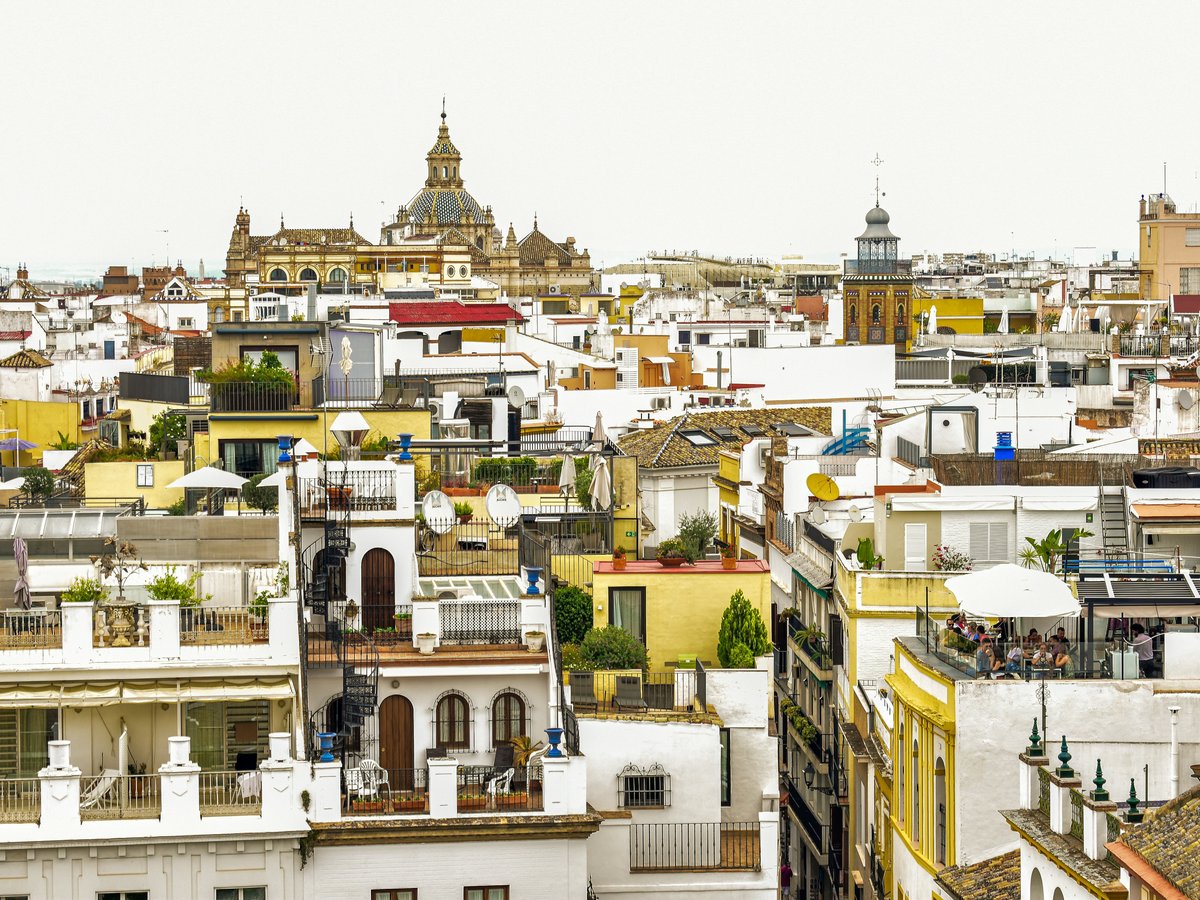
February in Seville is the city at its quietest and cheapest, with daytime temperatures around 18.8°C (66°F) that make walking the old quarter comfortable rather than punishing. Bitter orange trees line the streets of Santa Cruz and Triana, heavy with bright fruit. The faint citrus scent tends to catch first-time visitors off guard. This is low season. Hotel rates typically drop 30-40% below the spring peak, and you can walk into the Real Alcázar in 15 minutes rather than the 90-minute queue common in April.
The trade-off is real. Nights drop to around 8.5°C (47°F), so outdoor tapas on a Triana terrace requires a proper jacket. You'll likely see rain on about 5 days across the month, though February gets less rainfall (40mm) than March (129mm), October (111mm), or December (92mm). Seville's famous Semana Santa and Feria de Abril are still weeks away, so the theatrical energy of spring is absent. Mind you, that absence is part of the appeal. At the Real Alcázar, the Patio de las Doncellas is quiet enough in February to hear the fountain.
Carnaval de Sevilla brings costume parades and comparsas to the Alameda de Hércules area, typically in mid-to-late February depending on the Easter calendar. It's a local celebration with real energy, though travelers chasing the full carnival atmosphere tend to take the 90-minute train to Cádiz, where the festival is famously larger. February 28 is Día de Andalucía, a regional holiday that closes banks and many shops. The Zurich Maratón de Sevilla also takes place in late February. About 12,000 runners race through the historic center.
Why visit in February
- Hotel rates in Santa Cruz and Triana run 30-40% below the March-May peak, making February one of the cheapest months to visit Seville.
- Major attractions like the Real Alcázar and Catedral de Sevilla have minimal queues, rarely exceeding 15-20 minutes.
- Daytime highs around 18.8°C (66°F) are comfortable for long walking days through the historic center, without the heat-exhaustion risk of July's 38°C.
- February rainfall (40mm over roughly 5 days) is among the lowest of Seville's cooler months, well below January's 66mm or March's 129mm.
- The bitter orange harvest fills the streets of the old city with a distinct citrus scent that only lasts through late February.
Worth knowing
- Evenings cool to 8.5°C (47°F), which limits the warm-terrace outdoor dining Seville is known for. By 9pm, you'll want to eat indoors.
- Semana Santa, Feria de Abril, and the spring flamenco season have not started. February lacks the singular cultural spectacle that puts Seville on most travelers' lists.
- Shorter daylight hours (sunrise around 8:15am, sunset near 6:45pm) reduce the window for golden-hour photography at Plaza de España or along the Guadalquivir.
- Some smaller restaurants and family-run tapas bars in Santa Cruz and El Arenal keep reduced winter hours or close for a week-long annual vacation.
Best for
Think twice if
February in Seville is mild winter. Afternoons typically reach 18.8°C (66°F) under partly cloudy skies, while mornings and evenings sit closer to 8.5°C (47°F). That 10-degree daily swing is the defining feature of the month. Rainfall averages 40mm spread over about 5 days, usually arriving as short showers rather than all-day downpours. Humidity sits around 73%, noticeable in the morning chill but rarely oppressive. On clear days, sheltered plazas in Santa Cruz can feel 3-4°C warmer than the official reading.
Year-round climate
Averages from the last 5 years.
| Month | Avg high (°C) | Avg low (°C) | Rainfall (mm) |
|---|---|---|---|
| Jan | 16 | 7 | 66 |
| Feb | 19 | 9 | 40 |
| Mar | 20 | 10 | 129 |
| Apr | 24 | 13 | 40 |
| May | 29 | 16 | 18 |
| Jun | 33 | 20 | 16 |
| Jul | 38 | 22 | 0 |
| Aug | 37 | 23 | 3 |
| Sep | 31 | 19 | 34 |
| Oct | 27 | 17 | 111 |
| Nov | 20 | 11 | 52 |
| Dec | 17 | 8 | 92 |
Holidays and festivals in February
Public holidays
- Day of Andalucía(Día de Andalucía)28 February 2027
Best things to do in February
Walk the Real Alcázar without summer crowds
sightseeingFebruary means you can spend 2-3 unhurried hours inside the Real Alcázar, moving through the Patio de las Doncellas, the Salón de Embajadores, and the gardens without being pushed along by tour groups. The tilework in the Palacio de Pedro I catches winter light differently than in summer, with lower sun angles hitting the upper sections of the walls. You might have entire rooms to yourself on a Tuesday morning.
Low season drops visitor numbers to a fraction of the April-May peak. Queue times rarely exceed 15 minutes. Book tickets online to skip even that.Booking tipBuy timed-entry tickets on the Real Alcázar website. Morning slots before 11am tend to be quietest.
Explore Triana's ceramic workshops and market
cultureCross the Puente de Isabel II into Triana and walk Calle Alfarería, where ceramic workshops have operated since the 15th century. The Mercado de Triana sits on the remains of the Castillo de San Jorge, with a small Inquisition museum in the basement. Stalls inside sell fresh seafood, olives, and local cheeses. The neighborhood feels distinctly separate from the tourist center across the river.
February's cooler temperatures and thin crowds make Triana's narrow streets comfortable to wander. Workshop owners have more time to talk when business is slower.Booking tipNo booking needed. The market opens daily from around 9am to 3pm, though some stalls keep shorter Monday hours.
Attend a flamenco tablao performance
cultureSeville has roughly 15 active tablaos and peñas flamencas. The smaller peñas in Triana tend to draw more local audiences than the tourist-oriented venues in Santa Cruz. A typical show runs 60-90 minutes. The sound of palmas and heel strikes bouncing off tiled walls in a small room is a different experience from a theater stage. You can feel the vibration in the floor.
Without the spring tourist wave, smaller venues are easier to get into on shorter notice. Some peñas run winter-only recital series featuring local artists who perform on the bigger festival circuits in summer.Booking tipBook peña shows 2-3 days ahead online or by phone. Larger tablaos can often seat walk-ins on weekday evenings in February.
Climb the Giralda tower at the Catedral de Sevilla
sightseeingThe 35-ramp ascent (no stairs, because the muezzin rode a horse up) takes you to 70 meters above street level. On a clear February day, you can see past the Guadalquivir to the farmland and olive groves stretching toward Carmona. The cathedral below holds Columbus's tomb and the Capilla Real. February's mild temperatures make the enclosed ramp climb far more pleasant than the 38°C oven it becomes in July.
Clear winter days offer long sightlines from the top. The ramp is not air-conditioned, so the 18°C ambient temperature matters. Queue times at the cathedral drop well below the 45-60 minute spring average.Booking tipCombined cathedral-and-Giralda tickets are available online. Go early on a weekday for the shortest wait.
Day trip to Itálica Roman ruins
day_tripThe Roman city of Itálica sits 9km northwest of Seville, near the town of Santiponce. Emperor Trajan and Hadrian were both born here. The amphitheater held 25,000 spectators and is one of the largest surviving Roman amphitheaters. The mosaic floors in the Casa de los Pájaros and Casa del Planetario are still intact. February's mild weather makes walking the exposed site comfortable for an extended visit of 2-3 hours.
Summer heat turns the unshaded ruins into an endurance test above 35°C. February's 18°C highs and low visitor numbers let you explore at your own pace. The surrounding fields are green from winter rain.Booking tipBus M-172A runs from Plaza de Armas station to Santiponce in about 30 minutes. Check the reduced winter timetable, as departures are less frequent than in spring.
Walk the Parque de María Luisa and Plaza de España
sightseeingThe 34-hectare park was designed for the 1929 Ibero-American Exposition. February brings green lawns and blooming jasmine along the shaded paths. The Plaza de España's 48 tiled alcoves, each representing a Spanish province, are worth a slow circuit. Parakeets nest in the park's tall palms and are noisy in the morning. The ceramic benches along the canal stay dry enough to sit on most February afternoons.
Winter green and mild temperatures make the park's long walking paths comfortable. The Plaza de España typically has thin crowds, so you can photograph individual province alcoves without waiting for gaps in tour groups.Booking tipFree entry. Go before 11am on weekdays for near-empty conditions at Plaza de España.
Sample winter tapas along Calle Feria in La Macarena
foodCalle Feria in the Macarena neighborhood hosts a Thursday morning street market and a string of neighborhood bars that serve seasonal tapas year-round. February menus lean toward warming dishes. You'll likely find espinacas con garbanzos, cazón en adobo, and puchero at most stops. The bars here cater primarily to locals rather than tourists. The pace is slower than the Santa Cruz circuit.
Winter menus at Macarena's bars feature stews, braised meats, and hearty legume dishes that disappear from menus when temperatures rise in April. The Thursday rastro market on Calle Feria has operated since the 13th century.Booking tipNo reservations needed at most Calle Feria bars. The Thursday market runs roughly 9am to 2pm.
Visit the Museo de Bellas Artes
cultureHoused in the 17th-century Convento de la Merced, the museum holds Spain's second-largest collection of paintings after the Prado. Rooms dedicated to Murillo, Zurbarán, and Valdés Leal fill the former convent's galleries. The central cloister, with its Sevillian tile and quiet fountain, is worth the visit on its own. Most visitors spend 90 minutes to 2 hours inside.
The museum is free for EU citizens and inexpensive for others year-round, but February's low tourism means you can stand in front of Murillo's Inmaculada Concepción without a crowd 3 deep. Rainy February afternoons are well spent here.Booking tipFree entry for EU passport holders. No advance booking typically required in February.
What to eat in February
In season: fruit
Naranjas amargas
Seville's bitter oranges peak in January and February. The trees line nearly every street in the old city. The fruit is too bitter to eat raw, but it's the base of British-style marmalade and appears in local sauces and desserts. Some tapas bars serve pork loin in naranja amarga reduction during these weeks.
On menus now
Espinacas con garbanzos
Spinach and chickpea stew, spiced with cumin and a touch of vinegar. This is the classic Seville winter tapa, served at nearly every neighborhood bar in Triana and Macarena from November through February. The dish traces to the city's medieval Moorish and Jewish kitchens.
Puchero andaluz
A slow-cooked Andalusian stew with chickpeas, pork ribs, chicken, morcilla, carrots, and potatoes. Served in two courses. The broth comes first with thin noodles, then the meat and vegetables arrive on a separate plate. February's cool evenings make this the right dish at the right time.
Pestorejo
Slow-cooked pork snout, a traditional cold-weather tapa found in older bars across El Arenal and Triana. The meat is braised until tender, then often finished on a griddle until slightly crisp. A February specialty that largely disappears from menus by April.
Street food peaks
Churros con chocolate
Fried dough sticks dipped in thick hot chocolate. Sevillanos eat these for breakfast or merienda year-round, but consumption peaks in the cooler months from December through February. The texture should be crisp outside, soft inside, with the chocolate thick enough to coat.
In markets
Tagarninas
Wild thistle stems foraged from the fields outside Seville during the winter months. They appear in revueltos (scrambled eggs), stews, and sometimes sautéed with garlic. Spotting them on a menu is seasonal and somewhat unpredictable. Worth ordering when you find them.
Regular events in February
Carnaval de SevillaFree
Costume parades, comparsas, and chirigotas fill the Alameda de Hércules area over several days. The celebration is smaller and more local than the famous Cádiz Carnival 90 minutes south, but it has a neighborhood-party energy. Dates shift annually based on the Easter calendar, landing in mid-to-late February most years.
Mid-to-late February (moveable)Día de AndalucíaFree
February 28 marks the anniversary of the 1980 Andalusian autonomy referendum. Banks, government offices, and many shops close. Some restaurants in tourist areas stay open, but expect reduced hours. Celebrations include flag displays, cultural events, and free entry at select regional museums.
February 28Zurich Maratón de Sevilla
About 12,000 runners race a flat course through the historic center, passing the Catedral, Plaza de España, and the Guadalquivir riverbank. February temperatures of 10-18°C make the course one of Europe's fastest winter marathons. Road closures affect central Seville for most of the morning.
Late February (usually last Sunday)FIBES concert and exhibition season
Seville's FIBES convention center in Nervión runs a winter calendar of trade shows, concerts, and cultural exhibitions. The program varies year to year but February typically includes at least one or two large-scale events. Check the FIBES schedule closer to your travel dates.
Throughout FebruaryBest places this February
Real Alcázar
historic_siteMudéjar palace complex with gardens spanning over 7 hectares. Pedro I began the current palace in 1364. February's low crowds let you linger in the Patio de las Doncellas and Ambassador's Hall without being rushed. The gardens smell of orange blossom even in winter.
Santa CruzCatedral de Sevilla and Giralda
historic_siteThe largest Gothic cathedral in the world by area, completed in the early 16th century. The Giralda bell tower began as a 12th-century Almohad minaret. February queues are a fraction of spring levels.
CentroMuseo de Bellas Artes
museumSpain's second-largest painting collection, housed in a 17th-century convent. Murillo, Zurbarán, and Valdés Leal dominate the galleries. Free for EU citizens.
CentroBarrio de Santa Cruz
neighborhoodThe former Jewish quarter's narrow lanes and small plazas are atmospheric in winter, with bitter orange trees heavy with fruit and far fewer tour groups blocking the alleys. Plaza de los Venerables and Plaza de Doña Elvira are particularly quiet in February.
Santa CruzTriana
neighborhoodCeramic workshops on Calle Alfarería, the Mercado de Triana built over Inquisition-era ruins, and a riverside paseo with views back toward the cathedral tower. The neighborhood has its own distinct identity, rooted in flamenco, pottery, and maritime history.
TrianaPlaza de España
landmarkThe 1929 Exposition's centerpiece, with 48 tiled provincial alcoves, a curving canal, and a semicircular colonnade spanning 170 meters. February mornings offer near-empty conditions for photography.
Parque de María LuisaMetropol Parasol (Las Setas)
landmarkJürgen Mayer's wooden lattice structure in Plaza de la Encarnación, completed in 2011. The rooftop walkway gives panoramic views across the old city. The Antiquarium museum underneath displays Roman and Moorish archaeological remains found during construction.
CentroItálica
archaeological_siteRoman ruins 9km northwest of Seville, near Santiponce. Birthplace of emperors Trajan and Hadrian. The amphitheater, mosaic floors, and street grid are well-preserved. February's mild temperatures make the exposed site comfortable to explore.
Santiponce
Your packing checklist
Tick items off as you pack. Your progress saves in this browser.
All packed — have a great trip.
Insider tips
The Alameda de Hércules area north of the center has a cluster of bars and cafés that stay lively on winter evenings when the Santa Cruz tourist strip empties out. This is where younger Sevillanos tend to gather year-round.
For Carnaval, the real action is in the chirigotas performances, satirical singing groups that perform in the streets around Alameda. The humor is in local dialect and full of political references, but the energy is unmistakable even without fluent Spanish.
Mercado de Triana is better for a quick, inexpensive lunch at one of its counter-service stalls than as a grocery shop. The seafood stands serve fried fish and small plates that rival sit-down tapas bars across the river.
February is the tail end of the naranja amarga season. If you want to see the orange harvest at its peak, aim for the first two weeks. By late February, city crews begin collecting the fruit from the trees for export to British marmalade producers.
The rooftop walkway at Metropol Parasol (Las Setas) is especially worthwhile on clear February evenings around sunset. The low winter sun lights up the cathedral and Giralda from the west, and the walkway is rarely crowded this time of year.
Avoid these mistakes
- Packing only summer clothes because it is Spain. February nights at 8°C are genuinely cold, and a T-shirt at an outdoor dinner table by 9pm will leave you miserable.
- Assuming all tapas bars keep full hours in winter. Some family-run places in Santa Cruz and El Arenal close for a week-long annual vacation in February, and others shut early on weekday evenings. Check ahead for specific spots.
- Skipping Triana because it is across the river. The 5-minute walk over the Puente de Isabel II leads to Seville's most distinctive neighborhood, with better-value tapas bars and genuine ceramic workshops that the Santa Cruz side largely lacks.
- Planning a day trip on February 28 without realizing it is Día de Andalucía. Banks, museums, and many shops close for the regional holiday. Some restaurants in tourist zones stay open, but transport schedules may run on a Sunday timetable.
- Booking a hotel near the Nervión shopping district instead of central Santa Cruz or Triana. Nervión is convenient for the football stadium and FIBES, but it's a 25-minute walk or bus ride from the historic center and lacks the evening atmosphere.
Practical tips for February
Book Real Alcázar and Catedral tickets online before you arrive, even though February queues are short. Timed entry avoids any wait. The Seville Card bundles several attractions if you plan to visit 3 or more. Metro Line 1 connects the airport to Nervión, but the historic center is best reached by bus from the airport (EA line to Plaza de Armas, roughly 35 minutes). Most central Seville is walkable within 20-30 minutes. Carry cash for small tapas bars in Triana and Macarena, as some older establishments still prefer it. Siesta hours (roughly 2-5pm) are real in February. Many neighborhood shops close during this window. Restaurants typically serve lunch from 1:30pm to 3:30pm and dinner from 8:30pm onward. The tourist office on Plaza del Triunfo can provide a current events calendar and updated museum hours for the month.
FAQ
Is February a good time to visit Seville?
February is a solid choice if you prioritize low crowds and lower prices over warm evenings. Daytime highs around 18.8°C are comfortable for sightseeing, and major attractions like the Real Alcázar rarely have queues longer than 15-20 minutes. The trade-off is cooler evenings at 8-9°C and the absence of Seville's famous spring festivals. It tends to rank around 6th out of 12 months for visiting.
Does it rain a lot in Seville in February?
February averages about 40mm of rain spread over roughly 5 days, which is less than January (66mm), March (129mm), and several autumn months. Showers tend to be brief rather than all-day events. You might get a stretch of 2-3 overcast days, but week-long rain is uncommon. A compact umbrella handles most February weather.
What should I wear in Seville in February?
Layers work best. Mornings and evenings at 8-10°C call for a medium-weight jacket and a scarf. By midday, especially in sun-trapped plazas, temperatures feel closer to 20°C, so lighter shirts underneath let you adjust. Closed-toe walking shoes are important for cobblestones that can be slippery after rain. Sunglasses are useful on clear days, as Seville still averages about 6 hours of sunshine per day in February.
Is Carnaval in Seville worth attending?
Seville's Carnaval is a genuine local celebration centered on the Alameda de Hércules neighborhood, with costume parades, chirigotas (satirical singing groups), and street parties. It's fun and free. That said, it's considerably smaller than the famous Cádiz Carnival, which is a 90-minute train ride away. If carnival is your main reason for traveling, Cádiz is the bigger draw. But if you happen to be in Seville when it falls, the Alameda atmosphere is lively and worth an evening.
Are museums and attractions open on Día de Andalucía (February 28)?
February 28 is a regional public holiday. Banks and government offices close, and many shops follow. Some museums offer free entry for the day, but others close entirely. Check specific venues closer to your visit, as policies vary year to year. Restaurants in tourist areas generally stay open, though hours may be reduced. Public transport typically runs on a Sunday or holiday schedule.
Things to Do in Seville in February
 Free cancellation
 White Villages and Ronda Day Tour from Seville
Day trip: 10 hours, free cancellation.
via Viator
Alcazar, Cathedral and Giralda Guided Tour with Priority Tickets
City tour: 3.5 hours.
via Viator Free cancellation
 Cordoba & Carmona with Mezquita, Synagoge & Patios from Seville
Day trip: free cancellation.
via Viator Free cancellation
 3 Cities in One Day: Cordoba, White Village & Ronda from Sevilla
Day trip: 13 hours, free cancellation.
via Viator Free cancellation
 Tour Welcome to Seville in Eco Tuk Tuk Private with Local Guide
City tour: free cancellation.
via Viator Free cancellation
 Seville: Paella & Tapas Cooking Class + Triana Market Tour
Cooking class: 3.5 hours, free cancellation.
via ViatorFind a flight to Seville
Live fares to Seville appear here once cookies are accepted.
Last verified by automated review (v1.7.2) on . What is automated review?