Compare every Spain city in December →
Stay in Seville in December
98 hotels in the Trip.com pool for Seville, from US$16 a night.
Opens Trip.com on Fri 4 Dec to Sun 6 Dec 2026; change the dates there.
December in Seville is defined by its Christmas lights. The annual alumbrado navideño along Avenida de la Constitución draws hundreds of thousands of people into the Centro district every evening, and the display is genuinely worth the trip on its own. Daytime temperatures hover around 16.6°C (62°F), which feels mild if you arrive from northern Europe or the American northeast, though evenings drop to about 8.3°C (47°F). That coolness, after Seville's brutal 38°C summers, makes December one of the more comfortable months for walking the city on foot.
Rain is the trade-off. December averages 92mm across roughly 8 days, which puts it among Seville's wetter months alongside October and March. You might get a full week of dry skies, or you might catch 3 rainy days in a row. The showers tend to be intermittent rather than all-day soakers, but they will interrupt an afternoon in Parque de María Luisa if you are not prepared. Humidity sits around 82%, and on a grey morning in the Barrio de Santa Cruz, the damp stone walls carry a chill that the thermometer alone would not suggest.
That said, December sits in a sweet spot for certain travelers. Hotel rates stay well below the spring peaks of Semana Santa and Feria de Abril. The Real Alcázar, which can mean a 90-minute queue in April, often has 15-minute waits on a December weekday. The city smells of roasting chestnuts from street vendors along Calle Sierpes, polvorones from Estepa fill every bakery window, and the bitter orange trees lining the streets of Triana are heavy with fruit by mid-month. The harvest runs through January.
Why visit in December
- Comfortable walking temperatures of 16-17°C after the punishing 38°C summer heat, with daylight from roughly 8:30 to 18:00 giving solid sightseeing hours
- The alumbrado navideño Christmas lights on Avenida de la Constitución and Plaza de San Francisco rank among Spain's most elaborate, drawing visitors from across Andalucía each evening from late November through early January
- Queue times at the Real Alcázar and Catedral de Sevilla drop to a fraction of their spring peaks, often under 20 minutes on weekday mornings compared to 60-90 minutes during Semana Santa
- Seasonal Andalusian food peaks in December. Polvorones and mantecados from nearby Estepa, pestiños drizzled with orange-blossom honey, and hearty winter tapas like espinacas con garbanzos appear on every bar menu in Triana and Santa Cruz
- Hotel rates run 30-40% below the April Feria peak, and flights from northern European hubs are competitive because Seville is not yet a mainstream winter-sun destination the way Málaga or the Canaries are
Worth knowing
- December averages 92mm of rain across 8 days, making it one of Seville's wettest months. A rainy stretch can turn 3 consecutive days grey and damp, limiting outdoor plans in Parque de María Luisa and the open courtyards of Plaza de España
- Evenings cool to 8.3°C (47°F) with 82% humidity, which feels colder than the number suggests. If you are coming from a dry climate, the damp chill in narrow streets like those of the Barrio de Santa Cruz catches you off guard
- Some restaurants and smaller museums reduce hours or close entirely between December 24 and January 1. Nochebuena (December 24) and Día de Navidad (December 25) shut down most of the city beyond hotel restaurants
- Daylight is limited to about 9.5 hours, with sunset around 18:00. That compresses the window for outdoor photography and means afternoon activities shift indoors earlier than summer visitors expect
Best for
Think twice if
Mild by European winter standards, though wetter than many visitors expect. Mornings start cool around 8°C with frequent fog along the Guadalquivir. By early afternoon, temperatures reach 16-17°C on clear days, comfortable enough for a light jacket. Cloud cover is common, and when it rains, the showers tend to come in bursts of 1-2 hours rather than all-day drizzle. The 82% average humidity adds a damp edge to the cold that dry-climate travelers notice immediately. Clear December days in Seville feel like a gift. The light is low and golden on the tiles of the Real Alcázar, and the air carries the faint citrus scent of 40,000 bitter orange trees approaching ripeness.
Year-round climate
Averages from the last 5 years.
| Month | Avg high (°C) | Avg low (°C) | Rainfall (mm) |
|---|---|---|---|
| Jan | 16 | 7 | 66 |
| Feb | 19 | 9 | 40 |
| Mar | 20 | 10 | 129 |
| Apr | 24 | 13 | 40 |
| May | 29 | 16 | 18 |
| Jun | 33 | 20 | 16 |
| Jul | 38 | 22 | 0 |
| Aug | 37 | 23 | 3 |
| Sep | 31 | 19 | 34 |
| Oct | 27 | 17 | 111 |
| Nov | 20 | 11 | 52 |
| Dec | 17 | 8 | 92 |
Holidays and festivals in December
Public holidays
- Constitution Day(Día de la Constitución)6 December 2026
- Immaculate Conception(Inmaculada Concepción)8 December 2026
- Christmas Day(Navidad)25 December 2026
- St. Stephen's Day(Feast of Saint Stephen)26 December 2026
When is Christmas season in 2026?
27 November to 26 December 2026
Christmas season is a major cultural celebration in Seville. In 2026 it runs from 27 November to 26 December 2026.
Headline events
Navidad en Sevilla (Christmas in Seville)
Late November through January 6 (Día de Reyes), with peak activity December 8-31
Seville's Christmas season transforms the city centre from late November through early January. The alumbrado navideño lights on Avenida de la Constitución draw nightly crowds in the hundreds of thousands. Elaborate belenes (nativity scenes) appear in churches and public buildings across the city, with the display inside the Catedral de Sevilla among the largest. Plaza de San Francisco hosts a Christmas market, and the streets of Centro fill with chestnut vendors, carol singers, and families on the evening paseo. The atmosphere peaks between December 8 (Inmaculada Concepción) and December 24 (Nochebuena).
Best things to do in December
Walk the Alumbrado Navideño on Avenida de la Constitución
culturalThe Christmas light display runs from Plaza Nueva south along Avenida de la Constitución past the Catedral de Sevilla. The installation changes design each year, and the scale is large enough to justify a dedicated evening walk. The lights switch on around 18:30, and the avenue fills quickly with families and couples on the nightly paseo. Street vendors sell roasted chestnuts and churros along the route.
The lights run from late November through early January, but December is the heart of the season. The display peaks between December 8 and December 31.Booking tipNo booking needed. Go on a weeknight before 20:00 to avoid the thickest weekend crowds. Start from Plaza Nueva and walk south.
Visit the Belenes (Nativity Scenes) Across the City's Churches
culturalSeville's churches set up elaborate nativity scenes throughout December, some with hundreds of hand-painted figures and detailed landscape dioramas. The belén inside the Catedral de Sevilla is the largest, but smaller churches in the Macarena and San Lorenzo neighborhoods often have more intricate, personal displays. The tradition dates back centuries, and local families visit multiple belenes over the month, comparing craftsmanship.
Belenes are installed from early December through January 6 (Día de Reyes). Most are only accessible during December and the first week of January.Booking tipFree entry at nearly all churches. The Catedral's belén requires a cathedral ticket (around 12 EUR for adults), but many of the best displays are in free-entry parish churches.
Tour the Real Alcázar with Short Queues
sightseeingThe Mudéjar palace and its gardens are Seville's most visited site, and December's lower foot traffic means you can spend time in rooms like the Salón de Embajadores without being herded forward by the crowd. The gardens, planted with citrus and palm, stay green through winter. The tile work in the Patio de las Doncellas catches the low December sun at angles that summer visitors never see.
Queue times drop from 60-90 minutes in spring to under 20 minutes on December weekdays. Online pre-booking still helps, but walk-up entry is realistic.Booking tipBook online 1-2 days ahead for a morning slot. Weekday mornings before 11:00 are the quietest. Tickets are around 14.50 EUR for adults.
Attend the Baile de los Seises at the Catedral de Sevilla on December 8
culturalOn the Feast of the Immaculate Conception, 10 choirboys perform a centuries-old dance before the high altar of the Catedral de Sevilla. The dance dates to at least the 16th century, and the boys wear Renaissance-era costumes of blue and white. The performance is short, roughly 20 minutes, but the setting inside the largest Gothic cathedral in the world gives it a weight that few other December events in Europe carry.
The Baile de los Seises occurs on December 8, the Día de la Inmaculada Concepción. This is one of only a few dates each year when the dance is performed.Booking tipFree to attend, but arrive at the Catedral at least 45 minutes early to secure a spot with a good sightline. December 8 is a national holiday, so the cathedral draws large crowds.
Evening Flamenco at a Triana or Santa Cruz Tablao
culturalDecember's cooler evenings and lower tourist numbers make it a good month for flamenco. The intimate tablaos in Triana and Santa Cruz seat 50-100 people, and in December, you are more likely to be sitting alongside local aficionados than tour groups. The sound of palmas (hand-clapping) and cante (singing) in a small room on a cold night, with a glass of manzanilla in hand, is a different sensory experience from watching flamenco on a warm summer terrace.
Fewer tourists means better seat availability and a higher local-to-visitor ratio in the audience. Performers tend to play more loosely when the room is not packed with package-tour attendees.Booking tipBook 3-5 days ahead for weekend shows. Weeknight performances are typically easier to walk into. Expect to pay 20-35 EUR per person including a drink.
Winter Tapas Crawl Through Triana
foodCross the Puente de Isabel II into Triana and follow Calle Betis along the river before turning into the market streets. December menus lean toward winter dishes. Espinacas con garbanzos, pringá montaditos, slow-braised carrillada (pork cheeks), and croquetas de jamón are at their best when the weather calls for something warm. The bars around Mercado de Triana and along Calle San Jacinto stay busy with locals through the evening.
Winter tapas menus only appear from November through February. Dishes like espinacas con garbanzos and pringá are seasonal, and December is when the stew pots are fullest.Booking tipNo reservations needed at most tapas bars. Arrive before 14:00 for lunch or 21:00 for dinner to avoid standing waits at the most popular spots on Calle Betis.
Browse the Christmas Market at Plaza de San Francisco
shoppingThe market stalls on Plaza de San Francisco sell handmade ornaments, artisan crafts, regional sweets, and small gifts. It is not on the scale of German Christmas markets, but the setting beneath the illuminated facade of the Ayuntamiento (city hall) and the mild December air make it a comfortable evening browse. Stalls selling polvorones, turrón, and hot chocolate cluster on the east side of the plaza.
The market runs from early December through late December or early January, depending on the year. It overlaps with the alumbrado navideño, making it part of the same evening circuit.Booking tipFree entry. Evenings after 19:00 are the liveliest, as families combine the market with the Christmas lights walk.
Climb the Giralda Tower for Winter Light Over the City
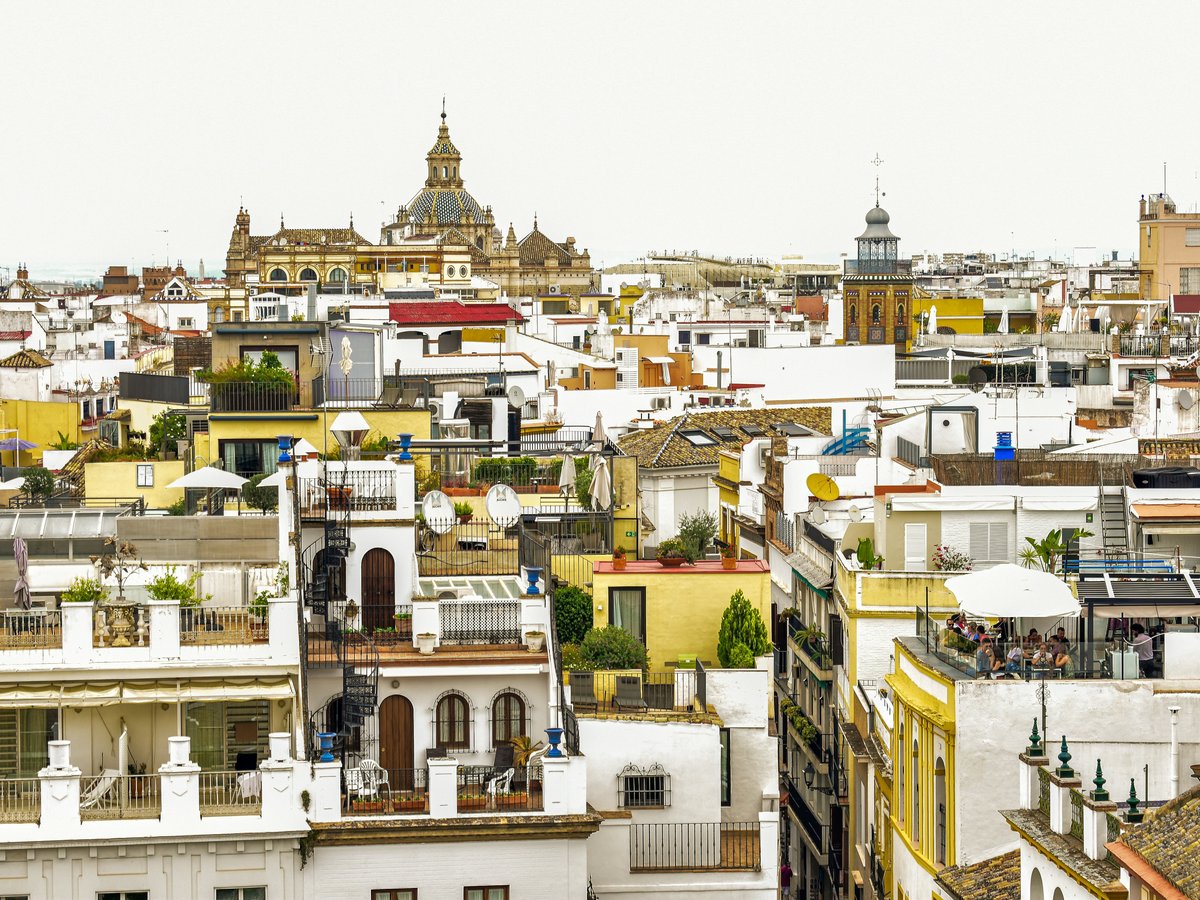
sightseeingThe 35-ramp ascent of the Giralda, the bell tower of the Catedral de Sevilla, rewards with views over the rooftops of Santa Cruz, the Guadalquivir river, and the Alcázar gardens. December's low-angle afternoon sun turns the city's terracotta roofscape a deep amber, and the clear-day visibility on a crisp December afternoon often extends to the Sierra Norte foothills to the north.
The low winter sun creates different light from summer. Combined with shorter queue times, December mornings and early afternoons are ideal for photography from the top.Booking tipIncluded in the Catedral ticket (around 12 EUR). Go before 12:00 on a clear day for the best light and shortest wait.
What to eat in December
On menus now
Espinacas con Garbanzos
Seville's signature winter tapa. Spinach and chickpeas stewed with cumin, garlic, and a splash of sherry vinegar. It appears on menus year-round in touristy spots, but December is when every neighborhood bar in Triana and Macarena serves it properly, thick and warming. The dish traces back to Moorish-era cooking and still tastes best eaten standing at a zinc bar counter on a damp evening.
Pringá
A slow-cooked stew of pork, morcilla (blood sausage), and chorizo, shredded and served on a small roll as a montadito. Pringá is a cold-weather staple in Seville's tapas bars, particularly in the Triana and Macarena neighborhoods. The meat cooks for hours until it falls apart. The fat-rich warmth of it on a rainy December evening at a bar on Calle Betis makes the weather feel like less of a drawback.
In markets
Naranjas Amargas (Seville Bitter Oranges)
The 40,000-plus bitter orange trees lining Seville's streets start to ripen in December. You cannot eat them raw. They are too sour. But this is the fruit that makes genuine Seville orange marmalade, and local shops sell small-batch preserves made from the current harvest. The scent of citrus in the December air along Calle San Fernando is one of the most distinctive sensory markers of this season.
Festival food
Polvorones and Mantecados
These crumbly shortbreads come from Estepa, about 110km east of Seville. Polvorones are almond-based, mantecados use lard and cinnamon. December is the only month when every bakery, supermarket, and bar in the city stocks fresh batches. The texture is dry and powdery, meant to dissolve on your tongue. Sevillanos buy them by the kilo from Mercado de Triana, where they cost roughly half the tourist-shop price in Santa Cruz.
Pestiños
Fried dough pastries glazed with orange-blossom honey or dusted with sugar. Pestiños appear in Seville's bakeries from early December through Semana Santa, but the Christmas batch tends to be the freshest. The orange-blossom honey version carries a floral sweetness that pairs well with a cortado at any bar in the Alameda de Hércules neighborhood.
Turrón
Spanish nougat made from almonds, honey, sugar, and egg white. The two main varieties are turrón de Jijona (soft, paste-like) and turrón de Alicante (hard, with whole almonds). December is peak turrón season across Spain, and Seville's Mercado de la Encarnación and Mercado de Triana stock regional artisan versions alongside the industrial brands.
Regular events in December
Día de la Inmaculada ConcepciónFree
National public holiday on December 8. In Seville, it is marked by the Baile de los Seises at the Catedral and processions through Centro. Many shops close, but restaurants and bars remain open. The day has a festive, family-oriented atmosphere across the city.
December 8Nochebuena (Christmas Eve)Free
December 24 is the main family celebration in Seville, more significant than Christmas Day itself. The city goes quiet after about 15:00 as families gather for dinner. Most restaurants, museums, and shops close by mid-afternoon. The streets empty out in a way that feels strange if you are used to Anglo-Saxon Christmas Eve traditions.
December 24Nochevieja (New Year's Eve)Free
Sevillanos gather in public squares to eat 12 grapes at midnight, one for each bell strike. Plaza Nueva and Avenida de la Constitución are the main gathering spots. The tradition is practiced across Spain, but Seville's mild December temperatures (around 8-10°C at midnight, compared to sub-zero in Madrid) make outdoor celebrations more comfortable. Bars and restaurants in the Alameda de Hércules neighborhood host ticketed dinner-and-party events.
December 31Día de los Santos InocentesFree
Spain's equivalent of April Fools' Day falls on December 28. Expect practical jokes in offices, prank headlines in local newspapers like the Diario de Sevilla, and a generally playful atmosphere. Some bars and restaurants run tongue-in-cheek specials. It is a minor observance, but if you see something that seems too absurd to be true on December 28, it probably is.
December 28Zambomba FlamencaFree
Informal flamenco-style Christmas singing gatherings held in patios, bars, and cultural centres across Triana and other neighborhoods throughout December. The zambomba is a friction drum that gives the tradition its name. Participants sing villancicos (carols) in flamenco style with palmas, guitar, and the rhythmic drone of the zambomba. These events range from organized tablao performances to spontaneous bar gatherings.
Throughout December, especially weekends from December 1-23Best places this December
Avenida de la Constitución
streetThe main artery running south from Plaza Nueva past the Catedral and the Archivo de Indias. In December, the street becomes the stage for the alumbrado navideño light display. After 18:30, the crowds arrive for the nightly paseo beneath the lights. On clear December evenings, the illuminated spire of the Giralda framed by the overhead light canopy is the defining image of the season.
CentroReal Alcázar
palaceThe Mudéjar palace complex is at its most accessible in December. The gardens hold their green through winter, and the tile work in the Salón de Embajadores and Patio de las Doncellas catches the low sun at steep angles. December mornings in the Patio de las Muñecas are quiet enough to hear the fountain clearly, a small thing you will not experience in a packed April visit.
Santa CruzMercado de Triana
marketThe covered market on the Triana side of the Puente de Isabel II stocks December's seasonal goods. Polvorones and mantecados from Estepa, fresh Seville oranges for marmalade, winter produce, and cured Iberian ham. The market is busiest on Saturday mornings, and the surrounding bars on Calle San Jorge serve some of the neighborhood's best winter tapas.
TrianaMetropol Parasol (Las Setas)
viewpointThe mushroom-shaped wooden structure on Plaza de la Encarnación offers a rooftop walkway with 360-degree views. December's cool temperatures make the open-air walkway comfortable at midday, unlike the baking summer months. On a clear day, the view south toward the Catedral and east toward the Macarena neighborhood is sharp. The Antiquarium museum beneath the structure, displaying Roman and Moorish ruins, is a useful rain-day backup.
CentroParque de María Luisa
parkSeville's largest central park stays green year-round thanks to its Mediterranean plantings. December temperatures of 16°C make it comfortable for a long walk, and the pathways are far less crowded than in spring. The Plaza de España, at the park's northern edge, is particularly photogenic in the low December light. Bring a layer for shade under the dense canopy, where the damp cool holds.
SurBarrio de Santa Cruz
neighborhoodThe former Jewish quarter's narrow lanes and tile-walled patios take on a quieter character in December. Without summer's crowds, you can wander Calle Agua and Plaza de los Venerables at your own pace. The orange trees lining the streets are heavy with ripening fruit by mid-month, and the scent of citrus in the cool air is strongest on still mornings. Several churches in the neighborhood display belenes through early January.
Santa CruzAlameda de Hércules
plazaThe long rectangular plaza in the Macarena district is Seville's main nightlife and cafe-culture zone. In December, the terrace bars set up outdoor heaters and blankets, and the crowd tilts local. The Nochevieja celebrations here are popular with younger sevillanos, and the bars along the plaza's western edge host zambomba flamenca gatherings on December weekends.
Macarena
Your packing checklist
Tick items off as you pack. Your progress saves in this browser.
All packed — have a great trip.
Insider tips
Polvorones from Estepa are significantly cheaper at Mercado de Triana and neighbourhood bakeries in Macarena than at the gift shops around the Catedral and Plaza del Triunfo. The product is identical. The markup in the tourist zone is roughly double.
The best belenes (nativity scenes) are not in the Catedral. The smaller parish churches in Macarena and San Lorenzo set up displays with more craft and local character, and they are free to visit. Ask at any neighbourhood bar which church has the best belén that year, as the displays change.
For the Christmas lights on Avenida de la Constitución, walk south from Plaza Nueva rather than starting from the Catedral end. Most visitors cluster near the Catedral, so the northern stretch of the avenue is less packed early in the evening. Tuesday and Wednesday nights are the quietest.
Zambomba flamenca gatherings in Triana patios are the most authentic December cultural experience in the city, and many are free. Check the weekly listings in the Diario de Sevilla or ask at any flamenco tablao for dates. These are not tourist events. The singing, the palmas, and the friction drum fill a patio with a sound you will not hear at any other time of year.
If you are spending Nochevieja in Seville, buy your bag of 12 grapes early on December 31. Supermarkets sell pre-peeled, pre-seeded grape packs specifically for the midnight tradition. By evening, the convenient packs sell out, and you will be trying to eat 12 full-sized grapes in 12 seconds at midnight. It is harder than it sounds.
Avoid these mistakes
- Planning every day around outdoor activities without rain backup options. December's 8 rainy days can cluster into 2-3 consecutive wet days. Have indoor alternatives ready. Museo de Bellas Artes, the Archivo de Indias, and the Antiquarium beneath Metropol Parasol are all strong wet-weather choices in different parts of the city.
- Underdressing for evenings. Visitors who packed for 16°C daytime temperatures are caught off guard by the drop to 8°C after sunset, especially with 82% humidity. The damp cold in the narrow streets of Santa Cruz feels colder than the thermometer reading. Bring a proper jacket, not a light cardigan.
- Expecting restaurants and attractions to operate on normal hours between December 24 and January 1. Nochebuena (December 24) effectively shuts the city down from mid-afternoon. December 25 is quiet. Many smaller museums close for several days. Plan your itinerary around these closures if your trip overlaps with the holiday week.
- Skipping Triana entirely. Many first-time visitors stay in Santa Cruz or Centro and never cross the Puente de Isabel II. In December, Triana's tapas bars, market, and zambomba gatherings are where the local winter character of Seville is strongest. It is a 10-minute walk from the Catedral.
Practical tips for December
Book Real Alcázar tickets online 2-3 days in advance, even in December. Walk-up entry is possible on quiet weekdays, but pre-booking guarantees your time slot and costs nothing extra. If your trip spans December 24-26, stock up on groceries by December 23. Supermarkets close early on the 24th and most stay closed on the 25th. Restaurant options on Nochebuena and Navidad are limited to hotel dining rooms and a handful of tapas bars in Centro that cater to tourists. For Nochevieja dinner, book by mid-December. Popular restaurants in Alameda de Hércules and Triana fill their fixed-price New Year's Eve seatings weeks ahead. The Seville Card tourist pass covers the Alcázar, Catedral, and several museums at a bundled rate. In December it is especially good value because short queues mean you can visit 2-3 sites in a single morning without the time pressure of summer. Dress in layers. The 8°C-to-17°C daily range means you will want a warm jacket at 9:00, a light shirt by 14:00, and the jacket again by 18:00. Public transport (TUSSAM buses and Metro Line 1) runs on reduced holiday schedules from December 24 through January 1. Check tussam.es for the specific dates. Taxis are plentiful year-round, and Uber and Cabify both operate in Seville.
FAQ
Is December a good time to visit Seville?
December is a good, not great, time to visit. You get comfortable walking temperatures of 16-17°C, short queues at the Real Alcázar and Catedral, Christmas lights that are worth the trip, and hotel rates 30-40% below the spring peaks. The trade-offs are 92mm of rain across about 8 days, short daylight hours (sunset around 18:00), and reduced hours or closures at some businesses over the Christmas holiday week. If you want the best weather with fewer crowds, October or November are stronger choices. But if mild winter temperatures, Christmas atmosphere, and lower prices appeal to you, December is a solid option.
What is the weather like in Seville in December?
Expect daytime highs around 16.6°C (62°F) and overnight lows near 8.3°C (47°F). Rainfall averages 92mm spread across roughly 8 days, making it one of the wetter months alongside October (111mm) and March (129mm). Humidity sits at 82%, which makes the cooler temperatures feel a bit sharper than the numbers suggest, especially in the narrow shaded streets of Santa Cruz. Sunny days feel genuinely pleasant for walking. Rainy days tend to come in intermittent bursts rather than all-day downpours. Snow is essentially unheard of.
Is Seville crowded in December?
Moderately. December falls between the quiet low season of January-February and the packed spring peak of Semana Santa and Feria de Abril. The Christmas lights on Avenida de la Constitución draw large local crowds every evening, especially on weekends and around December 8 (Inmaculada). The Real Alcázar and Catedral are noticeably less crowded than in spring, with queue times often under 20 minutes on weekdays. The Christmas-to-New-Year week (December 22-31) brings a bump in tourist numbers, but nothing approaching April levels.
What are the best Christmas events in Seville in December?
The alumbrado navideño (Christmas lights) along Avenida de la Constitución is the centrepiece, running from late November through early January. The Baile de los Seises at the Catedral de Sevilla on December 8 is a centuries-old choirboy dance performed for the Feast of the Immaculate Conception. Belenes (nativity scenes) appear in churches across the city, with particularly good ones in the Macarena and San Lorenzo parishes. Zambomba flamenca gatherings in Triana patios feature flamenco-style carol singing with friction drums throughout December. The Christmas market on Plaza de San Francisco sells artisan crafts and seasonal sweets.
What should I wear in Seville in December?
Layers are essential. Mornings start around 8°C and afternoons reach 16-17°C, so you will be adding and removing clothing throughout the day. A waterproof jacket with a hood is the most important single item, given the 92mm average rainfall. Wear shoes with rubber soles that grip wet cobblestones, especially if you plan to walk the hilly streets of Santa Cruz or the riverside in Triana. Bring a warm sweater or fleece for evenings, when the humidity makes 8°C feel colder than expected. Sunglasses are useful on clear days, as the low winter sun sits right at eye level during afternoon walks.
Things to Do in Seville in December
 Free cancellation
 White Villages and Ronda Day Tour from Seville
Day trip: 10 hours, free cancellation.
via Viator
Alcazar, Cathedral and Giralda Guided Tour with Priority Tickets
City tour: 3.5 hours.
via Viator Free cancellation
 Cordoba & Carmona with Mezquita, Synagoge & Patios from Seville
Day trip: free cancellation.
via Viator Free cancellation
 3 Cities in One Day: Cordoba, White Village & Ronda from Sevilla
Day trip: 13 hours, free cancellation.
via Viator Free cancellation
 Alcazar of Seville: Exclusive Early Access Tour
City tour: 1.5 hours, free cancellation.
via Viator Free cancellation
 Tour Welcome to Seville in Eco Tuk Tuk Private with Local Guide
City tour: free cancellation.
via ViatorFind a flight to Seville
Live fares to Seville appear here once cookies are accepted.
Last verified by automated review (v1.7.2) on . What is automated review?