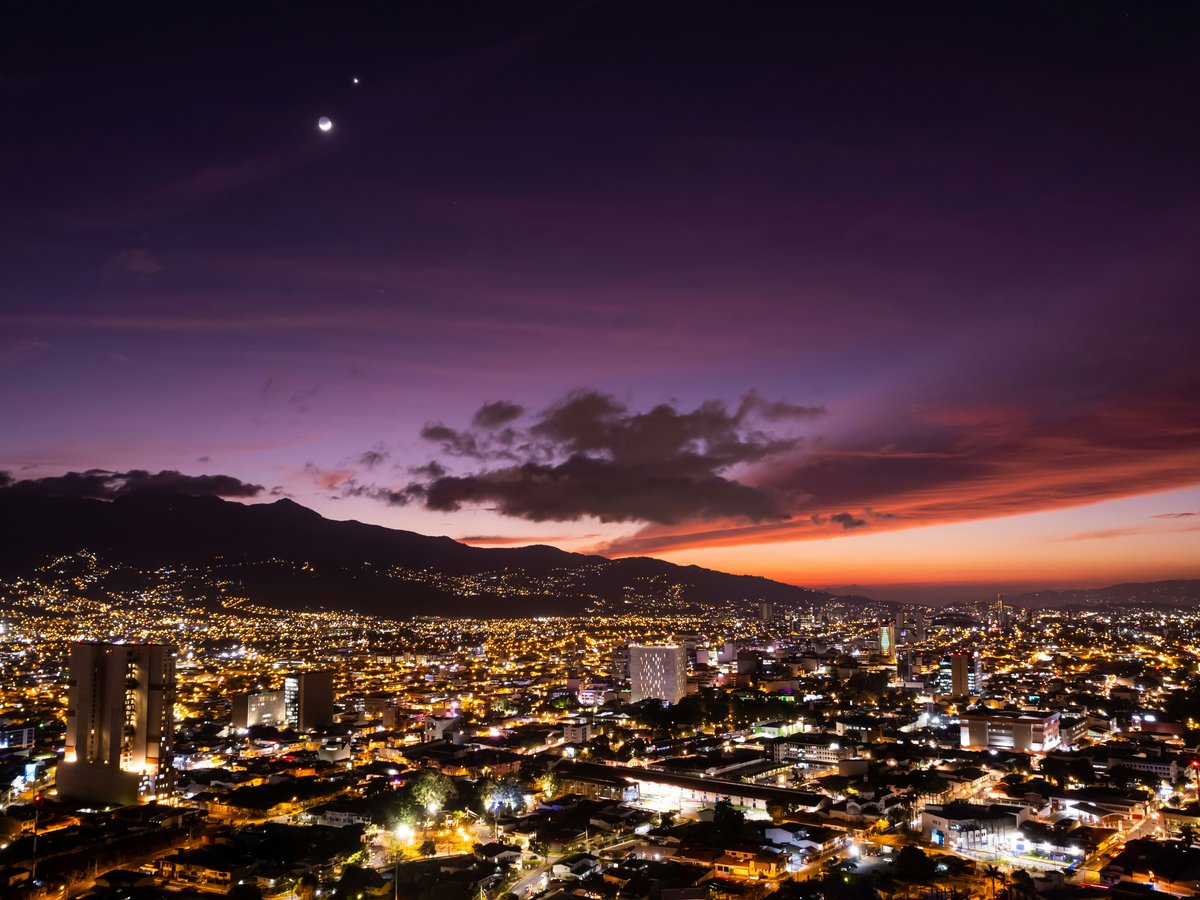
Stay in San José in April
Opens Trip.com on Fri 2 Apr to Sun 4 Apr 2027; change the dates there.
April in San José sits right on the fault line between dry season and green season, and you can feel the shift. The first couple of weeks still carry the warmth and clarity of verano: mornings tend to be sunny, the air smells of coffee blossoms drifting down from the Central Valley hillsides, and daytime temperatures hover around 27°C (80°F). Then the afternoon rains start showing up. Not the all-day downpours that define September or October, but reliable late-afternoon showers that roll in around 2 or 3 PM, drench everything for an hour, and leave the streets steaming. Rainfall jumps to roughly 145mm for the month, nearly triple what March sees. The city turns noticeably greener almost overnight.
If Semana Santa falls in April (and it does in many years) that changes the equation entirely. San José empties out. Ticos head for the coast, businesses shut for the week, and the capital takes on this strange, quiet quality that's either peaceful or eerie depending on your disposition. The religious processions through Barrio Amón and around the Catedral Metropolitana are genuinely moving if you happen to be here for them, with solemn floats and incense hanging in the humid air. Outside of Holy Week, though, April is a shoulder month in the truest sense: fewer tourists than the December-through-March high season, prices easing downward, and a city that feels like it belongs to the people who live here.
The honest assessment: April is a perfectly solid time to visit San José, just not the optimal one. You'll likely get rained on most afternoons. You might find your favorite restaurant closed for Semana Santa. But you'll also find a city that's less performative, less expensive, and (once those rains hit) startlingly lush. The surrounding volcanoes come into sharper relief against storm clouds. That trade-off works well for the right traveler.
Why visit in April
- Dry-to-green season transition means mornings are still mostly clear and warm, with reliable afternoon patterns you can plan around: schedule outdoor time before 2 PM and you'll rarely get caught out
- Tourist numbers drop noticeably from the January-March high season, which means shorter lines at Museo Nacional, easier tables in Barrio Escalante restaurants, and hotel rates starting their green-season slide
- Semana Santa processions (when Easter falls in April) offer some of the most culturally authentic experiences in the capital: the candlelit evening processions through Barrio Amón carry genuine emotional weight
- The landscape transformation is dramatic: hills around the Central Valley shift from dry-season brown to deep green within weeks, making day trips to places like Volcán Irazú and Volcán Poás especially photogenic
- Día de Juan Santamaría on April 11 brings parades, school marching bands, and a national holiday atmosphere that gives you a window into Costa Rican civic pride that most tourists never encounter
Worth knowing
- Afternoon rains become a daily fixture by mid-April: 145mm across roughly 15 rainy days means your post-lunch plans will regularly need a rain contingency, and outdoor markets or walking tours scheduled after 2 PM are a gamble
- Semana Santa closures can catch visitors off guard: many restaurants, shops, and even some museums close for three to five days, and the city feels genuinely deserted as residents leave for beach towns
- Humidity climbs to around 72%, which combined with 27°C highs creates a sticky, close quality to the air that takes some adjusting to, especially if you're walking the hilly streets of Los Yoses or San Pedro
- The transition timing is unpredictable: some Aprils the rains hold off until the last week, others they arrive in force by April 10, and there's no reliable way to predict which pattern you'll get
Best for
Think twice if
April is the transition month, and you feel it in the air. Mornings typically start clear and warm: sometimes with a thin haze over the mountains that burns off by 10 AM. By early afternoon, clouds build over the cordilleras to the south and east, and by 2 or 3 PM the rain arrives. It tends to come in sharp, concentrated bursts rather than dreary all-day drizzle. Thunder rolls through the valley. The smell of wet pavement and damp earth fills the streets. Then it stops, the sun might peek back out for an hour before dusk, and the evening cools down to a comfortable 17°C (62°F). The pattern is remarkably consistent once it establishes, though the first week of April can still feel like proper dry season. Average highs reach 26.8°C (80°F) and lows settle around 16.6°C (62°F): warm but not punishing, especially compared to lowland cities on the Pacific coast. Total rainfall hits about 145mm spread across 15 days, with humidity sitting around 72%. Worth noting: San José sits at roughly 1,170 meters elevation, so even when it's warm, the air has a different quality than coastal heat. Nights can feel genuinely cool, especially after a rain.
Seasonal caution
- Afternoon thunderstorms can produce intense lightning over the Central Valley: avoid exposed high ground and ridgeline trails after 1 PM, and be cautious at open-air viewpoints like those at Volcán Irazú if clouds are building
- Flash flooding occasionally affects low-lying areas near the Río Torres and Río María Aguilar after particularly heavy downpours: avoid walking along riverbanks during or immediately after storms
Year-round climate
Averages from the last 5 years.
| Month | Avg high (°C) | Avg low (°C) | Rainfall (mm) |
|---|---|---|---|
| Jan | 25 | 16 | 30 |
| Feb | 26 | 16 | 17 |
| Mar | 27 | 16 | 52 |
| Apr | 27 | 17 | 145 |
| May | 26 | 17 | 317 |
| Jun | 24 | 17 | 458 |
| Jul | 25 | 17 | 354 |
| Aug | 25 | 16 | 452 |
| Sep | 25 | 16 | 456 |
| Oct | 24 | 16 | 546 |
| Nov | 24 | 16 | 355 |
| Dec | 25 | 16 | 72 |
Holidays and festivals in April
Public holidays
- Juan Santamaría Day(Día de Juan Santamaría)11 April 2027
Headline events
Semana Santa
Variable: the week leading to Easter Sunday (falls in March or April depending on the year)
Holy Week transforms San José when Easter falls in April. Solemn religious processions wind through the historic center, with elaborate floats carried through Barrio Amón and past the Catedral Metropolitana. The city simultaneously empties as Ticos leave for the coast, creating a surreal atmosphere: packed churches alongside shuttered restaurants. The procession on Viernes Santo (Good Friday) is the emotional peak, with incense, chanting, and candlelit floats moving through streets that would normally be gridlocked with traffic. A genuinely unique window into Costa Rican faith and culture.
Best things to do in April
Attend Semana Santa processions in the historic center
culturalThe evening processions during Holy Week are unlike anything else in San José's cultural calendar. Floats depicting the Passion are carried on the shoulders of congregants through the narrow streets of the historic center, past the Teatro Nacional and through Barrio Amón. The smell of copal incense, the sound of brass bands playing dirges, the purple-robed figures: it's somber and beautiful. The Viernes Santo procession from the Catedral Metropolitana is the largest, sometimes drawing thousands of participants.
Semana Santa only happens once a year, and when it falls in April, the city's religious observance reaches its annual peak: this is the single most culturally immersive week in San JoséBooking tipNo booking needed: processions are public and free. Arrive 30-45 minutes early to find a spot along the route near the cathedral for the best vantage point.
Day trip to Volcán Irazú with storm-cloud drama
natureCosta Rica's tallest volcano at 3,432 meters sits about 90 minutes from San José, and April mornings offer some of the clearest views of the year into the acid-green crater lake. The trick is leaving San José by 6 AM: you'll be at the summit in clear skies while the afternoon storms are still building below you. On a good morning, you can see both the Caribbean and Pacific coasts. By noon, cloud banks start climbing the slopes, creating a dramatic show as the weather closes in around you.
April's morning-clear, afternoon-storm pattern creates the most dramatic volcanic landscapes of the year: clear summit views followed by watching thunderclouds form below you in the valleyBooking tipDepart San José no later than 6:30 AM. The park opens at 8 AM and clouds typically obscure the crater by 11 AM. Tour operators run early-morning shuttles: book any morning departure, not afternoon.
Explore Barrio Escalante's food scene during the green-season lull
foodSan José's best eating neighborhood (concentrated along Calle 33 and the surrounding blocks) is noticeably less crowded in April than during high season. The restaurants that draw hour-long waits in February are suddenly walk-in friendly. This is the neighborhood where Costa Rica's new wave of chefs have set up shop, drawing on both traditional Tico ingredients and broader Latin American and Asian techniques. The quality of the cooking here would surprise anyone whose image of Costa Rican food stops at gallo pinto.
The post-high-season lull means easier access to restaurants that are difficult to get into from December through March: same quality, fewer crowds, no reservations needed for most spotsBooking tipWeekend dinners at the most popular spots still benefit from a reservation, but weeknight walk-ins are reliably available in April.
Visit Mercado Central before the Semana Santa closure
culturalSan José's central market: a dense, slightly chaotic grid of stalls selling everything from whole fish to leather goods to medicinal herbs: takes on a particular energy in the days before Semana Santa. Vendors stock up on holiday ingredients: banana leaves for tamales, raw sugarcane for chiverre, whole spice bundles of cinnamon and cloves. The press of shoppers is intense but genuine: these are Josefinos buying for their family holiday, not tourists. The smell is overwhelming in the best way: roasting coffee, raw cilantro, frying chicharrones, all layered on top of each other.
Pre-Semana Santa shopping creates the market's most energetic atmosphere of the year, with seasonal ingredients and festival preparations on full display: a window into how Ticos prepare for their biggest holidayBooking tipGo in the morning, ideally Tuesday or Wednesday of the week before Semana Santa. The market closes for Holy Week itself.
Catch the Día de Juan Santamaría celebrations
culturalApril 11 is a national holiday honoring the young drummer who set fire to William Walker's stronghold during the 1856 Battle of Rivas: one of Costa Rica's few martial heroes in a country without a military. In San José, the day brings school marching bands, civic ceremonies, and a festive atmosphere around Parque Central and along the Paseo Colón. The main parade and historical reenactments happen in nearby Alajuela, his hometown, which is a quick 30-minute bus ride from San José's Terminal de Buses.
April 11 is a fixed national holiday: this is the only time of year you can witness these patriotic celebrations and understand the story Costa Ricans tell about their national identityBooking tipThe Alajuela parade typically starts mid-morning. Take an early bus from San José (departures every 10 minutes from the Alajuela terminal) to arrive by 9 AM.
Walk the Barrio Amón architecture circuit after morning rain
sightseeingSan José's oldest residential quarter contains a concentration of Victorian, art deco, and neocolonial mansions that most visitors walk right past on their way to the Museo de Jade. After an April rain shower, the streets glisten, the air cools by several degrees, and the neighborhood's trees (massive higuerones and guanacaste) release a green, earthy scent that mixes with coffee from the small roasters scattered along the blocks. The Alianza Francesa, the old Castillo del Moro, and the various converted-mansion boutique hotels all sit within a few blocks of each other.
April's afternoon rains wash the dust and diesel residue off these historic facades and cool the air enough to make a walking tour genuinely comfortable: the post-rain light is particularly good for photographyBooking tipTime your walk for the hour after a rain shower, typically 3:30-5 PM. The light is warm, the air is fresh, and the streets are quieter.
Saturday morning at Feria Verde de Aranjuez
foodThis weekly organic market in Barrio Aranjuez, held every Saturday morning, is where San José's health-conscious residents and chefs come to buy direct from small farmers. In April, the tables overflow with early-season mangoes, jocotes, cas, and the first chayote squash of the rainy season. There's live acoustic music, artisanal coffee stands, and prepared food stalls selling everything from Ethiopian injera to Costa Rican empanadas. The crowd is a mix of young families, expats, and serious cooks: it feels less like a tourist market and more like a neighborhood gathering.
April's overlap between dry-season and green-season crops means the widest fruit variety of the year: you'll find both the last of the dry-season citrus and the first of the rainy-season tropical fruits on the same tablesBooking tipArrive between 7 and 8 AM for the best selection. By 10 AM the popular vendors have sold out of their headline items and the heat is building.
Evening visit to Museo Nacional de Costa Rica
culturalThe National Museum, housed in the old Bellavista Fortress with its bullet-pocked walls from the 1948 civil war, is worth visiting in April specifically because of the afternoon rain pattern. Spend a rainy afternoon exploring the pre-Columbian gold and jade collections, the natural history wing, and the butterfly garden in the central courtyard. The museum's thick fortress walls keep the interior cool even when the humidity outside is at its worst. The courtyard garden, watered by the rain, fills with morpho butterflies in the late afternoon light.
April's afternoon rains create the perfect excuse to spend 2-3 hours in the museum during the daily wet window, and the butterfly garden is particularly active after rain when humidity peaksBooking tipPlan your visit for 1-4 PM to coincide with the rain. Sundays are free for Costa Rican residents, which means fewer tourists but more local families: a different energy.
What to eat in April
In season: fruit
Mango
April is peak mango season in the Central Valley. Street vendors along Avenida Central sell bags of sliced green mango with lime and salt, while ripe mangoes (mostly the Tommy Atkins and honey varieties) appear at Feria Verde de Aranjuez for a fraction of supermarket prices. The sweetness peaks this month before the heavy rains dilute the fruit's sugar concentration.
Jocote
These small, tart stone fruits with a resinous, almost turpentine-like sweetness ripen on trees throughout the Central Valley in April. Eaten ripe off the branch, or green with salt, or cooked into a thick dulce. The purple-skinned variety (jocote tronador) is the prized one. You'll see bags of them at every roadside stand and at Feria del Agricultor.
What to drink
Cas juice
Cas (a tart, pale-fleshed guava native to Costa Rica) comes into strong season in April. The juice, usually blended with water and a little sugar, has a sharp, almost citric tang that cuts through the humidity. You'll find it at every soda and refresquería in the Central Valley. Totally different from what most visitors think of as guava.
Festival food
Chiverre en miel
This Semana Santa staple: fig squash slow-cooked in a dark spiced syrup with cinnamon, cloves, and raw cane sugar: fills bakeries and home kitchens throughout April when Easter falls this month. The sticky, amber-colored preserve has a flavor somewhere between candied pumpkin and dulce de leche. Mercado Central vendors sell it in plastic bags for taking away, still warm.
Arroz con leche
Rice pudding simmered with cinnamon, condensed milk, and sometimes a splash of rum appears everywhere during Semana Santa. Each family has their own recipe: some thick enough to stand a spoon in, others loose and drinkable. The best versions have a burnt-sugar crust on top from a final pass under heat. Sodas and bakeries around Mercado Borbón make particularly good versions.
Tamal de cerdo
While tamales are most associated with Christmas in Costa Rica, Semana Santa brings its own tamal tradition: wrapped in banana leaves, filled with pork, rice, olives, and sometimes a hard-boiled egg slice. Families prepare batches for the holiday week, and vendors in Mercado Central sell them individually throughout April.
Regular events in April
Día de Juan SantamaríaFree
National holiday on April 11 honoring Costa Rica's war hero from the 1856 Battle of Rivas. Civic ceremonies, school parades, and marching bands in San José, with the main celebrations in nearby Alajuela. Government offices and many businesses close for the day.
April 11 (fixed)Feria del Agricultor at ZapoteFree
The weekly farmers' market in Zapote, southeast of downtown San José, ramps up in April with peak-season tropical fruit displays. The market runs every Saturday and is primarily for locals: prices are lower than tourist-facing markets and the produce selection reflects what's genuinely in season in the Central Valley.
Every Saturday morning, year-roundEarth Day events at Parque La SabanaFree
Environmental organizations, university groups, and the Museo de Arte Costarricense coordinate Earth Day programming in and around Parque La Sabana on or near April 22. Activities tend toward tree plantings, educational walks, and environmental art installations: low-key but fitting for a country that takes its green credentials seriously.
Around April 22Procesión del SilencioFree
When Semana Santa falls in April, this candlelit silent procession on the evening of Good Friday is the most atmospheric religious observance in the capital. Participants walk in complete silence through the streets around the Catedral Metropolitana carrying candles and religious icons. The only sounds are footsteps and the occasional tolling of church bells.
Good Friday evening (variable: March or April)Best places this April
Parque La Sabana
parkSan José's largest urban park (built on the site of the old international airport) is at its most pleasant in April mornings before the rain. Joggers circle the lake, families spread out on the grass, and the surrounding ceiba trees are in full leaf. The Museo de Arte Costarricense on the park's eastern edge occupies the old airport terminal building and is worth an hour. After an afternoon downpour, the park empties out and the wet grass releases that particular tropical-park smell of damp earth and cut vegetation.
La SabanaMuseo del Jade
museumThe Jade Museum, housed in a striking modern building on Plaza de la Democracia, holds the largest collection of pre-Columbian jade in the Americas. Five floors of carved jade artifacts, gold work, and ceramics from cultures that predated the Spanish by centuries. The building's climate control makes it an ideal afternoon-rain refuge, and the top-floor terrace offers panoramic views over San José's rooftops toward the mountains: particularly dramatic when storm clouds are building in the distance.
Centro HistóricoBarrio Escalante
neighborhoodThe six or seven blocks along Calle 33 and its cross-streets have become San José's culinary heart. In April, you can eat your way through the neighborhood without the high-season competition for tables. The restaurants here range from contemporary Costa Rican to Peruvian to Japanese to craft-beer gastropubs, and the quality would be noteworthy in any Latin American capital. Morning coffee at one of the specialty roasters, followed by a slow lunch, is a good way to pass a rainy April afternoon.
Barrio EscalanteMercado Central
marketThis labyrinthine covered market has operated since 1880 and feels it: narrow aisles, low ceilings, fluorescent lighting, and an assault of smells from every direction. The sodas (small lunch counters) inside serve some of the most honest Tico food in the city: casados with slow-cooked beans, fresh ceviche, arroz con pollo. In the days before Semana Santa, the market reaches its most frenetic energy as families stock up on holiday ingredients. The herbal medicine stalls in the back corners sell remedies that predate the pharmacy by centuries.
Centro HistóricoTeatro Nacional de Costa Rica
landmarkSan José's crown jewel, modeled on the Paris Opera and built with coffee-money opulence in the 1890s. The interior (Italian marble, gold leaf, hand-painted ceilings by European artists) is worth seeing even if nothing is playing. The attached café, Alma de Café, serves good espresso under ornate ceilings. April tends to have a lighter performance schedule due to Semana Santa, but guided tours of the building run most days and the acoustics in the main hall are remarkable even empty.
Centro HistóricoBarrio Amón
neighborhoodThe historic residential neighborhood north of Parque Morazán contains the densest concentration of turn-of-century architecture in San José. Mansions built by coffee barons in Victorian, Caribbean, and neocolonial styles line quiet streets shaded by massive tropical trees. Several have been converted into boutique hotels, galleries, and cultural centers. After April's afternoon rains, the neighborhood takes on a washed, photogenic quality: the painted facades of the old houses pop against wet sidewalks and grey skies.
Barrio AmónFeria Verde de Aranjuez
marketSaturday morning organic market in Barrio Aranjuez that draws a genuine cross-section of the city. In April, the seasonal transition means both dry-season and green-season produce overlap on the tables: the widest variety window of the year. Live music, artisanal everything, and a crowd that skews young and local rather than tourist-oriented. The prepared food stalls are strong enough to serve as breakfast.
Barrio AranjuezSpirogyra Jardín de Mariposas
gardenA small butterfly garden tucked into a ravine on the eastern edge of the city, near the university district of San Pedro. April's humidity spike and fresh plant growth make this the time when butterfly activity peaks: morphos, owl butterflies, and glass-winged species are all more active in warm, humid conditions. The garden is modest in size but well-maintained, and the walk down into the ravine gives you a taste of the cloud-forest microclimate that the Central Valley used to be.
San Pedro
Your packing checklist
Tick items off as you pack. Your progress saves in this browser.
All packed — have a great trip.
Insider tips
The afternoon rain pattern is reliable enough to plan your entire day around it. Schedule museums, indoor markets, and coffee shops for the 2-5 PM window, and front-load all outdoor walking and park time before noon. Most Josefinos already live this way: you'll notice restaurants fill up right around the time the sky darkens.
During Semana Santa, the few restaurants that stay open in Barrio Escalante become the de facto gathering spots for the expats and Ticos who didn't leave for the beach. The atmosphere is different from the rest of the year: smaller, more intimate, almost conspiratorial. Ask your hotel which places plan to stay open; it changes yearly.
Feria Verde de Aranjuez on Saturday mornings is the best single food experience in San José, and most guidebooks undersell it. Arrive by 7:30 AM, eat breakfast from the prepared-food stalls, buy seasonal fruit you won't find at the supermarket (April means cas, jocote, and the first good mangoes), and leave by 10 before it gets picked over.
The Museo Nacional is free on Sundays for Costa Rican residents, which counterintuitively makes it a good day for foreign tourists too: the local families create a warmer, more relaxed atmosphere than the quiet weekday vibe, and the butterfly garden courtyard fills with kids who know the butterflies' names.
If you're taking the bus to Alajuela for the April 11 celebrations, catch a return bus by early afternoon. After the parade ends, everyone tries to leave at once and the buses back to San José fill up quickly. The 1 PM return gets you back before the afternoon rain hits.
Avoid these mistakes
- Booking all-day outdoor tours for the second half of April without a rain plan. Tour operators that run volcano hikes, coffee-farm visits, or walking tours will still take you out in the afternoon, but you'll spend 90 minutes standing in a downpour at a scenic viewpoint instead of seeing the view. Morning departures only.
- Arriving during Semana Santa and expecting the city to function normally. Hotels remain open, but a substantial number of restaurants, shops, banks, and some museums close from Thursday through Sunday of Holy Week. Stock up on cash before the holiday: ATMs run low when banks close for multiple days.
- Skipping San José entirely for the coast or Arenal. Most travel advice tells you to spend zero nights in the capital, and that advice is outdated. Barrio Escalante's food scene, the Museo del Jade, Barrio Amón's architecture, and the Central Valley's coffee culture are worth at least two full days: especially in April when crowds are thin and the city feels more like itself.
- Packing only warm-weather clothing because it's Central America. The combination of 1,170-meter elevation and evening rain makes April nights genuinely cool by tropical standards. Visitors in shorts and tank tops at outdoor restaurants after 7 PM are visibly uncomfortable while locals are in long sleeves.
Practical tips for April
Book accommodation before Semana Santa if your trip overlaps: the remaining open hotels fill up with domestic travelers who didn't secure beach rentals, and rates spike for that single week. Outside Holy Week, April is loose enough that you can book most things a few days ahead. The SINPE Móvil payment system is widely used by locals but not available to foreign visitors, so carry colones for markets and small sodas; credit cards work at established restaurants in Barrio Escalante and most museums. Uber operates reliably in San José and is generally the safest and most predictable transport option: official red taxis are fine too, but agree on the price or insist on the meter (the 'maría') before getting in. The Tren Urbano commuter rail runs limited routes but is useful for getting between San Pedro and the city center cheaply. Museum hours may change during Semana Santa and for the April 11 holiday: check directly rather than relying on Google Maps hours, which tend to lag behind holiday schedules. If you're driving to Irazú or Poás, fuel up the evening before your early-morning departure: gas stations in the Central Valley open at varying times and you don't want to lose your clear-sky window waiting for one to open.
FAQ
Is April a good time to visit San José, Costa Rica?
April is a solid shoulder-season month, not the best, not remotely the worst. You get the tail end of dry-season mornings paired with the beginning of green-season afternoon rains, which creates a workable daily rhythm: outdoor activity before noon, museums and food after 2 PM. Hotel rates start their green-season decline, tourist crowds thin noticeably from the January-March peak, and the surrounding mountains flush green almost overnight. The main drawback is the rain itself: 145mm across roughly 15 days, mostly concentrated in afternoon bursts. If Semana Santa falls in April, you'll get the city's most distinctive cultural event but also its most extensive business closures. Overall, April ranks around fifth among the twelve months for visiting.
What is the weather like in San José in April?
Expect warm mornings around 27°C (80°F) that feel comfortable at San José's 1,170-meter elevation: less oppressive than the same temperature at sea level. Clouds build through midday and by 2 or 3 PM, sharp afternoon thunderstorms drop heavy rain for 60 to 90 minutes. Evenings cool to roughly 17°C (62°F), which can feel brisk after rain. Humidity sits around 72%, noticeable but not the wall-of-moisture you'd hit on either coast. Total rainfall is about 145mm across 15 rainy days: a clear jump from March's 52mm but far less than the 300-500mm months that define May through November. Pack a rain jacket, not an umbrella.
Does everything close during Semana Santa in San José?
Not everything, but enough to affect your trip planning. Banks close for the Thursday-Sunday stretch of Holy Week, many restaurants outside hotel dining rooms shutter, some museums adjust hours or close entirely, and government offices are shut. Supermarkets usually maintain reduced hours. The bigger shift is that a large portion of San José's population leaves the city for the coast, which gives the capital an oddly quiet, almost post-apocalyptic feel in residential neighborhoods. That said, Barrio Escalante tends to have a handful of restaurants that stay open and become informal gathering spots for those who stayed behind. Plan ahead: withdraw cash, confirm restaurant hours, and embrace the quiet.
Is San José crowded in April?
Noticeably less so than the December-through-March high season. The transition into green season thins the international tourist crowd, and during Semana Santa the domestic crowd leaves the city entirely. You'll find museums like the Museo del Jade and Museo Nacional manageable without advance tickets, restaurants in Barrio Escalante available without reservations on most nights, and day-tour buses to Irazú and Poás running at partial capacity. The exception is the week before Semana Santa, when Mercado Central hits peak intensity as families shop for holiday supplies, but that's a local crowd, not a tourist one.
What should I do if it rains every afternoon in April?
Lean into the pattern rather than fighting it. Structure your day in two halves: use the clear, warm mornings for outdoor activities; Parque La Sabana, the Barrio Amón walking circuit, Feria Verde on Saturdays, day trips to Irazú volcano. Then when the sky darkens around 2 PM, shift indoors to Mercado Central, the Museo Nacional, the Museo del Jade, a coffee tasting in Barrio Escalante, or a long lunch at one of the neighborhood's restaurants. The rains rarely last more than 90 minutes, and the post-rain evening is often the most pleasant part of the day: cool air, washed streets, golden light. Most visitors who complain about April rain simply didn't adjust their schedule to match the city's natural rhythm.
Things to Do in San José in April
 Free cancellation
 Arenal Volcano Full-Day Combo Tour with Lunch and Dinner
Outdoor experience: 14 hours, free cancellation.
via Viator Free cancellation
 Arenal Volcano Experience Full-Day Tour from San Jose
Day trip: 14 hours, free cancellation.
via Viator Free cancellation
 Manuel Antonio National Park Sightseeing and Wildlife Day Tour from San Jose
Day trip: 12 hours, free cancellation.
via Viator Free cancellation
 Full Day Poas Volcano, La Paz Waterfall Gardens and Coffee Plantation Experience
Outdoor experience: 10 hours, free cancellation.
via Viator Free cancellation
 Tortuga Island Full Day Tour from San José with Lunch
Day trip: free cancellation.
via Viator Free cancellation
 Zip Line, Rappel, Hiking La Carpintera Tour in San Jose
Outdoor experience: 3 hours, free cancellation.
via ViatorFind a flight to San José
Live fares to San José appear here once cookies are accepted.
Last verified by automated review (v1.7.2) on . What is automated review?