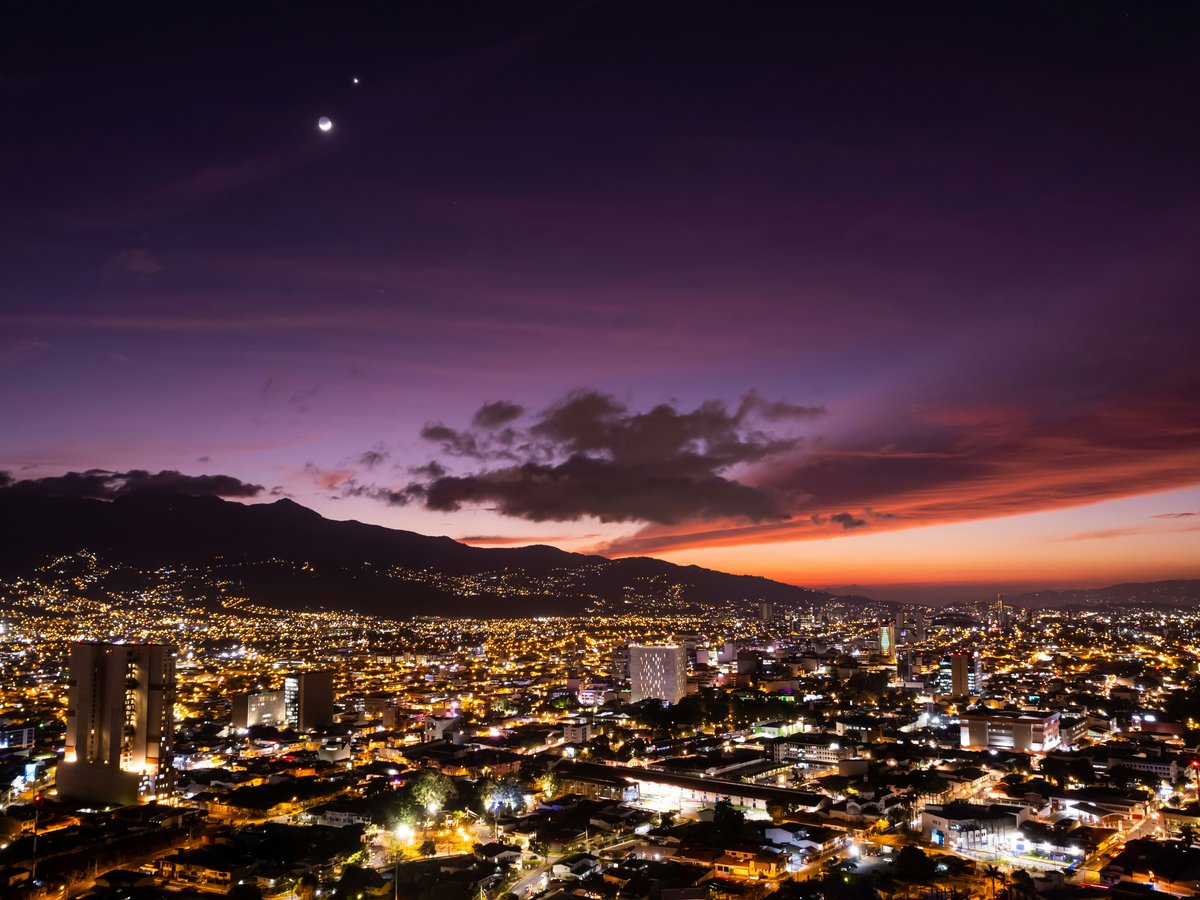
Stay in San José in May
Opens Trip.com on Fri 7 May to Sun 9 May 2027; change the dates there.
May in San José means one thing above all else: the rains have properly arrived. After months of dry-season sunshine, the Central Valley shifts gears with a forcefulness that tends to catch first-time visitors off guard. Mornings still start clear and warm (you'll step outside to blue skies around 26°C (79°F)) but by two or three in the afternoon, dark clouds pile up against the mountains ringing the valley and the downpours begin. These aren't gentle afternoon sprinkles. They're the kind of storms that turn gutters into streams and send everyone crowding under the corrugated zinc awnings of the nearest soda for a coffee.
To be fair, there's a rhythm to it that you pick up within a day or two. The mornings are genuinely pleasant, cooler than March or April, and the Valle Central is starting its transformation into the intensely green landscape that gives the 'green season' its name. Everything that looked parched and dusty two months ago is now thick with new growth. Nighttime temperatures drop to a comfortable 17°C (62°F): the kind of cool that lets you sleep with the windows cracked, accompanied by the chorus of frogs that the rains bring back.
May sits in a slightly awkward tourism spot. The dry-season crowds have left, but the deep green-season discounts of September and October haven't quite kicked in yet. Still, you'll notice the difference immediately: the Museo del Jade on a Tuesday morning might have a dozen visitors instead of a hundred, and getting a table at the popular restaurants along Calle 33 in Barrio Escalante goes from a thirty-minute wait to walking right in. If you can structure your days around the rain (outdoor plans before noon, museums and markets in the afternoon) May offers a quieter and noticeably cheaper version of the city.
Why visit in May
- Green season pricing kicks in: hotel rates across the city drop roughly 20-30% from dry season peaks, and you'll find promotional deals at mid-range hotels in Los Yoses and Sabana that simply don't exist in January
- The Valle Central turns a vivid, almost electric green as the rains return: the hillsides surrounding San José look dramatically different from the dusty brown of March, and the air clears of the dry-season haze
- Tourist crowds thin out noticeably: popular spots like Mercado Central, the Museo Nacional, and Barrio Amón lose that shoulder-to-shoulder peak-season feel, and you'll get more genuine interactions with locals
- Morning weather is consistently pleasant: typically clear, warm without being hot, and comfortable for walking the city before the afternoon storms roll in
Worth knowing
- Afternoon downpours are essentially guaranteed: 25 days of the month see measurable rain, and the storms can be intense enough to flood low-lying streets and push taxi or Uber wait times past 20 minutes
- The 82% average humidity is a constant companion: clothes take longer to dry, cameras fog when you step outside from air conditioning, and the general stickiness takes some getting used to
- Many outdoor activities and day trips become rain-roulette after noon: volcano views, for instance, are often obscured by cloud cover from midday onward
- Some tour operators reduce schedules or close outright for the low season, particularly smaller outfits running day trips to nearby volcanoes and cloud forests
Best for
Think twice if
May marks the real arrival of the rainy season in San José's Central Valley. Mornings are typically clear and warm, but by early-to-mid afternoon, heavy downpours roll in from the surrounding mountains. The rain tends to be intense but relatively short-lived: an hour or two of hard rain, then it tapers off by evening. Humidity sits at a sticky 82% on average, and you'll feel it the moment you step out of an air-conditioned space. The temperature range is quite pleasant despite all the water: highs around 26°C (79°F) during the day and lows near 17°C (62°F) at night. Worth noting that May more than doubles April's rainfall: jumping from 145mm to 317mm across roughly 25 rainy days.
Seasonal caution
- Afternoon storms can produce localized flash flooding, particularly in lower-lying neighborhoods and near the Río Torres and Río María Aguilar. Storm drains in older parts of downtown struggle with heavy rainfall, and street-level flooding of 10-20cm is not unusual during intense downpours. Avoid wading through standing floodwater: it often carries urban runoff.
- Lightning is common during the heavier afternoon thunderstorms. Avoid exposed areas and open green spaces like Parque La Sabana during active storms: head for a covered building and wait it out.
Year-round climate
Averages from the last 5 years.
| Month | Avg high (°C) | Avg low (°C) | Rainfall (mm) |
|---|---|---|---|
| Jan | 25 | 16 | 30 |
| Feb | 26 | 16 | 17 |
| Mar | 27 | 16 | 52 |
| Apr | 27 | 17 | 145 |
| May | 26 | 17 | 317 |
| Jun | 24 | 17 | 458 |
| Jul | 25 | 17 | 354 |
| Aug | 25 | 16 | 452 |
| Sep | 25 | 16 | 456 |
| Oct | 24 | 16 | 546 |
| Nov | 24 | 16 | 355 |
| Dec | 25 | 16 | 72 |
Holidays and festivals in May
Public holidays
- Labour Day(Día Internacional del Trabajo)1 May 2027
Best things to do in May
Morning walks through Barrio Amón and Barrio Otoya
walkingThe historic neighborhoods north of downtown are lined with Victorian-era mansions and early 20th-century houses, many converted into boutique hotels, small galleries, and restaurants. The rain-washed streets and cooler morning air of the green season make for better walking conditions than the dusty heat of March. You'll pass the Casa Amarilla, several small independent galleries that keep irregular hours, and a few well-hidden cafes in converted houses.
Clear mornings with fewer tourists mean you can photograph the colonial architecture without crowds or harsh midday shadows. The rain-washed streets and the first flush of greenery add atmosphere that the dry season simply doesn't have.Museo del Jade and Museo Nacional museum circuit
cultureSan José's two standout museums sit within a few blocks of each other downtown. The Jade Museum holds the world's largest collection of pre-Columbian jade artifacts across five well-designed floors, and the Museo Nacional occupies the old Bellavista Fortress: you can still see bullet holes in the exterior walls from the 1948 civil war. Both are air-conditioned, which matters more than you'd expect on a sticky May afternoon.
The afternoon rain pattern makes museums the natural activity from about 1 PM onward. Green season attendance is low enough that you can spend real time with the exhibits instead of being shuffled through.Booking tipNo advance booking needed in May, just walk up. Both museums are closed on Mondays.
Saturday morning at Feria Verde de Aranjuez
foodSan José's premier organic farmers market runs every Saturday morning in the Aranjuez neighborhood. Vendors sell local produce, artisanal cheese, fresh bread, single-origin honey, bean-to-bar chocolate, and prepared food from open-air stalls. The atmosphere is relaxed and genuinely local: this is where Josefinos come to do their weekly shopping and eat a slow breakfast, not a tourist setup. You'll hear far more Spanish than English.
Early season fruits like cas and the last of the mangoes show up at peak availability. May Saturday mornings are typically dry, giving you the full outdoor market experience without afternoon-storm risk.Booking tipArrive before 8 AM for the best produce selection. The market winds down by noon and the best stalls sell out well before that.
Day trip to Poás Volcano (morning departure only)
natureThe active crater of Poás sits about 50 km northwest of San José and is one of the most accessible volcano experiences in Costa Rica: you can drive nearly to the rim. The crater lake shifts between turquoise and sulphurous grey depending on activity levels, and on clear mornings the views can stretch toward both the Pacific and Caribbean coasts. The surrounding cloud forest is thick with bromeliads and moss.
May mornings often produce clearer conditions than the deeper rainy months of September and October. The early rains make the surrounding cloud forest intensely lush and the waterfalls along the access road more impressive. Cloud cover builds fast after mid-morning, though: earlier is always better.Booking tipReservations through the SINAC website are required and morning time slots sell out days in advance. Book at least 3-4 days ahead, earlier for weekends. Always choose the earliest available entry time.
Eating through Barrio Escalante
foodCalle 33 and the surrounding blocks of Barrio Escalante have become San José's most concentrated restaurant district over the past decade. You'll find everything from high-end Costa Rican cuisine reinterpreting traditional ingredients to craft breweries and specialty coffee roasters. The neighborhood has a walkable, slightly bohemian character that rewards wandering between meals: ducking into a gallery here, a design shop there.
Restaurants that require reservations weeks ahead in January are walk-in affairs in May. Some run green-season lunch specials or prix fixe menus to draw the smaller crowd. Post-rain evenings, when the air cools and the streets dry, are particularly comfortable for outdoor dining.Booking tipWeekend dinners at the more popular spots still benefit from a reservation, but weekday dining is wide open. Lunch is almost never an issue.
Coffee farm tour in the Central Valley
natureSeveral working coffee farms within an hour of San José offer tours covering the full bean-to-cup process. The Doka Estate near Alajuela and farms around Heredia are among the better-known options. May is when coffee plants flower after the first heavy rains: clusters of small white blossoms with a scent somewhere between jasmine and honey blanket the hillside rows.
The coffee flowering season, triggered by the arrival of the rains, typically peaks in May. The white blossoms against the green hillsides are striking and photograph well. Farms are far less crowded than during the dry-season harvest tours of December through February, so guides have more time for questions.Booking tipBook morning tours: afternoon rain and cloud cover reduce the experience considerably. A day or two ahead is usually sufficient in May.
Mercado Central and Mercado Borbón food crawl
foodSan José's two main covered markets sit a block apart downtown. Mercado Central is the older, more chaotic one: a tight labyrinth of stalls selling everything from medicinal herbs to fresh-ground coffee to cheap set lunches at family-run counters. Mercado Borbón next door is more spacious and tilted toward produce and prepared food. Both are fully covered from the elements, and the smells alone (roasting coffee, frying chicharrones, fresh cilantro) are worth the visit.
The covered markets become practical afternoon refuges during downpours, but beyond that, the start of the rainy season brings seasonal produce and fruits that weren't available a month ago. The markets carry a different, earthier, more tropical scent in May than in the dry months.Teatro Nacional performance or guided tour
cultureCosta Rica's most important cultural building, modeled after the Paris Opera and opened in 1897, is worth seeing for the architecture alone: marble staircases, painted ceilings, gold leaf details. The lobby cafe is a popular meeting spot. Beyond the building itself, the performance calendar in May often features the National Symphony Orchestra and visiting ensembles at accessible prices.
The domestic cultural season is in full swing while tourist attendance is low, meaning you can often get good seats for performances at short notice. The building provides a refined afternoon counterpoint to the rain drumming outside, and photography inside is easier without the dry-season tour groups.Booking tipCheck the Teatro Nacional website a week before your visit for the current performance schedule. Tours run throughout the day without reservation.
What to eat in May
In season: fruit
Mango
May hits the tail end of mango season in Costa Rica: street vendors still sell bags of sliced green mango with salt and lime from carts around Parque Central, and the riper golden varieties show up at Feria Verde at their sweetest before the season winds down. Catch them while you can.
Cas
Costa Rica's native sour guava comes into season around May. It's almost never eaten raw (the tartness would make you wince) but blended into refrescos naturales, the fresh fruit drinks that every soda and restaurant serves, it becomes something sharp, cooling, and entirely its own. You won't find it outside Central America.
On menus now
Olla de carne
This hearty beef and vegetable soup: thick with yuca, chayote, plantain, corn on the cob, and whatever root vegetables the cook has at hand: becomes the go-to comfort meal as the rainy season starts. There's something about a steaming bowl of olla de carne while rain hammers the zinc roof overhead that feels exactly right. Every soda in Mercado Central has its own version.
Sopa negra
Black bean soup served with a hard-boiled egg, rice on the side, and a good squeeze of Salsa Lizano: a rainy-season staple you'll find at sodas across the city. The beans are slow-cooked with cilantro and onion until the broth turns dark and thick. Simple, warming, and about the most Tico thing you can eat for under two thousand colones.
What to drink
Agua de sapo
A cold drink made from sugarcane juice, fresh ginger, and lime: traditional and refreshing in a way that bottled drinks just aren't. Street vendors and sodas serve it year-round, but it takes on a particular appeal during the humid May afternoons when you need something sharp and cooling after walking through the midday warmth.
Regular events in May
Día del TrabajadorFree
Costa Rica's Labor Day is a national public holiday. Government offices, banks, and many businesses close for the day. Labor unions organize marches through downtown San José, typically proceeding along Avenida Segunda toward the Asamblea Legislativa. The atmosphere is more civic than festive: political speeches and union banners rather than street parties. Plan around closures or watch the procession from a cafe along the route.
May 1Festividad de San Isidro LabradorFree
The patron saint of farmers is honored with processions and the blessing of animals and agricultural tools. The largest celebrations happen in San Isidro de El General south of San José, but smaller observances occur in agricultural communities around the Central Valley, and some older parishes in the city hold modest processions. It's a window into the country's agricultural identity that tourists rarely see.
May 15Feria Verde de AranjuezFree
San José's weekly Saturday organic market in the Aranjuez neighborhood runs year-round but takes on a different character as the green season begins: new seasonal produce appears, the vendor mix shifts slightly, and the crowd is entirely local. Live music, yoga sessions on the grass, and informal cooking demonstrations are common features. A Saturday morning institution for Josefinos.
Every Saturday morning, year-roundBest places this May
Parque La Sabana
parkSan José's largest urban park occupies the grounds of the old international airport on the west side of the city. The park holds the Museo de Arte Costarricense, a public lake, jogging paths, and open playing fields used for weekend football. In May, the trees are in full leaf and the grass has turned green again after months of dry-season brown. It's at its most attractive early morning, when the light is soft and joggers and dog-walkers outnumber tourists. Clear out before the afternoon storms: there's limited shelter.
SabanaMuseo de Arte Costarricense
museumHoused in the old airport terminal building on the eastern edge of Parque La Sabana, this museum covers Costa Rican art from the colonial period through the present day. The second-floor Salón Dorado features gilded bas-relief murals depicting the country's history: it's the single most impressive interior in the city, and somehow it stays under the radar compared to the Jade and National museums. Particularly quiet in May.
SabanaTeatro Nacional
cultural landmarkThe most photographed building in San José, and for good reason. The neoclassical facade, marble lobby, and painted ceilings deliver genuine grandeur for a city this size. The attached cafe under the ornate ceiling is a popular spot for coffee regardless of whether you're seeing a show. In May, the performance calendar features orchestral and chamber music at prices that would be unthinkable for equivalent quality in a European capital.
DowntownBarrio Escalante
neighborhoodThe gastronomic heart of modern San José, centered on Calle 33 and the surrounding residential blocks. What was a quiet neighborhood a decade ago now holds the city's densest concentration of restaurants, cafes, bakeries, and small galleries. The green-season quiet means easier access to everything, and the cooled-down evenings after the afternoon rain are comfortable for walking between dinner spots. This is where the city's culinary energy is concentrated right now.
Barrio EscalanteBarrio Amón
neighborhoodThe best-preserved historic neighborhood in San José, with Victorian mansions and early-twentieth-century houses built during the coffee-baron era. Many have been converted to boutique hotels, galleries, and cultural centers like the Casa Cultural Amón. The wet streets and moody green-season light give the architecture a different mood than it has under dry-season sunshine: more atmospheric, with deeper shadows and richer colors on the painted facades.
Barrio AmónCentro Nacional de la Cultura (CENAC)
cultural centerA repurposed national liquor factory complex that now houses galleries, performance spaces, and the Museo de Arte y Diseño Contemporáneo. The industrial architecture (thick concrete walls, high ceilings, open courtyards) has been thoughtfully adapted, and the covered walkways between buildings are a practical bonus during May's afternoon rains. The contemporary art exhibitions rotate regularly and skew toward Central American and Caribbean artists.
DowntownParque España and Parque Morazán
parkTwo small downtown parks that sit adjacent to each other north of Avenida Central, connected by tree-lined paths. Parque España is particularly worth seeking out in May: its dense canopy of tropical trees catches the rain and the birdlife picks up noticeably with the wet season. The Templo de la Música bandstand in Parque Morazán, a miniature neoclassical rotunda, photographs well in the soft morning light. Both parks are small enough to visit in twenty minutes but pleasant enough to linger.
Downtown
Your packing checklist
Tick items off as you pack. Your progress saves in this browser.
All packed — have a great trip.
Insider tips
The afternoon rain is more predictable than it sounds: most Josefinos plan their outdoor errands for the morning and shift to indoor tasks after lunch. If you follow the same pattern, the weather barely disrupts your trip. Watch the mountains to the south and east around noon: when clouds start building against the ridgeline, you've got roughly an hour before the rain hits downtown.
Uber and InDriver work well across San José and are generally cheaper than the official red taxis. But the moment rain starts, surge pricing kicks in and wait times jump past fifteen minutes. If you know you'll need a ride at 3 PM, request it at 2:30 before everyone else does the same thing. The red taxis (rojos) don't surge but get harder to flag in the rain.
The coffee vendors on the ground floor of Mercado Central (the ones grinding beans to order in front of you) sell the same quality beans as the tourist-facing specialty shops in Barrio Escalante at a fraction of the price. Ask for café chorreado, the traditional pour-through-cloth method. It's how Ticos have made coffee for generations, and it produces a cleaner cup than most drip machines.
San José's altitude (about 1,170 meters) is why the temperatures stay so moderate compared to the coasts. It also means stronger UV than the thermometer suggests and occasionally catching your breath on the steeper hills if you've just arrived from sea level. Neither is serious, but both catch visitors off guard.
If you're heading to Poás, Irazú, or any volcano day trip, leave San José by 6 AM at the latest. Cloud cover builds from mid-morning, and by early afternoon the craters are usually socked in with zero visibility. The visitors who arrive at 7 AM see everything; the ones who show up at 10 see the inside of a cloud.
Avoid these mistakes
- Scheduling outdoor activities for the afternoon. By 2 PM most days in May, the rain is either falling or visibly building. Visitors who plan volcano day trips, park visits, or walking tours for after lunch end up wet and disappointed. Front-load outdoor plans to the morning (before 11 AM is ideal) and keep indoor options for the afternoon hours.
- Packing only for tropical heat and leaving rain gear or layers at home. May in San José isn't the oppressive steambox people expect from Central America: mornings are warm but not hot, and evenings are genuinely cool at 17°C (62°F). The combination of afternoon rain, cool nights, and sometimes aggressive restaurant air conditioning means you'll reach for that light jacket more than you'd guess.
- Underestimating the altitude. San José sits at 1,170 meters, which means stronger UV radiation despite the moderate temperatures. First-day sunburns on clear mornings are common among visitors who assume the overcast tropical sky will protect them. It won't: especially at this elevation.
- Booking non-refundable outdoor tours locked to specific dates without a weather backup plan. May weather is predictable in its general pattern but not in its daily timing: some days the rain arrives at noon, others hold off until 4 PM, and occasionally a full morning of drizzle cancels the pattern entirely. Tours with flexible rescheduling policies are worth the slight premium.
Practical tips for May
May 1 (Día del Trabajador) is a national holiday: banks, government offices, and many retail shops close entirely, and labor marches along Avenida Segunda can snarl downtown traffic for hours. Plan around it or watch the procession from a cafe along the route. For day trips to national parks like Poás or Irazú, reserve entry through the SINAC website at least several days ahead; morning slots are limited and sell out faster during the rainy season because everyone clusters into the clear early hours. Domestic flights on Sansa to beach towns or Arenal often run on reduced green-season schedules but at reduced prices: book a few days ahead rather than same-day. The Uber network covers most of the Central Valley reliably, but have a backup plan for afternoon surge periods when demand spikes with the rain. Most restaurants in Barrio Escalante and San Pedro keep regular hours through the green season, but smaller tour operators and activity providers may scale back operations or close certain days. Always confirm hours before making the trip.
FAQ
Is May a good time to visit San José, Costa Rica?
May is a fair time to visit: honest assessment, not the best month but far from the worst. You're entering the rainy season, so expect afternoon downpours on roughly 25 out of 31 days. That said, mornings are typically clear and pleasant around 26°C (79°F), the city is noticeably less crowded than the dry season months of December through April, and hotel prices drop. It works well if you enjoy museums, food culture, and urban exploring, and you don't mind planning outdoor activities around a predictable weather pattern. If you want guaranteed all-day sunshine for hiking and outdoor day trips, January through March would suit you better.
What is the weather like in San José in May?
May averages a high of 26°C (79°F) and a low of 17°C (62°F) with about 317mm of rain spread across 25 days. Humidity sits around 82%. The pattern is fairly predictable once you learn it: mornings start clear and warm, clouds build through the late morning, and heavy rain typically arrives between 1 PM and 4 PM. The storms are intense (you'll hear them drumming on rooftops) but usually pass within an hour or two. Evenings tend to be pleasant and cool. Temperatures are moderate for the tropics thanks to San José sitting at about 1,170 meters above sea level.
Does it rain all day in San José in May?
No, and understanding this is the single most useful thing for planning a May visit. The rain follows a reliable daily pattern: mornings are usually clear and dry, storms build in the early-to-mid afternoon, and they taper off by evening. All-day rain happens occasionally but it's the exception in May: that's more typical of September and October. The practical trick is structuring your days around this rhythm: outdoor activities before noon, indoor plans for the afternoon. Most visitors and all locals adapt to this within a day or two. It becomes second nature fast.
Is San José crowded in May?
Not at all. May falls solidly in the green season, and visitor numbers drop significantly from the dry-season peaks of December through March. You'll notice shorter lines at museums like the Museo del Jade and Museo Nacional, easier restaurant reservations in Barrio Escalante, and fewer organized tour groups downtown. Hotels have vacancies and are often willing to negotiate rates or throw in extras. You're also unlikely to encounter the occasional waves of cruise-ship day-trippers that can fill downtown sidewalks during the dry season.
What should I wear in San José in May?
Light, breathable layers that dry quickly are the foundation: synthetic fabrics work better than cotton, which absorbs the 82% humidity and stays clammy. A compact rain jacket or poncho is essential for the afternoon storms, and you'll want it accessible in your bag rather than buried at the bottom. Closed-toe shoes with decent tread handle wet sidewalks and cobblestones safely. Bring a light sweater or hoodie for the evenings, which genuinely cool down to about 17°C (62°F). And don't skip sunscreen for the mornings: San José's altitude makes the UV index stronger than the mild temperature would suggest.
Things to Do in San José in May
 Free cancellation
 Arenal Volcano Full-Day Combo Tour with Lunch and Dinner
Outdoor experience: 14 hours, free cancellation.
via Viator Free cancellation
 Arenal Volcano Experience Full-Day Tour from San Jose
Day trip: 14 hours, free cancellation.
via Viator Free cancellation
 Manuel Antonio National Park Sightseeing and Wildlife Day Tour from San Jose
Day trip: 12 hours, free cancellation.
via Viator Free cancellation
 Full Day Poas Volcano, La Paz Waterfall Gardens and Coffee Plantation Experience
Outdoor experience: 10 hours, free cancellation.
via Viator Free cancellation
 Tortuga Island Full Day Tour from San José with Lunch
Day trip: free cancellation.
via Viator Free cancellation
 Zip Line, Rappel, Hiking La Carpintera Tour in San Jose
Outdoor experience: 3 hours, free cancellation.
via ViatorFind a flight to San José
Live fares to San José appear here once cookies are accepted.
Last verified by automated review (v1.7.2) on . What is automated review?