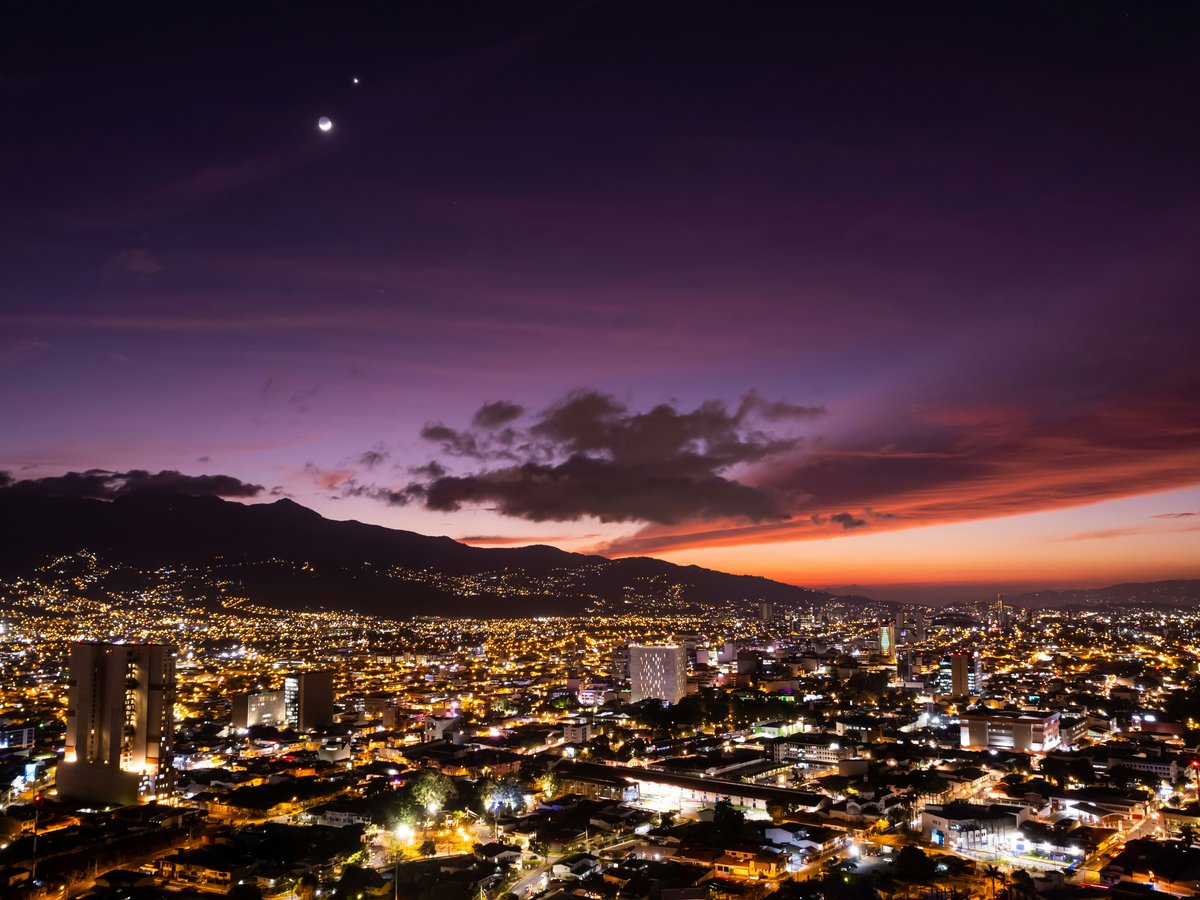
San José sits in the Central Valley at roughly 1,150 meters, hemmed in by volcanic ridges on nearly every side. The air has a coolness to it that surprises first-time visitors: mornings often start around 18°C with low clouds draped over the mountains to the north. It's not a beach town, and it's not really a jungle town either. What it is, though, is a staging ground. Within ninety minutes you can be standing on the rim of an active volcano, paddling Class III rapids, or walking through cloud forest so thick the canopy drips even when it hasn't rained. The city itself has pockets of green (La Sabana is genuinely enormous) but the real draw is everything that radiates outward from the valley floor. You'll hear people say San José is just a place to sleep between adventures. That's half true. The other half is that the city's own hillsides, parks, and river corridors have more going on than most visitors realize, especially if you're willing to lace up shoes and get a little mud on them.
Outdoor activities
-
Whitewater rafting on the Río Pacuare
The Pacuare is consistently rated among the top rafting rivers in the world, and it's about a two-and-a-half-hour drive from San José through Turrialba. You'll run Class III and IV rapids through a gorge walled in by primary rainforest: toucans overhead, waterfalls dropping into the channel from side canyons. Most outfitters run a full-day trip that covers roughly 28 kilometers. The water is warm enough that a wetsuit feels optional, though guides will insist on helmets and PFDs. The smell of wet vegetation and river spray stays with you.
- Difficulty
- Moderate to challenging (Class III–IV)
- Duration
- Full day including transport (10–12 hours door to door)
- Best season
- June through October tends to have the best water levels, though operators run year-round. Dry season flows can feel a bit bony on some sections.
-
Mountain biking in the Cerros de Escazú
The hills directly southwest of the city offer a surprisingly rugged network of fire roads and single track. You climb out of Escazú proper through coffee fincas and pastureland, and within an hour you're on exposed ridgeline with views across the entire Central Valley. The trails are volcanic clay: grippy when dry, a skating rink when wet. A few local shops in Escazú rent decent hardtails if you didn't bring your own. Expect loose rock, steep pitches, and the occasional barbed-wire gate to duck under.
- Difficulty
- Moderate to difficult depending on route choice
- Duration
- 3–5 hours for a solid loop
- Best season
- December through April (dry season) for the best trail conditions. Wet season rides are doable but messy.
-
Canopy zip-lining near Poás
Several operators along the road to Volcán Poás have set up canopy tours through cloud forest. The cables run between platforms bolted to massive oak trees, and the longer lines carry you 200-plus meters over ravines thick with bromeliads and moss. It's more about the forest immersion than pure adrenaline, though the speed picks up on the longer runs. Morning trips tend to be foggier, which honestly adds to the atmosphere: you zip into a wall of mist and emerge on the other side.
- Difficulty
- Easy (suitable for most fitness levels; minimum age and weight requirements vary by operator)
- Duration
- 2–3 hours for the tour itself, plus about an hour each way from San José
- Best season
- Dry season mornings for clearer views, though wet season fog has its own charm.
-
Trail running in Braulio Carrillo National Park
Braulio Carrillo is absurdly close to the city: the Quebrada González ranger station is maybe 35 minutes by car via the highway toward Limón. The trails here wind through lowland-to-premontane transition forest, with muddy stretches, root-choked descents, and humidity thick enough to taste. The Sendero Las Palmas loop is manageable for fit runners, but the footing demands attention. You'll hear howler monkeys before you see them. Bring bug spray and accept that you'll be soaked in sweat within twenty minutes.
- Difficulty
- Moderate (technical footing, humid conditions)
- Duration
- 1.5–3 hours depending on pace and route
- Best season
- Dry season is slightly less muddy, but this park is wet year-round. Early morning arrivals beat both the heat and the afternoon rain.
-
Road cycling in the Central Valley
The roads climbing out of San José toward Barva de Heredia, San Ramón, or Cartago offer long, sustained grades with relatively light traffic once you clear the urban edges. The route from San José up to the Irazú volcano summit is a local classic: about 50 kilometers of steady climbing to 3,400 meters, with temperatures dropping noticeably as you gain elevation. Your legs will burn and the air thins, but the descent is worth every pedal stroke. Sunday mornings are best; traffic is lightest and local cycling groups are out in numbers.
- Difficulty
- Moderate to very challenging depending on route and elevation gain
- Duration
- 3–6 hours
- Best season
- December through April for dry roads and better visibility at altitude.
-
Horseback riding near San Ramón or Atenas
The rolling countryside west of San José (around San Ramón, Atenas, and Grecia) has working cattle ranches that offer guided rides through pastures, along river valleys, and up forested hillsides. These aren't nose-to-tail trail rides; some operators let experienced riders move at a trot or canter across open ground. The landscape smells of cut grass and wood smoke. Mind you, the quality varies a lot between operators, so it's worth asking how many riders go out per group.
- Difficulty
- Easy to moderate
- Duration
- 2–4 hours
- Best season
- Dry season (December–April) is more comfortable, though rides operate year-round with rain gear.
Day hikes
-
Cerros de Escazú summit ridge
The Cerros de Escazú rise directly above the western suburbs, and you can be on the trail from central San José in about 30 minutes by car or bus. The standard route climbs from San Antonio de Escazú up through pastures and patches of secondary forest to the ridgeline, where the views open up across the Central Valley to Volcán Irazú on a clear day. The upper sections are exposed and steep: volcanic soil that crumbles underfoot in dry weather. Wind picks up on the ridge, sometimes fiercely. Bring layers. The smell of wild mint grows along sections of the trail. This is probably the most accessible real hike from the city center.
- Difficulty
- Moderate to strenuous (steep sustained climb, 800–1,000m elevation gain depending on start point)
- Duration
- 4–6 hours round trip
- Best season
- December through March for the clearest views. The trail is passable year-round but gets slick and muddy from May onward.
-
Volcán Poás crater trail
About an hour north of San José, Poás is the most visited volcano in Costa Rica for good reason: the main crater is over a kilometer wide, and on clear mornings you stare straight down into an acid lake that shifts between turquoise and milky grey depending on activity. The trail from the visitor center to the main crater viewpoint is paved and short, maybe 15 minutes. But the Sendero Botos loop to the second crater lake adds another 30–40 minutes through stunted cloud forest dripping with moss. The park currently requires advance reservations and limits visitor numbers, so check availability before driving up. Early morning is critical: clouds typically roll in by 10 a.m.
- Difficulty
- Easy (paved main trail; Botos trail is packed dirt with some steps)
- Duration
- 1.5–2 hours at the park, plus 1 hour drive each way
- Best season
- December through April, arriving before 8 a.m. for the best chance at a clear crater view.
-
Volcán Irazú summit
The highest volcano in Costa Rica at 3,432 meters, and you can drive nearly to the top. The actual hiking at the summit is minimal (paved paths to the crater viewpoints) but the experience of standing at that altitude, looking down into the grey-green crater lake with the temperature hovering around 7°C, is genuinely striking. On exceptionally clear days (rare, but they happen), you can supposedly see both the Caribbean and Pacific coasts. The real hike option is the Sendero Prusia, which descends through a reforested area on the volcano's flanks: tall pines planted in rows, oddly European-looking, with mossy understory. It's quiet there.
- Difficulty
- Easy at the summit; moderate if you add the Prusia forest trails
- Duration
- 2–3 hours at the summit area, or 4–5 hours with Prusia trails. About 1.5 hours drive from San José.
- Best season
- Dry season, especially January and February. Arrive by 8 a.m.: afternoon clouds are almost guaranteed.
-
Volcán Barva via the Braulio Carrillo sector
Barva is the hike that separates the casual volcano visitors from people who want to walk. You enter through the Sacramento ranger station north of Heredia and climb through dense cloud forest: the trail is rooty, muddy even in dry season, and the canopy closes overhead for long stretches. The reward at the top is a pair of cold, dark crater lakes (Laguna Barva and Laguna Copey) ringed by stunted trees. The forest up there has an eerie quiet to it. Fewer visitors come here than Poás or Irazú, and you'll likely have the lakes mostly to yourself on a weekday.
- Difficulty
- Moderate to strenuous (steady climb, very muddy conditions, 600m elevation gain from the ranger station)
- Duration
- 4–6 hours round trip
- Best season
- Dry season (December–April) makes the mud slightly more manageable, though this trail stays wet year-round. Weekdays for solitude.
-
Sendero Las Palmas in Braulio Carrillo
The Quebrada González sector of Braulio Carrillo sits right along the San José–Limón highway, making it one of the quickest escapes into lowland rainforest from the capital. Las Palmas is a loop trail through thick secondary and primary forest: the humidity here is oppressive in the best possible way, every surface is green, and you'll hear more wildlife than you see. Poison dart frogs are common along the creek crossings. The trail has some slippery wooden bridges and creek fords. It's short enough for a half day but feels like a different world from the city you left 40 minutes ago.
- Difficulty
- Easy to moderate (short but slippery, humid conditions)
- Duration
- 1.5–2.5 hours for the loop
- Best season
- Year-round, though morning visits in any season beat the afternoon downpours. Dry season is marginally less muddy.
Water activities
-
Whitewater rafting on the Río Reventazón
The Reventazón is the Pacuare's more accessible neighbor: the put-in near Turrialba is about two hours from San José. The river offers different sections for different comfort levels: the Florida section runs Class II–III and suits first-timers, while the Pascua section hits Class III–IV with bigger hydraulics and tighter channels. The water tends to be silty, especially after rain, and warmer than you'd expect at this elevation. Most outfitters bundle transport, lunch, and gear into a day rate. It's a muddier, rowdier experience than the Pacuare: less scenic gorge, more raw whitewater.
- Difficulty
- Moderate (Florida section) to challenging (Pascua section)
- Duration
- Full day with transport (8–10 hours)
- Best season
- June through November for higher water and bigger rapids. Dry season runs are mellower.
-
Kayaking on the Río Sarapiquí
The Sarapiquí flows through the northern lowlands, about two hours from San José via the road through Braulio Carrillo. The upper sections near La Virgen offer Class II–III rapids suitable for guided inflatable kayak trips: you'll paddle through a corridor of lowland forest where iguanas sun on overhanging branches and herons work the shallows. The water is warm and brown-green, and the pace is gentler than the Turrialba rivers. Several operators in La Virgen rent sit-on-top kayaks for self-guided flat-water stretches too, if you just want to float and look at birds.
- Difficulty
- Easy to moderate (guided Class II–III sections)
- Duration
- Half day (4–5 hours with transport)
- Best season
- Year-round, though September and October can see very high water levels that push the difficulty up.
-
Surfing at Jacó or Playa Hermosa
The Pacific coast is surprisingly close: Jacó is about a 90-minute drive from San José through the mountains, dropping from 1,100 meters to sea level. Jacó's beach break works for beginners with its sandy bottom and consistent whitewater, though the currents can be strong. Playa Hermosa, just five minutes south, is a different animal: a powerful beach break that draws experienced surfers. The water is warm year-round (around 27°C), and board rentals are everywhere in Jacó town. That said, the drive back up into the mountains after a full day of surfing is tiring: some people stay overnight.
- Difficulty
- Jacó: beginner-friendly. Playa Hermosa: intermediate to advanced.
- Duration
- Full day trip, or overnight
- Best season
- Rainy season (May–November) tends to bring more consistent swell. Dry season has smaller, cleaner waves.
-
Swimming at Catarata La Paz (La Paz Waterfall)
La Paz is a series of waterfalls on the Río La Paz, north of San José near Volcán Poás. There's a private nature park with maintained trails to several falls, but the upper public waterfall is accessible without paying the park fee. The water is cold (mountain-stream cold, the kind that makes you gasp) and the pool at the base is deep enough to swim. The mist off the falls coats everything in a fine spray. Getting there takes about an hour from the city. Worth noting that the public access point has minimal facilities.
- Difficulty
- Easy (the walk to the falls is short; the swimming depends on water levels)
- Duration
- Half day with transport
- Best season
- Dry season for safer water levels and easier road conditions. The falls run year-round but swell significantly in the wet months.
-
Lake and river fishing near Cachí and Orosi
The Orosi Valley southeast of Cartago, about an hour from San José, has the Cachí Reservoir and the Río Reventazón tailwaters. The reservoir holds tilapia and rainbow trout (stocked), and local guides run boat trips in the early morning when the water is glassy and the valley walls catch the first light. The Reventazón below the dam has trout fishing in cooler, faster water. It's not world-class fly fishing (to be fair, Costa Rica's trout rivers don't compare to Patagonia) but the setting is gorgeous and the valley itself, with its colonial church ruins at Ujarrás, makes the trip worthwhile even if the fish aren't biting.
- Difficulty
- Easy
- Duration
- Half to full day
- Best season
- Dry season (December–April) for the most comfortable conditions and clearest water.
Parks & gardens
-
Parque Metropolitano La Sabana
FreeLa Sabana is San José's version of Central Park: a former airstrip turned into the city's largest green space. Joggers circle the perimeter path early in the morning, pickup soccer games take over the fields by mid-afternoon, and families spread out on the grass on weekends. There's a man-made lake, scattered sculptures, and enough mature trees to muffle the traffic noise from the surrounding boulevards. The grass gets patchy in dry season but it's still the best place in the city to stretch your legs without dodging exhaust pipes. You'll catch the smell of roasting corn from vendors near the south entrance.
Highlights: The Museo de Arte Costarricense at the east end, the running path loop (roughly 3.5 km), the outdoor exercise stations, and the lake area for birdwatching: herons and kingfishers show up regularly.
-
Parque Nacional
FreeA compact downtown park wedged between the Asamblea Legislativa and the Biblioteca Nacional. It's more of a plaza with trees than a wilderness, but the massive old-growth trees provide real shade, and the Monumento Nacional at the center (depicting the Central American nations driving out William Walker) is worth a look. Office workers eat lunch here on weekdays. It can feel a little worn, but there's an honesty to the place that the fancier parks lack.
Highlights: The Monumento Nacional sculpture, the shade canopy from mature ceiba and guanacaste trees, and the street vendors selling fresh fruit and coconut water along the south side.
-
Jardín Botánico Lankester
Technically in Paraíso de Cartago, about 45 minutes east of San José, but it's the best botanical garden accessible as a day trip. Run by the Universidad de Costa Rica, it specializes in orchids (they claim over 800 species) and epiphytes. The Japanese garden section is quiet enough that you can hear individual birds in the canopy. It feels like an actual research station, not a tourist attraction, which is part of the appeal. Worth noting that peak orchid bloom tends to fall between February and April.
Highlights: The orchid collection (one of the largest in the Americas), the bromeliad garden, the bamboo grove, and the well-labeled medicinal plant section. February through April for peak orchid blooms.
-
Parque de la Paz
FreeBuilt in the 1980s on the site of a former army barracks after Costa Rica dissolved its military, this park in the southern neighborhoods has a different feel from La Sabana: more neighborhood gathering spot than jogging circuit. The paths meander through grassy hills, and there's a memorial wall that's easy to miss if you're not looking. It's quieter than you'd expect given its size, and you'll mostly share it with locals rather than tourists.
Highlights: The peace monument and memorial wall, the hilltop viewpoints looking north toward the city center, and the open green spaces that are rarely crowded on weekday mornings.
-
Spirogyra Jardín de Mariposas
A small butterfly garden tucked into Barrio Tournón, just north of downtown. It's more intimate than the larger butterfly farms outside the city: a mesh-enclosed garden where blue morphos and owl butterflies drift past at arm's length. The attached nursery raises caterpillars, and someone on staff usually explains the lifecycle with genuine enthusiasm. Not a big time commitment, but a nice break from the concrete.
Highlights: Blue morpho butterflies in the enclosed garden, the caterpillar nursery, and native plant labeling that teaches you what to look for in the wild.
Practical tips
- Sun protection at altitude
- San José's elevation means the UV index is stronger than it feels. The air temperature might be a comfortable 24°C, but you're 1,100 meters closer to the sun than at sea level. Wear SPF 50+ even on overcast days: cloud cover at this latitude filters less UV than you'd think. A hat with a brim is more useful than sunglasses alone, especially on ridgeline hikes where the sun reflects off pale volcanic soil.
- Hydration and water safety
- Tap water in San José and the Central Valley is generally safe to drink, which simplifies things. For day hikes, carry at least 2 liters per person: more for the exposed climbs like Cerros de Escazú. On rafting trips the outfitters usually provide water, but bring your own bottle for the transport legs. River and stream water outside the city should be treated or filtered, even if it looks clean.
- Rain gear and layering
- Even in dry season, afternoon showers happen. A packable rain shell that also blocks wind is probably the single most useful piece of gear for this area. For volcano hikes above 2,500 meters (Irazú, Barva, the upper Poás trails) temperatures can drop below 10°C with wind chill. Bring a fleece or insulating layer. In the lowland parks like Braulio Carrillo, moisture-wicking synthetics beat cotton by a wide margin.
- Trail conditions and footwear
- Most trails around San José run on volcanic clay soil, which gets treacherously slippery when wet. Proper hiking boots with aggressive tread are worth it for anything beyond La Sabana's paved paths. For the Barva and Braulio Carrillo trails, expect ankle-deep mud in places regardless of season. Gaiters help. Sandals and running shoes are fine for the paved volcano summit paths but will fail you on anything else.
- Timing and crowds
- Start early. This applies to nearly everything: volcano views cloud over by mid-morning, afternoon rain is almost clockwork from May through November, and popular trailheads fill up by 9 a.m. on weekends. Poás requires advance reservations and caps visitors per time slot. For the Cerros de Escazú and Barva, weekday mornings give you the trails almost to yourself.
- Getting to trailheads without a car
- Public buses reach Escazú, Heredia, and Cartago easily from San José, which gets you partway to several hikes. But the final leg to most trailheads: Volcán Barva's Sacramento entrance, the Quebrada González sector, the upper Escazú trails: usually requires either a taxi, a ride-share app like Uber (which operates widely in the Central Valley), or a rental car. Group day tours handle logistics entirely, though you're on someone else's schedule.
FAQ
Is San José a good base for outdoor activities in Costa Rica?
It's likely the most practical base in the country for variety. You're within 90 minutes of volcanoes, cloud forest, whitewater rivers, and the Pacific coast. The trade-off is that you spend time driving to and from trailheads, and the city itself doesn't have that raw jungle-at-your-doorstep feel. But for someone who wants to sample a range of ecosystems and activities without relocating every night, the Central Valley works well.
What's the best time of year for hiking near San José?
December through April (the dry season) gives you the most reliable weather, clearer volcano views, and less mud on trails. That said, the green season from May through November has its own appeal: fewer crowds, greener landscapes, and lower prices. Just plan to start early and be off exposed ridgelines before the afternoon rain rolls in, usually around 2 p.m.
Do I need a guide for day hikes around San José?
For the major volcano trails (Poás, Irazú) the paths are paved and well-signed, and a guide isn't necessary. Cerros de Escazú is manageable with a GPS track or offline map, though trail markings can be inconsistent. Volcán Barva benefits from local knowledge, especially in cloud cover when the forest all looks the same. For anything involving whitewater, a licensed guide is both legally required and genuinely essential for safety.
How fit do I need to be for the activities described here?
It ranges quite a bit. The volcano summit walks at Poás and Irazú are accessible to anyone who can manage a gentle 15-minute stroll. Cerros de Escazú and Barva demand a reasonable fitness base: sustained climbing for 2-3 hours, uneven terrain, and elevation. Whitewater rafting requires the ability to paddle and hold on, but the outfitters handle the technical work. The mountain biking and trail running assume prior experience with those sports.
Is it safe to hike alone near San José?
The well-trafficked trails (volcano parks, La Sabana, the lower Escazú paths) are generally fine for solo hikers, especially on weekend mornings when other groups are around. More remote routes like the upper Barva trail or lesser-used Braulio Carrillo sectors are better done with a companion, partly for safety on the trail itself (slippery conditions, limited cell signal) and partly because these areas see fewer visitors. Let someone know your plan regardless.
What should I budget for a day of outdoor activities from San José?
Park entrance fees at the national parks run around $15–18 USD for foreign visitors at the time of writing. Guided whitewater rafting day trips typically cost $85–130 USD per person including transport and lunch. Canopy zip-line tours are similar. Hiking the Cerros de Escazú is free. A rental car for self-guided volcano visits runs $40–60 USD per day plus fuel. Eat at a local soda near the trailhead for lunch and you're looking at $5–8 for a casado.
Outdoor experiences in San José
 Free cancellation
 Arenal Volcano Full-Day Combo Tour with Lunch and Dinner
Outdoor experience: 14 hours, free cancellation.
via Viator Free cancellation
 Full Day Poas Volcano, La Paz Waterfall Gardens and Coffee Plantation Experience
Outdoor experience: 10 hours, free cancellation.
via Viator Free cancellation
 Zip Line, Rappel, Hiking La Carpintera Tour in San Jose
Outdoor experience: 3 hours, free cancellation.
via Viator Free cancellation
 Zipline Tour in La Fortuna with Arenal Volcano Views
Outdoor experience: 1.5 hours, free cancellation.
via Viator Free cancellation
 Arenal Volcano and Thermal Hot Springs from San Jose
Outdoor experience: 13 hours, free cancellation.
via Viator
Pacuare River
Outdoor experience.
via Viator Free cancellation
 Sarapiquí River Family Rafting Adventure Class II & III
Outdoor experience: 3 hours, free cancellation.
via Viator Free cancellation
 Rafting Pacuare River from Turrialba
Outdoor experience: 6 hours, free cancellation.
via Viator Free cancellation
 Poas Volcano waterfalls and coffee tour from from San Jose
Outdoor experience: free cancellation.
via Viator Free cancellation
 From San Jose Zipline, ATV, Surfing and Chocolate Tour
Outdoor experience: 10 hours, free cancellation.
via Viator Free cancellation
 All-inclusive package 7 nights 8 days in the best destinations in Costa Rica
Outdoor experience: 8 days, free cancellation.
via Viator
Tortuguero : All Inclusive Package 2 Nights 3 Days from San Jose
Outdoor experience: 3 days.
via ViatorLast verified by automated review (v1.7.2) on . What is automated review?