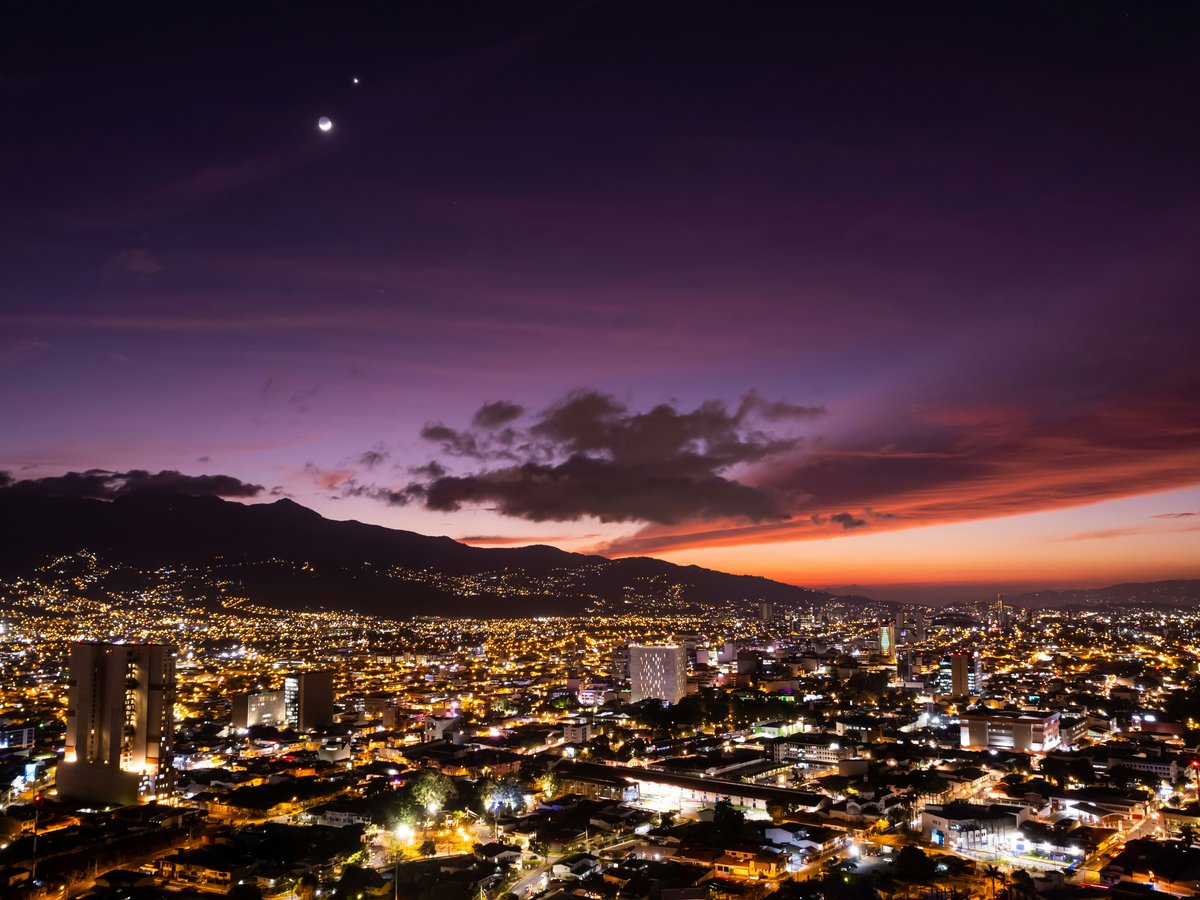
Stay in San José in August
Opens Trip.com on Fri 6 Aug to Sun 8 Aug 2027; change the dates there.
August in San José lands right in the thick of the green season, and there's no gentle way to put it: this is one of the wettest months of the year. Expect rain on roughly 27 out of 31 days, with 452mm of rainfall that tends to arrive in heavy afternoon downpours. Mornings, though, are a different story. You'll often wake to clear skies and mild temperatures around 24.9°C (77°F), and the Central Valley air has a freshness to it that the dry season never quite manages. The hills surrounding the city turn an almost absurd shade of green.
That said, August is not without its defining moments. The first two days of the month bring the Romería, Costa Rica's largest religious pilgrimage: hundreds of thousands of people walk through the night from San José to the Basílica de Nuestra Señora de los Ángeles in nearby Cartago. The energy in the city on the evening of August 1 is something you'd have trouble finding at any other time of year. Streets fill with families, vendors set up food stalls along the route through Barrio Escalante and Curridabat, and the whole metro area has a kind of communal electricity to it.
If you can work around the rain, and the pattern is predictable enough that most residents simply plan outdoor time before noon: August offers genuinely low prices, no crowds at the major museums, and a version of the city that feels more like a place people live in than a tourist destination. The evenings cool to around 16.4°C (62°F), which is sweater weather by tropical standards. Mind you, you will get wet. That's not a possibility, it's a certainty.
Why visit in August
- Green season pricing means hotel rates drop 30-50% compared to December through March, and popular tours to places like Poás Volcano often have availability the same week
- The Romería pilgrimage on August 1-2 is one of Central America's most significant cultural events: a genuine window into Costa Rican devotion and community that few tourists ever witness
- Morning weather is typically clear and pleasant, with temperatures rarely exceeding 25°C (77°F): comfortable for walking Barrio Amón's historic architecture or browsing Mercado Central without breaking a sweat
- The surrounding countryside and volcanoes are at peak greenness, and waterfalls run at full force: if you're doing day trips to La Paz Waterfall Gardens or the Orosi Valley, this is when they look their most dramatic
Worth knowing
- Rain falls on 27 of 31 days, with afternoon downpours that can dump 30-40mm in a couple of hours: outdoor plans after 1pm need a backup
- 85% humidity makes even 25°C feel sticky, and clothes take forever to dry if you're moving between hostels
- Some outdoor tour operators in the Central Valley reduce schedules or cancel midweek departures during the green season low point
- Overcast afternoons and evenings mean shorter useful daylight for sightseeing, with sunset around 5:45pm and clouds rolling in well before that
Best for
Think twice if
Deep green season with near-daily afternoon rain. Mornings often start clear and mild before clouds build by midday and release heavy downpours between 1pm and 6pm. The Central Valley elevation keeps temperatures cooler than you might expect for the tropics: you won't overheat, but the humidity clings. Evenings cool down enough that a light layer feels welcome, especially if you're sitting outside after the rain clears. The air smells clean, almost mineral, after a good downpour.
Seasonal caution
- Heavy afternoon downpours can cause flash flooding in low-lying areas of San José, particularly along the Río Torres and Río María Aguilar corridors: avoid walking along riverbanks during or immediately after heavy rain
- 452mm of monthly rainfall means saturated ground on hiking trails around the Central Valley; landslide warnings are occasionally issued for steep roads to Poás and Barva volcanoes
- The combination of 85% humidity and rain-cooled temperatures can trigger respiratory discomfort for travelers with asthma or sensitivity to mold: green season means everything grows, including what you'd rather not breathe
Year-round climate
Averages from the last 5 years.
| Month | Avg high (°C) | Avg low (°C) | Rainfall (mm) |
|---|---|---|---|
| Jan | 25 | 16 | 30 |
| Feb | 26 | 16 | 17 |
| Mar | 27 | 16 | 52 |
| Apr | 27 | 17 | 145 |
| May | 26 | 17 | 317 |
| Jun | 24 | 17 | 458 |
| Jul | 25 | 17 | 354 |
| Aug | 25 | 16 | 452 |
| Sep | 25 | 16 | 456 |
| Oct | 24 | 16 | 546 |
| Nov | 24 | 16 | 355 |
| Dec | 25 | 16 | 72 |
Holidays and festivals in August
Public holidays
- Feast of Our Lady of the Angels(Fiesta de Nuestra Señora de los Ángeles)2 August 2027
- Mother's Day(Día de la Madre)15 August 2027
Headline events
Romería a la Basílica de Nuestra Señora de los Ángeles
Night of August 1 into August 2
Costa Rica's largest religious pilgrimage, where hundreds of thousands of people walk through the night from San José to the Basílica in Cartago (roughly 22km) to honor La Negrita, the patron saint of Costa Rica. The route passes through Barrio Escalante, San Pedro, and Curridabat, lined with food vendors, families, and a palpable sense of collective purpose. Whether or not you're religious, walking even a portion of the route on the night of August 1 is a window into Tico culture that nothing else quite replicates.
Best things to do in August
Walk a portion of the Romería pilgrimage route
culturalJoin the stream of pilgrims walking from San José toward Cartago on the night of August 1. You don't need to walk the full 22km: many people walk for an hour or two, soak in the atmosphere, eat empanadas from roadside vendors, and catch a taxi back. The stretch through San Pedro near the Universidad de Costa Rica campus tends to have the liveliest crowd and the best food stalls.
The Romería only happens on August 1-2, and it's the single largest communal event in Costa Rica's calendar.Booking tipNo booking needed, just show up on Calle 0 or along the route through San Pedro after 8pm on August 1.
Morning coffee estate tours in the Central Valley
food and drinkEstates like those around Barva de Heredia and the Orosi Valley run tours during the green season at reduced rates. August is the growing season for coffee plants, so the focus shifts from harvest to cultivation: guides walk you through the lifecycle of the plant in lush, rain-fed fields. The smell of wet volcanic soil mixed with coffee plants is particular to this time of year.
Green season pricing drops tour costs by 20-40%, the plants are actively growing which adds educational depth, and the estate landscapes are at peak verdure.Booking tipMost estates run morning-only tours in August to dodge afternoon rain: book at least 3 days ahead for weekend slots.
Explore Museo Nacional de Costa Rica on a rainy afternoon
culturalThe national museum sits inside the old Bellavista Fortress in downtown San José, and its pre-Columbian gold and jade collections are genuinely world-class. On a rainy August afternoon (and you will have rainy afternoons) this is exactly the kind of place that rewards a slow, two-hour visit. The butterfly garden in the courtyard stays active even in light drizzle.
August's predictable afternoon rain makes indoor cultural sites the practical choice, and low tourist season means you'll likely have galleries mostly to yourself.Sunday morning at Feria Verde de Aranjuez
food and drinkThis organic farmers market in Barrio Aranjuez runs every Sunday morning and draws a loyal local crowd. In August, you'll find seasonal cas and guanábana, fresh tamales de elote, artisan chocolate from Talamanca, and craft coffee from small Central Valley roasters. The atmosphere is unhurried: people sit on the grass with their dogs and work through plates of gallo pinto.
Rainy-season fruits like cas, guanábana, and carambola peak at the market in August, and the smaller tourist-season crowd means vendors have time to talk about what they grow.Booking tipArrive before 8am for the best selection: popular items like fresh sourdough and artisan cheeses sell out by 10am.
Hike the trails at Parque Nacional Volcán Barva
natureAbout an hour north of San José, the Barva sector of Braulio Carrillo National Park offers cloud forest trails through some of the most primeval-looking forest in the Central Valley. In August the trails are muddy but the forest is alive: epiphytes dripping, frogs calling, and visibility through the canopy filtered by mist. The crater lake at the summit sits in a bowl of cloud forest that feels genuinely otherworldly.
The cloud forest reaches peak saturation in August, which means peak biodiversity activity: tree frogs, quetzals, and hummingbirds are more active and visible when moisture is high.Booking tipGo on a weekday morning. The park entrance near Sacramento de Barva can get muddy enough to need a 4x4 after heavy rain: check road conditions the day before.
Evening food crawl through Barrio Escalante
food and drinkSan José's main dining neighborhood has concentrated dozens of restaurants, coffee shops, and bars along Calle 33 and surrounding streets. An evening crawl in August means hopping between warm, dry interiors while rain drums on the awnings outside. The neighborhood's density means you can walk between spots in under two minutes, which matters when you might get caught in a downpour.
August's cooler evenings and low-season quiet mean easier walk-in seating at restaurants that require reservations in peak season. The rain creates a cozy atmosphere that pairs well with hearty Tico cooking and craft beer.Visit the Jade Museum and Pre-Columbian Gold Museum back to back
culturalThese two museums sit within a few blocks of each other in central San José and together hold one of the most significant collections of pre-Columbian artifacts in the Americas. The Jade Museum's modern building near the Parque España houses the world's largest collection of American jade, and the Gold Museum beneath the Plaza de la Cultura displays over 1,600 gold pieces. Both are well-designed and can be visited in a single morning.
Low tourist season means shorter lines and near-empty galleries: in December you'd share these spaces with tour groups. The combined ticket offers green-season pricing.What to eat in August
In season: fruit
Guanábana
Soursop fruit at good availability during the green season, used in batidos (smoothies) and refrescos across the city. The flavor is hard to describe: somewhere between pineapple and strawberry with a creamy, almost custard-like texture when blended. Market stalls at the Feria Verde de Aranjuez sell the whole fruit, or you can order a batido de guanábana at most sodas.
On menus now
Olla de carne
A hearty beef and root vegetable soup that Ticos reach for when the afternoon rains make the Central Valley feel cooler than its latitude suggests. Chunks of yuca, chayote, plantain, corn on the cob, and tiquizque in a beefy broth: the kind of meal that fills you from the inside out. August's cool, rainy evenings make this feel exactly right.
Street food peaks
Tamales de elote
Sweet corn tamales made from fresh green corn, wrapped in husks and steamed. August falls in the elote season, and street vendors and home cooks across San José make these: the texture is denser and sweeter than regular tamales, with a slight graininess that pairs well with natilla (sour cream). You'll find them at Mercado Central and from roadside stands along the Romería route.
What to drink
Cas fresco
A refresco natural made from cas fruit, a tart Costa Rican guava relative that peaks during the rainy season. The juice is sharp, slightly sour, and mixed with water and sugar to taste. It's the kind of drink that grows on you: most visitors wince at the first sip and order it again by the third day. Available at nearly every soda and market stall.
Agua dulce
Warm sugarcane drink made by dissolving a chunk of tapa de dulce (raw cane sugar) in hot water or milk. In the cooler rainy evenings, this is what many Tico families sip at home. Some cafés in Barrio Escalante serve it alongside traditional gallopinto for breakfast. The flavor is earthy and caramel-sweet, not cloying.
Regular events in August
Día de la Virgen de los ÁngelesFree
National religious holiday honoring La Negrita, Costa Rica's patron saint. Beyond the Romería pilgrimage, August 2 sees special masses, processions, and celebrations across San José's churches. Many businesses close or operate on reduced hours.
August 2Día de la Madre (Costa Rica)Free
Costa Rica celebrates Mother's Day on August 15, and it's taken seriously: restaurants fill up, families gather, and many businesses close entirely. Expect Barrio Escalante and Escazú restaurants to be fully booked for lunch.
August 15TransitarteFree
An occasional street art and cultural festival that closes a section of Paseo de la Luz in San José to traffic and fills it with live music, dance performances, food vendors, and art installations. When it falls in August, it runs on a Saturday afternoon into evening: rain or shine, though the rain adds its own character.
Varies: check local listings for August datesFeria Internacional del LibroFree
Costa Rica's international book fair typically runs in late August at various cultural venues around San José. Publishers, local authors, and small presses set up booths, and evening readings draw a literate local crowd. Most events are in Spanish, but there's usually a small English-language section.
Late August (dates vary annually)Best places this August
Mercado Central
marketSan José's 140-year-old central market is at its most honest in August: fewer tourists means the vendors cater to locals, prices stay real, and the sodas (small lunch counters) inside serve proper casados without upselling. The smell of coffee roasting near the south entrance mixes with frying chicharrón and fresh cilantro. Go hungry, sit at a counter, and order whatever the person next to you is having.
CentroParque La Sabana
parkSan José's largest urban park transforms in the green season. The grass is thick and vivid, the trees are in full canopy, and morning joggers and weekend football matches give it a lived-in energy. The Museo de Arte Costarricense sits at the east end in the old airport terminal building: a good rainy-afternoon backup.
La SabanaBarrio Amón
neighborhoodThe historic neighborhood north of downtown, where Victorian-era mansions mix with early-20th-century tropical architecture. Some house boutique hotels and small galleries. Walking Barrio Amón on a cool August morning, when the light is soft and the jacaranda-lined streets are mostly empty, is one of the more quietly satisfying things you can do in San José.
Barrio AmónParque España and Parque Morazán
parkTwo connected green spaces in the center of the city, shaded by massive ceiba and fig trees. In August the tree canopy is at full density and the parks are cool even at midday. The Edificio Metálico (a prefabricated iron schoolhouse shipped from Belgium in the 1890s) faces Parque España and is worth a look for the sheer improbability of its story.
CentroBarrio Escalante
neighborhoodThe gastronomic center of San José, concentrated along Calle 33 and its side streets. In August the neighborhood runs at a quieter pace: outdoor patios empty when the afternoon rain starts, but the interiors fill with a warm, unhurried crowd. Walk the side streets for smaller coffee shops and bakeries that don't make the tourist-season lists.
Barrio EscalanteMuseo de Jade
museumFive floors of pre-Columbian jade artifacts in a modern building near Parque España. The collection includes ceremonial axes, pendants, and carved figures spanning two millennia. The top floor offers one of the better views of San José's mountainous backdrop, which in August is likely to be half-hidden in dramatic cloud formations.
CentroEscazú
neighborhoodThe upscale suburb west of San José has a split personality: a modern commercial strip along the highway and, up the hill, the old village center of San Antonio de Escazú, where you'll find traditional Tico houses, the Iglesia de San Antonio, and a slower pace. The higher elevation means slightly cooler temperatures and, on August mornings, views of the Central Valley floor below the cloud line.
Escazú
Your packing checklist
Tick items off as you pack. Your progress saves in this browser.
All packed — have a great trip.
Insider tips
The Romería route through San Pedro on the night of August 1 is where the best food vendors concentrate: look for stands selling churros, empanadas arregladas, and fresh agua de sapo (a ginger-lime-sugarcane drink). The Cartago end of the route is more solemn; the San José end is where the party atmosphere lives.
If you're eating at the sodas inside Mercado Central, the counters near the center of the building tend to serve regulars and keep prices honest. The stalls closest to the main tourist-facing entrances on Avenida Central charge 20-30% more for the same casado.
The Feria Verde de Aranjuez on Sunday mornings is where San José's food-conscious crowd shops, but the smaller Feria del Agricultor in Zapote on Saturday mornings has lower prices and a rougher, more local energy. Both run rain or shine in August.
Afternoon rain in San José follows a surprisingly reliable pattern: clouds build from noon, heavy rain from 1-4pm, then clearing by evening. Plan museums and indoor markets for the 1-4pm window and save outdoor walking for mornings or after 5pm.
Uber works well in San José and is often cheaper than official red taxis, especially during rain when taxi demand spikes. Mind you, the legal status of rideshare apps is still in a gray area: Tico drivers tend to ask you to sit in the front seat so it looks less like a taxi service.
Avoid these mistakes
- Booking outdoor adventure tours for the afternoon: zipline canopy tours, volcano hikes, and walking tours scheduled after noon in August will almost certainly get rained out or cut short. Morning departures are the only sensible option.
- Packing only for tropical heat: San José sits at 1,170 meters elevation, and August evenings genuinely get cool at 16°C (62°F). Visitors who bring only shorts and tank tops end up buying overpriced fleeces at souvenir shops in Centro.
- Skipping the Romería because it seems 'just a religious thing', even non-religious visitors consistently describe walking a portion of the route on August 1 as one of their most memorable experiences in Costa Rica. The communal energy, the food, the midnight walking: it's a cultural event that happens to be religious, not the other way around.
- Trying to drive across San José during afternoon rain: the city's drainage can't handle heavy downpours, and key intersections near Paseo Colón and the Circunvalación flood regularly. Streets that were dry at noon can have ankle-deep water by 2pm. Use the metro or stay put until it passes.
Practical tips for August
Book accommodation in Barrio Escalante or Los Yoses for walkable access to restaurants and cafés: staying in Escazú or Santa Ana means taxi dependence, which gets frustrating during afternoon rain when wait times spike. Most museums close on Mondays. Restaurant reservations are rarely needed in August except for Día de la Madre on the 15th: book lunch at least a week ahead for that day, as Tico families fill every decent restaurant in the city. The airport bus (Tuasa) runs between Juan Santamaría Airport and downtown reliably, but in heavy rain the trip can take 90 minutes instead of the usual 30-40. Carry colones in cash for sodas and small vendors in Mercado Central: many don't take cards. ATMs inside the Banco Nacional branches downtown tend to have lower fees than the airport machines. If you're planning day trips to Poás or Irazú volcanoes, check the national park websites morning-of: both occasionally close access roads after heavy overnight rain due to landslide risk.
FAQ
Is August a good time to visit San José, Costa Rica?
It's an honest trade-off. August is one of the wettest months of the year, with roughly 452mm of rain spread across 27 days. You will encounter daily afternoon downpours, and outdoor plans need to revolve around morning windows. That said, temperatures are mild at around 25°C (77°F), prices are at their lowest, tourist crowds are thin, and the Romería pilgrimage on August 1-2 is genuinely one of Costa Rica's most significant cultural events. If you can embrace the rain rather than fight it, August has its own appeal, but if dry weather is important to your trip, January through March is a better fit.
What is the weather like in San José in August?
Expect average highs of 24.9°C (77°F) and lows of 16.4°C (62°F): cooler than most people expect for a Central American capital, thanks to the city's 1,170-meter elevation. Humidity sits around 85%, and rainfall averages 452mm across the month. The rain pattern is fairly predictable: mornings tend to be clear and pleasant, clouds build from midday, and heavy downpours hit between 1pm and 4pm before tapering off in the evening. It rarely rains all day, but it rains nearly every day.
Is San José crowded in August?
No: August is deep in the green season and one of the lowest points for international tourism. Museums like the Jade Museum and Museo Nacional have noticeably fewer visitors, restaurants in Barrio Escalante rarely need reservations, and you won't compete for seats on popular day tours. The one exception is the Romería on August 1-2, when the streets between San José and Cartago fill with hundreds of thousands of Costa Rican pilgrims, but that's a local crowd, not a tourist one, and it adds to the experience rather than detracting from it.
What should I wear in San José in August?
Layers, not beach clothes. Mornings are comfortable in a t-shirt and light pants, but you'll want a rain jacket by afternoon and a fleece or light sweater for evenings when temperatures drop to 16°C (62°F). Waterproof shoes with good grip are more important than sandals: San José's sidewalks get slippery in the rain. Quick-dry fabrics beat cotton in the humidity. Bring an umbrella for lighter drizzles and save the jacket for the real downpours.
Are there any festivals or events in San José in August?
The defining event is the Romería to the Basílica de Nuestra Señora de los Ángeles on August 1-2: hundreds of thousands of people walk through the night from San José to Cartago to honor Costa Rica's patron saint. It's the largest pilgrimage in Central America and well worth experiencing even as a non-religious visitor. August 2 is a national holiday (Día de la Virgen de los Ángeles), and August 15 is Día de la Madre, which Costa Rica celebrates with family gatherings and packed restaurants. The Feria Internacional del Libro typically runs in late August with readings and publisher events around the city.
Things to Do in San José in August
 Free cancellation
 Arenal Volcano Full-Day Combo Tour with Lunch and Dinner
Outdoor experience: 14 hours, free cancellation.
via Viator Free cancellation
 Arenal Volcano Experience Full-Day Tour from San Jose
Day trip: 14 hours, free cancellation.
via Viator Free cancellation
 Manuel Antonio National Park Sightseeing and Wildlife Day Tour from San Jose
Day trip: 12 hours, free cancellation.
via Viator Free cancellation
 Full Day Poas Volcano, La Paz Waterfall Gardens and Coffee Plantation Experience
Outdoor experience: 10 hours, free cancellation.
via Viator Free cancellation
 Tortuga Island Full Day Tour from San José with Lunch
Day trip: free cancellation.
via Viator Free cancellation
 Zip Line, Rappel, Hiking La Carpintera Tour in San Jose
Outdoor experience: 3 hours, free cancellation.
via ViatorFind a flight to San José
Live fares to San José appear here once cookies are accepted.
Last verified by automated review (v1.7.2) on . What is automated review?