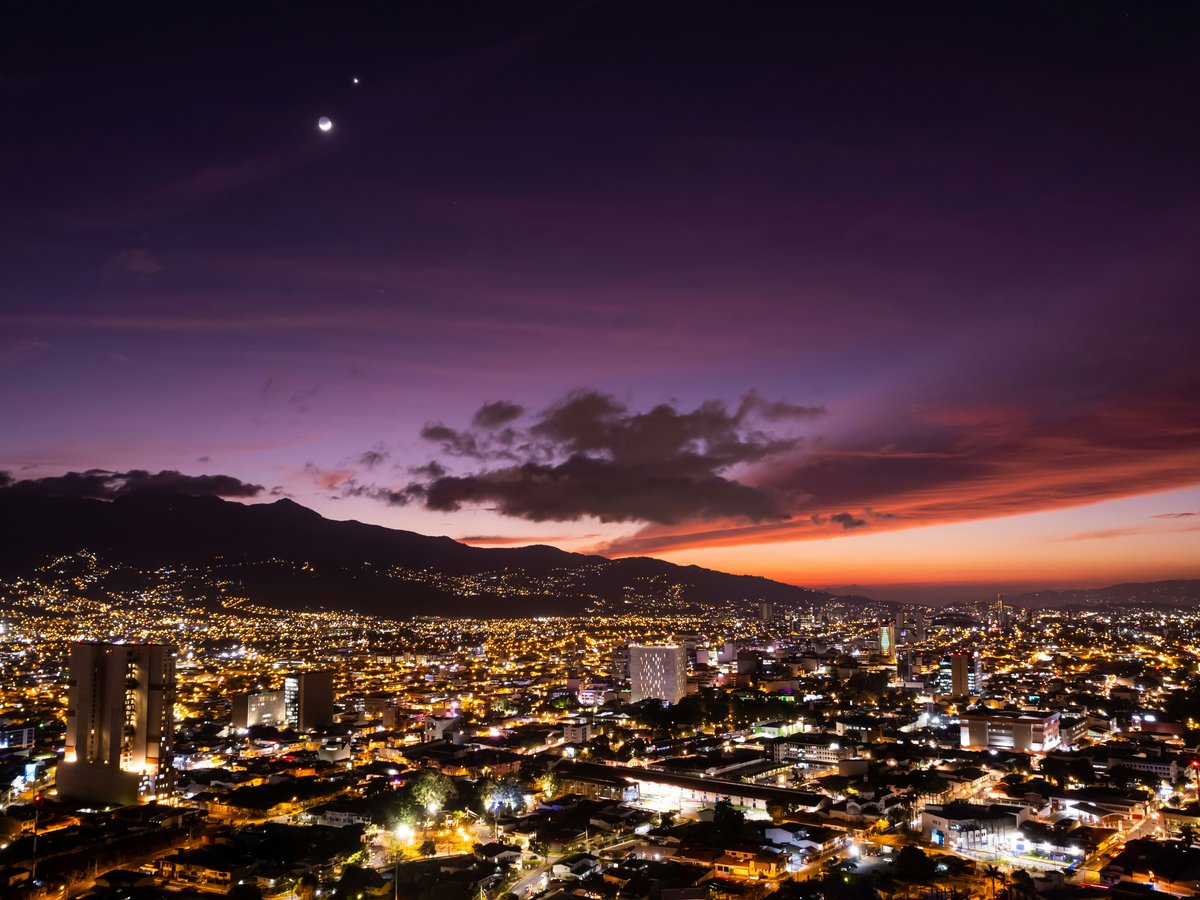
Stay in San José in October
Opens Trip.com on Fri 2 Oct to Sun 4 Oct 2026; change the dates there.
October in San José is, to put it plainly, the wettest month of the year. You're looking at roughly 546mm of rain spread across 29 out of 31 days, which means it rains nearly every single day, often in heavy afternoon downpours that turn streets into temporary rivers. Temperatures sit around 24°C (76°F) during the day and dip to about 16°C (61°F) at night, so it's never hot, never cold, just perpetually damp. The air carries that thick tropical humidity (89% on average) the kind that fogs your glasses the moment you step outside.
That said, there's a rhythm to it. Mornings in San José tend to start clear, sometimes even sunny, with the real rain holding off until early afternoon. If you plan around that pattern, you'll get a few good hours of dry weather for walking Barrio Amón or hitting Mercado Central before the sky opens up. The city feels noticeably quieter than the December-through-March high season. Hotel lobbies are half empty. You won't fight for a table at the better restaurants in Barrio Escalante. For travelers who genuinely don't mind rain (and I mean really don't mind, not just tolerating a light drizzle) there's something appealing about having the city mostly to yourself.
The national holiday Día de las Culturas falls on October 12, which brings a long weekend, a downtown parade, and cultural programming. Beyond that, October is a month where San José turns inward: people linger in covered markets, duck into museums, and settle into long lunches at sodas while the rain drums on tin roofs overhead. It's not the month the tourism board puts on postcards, but it has its own quiet appeal if your expectations are properly calibrated.
Why visit in October
- Rock-bottom hotel and tour prices: this is deep low season, and rates across San José drop 30-50% compared to January or February. You'll find genuinely good deals at places that would cost double in dry season.
- Almost no tourist crowds at major attractions. The Museo del Jade, Teatro Nacional, and Museo Nacional feel like they belong to you alone on a weekday morning.
- The Central Valley turns impossibly green: coffee plantations, Parque La Sabana, the hills ringing the city all look lush and alive in a way the dry season can't match.
- Morning weather windows are real. Most days start clear enough for a 3-4 hour window of exploring before the afternoon rains arrive, which gives you a workable daily rhythm.
- Migratory bird species start arriving from North America in October, making day trips to cloud forests and highland reserves around San José particularly rewarding for birders.
Worth knowing
- 546mm of rainfall across 29 rainy days: this is the single wettest month of the year, and the rain is not gentle. Afternoon downpours can be torrential, flooding low-lying streets in La Sabana and parts of San Pedro within minutes.
- Temporales (extended periods of continuous rain lasting two or three days straight) are most likely in October. When one hits, there's genuinely nothing to do but wait it out indoors.
- Road conditions deteriorate in the rainy season. Potholes multiply, some rural roads become impassable, and traffic in San José slows to a crawl when it rains during rush hour. A 20-minute taxi ride can take over an hour.
- Many outdoor tour operators reduce schedules or close entirely. Whitewater rafting companies still run (rivers are high), but canopy tours and some hiking trails close due to conditions.
Best for
Think twice if
October is the peak of San José's rainy season and the wettest month on the calendar. Expect an average high of 24.3°C (76°F) and a low of 16.1°C (61°F): mild by tropical standards thanks to the city's 1,170-metre elevation. The 546mm of rainfall falls across 29 days, typically arriving in heavy afternoon and evening downpours. Mornings tend to start overcast but dry, with the best chance of sunshine before noon. Humidity sits at a thick 89%, making even the mild temperatures feel muggy. Evenings cool down noticeably, and you might want a light layer after sunset. Temporales (multi-day stretches of continuous grey rain) are most common in October and can stall outdoor plans entirely.
Seasonal caution
- October is the month most prone to temporales: extended rain events lasting 2-3 days of near-continuous rainfall that can cause urban flooding in low-lying neighborhoods like parts of Pavas and La Uruca. Flash flooding along the Río Torres and Río María Aguilar corridors is a real risk after sustained heavy rain.
- Landslides on mountain roads around the Central Valley increase sharply in October. If you're planning day trips to destinations like Poás Volcano or the Orosi Valley, check road conditions before departing and avoid driving mountain roads during or immediately after heavy rain.
- The Turrialba volcano, visible from San José on clear days, has had periodic ash emissions in recent years. While rarely affecting the city directly, check current advisories before planning visits to the eastern Central Valley.
Year-round climate
Averages from the last 5 years.
| Month | Avg high (°C) | Avg low (°C) | Rainfall (mm) |
|---|---|---|---|
| Jan | 25 | 16 | 30 |
| Feb | 26 | 16 | 17 |
| Mar | 27 | 16 | 52 |
| Apr | 27 | 17 | 145 |
| May | 26 | 17 | 317 |
| Jun | 24 | 17 | 458 |
| Jul | 25 | 17 | 354 |
| Aug | 25 | 16 | 452 |
| Sep | 25 | 16 | 456 |
| Oct | 24 | 16 | 546 |
| Nov | 24 | 16 | 355 |
| Dec | 25 | 16 | 72 |
Best things to do in October
Self-guided food tour through Barrio Escalante
foodSan José's gastronomic neighbourhood has become dense with restaurants, bakeries, and specialty coffee roasters in recent years. October's empty dining rooms mean you can walk into places that need reservations in high season. Start at the northern end near Calle 33 and work south, stopping for coffee, ceviche, and whatever catches your eye. The covered and semi-covered patios that most restaurants have built make rain a non-issue.
Low season means no reservations needed and shorter waits at the neighbourhood's most popular spots. Several restaurants run rainy-season tasting menus at reduced prices.Booking tipNo booking needed for most places. For the handful of higher-end restaurants, a same-day call is plenty in October.
Museo del Jade and Museo del Oro double header
cultureThe Jade Museum houses the world's largest collection of pre-Columbian jade, and the Gold Museum sits underground beneath Plaza de la Cultura: literally rain-proof. Both are compact enough to visit in a single rainy afternoon with a coffee break in between. The Jade Museum's upper floors have panoramic views of the Central Valley that are particularly dramatic when storm clouds roll over the mountains.
October's rain makes indoor attractions the sensible choice, and low tourist numbers mean you can linger at displays without crowds. Both museums occasionally run extended hours or special exhibitions during green season to attract visitors.Booking tipNo advance booking required. Both museums are walkable from each other in central San José.
Coffee farm day trip to the Central Valley highlands
natureOctober marks the very beginning of coffee harvest season in Costa Rica's highland growing regions. Farms in the hills around Barva de Heredia, San Marcos de Tarrazú, and the slopes of Poás are transitioning from flowering to early cherry picking. You'll see the plants heavy with ripening fruit (mostly green turning red) and the processing facilities gearing up for the main harvest that runs November through February.
Early harvest season gives you a preview of the coffee cycle that most tourists only see in its final processed form. The farms are less busy than during peak harvest tours in December-January, and guides tend to spend more time with smaller groups.Booking tipBook through the farm directly rather than through a tour aggregator. Many farms require at least 24 hours notice for small-group tours.
Mercado Central and Mercado Borbón morning food crawl
foodSan José's two central markets sit a block apart and are entirely covered, which in October becomes their greatest selling point. Mercado Central is the older, denser, more chaotic of the two, packed with soda counters serving casados, rice and beans, fresh fruit drinks, and the best people-watching in the city. Mercado Borbón next door is the working produce market where Josefinos shop. The smells alone (roasting coffee, frying plantain, ripe tropical fruit) are worth the visit.
Rain keeps you dry under the market roofs while you eat your way through breakfast and lunch. Seasonal produce like cas, granadilla, and fresh-harvest corn are at their peak. The markets are noticeably less crowded than in tourist season.Booking tipGo before 10am for the best selection and the most local atmosphere. Most stalls are cash-only; bring colones in small denominations.
Teatro Nacional guided tour or evening performance
cultureCosta Rica's most distinguished building (modeled on the Paris Opera) offers both daytime tours of its ornate interior and an evening performance calendar that runs year-round. The lobby café serves decent coffee under painted ceilings. On a rainy October afternoon, sitting inside this building with an espresso and looking up at Aleardo Villa's ceiling mural feels like a small act of defiance against the weather outside.
The theatre's performance season is in full swing by October, and tickets for concerts and dance performances are easier to get than during the tourist-heavy months. The building itself is temperature-controlled and dry: a genuine refuge.Booking tipCheck the theatre's website for the October performance calendar. Daytime tours run on a walk-in basis most days.
Hot springs day trip to the Arenal area
natureThe drive from San José to La Fortuna takes about three hours and brings you to some of Costa Rica's best thermal hot springs, heated by the Arenal volcano. Sitting in naturally heated mineral water while rain patters on the surrounding jungle canopy is one of those experiences that improves with bad weather. The contrast between the warm pools and the cool rain is part of the appeal.
Rain makes hot springs more atmospheric, not less. October's low season means the springs are less crowded, and several properties offer discounted day passes during green season. The drive through the highlands is startlingly green.Booking tipBook a day pass at one of the larger hot spring complexes. Leave San José early to avoid afternoon rain on mountain roads. Consider spending the night rather than driving back in the dark and wet.
Birdwatching at highland reserves near San José
natureOctober brings the first wave of Nearctic migratory birds arriving from North America. Reserves in the Central Valley highlands (accessible as half-day trips from San José) see warblers, tanagers, raptors, and the start of the quetzal's post-breeding dispersal into lower elevations. The wet forests are dense and alive with calling birds in the early morning before the rain sets in.
The overlap between resident tropical species and arriving North American migrants makes October one of the highest bird-diversity months in the Central Valley highlands. The lush rainy-season growth means more fruit and insects, concentrating birds at feeding sites.Booking tipHire a local guide through the reserve rather than going independently: they know the current fruiting trees and roost sites. Early morning starts are essential; by 10am bird activity drops and rain begins.
Barrio Amón architecture walk
cultureSan José's oldest residential neighbourhood sits on a gentle hill north of downtown, lined with Victorian and art-nouveau mansions built by coffee barons in the late 1800s. Many are now boutique hotels, galleries, and restaurants. The architecture is best appreciated on foot, and the neighbourhood is compact enough to cover in a morning before the rain arrives. The faded grandeur feels more honest in the grey October light than it does under the harsh dry-season sun.
The overcast skies and soft light are better for photographing the painted facades and ironwork details. Low season means the boutique hotels housed in restored mansions offer their lowest rates, and some welcome non-guests for tours of the interiors.What to eat in October
In season: fruit
Cas
This tart, aromatic guava relative peaks in the rainy season and gets blended into refrescos naturales (fresh fruit drinks) at juice stands and sodas across the city. The flavour sits somewhere between sour guava and green apple. If you see refresco de cas on a menu, order it. It's one of those fruits that doesn't travel, so you likely won't find it outside Costa Rica.
On menus now
Olla de carne
This hearty beef and root vegetable stew (loaded with yuca, chayote, green plantain, corn on the cob, and tiquizque) is the rainy season comfort food of the Central Valley. October's cool, wet afternoons practically demand a steaming bowl at one of the sodas around Mercado Central or Mercado Borbón.
Sopa negra
Black bean soup with a hard-boiled egg, cilantro, and a squeeze of Lizano salsa: another rainy-season staple that locals turn to when the afternoon chill sets in. Simple, cheap, and warming. The best versions use freshly dried beans from the recent harvest rather than canned.
Pozol
A thick corn and pork soup that straddles the line between stew and porridge. Pozol is rural comfort food that shows up in sodas and home kitchens during the rainiest months. The corn is tender from slow cooking and the broth has a subtle sweetness. A bowl of this after getting caught in an October downpour is genuinely restorative.
Street food peaks
Chorreadas
Fresh corn pancakes made from the season's harvest, cooked on a griddle and served with natilla (a tangy sour cream). The corn crop peaks during the rainy months, and October chorreadas taste noticeably sweeter than what you'll find from frozen corn in dry season. Street vendors and sodas across San Pedro and Barrio Escalante serve them hot off the comal.
What to drink
Agua dulce
Hot water sweetened with tapa de dulce: unrefined cane sugar sold in solid brown cones at Mercado Central. Josefinos drink it the way the rest of the world drinks tea, and it's at its most appealing in October when cool rainy evenings make you want something warm in your hands. Pair it with a piece of pan casero and you've got the local equivalent of tea and biscuits.
Regular events in October
Día de las CulturasFree
Costa Rica's replacement for Columbus Day, celebrating the country's indigenous, African, European, and Asian cultural heritage. In San José, the day brings a parade through the downtown core along Avenida Segunda, cultural performances at the Centro Nacional de la Cultura (CENAC), and food stalls featuring dishes from Costa Rica's various cultural traditions. Government offices and many businesses close for the day. It's a public holiday, not a spectacle: more civic than carnival.
October 12 (fixed date; if it falls mid-week, expect a long weekend as many Ticos bridge the gap)Desfile de las CulturasFree
The street parade marking Día de las Culturas winds through central San José with marching bands, indigenous dance groups, Afro-Caribbean performers from Limón, Chinese dragon dancers, and school contingents. It's earnest rather than flashy: community groups and schools form the bulk of the procession. The route typically runs along Avenida Segunda and past the Museo Nacional. Worth watching for 30-40 minutes if you're in town.
October 12 or the nearest weekendHalloween celebrations in Barrio Escalante and San Pedro
Halloween has grown steadily more popular in Costa Rica over the past decade, and San José's younger neighbourhoods (particularly Barrio Escalante and the university district of San Pedro near UCR) go fairly hard on costumes and themed bar events by late October. Several bars and restaurants run costume competitions and themed menus during the last week of the month. It's not a traditional Tico celebration, but the enthusiasm is real.
October 28-31Feria Verde de AranjuezFree
San José's best farmers market runs every Saturday morning in Aranjuez park, rain or shine. In October, the stalls fill with seasonal produce: cas, granadilla, fresh corn, and a rotating cast of tropical fruit you won't find at supermarkets. Local artisan food vendors sell everything from craft chocolate to fermented hot sauces. The crowd skews local, and the atmosphere on a rainy Saturday morning under the market tarps feels genuinely communal.
Every Saturday, approximately 7am to 12:30pmBest places this October
Mercado Central
marketSan José's sprawling covered market has been the city's commercial heart since 1880. The maze of narrow aisles connects over 200 stalls selling everything from medicinal herbs to fresh-butchered meat to the best cheap lunch in the city. In October, the roof becomes your friend: you can spend a full morning eating, drinking refrescos, and browsing without ever stepping into the rain. The soda counters along the market's interior corridors serve casados and rice-and-bean plates for a fraction of restaurant prices.
CentroMuseo del Jade
museumFive floors of pre-Columbian jade artifacts (the largest collection of its kind in the world) housed in a striking modern building near the Asamblea Legislativa. The museum is fully climate-controlled, well-curated, and rarely crowded in October. The top floor has floor-to-ceiling windows with views across the Central Valley toward the northern volcanoes, weather permitting. Even when clouds obscure the volcanoes, watching the rain sweep across the valley from up there is its own show.
CentroMuseo Nacional de Costa Rica
museumHoused in the Bellavista Fortress: a former military barracks whose exterior walls still show bullet holes from the 1948 civil war: the national museum covers Costa Rica's natural and human history. The central courtyard has a butterfly garden that's at its most active during the wet months. A good 2-3 hour visit on a rainy morning.
CentroParque La Sabana
parkSan José's largest urban park stretches across the western end of Paseo Colón. On those clear October mornings before the rain sets in, the park fills with joggers, football matches, and families. The Museo de Arte Costarricense sits at the park's eastern edge in the old airport terminal building: worth visiting for both the permanent collection and the rotating exhibitions. When the rain starts, retreat to the museum or the covered food stalls along the park's southern perimeter.
La SabanaCentro Nacional de la Cultura (CENAC)
cultural centerA former liquor factory converted into San José's main cultural complex, housing galleries, theatre spaces, and the Museum of Contemporary Art and Design. CENAC programs exhibitions and performances year-round, and October's Día de las Culturas brings additional programming. The covered courtyards make it a reliable rainy-day destination. The building itself (industrial architecture softened by tropical plantings) is worth seeing.
CentroBarrio Escalante
neighborhoodOnce a quiet residential neighbourhood east of downtown, Barrio Escalante has become San José's culinary district over the past decade. The stretch along Calle 33 and the surrounding blocks concentrates specialty coffee roasters, craft breweries, contemporary restaurants, and bakeries within easy walking distance. In October, the neighbourhood's covered patios and indoor dining spaces make it the most weather-resilient eating destination in the city.
Barrio EscalanteMuseo del Oro Precolombino
museumSitting underground beneath Plaza de la Cultura in the very centre of San José, the Gold Museum is literally subterranean: rain is irrelevant. The collection of pre-Columbian gold artifacts is beautifully lit and displayed, and the museum connects to the Numismatics Museum. You could easily spend 90 minutes here. The plaza above is a good spot to watch the city go by on a dry morning.
CentroFeria Verde de Aranjuez
marketThis Saturday morning farmers market in the Aranjuez neighbourhood draws a mostly Josefino crowd and sells seasonal produce, artisan foods, and prepared breakfast items. October brings cas, fresh corn, and other rainy-season produce. The market operates under tarps and canopies, so light rain doesn't stop anything. Heavier downpours thin the crowd but the core vendors stay.
Aranjuez
Your packing checklist
Tick items off as you pack. Your progress saves in this browser.
All packed — have a great trip.
Insider tips
The morning dry window is real but shorter than guidebooks suggest. Locals plan their errands and outdoor time for before 11am in October: by noon the clouds have usually stacked up and the first drops start. If you want to walk a neighbourhood or visit a park, start at 7am. By the time most tourists finish breakfast, the best outdoor hours are already behind them.
When the afternoon rain hits, do what Josefinos do: duck into a soda (a small family-run restaurant) and order a casado or sopa negra. Nobody waits out the rain standing under an awning. The rain is a social cue to sit down, eat something warm, and wait. Fighting it just gets you soaked and frustrated.
Uber works well in San José and is often easier than negotiating taxi fares in the rain. When it's pouring and you need to get across the city, the app saves you from standing on a corner getting drenched while trying to flag down a red cab. Ticos use it heavily: the drivers know the city.
The Saturday morning Feria Verde de Aranjuez farmers market is where you'll taste things that don't exist on restaurant menus: fermented cas drinks, fresh-pressed sugarcane juice, tamales from Guanacaste-style cooks, artisan drinking chocolate. Get there by 8am. The good stuff sells out. This is not a tourist market; prices reflect local purchasing power.
If you're planning day trips, check road conditions with your hotel or car rental before driving mountain routes. October mudslides close the road to Poás Volcano and other highland destinations several times a month. The national road authority posts closures online, but your hotel front desk will know faster than any website.
Avoid these mistakes
- Planning a packed outdoor itinerary and refusing to adjust when the rain doesn't cooperate. October in San José rewards flexibility, not rigidity. Build your schedule around indoor morning activities and covered afternoon options, with outdoor plans as bonuses on the rare dry afternoon, not the foundation of your trip.
- Booking a rental car without understanding San José's rainy-season driving conditions. Flooded intersections, reduced visibility, aggressive drivers, and potholes that appear overnight make driving stressful for visitors unfamiliar with the city. Taxis and Uber handle the rain better than you will on unfamiliar roads.
- Underestimating the afternoon chill and going out without a layer after sunset. At 16°C (61°F) with 89% humidity and wet clothes, October evenings in San José feel colder than the numbers suggest. Every year, unprepared visitors end up buying overpriced fleeces from tourist shops near Plaza de la Cultura.
- Skipping mosquito protection because San José sits at elevation. The city is lower-risk than the coast, but October's standing water from constant rain still breeds mosquitoes. Dengue cases in the Central Valley spike during the wettest months. Use repellent in the evenings, especially near parks and green spaces.
Practical tips for October
October is a month where advance booking is mostly unnecessary: hotels, restaurants, and tours all have capacity. The exception is the Día de las Culturas long weekend around October 12, when domestic tourists fill mid-range hotels and rental cars get scarce. If your dates overlap with that holiday, book accommodation and transport a week ahead. Beyond that, walk-in rates at hotels are often lower than online prices in October: it's worth asking at the front desk. Most museums close on Mondays. Mercado Central closes on Sundays. Dress casually but bring closed-toe shoes if you're visiting Teatro Nacional for an evening performance: some events have a loose dress code. Tipping at restaurants is technically included in the bill as a 10% service charge, but rounding up or leaving a few extra thousand colones is appreciated and not obligatory. ATMs are widely available; bring a debit card with no foreign transaction fees. Colones are preferred at markets and sodas, but mid-range restaurants accept cards. Cell service and Wi-Fi are generally reliable, though heavy storms can knock out power and connectivity in some areas. Consider buying a local Kolbi or Claro SIM card at the airport for reliable data.
FAQ
Is October a good time to visit San José, Costa Rica?
Honestly, October is the most challenging month to visit San José. It's the wettest month of the year with 546mm of rainfall across 29 rainy days, and the chance of a temporal (a multi-day continuous rain event) is at its highest. That said, if you genuinely don't mind rain and want the lowest prices of the year with virtually no tourist crowds, October has a certain quiet appeal. Mornings tend to be drier, and the city's excellent museums, markets, and restaurant scene are all rain-proof. But if weather matters to your trip satisfaction, December through March is a dramatically better bet.
What is the weather like in San José in October?
Expect average highs around 24°C (76°F) and lows near 16°C (61°F): pleasantly mild thanks to the city's 1,170m elevation. The defining feature is rain: 546mm across the month, with downpours most afternoons and evenings. Humidity sits at 89%, which makes everything feel damp. Mornings are often overcast but dry, giving you a window for outdoor activities before the sky opens up around midday. Temporales (stretches of 2-3 days of near-continuous rain) are most likely in October. The temperatures are comfortable, but the relentless moisture takes adjustment.
Is San José crowded in October?
Not at all. October is deep low season: the wettest month scares off most international visitors, and you'll find major attractions like the Museo del Jade, Teatro Nacional, and Museo Nacional noticeably quiet. Hotel occupancy is low, restaurant reservations are unnecessary, and tour groups are small. The one exception is the Día de las Culturas long weekend around October 12, when Costa Rican domestic travelers book up mid-range hotels and the downtown parade draws local crowds. Outside that holiday, the city feels relaxed and unhurried.
What should I pack for San José in October?
A proper waterproof rain jacket is non-negotiable, not a poncho, not a windbreaker, but a sealed-seam shell that can handle sustained heavy rain. Quick-dry synthetic clothing is far better than cotton, which never fully dries at 89% humidity. Waterproof shoes with good tread for slippery sidewalks. Dry bags or ziplock bags to protect electronics. A light layer for cool evenings around 16°C. Insect repellent with DEET or picaridin: October's standing water breeds mosquitoes even at San José's elevation. And a compact umbrella for the lighter showers, keeping in mind that the real downpours will overwhelm it.
Are there any festivals or events in San José in October?
The main event is Día de las Culturas on October 12, a national holiday celebrating Costa Rica's cultural diversity with a downtown parade, performances at the Centro Nacional de la Cultura (CENAC), and cultural programming. It's more civic than carnival: community groups and school contingents rather than elaborate floats. Halloween has grown increasingly popular in San José's younger neighbourhoods, particularly Barrio Escalante and San Pedro, with costume events and themed nights at bars during the last week of October. Beyond these, October is a quieter month on the events calendar. The weekly Feria Verde de Aranjuez farmers market on Saturday mornings runs rain or shine and is worth building a morning around.
Things to Do in San José in October
 Free cancellation
 Arenal Volcano Full-Day Combo Tour with Lunch and Dinner
Outdoor experience: 14 hours, free cancellation.
via Viator Free cancellation
 Arenal Volcano Experience Full-Day Tour from San Jose
Day trip: 14 hours, free cancellation.
via Viator Free cancellation
 Manuel Antonio National Park Sightseeing and Wildlife Day Tour from San Jose
Day trip: 12 hours, free cancellation.
via Viator Free cancellation
 Full Day Poas Volcano, La Paz Waterfall Gardens and Coffee Plantation Experience
Outdoor experience: 10 hours, free cancellation.
via Viator Free cancellation
 Tortuga Island Full Day Tour from San José with Lunch
Day trip: free cancellation.
via Viator Free cancellation
 Zip Line, Rappel, Hiking La Carpintera Tour in San Jose
Outdoor experience: 3 hours, free cancellation.
via ViatorFind a flight to San José
Live fares to San José appear here once cookies are accepted.
Last verified by automated review (v1.7.2) on . What is automated review?