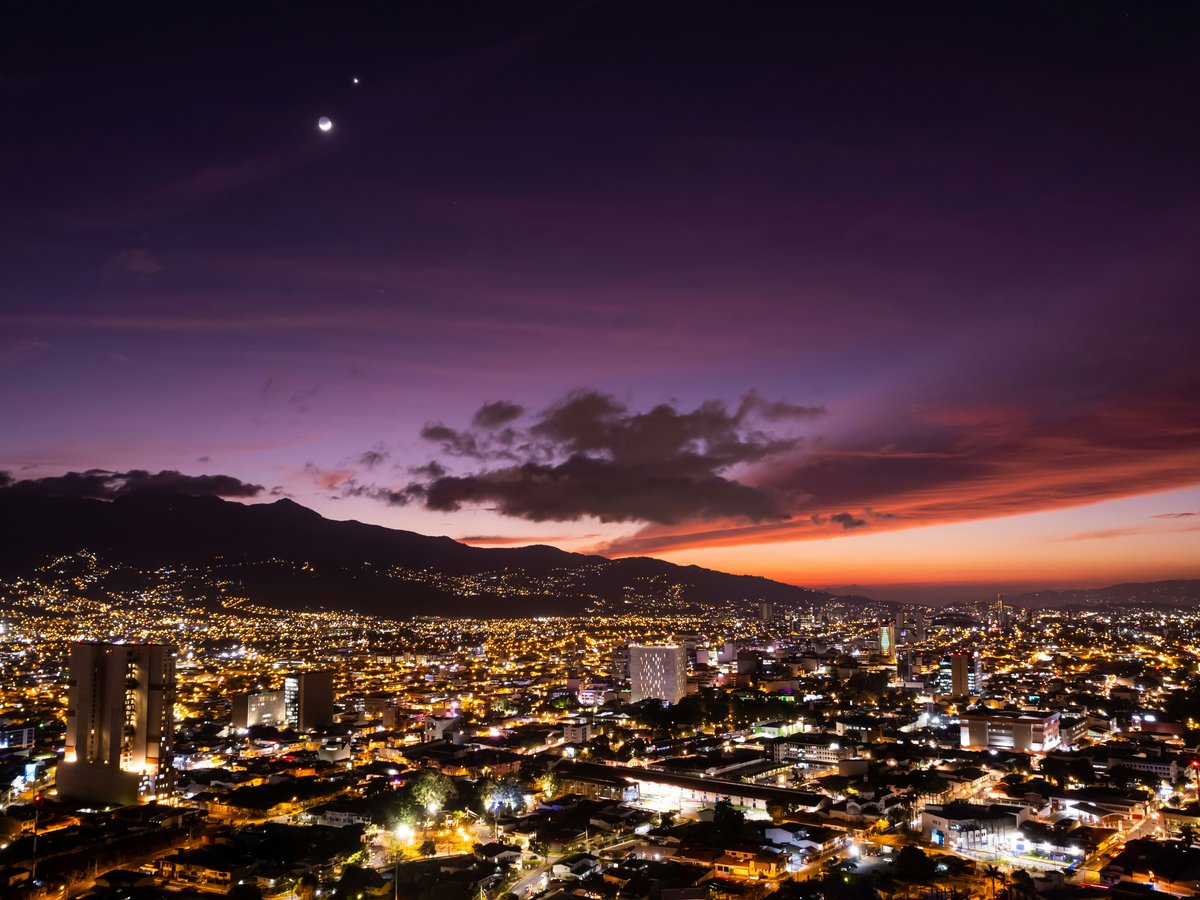
Stay in San José in September
Opens Trip.com on Fri 25 Sep to Sun 27 Sep 2026; change the dates there.
September in San José means rain. That's the single most important thing to know. You're walking into the deep end of Costa Rica's green season, with roughly 456mm of rainfall spread across 29 of the month's 30 days. Nearly every day gets wet. Mornings tend to start clear enough (mild, sometimes even sunny) but by early afternoon the clouds pile up over the Central Valley and the downpours roll in. They're heavy, theatrical, and usually finished within an hour or two. Temperatures hover around 25°C (77°F) during the day and settle near 16°C (62°F) at night, which would feel like perfect spring weather if the 87% humidity didn't make everything slightly clammy.
That said, September holds one genuine trump card: Independence Day on September 15. The evening of September 14 brings the Desfile de Faroles, when schoolchildren parade through the streets carrying handmade lanterns while the freedom torch (relayed on foot from Guatemala across all of Central America) arrives in the city. The whole capital takes on a patriotic energy you won't find any other month. Barrio Amón's colonial facades get draped in blue, white, and red. Marching bands rehearse in Parque La Sabana for days beforehand. If Costa Rican culture matters to you more than beach weather, this is a genuinely compelling window.
But honesty first: for most visitors, September sits near the bottom of the calendar. The rain constrains outdoor itineraries, grey skies settle in for stretches, and the persistent dampness wears on you. Hotel rates drop well below the dry-season average, the Museo Nacional and Museo de Jade are refreshingly uncrowded, and Barrio Escalante's restaurant row doesn't need reservations. The trade-off is real, though. Come for the Independence Day atmosphere and the low prices, or wait for December.
Why visit in September
- Independence Day celebrations (September 14-15) bring parades, lantern processions, and a wave of patriotic energy through the capital: a cultural experience unique to this month
- Hotel rates drop 30-50% below dry-season prices, and popular restaurants in Barrio Escalante and Los Yoses that normally need weekend reservations have walk-in availability
- The Central Valley turns a deep, saturated green: the hillsides ringing San José look their lushest, and Parque La Sabana's grounds are thick with growth
- Crowds at the city's top museums thin out considerably, so you can take your time at the Museo de Jade or Museo Nacional without competing for space
- Seasonal fruit peaks: cas, guanábana, and pejibayes appear at the Feria Verde de Aranjuez and Mercado Central at their freshest and cheapest
Worth knowing
- Rain falls on 29 of 30 days, typically in heavy afternoon cloudbursts that can flood low-lying streets in Zapote and parts of downtown for an hour or two
- 87% humidity means clothes take forever to dry, camera lenses fog when you step outside from air-conditioned spaces, and the general dampness becomes tiring after several days
- Some day-trip destinations outside San José (Poás Volcano crater, for instance) are frequently socked in by cloud, limiting visibility to near zero
- The grey, overcast afternoons can feel repetitive if you're here for more than a week, and sunset photography from spots like the Museo de Arte Costarricense terrace becomes a gamble
Best for
Think twice if
Deep green season. Mornings often start partly cloudy with comfortable temperatures, but by 1-2pm the clouds thicken over the Central Valley and heavy rain typically arrives. The downpours are dramatic (sheets of water, sometimes with thunder rolling off the surrounding mountains) but they usually pass within 60-90 minutes. Evenings tend to clear somewhat, leaving the air cool and washed clean. The humidity sits at 87% and you'll feel it: that heavy, damp quality to the air that makes lightweight cotton stick to your skin. Mind you, the temperatures themselves are remarkably mild for the tropics. You won't sweat from heat here the way you might in Guanacaste: it's the moisture in the air, not the temperature, that gets to you.
Seasonal caution
- Heavy afternoon downpours can temporarily flood low-lying streets and intersections, particularly in central San José near the Río Torres corridor: avoid walking through standing floodwater as drainage can be unreliable
- Lightning is common during September storms, especially over the Central Valley: seek shelter in buildings rather than under trees if you're caught outdoors during a thunderstorm
- Roads to highland destinations like Poás or Irazú volcanoes can become slick and occasionally close due to landslides after sustained heavy rain: check conditions with your hotel before booking a day trip
Year-round climate
Averages from the last 5 years.
| Month | Avg high (°C) | Avg low (°C) | Rainfall (mm) |
|---|---|---|---|
| Jan | 25 | 16 | 30 |
| Feb | 26 | 16 | 17 |
| Mar | 27 | 16 | 52 |
| Apr | 27 | 17 | 145 |
| May | 26 | 17 | 317 |
| Jun | 24 | 17 | 458 |
| Jul | 25 | 17 | 354 |
| Aug | 25 | 16 | 452 |
| Sep | 25 | 16 | 456 |
| Oct | 24 | 16 | 546 |
| Nov | 24 | 16 | 355 |
| Dec | 25 | 16 | 72 |
Holidays and festivals in September
Public holidays
- Independence Day(Día de la Independencia)15 September 2026
Headline events
Día de la Independencia and Desfile de Faroles
September 14-15
Costa Rica's Independence Day (September 15) and its eve-of celebration, the Desfile de Faroles, are the cultural high point of the month. On the evening of September 14, schoolchildren across the country march through the streets carrying handmade paper lanterns, many of them elaborate constructions shaped like the national flag, local animals, or traditional oxcarts. In San José, the main procession winds through downtown past the Teatro Nacional and along Avenida Central. The Antorcha de la Independencia: a freedom torch relayed by runners from Guatemala through Honduras, El Salvador, and Nicaragua: arrives in the capital that evening, and the moment it crosses into San José tends to draw crowds along the route. September 15 itself brings civic ceremonies, marching bands in the streets, and a palpable sense of national pride. Barrio Amón and the streets around the Museo Nacional get decked out in blue, white, and red bunting. The atmosphere is local and genuine: you won't find tour buses here, just Tico families celebrating together.
Best things to do in September
Desfile de Faroles walk along Avenida Central
culturalJoin thousands of Josefinos lining the streets on the evening of September 14 to watch the lantern parade. Handmade faroles bob through the crowd, some simple paper cylinders, others elaborate constructions lit from within. The smell of chicharrones from street carts mixes with the sound of drums. It's chaotic and joyful: children running ahead, parents carrying toddlers on shoulders.
The Desfile de Faroles only happens on the eve of Independence Day, September 14Booking tipNo tickets needed, just show up along Avenida Central or near the Catedral Metropolitana by 6pm
Museo del Jade and Museo Nacional deep visit
culturalSeptember's low crowds mean you can spend two or three unhurried hours in these two museums without tour-group bottlenecks. The Jade Museum's five floors of pre-Columbian jade, ceramics, and gold pieces reward slow looking. Across the plaza, the Museo Nacional occupies the old Bellavista fortress: bullet holes from the 1948 civil war still pock the turret walls. Both stay dry while the afternoon rains fall outside.
Crowds drop sharply in green season, so galleries that feel packed in January are nearly empty nowBooking tipGo in the morning when light fills the Jade Museum's upper galleries; move to the Museo Nacional after lunch when rain is likely anyway
Barrio Escalante food crawl
foodSan José's culinary heart runs along Calle 33 and the surrounding blocks of Barrio Escalante. September means walk-in tables at places that have month-long waits in high season. You might start with a ceviche at a Peruvian-Costa Rican spot, move to craft beer at a neighborhood taproom, and finish with dessert at a bakery where the pastry case still has options at 8pm. The neighborhood smells like wood-fired ovens and roasting coffee.
Green-season quiet means reservations are rarely needed, even on weekends: the neighborhood is yours to explore at your own paceBooking tipWeekend evenings still get lively: if you have your heart set on a specific spot, a same-day call is enough
Feria Verde de Aranjuez Saturday market
foodThis open-air organic market fills the park in Barrio Aranjuez every Saturday morning. In September the stalls overflow with seasonal fruit: cas, guanábana, rambutans, and tree tomatoes alongside fresh cheese, artisan bread, and small-batch coffee. Live music drifts from one end. The air smells like ripe fruit and fresh herbs. Worth noting: rain usually holds off until afternoon, so the market mostly stays dry.
September brings peak green-season produce: cas and pejibayes are at their freshest, and the market runs with fewer crowds than dry-season SaturdaysBooking tipArrive before 8am for the best selection; bring your own bags as many vendors are plastic-free
Coffee farm day trip to the Central Valley
outdoorThe coffee plants in the hillsides surrounding San José are deep in their flowering and early fruiting cycle during September. Tours at farms in the Barva or Poás slopes walk you through the wet-mill process, and you'll taste the difference between a fresh-roasted Central Valley bean and whatever you've been drinking back home. The green, rain-washed hillsides are stunning. Some farms also grow sugarcane and macadamia alongside the coffee.
September rains keep the coffee cherries developing on the branch: farms are lush and photogenic, and guides tend to have more time for small groupsBooking tipBook through your hotel or a local operator rather than a large tour company: smaller groups get deeper access to the processing facilities
Rainy-afternoon café hopping in Barrio Otoya and Barrio Amón
culturalWhen the 2pm rains arrive, duck into one of the heritage-house cafés scattered through these adjacent neighborhoods north of Avenida Central. Victorian and Art Deco mansions have been converted into coffee shops and small galleries. The rain drums on tile roofs while you sip a pour-over and watch water sheet off iron balconies. Each café has its own character: mismatched furniture, local art on the walls, the low hum of conversation.
The afternoon rains make café culture feel purposeful rather than indulgent: you're not avoiding plans, you're making the most of the rhythmMercado Central exploration
foodSan José's sprawling central market has been operating since 1880. The narrow aisles wind between fish stalls, spice vendors, leather shops, and a dozen sodas where you can eat a casado for a few dollars. The market is entirely covered, making it ideal for a rainy afternoon. The sensory load is full-on: shouted orders, the clatter of plates, the smell of frying plantains layered over raw fish and ground coffee.
Fewer tourists in September mean the market's regular rhythm isn't disrupted: you're eating alongside office workers and market vendors on their breaks, not tour groupsWhat to eat in September
In season: fruit
Cas
This tart Costa Rican guava hits peak season in September. Street vendors and Mercado Central stalls blend it into fresh cas juice: sharp, slightly sour, and bracingly cold. The fruit itself is pale green and fragrant, with a perfume that fills the market aisles.
Pejibayes
The orange palm fruit appears boiled at market stalls and bus stops across the city, served with a dollop of mayo. The texture sits somewhere between a chestnut and a boiled potato: starchy, mild, faintly nutty. September brings them at their cheapest and freshest.
Guanábana
Soursop season overlaps with September's rains. The white, fibrous flesh gets blended into batidos at juice bars throughout Barrio Escalante and the Mercado Central: creamy, slightly tangy, with a tropical sweetness that cuts through the humid air.
On menus now
Olla de Carne
This hearty beef and root vegetable soup (loaded with yuca, chayote, plantain, and corn on the cob) is comfort food for rainy afternoons. You'll smell it simmering at sodas across the city. The broth is rich, almost sweet from the long-cooked vegetables. Exactly what you want when the afternoon downpour rattles the corrugated roof overhead.
What to drink
Agua Dulce
Hot sugarcane water, sometimes spiked with a squeeze of lime or a splash of milk, is the traditional companion to a rainy Central Valley evening. Most sodas serve it. The flavor is warm, earthy, and gently sweet: nothing like refined sugar. Pairs well with a piece of pan casero fresh off the griddle.
Regular events in September
Feria Verde de AranjuezFree
Weekly Saturday organic market in Barrio Aranjuez featuring seasonal produce, artisan foods, live music, and community gathering: a fixture of Josefino weekends year-round, but September's seasonal fruit makes it especially worth the early wake-up
Every Saturday, 7am-12:30pmTransitarteFree
Monthly open-air art and culture walk along Calle 35 and surrounding streets in Barrio Escalante. Local artists, musicians, and food vendors take over the sidewalks for an evening. The September edition tends to be intimate: smaller crowds, more conversation with the artists, and the chance that a late shower sends everyone under awnings together
Typically one evening mid-month (check local listings)Civic parades and school band performancesFree
In the days leading up to September 15, schools across San José hold rehearsal marches through their neighborhoods. Parque La Sabana and Paseo Colón become impromptu stages for drum corps and flag teams. The rehearsals are arguably more charming than the official parade: rougher, louder, with kids waving at their parents from the road
September 10-14Best places this September
Museo del Jade
museumFive floors of pre-Columbian jade, gold, and ceramic artifacts in a modern building overlooking the Plaza de la Democracia. September's thin crowds let you linger at individual cases without the usual high-season shuffle. The top-floor terrace offers a rain-curtain view of the Central Valley on stormy afternoons.
DowntownBarrio Escalante
neighborhoodSan José's gastronomic district: a walkable grid of restaurants, cafés, craft breweries, and bakeries concentrated along Calle 33. In September the neighborhood runs at a slower pace. Tables appear without reservations. The smell of wood-fired ovens drifts across the street. At night, warm light spills from converted houses.
Barrio EscalanteMuseo Nacional de Costa Rica
museumHoused in the old Bellavista Barracks (the fortress that figured in the 1948 civil war) the Museo Nacional covers Costa Rican history from pre-Columbian stone spheres to the abolition of the army. The bullet-scarred turret walls are worth the visit alone. The interior courtyard garden, lush and damp in September, has blue morpho butterflies if you're patient.
DowntownMercado Central
marketOperating since 1880, this covered market is a maze of narrow aisles packed with sodas, fish stalls, spice vendors, and leather goods. The food is cheap and genuine: casados, ceviche, fresh fruit juices. The roof keeps everything dry during the afternoon rains, so it becomes a natural gathering point when the clouds open up.
DowntownParque La Sabana
parkSan José's largest urban park, roughly the size of New York's Central Park, occupies a former airport on the city's west side. In September the grass and tree canopy reach their deepest green. Morning joggers and weekend soccer games fill the paths before the rain arrives. The Museo de Arte Costarricense sits at the park's east entrance.
La SabanaBarrio Amón
neighborhoodA quiet residential-turned-cultural district north of downtown, filled with Victorian mansions, Art Nouveau facades, and a handful of boutique hotels and cafés. September's damp air makes the painted woodwork gleam. The neighborhood is walkable and largely flat: good for a morning wander before the clouds build.
Barrio AmónTeatro Nacional de Costa Rica
culturalCosta Rica's most ornate public building, modeled after the Paris Opera, opened in 1897. The gilded interior (frescoed ceilings, marble staircases, red velvet seats) is worth seeing even if nothing is performing. September matinee performances occasionally pop up on the schedule and tend to sell slowly, meaning good seats remain available.
Downtown
Your packing checklist
Tick items off as you pack. Your progress saves in this browser.
All packed — have a great trip.
Insider tips
The morning window between roughly 7am and noon is your golden time. Plan outdoor activities, market visits, and neighborhood walks for before lunch: by 1-2pm the clouds are already stacking up over the valley and rain is likely within the hour.
Sodas (the small family-run eateries found in every neighborhood and inside markets) serve the best value meals in the city. A casado (rice, beans, salad, plantain, and your choice of protein) runs a few dollars and is genuinely filling. The soda culture is where you'll taste how Josefinos eat, not the tourist-oriented restaurants near the Teatro Nacional.
Uber works well in San José and is generally the most practical way to get around when it's raining hard. The red taxis are also fine but negotiate the fare or insist on the meter: some drivers quote inflated rates to visitors during downpours.
If you're visiting for Independence Day, position yourself near the Catedral Metropolitana on the evening of September 14 rather than along the main Avenida Central route: the crowd is slightly thinner and you can see the lanterns up close as groups pass through the plaza.
The city's café scene runs deep but stays quiet about it. Barrio Otoya and Barrio Amón have converted-mansion coffee shops where a pour-over Costa Rican single-origin costs less than a chain latte elsewhere. Ask the barista which region the beans are from: they'll likely tell you the farm name and elevation.
Avoid these mistakes
- Packing only shorts and sandals: San José sits at 1,170 meters elevation and September evenings genuinely cool down. You'll want long pants and closed shoes for both comfort and the wet pavement.
- Trying to power through the afternoon rain instead of leaning into it. Fighting the weather makes for a miserable trip. The locals duck into a café or soda when the skies open: follow their lead and treat the downpour as a built-in rest period.
- Booking a tight three-day itinerary loaded with outdoor activities. September's rain pattern means you'll likely lose two or three afternoons to weather. Build in flexibility, prioritize mornings for anything outdoors, and keep museum and restaurant plans as afternoon backups.
- Assuming Poás Volcano will be visible. The crater is frequently socked in by cloud during September: you might drive an hour uphill only to see a wall of white mist. Check conditions that morning and have a backup plan (Café Britt or a Central Valley coffee tour works well as a rain alternative).
- Skipping the Mercado Central because it looks chaotic from the outside. The market's narrow aisles and rapid-fire vendors can feel overwhelming at the entrance, but three minutes in you'll find a soda stool, a plate of ceviche, and the authentic San José experience that the sanitized food halls don't quite capture.
Practical tips for September
Carry a packable rain jacket everywhere, not in your hotel, in your bag. September storms arrive fast, sometimes with only ten minutes of warning between thickening clouds and a full downpour. Plan your day around the morning dry window: outdoor activities, walking tours, and market visits before noon, then shift to museums, cafés, and restaurants when the rain settles in after lunch. The bus system works but can be confusing for visitors; Uber is reliable and inexpensive across the metro area. If you're heading to highland day trips like Poás or Irazú, call ahead that morning to check road and visibility conditions: landslide closures happen after heavy rain. For Independence Day events on September 14-15, no advance booking is needed for the public celebrations, but restaurants in Barrio Escalante may fill up with local families celebrating, so a lunchtime reservation that weekend is smart. Keep electronics in a waterproof pouch or dry bag inside your pack, even brief exposure during a sudden storm can damage phones and cameras.
FAQ
Is September a good time to visit San José, Costa Rica?
For most visitors, September is one of the less appealing months: it sits at number 10 out of 12 in our ranking. The rain is persistent, falling on roughly 29 of 30 days, and the humidity stays high. That said, it has real strengths if you know what you're getting into: Independence Day on September 15 brings parades and genuine cultural atmosphere, hotel prices drop significantly, and the city's museums and restaurants are uncrowded. It works well for budget travelers and culture-focused visitors who don't mind adjusting their schedule around afternoon rain.
How bad is the rain in San José in September?
It rains nearly every day, but the pattern is manageable once you understand it. Mornings tend to start dry and sometimes sunny. By early afternoon (usually between 1pm and 3pm) heavy rain rolls in over the Central Valley. These downpours can be dramatic, with thunder and briefly flooded streets, but they typically pass within 60 to 90 minutes. Evenings often clear up. The total rainfall sits around 456mm for the month, which is substantial, but it's concentrated in those afternoon bursts rather than all-day drizzle.
What should I do on rainy afternoons in San José?
San José is well-equipped for indoor time. The Museo del Jade and Museo Nacional are both worth several hours and stay pleasantly uncrowded in September. Barrio Escalante's restaurant and café scene is rich enough to fill an entire afternoon of eating and drinking. The Mercado Central is fully covered and offers cheap, genuine food alongside market browsing. Many of the heritage-house cafés in Barrio Amón and Barrio Otoya feel especially atmospheric when rain is drumming on the old tile roofs overhead.
What are the Independence Day celebrations like in San José?
The main event is the Desfile de Faroles on the evening of September 14: schoolchildren march through downtown carrying handmade paper lanterns, some simple and some elaborately crafted. The Antorcha de la Independencia, a freedom torch carried by relay runners from Guatemala through Central America, arrives in San José that evening. September 15 itself brings civic ceremonies, marching bands, and a wave of national pride. The atmosphere is local and familial rather than tourist-oriented: you'll be watching alongside Tico families, not tour groups. Streets around the Teatro Nacional and Catedral Metropolitana are the best viewing spots.
Is it safe to walk around San José in September?
The same general safety advice applies year-round: stick to well-lit neighborhoods like Barrio Escalante, Barrio Amón, Los Yoses, and Escazú, stay aware of your surroundings downtown, and use Uber or licensed taxis at night. September-specific concerns are mostly weather-related: avoid walking through standing floodwater on downtown streets, as drainage can be unreliable, and seek shelter during lightning storms rather than trying to wait them out under trees. The neighborhoods where most visitors spend their time are generally comfortable to walk during the day.
How much can I save on hotels by visiting San José in September?
Green-season discounts in September typically run 30-50% below the December-April peak rates. Mid-range and boutique hotels in Barrio Escalante, Barrio Amón, and Escazú that charge premium rates in high season offer real value during this period. Airfare to Juan Santamaría International tends to dip as well. The one minor exception is the Independence Day weekend (September 14-15), which can see a slight bump in domestic tourism, but it barely registers compared to dry-season pricing. For budget-conscious travelers, September is one of the cheapest months to visit.
Things to Do in San José in September
 Free cancellation
 Arenal Volcano Full-Day Combo Tour with Lunch and Dinner
Outdoor experience: 14 hours, free cancellation.
via Viator Free cancellation
 Arenal Volcano Experience Full-Day Tour from San Jose
Day trip: 14 hours, free cancellation.
via Viator Free cancellation
 Manuel Antonio National Park Sightseeing and Wildlife Day Tour from San Jose
Day trip: 12 hours, free cancellation.
via Viator Free cancellation
 Full Day Poas Volcano, La Paz Waterfall Gardens and Coffee Plantation Experience
Outdoor experience: 10 hours, free cancellation.
via Viator Free cancellation
 Tortuga Island Full Day Tour from San José with Lunch
Day trip: free cancellation.
via Viator Free cancellation
 Zip Line, Rappel, Hiking La Carpintera Tour in San Jose
Outdoor experience: 3 hours, free cancellation.
via ViatorFind a flight to San José
Live fares to San José appear here once cookies are accepted.
Last verified by automated review (v1.7.2) on . What is automated review?