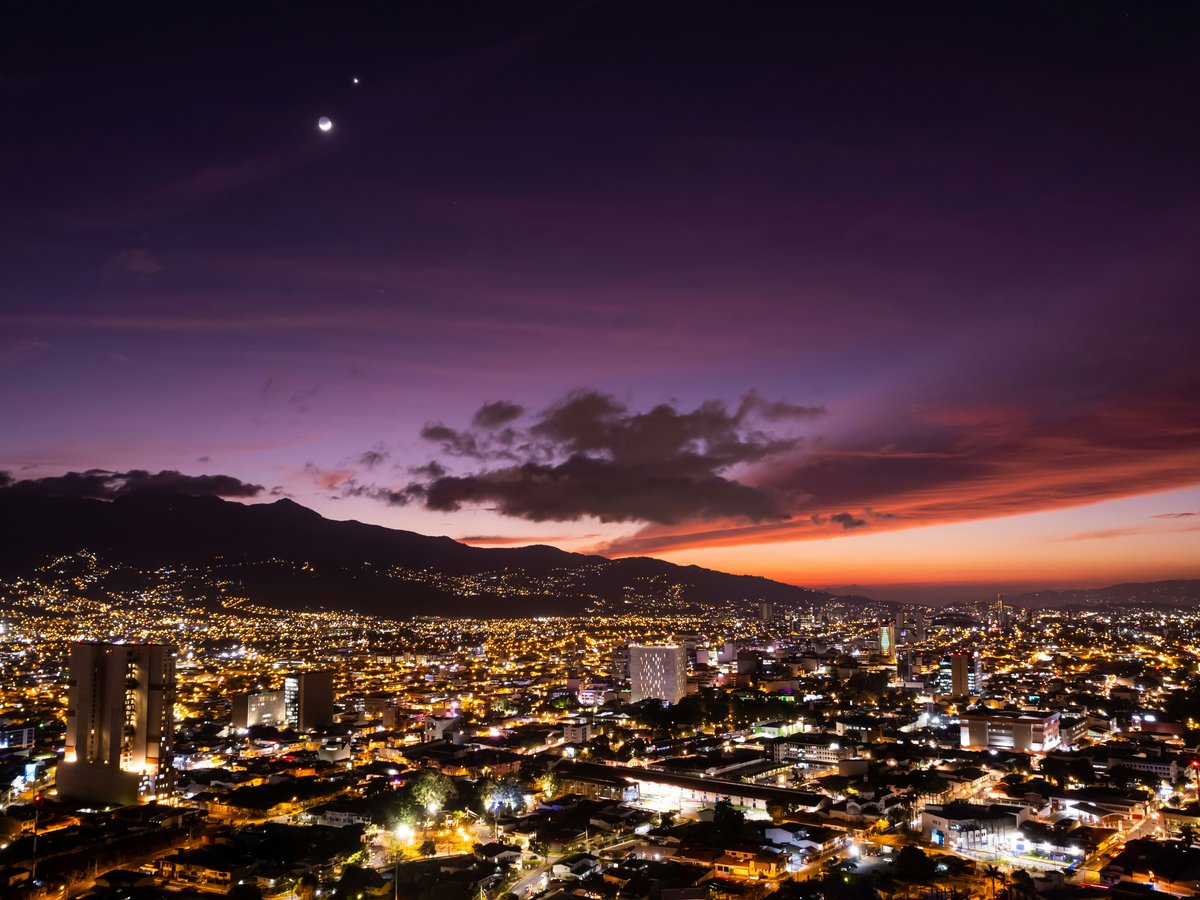
Stay in San José in July
Opens Trip.com on Fri 2 Jul to Sun 4 Jul 2027; change the dates there.
July in San José means rain. There's really no way around it: you're looking at roughly 354mm of rainfall spread across about 24 days of the month, which puts July squarely in the thick of Costa Rica's green season. The single most important thing to understand is that the rain follows a pattern you can work with: mornings tend to be clear, sometimes genuinely sunny, with clouds building through the early afternoon until the sky opens up around 2 or 3 PM. These aren't all-day tropical deluges. They're concentrated, sometimes startling downpours that typically last an hour or two before easing off by evening.
What might catch you off guard is the temperature. Daytime highs sit around 24.9°C (77°F) and nighttime lows drop to about 17°C (63°F): San José's elevation of 1,170 meters means you're well above the lowland heat most people associate with Central America. After sunset, you might want a jacket. The humidity runs at about 83%, which you'll notice as a damp, clinging sort of coolness rather than the suffocating swelter of coastal towns like Jacó or Limón. Think cool and damp, not hot and steamy.
There's a phenomenon locals watch for called the veranillo de San Juan: a brief dry spell that sometimes interrupts the green season for a few days in mid-July, occasionally stretching to a full week. It doesn't arrive on a fixed schedule, and some years it barely registers at all. But when it does show up, you get the lush green landscapes of the rainy season paired with actual sunshine: a combination that's honestly quite striking. The city itself is noticeably quieter than the December-through-April dry season, hotel prices drop to their lowest, and you can walk into the Museo del Jade or the Teatro Nacional without competing for elbow room. To be fair, July will never top anyone's list for a San José visit: the dry months own that distinction. But if your schedule puts you here in July, you'll find a city that works just fine around its afternoon storms, and you'll spend considerably less doing it.
Why visit in July
- Comfortable temperatures: highs of 25°C (77°F) with cool 17°C (63°F) evenings mean no heat stress, which is a genuine relief compared to the sweltering Pacific and Caribbean coasts this time of year
- Green season pricing knocks 30-40% off hotel rates compared to December-April, and you'll find mid-range properties willing to negotiate further for multi-night stays
- The veranillo de San Juan often delivers a brief mid-July dry spell: a few days of sunshine framed by the greenest landscapes the Central Valley produces all year
- San José's museums, restaurants, and cultural venues operate at full capacity with a fraction of high-season crowds: the Museo Nacional and Teatro Nacional feel almost private on weekday mornings
- The surrounding Central Valley is at peak green, with coffee plantations flowering and cloud forests thick with mist: if you enjoy lush landscapes, this is when the scenery earns its keep
Worth knowing
- Rain on 24 out of 31 days is the defining reality: your outdoor sightseeing window effectively closes by early afternoon on most days, which limits how much ground you can cover
- 83% humidity combined with older buildings that lack air conditioning can make indoor spaces feel clammy, especially in budget accommodations around the city center
- Mountain roads to popular day-trip destinations like Poás Volcano and the Orosi Valley are prone to landslides during heavy rainfall, occasionally closing with little warning
- The predictable afternoon downpours turn some downtown streets into temporary streams: the historic center's drainage infrastructure struggles with the volume, and ankle-deep water at certain intersections in Barrio Amón and along Avenida Central is a regular occurrence
Best for
Think twice if
July is solidly mid-green-season, with warm but not hot days and genuinely cool nights. The rain is persistent (about 24 days will see at least some precipitation) but it follows a predictable rhythm. Mornings are often clear and pleasant, with temperatures climbing from around 17°C to the low 20s by midmorning. Clouds build after noon, and by 2-3 PM, heavy showers roll through the Central Valley. These tend to last one to two hours before tapering off, leaving damp, cool evenings. The humidity sits at 83%, which you'll feel as a constant clamminess rather than oppressive heat. The veranillo de San Juan may interrupt the pattern for a few days in mid-July, but it's inconsistent. The overall sensation is closer to a mild English autumn with tropical rain than to the sticky lowland heat most visitors expect from Costa Rica.
Seasonal caution
- Heavy rainfall averaging 354mm across 24 rainy days can cause flash flooding on downtown streets, particularly along lower-lying sections of Avenida Central and intersections in the historic center where drainage infrastructure is aging: avoid walking through flowing water that obscures the road surface
- Landslides occasionally close mountain roads during intense rainfall, affecting routes to Poás Volcano National Park, the Orosi Valley, and the Ruta 27 highway to the Pacific coast: check road conditions through the CONAVI website or your hotel before starting a day trip
- Mosquito activity increases during the wet season across the Central Valley, though San José's altitude keeps dengue and Zika transmission rates lower than coastal areas: still worth using repellent during dawn and dusk hours
Year-round climate
Averages from the last 5 years.
| Month | Avg high (°C) | Avg low (°C) | Rainfall (mm) |
|---|---|---|---|
| Jan | 25 | 16 | 30 |
| Feb | 26 | 16 | 17 |
| Mar | 27 | 16 | 52 |
| Apr | 27 | 17 | 145 |
| May | 26 | 17 | 317 |
| Jun | 24 | 17 | 458 |
| Jul | 25 | 17 | 354 |
| Aug | 25 | 16 | 452 |
| Sep | 25 | 16 | 456 |
| Oct | 24 | 16 | 546 |
| Nov | 24 | 16 | 355 |
| Dec | 25 | 16 | 72 |
Holidays and festivals in July
Public holidays
- Annexation of the Party of Nicoya to Costa Rica(Anexión del Partido de Nicoya a Costa Rica)25 July 2027
Best things to do in July
Museo del Jade and Museo Nacional morning circuit
cultureBoth museums sit within a 10-minute walk of each other through Barrio Amón's historic streets. The Museo del Jade holds the world's largest collection of pre-Columbian jade artifacts in a striking modern building, while the Museo Nacional occupies the old Bellavista Fortress: you can still see bullet holes in the tower walls from the 1948 civil war. Start at one, walk through the neighborhood's Victorian-era mansions and art-deco facades, and finish at the other before the rain arrives.
Green season crowds are a fraction of dry-season levels: both museums feel almost empty on weekday mornings, and the afternoon rain makes indoor cultural sites the obvious activity choice.Booking tipNo advance booking needed. Both museums open at 8:30 AM; arriving by 9 gives you clear galleries and enough time to see both before noon.
Mercado Central food walk
foodSan José's covered central market is a grid of narrow alleys packed with food stalls, fruit vendors, spice shops, and sodas serving casados to workers on their lunch breaks. The air smells of frying plantains, brewing coffee, and the sharp tang of fresh cas juice. It's loud, close-quartered, and completely authentic. Find a counter seat at one of the lunch sodas, order a casado with today's meat, and eat elbow-to-elbow with office workers and market vendors.
July brings seasonal mamón chino and cas to the fruit vendors' stalls, and the covered market is fully rain-proof: when a downpour hits mid-visit, the sound of rain on the metal roof adds atmosphere rather than ruining your plans.Booking tipNo booking needed. Go between 10 AM and noon for the best lunch selection. Keep valuables in front pockets: the market is safe but crowded.
Coffee plantation tour in the Central Valley
natureSeveral working coffee farms in the hills surrounding San José offer guided tours that walk you through the growing process from seedling to cup. In July, you'll see the coffee plants covered in small white flowers (the blossoms smell faintly of jasmine) with tiny green cherries just beginning to form. The hillsides are almost absurdly green, mist drifting through the rows of plants, and the cooler temperature at plantation altitude makes the walking comfortable.
July falls during coffee flowering season, when the plants are at their most visually striking. The 25°C temperatures are comfortable for walking hilly terrain, and the lush green landscapes provide a dramatic backdrop you won't see during the dry-season harvest tours.Booking tipBook at least 3 days ahead for weekend morning slots. Most tours depart between 8 and 9 AM to beat the afternoon clouds: the earlier, the clearer the valley views.
Barrio Escalante evening food crawl
foodOver the past decade, the six blocks along and around Calle 33 in Barrio Escalante have transformed into the densest concentration of restaurants in Central America. Peruvian cevicherías sit next to Costa Rican farm-to-table spots, Israeli-inspired mezze counters, craft beer bars, and Japanese ramen shops. The atmosphere is relaxed and local: more neighborhood joint than tourist destination. Walk between venues after the rain clears, when the air smells washed and the sidewalks are wet but navigable.
July's lower tourist traffic means walk-in tables at restaurants that require reservations in high season. Cool evenings around 17°C make the walk between venues pleasant rather than sweaty.Booking tipMost Barrio Escalante restaurants don't take reservations for parties under four. Arrive by 6:30 PM to beat the 7:30 dinner rush.
Parque La Sabana morning walk
natureSan José's largest urban park (the old international airport turned green space) stretches across 72 hectares on the western edge of downtown. In July mornings, the grass is saturated green, the lake reflects the cloud formations building overhead, and runners, dog walkers, and families share the paths without the dry-season weekend crowds. The Museo de Arte Costarricense sits at the park's eastern entrance in the original airport terminal building, worth ducking into before the weather turns.
The park is at its visual best during green season, and morning temperatures around 17-20°C are ideal for walking or running before the afternoon rain shuts down outdoor activity. The adjacent Museo de Arte Costarricense provides a natural rain-backup plan.Booking tipNo booking needed. Best between 7 and 10 AM. The southern loop around the lake is the most scenic stretch.
Day trip to Poás Volcano National Park
natureThe drive from San José to Poás takes about 90 minutes through winding roads that climb through coffee farms and cloud forest. The main crater lake (an otherworldly turquoise pool of sulfurous water) sits at the top, steaming faintly. On a clear morning, the view extends across the entire Central Valley. The surrounding cloud forest trails are slick and cool, the air thick with moisture and the smell of wet earth and sulfur.
The veranillo de San Juan sometimes provides a window of clearer mornings in mid-July compared to June or August. Even without the veranillo, July mornings tend to offer the best chance of crater visibility before clouds close in by 10 AM.Booking tipBook your park entry online at least a day ahead: access is limited to timed slots. Choose the earliest slot available and leave San José by 6 AM. The park closes access when cloud cover makes the crater invisible.
Teatro Nacional evening performance
cultureCosta Rica's national theater, built in 1897 with coffee-export money, is an architectural landmark in its own right: ornate marble lobbies, painted ceilings, gilded details. The July performance calendar typically includes classical music concerts, contemporary dance, and occasional theater productions. Even if you don't catch a show, the building offers guided tours. But an evening performance is the better experience: the rain passes by 5 PM, you walk through the damp streets to the theater, and settle into a seat in one of the most handsome small theaters in the Americas.
The rainy afternoon-to-evening pattern makes indoor cultural events the natural choice. Green season means better seat availability: performances that sell out in February often have open seats in July.Booking tipCheck the Teatro Nacional website for the July schedule and book online. Seats in the main hall typically run between 3,000 and 15,000 colones depending on the event.
Romería pilgrimage walk to Cartago
cultural eventStarting on the night of July 31 and continuing through August 2, an estimated two million Costa Ricans walk the 22 kilometers from San José to the Basílica de Nuestra Señora de los Ángeles in Cartago. The atmosphere along the route is communal and festive: families walking together, vendors selling coffee and tamales at the roadside, strangers encouraging each other. Even walking a short stretch of the route gives you a window into one of Costa Rica's most deeply felt traditions. The energy is hard to describe until you've been in it.
The Romería begins in the final hours of July, with the heaviest foot traffic on the night of July 31 into August 1. If you're in San José at month's end, this is one of Central America's most significant pilgrimages happening right outside your hotel.Booking tipNo booking needed, just join the flow of walkers heading east from San José along the main highway. Wear comfortable, waterproof shoes and bring a light rain jacket. Start in the evening when temperatures are coolest.
What to eat in July
In season: fruit
Mamón chino
Costa Rica's name for rambutan, and July is peak season. Roadside vendors throughout the Central Valley sell bags of these hairy red-shelled fruits for next to nothing. Crack one open and the translucent, grape-like flesh inside is sweet with a faint floral note. You'll see them piled in baskets at the Mercado Central and at every highway pulloff between San José and the coast.
Cas
A small, intensely tart guava native to Costa Rica that peaks around July. Locals use it almost exclusively for refrescos naturales: blended with water and a bit of sugar into a pale, aromatic drink you'll find at every soda and market stall. The flavor is sharp and clean, somewhere between a green apple and a passion fruit. Ask for a refresco de cas at any Mercado Central stall.
Manzana de agua
Water apples (also called rose apples) come into season in July across the Central Valley. They're crisp, mildly sweet, and remarkably refreshing, with a texture somewhere between a pear and a watermelon. You'll find them at the Feria Verde de Aranjuez on Saturday mornings and piled on vendors' carts around Parque La Sabana. Not a fruit most visitors have encountered before.
On menus now
Olla de carne
The quintessential Costa Rican rainy-season dish: a slow-simmered beef stew loaded with chayote, yuca, corn on the cob, green plantain, and tiquizque root. The broth is clear and deeply savory. On a cool, rain-soaked July evening at 17°C, a bowl of olla de carne at a traditional soda feels exactly right. It's comfort food in the most literal sense.
Sopa negra
Black bean soup with a hard-boiled egg nestled in the center, finished with cilantro and a squeeze of lime. This is what Ticos eat when the rain is hammering the roof and the evening air has that damp chill to it. Simple, warming, and deeply satisfying: you'll find it on the menu at nearly every soda and comedor in the city.
What to drink
Agua dulce
A hot drink made from tapa de dulce: discs of unrefined cane sugar dissolved in hot water or milk. It's Costa Rica's answer to hot chocolate for rainy evenings, with a deep caramel sweetness and a slight molasses edge. Street vendors and traditional sodas around the Mercado Central serve it, and it pairs well with a piece of pan de maíz. On a cool July night, it genuinely hits the spot.
Regular events in July
Día de la Anexión de GuanacasteFree
National holiday on July 25 celebrating Guanacaste province's annexation from Nicaragua in 1824. In San José, expect cultural events including folkloric dance performances, traditional marimba music, and regional food stalls featuring Guanacastecan dishes like arroz de maíz and rosquillas. Government offices, banks, and many shops close for the day. The celebrations are bigger in Guanacaste itself, but San José marks the day with public events around the Plaza de la Democracia and in several city parks.
July 25 (fixed national holiday)La Romería preparations and early pilgrimageFree
The lead-up to Costa Rica's largest religious pilgrimage begins in the last days of July. Small groups of walkers start appearing on the San José-to-Cartago highway as early as July 29, with the main surge on the night of July 31. The Basílica de Nuestra Señora de los Ángeles in Cartago is the destination, but the walk begins in San José and the pre-pilgrimage energy: vendors setting up along the route, families organizing their walking groups, churches holding special services: is palpable across the city.
Late July, primarily July 29-31 (pilgrimage peaks August 1-2)Mid-year school vacation programming
Costa Rica's vacaciones de medio período falls in the first two weeks of July, when public schools close and families take domestic holidays. Museums throughout San José (the Museo de los Niños, Museo Nacional, and Museo del Jade) often run special family-oriented workshops and exhibitions. Local parks see higher daytime foot traffic from families. For visitors without children, this mostly means slightly busier museums on weekday mornings; for families, it means more programming options than usual.
Approximately July 1-14Best places this July
Mercado Central
marketSan José's sprawling covered market has operated since 1880 and still functions as a genuine daily market for Josefinos, not a tourist attraction with market dressing. The narrow aisles are dense with fruit stalls, spice vendors, leather shops, and lunch counters. In July, the covered structure is a natural shelter from afternoon rain, and the seasonal mamón chino and cas fruits appear at the produce stalls. The sound of vendors, the smell of frying food, the press of the crowd: it's sensory overload in the best sense.
Centro HistóricoMuseo Nacional de Costa Rica
museumHoused in the Bellavista Fortress (a military barracks with visible bullet scars from the 1948 revolution) the national museum covers Costa Rican history from pre-Columbian civilizations through the abolition of the military. The butterfly garden on the upper level is a quiet green pocket above the city noise. July mornings, you might have entire exhibition halls to yourself.
Centro HistóricoMuseo del Jade
museumA modern five-story building near the Plaza de la Democracia holding the largest collection of pre-Columbian jade in the world. The pieces are beautifully lit against dark backgrounds, and the upper floors offer views across the Central Valley: on clear July mornings, you can see volcanic peaks before the clouds roll in. The building's climate control is a welcome contrast to the humidity outside.
Centro HistóricoParque La Sabana and Museo de Arte Costarricense
park and museumThe park is at its greenest in July: the grass is thick, the trees are full, and the lake reflects the dramatic cloud formations that build through the morning. The Museo de Arte Costarricense sits at the park's eastern edge in the old airport terminal, housing Costa Rican art from colonial times through the contemporary period. The combination of an outdoor morning walk and an indoor museum visit mirrors the July rain pattern naturally.
La SabanaBarrio Escalante food district
neighborhoodThe residential neighborhood that has quietly become the dining capital of Costa Rica over the past decade. Calle 33 and its side streets pack in dozens of restaurants ranging from traditional Costa Rican to pan-Asian fusion. The buildings are mostly converted houses, giving the area an intimate, neighborhood feel rather than a commercial-strip atmosphere. In July, the cool evening air after the afternoon rain makes walking between restaurants genuinely pleasant.
Barrio EscalanteBarrio Amón historic district
historic neighborhoodSan José's best-preserved neighborhood of late-19th and early-20th-century architecture: Victorian mansions, art-deco facades, and neoclassical townhouses, many now converted into boutique hotels, galleries, and cafés. Worth a morning walking tour before noon when the streets are dry and the light is soft. The architectural detail rewards slow looking: iron balconies, decorative tile work, carved wooden doors. Several buildings are open to visitors.
Barrio AmónFeria Verde de Aranjuez
marketEvery Saturday morning in Barrio Aranjuez, this organic farmers' market draws a loyal crowd of Josefinos who come for the produce, artisan cheeses, fresh bread, locally roasted coffee, and prepared food stalls. It's not a tourist market: prices reflect local buying power, and the vendors know their regulars by name. In July, look for seasonal cas, mamón chino, and manzana de agua alongside the year-round staples. The atmosphere is unhurried and neighborly.
Barrio AranjuezCentro Nacional de la Cultura (CENAC)
cultural centerA former national liquor factory converted into San José's primary arts complex, housing galleries, performance spaces, and the Museum of Contemporary Art and Design. The industrial architecture (exposed brick, high ceilings, iron structural elements) gives the space a character you won't find in purpose-built museums. July often brings rotating exhibitions and performance series. The large covered courtyards provide shelter during afternoon storms while keeping you surrounded by art.
Centro Histórico
Your packing checklist
Tick items off as you pack. Your progress saves in this browser.
All packed — have a great trip.
Insider tips
The Feria Verde de Aranjuez on Saturday mornings in Barrio Aranjuez is where Josefinos shop for organic produce and artisan goods: the prices are a fraction of anything marketed at tourists, and the quality is noticeably better. Get there before 9 AM for the best selection, and grab a cup of locally roasted coffee from one of the stands while you browse. It's a 10-minute walk from Barrio Escalante.
When the afternoon rain catches you in the city center, duck into the Mercado Central rather than paying café prices for shelter. The covered market stays dry, the food stalls serve some of the best casados in the city for under 3,000 colones, and the atmosphere: vendors calling out, the smell of frying plantains, plates clattering on metal counters: is worth experiencing regardless of the weather outside.
Ticos have a built-in radar for the afternoon rain. If you notice locals suddenly picking up their pace around 1:30 PM, or shopkeepers pulling merchandise inside, follow their lead and find cover. The storm will arrive within 20 minutes. It'll pass in about an hour, and you'll have a dry, cool evening ahead of you. Fighting the pattern wastes energy; working with it is how the city functions.
The walk from Barrio Amón to the Museo Nacional takes you past some of the city's finest preserved Victorian and art-deco architecture, but it's a morning-only route in July. By early afternoon, those same streets in the historic center become ankle-deep streams. The old drainage system hasn't kept up with the city's growth, and the lower-lying intersections near the Correos building collect water fast.
San José's craft beer scene has grown considerably, and several of the better taprooms are in Barrio Escalante and Los Yoses: neighborhoods you can walk between in 15 minutes. Costa Rica's microbreweries tend to release seasonal and experimental batches during the quieter green season when they have time to experiment. Ask what's new rather than defaulting to the usual pilsner.
Avoid these mistakes
- Scheduling an all-day outdoor itinerary without a rain backup: by 2 PM on most July days, you need to be indoors or under cover. Standing under a shop awning waiting out a 90-minute downpour gets old fast. Plan morning outdoor time and afternoon indoor activities, and you'll never lose a day to the rain.
- Packing only warm-weather clothing and forgetting layers: at 17°C (63°F) after dark with 83% humidity, evenings in San José feel genuinely cool and damp. Many restaurants in older buildings in Barrio Amón and the Centro Histórico have no climate control, and sitting through dinner in a soaked cotton t-shirt is miserable.
- Attempting to drive to the Pacific coast without checking road conditions: the Ruta 27 highway and mountain passes between San José and the coast see landslides during heavy rain periods, and what should be a routine 90-minute drive can become a 4-hour ordeal or end with a road closure and a long detour.
- Sleeping through the morning clear window and then wondering why there's nothing to do at 3 PM: July's rhythm rewards early risers. The hours between 7 and noon are your outdoor window. If you treat San José like a late-start city, you'll spend your afternoons trapped in your hotel lobby watching it rain.
Practical tips for July
July mornings in San José tend to stay dry until early afternoon, so structure your days with outdoor activities before noon and indoor plans for the afternoon: this rhythm is how locals live, and fighting it will only frustrate you. Most museums open by 8:30 or 9 AM, so take advantage of that window. If you're planning a day trip to Poás Volcano, leave San José by 6 AM; cloud cover typically moves in by 10 AM during green season and the park sometimes restricts access when visibility drops to zero. Book accommodations in walkable neighborhoods like Barrio Escalante or Barrio Amón so you can get home on foot when the rain hits: hailing a taxi in a downpour is frustrating, and ride-hail surge pricing kicks in immediately. July 25 is Día de la Anexión de Guanacaste, a national holiday: banks, government offices, and many shops will be closed, so handle any administrative errands before that date. Many sodas and smaller market stalls in the Mercado Central area are cash-only, so keep colones on hand; ATMs inside the Banco Nacional branches in the Centro Histórico tend to have the best exchange rates. Starting around July 29-31, you'll notice groups of walkers heading east on the main highway toward Cartago for the Romería pilgrimage: expect road closures and redirected traffic on the eastern exits of the city, especially overnight on July 31. Uber and DiDi both work reliably in San José and are generally safer and more predictable than street taxis, especially during rainstorms when some taxi drivers try to negotiate off-meter fares.
FAQ
Is July a good time to visit San José, Costa Rica?
It's a fair time, not the best, not the worst. July sits in the middle of Costa Rica's green season, so you'll deal with rain on most days. That said, the rain follows a predictable pattern (clear mornings, afternoon downpours), the temperatures are mild and comfortable at 25°C (77°F), and hotel prices are at their annual lowest. If you're flexible about structuring your days around the weather and you're more interested in museums, food, and culture than beach time, July works. But if you want guaranteed sunshine, the dry season months of January through March are a much safer bet. July ranks around 7th out of 12 months for visiting San José.
What is the weather like in San José in July?
Expect highs around 24.9°C (77°F) and lows around 17°C (63°F): cooler than most people expect from Central America, thanks to the city's 1,170-meter elevation. Rainfall averages 354mm spread across about 24 rainy days, and humidity sits at 83%. The rain typically arrives in the early-to-mid afternoon as heavy showers that last one to two hours, with mornings often clear and evenings damp but rain-free. A brief dry spell called the veranillo de San Juan sometimes arrives in mid-July, though it's not guaranteed every year. The overall feeling is cool and damp rather than hot and steamy.
Is San José crowded in July?
No. July is solidly in the green season, and international tourist numbers are at their lowest. Museums, restaurants, and cultural venues that are packed during the December-April dry season are noticeably quieter. The exception is the first two weeks of July, when Costa Rican school holidays bring local families to parks and museums, but even then, the crowds are modest compared to high season. If you prefer having attractions mostly to yourself, July delivers that.
Does it rain all day in San José in July?
No, and this is the most common misconception. While 24 out of 31 days will see rain, the pattern is remarkably consistent: mornings are often clear and sunny, clouds build after noon, and the rain arrives around 2-3 PM as a concentrated downpour. These storms typically last one to two hours before easing off, leaving cool, damp evenings. You get a solid 5-6 hours of dry outdoor time most mornings. The key is planning your day around this rhythm rather than fighting it.
What should I bring to San José in July?
A compact waterproof rain jacket is the single most important item: afternoon showers are near-certain and arrive without much warning. Quick-dry clothing handles the humidity and rain cycle better than cotton. Bring a light hoodie or sweater for evenings at 17°C, which feel genuinely cool. Waterproof walking shoes are worth it: the historic center's streets flood at intersections. A small dry bag or waterproof phone pouch protects electronics during sudden downpours. Sunscreen is still necessary for clear mornings at this altitude, and insect repellent helps with increased mosquito activity during the wet season.
Things to Do in San José in July
 Free cancellation
 Arenal Volcano Full-Day Combo Tour with Lunch and Dinner
Outdoor experience: 14 hours, free cancellation.
via Viator Free cancellation
 Arenal Volcano Experience Full-Day Tour from San Jose
Day trip: 14 hours, free cancellation.
via Viator Free cancellation
 Manuel Antonio National Park Sightseeing and Wildlife Day Tour from San Jose
Day trip: 12 hours, free cancellation.
via Viator Free cancellation
 Full Day Poas Volcano, La Paz Waterfall Gardens and Coffee Plantation Experience
Outdoor experience: 10 hours, free cancellation.
via Viator Free cancellation
 Tortuga Island Full Day Tour from San José with Lunch
Day trip: free cancellation.
via Viator Free cancellation
 Zip Line, Rappel, Hiking La Carpintera Tour in San Jose
Outdoor experience: 3 hours, free cancellation.
via ViatorFind a flight to San José
Live fares to San José appear here once cookies are accepted.
Last verified by automated review (v1.7.2) on . What is automated review?