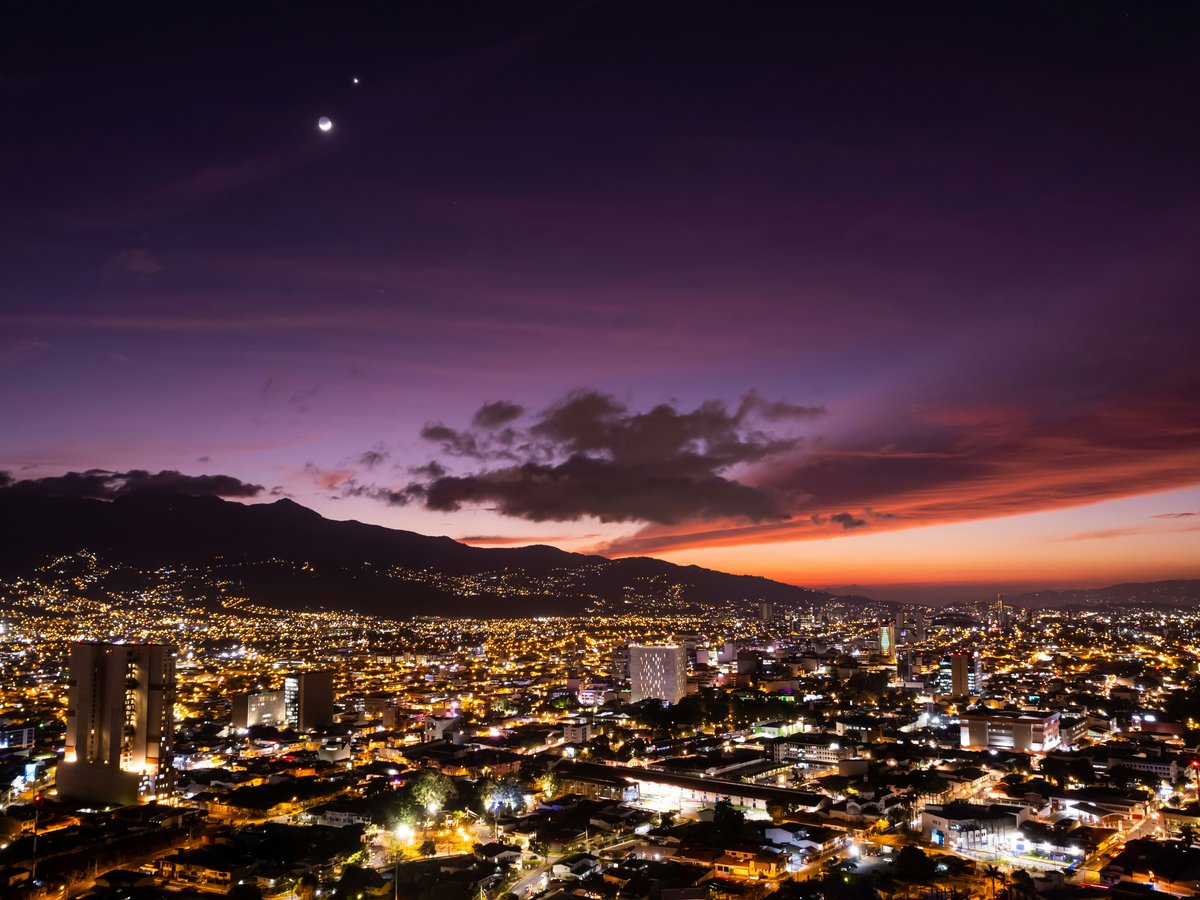
Stay in San José in January
Opens Trip.com on Fri 1 Jan to Sun 3 Jan 2027; change the dates there.
January is San José's sweet spot: the heart of the Central Valley's dry season, when mornings break clear and cool at around 16°C (60°F) and afternoons warm to a comfortable 25°C (77°F) without the crushing humidity that arrives with the rains later in the year. You'll likely get six rainy days across the entire month, and even those tend to be brief. It's the kind of weather that makes you wonder why the city doesn't get more credit as a destination in its own right.
That said, you're not the only one who figured this out. January is peak high season for Costa Rica, and San José fills up with travelers using the city as a launchpad for Arenal, Monteverde, and the Pacific beaches. Hotel rates reflect this: you're paying a premium compared to, say, a September visit when the city is quieter and half the price. The upside is that every tour operator, museum, and restaurant is firing on all cylinders. Nothing is closed for low-season maintenance, the coffee harvest is in full swing across the Central Valley hills, and Fiestas de Zapote still has a few days left in its run at the beginning of the month if you arrive early enough.
The practical reality of January in San José is a city that's at its most accessible: dry sidewalks, functioning infrastructure, and a population in good spirits after the holiday season. Nights are genuinely cool: you might want a light layer walking through Barrio Amón after dinner. The air in the valley tends to be clearer than the months flanking the rainy season, when agricultural burning can push haze down from the surrounding hills. It's not a dramatic month. There's no single festival that defines it the way Semana Santa defines April. But as a baseline for exploring a city that most visitors just pass through on the way to a beach, January is about as good as it gets.
Why visit in January
- Dry season at its peak: roughly 30mm of rain the entire month, so you can walk the city without dodging downpours or navigating flooded gutters along Avenida Central
- Mornings in the Central Valley settle around 16°C (60°F), which is genuinely pleasant for walking Barrio Escalante's restaurant row or the shaded paths of Parque La Sabana without breaking a sweat
- Coffee harvest season means the hillside fincas around Barrio Tournón and the broader Central Valley are actively processing beans: tours feel alive rather than hypothetical
- Every museum, restaurant, and tour operator is running full schedules with no low-season closures or shortened hours
- The tail end of Fiestas de Zapote spills into the first days of January, and Fiestas de Palmares fires up mid-month about an hour west: two of the country's rowdiest traditional festivals bookend the month
Worth knowing
- Peak-season pricing is real: expect to pay 30-50% more for hotels compared to the green season months of September or October
- The city's traffic, which is already notorious, gets worse in January with returning holiday travelers and the tourism surge: Paseo Colón and the Circunvalación can gridlock during rush hours
- San José is a transit hub, not a resort, and January's good weather can make the concrete feel more exposed than charming: the city wasn't designed for leisurely strolling the way Cartagena or Antigua were
- Availability at well-reviewed restaurants in Barrio Escalante and Los Yoses tightens on weekends: walk-in tables that are easy in October require a reservation in January
Best for
Think twice if
January sits in the driest stretch of the Central Valley's calendar. Days are warm but not hot, with highs around 25°C (77°F) that feel comfortable at San José's elevation. Mornings start cool: 16°C (60°F) is common, and it can feel genuinely chilly if you're walking to the Mercado Central before the sun clears the eastern hills. Humidity hovers near 70%, which is noticeable but nothing like the sticky 85%+ of the rainy months. Rain, when it comes, tends to arrive as a brief late-afternoon shower rather than an all-day event. You might get six rainy days across the whole month, and most of those drop so little water they barely count.
Year-round climate
Averages from the last 5 years.
| Month | Avg high (°C) | Avg low (°C) | Rainfall (mm) |
|---|---|---|---|
| Jan | 25 | 16 | 30 |
| Feb | 26 | 16 | 17 |
| Mar | 27 | 16 | 52 |
| Apr | 27 | 17 | 145 |
| May | 26 | 17 | 317 |
| Jun | 24 | 17 | 458 |
| Jul | 25 | 17 | 354 |
| Aug | 25 | 16 | 452 |
| Sep | 25 | 16 | 456 |
| Oct | 24 | 16 | 546 |
| Nov | 24 | 16 | 355 |
| Dec | 25 | 16 | 72 |
Holidays and festivals in January
Public holidays
- New Year's Day(Año Nuevo)1 January 2027
Headline events
Fiestas de Palmares
Mid-January through early February (typically starts around January 15)
Costa Rica's largest traditional civic festival, held in the town of Palmares about an hour west of San José. Two weeks of concerts, tope-style horse parades, traditional bullfighting (tico style: the bull chases volunteers, nobody gets stabbed), carnival rides, food stalls serving chicharrones and churros, and an atmosphere somewhere between a county fair and a rock festival. Major Latin artists headline the concert nights. It draws hundreds of thousands of Ticos and is genuinely one of the country's biggest annual gatherings.
Best things to do in January
Day trip to Poás Volcano National Park
natureThe drive from San José takes about an hour through coffee country. The main crater is one of the most accessible active craters in the world: a paved path from the parking lot gets you to the viewpoint in under 20 minutes. The crater lake shifts between turquoise and grey depending on sulfur activity. On clear January mornings you can see both the Atlantic and Pacific coasts from the summit trail.
January's dry weather gives you the best odds of a clear crater view: during the rainy months, cloud cover obscures the crater by mid-morning most days. Park rangers confirm January and February have the highest percentage of clear-visibility days.Booking tipThe park requires advance online reservations through the SINAC website. Slots fill up fast in January: book at least a week ahead and choose the earliest morning entry time for the clearest views.
Self-guided walking tour of Barrio Amón
cultureSan José's oldest residential neighborhood sits just north of the Parque Nacional. The blocks between Avenida 7 and Avenida 11 hold a concentration of Victorian and art-deco mansions from the 1890s-1920s coffee-baron era, many now converted to boutique hotels, galleries, and restaurants. The Casa Verde de Amón and the Castillo del Moro are probably the most photographed facades. Walking this neighborhood in January means dry sidewalks, good light for photos, and comfortable temperatures.
The dry, clear weather and mild temperatures (around 22-25°C by mid-morning) make this the most comfortable month for extended walking in a city that otherwise gets rained on, overheated, or both.Coffee farm tour in the Central Valley
food_and_drinkSeveral working fincas within 30-45 minutes of downtown San José offer harvest-season tours. You walk through rows of coffee plants heavy with ripe red cherries, watch the wet-mill processing, and taste the difference between fresh-pulped and dried-and-roasted stages. Finca Rosa Blanca, Doka Estate, and the cooperatives around Barva de Heredia are the most visited.
January falls in the heart of the coffee harvest (cosecha). The plants are loaded with ripe cherries, the processing equipment is running, and workers are actively picking. A tour in August shows you dormant machinery and green fruit.Booking tipDoka Estate and Britt fill up with cruise-ship groups on certain days: call ahead to ask which days are group-free for a quieter experience.
Saturday Feria del Agricultor in Zapote
marketThe farmers' market in Zapote (a suburb that's essentially contiguous with San José proper) runs every Saturday morning. It's not a tourist market: it's where Josefinos buy their week's produce. The stalls overflow with tropical fruit, fresh herbs, cheese from Turrialba and Zarcero, eggs, flowers, and prepared foods. The pace is hectic by 7 a.m. and winding down by noon.
January's dry-season harvest brings peak variety of Central Valley produce: strawberries from Poás, chayote from Ujarrás, avocados starting their season. The selection is wider and fresher than the rainy months when transport from mountain farms gets disrupted.Explore the Museo del Jade
cultureThe Museo del Jade y de la Cultura Precolombina houses the largest collection of pre-Columbian jade in the Americas: over 7,000 pieces across five floors. The building itself, a modernist cube on the Plaza de la Democracia, is one of San José's few genuinely striking pieces of contemporary architecture. The top-floor terrace gives you a panoramic view of the Central Valley.
January's clear skies make the top-floor terrace views worth the visit on their own, and the dry weather means you can combine it with a walk through Barrio Amón and the Parque Nacional without getting caught in rain.Evening stroll and dinner along Calle 33 in Barrio Escalante
food_and_drinkBarrio Escalante has become San José's culinary center over the past decade. Calle 33, sometimes called Paseo Gastronómico, concentrates a dozen-plus restaurants ranging from Peruvian to Korean to contemporary Costa Rican within a few walkable blocks. The sidewalk dining that feels miserable in the rainy season is genuinely pleasant in January's dry, cool evenings.
Evening temperatures around 17-19°C and no rain make outdoor dining along Calle 33 comfortable: something that's a gamble from May through November when sudden downpours can clear a patio in seconds.Hike the trails of Parque La Sabana
natureSan José's largest urban park, at the western end of Paseo Colón, covers 72 hectares with running paths, a lake, sports fields, and the Museo de Arte Costarricense housed in the old airport terminal. The park fills with joggers and families on weekend mornings. The loop trail around the lake takes about 30 minutes at a casual pace.
The grass is still green from the tail end of the rains but the trails are dry underfoot: later in March they start to brown and dust up. Morning temperatures around 16-18°C are ideal for outdoor exercise without overheating.What to eat in January
In season: fruit
Cas
This tart, pale-green fruit hits its stride in the Central Valley's dry months. Locals blend it into frescos (fruit drinks) with water and a little sugar. The flavor sits somewhere between a sour guava and a green apple. You'll find cas frescos at nearly every soda (casual eatery) and at the Feria del Agricultor weekend markets.
Fresas from Poás and Fraijanes
Strawberry season runs strong in January in the highlands above San José. The volcanic soil around Poás and Fraijanes produces smaller, more intensely flavored berries than what you'd find in a supermarket elsewhere. Roadside stands on the drive up to Poás sell them by the kilo, and you'll find them at the Feria del Agricultor in Zapote and Curridabat: sometimes still warm from the field.
On menus now
Tamales
Christmas tamale season technically ends on January 6 (Día de Reyes), but families and market vendors keep making them through mid-January. The Central Valley version wraps masa, pork or chicken, rice, and vegetables in banana leaves. Mercado Central vendors sell them warm from morning steamer carts: the corn masa stays softer here than in other Central American versions.
Gallo pinto with natilla
Gallo pinto is year-round, but January mornings in the valley are cool enough that the warm rice-and-beans breakfast with a thick dollop of natilla (tangy sour cream) and a fried egg feels particularly right. The sodas around Mercado Central and Mercado Borbón serve it from about 6 a.m. The black beans here have a deeper, almost smoky quality compared to the red-bean versions you'll find on the Caribbean coast.
What to drink
Fresh-harvest coffee
January is mid-harvest for Central Valley coffee. The beans being picked right now on the slopes above Escazú, Santa Ana, and Barva are the ones that will become that year's premium single-origin lots. Several roasters in Barrio Escalante sell micro-lots from specific fincas: the flavor profile tends toward bright and citrusy at this altitude. Worth tasting the difference between fresh-harvest and the older stock.
Regular events in January
Fiestas de Zapote (final days)
The tail end of this traditional festival, which starts December 25, usually runs through the first few days of January. The fairground in Zapote features the famous tico-style bullfighting (improvised rodeo clowns dodge the bull), carnival rides, food stalls, and live music stages. It's rowdy, local, and smells like frying chicharrones and cotton candy.
January 1-5 (end of run)Día de los Reyes MagosFree
Three Kings Day on January 6 is a quieter affair in Costa Rica than in Mexico or Spain, but some neighborhoods organize small parades and churches hold special services. A few bakeries in San Pedro and Barrio Escalante make rosca de reyes (king cake) for the occasion, though it's not as universal as in other Latin American countries.
January 6TransitarteFree
An open-air arts and culture festival that typically sets up along a section of the city's streets, with live music, theater performances, art installations, and food vendors. The event aims to reclaim urban public space and draws a younger, artsy crowd from the university neighborhoods around San Pedro and Los Yoses.
Mid to late January (dates vary by year)Feria del Agricultor (weekly farmers' markets)Free
Multiple farmers' markets operate across the San José metropolitan area every weekend: Zapote on Saturdays, Curridabat on Sundays, Escazú on Saturdays. These are working markets, not tourist attractions, and January's dry-season harvest brings the widest produce variety of the year.
Every Saturday and Sunday throughout JanuaryBest places this January
Mercado Central
marketSan José's 140-year-old central market spans a full city block between Avenida Central and Avenida 1. The narrow aisles pack in lunch counters serving casados (plate lunches), fish stalls, spice vendors, leather goods, and coffee sellers. It's loud, crowded, and smells like frying plantains and fresh cilantro. January's dry weather means the interior isn't competing with rain noise on the metal roof, and the surrounding streets are walkable without dodging puddles.
CentroTeatro Nacional de Costa Rica
landmarkThe national theater on the Plaza de la Cultura is San José's architectural showpiece: an 1897 neoclassical building funded by coffee-baron taxes, with marble staircases, ceiling murals by Italian painters, and a gilded auditorium. Tours run daily, and the on-site café in the lobby is worth a stop even if you skip the tour. Check the January performance schedule: the theater programs concerts and dance through the dry season.
CentroMuseo Nacional de Costa Rica
museumHoused in the Bellavista Fortress: a yellow colonial-era military barracks still pocked with bullet holes from the 1948 civil war: the national museum covers pre-Columbian history, the colonial period, and Costa Rica's unusual decision to abolish its military. The butterfly garden in the courtyard is a quiet detour. January's clear weather makes the rooftop views of the Central Valley worth lingering over.
CentroParque La Sabana
parkThe former airport turned into San José's largest green space. The old terminal building now houses the Museo de Arte Costarricense, and the surrounding 72 hectares offer running paths, a lake, basketball courts, and weekend pickup football. Early mornings in January are cool enough for a comfortable jog, and the park's western edge frames the sunset behind the mountains on clear evenings.
La SabanaBarrio Escalante
neighborhoodWhat was once a quiet residential neighborhood east of the city center has become San José's culinary district. Calle 33 concentrates the highest density of restaurants per block in the country. Beyond dining, the side streets hold independent bookshops, craft-coffee roasters, and a few small galleries in converted houses. January evenings here (dry, around 18°C) are the best months for walking between spots.
Barrio EscalanteMuseo del Oro Precolombino
museumUnderground on the Plaza de la Cultura, beneath the Teatro Nacional. The collection of pre-Columbian gold artifacts (figurines, jewelry, ceremonial pieces) is displayed in dimly lit galleries that feel almost like a vault. It's a useful rainy-day option, but in January you likely won't need the excuse. Pairs well with the Museo del Jade a few blocks east for a morning of pre-Columbian art.
CentroBarrio Amón
neighborhoodSan José's best-preserved historic residential neighborhood, with Victorian mansions built by coffee and banana wealth in the late 1800s. Several have been converted into small hotels and art galleries. The street-level detail (tile work, wrought-iron balconies, carved wooden doors) rewards slow walking. January light and dry conditions make this the ideal month for photographing the facades without glare off wet surfaces.
Barrio AmónSpirogyra Jardín de Mariposas
natureA small butterfly garden tucked next to the Torres River in Barrio Amón. It's a modest operation (maybe 30 species in a netted garden) but the guides know their entomology and the setting is quiet. January's warm, dry conditions keep butterfly activity high; the population dips during the heaviest rain months.
Barrio Amón
Your packing checklist
Tick items off as you pack. Your progress saves in this browser.
All packed — have a great trip.
Insider tips
The Feria del Agricultor in Zapote on Saturday mornings sells produce at roughly half the price of the tourist-facing organic markets in Escazú. Arrive before 7:30 a.m. for the best selection: by 9 the good avocados and strawberries are gone. Locals bring their own cloth bags.
For coffee, skip the Britt factory-tour experience (which is fine but packaged) and instead visit one of the small roasters on Calle 33 in Barrio Escalante. Several source from specific Central Valley fincas and will let you taste the difference between honey-process and washed beans from the current harvest.
If you're heading to Fiestas de Palmares from San José, take the bus from the Terminal de Palmares on Calle 16 rather than renting a car. Parking at the festival is chaotic and the return traffic on the Interamericana highway can add two hours to what should be a one-hour drive. The bus drops you at the festival entrance.
The Museo Nacional offers free admission on the first Sunday of each month: in January, that's a good way to combine it with a walk through the Plaza de la Democracia and down to the Mercado Central without spending anything on entry fees.
Evening temperatures in January hover around 17-19°C, which catches visitors off guard who packed for the tropics. The outdoor tables along Calle 33 in Barrio Escalante are comfortable with a light layer, but if you're planning to linger over wine past 9 p.m., you'll want sleeves.
Avoid these mistakes
- Booking only one night in San José as a layover before heading to the beach: January is the month when the city is at its most walkable and pleasant. Two or three nights lets you do a coffee farm day trip, explore Barrio Escalante properly, and visit the museums without rushing. Treating San José as just a transit point means you miss the Central Valley, which is a real destination.
- Assuming you don't need sun protection because the temperature feels mild: San José's elevation means UV radiation is stronger than the 25°C air temperature suggests. Clear January skies amplify this. Sunburn sneaks up on people who associate sun risk with heat.
- Driving a rental car into the city center during weekday rush hours: San José's road grid was designed for a much smaller population, and January's tourist traffic makes it worse. The stretch of Paseo Colón between La Sabana and the center can take 45 minutes for what's a 10-minute drive on a Sunday. Use taxis or ride-hailing apps for in-city trips and save the rental for day trips outside the valley.
- Arriving at Fiestas de Palmares expecting a quiet cultural event: it's a full-throttle festival with stadium-level concerts, bull runs, and a drinking culture to match. If you're bringing children or expecting a serene afternoon, plan your visit for the daytime hours and the craft/food sections rather than the main arena at night.
Practical tips for January
January is high season, so book accommodation in Barrio Escalante, Barrio Amón, or near Parque La Sabana at least two to three weeks ahead: popular mid-range hotels fill up, especially on weekends when Fiestas de Palmares draws domestic visitors who also need San José rooms. The Juan Santamaría International Airport (SJO) is in Alajuela, about 20 km northwest of downtown: budget 30-45 minutes for the taxi or shuttle depending on traffic. Uber and DiDi both operate in the greater San José area and are generally cheaper than official red taxis for short trips. Most museums close on Mondays. Restaurants in Barrio Escalante rarely open before 11:30 a.m. for lunch, and dinner reservations for Friday and Saturday should be made by Wednesday. Costa Rican colones are the local currency, but US dollars are widely accepted at tourist-facing businesses, though you'll get a worse exchange rate than at a bank ATM. Banks have shorter hours in early January due to the holiday hangover. Dress code is casual everywhere except the Teatro Nacional performances, where smart casual is expected. Tap water is safe to drink throughout the San José metropolitan area.
FAQ
Is January a good time to visit San José, Costa Rica?
January is one of the best months to visit San José. It falls in the heart of the dry season, with average highs of 25°C (77°F), comfortable humidity around 70%, and only about 30mm of rainfall across the entire month. The city's museums, restaurants, and tour operators are all running full schedules. The main trade-off is price: this is peak tourist season, so you'll pay more for hotels and flights than you would in the green season (May through November). But if your budget allows it, the weather and accessibility make January hard to beat.
What is the weather like in San José in January?
Expect warm, dry days and cool evenings. Daytime highs average around 25°C (77°F), which feels comfortable at the city's 1,150-meter elevation. Nights drop to about 16°C (60°F): cool enough for a light sweater. Rain is minimal, roughly 30mm across maybe six days, usually as brief afternoon showers. Humidity sits around 70%, which is noticeable but not oppressive. The skies are generally clear, especially in the mornings, which is why January is the best month for volcano day trips where you need clear views.
Is San José crowded in January?
Yes, noticeably. January is peak season for Costa Rica tourism, driven largely by North American and European visitors escaping winter. The city's hotels, popular restaurants in Barrio Escalante, and day-trip providers (Poás, coffee farms, Irazú) operate at or near capacity. That said, San José isn't a resort town: the crowds manifest as booked-up hotels and busy restaurants rather than shoulder-to-shoulder sidewalks. The Mercado Central is always crowded regardless of season. You'll feel the difference most when trying to book last-minute accommodation or get a table at a popular restaurant on a Friday night.
How many days should I spend in San José in January?
Two to three full days is a good range. That gives you time to walk Barrio Amón and the Centro museums (Jade, Gold, National), spend a morning at the Mercado Central, explore Barrio Escalante's restaurant scene, and fit in a day trip to a coffee farm or Poás Volcano. If you're using San José as a base for the Central Valley (which January's weather makes ideal) four or five days lets you add Irazú Volcano, the Orosi Valley, and a Saturday farmers' market without feeling rushed. One night as a layover wastes the month's best quality: walkable, dry weather in a city that's genuinely unpleasant to walk in during the rainy months.
What should I wear in San José in January?
Layers are the key. Mornings and evenings are cool at 16°C (60°F), so a light sweater or long-sleeve shirt keeps you comfortable. By midday it warms to 25°C (77°F), and a t-shirt is fine. Bring a packable rain jacket for the rare afternoon shower, but you likely won't use it more than once or twice. Sturdy walking shoes matter: the city's sidewalks are uneven and occasionally broken. Sunscreen is more important than you'd expect at this elevation; the UV is strong even when the air temperature feels mild.
Things to Do in San José in January
 Free cancellation
 Arenal Volcano Full-Day Combo Tour with Lunch and Dinner
Outdoor experience: 14 hours, free cancellation.
via Viator Free cancellation
 Arenal Volcano Experience Full-Day Tour from San Jose
Day trip: 14 hours, free cancellation.
via Viator Free cancellation
 Manuel Antonio National Park Sightseeing and Wildlife Day Tour from San Jose
Day trip: 12 hours, free cancellation.
via Viator Free cancellation
 Full Day Poas Volcano, La Paz Waterfall Gardens and Coffee Plantation Experience
Outdoor experience: 10 hours, free cancellation.
via Viator Free cancellation
 Tortuga Island Full Day Tour from San José with Lunch
Day trip: free cancellation.
via Viator Free cancellation
 Zip Line, Rappel, Hiking La Carpintera Tour in San Jose
Outdoor experience: 3 hours, free cancellation.
via ViatorFind a flight to San José
Live fares to San José appear here once cookies are accepted.
Last verified by automated review (v1.7.2) on . What is automated review?