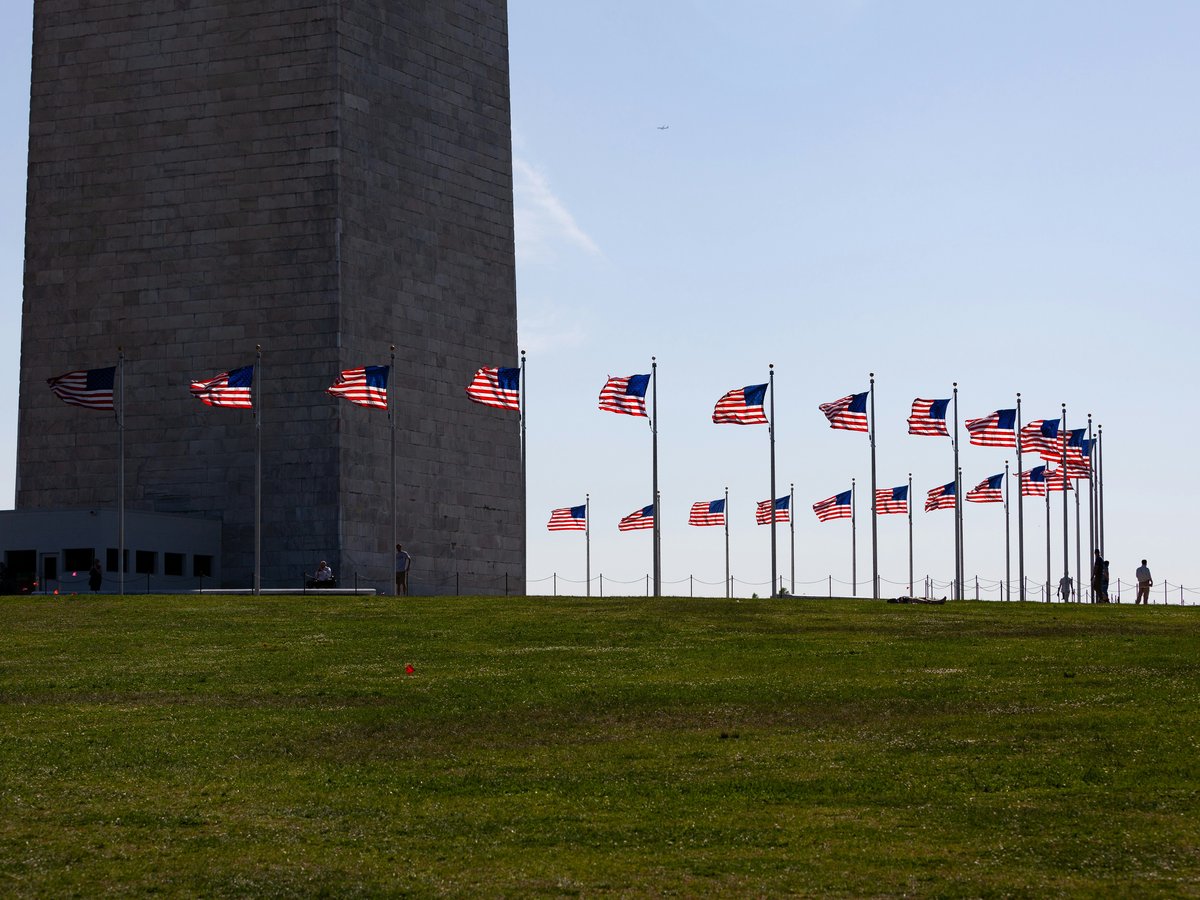
Stay in Washington DC in March
77 hotels in the Trip.com pool for Washington DC, from US$72 a night.
Opens Trip.com on Fri 5 Mar to Sun 7 Mar 2027; change the dates there.
March in Washington DC is a coin flip. The month's headline is the National Cherry Blossom Festival, which typically opens in the final week of March and celebrates the roughly 3,700 trees that Mayor Ozaki of Tokyo gifted to the city in 1912. Peak bloom along the Tidal Basin might land in late March or slide into the second week of April depending on how harsh the winter was. The National Park Service posts updated bloom forecasts starting in early March, and for the serious photography crowd, those predictions matter more than the weather.
The temperatures tell the real story. Average highs reach 14.6°C (58°F), which sounds manageable, but average lows sit at 3.5°C (38°F), and early March mornings bring the kind of damp cold that cuts through a light jacket on the steps of the Lincoln Memorial. You might get a 20°C afternoon with the smell of thawing earth and magnolia buds drifting across the Mall, then freezing rain the next morning. The city sees about 98mm of rainfall across 8 days, and March rain tends toward steady all-day soaks rather than quick showers.
The unpredictability has a genuine upside, though. March sits between DC's quiet winter and the April tourist surge. The Smithsonian museums, all free since the institution's founding in 1846, feel noticeably less packed than they will 6 weeks later. Georgetown's M Street starts seeing sidewalk tables again, though you'll want a jacket draped over the back of your chair. Hotel rates in early March tend to run 20-30% below April's peak, climbing toward parity only in the final 10 days as the festival opens.
Why visit in March
- Cherry blossoms along the Tidal Basin draw roughly 1.5 million visitors over the festival's multi-week run, making late March one of the great spring photography windows worldwide.
- March crowds at the Smithsonian are noticeably thinner than the April-through-August tourist season, so you can linger at the Hope Diamond in the National Museum of Natural History (open since 1910) without being pressed shoulder to shoulder.
- Early March is low enough season that you can book Mall-adjacent hotels in Foggy Bottom and Penn Quarter on 2-3 weeks' notice, something that becomes difficult in April when cherry blossom tour groups fill blocks of rooms months ahead.
- Daylight Saving Time starts the second Sunday of March, pushing sunset from roughly 6:15 PM to after 7:15 PM and giving you an extra hour of evening light for walking the monuments.
Worth knowing
- An 18°C afternoon can be followed by a morning with wind chill near -2°C, and there is no reliable way to predict which week will deliver spring and which will feel like January.
- Cherry blossom peak bloom is not guaranteed in March. Some years the trees do not reach full bloom until the second week of April, and you could visit the Tidal Basin to find bare branches and tight buds.
- Rain arrives on roughly a quarter of March's days, and when it comes, it is typically cold, steady, and all-day rather than the quick afternoon showers of summer.
- Late March weekends near the Tidal Basin become congested, with Metro trains packed between Smithsonian and L'Enfant Plaza stations and wait times at Penn Quarter restaurants stretching past 90 minutes on festival nights.
Best for
Think twice if
March weather in DC is transitional and honestly a bit moody. The first half of the month often still feels like late winter, with raw mornings where the wind funnels down the open Mall corridor. By the second half, you start getting genuine spring afternoons where the air softens and sitting outdoors along the Georgetown waterfront feels comfortable in a light layer. Humidity is moderate, nowhere near the oppressive 75-80% summer levels that make July and August in DC genuinely unpleasant for walking. Rain tends to arrive in slow-moving frontal systems rather than pop-up storms, so when it commits, it usually lasts the full day.
Seasonal caution
- Late-season cold snaps can push overnight lows below freezing, especially in the first two weeks of March. Wind along the open Mall and the Tidal Basin waterfront makes the felt temperature 3-5°C colder than the official reading.
- March nor'easters, while uncommon, can bring 15-25 cm (6-10 inches) of wet snow to the DC area, effectively shutting down the Metro bus system and many above-ground attractions for 1-2 days.
Year-round climate
Averages from the last 5 years.
| Month | Avg high (°C) | Avg low (°C) | Rainfall (mm) |
|---|---|---|---|
| Jan | 6 | -2 | 84 |
| Feb | 9 | 0 | 82 |
| Mar | 15 | 4 | 98 |
| Apr | 20 | 8 | 95 |
| May | 24 | 13 | 139 |
| Jun | 29 | 18 | 138 |
| Jul | 31 | 21 | 168 |
| Aug | 30 | 20 | 140 |
| Sep | 26 | 17 | 118 |
| Oct | 20 | 10 | 78 |
| Nov | 14 | 4 | 62 |
| Dec | 9 | 0 | 98 |
Holidays and festivals in March
Public holidays
- Good Friday(Good Friday)26 March 2027
Headline events
National Cherry Blossom Festival
Late March through mid-April (opening events begin around March 20)
The defining spring event in Washington DC, built around 4 weeks of cultural performances, a parade, art installations, and the Blossom Kite Festival on the Washington Monument grounds. Peak bloom, when roughly 70% of the blossoms are open, typically arrives around the turn of March into April. The opening ceremony and first events begin in late March, with the main parade following in April.
Best things to do in March
Cherry blossom viewing at the Tidal Basin
sightseeingWalk the 2.1 km loop around the Tidal Basin under the canopy of blossoms, with the Jefferson Memorial reflected in the water and the Washington Monument visible across the basin. On still mornings you can smell the faint sweetness of the blossoms and hear nothing but birdsong and camera shutters.
Peak bloom historically averages between March 25 and April 5, making late March the first realistic window to catch the trees at their fullest.Booking tipNo booking needed, but arrive before 7 AM on weekends to avoid the heaviest foot traffic. By 10 AM on peak bloom weekends, the loop trail is shoulder to shoulder.
Walking the monument corridor at dawn
sightseeingThe stretch from the US Capitol to the Lincoln Memorial (dedicated in 1922) runs the full length of the National Mall, with the White House (the presidential residence since 1800) visible to the north across the Ellipse. At dawn in March, the low-angle light catches the marble and the reflecting pool is often glassy and still.
March mornings are cool enough (3-8°C) that the walk is brisk and comfortable at any pace, unlike July and August when the same route in humidity feels twice as long.Rainy-day Smithsonian marathon
cultureWith rain on roughly a quarter of March's days, you have a natural excuse to spend full days inside the Smithsonian museums along the Mall. The Hirshhorn's modern art collection tends to be the least crowded, while the National Air and Space Museum and the National Museum of African American History and Culture draw the most visitors.
Summer crowds at popular Smithsonian buildings can mean 30-45 minute entry waits. March cuts those waits significantly, especially on weekdays.Booking tipThe National Museum of African American History and Culture requires timed-entry passes. Reserve them online 30 days in advance. Weekend slots disappear within hours of release.
Paddleboating on the Tidal Basin
outdoorThe rental fleet at the Tidal Basin boathouse opens in mid-March, offering pedal boats and kayaks that let you see the cherry blossoms from the water. The angle of the Jefferson Memorial framed by branches, viewed from a boat, is one of the most photographed in the city and far easier to capture without competing for sidewalk position.
The boat rentals open specifically for cherry blossom season in March. This is the earliest you can get on the water, and the novelty wears off as April lines grow.Booking tipNo advance reservations. Arrive by 9 AM on weekends during bloom to avoid a 60-90 minute wait for a boat.
Rock Creek Park early-spring hike
outdoorDC's largest urban park covers 710 hectares (1,754 acres) of forested ravine through Northwest DC. In March, the leaf canopy has not closed yet, so sunlight reaches the forest floor and you can spot returning migratory warblers that use the creek corridor as a flyway. The Valley Trail runs about 15 km and crosses the creek on stone bridges.
Late March is the earliest reliable window for spring wildflowers (bloodroot, trout lily, Virginia bluebells) on the forest floor before the tree canopy fills in and shades them out by May.Evening monument walk after the spring time change
sightseeingBy mid-March, sunset pushes past 7 PM, and the illuminated monuments become walkable at dusk without the winter wind chill. The Lincoln Memorial and the Martin Luther King Jr. Memorial are both dramatically lit after dark, and the crowds thin considerably after 6 PM.
The longer evenings from the spring time change give you usable dusk and evening light that February does not have, at temperatures mild enough to linger past sunset.Exploring Dumbarton Oaks gardens in Georgetown
outdoorThe 10-acre formal garden at Dumbarton Oaks reopens for the season in mid-March, with early crocuses, snowdrops, and forsythia in the lower terraces. The garden descends through a series of walled rooms that feel more European than American, and on March mornings you might have entire sections to yourself.
Mid-March is when the gardens reopen after winter closure, and the early spring bulbs are the first to bloom. By April, the gardens are busier and the bloom shifts to later species.Booking tipThe gardens charge a small admission fee during the bloom season. The museum inside is free and open year-round. No advance booking needed in March.
What to eat in March
On menus now
Senate Bean Soup
Served daily in the US Senate dining room for over a century, this white bean and ham soup is one of the few dishes tied directly to a government institution. Several Capitol Hill restaurants serve their own versions, and the cool March weather is the right season for a bowl.
Shad roe
A traditional mid-Atlantic spring delicacy that appears on some DC restaurant menus from mid-March through April as the American shad run begins along East Coast rivers. The roe sacs are typically pan-fried in butter with bacon and served with lemon. A seasonal taste particular to this region and this 6-8 week window.
Street food peaks
Half-smoke
DC's signature sausage, a coarser half-pork half-beef link served split and griddled with chili and mustard. Ben's Chili Bowl on U Street has been serving them since 1958, and March is one of the few months you can walk up without a 20-minute sidewalk queue.
In markets
Chesapeake oysters
March falls in the traditional R-month oyster season, and DC's proximity to the Chesapeake Bay means oyster bars feature hyper-local varieties from Virginia and Maryland waters. Rappahannock, Chincoteague, and Skinny Dip are names you will see on raw bar menus across Georgetown and Penn Quarter.
Ramps
Wild leeks foraged in the Appalachian region, with a sharp garlic-onion bite. They start appearing on restaurant menus across Adams Morgan and Capitol Hill in mid-to-late March, marking the unofficial start of spring on DC menus.
Regular events in March
Washington DC St. Patrick's Day ParadeFree
A parade along Constitution Avenue NW with pipe bands, Irish dance troupes, and local community groups. The surrounding bars in Penn Quarter and Capitol Hill host day-long celebrations.
The Sunday on or before March 17Blossom Kite FestivalFree
Part of the broader cherry blossom celebration, this outdoor event fills the grounds near the Washington Monument with hundreds of colorful kites and competitive flying demonstrations. It draws families and serious kite enthusiasts in equal measure.
Last Saturday of March or first Saturday of AprilDC Environmental Film Festival
One of the longest-running environmental film festivals in the US. It screens 50-100 films across venues including the National Geographic Society headquarters near Dupont Circle, with categories from wildlife documentaries to climate policy films.
Early to mid-March, spanning 10-12 daysRock 'n' Roll DC Half Marathon and 5K
A road race passing several major monuments along a route through the city, including stretches along the Mall and through Southwest DC. Spectators line the course at key landmarks.
Mid-March, usually the second or third SaturdayBest places this March
Tidal Basin
parkThe 107-acre reservoir south of the National Mall is ground zero for cherry blossom season. The loop path passes under the densest concentration of trees and offers views of the Jefferson Memorial from the north bank. In March, the soft pink canopy against a grey Potomac sky is the defining image of the city.
National MallEast Potomac Park
parkThe narrow peninsula south of the Tidal Basin has hundreds of cherry trees, including weeping varieties, that bloom on the same schedule but with a fraction of the foot traffic. The waterfront path offers views across the Potomac to Virginia. Locals come here when the Tidal Basin crowds become unmanageable.
SouthwestNational Gallery of Art
museumFounded in 1937 through a gift from Andrew Mellon, the West Building houses one of the strongest collections of European painting in the Americas, from Vermeer to the French Impressionists. The East Building, designed by I.M. Pei, holds modern and contemporary work. On a rainy March afternoon you can spend 3-4 hours without seeing everything.
Penn QuarterRock Creek Park
parkDC's largest urban park cuts through Northwest DC with hiking trails, a horse center, and a nature center. March is when the bare winter canopy starts to green up and the first wildflowers push through the leaf litter. The creek runs higher from snowmelt and spring rain, giving the Valley Trail a soundtrack of moving water.
Northwest DCWashington National Cathedral
cathedralThe sixth-largest cathedral in the world, with its foundation stone set in 1910 and construction continuing through 1990. The Bishop's Garden on the south side, a walled medieval-style planting, begins its spring bloom in late March with hellebores and early daffodils. The observation gallery offers long views across the city from one of its highest points.
Upper NorthwestDumbarton Oaks
gardenA terraced formal garden and Byzantine art museum tucked into residential Georgetown. The grounds reopen from winter closure in time for cherry blossom weeks, and the early spring plantings are at their freshest before summer growth fills in. The pre-Columbian collection in the museum rotunda is worth seeing regardless of weather.
GeorgetownThe Wharf
waterfrontA mile-long waterfront development along the Washington Channel in Southwest DC, with restaurants, The Anthem concert venue (capacity 6,000), and a seasonal fish market. In March the outdoor dining patios start opening for the season, and the waterfront promenade is pleasant on mild afternoons.
SouthwestThe National Mall
parkThe 3.2 km green corridor from the US Capitol to the Lincoln Memorial, established in the 1791 L'Enfant Plan for the city. In March the grass starts to green up and the elms along the reflecting pool are budding. The Washington Monument (cornerstone laid 1848) anchors the midpoint, and the scale of the open space is something you only appreciate on foot.
National Mall
Your packing checklist
Tick items off as you pack. Your progress saves in this browser.
All packed — have a great trip.
Insider tips
East Potomac Park's Hains Point loop is the locals' cherry blossom circuit, with the same bloom timing as the Tidal Basin and a fraction of the foot traffic. You can park directly next to the trees.
For cherry blossom photography, the golden window is 6:00-6:45 AM. The Tidal Basin path is nearly empty, the light is warm and low, and you can photograph the Jefferson Memorial reflection without 200 people in your frame. By 9 AM that same spot has a crowd three rows deep.
The FreshFarm farmers market at Dupont Circle runs Sundays year-round, but mid-to-late March is when the first Appalachian spring produce arrives. Look for ramps, early greens, and overwintered root vegetables from farms in Virginia's Shenandoah Valley.
For a guided Capitol tour beyond the standard visitor center experience, contact your Congressional representative's office 2-3 weeks ahead. The staff-led tours access the House and Senate galleries and the crypt level that the public tours skip.
The U Street Corridor and Adams Morgan are where DC's nightlife concentrates north of the Mall. In March, both are quieter than summer, and you can walk into restaurants on 14th Street NW that require 2-week reservations in May.
Avoid these mistakes
- Timing an entire trip around cherry blossoms without checking the NPS bloom forecast. Peak bloom shifts by 2-3 weeks depending on winter severity, and the NPS posts updated predictions starting in early March. A trip booked for March 15 could land a full month before peak.
- Packing only spring clothing. March mornings regularly dip to 3-4°C with wind chill potentially below freezing, and the open Mall offers no wind shelter. Visitors who arrive with only a light sweater end up buying overpriced fleeces from souvenir shops near the Smithsonian Metro station.
- Driving to the Tidal Basin on festival weekends. Parking within a 1 km radius is functionally nonexistent during peak bloom weekends, and road closures around the basin compound the gridlock. Take Metro to Smithsonian station (Orange, Blue, or Silver lines) and walk the 10 minutes south.
- Underestimating Mall walking distances. The Capitol to the Lincoln Memorial looks deceptively close on a map but takes 40-50 minutes at a walking pace, and a full loop adding the Tidal Basin and the war memorials easily totals 8-10 km. Wear proper walking shoes, not fashion sneakers.
Practical tips for March
The mid-March time change pushes sunset past 7 PM, opening an evening window for monument visits. Metro runs until midnight on Fridays and Saturdays, which helps if you are returning from dinner in Georgetown or Adams Morgan. Most Smithsonian museums open at 10 AM and close at 5:30 PM, though hours sometimes extend during cherry blossom weeks. Restaurant reservations in Penn Quarter and along 14th Street NW fill faster on festival weekends, so book dinner 4-5 days ahead for the final two weeks of March. Tree pollen counts rise sharply in the second half of the month as oak and maple trees release, so pack allergy medication if you are sensitive. DC scores 9.5 out of 10 for LGBTQ+ friendliness (sourced from TTDI's editorial rubric), with Dupont Circle's 17th Street NW as the historic center of the community. The solo-traveler safety score sits at 6.5 out of 10 (see the TTDI Solo-Safety Index), with standard urban awareness advised after dark east of the Capitol and in parts of Southeast DC.
FAQ
Is March a good time to visit Washington DC?
March is a good time to visit, particularly in the second half when the National Cherry Blossom Festival opens and the city's energy picks up from the winter lull. The main risk is weather unpredictability. You might get a warm 18°C afternoon or a morning with frost, sometimes in the same week. If cherry blossoms are your primary draw, check the NPS peak bloom forecast before committing to specific dates, as some years the trees do not peak until April.
What is the weather like in Washington DC in March?
Expect transitional spring weather with wide day-to-day swings. Afternoons average in the mid-teens Celsius (upper 50s Fahrenheit) while mornings still drop near freezing. Rain comes on roughly a quarter of the month's days, usually as cold frontal systems that last most of the day rather than quick showers. Humidity is moderate. The first two weeks lean colder, while the final two can produce genuinely pleasant spring days in the high teens.
Are the cherry blossoms out in March in Washington DC?
It depends on the year. The average peak bloom date typically falls near the end of March, but the actual date has varied by over a month across recent decades. The NPS publishes updated bloom forecasts starting in early March. If you visit in the final week of March, you have a reasonable chance of catching early bloom, but full peak is not guaranteed in any given year.
Is Washington DC crowded in March?
Early and mid-March are moderate, noticeably quieter than the April-through-August high season. Weekday museum visits feel uncrowded. Late March, especially weekends close to cherry blossom peak bloom, gets genuinely busy along the Tidal Basin and the Mall. Popular restaurants in the Penn Quarter neighborhood see wait times past an hour on festival weekends.
How many days do you need in Washington DC in March?
Three to four full days covers the major monuments, 3-4 Smithsonian museums, a Tidal Basin cherry blossom walk, and at least one neighborhood outside the Mall like Georgetown or Dupont Circle. Five days lets you add Rock Creek Park, the National Cathedral, and a trip across the Potomac to Arlington National Cemetery (established 1854). Build at least one rainy-day museum day into your plan, because the odds of all sunshine in March are low.
Things to Do in Washington DC in March
 Free cancellation
 DC Monuments by Night: 10+ Landmarks | Open-Top Upgrade Available
City tour: 3 hours, free cancellation.
via Viator Free cancellation
 DC Monuments Night Tour with 10+ Stops, National Mall, Tickets
City tour: 3 hours, free cancellation.
via Viator Free cancellation
 Washington DC in One Day: Guided Sightseeing Tour + Boat Cruise
City tour: 6 hours, free cancellation.
via Viator Free cancellation
 Arlington Cemetery Small-Group Tour & Changing of the Guards
City tour: free cancellation.
via Viator Free cancellation
 US Capitol "Big 3" Highlights with Reserved Entry
City tour: free cancellation.
via Viator Free cancellation
 Washington DC "See the City" Guided Sightseeing Segway Tour
City tour: 2.5 hours, free cancellation.
via ViatorFind a flight to Washington DC
Live fares to Washington DC appear here once cookies are accepted.
Last verified by automated review (v1.7.2) on . What is automated review?