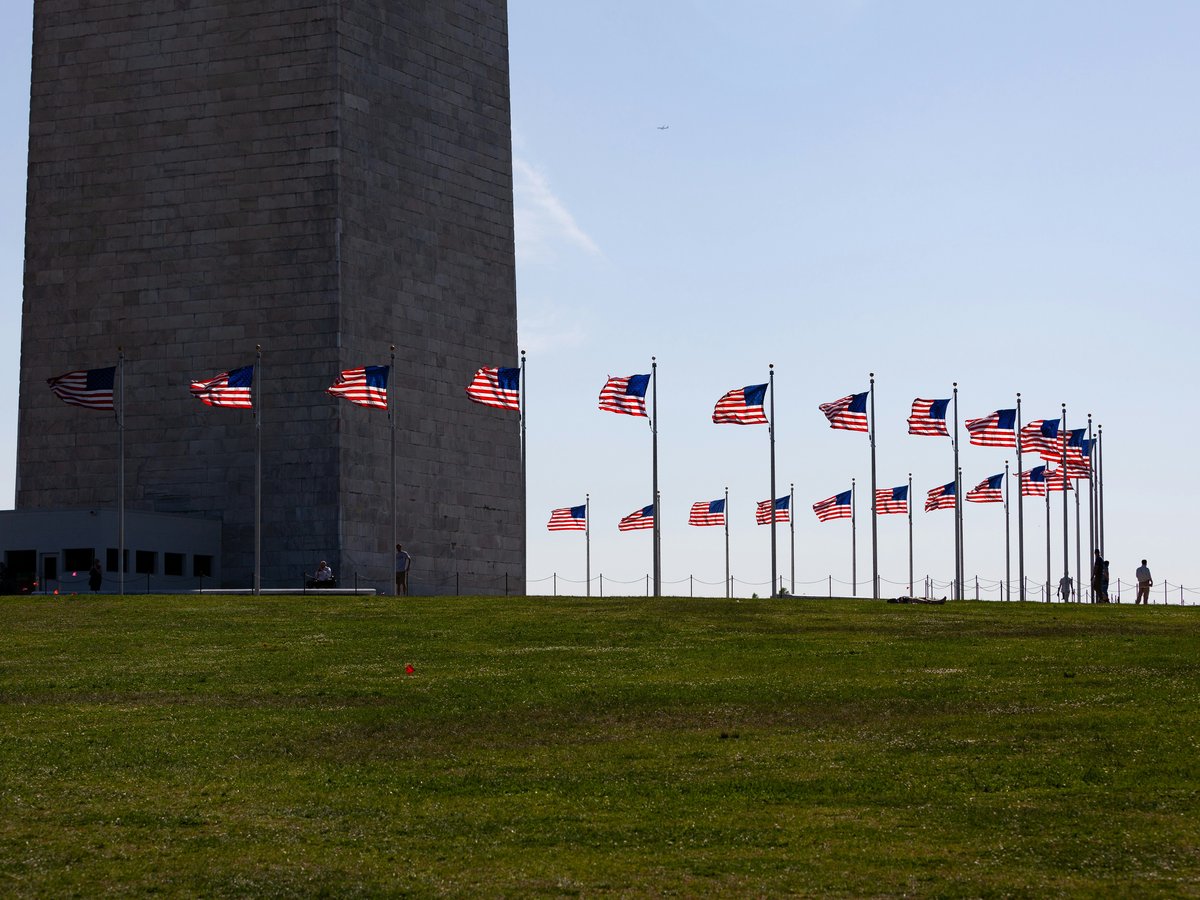
Stay in Washington DC in January
77 hotels in the Trip.com pool for Washington DC, from US$72 a night.
Opens Trip.com on Fri 1 Jan to Sun 3 Jan 2027; change the dates there.
January is Washington DC's coldest month. That single fact shapes everything about a winter visit to the capital. Average highs reach 6°C (43°F), with overnight lows dipping to -2°C (28°F), and wind off the Potomac River adds a raw edge that cuts through most coats. The National Mall, which hosts tens of thousands on a spring afternoon, sits largely empty. Snow falls a handful of times in most Januaries, though accumulations in the District rarely exceed 15 cm (6 inches). Sunset arrives around 5:10 PM, compressing your outdoor sightseeing window.
That said, the Smithsonian Institution, founded in 1846, operates 17 free museums across the city, and in January you might have entire wings of the National Museum of Natural History to yourself. Congress reconvenes after the holiday recess, making Capitol tours and public congressional hearings accessible. Hotel rates across the District fall to their annual low. Martin Luther King Jr. Day, the third Monday of the month, draws visitors to the MLK Memorial on the Tidal Basin and brings special programming to museums and cultural centers.
Be honest about your cold tolerance. If walking 2 km (1.2 mi) in freezing wind between the Lincoln Memorial and the Washington Monument sounds like a chore, wait for April. If you prefer museums to monuments and low prices to crowds, January might surprise you.
Why visit in January
- Lowest travel costs of the year. Both airfare and hotel rates reach their annual floor, and free admission at the city's major museums stretches the budget further.
- Nearly empty galleries. The Smithsonian museums that draw hour-long queues in spring have walk-up access throughout January, and you can linger at exhibits without the crowd pressure of peak season.
- Washington DC's restaurant scene is at its most accessible. Tables that require weeks of planning in April are often available same-day along 14th Street NW and in Georgetown.
- The cold, clear winter light on white marble monuments produces stark shadows and contrasts that the hazy summer months cannot match. The low-angle January sun is particularly rewarding for photography.
Worth knowing
- Cold that limits outdoor time. Temperatures regularly drop below freezing overnight, and wind across the open Mall makes extended walks uncomfortable without serious layering.
- Short daylight. You lose several hours of outdoor time compared to summer, and many memorials are best experienced in natural light that fades well before dinner.
- Snow and ice are intermittent but disruptive. When accumulation hits, the city's brick and marble sidewalks can stay icy for days, making walks between sites slower and less pleasant.
- Some seasonal attractions shut down. Potomac River cruises, outdoor dining along the Georgetown Waterfront and the Wharf, and several garden tours close or significantly reduce operations for the winter.
Best for
Think twice if
January's cold in Washington DC has a damp quality that makes the air feel heavier than the thermometer suggests. Mornings near the Tidal Basin typically start below freezing, with ice sometimes forming on the reflecting pools along the Mall. Wind funnels through the city's grid of broad avenues with little to break it. Precipitation falls on roughly 8 days across the month, arriving as cold rain, sleet, or snow that may linger as gray slush for a day or two. Overcast skies can settle in for several days running. When the sun breaks through, the low winter light on white marble is genuinely worth the wait. Humidity runs moderate, well below summer's punishing levels, but damp enough that the cold reaches through your coat in a way a dry mountain winter would not.
Seasonal caution
- Freezing overnight temperatures are common, and wind chill on the open Mall can push the felt temperature well below the posted reading. Exposed skin becomes uncomfortable quickly during sustained outdoor walks.
- Snow and ice, while not guaranteed, can arrive with little warning and linger on secondary sidewalks for days. The city's snow-clearing infrastructure lags behind northern cities like Boston or Chicago.
- Cold rain mixed with near-freezing temperatures creates a penetrating chill distinct from dry cold. Waterproof outer layers are more important here than in a drier winter climate.
Year-round climate
Averages from the last 5 years.
| Month | Avg high (°C) | Avg low (°C) | Rainfall (mm) |
|---|---|---|---|
| Jan | 6 | -2 | 84 |
| Feb | 9 | 0 | 82 |
| Mar | 15 | 4 | 98 |
| Apr | 20 | 8 | 95 |
| May | 24 | 13 | 139 |
| Jun | 29 | 18 | 138 |
| Jul | 31 | 21 | 168 |
| Aug | 30 | 20 | 140 |
| Sep | 26 | 17 | 118 |
| Oct | 20 | 10 | 78 |
| Nov | 14 | 4 | 62 |
| Dec | 9 | 0 | 98 |
Holidays and festivals in January
Public holidays
- New Year's Day(New Year's Day)1 January 2027
- Martin Luther King, Jr. Day(Martin Luther King, Jr. Day)18 January 2027
Headline events
Martin Luther King Jr. Day
Third Monday of January
Washington DC is arguably the most meaningful city in America to observe this federal holiday. The memorial hosts a wreath-laying ceremony, and Smithsonian museums along the Mall run themed film screenings, panel discussions, and educational workshops throughout the long weekend. Community organizations lead commemorative marches from the memorial toward the Capitol.
Best things to do in January
Ice skating at the National Gallery of Art Sculpture Garden
outdoorThe open-air rink sits at the center of the Sculpture Garden on the National Mall, surrounded by modern sculptures and bare winter trees. Sessions run roughly 2 hours and skate rentals are available on site. The Capitol dome is visible above the treeline to the east.
The rink typically operates November through mid-March, and January's sustained cold keeps the ice in the best condition of the season.Booking tipWeekend afternoon sessions fill up. Go on a weekday morning for the shortest wait and the smoothest ice.
Smithsonian museum marathon
culturalWith nearly a dozen free museums within walking distance along the Mall, January's thin crowds let you cover 3-4 in a single day without the queues that eat half your time in spring. The Air and Space Museum and the American History Museum are strong starting points for first-time visitors.
January draws the fewest visitors of any month, meaning minimal entrance lines and room to linger at exhibits that draw dense crowds in peak season.Attend a public congressional hearing
culturalWhen Congress is in session, many committee hearings in the Capitol complex and surrounding office buildings are open to the public. Topics range from foreign policy to technology regulation. You can typically walk in without a reservation for most subcommittee sessions.
Congress returns from holiday recess in early January and the new session's hearing calendar fills quickly, making this one of the most active months for public hearings.Booking tipCheck committee websites the week before for scheduled public hearings. Arrive 20-30 minutes early for high-profile hearings.
Restaurant Week dining
foodDC's wintertime Restaurant Week offers prix-fixe lunch and dinner menus at dozens of restaurants across the city, with multi-course meals at fixed price tiers. Neighborhoods like Penn Quarter, 14th Street NW, and Georgetown participate heavily.
The event typically runs for 10 days in late January into early February, timed to fill seats during the city's slowest dining period.Booking tipReservations open 2-3 weeks before the event. Popular spots on 14th Street NW and in Penn Quarter fill within hours of going live.
Night walk along the lit monuments
outdoorThe major memorials along the Mall stay open 24 hours and are illuminated after dark. Walking from the Lincoln Memorial past the World War II Memorial to the Washington Monument takes about 40 minutes at a leisurely pace. The lit marble against a dark winter sky feels entirely different from the daytime postcard view.
January's early sunsets let you do a full monument walk before 6 PM without staying out unreasonably late, and the cold keeps most visitors away.Kennedy Center winter season performance
entertainmentThe Kennedy Center for the Performing Arts runs a full winter season of ballet, symphony, theater, and jazz from its perch above the Potomac in Foggy Bottom. The building's free rooftop terrace offers river views even in winter, and the Millennium Stage hosts a free performance at 6 PM daily.
The winter season typically features the Center's strongest touring productions and resident company premieres, with better ticket availability than the fall gala season.Booking tipThe free 6 PM Millennium Stage performance requires no tickets. For paid shows, check for last-minute releases 2-3 days before the performance.
Tour the Library of Congress
culturalThe Thomas Jefferson Building, completed in 1897, holds one of the most ornate interiors in the United States. The Great Hall's ceiling murals and the main reading room's dome are worth the visit alone. Free guided tours run throughout the day.
January's thin crowds mean shorter waits for guided tours of the Jefferson Building, and the reading room overlook, packed shoulder-to-shoulder in peak months, is usually accessible without a queue.Booking tipReserve a free timed-entry pass online in advance. Walk-ups are possible but not guaranteed after noon.
What to eat in January
On menus now
Maryland cream of crab soup
The hot, cream-based version of Maryland's signature soup is the winter counterpart to the chilled, vinegar-dressed style served in summer. Thick with backfin crab and seasoned with Old Bay, it shows up on menus across Capitol Hill and the waterfront neighborhoods from November through March.
Senate bean soup
Navy bean soup served daily in the U.S. Senate Dining Room by tradition since the early 1900s. Restaurants around Capitol Hill offer their own versions of this dense, warming bowl. A lunch-counter classic that feels exactly right when you have walked through freezing wind to get there.
Street food peaks
Half-smoke
DC's signature split sausage, grilled until the casing blisters with a smoky char, traditionally topped with mustard, onions, and chili. Ben's Chili Bowl on U Street has served them since 1958. The snap of cold January air makes the smoky heat land differently than it does in summer.
What to drink
Bourbon hot toddy
Bars across the District run hot cocktail menus from November through February. The bourbon-forward hot toddy reflects the region's proximity to Virginia and Kentucky distilleries. Warming from the inside after an afternoon on the Mall, it tends to appear on bar menus in neighborhoods like Shaw, Adams Morgan, and along U Street.
In markets
Chesapeake Bay oysters
Cold Chesapeake waters produce the plumpest, sweetest oysters of the year during the traditional R-months window from September through April. January sits at the heart of that peak. You will find them raw on the half shell, fried, or in stews at restaurants across the District and in nearby Maryland suburbs.
Regular events in January
Washington Auto Show
One of the largest auto shows on the East Coast, with new vehicle debuts, concept cars, and test drive opportunities at the Walter E. Washington Convention Center near Mount Vernon Square.
Late JanuaryWashington Capitals Hockey
The NHL's Capitals play multiple home games at Capital One Arena in Penn Quarter throughout January. The arena sits directly above the Gallery Place-Chinatown Metro station.
Multiple games throughout JanuaryWashington Wizards Basketball
NBA regular season games at Capital One Arena, typically with 6-8 home dates scattered across the month. Weeknight tickets tend to be more affordable than weekend Capitals hockey.
Multiple games throughout JanuaryBest places this January
National Museum of African American History and Culture
museumThe newest major Smithsonian museum on the Mall's western end, housed beneath a distinctive bronze-colored corona. Particularly resonant to visit around the MLK Day holiday weekend, when the museum runs extended programming. The lower-level history galleries trace the African American experience from the 15th century through the present.
National MallGeorgetown
neighborhoodCobblestone streets, Federal-era rowhouses, and independent shops along M Street and Wisconsin Avenue NW have a quieter winter charm. January is the one month when popular brunch spots reliably have open tables and you can browse the small galleries and bookshops without the summer foot traffic.
GeorgetownEastern Market
marketCapitol Hill's public market has operated on 7th Street SE since 1873. The indoor market hall stays active through winter with produce, meat, cheese, and baked goods from regional farms. Weekend flea market vendors set up outside even in January, though the selection thins when cold snaps hit.
Capitol HillU Street Corridor
neighborhoodThe historic Black Broadway district runs along U Street NW between 9th and 18th Streets, with live music venues, Ethiopian restaurants, and late-night spots. Winter crowds thin enough that cover-charge-free shows at smaller clubs become easier to walk into.
ShawWashington National Cathedral
landmarkThe Neo-Gothic cathedral in the Cleveland Park neighborhood, founded in 1910 and completed over the course of 83 years, rewards the trip north from the Mall. Winter light through the stained glass hits at a lower angle that illuminates colors the summer sun passes over. The observation gallery on the 7th floor offers a panoramic view of the city's layout.
Cleveland ParkDupont Circle
neighborhoodThe circle and surrounding blocks feel more residential and less tourist-tracked than the Mall area. Independent bookshops, coffee shops, and gallery spaces along Connecticut Avenue NW and P Street NW make for good cold-weather browsing. The Phillips Collection, opened in 1921 as one of the country's first modern art museums, sits a block east of the circle.
Dupont Circle
Your packing checklist
Tick items off as you pack. Your progress saves in this browser.
All packed — have a great trip.
Insider tips
The Smithsonian museums closest to the center of the Mall, like Natural History and Air and Space, still draw the most foot traffic even in January. Start your day at the Freer Gallery of Art or the Hirshhorn Museum on the south side of the Mall for near-empty galleries where you might have a room to yourself for 20 minutes.
Georgetown's M Street restaurants are easier to book in January than any other month. Places that normally carry 2-week waits often have same-day availability, and some run off-menu winter specials that disappear by March.
The west-facing steps of the Lincoln Memorial, completed in 1922, look directly toward the Washington Monument's reflection in the pool. Around 5 PM in January, the low-angle sunlight turns the marble golden and the crowds have already thinned. Worth timing a visit around.
Weeknight Wizards basketball games at Capital One Arena tend to cost significantly less than weekend Capitals hockey, and the restaurants along 7th Street NW in Chinatown stay available on basketball nights but fill before puck drop on hockey evenings.
Avoid these mistakes
- Planning a full day of outdoor monument-hopping on the National Mall without indoor breaks. The wind across the open Mall turns a merely cold afternoon into a bitter one. Alternate 1-2 outdoor stops with warming breaks at nearby free museums.
- Not checking museum hours around the two federal holidays in January. Some Smithsonian museums and the National Archives adjust their schedules, and federal offices close entirely. Check individual venue websites before walking across the Mall in the cold.
- Booking accommodation far from a Metro station. A 10-minute walk from a hotel to the nearest station feels trivial in spring but becomes a real deterrent when temperatures drop below freezing and the wind picks up. Stay within 5 minutes of a station on the Red, Blue, Orange, or Silver lines.
Practical tips for January
The Metro is the most reliable transit between the Mall, Capitol Hill, and neighborhoods like Georgetown and Dupont Circle in January. Weekend service runs less frequently, with trains every 12-15 minutes instead of the weekday rush-hour 3-8 minutes, so check WMATA schedules before heading out. Most Smithsonian museums open at 10 AM and close at 5:30 PM. Federal buildings, including the Capitol and Library of Congress, require advance reservations for tours. Layer for aggressive indoor heating in federal buildings and museums. A zip-front coat you can shed in 10 seconds is more practical than a pullover you have to wrestle off. If you are visiting in a presidential inauguration year, book accommodation and transit months ahead, as the January 20 ceremony draws hundreds of thousands to the Mall and surrounding streets.
FAQ
Is January a good time to visit Washington DC?
It depends on what you want from the trip. January is the coldest and quietest month, which limits comfortable outdoor time but makes the city's world-class indoor attractions notably uncrowded. Hotel prices hit their annual low. If museums and lower costs matter more to you than comfortable outdoor weather, January offers genuine value. For outdoor sightseeing and cherry blossoms, spring is the better window.
Does it snow in Washington DC in January?
Yes, though accumulation varies widely year to year. Some Januaries see only a dusting, while others bring 15-25 cm (6-10 in) over the course of the month. The city's snow removal lags behind northern cities, so even modest accumulations can make sidewalks icy and disrupt above-ground bus service for a day or two. The Metro generally keeps running underground.
What is there to do in Washington DC in January?
Indoor attractions carry the month. The city's free museums, performing arts venues like the Kennedy Center, and the Library of Congress all run full winter programming. The MLK Day long weekend brings themed events across the District. Late January's Restaurant Week fills dining rooms at reduced prix-fixe prices. The Sculpture Garden ice rink and evening monument walks are the strongest outdoor draws.
Is Washington DC crowded in January?
Generally no. January is the city's lowest-traffic month outside of the MLK Day long weekend, which brings a temporary increase around the Mall. You will find shorter lines at museums, available restaurant tables at popular spots, and notably fewer tourists at monuments. The one exception is presidential inauguration years, when the January 20 ceremony draws hundreds of thousands and hotels sell out months in advance.
What should I wear in Washington DC in January?
Layer for genuine winter cold. A warm outer coat, thermal base layers, waterproof boots, hat, gloves, and scarf are all essential. Indoor spaces throughout the city, from museums to the Metro, are heated aggressively, so choose layers you can shed and carry easily. Dress as you would for a northern European winter rather than a mild southern one.
Things to Do in Washington DC in January
 Free cancellation
 DC Monuments by Night: 10+ Landmarks | Open-Top Upgrade Available
City tour: 3 hours, free cancellation.
via Viator Free cancellation
 DC Monuments Night Tour with 10+ Stops, National Mall, Tickets
City tour: 3 hours, free cancellation.
via Viator Free cancellation
 Washington DC in One Day: Guided Sightseeing Tour + Boat Cruise
City tour: 6 hours, free cancellation.
via Viator Free cancellation
 Arlington Cemetery Small-Group Tour & Changing of the Guards
City tour: free cancellation.
via Viator Free cancellation
 US Capitol "Big 3" Highlights with Reserved Entry
City tour: free cancellation.
via Viator Free cancellation
 Washington DC "See the City" Guided Sightseeing Segway Tour
City tour: 2.5 hours, free cancellation.
via ViatorFind a flight to Washington DC
Live fares to Washington DC appear here once cookies are accepted.
Last verified by automated review (v1.7.2) on . What is automated review?