Stay in St. Augustine in March
50 hotels in the Trip.com pool for St. Augustine, from US$46 a night.
Opens Trip.com on Fri 5 Mar to Sun 7 Mar 2027; change the dates there.
March in St. Augustine means spring break, and that single fact shapes nearly everything about the month. This city of roughly 15,000 year-round residents absorbs several times that in visitors during peak weeks, and you'll feel the pressure most on St. George Street and around Castillo de San Marcos. Daytime highs average 22°C (72°F) with lows near 15°C (59°F). The humidity sits at about 76%, which is noticeable but a long way from the thick, wet air that settles over the city by July. Rain falls on roughly 10 days, usually in short afternoon bursts that tend to clear within half an hour.
The trade-off is straightforward. The weather is close to ideal for walking the 144-block Historic District, for climbing the 219 steps of the St. Augustine Lighthouse, or for spending a few hours at Anastasia State Park's 1,600 acres of beach and maritime hammock. But hotel rates along A1A and the bayfront climb 30-50% above shoulder-season levels, and the best-known sites get genuinely crowded on weekends. Worth noting, the first week of March and the final days after spring break winds down tend to be considerably calmer and cheaper.
If you're coming for history and mild weather and can handle the crowds, March works well. If you prize quiet streets and affordable rooms, October or April would likely suit you better.
Why visit in March
- Daytime temperatures around 22°C (72°F) are comfortable for 4-5 hours of walking through the Historic District and Lincolnville without the draining summer heat
- Washington Oaks Gardens State Park, about 30 minutes south on A1A, hits peak azalea and camellia bloom through mid-March
- Daylight stretches past 7:30 PM by late March, giving a full day for outdoor exploration at Fort Matanzas or along the bayfront
- The St. Augustine Lions Seafood Festival at Francis Field in late March brings local vendors and fresh catches to one downtown site
- Ocean water at St. Augustine Beach reaches about 19°C (66°F), warm enough for wading and beachcombing even if swimming still feels bracing
Worth knowing
- Spring break crowds pack St. George Street and Castillo de San Marcos to shoulder-to-shoulder levels on mid-March weekends
- Hotel rates run 30-50% above shoulder-season prices, with bayfront and Historic District properties typically selling out 4-6 weeks ahead
- Parking in the Historic District becomes a real problem on spring break weekends. The main garage on Castillo Drive often fills by 10 AM.
- Occasional cold fronts can drop nighttime temperatures to 8-10°C (46-50°F) for 2-3 days with little advance notice
Best for
Think twice if
March in St. Augustine feels like the sweet spot between the cool gray stretches of January and the sticky heat that arrives by June. Mornings tend to start in the mid-teens Celsius (upper 50s°F), with a faint chill that burns off by 10 AM. By early afternoon the air warms to around 22°C (72°F), sometimes reaching 25°C (77°F) on warmer days. Humidity hovers at 76%, enough that you'll notice a slight dampness in the salt air off the Matanzas River, but nowhere near the 85-90% levels that make July feel like breathing through a warm towel. Rainfall totals about 84mm across roughly 10 days, and most of it falls in quick afternoon showers. You might get a surprise cold front that drops the temperature to 10°C (50°F) for a couple of days, though these become less common as the month goes on. By late March, the warmth starts to hint at the summer ahead.
Year-round climate
Averages from the last 5 years.
| Month | Avg high (°C) | Avg low (°C) | Rainfall (mm) |
|---|---|---|---|
| Jan | 18 | 10 | 52 |
| Feb | 20 | 13 | 61 |
| Mar | 22 | 15 | 84 |
| Apr | 25 | 18 | 82 |
| May | 28 | 21 | 80 |
| Jun | 30 | 24 | 127 |
| Jul | 31 | 25 | 154 |
| Aug | 30 | 25 | 163 |
| Sep | 28 | 24 | 201 |
| Oct | 25 | 20 | 91 |
| Nov | 22 | 16 | 98 |
| Dec | 20 | 13 | 44 |
Holidays and festivals in March
Public holidays
- Good Friday(Good Friday)26 March 2027
Best things to do in March
Walk the Historic District in comfortable weather
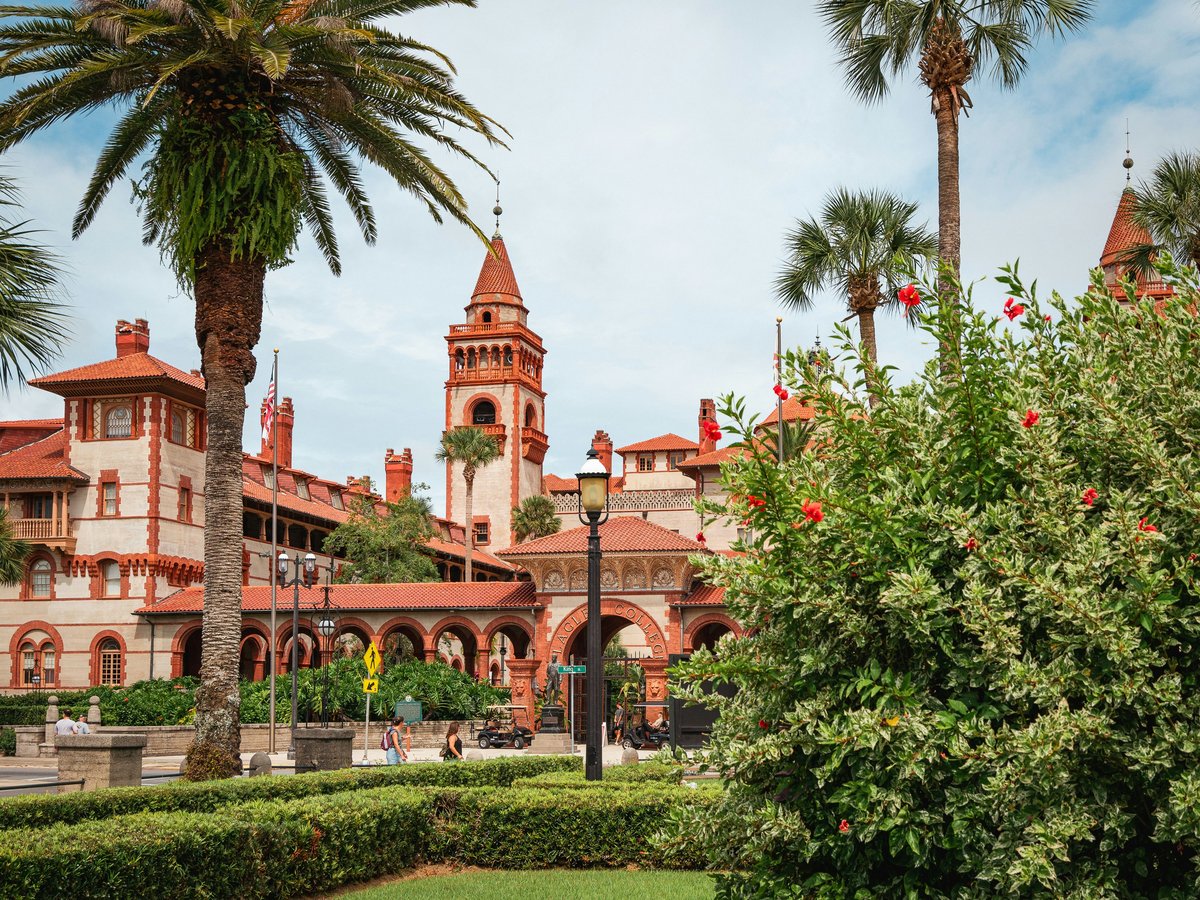
sightseeingThe 144-block Historic District covers everything from the narrow lanes around St. George Street to the bayfront along Avenida Menendez. At March temperatures of 22°C (72°F), you can comfortably spend 4-5 hours on foot. Flagler College's Spanish Renaissance courtyard, the Lightner Museum's Gilded Age collection, and the quiet alleys south of the Plaza de la Constitución all reward slow exploration on foot.
March highs of 22°C (72°F) are 8-9 degrees cooler than July's 31°C. That's the difference between a comfortable 4-hour walk and a miserable one.Booking tipNo booking needed, but start by 9 AM on spring break weekends to beat the crowds on St. George Street.
Take the ferry to Fort Matanzas
historyFort Matanzas National Monument sits on Rattlesnake Island, accessible only by a free National Park Service ferry from A1A about 15 miles south of town. The small coquina fort dates to 1742 and overlooks the Matanzas Inlet. The ferry ride takes about 5 minutes across the river, and the whole visit runs 45-60 minutes. The salt breeze on the crossing is worth the drive alone.
The ferry runs on a reliable schedule in March's calmer weather. Summer thunderstorms frequently cancel afternoon crossings from June through September.Booking tipThe ferry is first-come, first-served with a 40-person capacity. Arrive before 10 AM on weekends.
Kayak the Matanzas River at sunset
outdoorThe Matanzas River between the Historic District and Anastasia Island stays calm enough for paddling on most March evenings. Outfitters near the Vilano Beach causeway and on Anastasia Island rent single and tandem kayaks. Dolphins tend to feed in the shallows along the Intracoastal around sunset, and you'll likely spot great blue herons and ospreys hunting along the marsh edges.
March water temperatures reach 18-19°C (64-66°F), warm enough that a capsized paddle isn't dangerous. Wind is calmer than the gusty days common in January and February.Booking tipWeekend sunset tours fill up. Reserve by Wednesday for Saturday availability.
Explore Anastasia State Park's beach and trails
natureAnastasia State Park covers 1,600 acres on Anastasia Island, with 4 miles of undeveloped Atlantic beach, tidal marshes, and ancient coquina quarries the Spanish used to build the Castillo. The Salt Run lagoon on the park's west side offers sheltered paddling. A campground with 139 sites sits within the park for those who want to stay overnight.
March hits the balance between comfortable warmth for beach days and low enough humidity for the 2.5-mile nature trail through the maritime hammock. The park also draws fewer spring break visitors than St. Augustine Beach to the south.Booking tipCampground reservations for March should be made 2-3 months ahead. Day-use parking fills by noon on spring break weekends.
See the spring blooms at Washington Oaks Gardens State Park
natureWashington Oaks sits about 25 miles south of St. Augustine on A1A, right where the Matanzas River meets the Atlantic. The formal gardens cover 20 acres of azaleas, camellias, bird of paradise, and rose beds. The ocean side of the park has a rocky coquina beach that looks nothing like the sandy stretches to the north. The contrast between the manicured gardens and the rough shoreline is genuinely striking.
Azalea and camellia blooms peak from late February through mid-March. By April, the show is winding down.Booking tipNo reservation needed. Arrive before 10 AM for the softest light in the gardens.
Climb the St. Augustine Lighthouse
sightseeingThe 1874 St. Augustine Lighthouse stands 50 meters (165 feet) tall on the north end of Anastasia Island. The 219 steps to the top are worth it on a clear March day, when visibility can reach 30+ miles north toward Jacksonville Beach and south past Marineland. The Maritime Museum at the base covers 500 years of local nautical history.
March's lower humidity and clearer skies compared to summer months mean better visibility from the top. The climb is also far more pleasant at 22°C than at 31°C in July.Booking tipBuy tickets online to skip the entrance line on spring break weekends. Last climb is typically 45 minutes before closing.
Walk through Lincolnville's civil rights history
historyLincolnville, the neighborhood south of King Street, was established by formerly enslaved people after the Civil War. It played a central role in the 1964 civil rights movement, when Dr. Martin Luther King Jr. led marches from its churches to the Plaza de la Constitución. The Lincolnville Museum and Cultural Center on Martin Luther King Avenue documents this history, and several of the original churches still stand along Washington Street.
March weather makes the 30-40 minute self-guided walk through the neighborhood comfortable. The area also draws fewer spring break crowds than the Historic District north of King Street.Evening ghost tour of the old city
entertainmentSt. Augustine has been running ghost tours since the 1990s, and several operators offer 90-minute walking routes through the Historic District after dark. The tours typically pass the Huguenot Cemetery on San Marco Avenue, the old jail, and several 18th-century buildings along St. George Street. Whether you believe in ghosts or not, the tours cover legitimate colonial-era history in atmospheric settings.
March evenings at 15-17°C (59-63°F) are comfortable for 90 minutes of outdoor walking. Summer tours at 27°C+ with 85% humidity are a different, sweatier experience entirely.Booking tipBook 3-5 days ahead for weekend tours during spring break weeks.
What to eat in March
In season: fruit
Florida strawberries
March is peak season for Florida strawberries, grown primarily in the Plant City area about 3 hours west. They show up at the Saturday farmers market at Plaza de la Constitución and at roadside stands along US-1. Smaller and sweeter than the California varieties most grocery stores carry, with a fragrance you can smell from a few feet away.
On menus now
Minorcan clam chowder
St. Augustine's signature soup traces back to the 18th-century Minorcan settlers who arrived at nearby New Smyrna. The tomato-based broth gets its slow, building heat from datil peppers. Clams, potatoes, and onion round it out. You'll find versions at nearly every sit-down restaurant in the Historic District, and locals tend to have strong opinions about whose is best.
Rock shrimp
Rock shrimp come from deep Atlantic waters off northeast Florida. They have a firm texture closer to lobster than typical shrimp. March falls in the tail end of their cooler-weather season. You'll find them fried or served in a creamy grits bowl at restaurants in the Historic District, and the Lions Seafood Festival in late March features them heavily.
Smoked mullet dip
A northeast Florida staple you'll find at waterfront spots on Anastasia Island and along the bayfront. The fish is smoked low and slow, then mixed with cream cheese and datil pepper and served with saltines. The smoky, peppery smell tends to drift from kitchens in a way that makes ordering it almost involuntary.
In markets
Datil pepper hot sauce
The datil pepper grows almost exclusively in the St. Augustine area, a legacy of the Minorcan community. It's milder than a habanero with a fruity, tangy bite. Local producers at the Saturday farmers market sell small-batch sauces. March visitors catch the start of planting season, while the previous fall's harvest still fills shop shelves.
Regular events in March
St. Augustine St. Patrick's Day ParadeFree
The annual parade runs along the bayfront on Avenida Menendez, typically on the Saturday nearest March 17. Floats, marching bands, and local organizations make their way from the Mission of Nombre de Dios south toward the Bridge of Lions. The crowd lines up 2-3 deep along the seawall, and the mood is relaxed rather than rowdy.
Saturday nearest March 17St. Augustine Lions Seafood Festival
This late-March weekend event takes place at Francis Field in the Historic District. Local seafood vendors, live music, and craft booths fill one of the largest open spaces downtown. Fried shrimp, Minorcan clam chowder, and smoked fish are the main draws. The festival has been running for decades and tends to attract more locals than tourists.
Late March weekendFirst Friday Art WalkFree
On the first Friday of each month, galleries and studios in the Uptown district along San Marco Avenue open their doors for an evening walk-through. Local artists show new work, and several galleries serve wine. The walk covers roughly 15 galleries over about a half-mile stretch north of the Historic District.
First Friday of the month, 5-9 PMSt. Augustine Amphitheatre spring concert series
The 4,000-seat open-air amphitheatre on Anastasia Island picks up its spring concert schedule in March, with touring acts performing on weekend nights. The venue sits near Anastasia State Park and has a reputation for strong acoustics despite being outdoors. March weather makes the open-air seating comfortable.
Various weekends throughout MarchBest places this March
Castillo de San Marcos
historic siteThe 1672 coquina fortress on the bayfront is the oldest masonry fort in the continental United States. In March, the National Park Service runs ranger-led programs and occasional cannon-firing demonstrations on weekends. Arrive at the 8:45 AM opening to walk the ramparts and feel the cool morning breeze off Matanzas Bay before the mid-morning crowds arrive. The views across to Anastasia Island are clearest on March mornings before any haze builds.
Historic DistrictLightner Museum
museumThe Lightner Museum occupies the former Alcazar Hotel, built by Henry Flagler in 1888. Three floors of Gilded Age decorative arts, Tiffany glass, and mechanical musical instruments fill the space. The building itself, with its Spanish Renaissance courtyard and tiled pool turned cafe, is arguably more impressive than many of the exhibits. March's comfortable temperatures make the walk from St. George Street through the museum grounds a pleasant transition between indoor and outdoor exploration.
Historic DistrictAnastasia State Park beach
beachThe 4-mile beach inside Anastasia State Park stays noticeably less developed and less crowded than St. Augustine Beach, even during spring break. In March, the sand warms enough to sit on comfortably by midday, and the water at 19°C (66°F) works for wading and shell hunting along the shoreline. Sea oats and morning glories cover the dunes between the parking area and the beach, giving it a wilder feel than the more manicured public beaches to the south.
Anastasia IslandPlaza de la Constitución
public squareThis open square at the east end of King Street has been the civic center of St. Augustine since the Spanish colonial era. On Saturdays, the farmers market fills the south end of the plaza with produce, baked goods, and datil pepper products from about 8:30 AM to 12:30 PM. The market is noticeably bigger during spring break weeks, and the smell of fresh bread and local honey carries across the square.
Historic DistrictVilano Beach
beachNorth of the Vilano Beach causeway, this stretch of sand draws a more local crowd than St. Augustine Beach to the south. The beach is wide at low tide, free parking is available in the residential streets nearby, and you can see the St. Augustine Lighthouse across the inlet. On calm March days, the fishing pier offers views of dolphins working the inlet channel.
Vilano BeachWashington Oaks Gardens State Park
state parkThe formal gardens peak in late February through mid-March with azalea and camellia blooms across 20 acres. The coquina rock formations on the Atlantic beach side of the park look unlike anything else on the northeast Florida coast. The park sits about a 30-minute drive south on A1A from St. Augustine, and the combination of gardens and rocky shore makes a full morning trip.
Fort Matanzas National Monument
historic siteThis smaller Spanish fort on Rattlesnake Island, about 15 miles south of town, is free to visit and accessible by a short NPS ferry. The fort dates to 1742 and was built to guard the southern river approach to St. Augustine. March weather makes the open-air ferry ride and the exposed fort comfortable to explore. The inlet views from the fort's gun deck are some of the most photogenic in northeast Florida.
Your packing checklist
Tick items off as you pack. Your progress saves in this browser.
All packed — have a great trip.
Insider tips
The parking lot at the St. Augustine Lighthouse on Anastasia Island rarely fills even on spring break weekends, and it's a 10-minute walk across the Bridge of Lions to the Historic District. Locals use it to avoid the paid downtown garages.
The Saturday farmers market at the Plaza de la Constitución (8:30 AM to 12:30 PM) sells datil pepper products at roughly half the price of the tourist shops on St. George Street. Get there by 9 AM before the spring break crowds discover it.
If you eat along the bayfront on Avenida Menendez, the restaurants on the west side of the street tend to be 15-20% cheaper than those with direct water views on the east side. The food is often from the same local suppliers.
Fort Matanzas is completely free, including the ferry, and it draws a fraction of the visitors that Castillo de San Marcos does. A morning trip there followed by lunch on the way back at one of the fish camps along A1A is a quintessential local day out.
Vilano Beach has free street parking and far fewer people than St. Augustine Beach, even on peak spring break Saturdays. The trade-off is fewer amenities, but if you bring your own chairs and a cooler, that's a feature rather than a drawback.
Avoid these mistakes
- Booking a Historic District hotel for the second or third week of March without checking spring break calendars. Rates can vary significantly between a spring break weekend and the following Tuesday. Check the University of Florida, Florida State, and Georgia school calendars before locking in dates.
- Driving into the Historic District on a Saturday morning during spring break and expecting to find street parking. The grid north of King Street has almost no open spots by 10 AM. Park at the visitor center on Castillo Drive or across the bridge on Anastasia Island and walk in.
- Spending the entire visit on St. George Street and the bayfront. Lincolnville, a 5-minute walk south of King Street, has some of the best-preserved Victorian architecture in the city, and the civil rights history there is genuinely significant. It draws a fraction of the foot traffic.
- Skipping a light jacket because it's Florida. A March cold front can drop nighttime lows to 8°C (46°F), and the wind off the Matanzas River makes open-air dining on the bayfront feel colder than the thermometer reads.
Practical tips for March
Book your hotel by early February if you're targeting a mid-March spring break week. Bayfront and Historic District properties sell out 4-6 weeks ahead, and last-minute rates can run double the advance-booking price. For parking, the city garage on Castillo Drive opens at 7 AM, and the visitor center lot is a backup. Most Historic District restaurants don't take reservations for parties under 6, so expect 30-45 minute waits at popular spots along St. George Street on Friday and Saturday evenings. If you're visiting Castillo de San Marcos, bring a National Parks annual pass if you have one. Dress in layers. You'll start the morning in a sweater, strip to a T-shirt by noon, and want the sweater again by 6 PM. The Uber and Lyft supply in St. Augustine is thin compared to Jacksonville, about 40 miles north, so don't count on rideshares for a late-night return from dinner. Consider renting a car if you plan to visit Fort Matanzas, Washington Oaks, or any of the beaches south of town.
FAQ
Is March a good time to visit St. Augustine?
March is a good time for weather, with daytime highs around 22°C (72°F) and humidity well below summer levels. The trade-off is spring break crowds and higher prices, particularly during the middle 2-3 weeks. If you can visit the first or last week of March, you'll likely get the pleasant weather with fewer people and lower hotel rates. Mid-March weekends are the busiest and most expensive period of the month.
What is the weather like in St. Augustine in March?
Average highs reach 22.3°C (72°F) and lows sit around 15.1°C (59°F). Humidity is about 76%, and you'll see rain on roughly 10 days, totaling about 84mm for the month. Most rain comes in short afternoon showers that clear within 30 minutes. The occasional cold front can temporarily drop temperatures into the low 10s°C (low 50s°F), but these episodes tend to last only 2-3 days. Overall, it's very comfortable for outdoor sightseeing.
Is St. Augustine crowded in March?
Yes, particularly during the middle 2-3 weeks when spring break schedules from universities in Florida and Georgia overlap. St. George Street, Castillo de San Marcos, and the bayfront restaurants feel the pressure most. The first few days of March and the tail end of the month are noticeably quieter. Weekdays throughout the month are also more manageable than Saturdays.
Is the ocean warm enough to swim in St. Augustine in March?
The Atlantic water temperature at St. Augustine Beach and Vilano Beach sits around 19°C (66°F) in March. That's warm enough for wading and quick dips but still feels bracing for extended swimming. Most beachgoers in March stick to the sand. By late April the water reaches 21-22°C (70-72°F), and by June it's genuinely warm at 27°C (80°F).
How far in advance should I book a hotel in St. Augustine for March?
For mid-March spring break weeks, book 6-8 weeks ahead. Bayfront properties and lodging in the Historic District sell out first. Vacation rentals on Anastasia Island need similar lead time. If you're targeting the first or last week of March, 3-4 weeks is usually sufficient, and you'll find rates 15-20% lower than peak spring break weekends.
Things to Do in St. Augustine in March
 Free cancellation
 Sunset Cruise of St. Augustine
Cruise: 1.5 hours, free cancellation.
via Viator Free cancellation
 Wine Tasting Cruise in St. Augustine
Cruise: 1.5 hours, free cancellation.
via Viator Free cancellation
 Red Boat Tours - Dolphin Odyssey and Sightseeing Tour
Cruise: 2 hours, free cancellation.
via Viator Free cancellation
 St. Augustine Live Music Sail with Drinks & Sunset Option
Cruise: 1.8 hours, free cancellation.
via Viator Free cancellation
 Red Boat Tours - Adults-Only & Family Friendly BYOB Sunset Cruise
Cruise: 1.5 hours, free cancellation.
via Viator Free cancellation
 Dolphin, Manatee and Sea Turtle Kayak Adventure in St. Augustine
Cruise: 2 hours, free cancellation.
via ViatorFind a flight to St. Augustine
Live fares to St. Augustine appear here once cookies are accepted.
Last verified by automated review (v1.7.2) on . What is automated review?