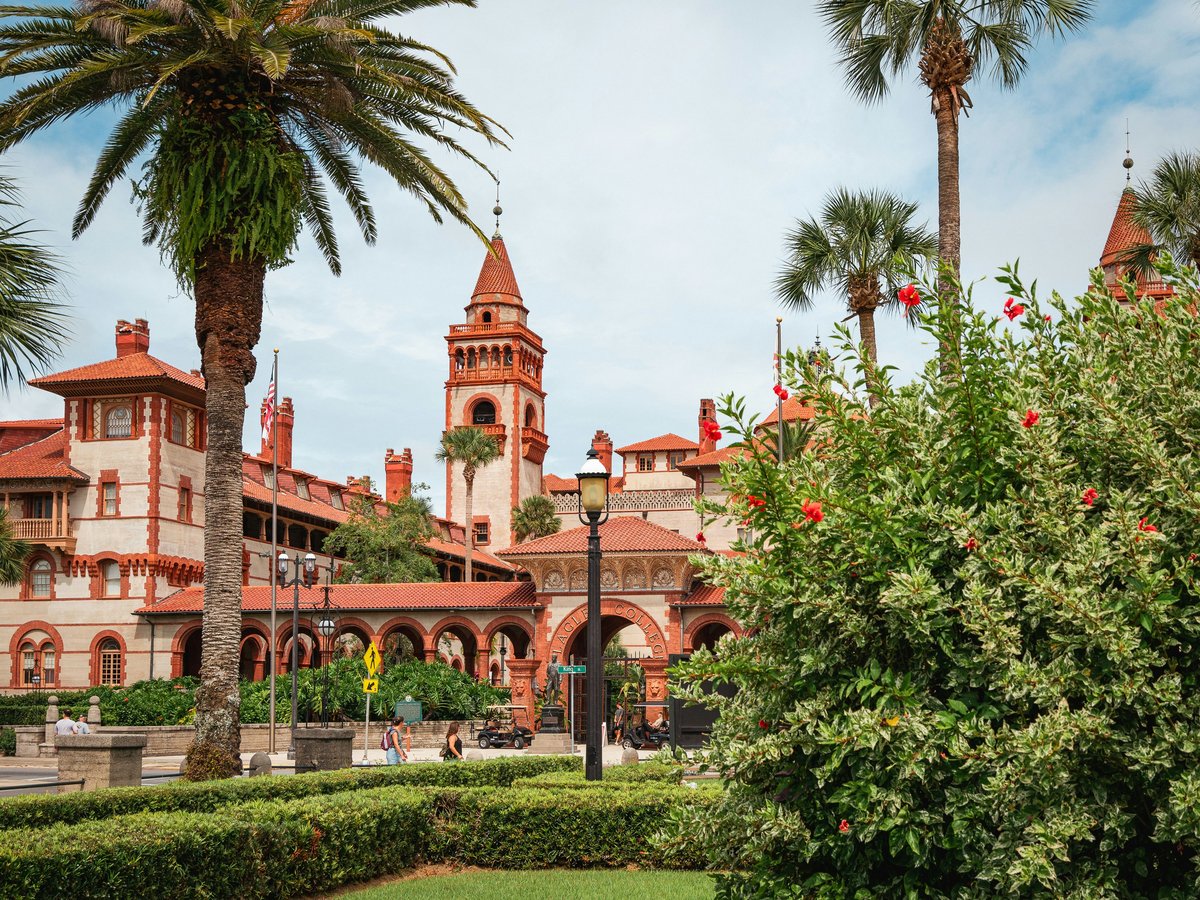
Stay in St. Augustine in February
50 hotels in the Trip.com pool for St. Augustine, from US$46 a night.
Opens Trip.com on Fri 5 Feb to Sun 7 Feb 2027; change the dates there.
February in St. Augustine is the tail end of the dry season, and it might be the most comfortable month to walk this city's compact historic core. Daytime highs sit around 20°C (69°F), cool enough that the coquina walls of Castillo de San Marcos don't radiate stored heat back at you, warm enough that a light jacket handles the breeze off Matanzas Bay. The summer crowds and their 30°C-plus humidity haven't arrived yet. You'll find St. George Street walkable at 2 p.m. without dodging tour groups every 10 meters.
That said, February is not the glamour month here. The Nights of Lights display, which drapes 3 million white lights across the Colonial Quarter and Flagler College from mid-November through January 31, has typically wrapped up by the time you arrive. You've missed the spectacle that fills every hotel in the historic district. What you get instead is a city that's caught its breath. Restaurant tables at places along Aviles Street open up. Parking in the downtown historic district drops from a 45-minute hunt to a 10-minute one.
The trade-off feels fair. February brings Black History Month programming at Fort Mose Historic State Park, the site of the first legally sanctioned free Black settlement in what became the United States, established in 1738. Lincolnville, the historically Black neighborhood south of King Street, runs heritage events through the month. If you're here for history rather than holiday spectacle, February might suit you better than December.
Why visit in February
- Temperatures averaging 20°C (69°F) make all-day walking tours through the historic district comfortable, with none of the summer heat exhaustion risk that plagues June through September visitors
- Post-Nights of Lights lull means hotel availability improves noticeably in the downtown historic district and along San Marco Avenue, with rates typically 20-30% below December peaks
- Fort Mose Historic State Park runs expanded Black History Month programming throughout February, offering ranger-led talks and living history demonstrations not available in other months
- Only 61mm of rain across roughly 7 days keeps outdoor plans mostly intact, compared to the 154-163mm monthly dumps of July and August
- Stone crab and oyster seasons overlap in February, putting two of Florida's best cold-water shellfish on menus simultaneously at restaurants along the bayfront
Worth knowing
- Nights of Lights ended January 31, so you'll see the infrastructure being dismantled rather than the 3 million white LEDs that define St. Augustine's peak tourist draw
- Morning lows around 12.8°C (55°F) can feel raw with 81% humidity and wind off the Intracoastal Waterway, particularly on Vilano Beach and along the seawall
- The Atlantic water temperature hovers around 16-17°C (61-63°F), which is too cold for comfortable swimming for most visitors at St. Augustine Beach or Anastasia State Park's shoreline
- February is still considered off-peak, so a handful of tour operators and smaller attractions run reduced hours or close certain days mid-week
Best for
Think twice if
February in St. Augustine tends to feel like late autumn in a more northern city. Mornings carry a dampness you can feel on your skin, especially near the bayfront, where 81% humidity and 12.8°C (55°F) lows combine into something that cuts through a thin shirt. By early afternoon, temperatures typically climb to around 20.3°C (69°F) under partly cloudy skies. Rain arrives on roughly 7 days through the month, usually as brief frontal showers rather than the long tropical downpours of summer. Total rainfall hits about 61mm, which is the second-driest month after December's 44mm. Wind off the Atlantic picks up on Anastasia Island and along the seawall near the Castillo, so exposed spots feel 3-5 degrees cooler than the sheltered streets of the historic district.
Year-round climate
Averages from the last 5 years.
| Month | Avg high (°C) | Avg low (°C) | Rainfall (mm) |
|---|---|---|---|
| Jan | 18 | 10 | 52 |
| Feb | 20 | 13 | 61 |
| Mar | 22 | 15 | 84 |
| Apr | 25 | 18 | 82 |
| May | 28 | 21 | 80 |
| Jun | 30 | 24 | 127 |
| Jul | 31 | 25 | 154 |
| Aug | 30 | 25 | 163 |
| Sep | 28 | 24 | 201 |
| Oct | 25 | 20 | 91 |
| Nov | 22 | 16 | 98 |
| Dec | 20 | 13 | 44 |
Holidays and festivals in February
Public holidays
- Lincoln's Birthday(Lincoln's Birthday)12 February 2027
- Presidents Day(Washington's Birthday)15 February 2027
Best things to do in February
Walk the Colonial Quarter without peak crowds
sightseeingThe 2-block stretch of St. George Street from the City Gate to the Plaza de la Constitución is the densest historic zone in town. In February, the absence of summer tour buses and Nights of Lights crowds means you can stop and read the interpretive plaques at the Oldest Wooden Schoolhouse (dating to the early 1700s) without blocking foot traffic.
Crowd levels drop noticeably after January 31, when the Nights of Lights wrap up and winter visitors thin outTour Fort Mose Historic State Park
historyFort Mose, about 3km north of the Castillo on the edge of a salt marsh, was established in 1738 as the first legally sanctioned free Black settlement in what became the United States. The site has a small museum and boardwalk trail through the marsh, and February's Black History Month programming adds ranger talks and living history demonstrations.
February Black History Month programming brings expanded ranger-led interpretive talks and living history events not offered in other monthsKayak the Matanzas River
outdoorThe stretch of the Matanzas River between the Bridge of Lions and the inlet is calm enough for beginner kayakers in February. Water temperatures hover around 16°C, so you'll want a splash guard, but the air temperature is comfortable for paddling. Dolphins feed in the shallows near the Castillo seawall most mornings.
Mild air temperatures around 20°C make paddling comfortable without the heat exhaustion risk of summer, and calmer winter water conditions suit beginnersBirdwatching at GTM Research Reserve
natureThe Guana Tolomato Matanzas National Estuarine Research Reserve stretches along the barrier island north of St. Augustine Beach. February is one of the last months to catch wintering shorebirds, including American oystercatchers, reddish egrets, and migrating raptors, before the spring departure north.
Wintering shorebird populations are still present through February before beginning their northward spring migration in March and AprilVisit the Lightner Museum
cultureHenry Flagler's former Hotel Alcazar, built in 1888, now houses the Lightner Museum's collection of Gilded Age decorative arts, Tiffany glass, and Victorian-era curiosities. The indoor setting makes it a reliable option on the occasional rainy February afternoon. The building's Moorish Revival courtyard is worth the visit on its own.
February's occasional rainy days make indoor attractions more appealing, and lower visitor counts mean you can linger in the Tiffany glass gallery without being rushedExplore Anastasia State Park trails
natureThe park's 6.5km Ancient Dunes Nature Trail winds through a maritime hammock of live oaks draped in Spanish moss. February temperatures around 20°C make the shaded trail comfortable for a 2-hour walk. The park's 2.5km of beach is too cold for swimming but worth walking for the shell collecting, which is better in winter when storms churn up deeper deposits.
Cool temperatures and low humidity make the shaded trail hikes comfortable, and winter storms deposit better shell variety along the beachSample Minorcan cuisine on a food walk
foodSeveral local outfits run 3-hour walking food tours through the historic district, stopping at 5-6 restaurants for tastings of datil pepper dishes, Minorcan clam chowder, and fresh seafood. February's cooler weather makes the walking portions between stops more pleasant than the sweltering summer version of the same route.
Comfortable walking temperatures and smaller group sizes in the shoulder season mean more attention from guides and less waiting at each restaurant stopWhat to eat in February
In season: fruit
Florida citrus
February is peak Florida citrus season. Navel oranges, ruby red grapefruits, and tangerines hit their sweetest point during the cooler months. Roadside stands along US-1 south of town sell bags by weight, and the difference in flavor compared to shipped supermarket fruit is striking. The local datil pepper jelly paired with fresh grapefruit shows up on brunch menus around town.
On menus now
Minorcan clam chowder
St. Augustine's signature dish, brought by Minorcan settlers in the 1700s. It's a tomato-based chowder spiked with datil peppers, and February's cooler evenings make it taste sharper and more warming than it does in the muggy summer months. You'll find it at nearly every sit-down restaurant in the historic district.
Florida stone crab claws
Stone crab season runs October 15 through May 15, and February sits right in the middle. The claws arrive pre-cooked and chilled, cracked at the table, dipped in mustard sauce. Firm, sweet meat with a texture closer to lobster than blue crab. February supply tends to be steady, without the opening-week frenzy of October.
In markets
Apalachicola oysters
Winter is prime oyster season on Florida's Gulf coast, and St. Augustine restaurants source heavily from Apalachicola Bay through February. Colder water produces a firmer, more briny oyster than the summer harvest. Served raw on the half shell at bayfront spots, often with datil pepper mignonette as a local twist.
Datil pepper hot sauce
The datil pepper grows almost exclusively in St. Augustine, descended from seeds the Minorcan colonists brought in the 1770s. February farmers' market stalls at the St. Augustine Amphitheatre Saturday market sell small-batch sauces and dried peppers. The heat is similar to a habanero but sweeter, with a fruity undertone that works on oysters and chowder alike.
Regular events in February
St. Augustine Art WalkFree
On the first Friday of each month, galleries along San Marco Avenue and in the Uptown San Marco district open their doors for a free evening walk with wine and live music. February's edition tends to be less crowded than the winter holiday months.
First Friday of FebruaryLincolnville Heritage Trail eventsFree
Throughout Black History Month, the Lincolnville neighborhood south of King Street hosts guided heritage walks, oral history sessions, and community gatherings tied to the civil rights history of St. Augustine's 1964 demonstrations.
Throughout FebruaryRomanza Festivale preview events
St. Augustine's 10-day arts and culture festival runs in May, but the organizing committee holds February preview concerts and gallery openings at venues around the Colonial Quarter to build momentum.
Mid to late FebruaryBest places this February
Castillo de San Marcos
historic siteThe oldest masonry fort in the continental United States, built by the Spanish between 1672 and 1695 from local coquina limestone. February's mild temperatures make the exposed gun deck and open courtyard comfortable to explore. The coquina walls, which absorbed British cannonballs rather than shattering, still show the impact marks.
BayfrontFort Mose Historic State Park
historic siteSite of the first legally sanctioned free Black settlement in what became the United States, established in 1738. The park sits on a salt marsh 3km north of downtown, with a small museum and boardwalk. February's Black History Month programming adds depth beyond the standard self-guided visit.
North CityFlagler College
architectureHenry Flagler's former Ponce de León Hotel, built in 1888 in Spanish Renaissance Revival style, now serves as a liberal arts college. The lobby and dining hall (with Tiffany stained glass windows) are open to guided tours. February means the Nights of Lights scaffolding is coming down, but the building's architecture needs no embellishment.
Historic DistrictSt. Augustine Lighthouse and Maritime Museum
museumThe 1874 lighthouse on Anastasia Island stands 50 meters tall, with 219 steps to the top. February's clear winter air and lower humidity tend to give sharper views from the observation deck than the hazy summer months. The keeper's house museum covers local maritime and Civil War history.
Anastasia IslandLightner Museum
museumHoused in Flagler's 1888 Hotel Alcazar, the museum holds Gilded Age decorative arts, mechanical musical instruments, and a notable Tiffany glass collection. The indoor setting suits February's occasional rainy afternoons, and the courtyard cafe occupies what was once the world's largest indoor swimming pool.
Historic DistrictGTM Research Reserve
natureA 30,700-hectare estuarine reserve stretching along the coast north and south of St. Augustine. February birdwatching is particularly rewarding on the north beach section, where reddish egrets and American oystercatchers feed on exposed tidal flats. The Visitor Center has trail maps and a small exhibit on the estuary ecosystem.
Ponte Vedra areaLincolnville neighborhood
historic neighborhoodThe historically Black neighborhood south of King Street, central to St. Augustine's 1964 civil rights history. Dr. Martin Luther King Jr. stayed at a house on Bridge Street during the demonstrations. February heritage walks connect the sites, from the Excelsior School to the Slave Market at the Plaza.
LincolnvilleAnastasia State Park
state parkA 680-hectare barrier island park with 2.5km of undeveloped beach, maritime hammock trails, and a tidal lagoon popular with kayakers. February is too cold for swimming, but the Ancient Dunes Nature Trail through the live oak canopy is at its most comfortable in the cooler, drier weather.
Anastasia Island
Your packing checklist
Tick items off as you pack. Your progress saves in this browser.
All packed — have a great trip.
Insider tips
The St. Augustine Amphitheatre parking lot on Anastasia Boulevard hosts a Saturday morning farmers' market year-round, and February is when local datil pepper growers start selling seedlings for home gardens alongside their hot sauces and dried peppers.
Vilano Beach, north of the inlet, has a different character from St. Augustine Beach on Anastasia Island. It's less developed, windier in February, and the eroded shoreline reveals coquina rock formations at low tide that are worth the 10-minute drive from downtown.
The free Nombre de Dios mission site on San Marco Avenue, where the Spanish landed in 1565, is one of the least crowded historic spots in town. The 63-meter Great Cross is visible from the Bridge of Lions but most visitors never walk over to the grounds.
If you're driving, arrive before 10 a.m. on weekdays to avoid the downtown parking hunt. The lots closest to the Castillo fill first, but the garage on Cordova Street tends to have space longer than the surface lots near the bayfront.
The Cathedral Basilica of St. Augustine on the Plaza de la Constitución dates to 1797 and is still an active parish. Weekday mornings you can often walk in and sit in the nave with fewer than a dozen other people, which is impossible on a Saturday in March.
Avoid these mistakes
- Booking a trip expecting to see the Nights of Lights. The display wraps January 31 in most years, and the takedown process through early February leaves wires and scaffolding rather than the 3 million white LEDs that fill social media feeds from November and December.
- Packing only shorts and t-shirts. February mornings near the waterfront feel genuinely cold with 81% humidity and wind off the Intracoastal, and visitors in summer clothes at 8 a.m. on the bayfront are visibly uncomfortable.
- Planning a beach day without checking the water temperature. The Atlantic runs 16-17°C in February, which is too cold for comfortable swimming. Anastasia State Park's beach is still worth visiting for the walk and shell collecting, but leave the swimsuit at the hotel.
- Underestimating walking distances in the historic district. The stretch from the Castillo to the Lighthouse on Anastasia Island is about 3km, and the coquina streets tire your feet faster than flat pavement. Plan for slower walking than you'd normally expect.
- Skipping Fort Mose because it's north of downtown. The 3km drive takes 5 minutes, and the site's significance as the first legally sanctioned free Black settlement in what became the United States, established in 1738, makes it one of the most historically important spots in Florida.
Practical tips for February
February in St. Augustine is a shoulder season month that rewards flexibility. Check the Nights of Lights end date before booking, since it occasionally extends a few days into February depending on the year. Hotel cancellation policies in the historic district are generally more lenient in February than during peak season, so booking refundable rates is easier. Restaurants along Aviles Street and Cordova Street that require reservations weeks in advance during December are often walkable on a February weeknight. Bring layers rather than committing to warm or cool clothing, because the temperature swing within a single day can reach 14°C. If you're planning outdoor activities at Anastasia State Park or GTM Reserve, mornings tend to be calmer and clearer before the afternoon sea breeze picks up.
FAQ
Is February a good time to visit St. Augustine?
February is a solid shoulder-season month. You get comfortable walking temperatures around 20°C, noticeably fewer crowds than the November-January Nights of Lights season, and lower hotel rates. The trade-off is that the Nights of Lights display has ended, beach swimming is too cold at 16-17°C, and a few smaller attractions run reduced hours mid-week. For history-focused visits and comfortable outdoor exploration, it's one of the better months.
Can you swim at St. Augustine Beach in February?
Most visitors find it too cold. The Atlantic water temperature runs around 16-17°C (61-63°F) in February, and the wind chill on Anastasia Island's exposed beaches can make it feel colder. The beach is still worth visiting for walking, shell collecting, and the views, but plan on staying dry.
Are the Nights of Lights still on in February?
Typically no. The display runs from mid-November through January 31 in most years, though the exact end date can shift slightly. By early February, you're more likely to see takedown crews removing the 3 million white LEDs from the Colonial Quarter and Flagler College than the lights themselves. Check the official schedule before booking if the lights are a priority.
What is the weather like in St. Augustine in February?
Expect daytime highs around 20°C (69°F) and morning lows near 13°C (55°F). Humidity sits around 81%, which makes those cool mornings feel damper than the temperature alone suggests. Rain falls on about 7 days through the month, usually as brief frontal showers. Wind picks up along the bayfront and on the barrier islands, so sheltered streets in the historic district feel noticeably warmer than exposed spots near the Castillo or on Vilano Beach.
Is February busy in St. Augustine?
It's a medium-crowd month. The Nights of Lights peak is over, and spring break doesn't start until mid-March. You'll still see visitors, especially on weekends and around Valentine's Day on February 14, but weekday mornings in the historic district feel noticeably calmer than any time between November and January. Parking downtown is easier, and restaurant waits are shorter.
Things to Do in St. Augustine in February
 Free cancellation
 Sunset Cruise of St. Augustine
Cruise: 1.5 hours, free cancellation.
via Viator Free cancellation
 Wine Tasting Cruise in St. Augustine
Cruise: 1.5 hours, free cancellation.
via Viator Free cancellation
 Red Boat Tours - Dolphin Odyssey and Sightseeing Tour
Cruise: 2 hours, free cancellation.
via Viator Free cancellation
 St. Augustine Live Music Sail with Drinks & Sunset Option
Cruise: 1.8 hours, free cancellation.
via Viator Free cancellation
 Red Boat Tours - Adults-Only & Family Friendly BYOB Sunset Cruise
Cruise: 1.5 hours, free cancellation.
via Viator Free cancellation
 Dolphin, Manatee and Sea Turtle Kayak Adventure in St. Augustine
Cruise: 2 hours, free cancellation.
via ViatorFind a flight to St. Augustine
Live fares to St. Augustine appear here once cookies are accepted.
Last verified by automated review (v1.7.2) on . What is automated review?