What cultural etiquette should I know for St. Augustine?
St. Augustine runs on relaxed Southern manners, not formal protocol. A 'hey, how are you' before any transaction goes a long way. Tip 18-20% at restaurants along St. George Street, cover shoulders inside the Cathedral Basilica on Cathedral Place, and never climb on the 340-year-old coquina walls at Castillo de San Marcos. The pace here is slow. Match it.
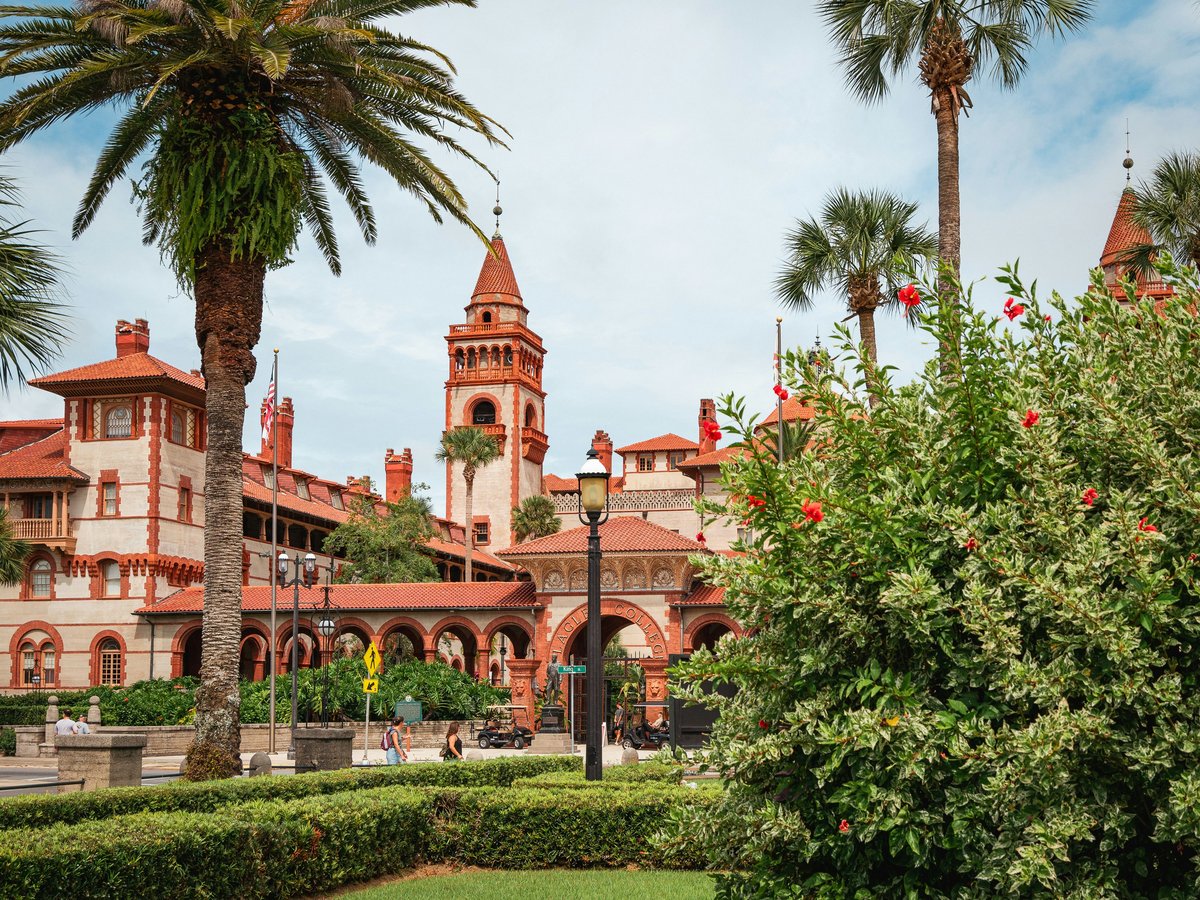
St. Augustine is a small Florida city of about 15,000 year-round residents who share their 4-block downtown with roughly 6 million annual visitors. The social contract is simple. Greet people. A 'hey, how y'all doin'' when you walk into any shop on St. George Street or Aviles Street is not performative friendliness. It's the baseline. Skip it and you'll feel the temperature drop. Locals hold doors, wave from porches along Bridge Street, and expect eye contact when you're being helped. The pace runs slower than Jacksonville, 40 miles north. If you're from New York or Chicago, you might find yourself tapping your foot at a café counter on Hypolita Street while the barista finishes a conversation with a regular. That's not poor service. That's how things work in a town where the same families have been running shops since the Flagler hotel era of the 1880s.
Tipping follows standard American norms with a local wrinkle. Leave 18-20% at sit-down restaurants along the bayfront and on St. George Street. At the Columbia Restaurant on St. George, Florida's oldest Spanish restaurant chain (the Tampa original opened in 1905, the St. Augustine location since 1983), servers work hard through tourist-season crowds from March through August. Cash tips are still appreciated. For the trolley tour operators who run the hop-on-hop-off routes, $3-5 per person is generous. Ghost tour guides, who walk you past the Huguenot Cemetery and the old Spanish Military Hospital on Aviles Street, typically expect $5-10 per person. At beach rental shops on Anastasia Boulevard, tipping isn't expected but rounding up for board rentals won't hurt.
The Cathedral Basilica of St. Augustine on Cathedral Place holds active Catholic Mass, including a well-attended Sunday service at 11am. It is not a museum. Visitors are welcome between services, but silence matters inside. You'll notice it. The thick coquina walls muffle St. George Street's noise to almost nothing. Cover your shoulders and knees. No hats inside. Photography without flash is tolerated, but step away from anyone praying. The same respect applies at Tolomato Cemetery on Cordova Street, one of the oldest burial grounds in the state, where headstones date to the 1700s. Don't sit on gravestones and don't treat it as a backdrop for photos. At Castillo de San Marcos, the 1672 coquina fortress on the bayfront, rangers will ask you not to climb on walls or touch the historic graffiti carved by prisoners centuries ago. The stone feels rough and warm under June sun, and it's tempting to run your hands over it. Don't.
Beach etiquette on Anastasia Island runs looser than downtown, but a few rules hold. St. Augustine Beach has a no-glass-on-the-sand ordinance. Sea turtle nesting season runs from May through October, and during those months you'll see orange stakes marking nests on the sand south of the pier. Don't disturb them, don't shine flashlights near them after dark, and fill in any holes you dig before you leave. The dune system between A1A Beach Boulevard and the waterline is fragile and fenced for good reason. If you walk through the sea oats, you'll face a fine from the St. Johns County beach patrol. Water temperatures in June tend to hover around 27°C, warm enough that the salt air hits your skin with a sticky, tropical weight the moment you step out of your car. Locals use the beach early, before 9am, when the sand is still cool underfoot and the public lot near A Street hasn't filled up yet.
St. Augustine National Cemetery on Marine Street is an active military burial ground, not a park. Keep voices low. The cemetery holds Union dead from the Civil War alongside veterans from later conflicts, with rows of white headstones that catch the afternoon sun in sharp, orderly lines. No picnicking, no dogs, no running. Fort Mose Historic State Park sits about 2 miles north on US-1 and marks the site of the first legally sanctioned free Black settlement in what became the United States, established in 1738 under Spanish colonial rule. The state park opened in 1994. The reconstructed site is modest, a few interpretive panels and a boardwalk over the marsh, but the history it represents is significant. Treat it with the same seriousness you'd give any civil rights landmark. The warm salt-marsh air carries a faint sulfur smell here, mixing with the sound of red-winged blackbirds calling from the cordgrass.
Cultural norms
St. Augustine runs on Southern hospitality with a Florida beach-town ease. A "hey, how y'all doing" from a stranger on St. George Street is genuine: a nod or brief reply is expected, and ignoring it reads as rude. Servers and tour guides will chat you up; this is normal, not a sales pitch. When visiting the Cathedral Basilica of St. Augustine or Memorial Presbyterian Church, cover your shoulders and avoid shorts above the knee: the cathedral is an active parish, not a photo backdrop, and Mass-goers will notice. Castillo de San Marcos and Fort Matanzas are National Park Service sites where climbing on the coquina walls or touching artifacts will draw a sharp correction from a ranger.
Tipping is not optional. Leave 18 to 20 percent at sit-down restaurants like Columbia Restaurant or Cap's on the Water, hand a dollar or two per drink to bartenders on St. George Street, and tip trolley and ghost-tour guides five dollars per person. Credit cards work everywhere, but some of the smaller vendors at the Saturday farmers market near the Amphitheatre are cash-only. The taboo that catches visitors most often is treating the Castillo's moat area and the Plaza de la Constitución as a picnic ground or dog park: both are preserved public spaces with posted rules, and locals take those rules seriously.
Greetings
A 'hey, how y'all doin'' or 'good morning' when entering any shop on St. George Street or Aviles Street is expected, not optional. Make eye contact, hold doors. Nobody's formal here, but skipping the greeting reads as rude in a town this small. Wave back if someone waves from a porch on Bridge Street.
Don't do this
- Climbing on or touching the coquina walls at Castillo de San Marcos, the fortress dates to 1672 and the stone is irreplaceable
- Walking through fenced dune vegetation on Anastasia Island, this is a fineable offense under St. Johns County ordinance
- Disturbing marked sea turtle nests during May-October nesting season or shining lights near them after dark
- Bringing glass containers onto St. Augustine Beach
- Sitting on gravestones at Tolomato Cemetery or St. Augustine National Cemetery
- Using flash photography during Mass at the Cathedral Basilica on Cathedral Place
- Talking loudly or running at St. Augustine National Cemetery on Marine Street
- Cutting queues at St. George Street restaurants during peak season, March through August, locals will correct you
Tipping
18-20% at sit-down restaurants. $3-5 per person for trolley tour drivers. $5-10 per person for ghost tour guides. Rounding up for beach equipment rentals on Anastasia Boulevard is appreciated but not expected.
Dress code
Downtown St. Augustine is casual. Flip-flops and shorts are fine on St. George Street. The Cathedral Basilica requires covered shoulders and knees, no hats inside. Upscale restaurants on Avenida Menendez along the bayfront may expect collared shirts at dinner, but nowhere in town enforces a formal dress code.
Religious norms
The Cathedral Basilica on Cathedral Place holds active Catholic services, including Sunday Mass at 11am and a 1pm Spanish-language service. Enter quietly between services, silence phones, and step away from anyone at prayer. Photography without flash is tolerated during non-service hours. Tolomato Cemetery on Cordova Street, with burials dating to the 1700s, sits on consecrated ground. Treat both sites as living places of worship, not historical attractions.
Last verified by automated review (v1.7.2) on . What is automated review?