St. Augustine on a budget
Here's St. Augustine through the lens of budget travelers: the canonical questions worth asking before you book a flight, the curated lists worth opening when you want a shortcut to local expertise, and the live right-now data below ready to inform your next decision about when, where, and how to spend your time on the ground.
St. Augustine for budget travelers, in numbers
- Picks on this page
- 1 places across 1 lists, led by Dive into the 50s- Restored Motel in St Augustine
- budget-tier hotels
- 15 in the Trip.com poolfrom US$46 a night
Questions budget travelers ask about St. Augustine
-
Cost per day
St. Augustine costs roughly $65/day on a tight budget. That covers a $35 dorm bed at Pirate Haus Inn, $25 for food if you skip St. George Street, and free NPS sites like Fort Matanzas. Midrange sits around $175 with a hotel and restaurant meals. Parking in the historic district runs $15/day and catches most visitors off guard.
Read the full answer → -
What to avoid
Skip the $35 trolley tours when the entire historic district fits inside a 15-minute walk. Avoid St. George Street restaurants with laminated menus and hostesses waving you inside. The Fountain of Youth Archaeological Park charges $21 for sulfur-tasting water from a garden spigot. Most ghost tours recycle the same five stops.
Read the full answer → -
Getting around
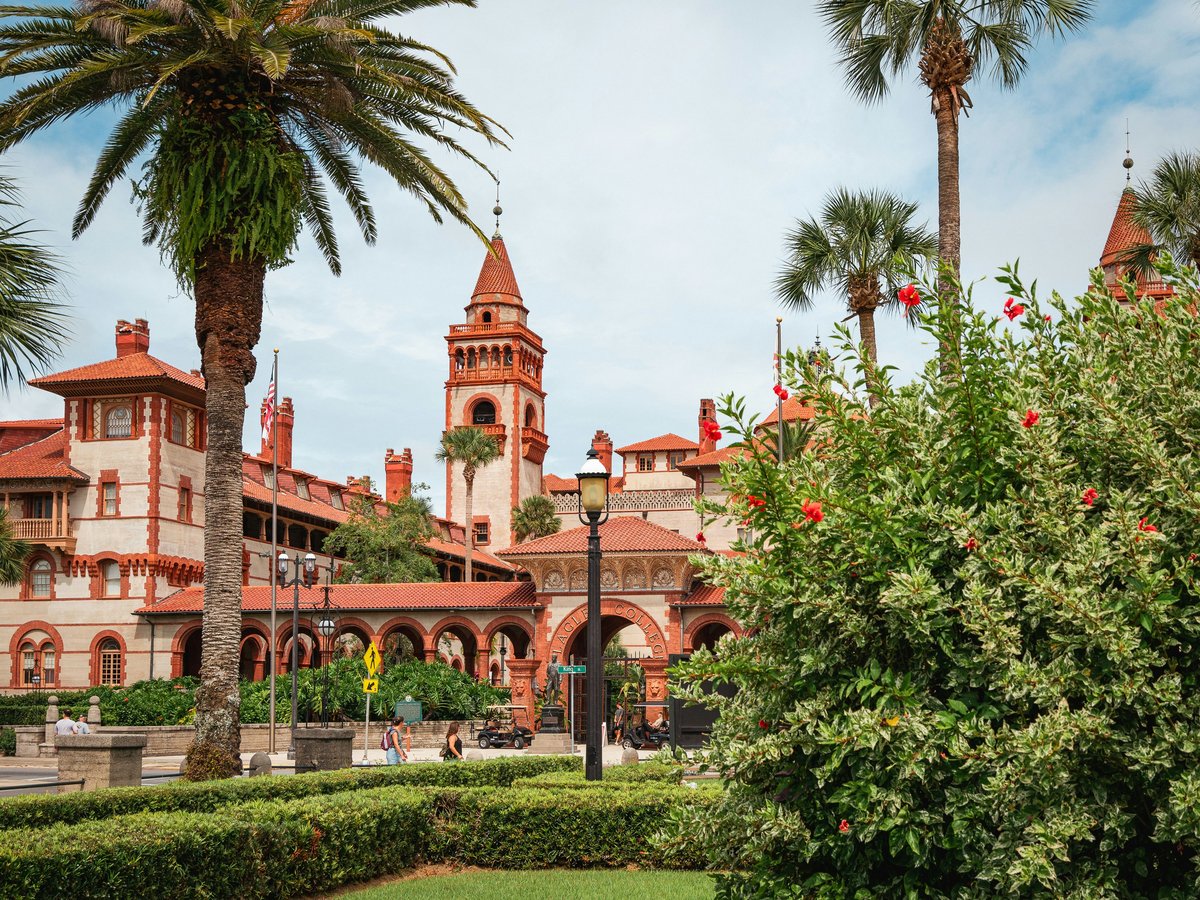
Walk the 144-block historic district on foot. Everything between the Castillo de San Marcos and Flagler College sits within a 15-minute radius. For Anastasia Island beaches, 3 miles east across the Bridge of Lions, use Uber or Lyft. There is no public transit worth relying on. Park once at the Historic Downtown Garage on Cordova Street and leave the car.
Read the full answer → -
Airport to city
St. Augustine has no commercial airport. Fly into Jacksonville International (JAX), 50 miles north, and rent a car. The drive south on I-95 takes 50-55 minutes to downtown. Budget $40-65 per day for a midsize rental. Uber runs $55-80 for the same trip but leaves you without wheels for beaches 4 miles east and day trips along A1A.
Read the full answer → -
Food culture
St. Augustine's food identity runs through the datil pepper, a habanero-class chile grown almost nowhere else in the U.S. Minorcan settlers likely brought it here around 1777, and it still turns up in the city's tomato-based clam chowder, grilled shrimp, and hot sauces. Fresh catch from Matanzas Inlet and a Southern seafood tradition fill in the rest.
Read the full answer →