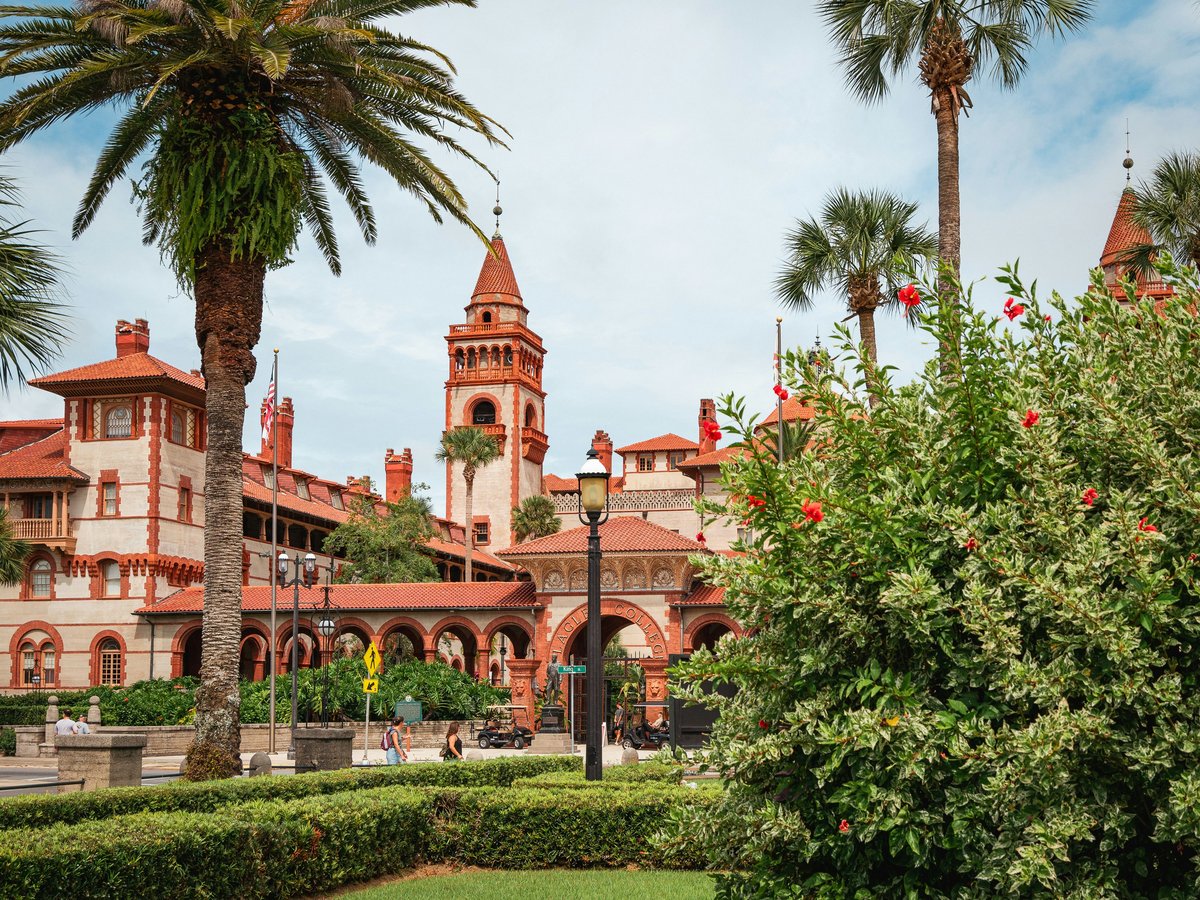
When's the best time to visit St. Augustine in 2026?
March through May and October through November give you St. Augustine at its best. Temperatures sit in the 65-80°F range, humidity stays manageable, and you can walk St. George Street without the thick summer air that makes a 20-minute stroll past the coquina buildings feel twice as long. Azaleas bloom across Flagler College grounds by mid-March.
March through May is the window. Daytime highs run 72-82°F, the Atlantic breeze off Matanzas Bay keeps the air moving, and the coquina walls of Castillo de San Marcos glow warm in the lower-angle sunlight. Azaleas bloom across the Flagler College campus by the second week of March. You can walk the full length of St. George Street, about three-quarters of a mile from the City Gate to the Plaza de la Constitución, without the drenched-shirt humidity that July brings. Hotel rates in the historic district tend to sit 20-30% below their December peak. Spring break is the trade-off. The last two weeks of March pack the fort and the Alligator Farm, open since 1893, with families. If you have flexibility, aim for the first week of April. The crowds thin, the weather holds, and you'll hear the docents at the González-Alvarez House, which dates to 1723.
October and November bring similar temperatures with a different feel. The summer thunderstorms that fire up over the Intracoastal Waterway every afternoon by 3 PM largely stop by mid-October. Mornings on the Bayfront start cool, in the low 60s. The salt marsh smell reaches you on the wind off the Bridge of Lions. This is when the locals come back out. The restaurants along Hypolita Street are easier to book on a weekday. Late November brings the start of Nights of Lights, when the historic district gets covered in roughly 3 million white LED lights through the end of January. The display stops you in your tracks. Buildings along King Street and around Flagler College look like they've been dipped in warm light. That said, hotel rates climb the moment the lights switch on, and weekend trolley tours sell out weeks ahead. If you want fall weather without the lighting-season crowds, the first three weeks of October are the play.
June through September is the season to skip if you have a choice. Average highs reach 89-91°F, but the real problem is humidity that holds above 80% most of the day. The open courtyard at Castillo de San Marcos at noon in August is brutal. The heat sits on your chest. Afternoon thunderstorms roll in almost daily between 2 and 5 PM. They drop heavy rain for 30-45 minutes, then clear to steam. Hurricane season officially runs June through November, but the realistic risk window for northeast Florida is August and September. The upside, if you're flexible about comfort, is that hotel rates drop 30-40% and you'll have Fort Matanzas National Monument, 14 miles south on A1A, nearly to yourself. The fort sits on Rattlesnake Island and requires a free ferry ride across the Matanzas River. In summer, you might be the only person on the boat.
December through February is a split decision. December still runs warm enough for walking, with highs around 65-68°F, and Nights of Lights makes the historic district worth visiting after dark. January and February bring cold fronts that drop temperatures into the 40s for 2-3 days at a stretch. Wind off Matanzas Bay in January cuts through thin layers. The Cathedral Basilica of St. Augustine on Cathedral Place stays cool and quiet on these mornings, and you'll want a proper jacket for the evening ghost tours along St. George Street. February is the driest month, with rainfall averaging under 3 inches, and the Tolomato Cemetery near the City Gate is easier to explore without the summer mosquitoes that make it miserable from June onward. Worth noting, St. Augustine doesn't draw snowbird-level crowds the way South Florida does. Most winter visitors drive from Jacksonville, 40 miles north, or Atlanta, about 5 hours by car.
Month-by-month outlook
- Jan
- Feb Shoulder
- Mar Ideal
- Apr Ideal
- May Shoulder
- Jun Avoid
- Jul Avoid
- Aug Avoid
- Sep Avoid
- Oct Ideal
- Nov Ideal
- Dec Shoulder
Year-round climate
Averages from the last 5 years.
| Month | Avg high (°C) | Avg low (°C) | Rainfall (mm) |
|---|---|---|---|
| Jan | 18 | 10 | 52 |
| Feb | 20 | 13 | 61 |
| Mar | 22 | 15 | 84 |
| Apr | 25 | 18 | 82 |
| May | 28 | 21 | 80 |
| Jun | 30 | 24 | 127 |
| Jul | 31 | 25 | 154 |
| Aug | 30 | 25 | 163 |
| Sep | 28 | 24 | 201 |
| Oct | 25 | 20 | 91 |
| Nov | 22 | 16 | 98 |
| Dec | 20 | 13 | 44 |
Subtropical. Summer highs 89-91°F with 80%+ humidity and daily thunderstorms. Winter highs 63-68°F with cold fronts into the 40s. Driest February-April, wettest June-September.
Last verified by automated review (v1.7.2) on . What is automated review?