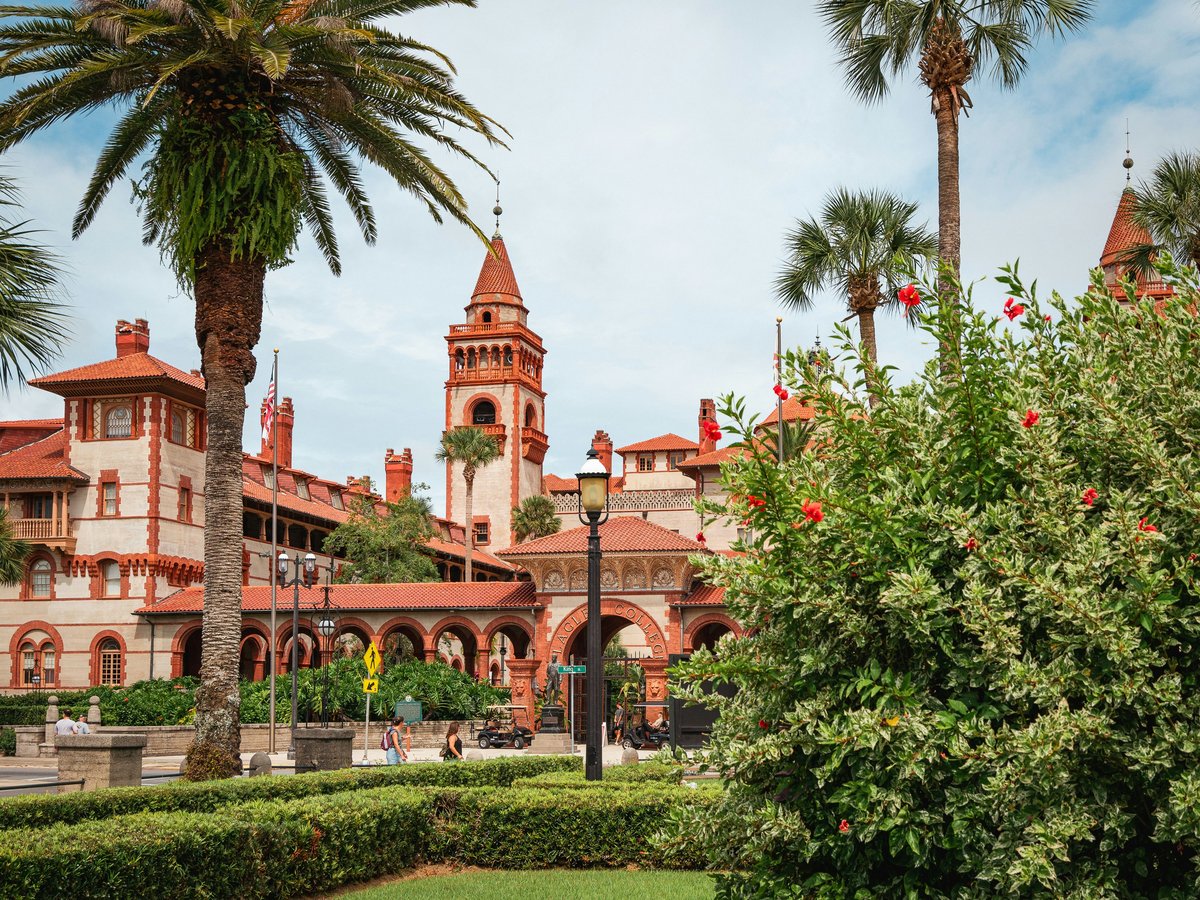
What should I pack for St. Augustine?
Pack walking shoes with grip for St. Augustine's coquina cobblestones, which turn slick in summer rain. June through September averages 30-33°C with 80%+ humidity, so bring quick-dry clothing, SPF 50+ sunscreen, and a packable rain jacket for the near-daily afternoon storms. Bug repellent with DEET handles the mosquitoes near the salt marshes and Fort Mose.
Shoes with good tread matter more in St. Augustine than in most Florida beach towns. The streets through the Colonial Quarter are uneven, a mix of old brick, tabby, and coquina surfaces that crunch underfoot and turn slippery after rain. The pedestrian stretch of St. George Street runs about half a mile through the historic core, and you'll feel every uneven seam through thin soles. Castillo de San Marcos, the coquina-walled fort begun in 1672, has worn ramps and ground-level passages that get slick in summer storms. Flat sandals won't survive a morning at the Castillo. Broken-in trail shoes or hiking sandals with rubber grip handle the cobblestones, the wooden boardwalks on Anastasia Island, and the packed-sand trails at Fort Matanzas National Monument 14 miles south on A1A.
June through September in St. Augustine runs 30-33°C during the day with humidity around 80-85%. The air feels heavy and damp the moment you step outside, even at 8am, and your sunglasses will fog walking from an AC'd hotel lobby onto St. George Street. Pack 3-4 lightweight, quick-dry shirts and shorts. You'll likely want a fresh shirt after a morning at the Lightner Museum or after climbing the 219 steps of the St. Augustine Lighthouse on Anastasia Island. One light long-sleeve layer is worth bringing for the aggressive air conditioning inside restaurants along Avenida Menendez, where it can feel 15°C cooler than the sidewalk. Evenings along the Matanzas Bay waterfront settle to around 23-24°C with a salt breeze off the water, and you won't need a jacket from May through October.
Afternoon thunderstorms roll in off the Atlantic almost every day from June through September, typically between 2pm and 5pm. They hit with warm, heavy rain that drums on the coquina for 20-40 minutes, then clear to blue sky. A packable rain jacket beats an umbrella because you'll want both hands free on the Castillo's walls and the narrow sidewalks along Charlotte Street. SPF 50+ sunscreen is non-negotiable at outdoor sites like Castillo de San Marcos and Fort Matanzas, where shade is almost nonexistent and 2-3 hours of direct Florida sun will burn through lower SPF. Bug repellent with at least 20% DEET or picaridin matters most at dusk and near the salt marshes around Fort Mose, the 1738 settlement about 2 miles north of downtown. No-see-ums at St. Augustine Beach can be relentless from May through October. A DEET-based repellent handles both no-see-ums and mosquitoes better than the citronella sprays sold at the Anastasia Island beach shops.
Beach chair rentals along A1A at St. Augustine Beach run $10-15 per day, and umbrella rentals are $8-12, so leave those at home. Sunscreen at the CVS on King Street costs $8-12 for a name-brand SPF 50, roughly the same as back home, but it saves luggage space. Aloe vera gel runs $5-7 at the same CVS or the Walgreens on US-1. Cheap flip-flops for the sand go for $8-15 at the surf shops near the St. Augustine Beach pier. A reusable water bottle is worth the suitcase space, since the public refill fountains cluster around the Plaza de la Constitución and a cold refill makes a real difference when it's 33°C by mid-morning. That walk from the Cathedral Basilica to the Lightner Museum is about 10 minutes with no shade along Cordova Street.
Essentials
- Walking shoes with rubber tread for coquina cobblestone streets
- Packable rain jacket (afternoon storms hit daily June through September)
- SPF 50+ sunscreen, reef-safe if visiting St. Augustine Beach
- 3-4 quick-dry shirts and shorts for 80%+ humidity
- Insect repellent with 20%+ DEET or picaridin (no-see-ums and mosquitoes near Fort Mose)
- Refillable water bottle (public fountains limited to Plaza de la Constitución area)
- Sunglasses with UV protection
- Wide-brim hat for shadeless sites like Castillo de San Marcos
- Swimwear for St. Augustine Beach and hotel pools
- One light long-sleeve layer for over-AC'd restaurants on Avenida Menendez
- Portable phone charger (GPS navigation drains battery in the historic district)
- Sandals with back straps for evening walks along the bayfront
Seasonal extras
- Cooling towel or bandana for June through September heat
- Waterproof phone pouch for beach days and sudden storms
- Anti-chafe balm (humidity plus walking equals friction)
- Light fleece for December through February evenings when lows drop to 7-10°C
- Warm layers for the Nights of Lights festival, mid-November through January, when evening temps sit around 8-15°C
Buy on arrival
- Sunscreen at CVS on King Street ($8-12 for SPF 50)
- Beach chair and umbrella rentals on A1A ($10-15 per day for chairs, $8-12 for umbrellas)
- Aloe vera gel at CVS or Walgreens on US-1 ($5-7)
- Cheap flip-flops at surf shops near St. Augustine Beach pier ($8-15)
- Bottled water at any gas station on US-1 ($1-2)
Last verified by automated review (v1.7.2) on . What is automated review?