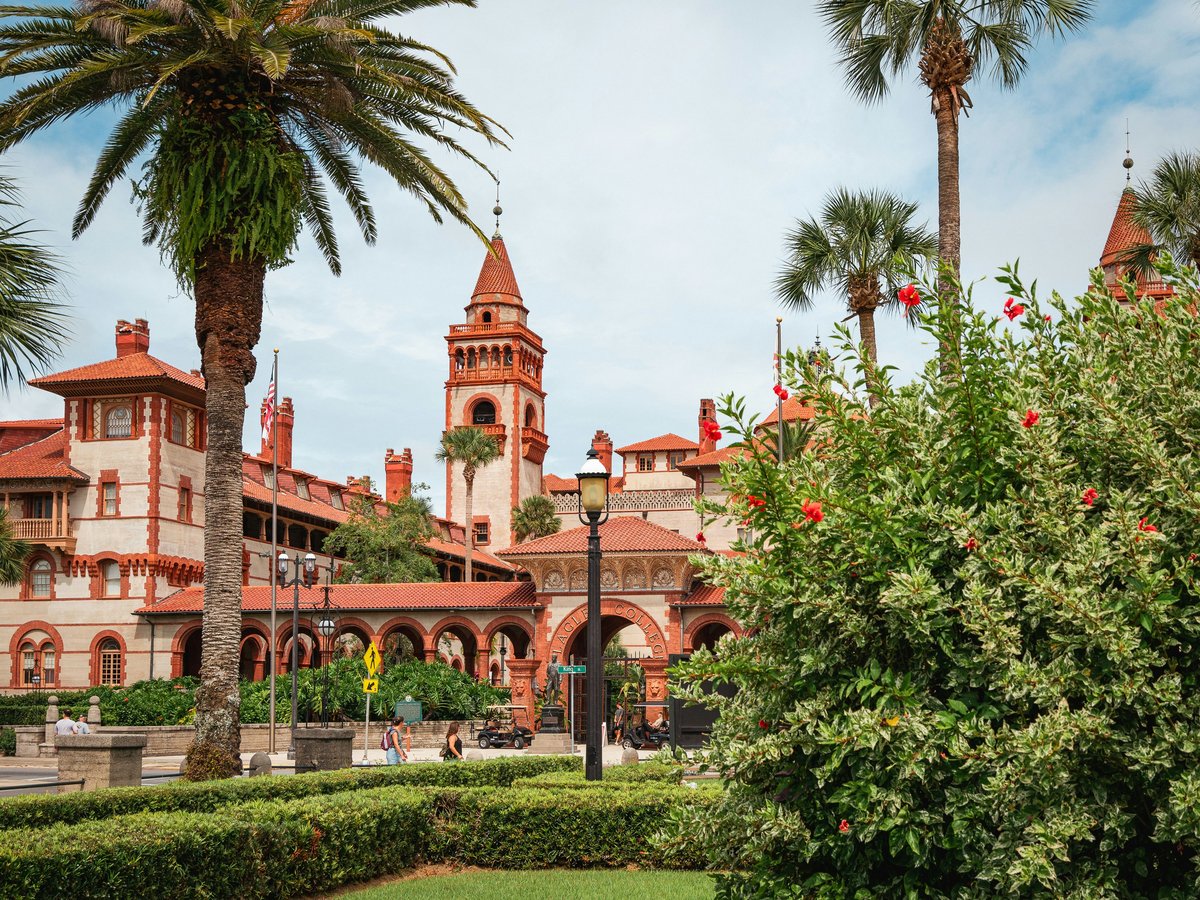
Stay in St. Augustine in January
50 hotels in the Trip.com pool for St. Augustine, from US$46 a night.
Opens Trip.com on Fri 1 Jan to Sun 3 Jan 2027; change the dates there.
January in St. Augustine is the final month of Nights of Lights, the city's annual display of roughly 3 million white lights strung across the Historic District. The display runs from mid-November through January 31, and by this point the December holiday crowds have mostly cleared out. You'll still see the full spectacle along St. George Street and around the Plaza de la Constitución, but without the 2-hour waits for trolley tours that defined December weekends.
The weather is St. Augustine's coolest. Daytime highs average 17.8°C (64°F), with lows around 10.2°C (50°F). That's comfortable for walking the coquina-shell streets of the Colonial Quarter, though mornings along the bayfront can feel genuinely crisp. A north wind off the Atlantic will cut right through a single layer, and the smell of salt air off the Matanzas Inlet seems to carry further in the dry winter atmosphere. Rainfall is low at 52mm across about 7 days, making January one of the driest months of the year. The 150mm+ monthly rainfall and daily afternoon thunderstorms of July and August are months away.
This is not beach-swimming weather. The ocean hovers around 15°C (59°F), which keeps all but the hardiest out of the surf. But it is excellent weather for the thing St. Augustine does best, which is history on foot. The city was founded in 1565, making it the oldest continuously occupied European settlement in the United States, and January's mild days let you spend 6 or 7 hours outside without the heat exhaustion that summer brings. Crowds are moderate. Snowbirds from the Northeast fill the vacation rentals on Anastasia Island, but you won't fight for a table at most restaurants on a Tuesday night. Hotel rates have dropped from their December peak, though they remain above summer lows.
Why visit in January
- Nights of Lights runs through January 31, and you'll see 3 million white lights across the Historic District with noticeably fewer crowds than December weekends draw.
- Rainfall averages 52mm for the month, roughly a third of what August brings at 163mm, so outdoor sightseeing plans rarely get disrupted.
- Temperatures in the 10-18°C (50-64°F) range make full-day walks through the Historic District, Castillo de San Marcos, and Anastasia State Park comfortable, unlike the 30°C+ (86°F+) humidity of summer.
- Hotel rates drop 20-30% from the December holiday peak, particularly on Anastasia Island and along San Marco Avenue in the Uptown district.
Worth knowing
- Ocean water temperature at 15°C (59°F) rules out comfortable swimming at St. Augustine Beach and Vilano Beach for the entire month.
- Cold fronts occasionally push overnight lows to 2-3°C (35-37°F), and the wind off the Matanzas River can make evenings feel colder than the thermometer reads.
- Sunset arrives early, around 5:45 PM in early January, which limits afternoon daylight for outdoor activities like kayaking or beach walks.
- Some seasonal operations, including offshore snorkeling trips and certain water tours, don't run in January due to water temperature and rough Atlantic conditions.
Best for
Think twice if
January is St. Augustine's coolest and second-driest month. Expect clear, bright mornings that start crisp and warm slowly through midday. The humidity at 75% is noticeable but nothing like the thick, heavy air of summer months. Rain arrives with passing cold fronts every 4-5 days on average, typically as a half-day of gray skies and light showers rather than the violent afternoon thunderstorms that define June through September. Wind off the Atlantic and the Matanzas River adds a persistent chill on exposed stretches like the bayfront and the seawall at Castillo de San Marcos.
Seasonal caution
- Occasional cold fronts can push overnight lows near 0°C (32°F) for 1-2 nights, particularly in the second and third weeks of January. These are brief but can catch visitors off guard if they packed only light layers. Frost is rare in St. Augustine proper due to the moderating effect of the Atlantic, but inland areas see it more frequently.
Year-round climate
Averages from the last 5 years.
| Month | Avg high (°C) | Avg low (°C) | Rainfall (mm) |
|---|---|---|---|
| Jan | 18 | 10 | 52 |
| Feb | 20 | 13 | 61 |
| Mar | 22 | 15 | 84 |
| Apr | 25 | 18 | 82 |
| May | 28 | 21 | 80 |
| Jun | 30 | 24 | 127 |
| Jul | 31 | 25 | 154 |
| Aug | 30 | 25 | 163 |
| Sep | 28 | 24 | 201 |
| Oct | 25 | 20 | 91 |
| Nov | 22 | 16 | 98 |
| Dec | 20 | 13 | 44 |
Holidays and festivals in January
Public holidays
- New Year's Day(New Year's Day)1 January 2027
- Martin Luther King, Jr. Day(Martin Luther King, Jr. Day)18 January 2027
Headline events
Nights of Lights
Mid-November through January 31
St. Augustine's annual display of roughly 3 million white lights covering the Historic District, including the bayfront, St. George Street, the Bridge of Lions, and the Plaza de la Constitución. January is the final month before the lights come down. Free trolley-viewable from the street, with paid trolley and boat tours available for closer looks from the Matanzas River.
Best things to do in January
Walk the Nights of Lights display
sightseeingThe 3 million white lights cover roughly 20 blocks of the Historic District, from the bayfront to the Cathedral Basilica to the Bridge of Lions. Walking it takes about 90 minutes at a comfortable pace. The lights switch on at dusk, around 5:45 PM in early January, and stay lit until late. Boat tours on the Matanzas River offer a waterside perspective of the lit bayfront.
January is the final month before the display ends on January 31. Crowds thin significantly from the December peak, so you'll have more space on St. George Street and shorter waits for boat tours.Booking tipWeeknight visits, Tuesday through Thursday, tend to be the quietest. The final weekend before January 31 draws a last-chance crowd.
Tour Castillo de San Marcos
historyThe oldest masonry fort in the continental United States, built by the Spanish between 1672 and 1695 from local coquina stone. The walls are 3.6 meters thick and still bear marks from British cannonballs. Rangers give talks on the hour, and you can walk the gun deck overlooking the Matanzas Bay. The coquina has a rough, shell-studded texture you can feel under your hands.
January's mild temperatures make the open-air gun deck and courtyard comfortable for an extended visit. In summer, the exposed coquina radiates heat and the fort empties by midday.Booking tipTickets are available at the entrance. Morning visits before 11 AM tend to have the smallest crowds.
Explore Anastasia State Park
natureA 1,600-acre barrier island park on Anastasia Island, with 4 miles of undeveloped Atlantic beach, tidal marshes, maritime hammock forest, and a lagoon popular for kayaking and paddleboarding. The park has over 130 bird species recorded, and January's cooler weather brings migratory shorebirds to the tidal flats.
Cooler temperatures and lower humidity make hiking the nature trails comfortable. The beach is too cold for swimming but ideal for long, quiet walks. Mosquito pressure, which can be fierce in summer, is virtually absent in January.Booking tipThe park has a daily vehicle capacity. Arriving before 10 AM on weekends avoids the risk of the lot filling.
Visit the Lightner Museum
cultureHoused in the former Hotel Alcazar, built by Henry Flagler in 1888 in Spanish Renaissance Revival style. The museum fills Flagler's original indoor swimming pool and ballroom with collections of Gilded Age art glass, Victorian-era curiosities, and period furnishings. The building itself, with ornate tile work and a grand courtyard, is half the experience.
January's moderate visitor numbers mean you can linger in the galleries without jostling. The indoor setting also serves as a warm retreat on mornings when the bayfront wind is sharp.Walk through Flagler College
historyThe former Hotel Ponce de León, built by Henry Flagler in 1888, is now a liberal arts college but still open for guided tours. The Spanish Renaissance Revival architecture includes Tiffany stained-glass windows, murals by George Maynard, and a dining hall with a 20-meter-high ceiling. The courtyard smells like old stone and gardenias even in winter.
Guided tours run on a reduced winter schedule but with far fewer visitors than the packed spring and summer sessions. January's student break period opens up more access to campus grounds.Booking tipTours are offered daily but sell out on weekends. Booking a day ahead through the college's visitor center is recommended.
Kayak the Matanzas River
outdoorPaddle through the salt marsh estuaries behind Anastasia Island, where you'll likely spot great blue herons, osprey, and possibly dolphins in the deeper channels. The water is calm and protected from Atlantic swells. Guided eco-tours typically run 2-3 hours and launch from points along A1A on Anastasia Island.
Winter is the best season for birding in the marsh. The cooler water keeps jellyfish away, and the reduced boat traffic on the river makes for quieter paddling conditions.Booking tipMorning tours tend to have calmer wind conditions. Dress in layers, as it can feel 5-6°C colder on the water than on land.
Browse the St. Augustine Amphitheatre farmers market
foodA Saturday morning market at the St. Augustine Amphitheatre on Anastasia Island, running from 8:30 AM to 12:30 PM. Vendors sell local citrus, datil pepper products, fresh seafood, baked goods, and handmade crafts. The smell of fresh kettle corn and roasting coffee drifts through the parking area. It draws a mix of locals and visitors.
January is peak citrus season, so the market has its best selection of navel oranges, grapefruit, and tangerines from Northeast Florida groves. The cool morning air makes browsing outdoors pleasant.What to eat in January
In season: fruit
Florida navel oranges and Ruby Red grapefruit
January is peak citrus season in Northeast Florida. Roadside stands along US-1 and A1A sell bags of navel oranges and grapefruit picked that week. The fruit is sweeter and heavier with juice than anything shipped to northern supermarkets. Local farmers markets carry them through March.
On menus now
Minorcan clam chowder
St. Augustine's signature soup. Tomato-based, not cream-based, spiked with locally grown datil peppers that give it a slow, building heat. The Minorcan settlers brought the recipe and the peppers in the 1700s. January's cooler evenings make this particularly satisfying, and you'll find it at restaurants throughout the Historic District.
Oysters from the Matanzas River
Winter is prime oyster season along Florida's Atlantic coast. The cooler water temperatures tend to produce firmer, brinier oysters. Several restaurants in the Historic District serve them raw or roasted, and the Matanzas River harvest area sits within sight of the city.
In markets
Datil pepper hot sauce
The datil pepper is unique to St. Augustine, brought by Minorcan colonists in the 18th century. Local producers bottle it into sauces that range from mild to searing. You'll find bottles at shops along St. George Street and at the St. Augustine Amphitheatre farmers market on Saturdays. It makes a compact, shelf-stable souvenir.
Regular events in January
St. Augustine Art WalkFree
A monthly First Friday event where galleries and studios along San Marco Avenue and in the Historic District open their doors from 5 PM to 9 PM. Local and regional artists display new work, and several venues offer wine and light refreshments. The January walk coincides with the final weeks of Nights of Lights.
First Friday of JanuaryCeltic Music and Heritage Festival
A weekend festival typically held in mid-to-late January at Francis Field in the Historic District. Features Celtic bands, Highland games, Irish and Scottish food vendors, and traditional dance performances. St. Augustine has documented ties to Irish and Scottish settlers dating to the British period (1763-1783).
Mid-to-late January weekendGamble Rogers Folk Festival planning eventsFree
Pre-festival gatherings and open mic nights at local venues leading up to the annual folk music festival held later in the spring. Named for Gamble Rogers, the Florida folk musician who drowned at Flagler Beach in 1991. January events are smaller, intimate sessions at venues around the Historic District.
Various weekends in JanuaryBest places this January
Castillo de San Marcos
historic siteSpanish-built coquina fort from 1672, the oldest masonry fortification in the continental United States. The walls absorbed British cannonballs rather than shattering. Views from the gun deck span the Matanzas Bay and the Bridge of Lions.
Historic DistrictSt. George Street
streetThe pedestrian-only main street of the Historic District, running about 0.5 km from the Old City Gates to the Plaza de la Constitución. Lined with shops, restaurants, and colonial-era buildings. In January, the entire street is draped in Nights of Lights displays.
Historic DistrictLightner Museum
museumGilded Age collections housed in Henry Flagler's 1888 Hotel Alcazar. The museum occupies the hotel's former indoor swimming pool and ballroom, with exhibits of Victorian glass, antiquities, and decorative arts.
Historic DistrictAnastasia State Park
natureA 1,600-acre barrier island park with 4 miles of undeveloped beach, tidal marshes, and maritime hammock trails. Good January birding, with migratory shorebirds on the tidal flats.
Anastasia IslandFort Matanzas National Monument
historic siteA small Spanish watchtower fort built in 1742 on Rattlesnake Island, about 22 km south of St. Augustine. Accessible only by a free ferry that runs every 30 minutes. The fort guarded the southern approach to St. Augustine via the Matanzas Inlet.
South of city on A1APlaza de la Constitución
landmarkThe central square of St. Augustine since 1573, making it one of the oldest public spaces in the United States. Anchored by the Cathedral Basilica of St. Augustine and surrounded by Nights of Lights displays in January. A farmers market operates here on Wednesday mornings.
Historic DistrictThe Colonial Quarter
historic siteA living-history site covering 2 acres in the Historic District, with reconstructed buildings from the 16th, 17th, and 18th centuries. Demonstrations include blacksmithing, musket firing, and leather working. The coquina-shell paths and period architecture give a tangible feel for the colonial era.
Historic DistrictSt. Augustine Lighthouse and Maritime Museum
museumA still-active lighthouse on Anastasia Island, first lit in 1874. Climbing the 219 steps to the top gives a 360-degree view of the city, the Matanzas River, and the Atlantic. The adjacent maritime museum covers the city's shipwreck archaeology.
Anastasia Island
Your packing checklist
Tick items off as you pack. Your progress saves in this browser.
All packed — have a great trip.
Insider tips
The Nights of Lights boat tours on the Matanzas River fill up on weekends but tend to have open spots on Tuesday and Wednesday evenings in January. The view of the lit bayfront from the water is noticeably different from the street-level perspective.
The Wednesday morning farmers market at the Plaza de la Constitución is smaller and more local than the Saturday Anastasia Amphitheatre market. Fewer tourists, more conversation with the vendors, and you'll still find the citrus and datil pepper products.
Parking in the Historic District fills by mid-morning on weekends. The lots on San Marco Avenue north of the city gate are a 5-10 minute walk to St. George Street and rarely fill completely.
If a cold front blows through and drops temperatures below 5°C (41°F), the next morning is likely to be the clearest, brightest day of your trip. The post-front air has almost no haze, and the light on the coquina walls is at its warmest and sharpest.
The ghost tours that run nightly in the Historic District are better in January than in summer. Smaller groups, cooler air that makes the candlelit streets atmospheric, and guides who have more time to talk when the tour isn't 40 people deep.
Fort Matanzas, 22 km south on A1A, is free to visit and sees a fraction of the visitors that Castillo de San Marcos gets. The ferry ride across the Matanzas River to Rattlesnake Island takes about 5 minutes and runs every 30 minutes, weather permitting.
Avoid these mistakes
- Packing for Florida beach weather and arriving to 10°C (50°F) mornings. St. Augustine is in Northeast Florida, not South Florida. January mornings on the bayfront can feel genuinely cold, especially with wind.
- Driving into the Historic District and spending the first hour circling for parking. The district is compact, about 1 km end to end. Parking on the periphery and walking in saves time and frustration.
- Skipping Nights of Lights because you assume it's a December-only event. The lights run through January 31, and the January experience is arguably better, with thinner crowds and the same 3 million lights.
- Trying to swim at St. Augustine Beach. The Atlantic water temperature in January sits around 15°C (59°F). It's fine for a beach walk but not for swimming.
- Booking only 1 day. The Historic District alone fills a full day, and the surrounding sites, including Anastasia State Park, Fort Matanzas, and the Lighthouse, need at least another day. A 2-night stay is the practical minimum to cover the highlights without rushing.
Practical tips for January
January is St. Augustine's shoulder season, sitting between the December holiday rush and the spring break surge that starts in March. Book accommodations 2-3 weeks ahead for weekends, especially the final weekend before Nights of Lights ends on January 31. Weekday visits offer noticeably lighter crowds at every attraction. Most Historic District restaurants serve lunch and dinner without reservations on weekdays, though weekend dinner at popular spots benefits from calling ahead. The Old Town Trolley and other hop-on tours run daily but on reduced winter schedules, with the last departure typically by 4:30 PM. Dress in layers you can adjust through the day. The temperature swing between a 10°C morning and a 18°C afternoon is real, and you'll overheat in a heavy coat by 1 PM. If you're renting a car, free and metered parking is available on the streets surrounding the Historic District, but the meters enforce time limits. The city's Visitor Information Center on San Marco Avenue has maps and current event schedules.
FAQ
Is January too cold to visit St. Augustine?
Not at all. Daytime highs average 17.8°C (64°F), which is comfortable for walking. Mornings start cool at 10.2°C (50°F), but you'll warm up quickly once the sun is up. It's too cold for ocean swimming, but ideal for the outdoor sightseeing that makes St. Augustine worth visiting. Bring layers and a windbreaker.
Are the Nights of Lights still running in January?
Yes. The display runs from mid-November through January 31. All 3 million lights across the Historic District stay on for the full duration. January is arguably the best time to see them, since the December holiday crowds have thinned and you can walk St. George Street and the bayfront at a relaxed pace.
How many days do I need in St. Augustine in January?
Plan for at least 2 full days. The Historic District, including Castillo de San Marcos, the Lightner Museum, Flagler College, and St. George Street, fills one day. Anastasia State Park, the Lighthouse, and Fort Matanzas fill a second. A third day lets you kayak the Matanzas River, visit the farmers market, and explore at a slower pace.
Is St. Augustine Beach worth visiting in January?
For a walk, yes. The beach on Anastasia Island stretches for miles and is uncrowded in January. The sand is firm and the winter light is beautiful. But the water temperature is around 15°C (59°F), so swimming and water sports are off the table. Think of it as a walking and photography destination, not a beach day.
Do I need a car to get around St. Augustine?
The Historic District is compact and walkable, roughly 1 km end to end. You can cover the main attractions on foot. A car is useful for reaching Anastasia State Park, Fort Matanzas (22 km south), and the Lighthouse, all of which sit outside the core walking area. Some visitors use rideshare for these trips instead.
Things to Do in St. Augustine in January
 Free cancellation
 Sunset Cruise of St. Augustine
Cruise: 1.5 hours, free cancellation.
via Viator Free cancellation
 Wine Tasting Cruise in St. Augustine
Cruise: 1.5 hours, free cancellation.
via Viator Free cancellation
 Red Boat Tours - Dolphin Odyssey and Sightseeing Tour
Cruise: 2 hours, free cancellation.
via Viator Free cancellation
 St. Augustine Live Music Sail with Drinks & Sunset Option
Cruise: 1.8 hours, free cancellation.
via Viator Free cancellation
 Red Boat Tours - Adults-Only & Family Friendly BYOB Sunset Cruise
Cruise: 1.5 hours, free cancellation.
via Viator Free cancellation
 Dolphin, Manatee and Sea Turtle Kayak Adventure in St. Augustine
Cruise: 2 hours, free cancellation.
via ViatorFind a flight to St. Augustine
Live fares to St. Augustine appear here once cookies are accepted.
Last verified by automated review (v1.7.2) on . What is automated review?