Compare every Italy city in March →
Stay in Venice in March
85 hotels in the Trip.com pool for Venice, from US$26 a night.
Opens Trip.com on Fri 5 Mar to Sun 7 Mar 2027; change the dates there.
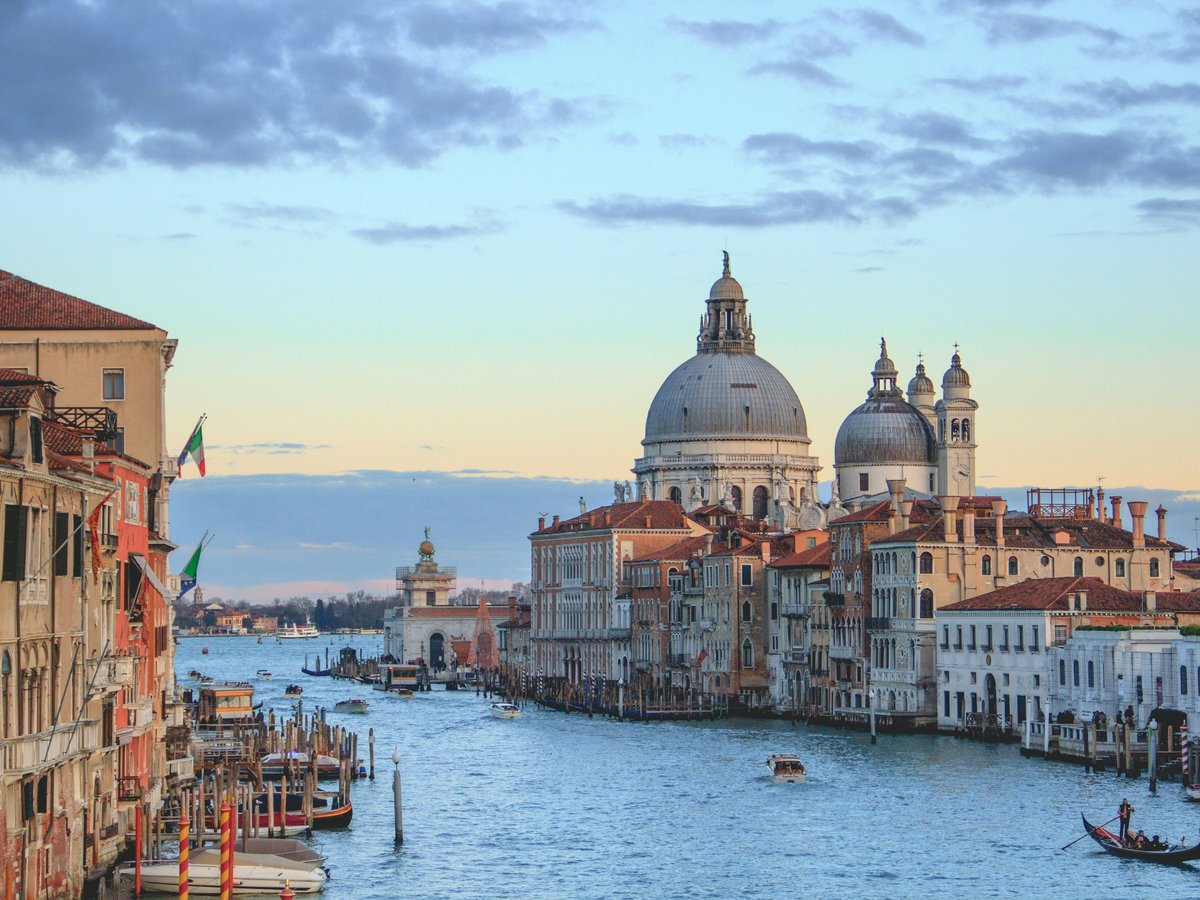
March in Venice sits in the gap between Carnevale season and the spring rush, and that gap tends to be the most honest version of the city you'll find. Daytime temperatures hover around 13°C (56°F) with lows near 5°C (42°F), which means layers are non-negotiable. The morning air off the canals in Cannaregio carries a clean, mineral edge, and your footsteps echo through the calli when the usual crowds aren't there to absorb the sound. Fog still shows up some mornings, hanging over the Grand Canal in a way that makes the vaporetto lights bleed gold across the water.
The real draw of March is what's absent. You can walk into the Gallerie dell'Accademia on a Tuesday morning and have entire rooms to yourself. Restaurants in Dorsoduro and San Polo that turn you away without a reservation in July will seat you by the window with a glass of Prosecco and a plate of sarde in saor. The Mercato di Rialto, where fishmongers have been selling the lagoon's catch for over 900 years, feels more like a neighborhood market than a tourist photo op. Late in the month, the first castraure artichokes from Sant'Erasmo island start appearing at the stalls.
Mind you, March in Venice is a trade-off. It rains on roughly 9 days during the month, totaling about 77mm. Some island restaurants on Burano and Torcello stay closed until April. Acqua alta flooding is less frequent than in November but can still catch you off guard if you haven't checked the Centro Maree forecast. Pack for 5°C (42°F) mornings, the occasional wet walkway, and 77mm of rain across about 9 days.
Why visit in March
- Shorter lines at Palazzo Ducale and the Basilica di San Marco than any month from April through October. You might wait 15 minutes instead of 90.
- The low-angle spring light reflects off the lagoon and gives the stone facades a warm tone you don't get from July's overhead sun. It's softer than January's flat gray but still has the contrast that photographers seek out.
- Moeche (soft-shell crab) season begins in late March, available fried at bacari across San Polo and Cannaregio for a few weeks only.
- Hotel rates run 20-30% below the June-September peak, with availability at properties that are fully booked in summer.
- Opera season at Teatro La Fenice is still running, and March performances are easier to get tickets for than the December or New Year's Eve shows.
Worth knowing
- The 5-13°C temperature range feels colder than it reads because of the 76% humidity and wind off the lagoon, especially after dark on the Fondamenta Nuove or on open vaporetto decks.
- Acqua alta is still possible in March, though events above 110cm (when the raised walkways go up in Piazza San Marco) are rare this late in the season.
- Several outdoor terraces, rooftop bars, and some restaurants on outer islands like Torcello remain closed until April or Easter weekend.
- Sunset arrives around 18:15 at the start of March and 19:30 by month's end (after the last-Sunday clock change to CEST), which limits late-afternoon light for photography in early March.
Best for
Think twice if
March in Venice is late winter turning toward spring. Expect cool, damp days with temperatures that feel colder than the numbers suggest because of the lagoon humidity. Morning fog is still common in early March but lifts earlier than it did in January. Rain comes as steady drizzle more often than heavy downpours, spread across roughly 9 days. The last Sunday of March brings the switch to Central European Summer Time, adding an hour of evening daylight.
Seasonal caution
- Acqua alta (tidal flooding) is possible in March, though less frequent than during the October-January peak season. The MOSE barrier system now activates for higher tides, but low-level flooding between 80-100cm can still wet the pavement in Piazza San Marco and parts of Dorsoduro for a few hours. Check the Centro Maree forecast every morning. Events above 110cm are rare in March.
Year-round climate
Averages from the last 5 years.
| Month | Avg high (°C) | Avg low (°C) | Rainfall (mm) |
|---|---|---|---|
| Jan | 8 | 1 | 73 |
| Feb | 10 | 3 | 49 |
| Mar | 13 | 5 | 77 |
| Apr | 16 | 8 | 85 |
| May | 21 | 14 | 149 |
| Jun | 27 | 19 | 57 |
| Jul | 29 | 21 | 84 |
| Aug | 29 | 20 | 74 |
| Sep | 24 | 17 | 116 |
| Oct | 19 | 12 | 104 |
| Nov | 13 | 6 | 85 |
| Dec | 9 | 3 | 57 |
Holidays and festivals in March
Public holidays
- Easter Sunday(Pasqua)28 March 2027
- Easter Monday(Lunedì dell'Angelo)29 March 2027
Headline events
Carnevale di Venezia
Late February to early March (depends on Easter; most years Carnival ends in February)
In years when Easter falls late (typically late April), the final weekend and Martedì Grasso of Venice's Carnival land in early March. Masked processions, costume contests in Piazza San Marco, and the Volo dell'Angelo ceremony draw tens of thousands. In most years, however, Carnival wraps up entirely in February. Check the specific year's dates before booking, as hotel rates during Carnival week can double.
Best things to do in March
Explore the Gallerie dell'Accademia without summer crowds
cultureThe Accademia holds the most important collection of Venetian painting anywhere, including Bellini's altarpieces, Carpaccio's Saint Ursula cycle, and Veronese's Feast in the House of Levi. In March, you can stand in front of Giorgione's La Tempesta without a tour group at your shoulder.
Visitor numbers in March run roughly 60-70% below the July-August peak. Rooms that are shoulder-to-shoulder in summer feel spacious enough to sit on a bench and study individual paintings.Booking tipBook timed-entry tickets online 2-3 days ahead. Even in low season, this avoids the morning queue.
Bacaro crawl through Cannaregio and San Polo
food and drinkA bacaro is Venice's version of a wine bar, and a crawl through 4-5 of them in an evening is how Venetians socialize. Each stop involves an ombra (small glass of house wine) and 2-3 cicchetti (small bites on bread or toothpicks). Start near the Rialto end of San Polo, cross the bridge, and wind through the Strada Nova in Cannaregio.
Late March brings the first moeche fritte to bacaro counters. You might also find castraure crostini. The bars aren't packed three-deep as they are in June, so you can talk to the person behind the counter.Booking tipNo booking needed. Arrive between 18:00 and 19:30 for the best cicchetti selection. After 20:00, the good stuff is gone.
Attend an opera at Teatro La Fenice
cultureLa Fenice is one of the most famous opera houses in Europe, with a gilded interior that survived two fires and a complete rebuild. The March program typically includes 2-3 productions from the main season. The acoustics in the roughly 1,000-seat hall are remarkably clear from almost every section.
The opera season runs November through June, but March offers a sweet spot. The holiday-rush performances are over, and tickets in the upper gallery are more available than in December or during spring premieres.Booking tipBook through the Teatro La Fenice website 2-4 weeks ahead. Upper gallery seats cost significantly less than the platea. Dress code is smart casual at minimum.
Morning visit to the Mercato di Rialto
food and drinkThe Rialto fish and produce market operates Tuesday through Saturday along the Grand Canal, in roughly the same spot for over 900 years. The Pescheria (fish market) is the highlight. In March, fishmongers lay out lagoon catches on marble slabs, and by late month the first castraure artichokes appear at produce stalls. The smell is briny and mineral, and the shouting between vendors carries across the water.
March marks the transition from winter seafood (razor clams, mantis shrimp) to the spring lagoon harvest. The market is quieter than in tourist season, and vendors are more willing to explain what you're looking at.Booking tipArrive before 08:30 on a Tuesday or Saturday for the fullest stalls. The fish market closes by 12:00, and the best catches go early.
Walk the quiet backstreets of Castello
sightseeingCastello is Venice's largest sestiere and its least touristy. East of Piazza San Marco, the crowds thin within 5 minutes. The neighborhood stretches past the Arsenale (Venice's medieval shipyard complex) to the Via Garibaldi, the city's widest street, lined with local shops and cafes. The public gardens at the eastern tip face the Lido across the lagoon.
March's cooler temperatures make long walks comfortable rather than sweaty. The residential character of eastern Castello is most apparent in shoulder season, when tourists stay concentrated around San Marco. You'll hear Venetian dialect at the bars along Via Garibaldi.Visit Murano for glassblowing demonstrations
cultureMurano has been the center of Venetian glassmaking since 1291, when the Republic forced glassmakers to relocate from the main island to reduce fire risk. Several fornaci (furnaces) offer live demonstrations where a master shapes molten glass into a vase or sculpture in under 10 minutes. The Museo del Vetro traces the craft's 700-year history.
In March, the artisans have time to talk. Summer visitors are herded through in groups of 30-40 with minimal interaction. In March, a demonstration might have 8-10 people, and the maestro will often answer questions afterward.Booking tipNo advance booking needed in March. The fornaci near the Museo del Vetro vaporetto stop run demonstrations throughout the day.
Photograph the lagoon at dawn from Fondamenta Nuove
photographyThe north-facing Fondamenta Nuove waterfront in Cannaregio looks out across the lagoon toward the cemetery island of San Michele and, beyond it, Murano. At dawn in March, the low sun rises over the lagoon and catches the cemetery's brick walls and cypress trees. On foggy mornings, San Michele seems to float without any visible water beneath it.
March sunrise (around 06:30 early in the month, 07:00 after the clock change to CEST) is late enough to be practical but early enough that you'll have the fondamenta to yourself. The spring fog and low-angle light create conditions that don't repeat from May through September.Day trip to Burano
day tripBurano is the island of painted houses, about 45 minutes by vaporetto No. 12 from Fondamente Nove. Each house is painted a different bright color, a tradition that likely started so fishermen could spot their homes from the lagoon. The island is also known for merletto (lace), though most of what's sold in shops now is imported. The Museo del Merletto on Piazza Galuppi shows the real handmade product.
In July and August, Burano's narrow streets fill with day-trippers to the point where you're photographing other tourists, not houses. In March, you might share a canal-side bench with one other person. Some restaurants remain closed, but enough are open for a long lunch.Booking tipTake the first vaporetto of the day (before 09:00 from Fondamente Nove) to arrive before any organized tour groups.
What to eat in March
On menus now
Moeche fritte
Soft-shell crabs from the Venetian lagoon, caught during their brief spring molt. The season opens in late March and runs only a few weeks. They're dredged in flour and fried whole, eaten shell and all. You'll find them at bacari in San Polo and Cannaregio, though they sell out fast. The autumn molt in October and November is the other window.
Seppie al nero con polenta
Cuttlefish braised slowly in its own ink, served over white polenta. This cold-weather Venetian staple is still on every trattoria menu through March. The ink turns the sauce black and gives it a deep, briny flavor. By May it starts disappearing in favor of lighter dishes.
Bigoli in salsa
Thick whole-wheat spaghetti tossed with slow-cooked onions and salt-cured anchovies. Traditionally a Lenten Friday dish, so it appears more frequently on March menus during the 40 days before Easter. The onions cook down for over an hour until they nearly dissolve into the sauce.
Risotto de gò
Risotto made with ghiozzo (goby), a small lagoon fish. This deeply traditional Venetian dish appears on menus from late autumn through early spring. The fish is simmered into a broth that flavors the rice, and the flesh is strained out. You'll find it at old-school trattorias in Castello and Cannaregio, less often at tourist-facing restaurants.
In markets
Castraure
The first and smallest artichoke buds from Sant'Erasmo island, harvested from late March into April. These are the tender top buds of the plant, prized for their sweetness. Served raw and shaved over Parmigiano, or sautéed quickly in olive oil and garlic. The Mercato di Rialto gets them first.
Radicchio di Treviso tardivo
The elongated, deep-red late-harvest radicchio from Treviso province, about 30km north of Venice. March is the tail end of its November-to-March season. Served grilled with aged balsamic, or raw in salads where its bitter-sweet bite cuts through richer dishes.
Regular events in March
Festa della Donna (International Women's Day)Free
Celebrated across Italy on March 8 with sprigs of yellow mimosa flowers given to women. In Venice, restaurants often run special menus, and you'll see mimosa sold at flower stalls near the Rialto. It's a lively evening in the bars of Campo Santa Margherita in Dorsoduro.
March 8Anniversary of the Founding of VeniceFree
According to tradition, Venice was founded on March 25, 421 AD. The city sometimes marks the date with civic ceremonies and historical exhibitions near Piazza San Marco, though the scale varies by year.
March 25Su e Zo per i Ponti
A non-competitive walking event whose name translates to 'Up and Down the Bridges' in Venetian dialect. Participants follow marked routes through the city's sestieri, crossing dozens of bridges. Part charity walk, part city tour, it draws thousands of Venetians and visitors. The event falls in March some years and April in others.
A Sunday in March or April (varies by year)Best places this March
Gallerie dell'Accademia
museumVenice's premier art museum, housing the definitive collection of Venetian painting from the 14th to 18th century. Bellini, Titian, Tintoretto, Veronese, Carpaccio, Giorgione. In March, the low visitor count means you can study individual works without being pressed forward by the crowd behind you. The building itself, a former convent, has quiet cloister spaces.
DorsoduroScuola Grande di San Rocco
museumTintoretto spent 23 years painting the interior of this confraternity hall, and the result is one of the most complete decorative cycles by a single artist in Venice. The upper hall ceiling panels depict Old Testament scenes, and the lighting in March's softer afternoons is particularly good for viewing them. Far fewer visitors than the Accademia or Palazzo Ducale.
San PoloFondamenta della Misericordia
neighborhood streetA long canal-side walkway in northern Cannaregio lined with local bars, restaurants, and the occasional art gallery. This is where Venetians in their 20s and 30s go for a drink on a weekday evening. In March, the bars set out a few outdoor seats on warmer afternoons, but most drinking happens standing at the bar or leaning against the canal railing.
CannaregioCampo Santa Margherita
piazzaThe social center of Dorsoduro, this large campo is ringed by cafes, bars, and a daily produce market. Ca' Foscari university students keep it lively year-round. In March, outdoor seating begins to fill on sunny afternoons, and the morning market sells seasonal produce including the first spring greens from the lagoon islands.
DorsoduroBasilica di Santa Maria della Salute
churchBaldassare Longhena's octagonal church at the entrance to the Grand Canal, built as a votive offering after the 1630 plague. The interior is spare compared to San Marco, which makes the Titian paintings in the sacristy more striking by contrast. March morning light enters from the east-facing windows and catches the marble floor at a low angle.
DorsoduroPeggy Guggenheim Collection
museumGuggenheim's personal collection of 20th-century art is housed in the Palazzo Venier dei Leoni on the Grand Canal. Pollock, Ernst, Magritte, Picasso, and Brancusi fill rooms that still feel like a private home. The sculpture garden overlooks the canal. In March you can spend 2 hours here without feeling rushed by crowds pressing behind you.
DorsoduroLibreria Acqua Alta
shopA bookshop in Castello where books are stored in gondolas, bathtubs, and waterproof bins to protect them from flooding. The back exit opens directly onto a canal. It's well-known on social media, but in March you can browse the stacks of Italian and English titles without the queue that forms from May onward.
CastelloFondaco dei Tedeschi rooftop terrace
viewpointThe former German trading house near the Rialto Bridge has a free rooftop terrace with 360-degree views over Venice's rooftops, bell towers, and the Grand Canal. The views are identical year-round, but in March you can get a timed-entry slot for the same afternoon instead of booking 3 days ahead as you'd need in summer.
San Marco
Your packing checklist
Tick items off as you pack. Your progress saves in this browser.
All packed — have a great trip.
Insider tips
The bacari near the Rialto in San Polo serve their best cicchetti between 18:00 and 19:30, when locals stop for an ombra before dinner. By 20:00, the display trays are picked over. Standing-room counters are part of the ritual, not a sign the place is too small.
Check the Centro Maree app or website every morning for the acqua alta forecast. If the prediction stays under 80cm, nearly all of the city remains dry. Above 110cm, the raised walkways (passerelle) go up in the San Marco area. The MOSE barrier catches most extreme events now, but 80-100cm flooding still wets the lowest points.
The vaporetto No. 1 runs the full length of the Grand Canal and costs the same as any other line. Ride it at least once, ideally around 17:00 when afternoon light turns the palazzo facades golden. Sit on the left side heading from Piazzale Roma toward San Marco for the best views.
Skip the restaurants with multilingual picture menus along the Riva degli Schiavoni waterfront near San Marco. Walk 2 blocks into Castello in any direction and the food quality rises while the price drops noticeably. The restaurants around Via Garibaldi serve Venetians, not tour groups.
Venetians don't eat lunch before 12:30 or dinner before 19:30. If you show up at a restaurant at 18:00 expecting dinner, you'll find an empty room and a kitchen that isn't ready. Use the 18:00-19:30 window for a bacaro crawl, then sit down for dinner at 20:00.
Avoid these mistakes
- Wearing canvas sneakers or sandals in March. The sidewalks stay damp for hours after rain, and even a mild acqua alta event floods the lowest walkways with a few centimeters of lagoon water. Waterproof footwear is the single most important packing decision for Venice in any cool month.
- Not bringing enough layers because 13°C (56°F) sounds mild on paper. The 76% humidity and wind off the lagoon make it feel closer to 8°C (46°F), especially on open vaporetto decks and in the shaded calli between tall buildings. A T-shirt under a jacket is not enough for a full day out.
- Assuming Carnevale is still going in March without checking dates. Most years, Carnival ends in February. Arriving in the first week of March expecting masked balls and finding a quiet city is a real disappointment if that's what you planned around. Check the calendar before booking flights.
- Planning all outdoor activities for a single day and banking on good weather. With rain on 9 of the month's 31 days, there's roughly a 1-in-3 chance any given day will be wet. Spread your outdoor priorities across multiple days so a rainy morning doesn't wipe out your only shot at photographing Burano.
Practical tips for March
Book Palazzo Ducale and the Basilica di San Marco online at least 3 days ahead to skip the morning queue, even in March. Vaporetto passes come in 1-day, 2-day, 3-day, and 7-day options from ACTV booths or the Venezia Unica website. The 3-day pass is typically the best value for a standard 3-4 night visit. Most churches close between 12:00 and 15:00, so plan museum mornings and church visits for late afternoon. Restaurant service follows mainland Italian timing. Lunch runs 12:00 to 14:30, dinner 19:00 to 22:00, and many kitchens close between those windows. The clock change to Central European Summer Time happens on the last Sunday of March. You gain an hour of evening daylight, which is welcome for late-afternoon photography. Green bronze drinking fountains with dolphin-head spouts are scattered throughout the city and dispense free, clean water piped from the mainland.
FAQ
Is March a good time to visit Venice?
March is a good, though not ideal, time to visit Venice. You'll see noticeably fewer crowds than any month from April through October, and hotel rates sit 20-30% below summer peak. The trade-off is the weather. Temperatures of 5-13°C (42-56°F) with 76% humidity and frequent drizzle mean you'll spend time layering up and drying off. If you prioritize quiet museums, shorter lines, and lower prices over warm weather and outdoor dining, March is a strong choice. If you want guaranteed sunshine and canal-side meals outdoors, aim for May or September.
What is the weather like in Venice in March?
Expect average highs of 13.3°C (56°F) and lows of 5.3°C (42°F), with about 77mm of rain spread over roughly 9 days. Humidity averages 76%, which makes the cold feel more penetrating than the numbers suggest. Morning fog is common in early March but typically lifts by midday. The last Sunday of March brings the clock change to CEST, adding an hour of evening light. By late March, sunset is around 19:30.
Is Venice crowded in March?
No. March is one of the quieter months. Visitor numbers sit well below the April-October peak. You'll find shorter queues at the Basilica di San Marco and Palazzo Ducale, open tables at restaurants that require reservations in summer, and room to walk across the Ponte di Rialto without being pressed against the railing. The exception is if Carnevale extends into early March (which depends on when Easter falls that year), when the final weekend draws large crowds and spikes hotel prices.
Should I worry about acqua alta flooding in March?
Acqua alta is possible in March but far less frequent than during the peak season of October through January. The MOSE barrier system now blocks most extreme high-tide events. Low-level flooding between 80-100cm can still wet the pavement in Piazza San Marco and parts of Dorsoduro for a few hours. Check the Centro Maree forecast each morning. If the prediction stays under 80cm, you'll walk dry all day. Waterproof shoes are still a good idea regardless.
Is Carnival still happening in Venice in March?
It depends on the year. Carnevale di Venezia dates are tied to Easter. The festival ends on Martedì Grasso (Shrove Tuesday), which falls 47 days before Easter. In years when Easter is late (mid-to-late April), the final days of Carnival land in early March. In most years, Carnival wraps up entirely in February. Check the specific year's calendar before planning a trip around it, as the difference between a Carnival week and a quiet first week of March is significant.
Things to Do in Venice in March
 Free cancellation
 Murano & Burano Islands Guided Small-Group Tour by Private Boat
Day trip: 5 hours, free cancellation.
via Viator
Venice In a Day St Mark's Doges Palace Gondola Ride and City Tour
Cruise: 4.5 hours.
via Viator Free cancellation
 Venice Basilica Doge Palace Gondola and History Gallery
Cruise: 3.5 hours, free cancellation.
via Viator Free cancellation
 Venice Islands: Murano Glass & Burano Colors-Guided Visit
Day trip: free cancellation.
via Viator Free cancellation
 Skip-the-Line: Doge's Palace & St. Mark's Basilica Fully Guided Tour
City tour: 2 hours, free cancellation.
via Viator Free cancellation
 Venice Like a Local: Food, Wine & Spritz Tour with Traghetto Ride
Cruise: 2.5 hours, free cancellation.
via ViatorFind a flight to Venice
Live fares to Venice appear here once cookies are accepted.
Last verified by automated review (v1.7.2) on . What is automated review?