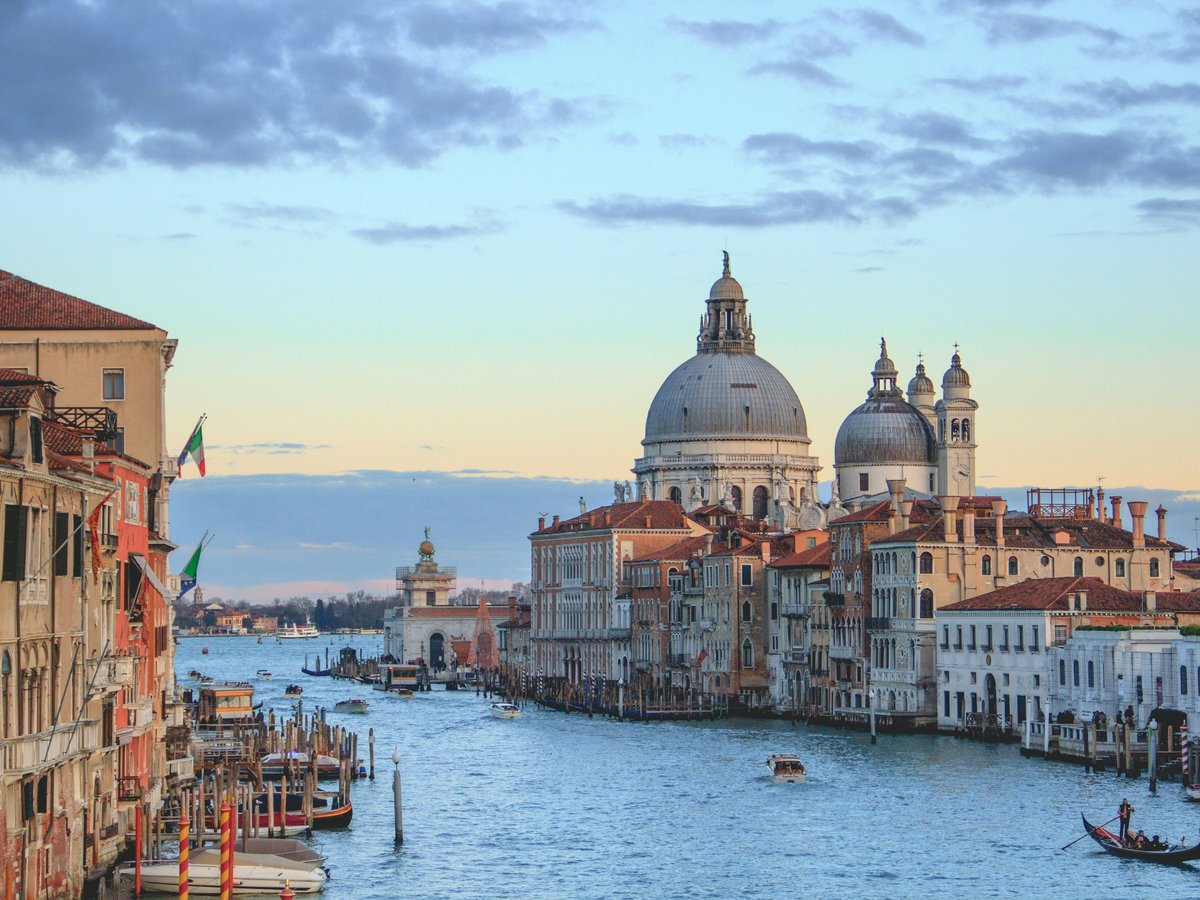
How do I get to Venice?
Venice Marco Polo Airport (VCE), 13 km north across the lagoon, handles most international and European flights. Treviso (TSF), 40 km northwest, serves Ryanair and Wizz Air budget routes. From VCE, Alilaguna water buses reach the historic center in 70-90 minutes for €15. High-speed Trenitalia and Italo trains connect Venice Santa Lucia to Rome, Milan, and Florence.
Venice Marco Polo (VCE) sits 13 km north of the city on the mainland edge of the lagoon. It handles ITA Airways, Lufthansa, KLM, and British Airways connections from across Europe, plus seasonal transatlantic service. Delta operates a JFK-VCE nonstop from June through September, about 9.5 hours eastbound. From London, BA and easyJet fly nonstop in 2 hours 15 minutes for £60-180 round-trip. Treviso (TSF), 40 km northwest, is Ryanair and Wizz Air territory. Fares from London to TSF can drop to £25 one-way in shoulder season, but the ATVO bus to Piazzale Roma takes 70 minutes and costs €12. TSF has no water connection to the islands, so you add a vaporetto transfer on top. From the US West Coast or Midwest, expect one stop through Frankfurt, Amsterdam, or Paris CDG at $800-1,300 round-trip, rising to $1,300-1,500 in July and August. Verona Villafranca (VRN), 120 km west, is a fallback worth checking if VCE fares spike during Carnevale or the Venice Film Festival at Lido di Venezia in late August.
The arrival into Venice is unlike landing at any other European airport. From Marco Polo, Alilaguna operates three water bus lines across the lagoon. The Arancio (orange) line reaches the Rialto area in about 70 minutes for €15 one-way. The Blu (blue) line runs to San Marco in 90 minutes. The Alilaguna is not fast. But the slow crossing lets you watch San Giorgio Maggiore's bell tower grow from the flat horizon while salt air and warm diesel mix off the water. That first approach is worth the extra 40 minutes over the bus. A private water taxi from VCE to your hotel door costs €110-130 for up to 4 passengers and takes 30 minutes. Loud engine, cold spray on your arms if you sit in the open stern, but you arrive at your hotel's canal entrance. The budget path is the ACTV bus to Piazzale Roma (€8, 25 minutes), Venice's road-end, where you transfer to vaporetto Line 1 or 2 down the Grand Canal.
Venice Santa Lucia station sits right on the Grand Canal. You step off the platform and the water is 15 meters ahead. Trenitalia's Frecciarossa high-speed trains connect Milan Centrale in 2 hours 25 minutes (from €19.90 advance), Florence Santa Maria Novella in 2 hours 5 minutes (from €14.90), and Roma Termini in 3 hours 45 minutes (from €24.90). Italo, the private competitor, runs the same corridors at similar prices and sometimes undercuts by €5-10. Both carriers release fares about 120 days out, and the cheapest seats tend to sell within 2-3 weeks of release. From Munich, the ÖBB Nightjet sleeper arrives at Santa Lucia around 8:30 AM for €50-90 in a couchette. Mind you, Venice has a second station, Venezia Mestre, on the mainland 10 minutes before Santa Lucia. If your train stops at Mestre, stay on. Mestre is mainland territory. From there you need a local train or bus across the Ponte della Libertà to reach the islands.
Low season for flights runs November through mid-March, excluding Christmas week and Carnevale (which falls in February or early March and can push prices up 40-60%). Summer peak from late June through August adds €30-40 per European flight and $200-400 from the US. The humidity in July sits heavy over the canals, and at low tide a warm mud-and-algae smell drifts from the smaller waterways near the Fondamenta della Misericordia. Piazza San Marco fills with tour groups by 9 AM. September and early October are likely the sweet spot, still warm at 22-25°C, with fewer cruise ships since the 2021 ban on large vessels in the Giudecca Canal. Flight prices tend to drop by mid-September. One thing first-timers miss about Venice. There are no cars, no buses, no Uber inside the historic center. Once you cross the lagoon, you walk or ride the vaporetto. Pack shoes you can cover 8-10 km a day in on stone and bridge steps.
Nonstop from London (2h 15m, BA/easyJet), seasonal JFK direct on Delta Jun-Sep, 1-stop from US via FRA/AMS/CDG. Trenitalia Frecciarossa from Milan (2h 25m), Florence (2h 5m), Rome (3h 45m).
Nearest airports
VCE: Venice Marco Polo Airport
13 km from city centre
TSF: Treviso Airport
40 km from city centre
VRN: Verona Villafranca Airport
120 km from city centre
Find a flight to Venice
Live fares to Venice appear here once cookies are accepted.
More transport questions
How do I get from the airport to Venice?
From Marco Polo Airport (VCE), take the ATVO express bus to Piazzale Roma for €10, a 20-minute ride with departures every 20 minutes until midnight. From Piazzale Roma, vaporetto line 1 or 2 runs along the Grand Canal to your hotel's nearest stop. Water taxis cost €100-130 for direct door-to-door delivery.
Full answerHow do I get around Venice?
Walking and ACTV vaporetti. Venice has no cars, no bikes, no ridehail. You walk the stone alleys between the six sestieri and take vaporetti along the Grand Canal and out to the lagoon islands. A 72-hour tourist pass costs €45 and pays for itself by the third ride. Traghetti cross the Grand Canal for €2.
Full answerWhat are the best day trips from Venice?
Burano and Padova are the two best single-day trips from Venice. Burano is a 40-minute vaporetto ride with painted houses, risotto al go at Da Romano, and the oldest Byzantine church in the lagoon on neighboring Torcello. Padova is 25 minutes by train, with Giotto's 1305 Scrovegni frescoes and a morning food market at Piazza delle Erbe. Verona needs early Freccia booking.
Full answerLast verified by automated review (v1.7.2) on . What is automated review?