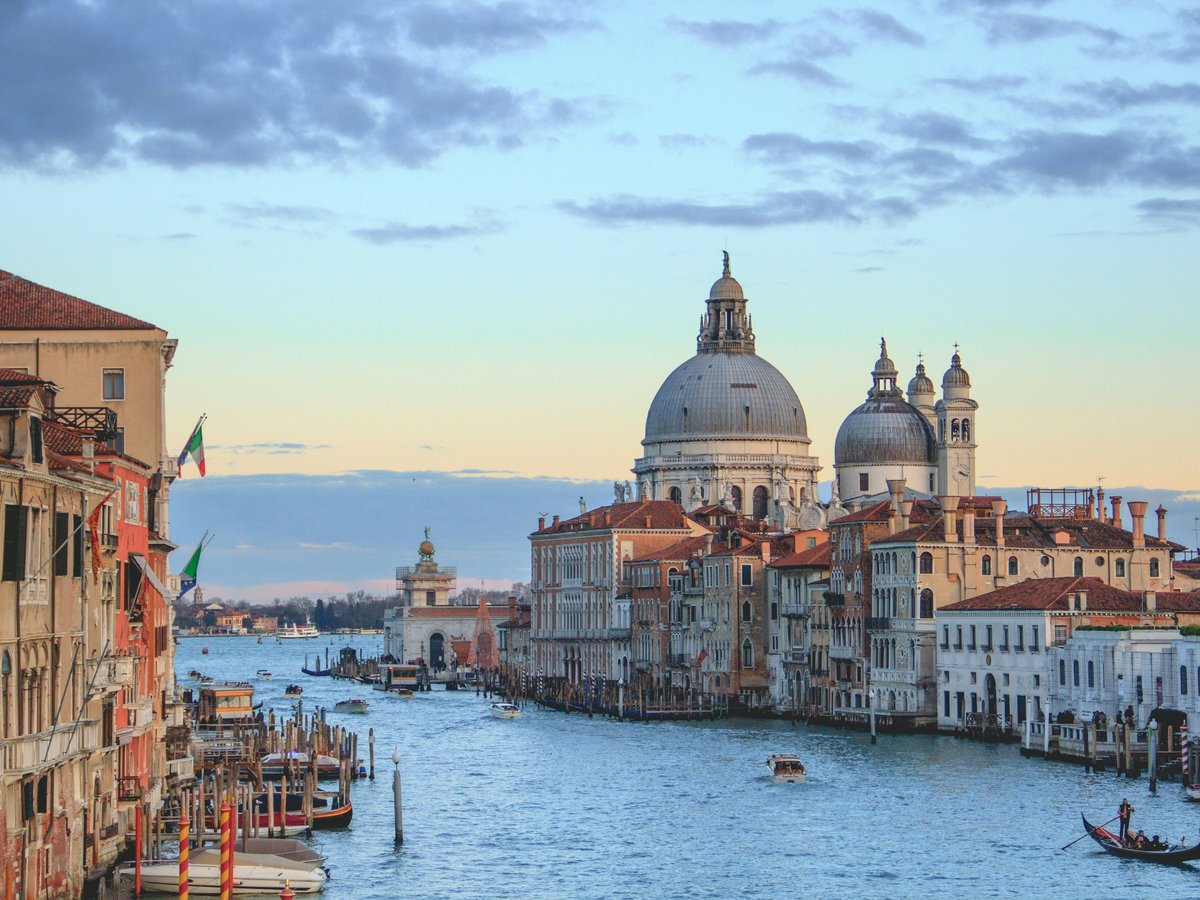
Venice tends to get a reputation as a wallet-emptying destination. To be fair, a 30-minute gondola ride at 80 EUR and a 25 EUR Palazzo Ducale ticket add up fast. But Venice's real character lives in its free layers, the ones most visitors walk past without noticing. The 400-odd bridges, the crumbling palazzo facades reflected in green canal water, the fish sellers at the Pescheria who have occupied the same Grand Canal-side loggia since 1097. You can walk the six sestieri for a full week without paying a single admission and still leave with a richer sense of the place than someone clutching a museum pass. Dorsoduro's waterfront along the Zattere catches the afternoon sun across roughly 2 kilometers. Eastern Castello barely sees a tour group. Cannaregio's wide canals north of the tourist flow still feel like a working neighborhood. The salt air, the slap of water against moss-covered fondamenta stone, the particular amber light that bounces off peeling stucco at 6 PM in September. Venice currently has fewer free museums than Rome or Florence, but it makes up for that with something neither city can match. The entire historic center, all 118 islands of it, is itself the attraction. None of that requires a ticket.
Free attractions
-
Basilica di Santa Maria della Salute
Baldassare Longhena's octagonal church took over 50 years to build, from 1631 to 1687, and sits at the tip of Dorsoduro where the Grand Canal meets the Bacino di San Marco. The main nave is free to enter. The light shifts dramatically depending on the hour. Morning fills the eastern windows with cool white. Late afternoon warms the marble floor to a soft gold. Titian's ceiling paintings in the sacristy cost a few euros, but the core of the church, the soaring dome and the Byzantine icon above the high altar, costs nothing. Worth noting that it tends to be less crowded before 10 AM.
DorsoduroChurch -
Chiesa di San Giorgio Maggiore
Andrea Palladio designed this church in 1566, and it dominates the island directly across from Piazza San Marco. The white Istrian stone facade catches every shift in lagoon light. Inside, Tintoretto's Last Supper (1594) and The Fall of Manna hang in the chancel. No admission charge for the church itself. The campanile elevator costs about 8 EUR and offers what might be the finest panorama of Venice, but the church floor alone makes the vaporetto ride over. A 2-minute walk from the San Giorgio stop on line 2.
San Giorgio MaggioreChurch -
T Fondaco dei Tedeschi Rooftop Terrace
The former German trading house next to the Ponte di Rialto became a DFS luxury department store after a renovation completed in 2016. The rooftop terrace is free, though you need to book a 15-minute time slot online or at the ground-floor desk. Views span the Grand Canal, the terracotta rooftops of San Polo, and on very clear days, mountain outlines to the north. Sunset slots fill up days in advance during summer. The building itself, redesigned by Rem Koolhaas's OMA, is worth seeing for its central atrium escalators alone.
San MarcoViewpoint -
Giardini Reali
These Royal Gardens sit between Piazza San Marco and the waterfront, reopened in 2019 after a restoration funded by the Venice Gardens Foundation. Small by park standards, roughly 5,500 square meters, but a rare patch of green in the most densely built part of the city. Benches face the Bacino di San Marco. The shade from the mature trees feels like a minor event on a 35-degree August afternoon. Free to enter, open daily.
San MarcoPark -
Giardini della Biennale
Napoleon ordered these public gardens created in 1807 at the eastern end of Castello, which meant demolishing a church and several buildings to clear the land. Outside Biennale exhibition months, the gardens are open and free, a broad green space with shaded paths, benches, and views across to the Lido. During the Biennale (typically May through November in odd-numbered years), the main exhibition area with its national pavilions requires a ticket at around 25 EUR, but the surrounding garden paths and waterfront promenade remain accessible year-round.
CastelloPark -
Parco Savorgnan
A leafy rectangle in Cannaregio, about 2 minutes from the Ponte delle Guglie. Families from the surrounding streets use this one, children on the playground, elderly residents reading on benches. It sits behind Palazzo Savorgnan and rarely appears in guidebooks. The green canopy blocks enough sun to drop the temperature noticeably in July. Free, open during daylight hours, and rarely more than a dozen people in it.
CannaregioPark -
Gallerie dell'Accademia
Venice's principal art museum holds the densest collection of Venetian painting anywhere. Bellini, Giorgione, Titian, Tintoretto, Veronese, Canaletto. Full admission currently runs about 12 EUR, but on the first Sunday of every month, entry is free under Italy's Domenica al Museo program, in effect since 2014. The queue on free Sundays can reach 45 minutes by mid-morning, so arriving by 9 AM is worth the early start. Leonardo's Vitruvian Man drawing is held here but shown only on rare occasions.
DorsoduroMuseum (free first Sunday of the month) -
Museo di Palazzo Grimani
A Renaissance palazzo in Castello near Santa Maria Formosa, with rooms decorated by Giovanni da Udine and Francesco Salviati in the 1540s. The tribuna ceiling alone is worth the visit. Standard admission is about 10 EUR, but the first Sunday of the month is free under the same Domenica al Museo policy. It draws far smaller crowds than the Accademia on free Sundays, making it the better first-Sunday choice if you dislike queuing. The courtyard houses a Roman antiquities collection started by the Grimani family in the 1500s.
CastelloMuseum (free first Sunday of the month) -
Campo del Ghetto Nuovo
The world's first ghetto, established by the Venetian Republic in 1516 and the origin of the word itself. The campo is an open square in northern Cannaregio, surrounded by unusually tall buildings, 7 stories in some cases, built upward because residents could not expand outward. The bronze relief memorials by Arbit Blatas on the campo wall commemorate roughly 200 Venetian Jews deported in 1943. The campo and its plaques are free to visit at any hour. The Museo Ebraico and synagogue tours cost about 12 EUR.
CannaregioHistoric site and memorial -
Chiesa di San Francesco della Vigna
Palladio designed the facade of this Franciscan church in 1562, and it sits in a quiet corner of eastern Castello that most visitors never find. The church holds paintings by Giovanni Bellini and Paolo Veronese. The name 'della Vigna' recalls the vineyard that occupied this site before the Franciscans built here in the 1200s. Free to enter. The walk from San Marco takes about 15 minutes through some of the least touristy calli in central Venice.
CastelloChurch
Free activities
-
Mercato di Rialto (Pescheria and Erberia)
The Rialto fish market has operated on this bend of the Grand Canal since 1097. The neo-Gothic loggia of the Pescheria dates to 1907, open to the water on one side. By 7:30 AM the stalls are fully loaded with Adriatic catch, still glistening. Cuttlefish, soft-shell crabs (moeche) in season, spider crabs, sardines. The smell of brine and cold stone is strong before 8 AM. The adjacent produce market, the Erberia, has seasonal fruit, artichokes in spring, radicchio from Treviso in winter. Browsing costs nothing. The market runs Tuesday through Saturday, typically closing by 12:30 PM.
San PoloMarket -
Fondamenta delle Zattere Walk
The Zattere is Dorsoduro's long south-facing waterfront, stretching about 2 kilometers from the Punta della Dogana to the Stazione Marittima. It faces the island of Giudecca across a wide channel. The afternoon sun is direct and warm most of the year. Venetians sit along the stone edge with gelato from the Nico bar at Zattere 922. The walk passes the Magazzini del Sale, the old salt warehouses, and several church facades. A straightforward 25-minute walk end to end, no ticket or reservation needed.
DorsoduroWalking route -
Via Garibaldi and Eastern Castello
Via Garibaldi is the widest street in Venice, which in Venetian terms still means about 8 meters across. Napoleon's administration created it in 1808 by filling in a canal. This is residential Venice. Neighborhood bars with 1.30 EUR standing espressos, a daily fruit-and-vegetable stall, older residents sitting outside in the evening. The street leads east toward the Giardini della Biennale. The walk from the Arsenale vaporetto stop down Via Garibaldi and along the waterfront toward Sant'Elena takes about 40 minutes and covers a side of Venice that feels distinctly separate from the San Marco crowds.
CastelloWalking route -
Punta della Dogana Waterfront
The triangular tip of Dorsoduro where the Grand Canal meets the Giudecca Canal. The Punta della Dogana building, now the Pinault Collection, requires a ticket, but the waterfront triangle in front of it is open and free. The view spans the Bacino di San Marco, San Giorgio Maggiore, the Lido barrier islands, and the Palazzo Ducale. Summer sunset from this spot, roughly 8:30 PM in June, might be the best free view in the city. The wide Istrian stone steps along the waterfront make decent seating.
DorsoduroViewpoint -
Spiaggia Pubblica del Lido
The Lido's public beach stretches are free to use. Sand, Adriatic water, no entrance fee. The private stabilimenti with their rows of cabanas charge 20 to 40 EUR per day for a lounger setup, but the public stretches between them cost nothing. Getting there requires a vaporetto from central Venice on line 1 or 5.1, currently 9.50 EUR single or covered by a transit pass. The water is shallow and calm enough for children. Peak season runs July and August, when the sand temperature can reach 45 degrees Celsius by midday.
LidoBeach -
Libreria Acqua Alta
A bookshop in Castello, near Campo Santa Maria Formosa, that stores its inventory in gondolas, bathtubs, and waterproof bins because the ground floor floods regularly during acqua alta. Resident cats patrol the stacks at Calle Lunga Santa Maria Formosa 5176/b. The back exit opens to a canal-side wall built from damaged books, which has become a well-known photo spot. No charge to enter and browse. The shop has operated from this address since 2004, and the smell of aging paper and canal water is strong near the back entrance.
CastelloBookshop and cultural curiosity
Free events
-
Festa del Redentore
Third weekend of July (Saturday night fireworks, Sunday procession)Venice's most beloved festival, held on the third weekend of July since 1577. Saturday night brings a fireworks display over the Bacino di San Marco, visible for free from the Zattere, Riva degli Schiavoni, and the Giudecca waterfront. Venetians traditionally picnic on boats in the basin. The smell of grilled fish and the sound of boat horns fill the water. A temporary pontoon bridge connects the Zattere to the Chiesa del Redentore on Giudecca for the weekend. The Sunday morning mass at the Redentore is also free.
Bacino di San Marco, Giudecca, Dorsoduro -
Carnevale di Venezia
Approximately 2 weeks in February, ending on Shrove TuesdayThe street celebrations of Carnevale run for roughly 2 weeks leading up to Martedi Grasso (Shrove Tuesday), typically in February. Costumed figures gather in Piazza San Marco and along the surrounding calli. The outdoor festivities, parades, and public performances cost nothing. Some gala events and masked balls in palazzi are ticketed, sometimes over 500 EUR per person, but the street spectacle is entirely free. The tradition dates to at least the 13th century, was revived in 1979, and currently draws over 3 million visitors across the full festival period.
Piazza San Marco and throughout the historic center -
Regata Storica
First Sunday of SeptemberA historical boat procession followed by competitive rowing races on the Grand Canal, held on the first Sunday of September since 1489. The procession features 16th-century-style boats with rowers in period costume, led by a Bucintoro replica. Four races follow, including the championship gondolini sprint. The canal banks, bridges, and fondamente are free vantage points. Locals tend to claim spots along the Grand Canal by mid-morning, some setting up folding chairs on the Riva del Vin or near Campo San Vio.
Grand Canal, full length from the Giardini to Santa Lucia station area -
Festa della Sensa
Ascension Day (Thursday, 40 days after Easter, typically May or June)The Ascension Day ceremony re-enacts Venice's symbolic marriage to the sea. The mayor drops a gold ring into the lagoon from a ceremonial boat near the San Nicolò inlet at the Lido. A corteo of traditional rowing boats follows the main vessel. The festival typically falls on a Thursday in May or early June, 40 days after Easter. The ceremony is free to watch from the Lido shore or from the Riva di San Nicolò. A smaller regatta often follows on the same weekend.
Bacino di San Marco to San Nicolò al Lido -
Venice Glass Week (Settimana del Vetro)
Mid-September (approximately 7 days)An annual festival celebrating Murano glassmaking, held in mid-September since its first edition in 2017. Furnaces on Murano open their doors for free demonstrations, and exhibitions appear across Venice and Murano for about 7 days. Some hands-on workshops are ticketed, but the majority of furnace open-house events, gallery shows, and public installations cost nothing. Getting to Murano requires a vaporetto on line 4.1 or 4.2, at the standard 9.50 EUR fare or covered by a transit pass.
Murano and various venues across Venice
Three Walking Routes Worth Planning
Venice rewards aimless wandering, but a few routes are worth choosing deliberately. The first runs from the Ponte di Rialto south through San Polo's quieter calli to Campo San Polo, Venice's largest square after Piazza San Marco at roughly 7,800 square meters. From there, head west to Campo Santa Margherita in Dorsoduro, where university students from Ca' Foscari fill the cafe tables most evenings. That leg takes about 20 minutes. The second starts at the Fondamente Nove in northern Cannaregio, facing the cemetery island of San Michele across grey-green water. Walk west along the fondamenta, turn south at the Rio dei Gesuiti, and follow signs toward the Strada Nova, Cannaregio's main commercial artery. Along the way you pass the Chiesa dei Gesuiti, where the marble walls imitate draped fabric so convincingly that you'll want to touch them to check. The third route is the least walked. From the Arsenale, head east through the residential blocks of Sant'Elena, past the football pitch where Venezia FC's youth teams sometimes train, and along the tree-lined waterfront facing the Lido. Practically no tourists walk as far as Sant'Elena. The afternoon light through the pine trees along Viale IV Novembre has a quality you will not find anywhere near San Marco.
What Used to Be Free but Now Costs Money
A few Venice staples have shifted to paid admission in recent years, and it helps to know before you arrive. The Basilica di San Marco introduced a 3 EUR entry ticket in April 2024 for tourists, ending centuries of free access to the main nave. Residents and worshippers still enter free. The ticket covers the basilica floor only. The Pala d'Oro (5 EUR), the Treasury (5 EUR), and the museum with the Loggia dei Cavalli (7 EUR) remain separately ticketed as they have been for years. Venice also introduced a day-tripper entry fee of 5 EUR on selected peak days starting in April 2024, covering roughly 30 dates per year. This applies to visitors not staying overnight in the municipality and requires pre-registration through the Venezia Unica portal. The fee is still in a pilot phase and has generated considerable local debate. If you are sleeping in Venice, it does not apply to you. Mind you, these changes are relatively modest in the context of a trip. The Campanile di San Marco has charged admission for decades, currently about 10 EUR.
Drinking Water and Budget Survival Tips
Venice has public drinking fountains scattered throughout the city, maintained by Veritas, the municipal utility company. You'll find them in most major campi and along well-trafficked routes. The water comes from a mainland aqueduct system and runs cold and clean. Carrying a refillable bottle saves 2 to 3 EUR per purchase versus buying bottled water at bars. For food on zero budget, the Coop supermarket near Campo Santa Margherita and the larger Coop at Piazzale Roma sell ready-made tramezzini for 1.50 to 3 EUR. The bakeries along the Strada Nova in Cannaregio tend to be cheaper than anything near San Marco. A standing espresso at a neighborhood bar currently costs about 1.20 to 1.50 EUR in most sestieri. The difference between a standing coffee and a seated one at a bar in Piazza San Marco can reach 8 EUR or more. That said, a 1.30 EUR espresso at a Castello neighborhood bar tastes the same as a 10 EUR one in Piazza San Marco, and the people-watching from a local campo is arguably better.
FAQ
Do you need a vaporetto pass to get around Venice, or can you walk everywhere?
The main historic center of Venice, all six sestieri, is entirely walkable. No distance within it exceeds about 45 minutes on foot. A single vaporetto ticket currently costs 9.50 EUR and is valid for 75 minutes, which makes casual boat trips expensive on a zero budget. A 24-hour pass at 25 EUR or 72-hour pass at 45 EUR makes more sense if you plan to visit the Lido, Murano, or Burano. But if you are staying within the main islands, you do not need a boat at all.
When is the best time of year to visit Venice on a zero budget?
Late October through mid-November tends to offer a good balance. Accommodation prices drop below peak-season rates, the summer crowds have thinned, and the weather is still mild enough for long walks, typically 12 to 18 degrees Celsius. The first acqua alta floods might appear, which is an experience in itself. Late January and early February around Carnevale brings free street spectacle but also cold temperatures around 2 to 6 degrees and larger visitor numbers. Spring from April to May has pleasant weather but prices and crowds start climbing. July and August are hot, reaching 32 to 35 degrees, which makes extended walking less comfortable.
Are churches in Venice free to enter?
It depends on the church. Many smaller parish churches remain free, including Santa Maria della Salute (main nave), San Giorgio Maggiore, and San Francesco della Vigna. However, 18 notable churches participate in the Chorus Association circuit, and each charges about 3.50 EUR individually, or 14 EUR for a pass covering all 18. These include Santa Maria Gloriosa dei Frari, Madonna dell'Orto, and San Sebastiano. The Basilica di San Marco began charging 3 EUR for tourist entry in April 2024. If you are attending a service at any church, entry is typically free.
Can you visit any of the lagoon islands without paying an entrance fee?
The islands themselves are free to walk around and explore. Murano, Burano, Torcello, and the Lido charge no entrance fee. The cost is getting there. A vaporetto ticket currently runs 9.50 EUR each way, and there is no free alternative unless you know someone with a private boat. On Murano, some glass furnaces allow free viewing of glassblowing demonstrations, typically as a way to attract potential buyers. On Burano, walking the brightly painted houses along Via Galuppi and the canal-side paths costs nothing. Torcello's cathedral, Santa Maria Assunta, charges about 5 EUR for the mosaic-filled interior.
Is there free Wi-Fi available in Venice?
The city of Venice has operated a public Wi-Fi network under the Venezia Unica brand, though coverage and reliability have varied over the years. Some major campi and waterfront areas near San Marco, Rialto, and the Accademia have had signal. Bars and cafes typically offer Wi-Fi to seated customers. The main public libraries also provide internet access with registration. For reliable connectivity on zero budget, the Wi-Fi at the Biblioteca Nazionale Marciana reading rooms is currently accessible to registered visitors.
Is the Venice day-tripper entry fee still in effect, and does it affect all visitors?
As of 2025, Venice ran a pilot program charging 5 EUR for day visitors on selected peak dates, roughly 30 days per year concentrated in spring and summer weekends. The program started in April 2024 and has been extended with modifications. Overnight visitors with accommodation bookings in the municipality are exempt. The fee requires pre-registration through the Venezia Unica portal. Check the Comune di Venezia website for the current year's designated dates before your trip, as the schedule and fee structure are still subject to change.
Last verified by automated review (v1.7.2) on . What is automated review?