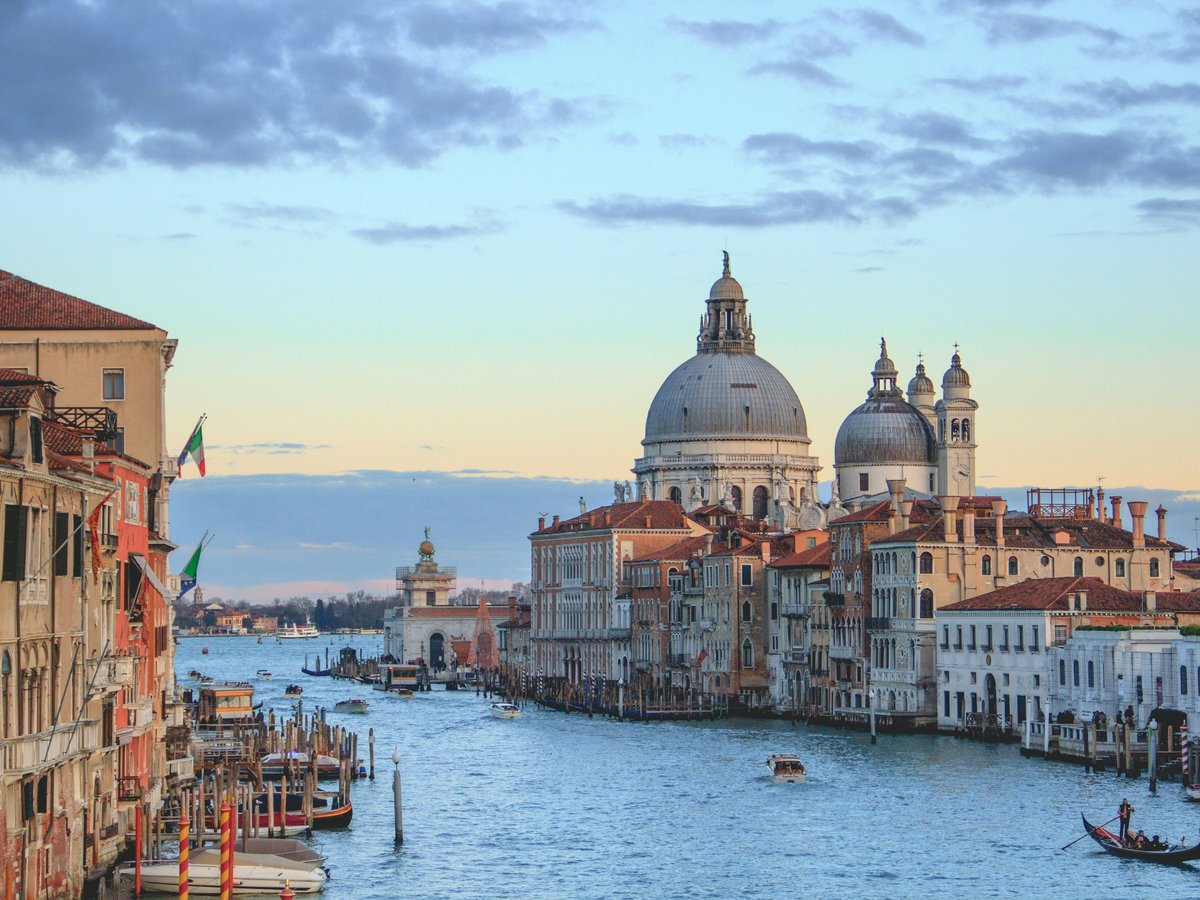
Venice is not the city most people picture when they think about outdoor adventure. It sits on 118 islands in a shallow lagoon that opens into the northern Adriatic, and the highest point in the historic centro storico barely reaches 3 meters above sea level. There are no hills to climb, no forests to wander. But that flatness is misleading. The lagoon itself covers roughly 550 square kilometers of tidal flats, salt marshes, and barene (mudflat islands) that shift with every tide cycle. The air smells of brine and diesel and, in summer, warm stone. You'll hear water slapping against foundations on every street. Mind you, the real outdoor Venice lives on the edges. The Lido stretches about 12 kilometers of Adriatic sand. The northern lagoon around Torcello still feels half-wild, full of herons and egrets. And within 90 minutes by train, the Veneto mainland opens into the Colli Euganei, the foothills below Asiago, and the southern Dolomites. Venice works surprisingly well as a base for someone who wants mornings on the water and afternoons on a trail.
Outdoor activities
-
Cycling the Lido di Venezia
The Lido is one of the few places near Venice where you can ride a bike on flat, paved roads without dodging foot traffic on narrow calli. The island runs roughly 12 kilometers north to south, with a main road (Gran Viale Santa Maria Elisabetta and its continuation) connecting the vaporetto stop to the beach side. Bike rental shops cluster near the vaporetto landing, and rates tend to hover around 8 to 12 euros for a half day. You can ride south past the old Murazzi sea walls toward Alberoni, where the pavement gives way to a quieter stretch near the golf course and a small nature reserve. The breeze off the Adriatic keeps things tolerable even in July, though the road surface gets sandy in patches near the southern tip.
- Difficulty
- Easy
- Duration
- 2 to 4 hours for a full island loop
- Best season
- April through October
-
Voga alla Veneta (Venetian-style rowing)
This is the traditional standing-up rowing technique you see gondoliers use, and several associations in Venice offer lessons to visitors. The most established is likely the Reale Società Canottieri Bucintoro, founded in 1882 and based on the Giudecca canal near the Zattere. A typical introductory session runs about 90 minutes and costs around 80 to 100 euros per person. You'll stand in a light batellina or sandolo and learn to balance while pushing a single oar in a forward stroke. It feels wobbly for the first 20 minutes. The canals off Giudecca tend to be calmer than the Grand Canal, which helps. Worth noting, this is genuinely physical work, not a tourist photo op. Your forearms and lower back will remind you the next day.
- Difficulty
- Moderate (balance and coordination required)
- Duration
- 90 minutes for an introductory lesson
- Best season
- March through November
-
Birdwatching in the Northern Lagoon
The marshes and barene around Torcello and Sant'Erasmo host a surprising density of wading birds, especially between April and June. Grey herons, little egrets, and cormorants are common year-round. During spring migration, you might spot flamingos that wander north from the Po Delta, though sightings seem to vary from year to year. The Palude della Rosa, a protected wetland area north of Burano, is probably the most productive spot. Access is easiest by private boat or guided tour, since there is no public vaporetto stop directly at the marshes. Binoculars are essential. The light on the lagoon can be harsh and reflective by midmorning, so early starts tend to pay off. Mosquitoes in this area from June through September are fierce.
- Difficulty
- Easy
- Duration
- Half day including boat transit from Fondamente Nove
- Best season
- April through early June for migration
-
Running the Fondamenta Circuit
Venice is surprisingly runnable if you pick the right route and the right hour. The fondamenta along the southern edge of Dorsoduro, from the Punta della Dogana east to the Giardini della Biennale, covers roughly 5 kilometers one way and stays relatively flat with fewer bridge crossings than cutting through the interior. Early morning, before 7:30, the quaysides are nearly empty. The surface alternates between Istrian stone and brick, and you will still cross maybe 15 bridges, each with steps. Your calves will know it. Some runners extend the route through the Giardini and along the Riva dei Sette Martiri toward Sant'Elena, adding another 2 kilometers of waterfront. The views across the Bacino di San Marco at sunrise make the bridge stairs tolerable.
- Difficulty
- Moderate (bridge steps add intensity)
- Duration
- 45 to 75 minutes for 7 to 10 kilometers
- Best season
- September through May (summer heat and crowds make it difficult)
-
Cycling the Brenta Riviera from Stra to Padova
The Brenta Canal towpath runs about 30 kilometers between Stra and Padova along a mostly flat, partially paved cycle path that passes several Palladian villas. Villa Pisani at Stra, with its 114 rooms and hedge maze, is the obvious first stop. Villa Widmann in Mira is smaller and less crowded. The path itself follows the canal closely, shaded by plane trees in long stretches. Surface quality varies. Some sections are smooth asphalt, others are packed gravel that turns muddy after rain. You can reach Stra from Venice by ACTV bus (line 53E from Piazzale Roma, about 40 minutes) or by train to Padova and cycling back the other direction. Bike rental is available in Stra and Mira. To be fair, the route gets busy on weekend mornings in spring.
- Difficulty
- Easy to moderate
- Duration
- 3 to 5 hours one way at a relaxed pace
- Best season
- April through June and September through October
Day hikes
-
Colli Euganei (Euganean Hills), Parco Regionale dei Colli Euganei
The Euganean Hills rise abruptly from the Veneto plain about 60 kilometers southwest of Venice. Monte Venda, the highest point, reaches 601 meters. The regional park covers roughly 18,700 hectares of volcanic hills with a marked trail network. You can reach the area by train from Venezia Santa Lucia to Terme Euganee-Montegrotto (about 50 minutes), then local bus or taxi to trailheads. The trails pass through chestnut and oak forest, with vineyards on the lower slopes. Views from the ridgelines extend across the Po plain to the Adriatic on clear days. The town of Arquà Petrarca, where the poet Petrarch spent his last years, makes a good starting or ending point. The terrain is hilly but not technical, with some steep rocky sections near the summits.
- Difficulty
- Easy to moderate depending on route
- Duration
- 3 to 6 hours depending on circuit chosen
- Best season
- March through May and September through November
-
Altopiano di Asiago, Sentiero della Memoria (Path of Remembrance)
The Asiago Plateau sits at roughly 1,000 meters elevation, about 2 hours north of Venice by car or bus via Bassano del Grappa. The area saw heavy fighting in World War I, and several trails pass through restored trenches, fortifications, and military cemeteries. The plateau is a mix of alpine meadows and spruce forest, cooler than the lowlands by 8 to 10 degrees Celsius in summer. Trail surfaces are generally well-maintained dirt and gravel. The Sacrario Militare di Asiago, an ossuary holding over 50,000 soldiers, sits near the town center and serves as a reference point for several marked loops. Snow typically covers the trails from December through March.
- Difficulty
- Easy to moderate
- Duration
- 2 to 5 hours for plateau walks
- Best season
- June through October
-
Monte Grappa
Monte Grappa reaches 1,775 meters and sits about 80 kilometers northwest of Venice. You can drive to the summit via a winding road from Bassano del Grappa (about 30 km), or start lower and hike up through beech forest on marked CAI trails. The summit holds another World War I ossuary and a panoramic terrace. On clear mornings the view stretches from the Dolomites to the Adriatic. The terrain gets steeper and rockier above the treeline at roughly 1,400 meters. Wind on the exposed summit ridge can be strong even in summer. The approach from Bassano del Grappa takes about 90 minutes by car from Venice, making it a long but feasible day trip.
- Difficulty
- Moderate to strenuous (summit approaches from lower elevations)
- Duration
- 4 to 7 hours depending on starting elevation
- Best season
- June through September
-
Sentiero Natura at Oasi di Ca' Mello, Po Delta
The Po Delta, southeast of Venice, is one of Italy's most important wetland areas and has been a UNESCO Biosphere Reserve since 2015. The flat nature trails around the Oasi di Ca' Mello near Porto Tolle are easy walking through reed beds, lagoon edges, and sandy scrub. The area is notable for its birdlife. Flamingos have been breeding in the delta since around 2010, and colonies of several hundred are now fairly reliable from April through September. The terrain is dead flat, so this is more of a nature walk than a hike. Access from Venice involves about 2 hours by car, or a combination of train to Rovigo and local bus. Bring insect repellent. The mosquitoes in the delta wetlands from May onward are relentless.
- Difficulty
- Easy (flat terrain, no elevation gain)
- Duration
- 2 to 3 hours for the loop trails
- Best season
- April through June for birdlife, September through October for comfortable temperatures
-
Tre Cime di Lavaredo (long day trip to the Dolomites)
This is a stretch as a day trip, but it is technically possible and people do it. The Tre Cime loop trail starts at Rifugio Auronzo (2,320 meters), which you reach by toll road from Misurina. The circuit around the three towers covers about 9.5 kilometers with roughly 400 meters of elevation gain. The drive from Venice takes approximately 2.5 to 3 hours via the A27 motorway through Belluno. That means a very early start, probably leaving Venice by 5:30 AM. The trail itself is a well-graded path, not technical, but the altitude and exposed sections demand respect. Afternoon thunderstorms are common from June through August. To be fair, an overnight at one of the rifugi makes this trip far more enjoyable, but the loop alone works as a long, tiring day.
- Difficulty
- Moderate (altitude, not technical difficulty)
- Duration
- 3 to 4 hours for the loop, plus 5 to 6 hours of driving round trip
- Best season
- Late June through September (toll road typically opens mid-June)
Water activities
-
Kayaking the Venetian Canals and Lagoon
Paddling a kayak through Venice gives you a completely different perspective on the city. Several operators run guided tours, typically launching from the Sant'Elena area or the Certosa island. A 2-hour guided tour currently runs about 50 to 80 euros per person. You'll navigate smaller canals in Castello and Cannaregio where motorboat traffic is lighter. The water in the canals is tidal and brackish, not clean, but you are unlikely to capsize on a guided tour. Morning sessions tend to have calmer water and fewer boat wakes. Independent kayaking requires some knowledge of the lagoon's shallow channels, because grounding on a mudflat at low tide is a real possibility. The open lagoon between Venice and Murano can get choppy when the wind picks up from the southeast.
- Difficulty
- Easy (guided canal tour) to moderate (open lagoon paddling)
- Duration
- 2 to 4 hours
- Best season
- April through October
-
Swimming at Lido Beaches
The Lido has both public and private beach sections along its Adriatic-facing shore. The free public beach (Spiaggia Pubblica) near the Blue Moon area at the northern end has sand, basic facilities, and lifeguards in summer. The water is shallow for the first 30 to 50 meters, with a sandy bottom. Water temperature reaches about 24 to 26 degrees Celsius by July. The private stabilimenti (beach clubs) charge roughly 15 to 30 euros per day for a sunbed and umbrella, with better-maintained facilities. The beach at Alberoni, near the southern tip, is wilder and less developed, backed by a small nature reserve with dunes. Jellyfish appear periodically in the northern Adriatic, more commonly in August. The Lido is a 15-minute ride on the vaporetto from San Zaccaria.
- Difficulty
- Easy
- Duration
- Half day or full day
- Best season
- June through September
-
Stand-up Paddleboarding in the Lagoon
SUP has become increasingly popular on the quieter edges of the Venetian lagoon. The water around Certosa island and the channels near Sant'Erasmo tends to be calmer than the main waterways. A few operators on the Lido and Certosa rent boards, typically for 25 to 40 euros per hour. The lagoon is shallow in many areas, often under a meter deep on the flats at low tide, which means falling off is more embarrassing than dangerous. That said, boat traffic in the main channels creates wakes that can catch you off guard. Staying in designated slower-traffic zones is important. The light on the lagoon around sunset, when the water turns coppery and the city silhouette sharpens, is worth the effort of staying out late.
- Difficulty
- Easy to moderate (balance required, boat wake awareness)
- Duration
- 1 to 3 hours
- Best season
- May through September
-
Sailing the Northern Adriatic
The waters between Venice and the Istrian peninsula offer good sailing in a relatively sheltered basin. The prevailing summer wind, the Maestrale, blows from the northwest and tends to build through the afternoon. The Bora, a cold northeast wind, is stronger and less predictable, more common from October through March. Several charter companies and sailing schools operate from the Lido and from Chioggia, about 50 kilometers south of Venice. A day charter with skipper for a 30 to 36-foot boat currently runs roughly 400 to 700 euros depending on season. Sailing out past the Lido's sea walls into open water gives you a view of Venice from the Adriatic that most visitors never see. The lagoon entrance channels are narrow and busy with commercial traffic, so experience or a skilled skipper matters.
- Difficulty
- Moderate to advanced (open sea conditions, commercial traffic)
- Duration
- Full day (6 to 8 hours)
- Best season
- May through September for recreational sailing
-
Lago di Garda Day Trip (Swimming, Windsurfing)
Lake Garda, Italy's largest lake, lies about 150 kilometers west of Venice. Trains from Venezia Santa Lucia to Peschiera del Garda take roughly 90 minutes and cost around 10 to 15 euros. The southern end of the lake has gentle beaches and warmer water, reaching 22 to 24 degrees Celsius by midsummer. The northern end around Torbole and Riva del Garda is famous for its wind. The Ora, a thermal wind, builds reliably from early afternoon, making Torbole one of the best windsurfing and kitesurfing spots in the Alps. Board rental at Torbole runs about 50 to 70 euros for a half day. The water up north is cooler, often 18 to 20 degrees even in July. The scenery shifts dramatically from the flat southern shore to steep limestone cliffs above Malcesine and Limone.
- Difficulty
- Easy (swimming) to moderate-advanced (windsurfing at Torbole)
- Duration
- Full day including transit
- Best season
- June through September
Parks & gardens
-
Giardini della Biennale
FreeThe largest public green space in Venice's historic center sits at the eastern end of the Castello district. Napoleon ordered these gardens laid out in 1807, and they now cover about 60,000 square meters. During the Biennale (odd-numbered years, typically May through November), the national pavilions dominate the landscape, and you pay an entry fee for the exhibition areas. In the off-years, the gardens feel quieter and more like an actual park. Old plane trees and elms provide heavy shade. Benches line the gravel paths and you'll find a decent cafe near the entrance. The waterfront promenade at the south edge looks across to the Lido.
Highlights: Mature plane trees, waterfront promenade along the Bacino di San Marco, 29 permanent national art pavilions, the Carlo Scarpa-designed Venezuelan pavilion
-
Parco delle Rimembranze
FreeThis quiet park occupies the northeastern tip of the Sant'Elena island, about a 20-minute walk past the Giardini della Biennale. It was planted after World War I as a memorial, with one tree for each fallen soldier from Venice. The park is mostly grass and pine trees, with dirt paths that feel more rural than urban. Venetian families bring kids here on weekend afternoons. It is one of the few spots in the historic center where you can sit on grass. The views north toward the cemetery island of San Michele are striking in late afternoon light.
Highlights: Pine-shaded lawns, lagoon views toward San Michele and Murano, playground area, one of the few places in central Venice with open grass
-
Giardini Reali
FreeThese small royal gardens sit between Piazza San Marco and the waterfront, tucked behind the Procuratie Nuove. Originally laid out in the Napoleonic era and restored in 2019 by the Venice Gardens Foundation, they cover only about 5,500 square meters. That said, the restoration is well done. Clipped hedges, gravel paths, a greenhouse that now operates as a small cafe. The trees provide shade within 50 meters of the busiest tourist zone in Venice. You can hear the vaporetti on the Grand Canal from the benches near the waterfront railing.
Highlights: Recently restored greenhouse cafe, boxwood parterre, proximity to the San Marco vaporetto stop, views of San Giorgio Maggiore island from the waterfront edge
-
Parco Savorgnan
FreeA neighborhood park in Cannaregio, near the Ponte delle Guglie, surrounded by a wall so you might walk past without noticing the entrance. Inside, it is shaded by tall magnolias and horse chestnuts. The park connects to the garden of Palazzo Savorgnan and has a small playground. It feels local. On a summer afternoon you will find residents reading on benches and pigeons thicker than in the piazzas. It is small, maybe 8,000 square meters, but it is a functional green space rather than a monument.
Highlights: Mature magnolia trees, shaded benches away from tourist foot traffic, children's playground, access from both Cannaregio canal side and the Lista di Spagna
-
Giardini Papadopoli
FreeSitting near Piazzale Roma, these gardens once belonged to a 19th-century palazzo and were much larger before the bus terminal and parking garage ate into them. What remains is still pleasant. About 12,000 square meters of paths shaded by cedars, palms, and a few large magnolias. The park tends to attract locals waiting for buses or killing time before a train. It is not manicured in the way the Giardini Reali are, but the old trees give it a different character. The southern edge borders the Rio Nuovo.
Highlights: Cedar of Lebanon specimens, Canary Island date palms, a quieter alternative to the crowds at Piazzale Roma, one of Venice's few parks with subtropical planting
Practical tips
- Footwear
- Venice's streets are stone and brick, with hundreds of stepped bridges. Proper walking shoes with grip matter more here than in most cities. Flip-flops are a bad idea on the polished Istrian stone, which gets slippery when wet. For lagoon kayaking or SUP, water shoes or sport sandals work well. If you are doing mainland hikes in the Colli Euganei or Dolomites, bring proper trail shoes or light hiking boots separately.
- Sun Protection
- The lagoon reflects UV light from every direction, so you burn faster on the water than you expect. SPF 30 or higher, reapplied every 2 hours, is the minimum from April through September. A hat with a brim helps more than sunglasses alone, though polarized lenses cut the glare off the water surface significantly. The Lido beaches have no natural shade. Bring or rent an umbrella if you plan to spend more than a couple of hours.
- Drinking Water
- Venice has public drinking fountains scattered across the city, marked with a green spigot. The water comes from mainland sources and is safe to drink. Carry a refillable bottle. On the Lido and the outer islands (Burano, Torcello, Sant'Erasmo), fountains are less frequent, so fill up before you leave the centro storico. On mainland hikes, CAI-marked trails sometimes pass rifugi or bars where you can refill, but carry at least 1.5 liters per person for anything over 3 hours.
- Tides and Acqua Alta
- The Venetian lagoon is tidal, with a normal range of about 60 to 80 centimeters. Acqua alta (exceptional high water) mainly affects the city between October and March and can flood low-lying areas, especially around San Marco. For kayakers and SUP users, the tide changes the depth and current in lagoon channels noticeably. Check the Centro Maree tide forecast before any water activity. At extreme low tide, lagoon shallows become impassable mudflats. The MOSE barrier system, completed in 2020, now activates at forecasted tides above 110 centimeters.
- Mosquitoes
- From June through September, mosquitoes around the lagoon edges, the Po Delta, and any area near standing water can be aggressive, especially around dusk. DEET-based repellent or icaridin works better than citronella products. The northern lagoon marshes near Torcello and the Palude della Rosa are the worst spots. Even in the city center, mosquitoes appear near ground-floor canals in humid weather. Long sleeves at sunset are a practical choice for lagoon birdwatching or evening paddling.
- Getting to Mainland Trailheads
- Trenitalia runs frequent regional trains from Venezia Santa Lucia. Padova is 26 minutes, Bassano del Grappa about 75 minutes, and Belluno roughly 2 hours. Buy tickets at the station machines or the Trenitalia app. For the Colli Euganei, the Terme Euganee-Montegrotto stop puts you closest to the park, but trailhead access from there often requires a short taxi or local bus. For the Dolomites, a car is significantly more practical. Rental agencies cluster around Piazzale Roma and Mestre station. Budget about 50 to 80 euros per day for a compact car in summer.
FAQ
Is Venice a good base for outdoor activities or should I stay on the mainland?
Venice works well as a base if your outdoor priorities are water-based. Kayaking, SUP, rowing lessons, Lido beaches, and lagoon birdwatching are all accessible by vaporetto. For mainland hiking in the Colli Euganei or Dolomites, Mestre is more convenient because you skip the 10-minute Ponte della Libertà crossing and have direct car access. That said, the train connections from Santa Lucia station are good enough that day-tripping from Venice is feasible for most hikes within 2 hours. The tradeoff is time. You will spend 20 to 30 minutes getting from your hotel to the station, and you lose daylight hours to transit.
Can I swim in the canals of Venice?
Swimming in Venice's canals is prohibited and fined. The canals carry boat traffic, sewage discharge, and tidal currents that create genuine safety risks. For open-water swimming, the Lido's Adriatic beaches are a 15-minute vaporetto ride from San Zaccaria. The free public beach near Blue Moon has lifeguards from June through September. Some people swim off the quieter beaches on Pellestrina, the long barrier island south of the Lido, though facilities there are minimal.
What is the best time of year for outdoor activities near Venice?
Late April through mid-June and September through mid-October tend to offer the best balance of temperature, daylight, and manageable tourist crowds. July and August bring temperatures above 30 degrees Celsius with high humidity in the city and lagoon, which makes walking and cycling uncomfortable by midday. Water activities remain pleasant through August because the Adriatic breeze helps. For mountain hikes in the Dolomites or on Monte Grappa, late June through September is the window when snow has cleared the higher trails. Winter is quiet but limits options to city walking and the occasional foggy lagoon paddle.
Do I need to book kayak or SUP tours in advance?
In peak season, roughly May through September, booking at least 2 to 3 days ahead is a good idea for guided kayak tours. Group sizes are usually capped at 8 to 10 paddlers per guide for safety in the canal traffic. SUP rentals tend to be more flexible because it is a newer activity with more availability. Off-season, you can often arrange tours on a day's notice. Several operators accept bookings through their websites or through platforms like GetYourGuide. Prices have been creeping up, so expect to pay more than rates listed in older guides.
Are there any outdoor gear shops in Venice for last-minute supplies?
Venice's historic center has limited outdoor gear options. There is a Decathlon in Marghera, on the mainland near Mestre, which is the closest reliable source for hiking boots, water bottles, sun hats, and basic camping supplies. In the centro storico, a few general sporting goods shops near Campo Santa Margherita and along the Strada Nova carry basics like water shoes and sunscreen, but selection is thin and prices are tourist-inflated. If you need serious hiking or water sports gear, buy it before you arrive or make the 20-minute bus trip to Marghera.
Is the Venetian lagoon safe for independent kayaking without a guide?
Experienced kayakers can paddle the lagoon independently, but it demands respect. The main navigational channels (marked by wooden bricole poles) carry vaporetti, water taxis, and cargo boats that generate large wakes. Stick to the edges and smaller channels. The lagoon is shallow, typically 1 to 2 meters on the flats, but channels can be 5 meters deep or more with strong tidal currents. Wind from the southeast (the Scirocco) can build waves quickly on the open lagoon. Carry a tide chart, a waterproof phone case with GPS, and wear a PFD. The water is murky, so you will not see submerged obstacles. It is not dangerous if you are cautious, but complacency in a tidal lagoon is the actual risk.
Outdoor experiences in Venice
 Free cancellation
 Day trip to the Dolomites, Cortina and Lake Braies from Venice
Outdoor experience: free cancellation.
via Viator Free cancellation
 Cinematic Photoshoot in Venice: Capture Venice Hidden Gems
Outdoor experience: free cancellation.
via Viator Free cancellation
 Private tour Dolomites from Venice with Lake Braies and Cortina
Outdoor experience: free cancellation.
via Viator Free cancellation
 Venice Lagoon Private Sunset Tour
Outdoor experience: free cancellation.
via ViatorLast verified by automated review (v1.7.2) on . What is automated review?