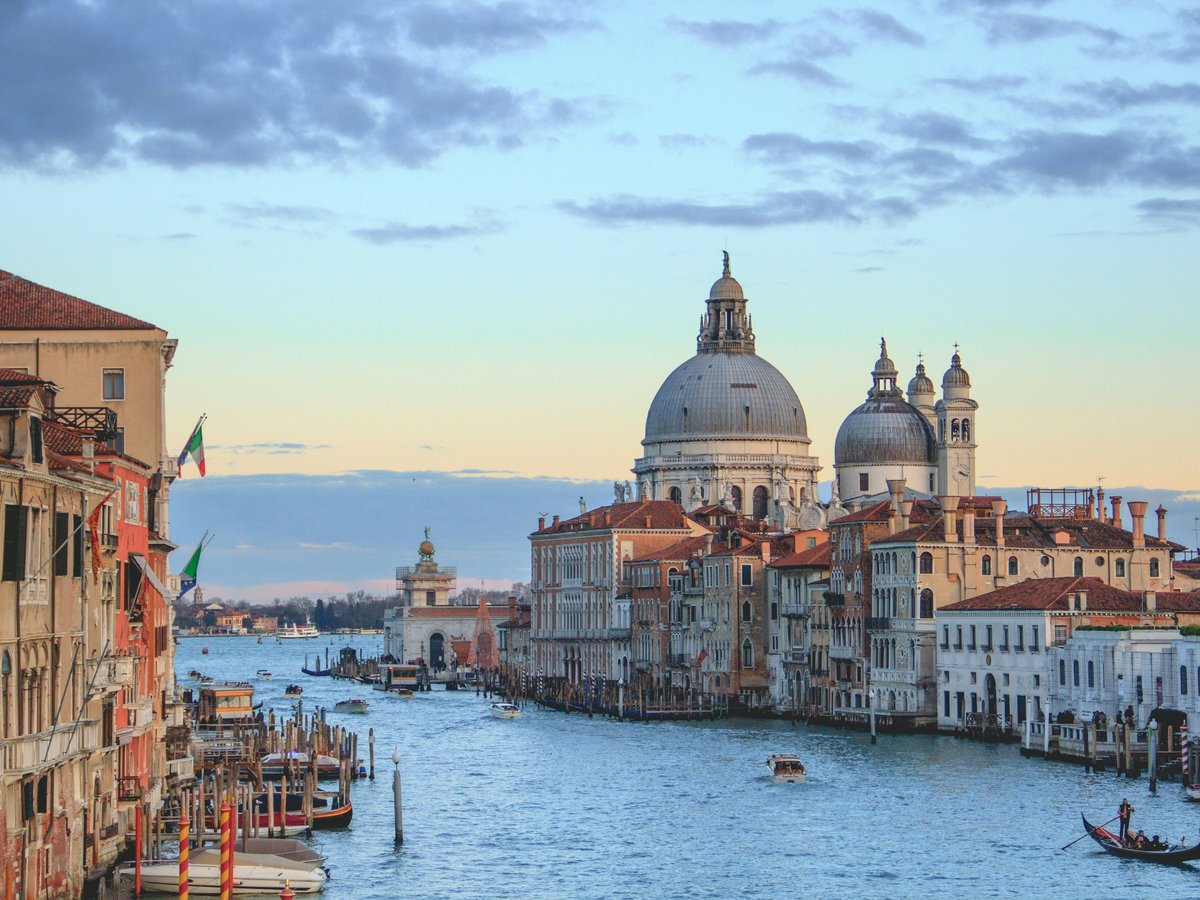
How do I get around Venice?
Walking and ACTV vaporetti. Venice has no cars, no bikes, no ridehail. You walk the stone alleys between the six sestieri and take vaporetti along the Grand Canal and out to the lagoon islands. A 72-hour tourist pass costs €45 and pays for itself by the third ride. Traghetti cross the Grand Canal for €2.
Your feet do most of the work in Venice. No cars enter the islands. No bikes either. The city banned cycling in the centro storico decades ago. Six sestieri connect through over 400 bridges, most with stone steps and no ramps. Rolling luggage over those steps sounds like a drumroll on cobblestone. From Santa Lucia train station to Piazza San Marco takes about 40 minutes on foot if you follow the route correctly. You will not follow the route correctly. The alleys narrow to shoulder-width in Castello and San Polo, and Google Maps tends to route you into dead ends at canal edges. Follow the yellow directional signs posted at intersections instead. They point toward 5 landmarks. Ferrovia, Piazzale Roma, Rialto, San Marco, and Accademia. Those 5 signs will get you reoriented within 10 minutes every time.
ACTV vaporetti are Venice's public transit. They float. Line 1 runs the full length of the Grand Canal from Piazzale Roma to Lido di Venezia. It stops at every pier and takes about 45 minutes end to end. Line 2 covers a similar route but skips stops and finishes in about 25 minutes. A single vaporetto ticket costs €9.50 and is valid for 75 minutes with transfers. That adds up by your third trip. The tourist travel card is the better math. A 24-hour pass runs €25, a 48-hour pass €35, and a 72-hour pass €45. Buy them at the ACTV booth outside Santa Lucia station or through the AVM Venezia app before you arrive. Validate on the yellow reader at the dock before boarding every time. Inspectors board at random stops, and the fine runs around €60 on the spot.
Traghetti are the locals' shortcut across the Grand Canal. The Canal has only 4 bridges along its 3.8 kilometers, so without a traghetto you face a 15-minute detour to the nearest one. These stripped-down gondolas ferry standing passengers at about 7 crossing points for €2 per ride. Look for small hand-painted traghetto signs near the water's edge. You stand for the 2-minute crossing, grip the gunwale, and feel the hull rock under your feet while the water slaps against the wood. It feels unsteady the first time. Water taxis are private motorboats. A ride within the historic center runs €70-100. Gondolas cost a regulated €80 for 30 minutes before 19:00 and €100 after. They follow a fixed scenic loop, not a destination. The gondolier will likely sing near Rialto Bridge whether you want it or not.
Wear shoes with grip. The stone pavement, called masegni, gets slick when wet. Acqua alta floods the low-lying areas around Piazza San Marco and parts of Dorsoduro between October and March. During those episodes, raised wooden walkways appear, but they are narrow and single-file in places. In late July the temperature sits around 27°C with humidity above 50%, and the canals carry a salty, low-tide smell that gets stronger in the afternoon heat. Venice is compact. The historic center measures roughly 2 kilometers across, and even Cannaregio sits within a 30-minute walk of San Marco. For the lagoon islands, vaporetto Lines 12 and 4.1 leave from Fondamente Nove on the north shore. Murano takes 10 minutes. Burano takes 40.
Plan to walk or take taxis between key sights.
Primary modes of transit
- Walking
- Vaporetto (water bus)
- Traghetto (gondola ferry)
- Water taxi
Venice's network by the timetable
Read from the published timetables, not from memory: 2 operators, 122 routes and 2,031 stops within 26 km of the centre.
- Operators, by routes here
- ACTVs.p.a (119)
- Alilaguna S.p.A. (3)
- Routes by mode
- 91 Bus
- 29 Ferry
- 2 Tram
- Weekday service
- 00:08 to 29:27 (05:27 the next morning)
- Fares in the timetable
- EUR 10.00 to 18.00
- Timetables valid
- 2026-04-29 to 2026-11-30
Read 2026-09-14, version 2026.2, from 3 feeds:
- Azienda del Consorzio Trasporti Veneziano (ACTV) Navigazione (the operator's own local feed, Mobility Database source 1063). Licence
- Automobilistico (the operator's own local feed, Mobility Database source 1062). Licence: not stated in the catalog; the agency's terms apply.
- Alilaguna (a community local feed, Mobility Database source 891). Licence: not stated in the catalog; the agency's terms apply.
More transport questions
How do I get from the airport to Venice?
From Marco Polo Airport (VCE), take the ATVO express bus to Piazzale Roma for €10, a 20-minute ride with departures every 20 minutes until midnight. From Piazzale Roma, vaporetto line 1 or 2 runs along the Grand Canal to your hotel's nearest stop. Water taxis cost €100-130 for direct door-to-door delivery.
Full answerHow do I get to Venice?
Venice Marco Polo Airport (VCE), 13 km north across the lagoon, handles most international and European flights. Treviso (TSF), 40 km northwest, serves Ryanair and Wizz Air budget routes. From VCE, Alilaguna water buses reach the historic center in 70-90 minutes for €15. High-speed Trenitalia and Italo trains connect Venice Santa Lucia to Rome, Milan, and Florence.
Full answerWhat are the best day trips from Venice?
Burano and Padova are the two best single-day trips from Venice. Burano is a 40-minute vaporetto ride with painted houses, risotto al go at Da Romano, and the oldest Byzantine church in the lagoon on neighboring Torcello. Padova is 25 minutes by train, with Giotto's 1305 Scrovegni frescoes and a morning food market at Piazza delle Erbe. Verona needs early Freccia booking.
Full answerLast verified by automated review (v1.7.2) on . What is automated review?