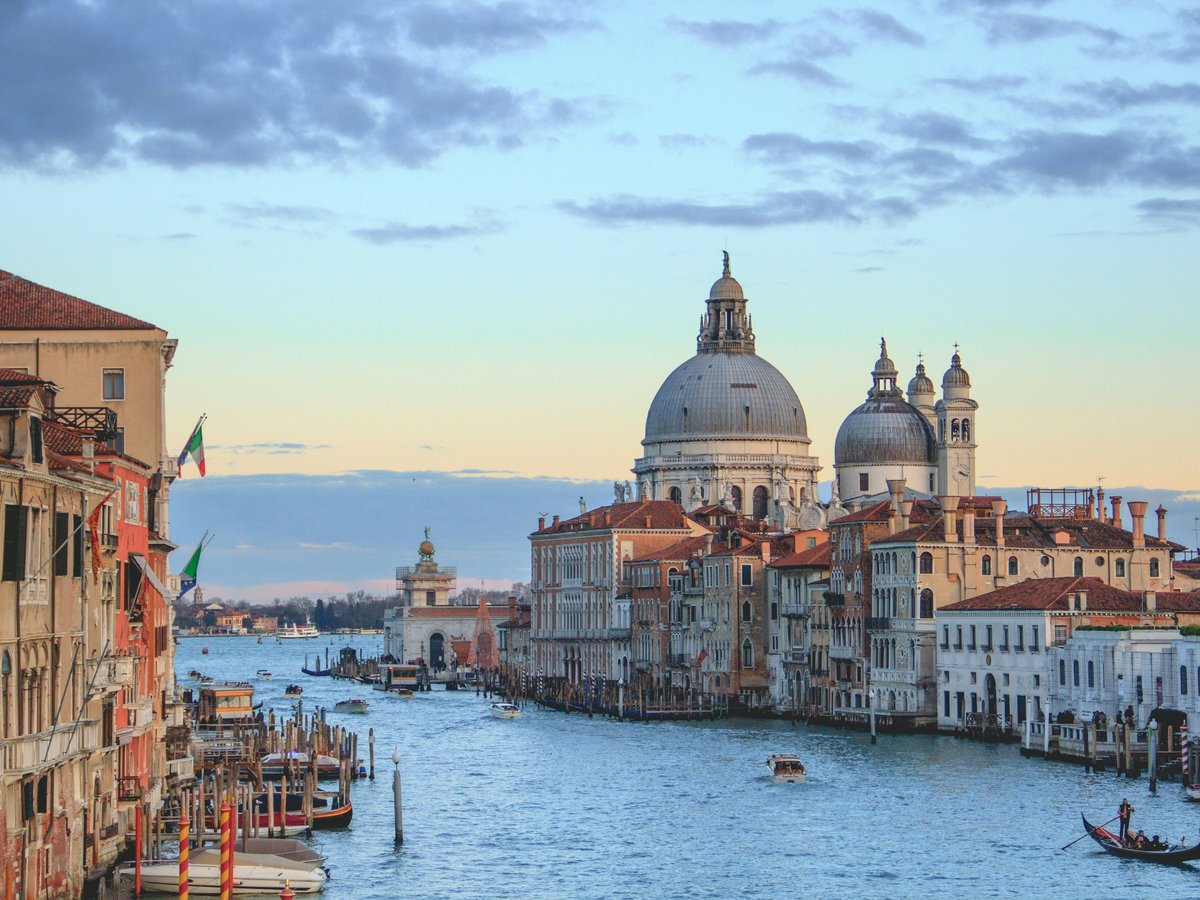
Venice sits on 118 islands threaded together by more than 400 bridges, a city where the main thoroughfare is a reverse-S canal and the taxi is a wooden boat. The historic centro storico holds around 50,000 permanent residents now, down from triple that in the 1950s, while the broader comune (stretching across the lagoon to the mainland districts of Mestre and Marghera) accounts for the city's roughly 250,000 total. This matters because the Venice most visitors picture, the one built on wooden pilings driven into lagoon mud, is startlingly small: you can walk from the train station at Santa Lucia to the Giardini della Biennale in under an hour if you follow the yellow directional signs and resist every side turning. You will not resist. Cannaregio, the neighbourhood stretching north from the station, has the cheapest cicchetti bars and the original Ghetto, the walled quarter that first gave every other ghetto its name. San Polo and Santa Croce sit across the Grand Canal from San Marco, quieter after dark and home to the Rialto fish market, where vendors set out lagoon-caught moeche (soft-shell crabs) during their brief spring and autumn seasons. Dorsoduro runs along the southern edge facing the Giudecca canal, anchored by the Accademia gallery and the Peggy Guggenheim Collection, and its Zattere waterfront is where Venetians themselves walk on Sunday afternoons. Castello, the largest of the six sestieri, stretches east past the Arsenale (the medieval shipyard that once produced a fully rigged galley every day) into residential streets where laundry hangs between buildings and you are more likely to hear Venetian dialect than English. The acqua alta floods still come between October and March, though the MOSE barrier system now rises from the lagoon seabed to hold back tides above 110 centimetres. Bring shoes you do not love.
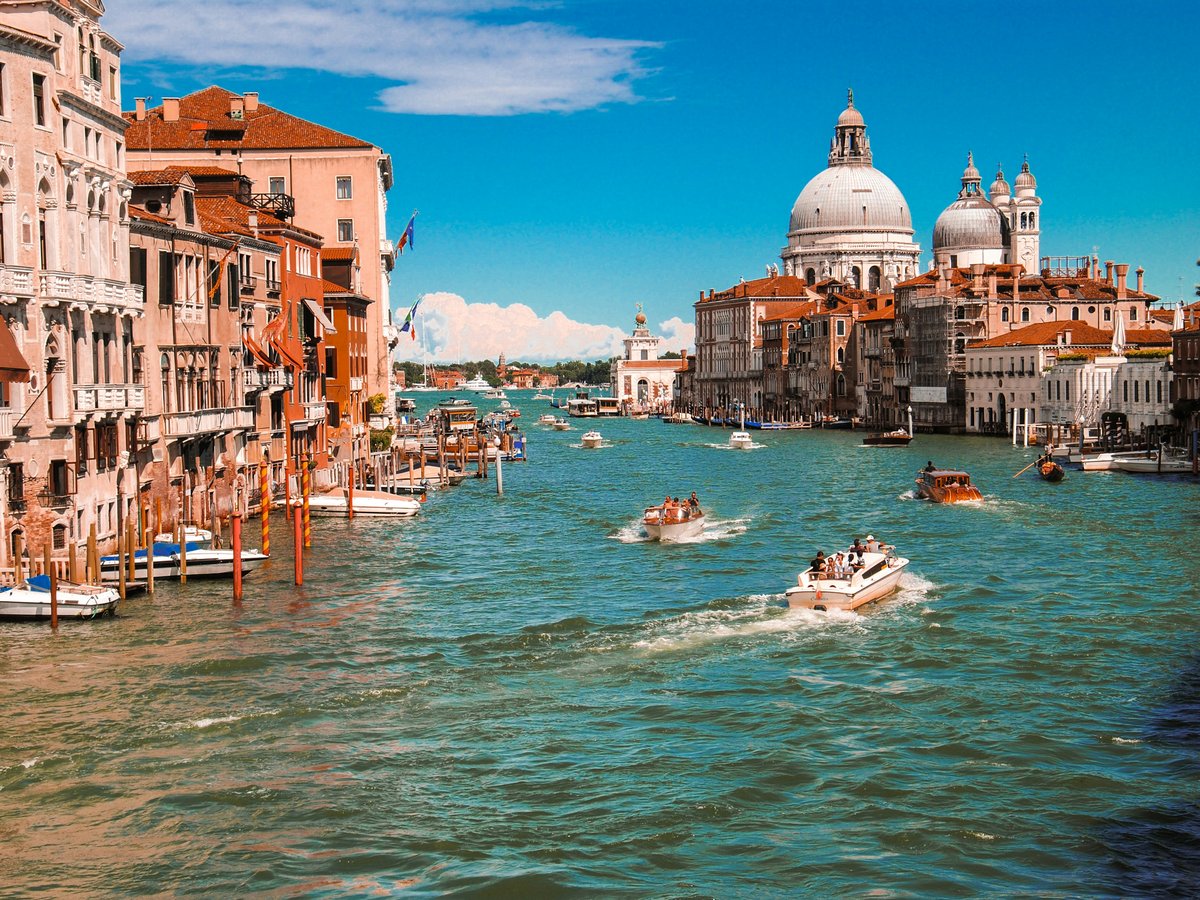
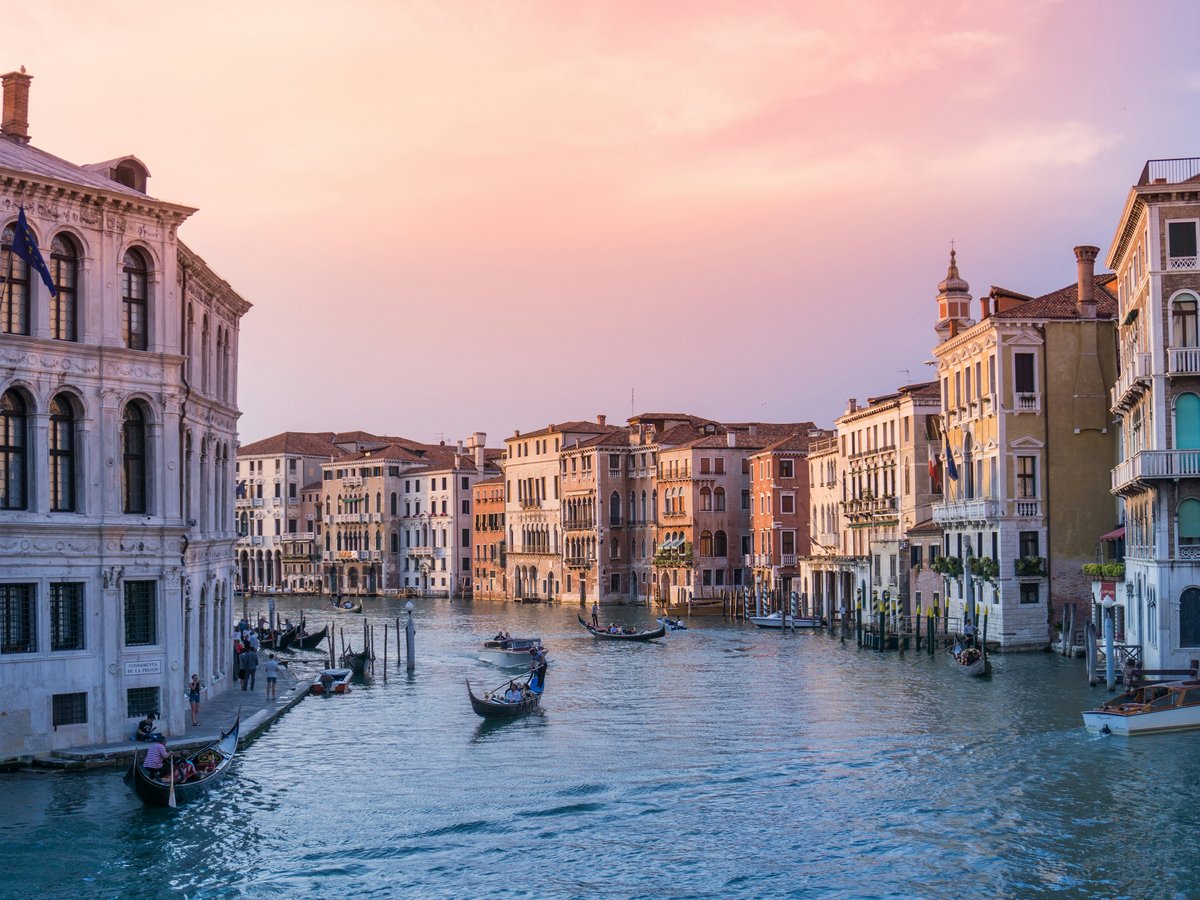
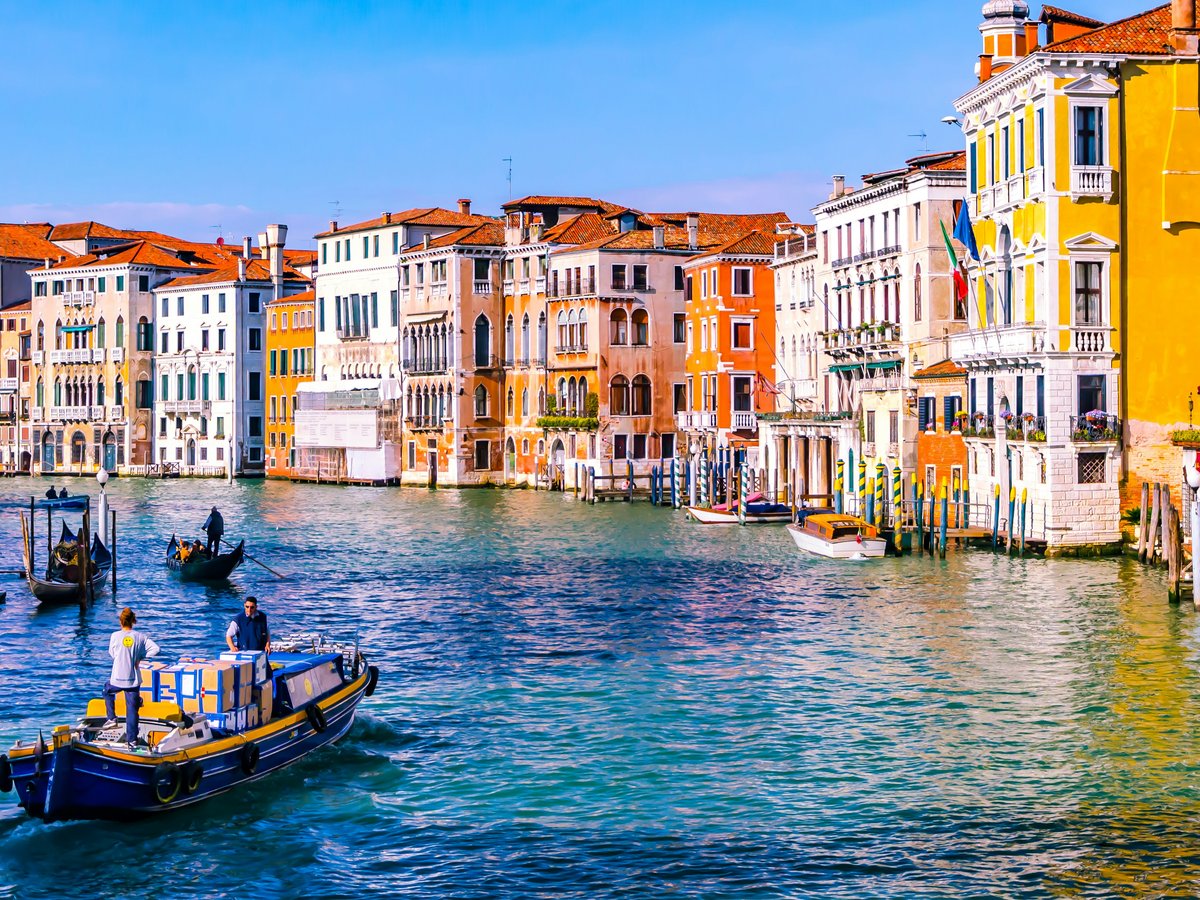
Venice in photos
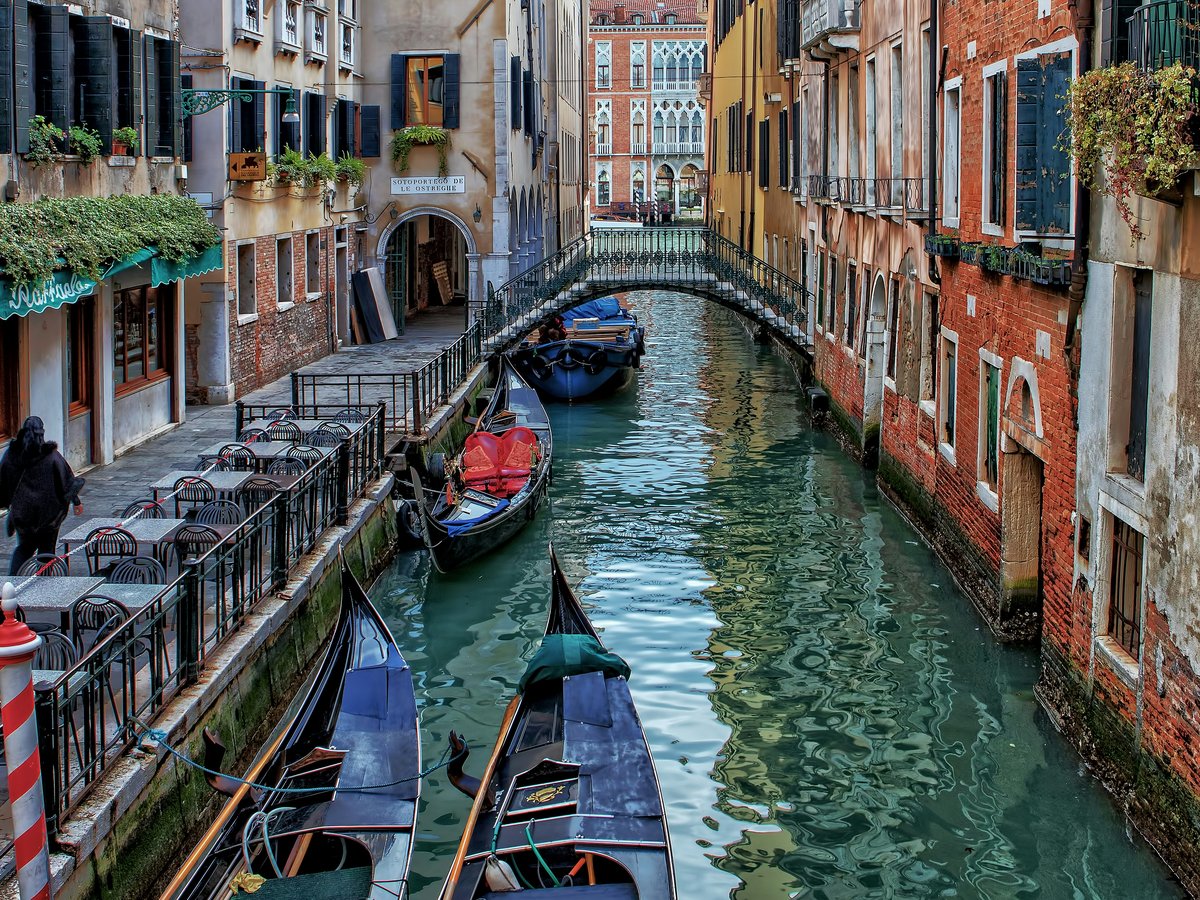
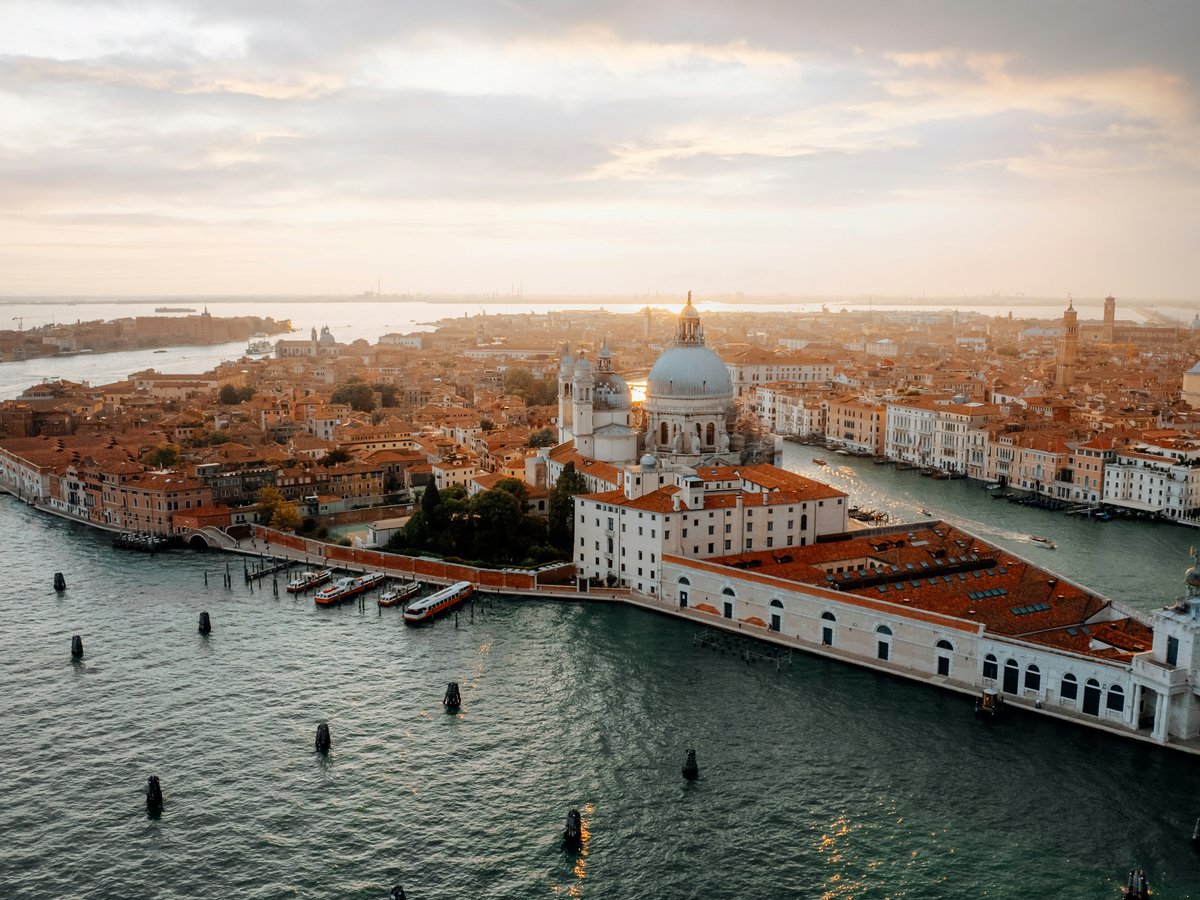
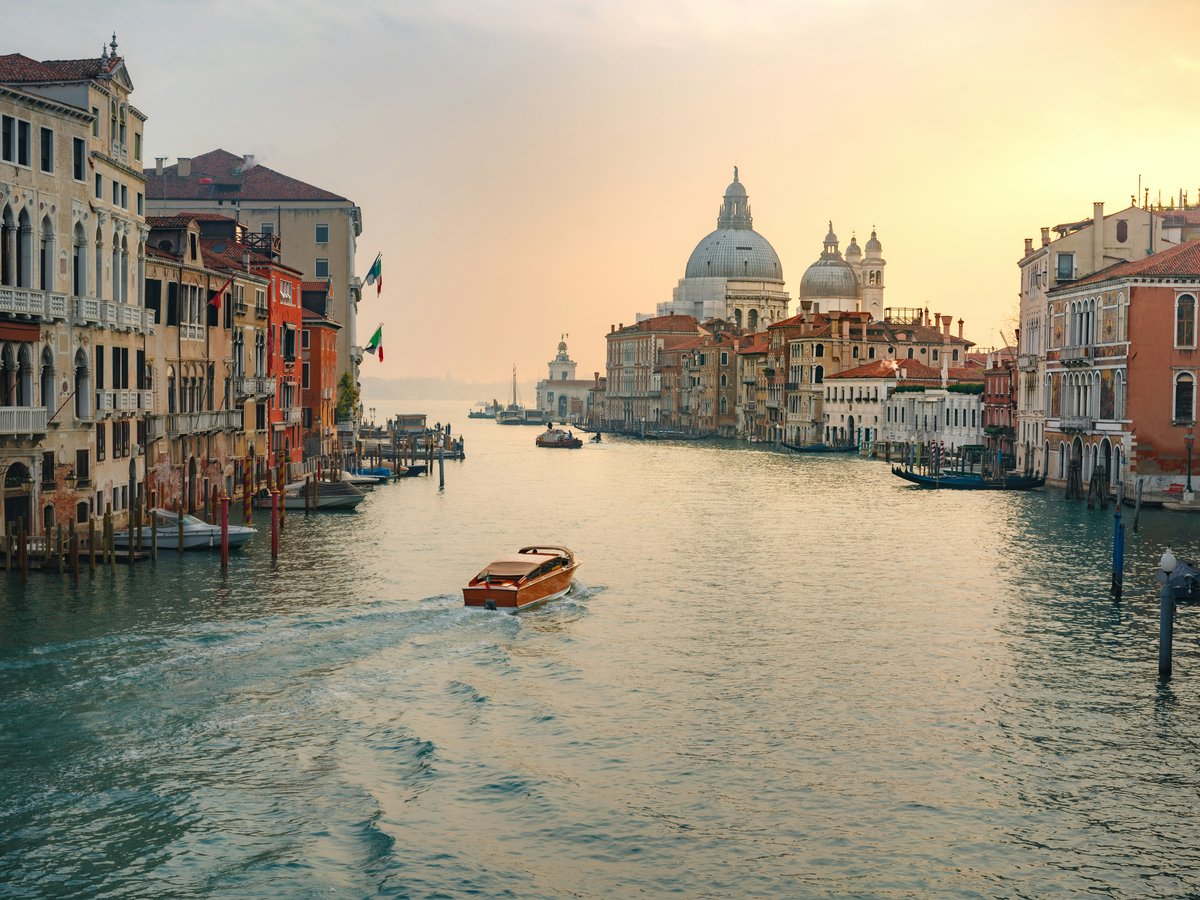
Venice right now
Answers about Venice
-
Airport to city
From Marco Polo Airport (VCE), take the ATVO express bus to Piazzale Roma for €10, a 20-minute ride with departures every 20 minutes until midnight. From Piazzale Roma, vaporetto line 1 or 2 runs along the Grand Canal to your hotel's nearest stop. Water taxis cost €100-130 for direct door-to-door delivery.
Read the full answer → -
Best time to visit
Late September through October or April through May. Temperatures average 18-22°C, summer crowds thin out at Piazza San Marco, and hotel rates in Dorsoduro drop 30-40% from July peaks. Avoid July and August, when the canals smell at low tide and queue times at the Gallerie dell'Accademia can exceed 2 hours.
Read the full answer → -
Cost per day
Budget travelers can manage Venice on about €70/day ($80) by sleeping in a Mestre hostel, eating cicchetti at bacari counters, and walking the historic center instead of riding the €9.50 vaporetto. Midrange days run around €175 ($200) with a Cannaregio hotel and trattoria dinners. Transport, not food, is Venice's real budget trap.
Read the full answer → -
Cultural etiquette
Venice fines visitors for sitting on the ground near Piazza San Marco, swimming in canals, or feeding pigeons. Churches including St Mark's Basilica enforce dress codes with attendants at the door. The coperto on most restaurant bills means tipping stays minimal. Greet shopkeepers and waiters with 'buongiorno' before asking anything.
Read the full answer → -
Best day trips
Burano and Padova are the two best single-day trips from Venice. Burano is a 40-minute vaporetto ride with painted houses, risotto al go at Da Romano, and the oldest Byzantine church in the lagoon on neighboring Torcello. Padova is 25 minutes by train, with Giotto's 1305 Scrovegni frescoes and a morning food market at Piazza delle Erbe. Verona needs early Freccia booking.
Read the full answer → -
Digital nomads
Venice scores 3.8/10 for digital-nomad suitability (sourced from TTDI's editorial rubric). Wifi in the historic center fights through 500-year-old stone walls, coworking options number in single digits, and a 1-bedroom in Cannaregio runs €1,500 or more per month. Most nomads who stay beyond 2 weeks end up in Mestre, the mainland district 10 minutes away by train.
Read the full answer → -
Family-friendly
Venice scores 5.8/10 for families (see the TTDI Family-Friendliness Index). Over 400 stepped bridges make strollers nearly useless, and open canals without guardrails demand constant vigilance with toddlers. Kids age 6 and up tend to love vaporetto rides, Murano glass-blowing demos, and the Lido's sandy beach. Bring a structured carrier, not wheels.
Read the full answer → -
Food culture
Venice eats standing up. Cicchetti, bite-sized seafood and crostini, replace sit-down meals at the city's bacari, small wine bars in every neighborhood. The Rialto market sets each day's menu. Lagoon seafood dominates from San Polo to Cannaregio. Sardines, salt cod, cuttlefish. Vinegar, pine nuts, polenta. A Spritz washes it all down.
Read the full answer → -
Getting around
Walking and ACTV vaporetti. Venice has no cars, no bikes, no ridehail. You walk the stone alleys between the six sestieri and take vaporetti along the Grand Canal and out to the lagoon islands. A 72-hour tourist pass costs €45 and pays for itself by the third ride. Traghetti cross the Grand Canal for €2.
Read the full answer → -
How to get there
Venice Marco Polo Airport (VCE), 13 km north across the lagoon, handles most international and European flights. Treviso (TSF), 40 km northwest, serves Ryanair and Wizz Air budget routes. From VCE, Alilaguna water buses reach the historic center in 70-90 minutes for €15. High-speed Trenitalia and Italo trains connect Venice Santa Lucia to Rome, Milan, and Florence.
Read the full answer → -
Is it safe?
Venice is a safe city for solo travellers, scoring 8.2/10 for solo safety (see the TTDI Solo-Safety Index), and violent crime against visitors is rare. The practical risks are pickpockets on the crowded Line 1 vaporetto and the Rialto steps, slippery stone underfoot during acqua alta, and inflated bills around Piazza San Marco. The blocks near Mestre's station feel rougher after dark. Dial 112 for any emergency.
Read the full answer → -
Language basics
Italian, with a local dialect called Veneziano still heard among residents in the quieter sestieri. English works well in the main tourist corridors but drops off fast at local shops and morning market stalls. The two phrases worth learning before anything else are 'un'ombra' (a glass of wine, ordered the Venetian way) and 'permesso' (let me through in a crowd).
Read the full answer → -
Layover guide
Yes, with 7 hours or more. ATVO buses connect Marco Polo Airport to Piazzale Roma in 20 minutes, and vaporetto line 2 adds another 25 to San Marco. Non-Schengen passports face 15-30 minutes of immigration each way. Allow 90 minutes back at the terminal before departure. Under 6 hours, stay airside.
Read the full answer → -
LGBTQ-friendly
Venice scores 6.5/10 for LGBTQ+ friendliness (sourced from TTDI's editorial rubric). Italy recognizes same-sex civil unions but has not reached marriage equality, and national anti-discrimination protections for sexual orientation remain absent. The city is tolerant and safe, though the queer scene is thin. Fewer than 50,000 centro storico residents cannot sustain dedicated venues. Padova, 26 minutes by train, fills the gap.
Read the full answer → -
Where locals go
Venetians concentrate in Cannaregio's Fondamenta degli Ormesini for evening cicchetti, Campo Santa Margherita in Dorsoduro for university nightlife, and Via Garibaldi in Castello for weekday morning market runs. The tourist-to-local ratio inverts after 8pm in Cannaregio and before 9am near the Rialto fish market. Giudecca stays residential year-round.
Read the full answer → -
Must-see
St Mark's Basilica, not the gondola ride. The interior holds roughly 8,500 square metres of gold mosaic laid from the 11th century onward. Go early. Low-angle morning sun enters the south transept and the ceiling seems to shift above you. A gondola costs €80 for 30 minutes. You'll see the same canals from a €9.50 vaporetto.
Read the full answer → -
Solo travel
Venice suits confident solo travellers who can handle high prices and don't need a built-in social scene. No cars, no road crossings, the vaporetto runs a night line until dawn. Counter-dining at bacari makes eating alone feel normal. Social options take more effort than Rome or Florence, but the compact layout and safe streets keep it practical even for first-timers.
Read the full answer → -
This week
Venice is calmest Tuesday through Thursday, with quiet mornings at Piazza San Marco and the Rialto Pescheria fish market open from 7:30am. Monday closes Gallerie dell'Accademia and Ca' d'Oro. When afternoons hit 30°C-plus, schedule indoor sights 2pm to 5pm and outdoor walks before 10am.
Read the full answer → -
3-day itinerary
Day 1 covers San Marco on foot. St Mark's Basilica by 9:30am, Doge's Palace, the Campanile, lunch at Rosticceria Gislon for €15, afternoon in Castello. Day 2 crosses to San Polo for the 7:30am Rialto fish market, Frari church, Gallerie dell'Accademia, and aperitivo at the Zattere. Day 3 takes the vaporetto from Cannaregio to Murano and Burano. About 20 kilometres of walking total.
Read the full answer → -
What to avoid
Skip table service on Piazza San Marco, the photo-menu restaurants on Lista di Spagna, and any 'free' boat to a Murano glass showroom. The Line 1 vaporetto at midday is best avoided. Skip the St Mark's Campanile queue: the San Giorgio Maggiore bell tower has the better view. From late October, pack plastic overboots for acqua alta flooding.
Read the full answer → -
What to pack
Rubber-soled walking shoes that grip wet marble. Venice has no wheeled transport. Every route crosses stepped stone bridges, and the major churches turn away bare shoulders and exposed knees. Bring a bag you can carry over your shoulder, not roll. Pack a universal power adapter for Italian outlets. Skip sunscreen and umbrellas. Both cost less at any Venetian farmacia.
Read the full answer → -
Where to stay
San Polo or Dorsoduro for a first visit to Venice. San Polo puts you 5 minutes from the Rialto Market and 15 from Piazza San Marco on foot, with mid-range hotels running $150-280 per night. Dorsoduro is quieter, sits near the Accademia, and costs $120-250. Skip Mestre. The mainland commute eats 30 minutes per day.
Read the full answer →
Deep guides for Venice
-
Best Time to Visit Venice, by Season
Venice's average highs swing from 7.8°C in January to 28.9°C in July. We mapped all 12 months for the trade-off between weather, crowds, and cost to name one best window for each kind of traveller.
Read the guide → -
Venice Restaurants: What's Worth It
Venice runs on two dining currencies. The standing espresso at a neighbourhood counter costs a coin. The seated room on Piazza San Marco charges for the address. This guide names twelve places across both tiers, with hours, alternatives, and the honest word on who each kitchen is right for.
Read the guide →
Curated lists for Venice
attractions
-
Best free attractions
Free in Venice mostly means open ground: eleven of these twelve entries are squares in Venice, Italy, and the twelfth is a park. That is the honest shape of this list, and it will not send you to a ticket desk or a gift shop. It sends you to the places where the city does its living out loud, where you can stand, sit, wait out a downpour, or eat a sandwich without anyone asking for money. The famous square is here because leaving it out would be silly, and the rest is weighted toward the campi, the ordinary squares that matter more to an afternoon than any monument does. One entry, the garden, keeps opening hours, so check the day before you set off. The squares need no planning at all. This list is for the traveller with sore feet and a thinning budget, and for anyone who suspects the best Venetian hour is the one with no agenda.
See the picks → -
Best museums
Venice keeps its museums inside its buildings, and the building is often the first exhibit. This list runs from the Doge's Palace, dating from 1340, to Punta della Dogana, whose art gallery sits at the tip of the triangle where the Grand Canal meets the Giudecca Canal, with palazzi that now work as galleries between them, among them Ca' Rezzonico and Ca' Pesaro. There is also a modern art museum on the Grand Canal, the Peggy Guggenheim Collection, and a museum on the history of glass out on the island of Murano. Many carry Italian national heritage designation. This list is for visitors who would rather spend their hours inside the rooms than in the crowd outside them, and it pays to plan around opening hours: some places close early on Mondays, and others close on Tuesdays.
See the picks → -
Must-see attractions
Venice's must-see list holds few surprises and a great deal of stone, which is no criticism. The oldest entries reach back a very long way: St Mark's Basilica dates from AD 828, Santa Maria Gloriosa dei Frari from 1250, and the Rialto Bridge from 1588, with several of them forming part of a UNESCO World Heritage Site. We put this list together for the visitor who wants the famous buildings that have earned their crowds, plus a few that should get more of them: a palazzo that doubles as an art museum, an opera house dating from 1792, and a church on Fondamenta San Giacomo. Our advice is blunt: go to the big names when they open, walk instead of queueing wherever you can, and keep the afternoon free for the quieter rooms that fall outside the hours everyone else keeps. Venice punishes the visitor who rushes and rewards the one who plans.
See the picks →
food
-
Best cafes
Venice does not have a cafe scene so much as it has a cafe economy: a working system of counters and pasticcerie where a stand-up espresso costs a coin and a seated one on Piazza San Marco costs a small fortune. The twelve places below are chosen to give you both ends of that spectrum honestly. Some are institutions old enough that the room itself is part of the bill; others are neighbourhood bars where a gondolier and a pensioner order the same cornetto for the same price. A few sit deep in the sestieri where the tour groups thin out; one is on the Lido; one is on the cemetery island of San Michele. What ties them together is that each is mapped, verifiable, and still trading, no ghost addresses, no invented hours. Read the list as a working itinerary: which counter for a fast morning caffè, which room for a slow afternoon, which pasticceria for the box of biscuits you carry back to the apartment. Prices, hours, and phone numbers are given as the sources record them; the opinions are the editor's.
See the picks → -
Best restaurants
Venice does not do restaurants the way other Italian cities do. The kitchens that matter are wedged into ground floors of buildings older than most countries, addressed by four-digit sestiere numbers that mean nothing to satnav and everything to a postino, and they close on days that would look eccentric anywhere else. What follows is twelve places worth the walk: a mix of trattorie holding a regional line, an osteria off a busy calle, a pizzeria that has kept its ovens on for decades, and one or two rooms that lean toward the historic. They are grouped by neither cuisine nor sestiere but by the editor's ranked judgement, and the addresses are given as Venice gives them: a number, sometimes a street, sometimes just a postal code. Bring the number, ask for the calle, and expect the door to be smaller than the reputation.
See the picks →
Browse by traveler type
Book experiences in Venice
 Free cancellation
 Murano & Burano Islands Guided Small-Group Tour by Private Boat
Day trip: 5 hours, free cancellation.
via Viator
Venice In a Day St Mark's Doges Palace Gondola Ride and City Tour
Cruise: 4.5 hours.
via Viator Free cancellation
 Venice Basilica Doge Palace Gondola and History Gallery
Cruise: 3.5 hours, free cancellation.
via Viator Free cancellation
 Venice Islands: Murano Glass & Burano Colors-Guided Visit
Day trip: free cancellation.
via Viator Free cancellation
 Skip-the-Line: Doge's Palace & St. Mark's Basilica Fully Guided Tour
City tour: 2 hours, free cancellation.
via Viator Free cancellation
 Venice Like a Local: Food, Wine & Spritz Tour with Traghetto Ride
Cruise: 2.5 hours, free cancellation.
via Viator Free cancellation
 Venice Pasta & Tiramisu Cooking Class with wine by Cooking Italy
Cooking class: 3 hours, free cancellation.
via Viator Free cancellation
 Murano Glass Experience With a Visit to Burano Lace Island
Day trip: 5 hours, free cancellation.
via Viator Free cancellation
 Dolomites & Cortina d’Ampezzo Small Group Day Tour from Venice
Day trip: 10 hours, free cancellation.
via Viator Free cancellation
 Venice Bacaro Food Tour: Eat and Drink like a Venetian
Day trip: 3.5 hours, free cancellation.
via Viator Free cancellation
 Venice: St.Mark's Basilica & Doge's Palace Tour with Tickets
Day trip: 3.2 hours, free cancellation.
via Viator Free cancellation
 St. Mark's Basilica & Doge's Palace Guided Tour with Gondola Ride
Cruise: 3.5 hours, free cancellation.
via ViatorBrowse by interest
Find a flight to Venice
Live fares to Venice appear here once cookies are accepted.
Last verified by automated review (v1.7.2) on . What is automated review?