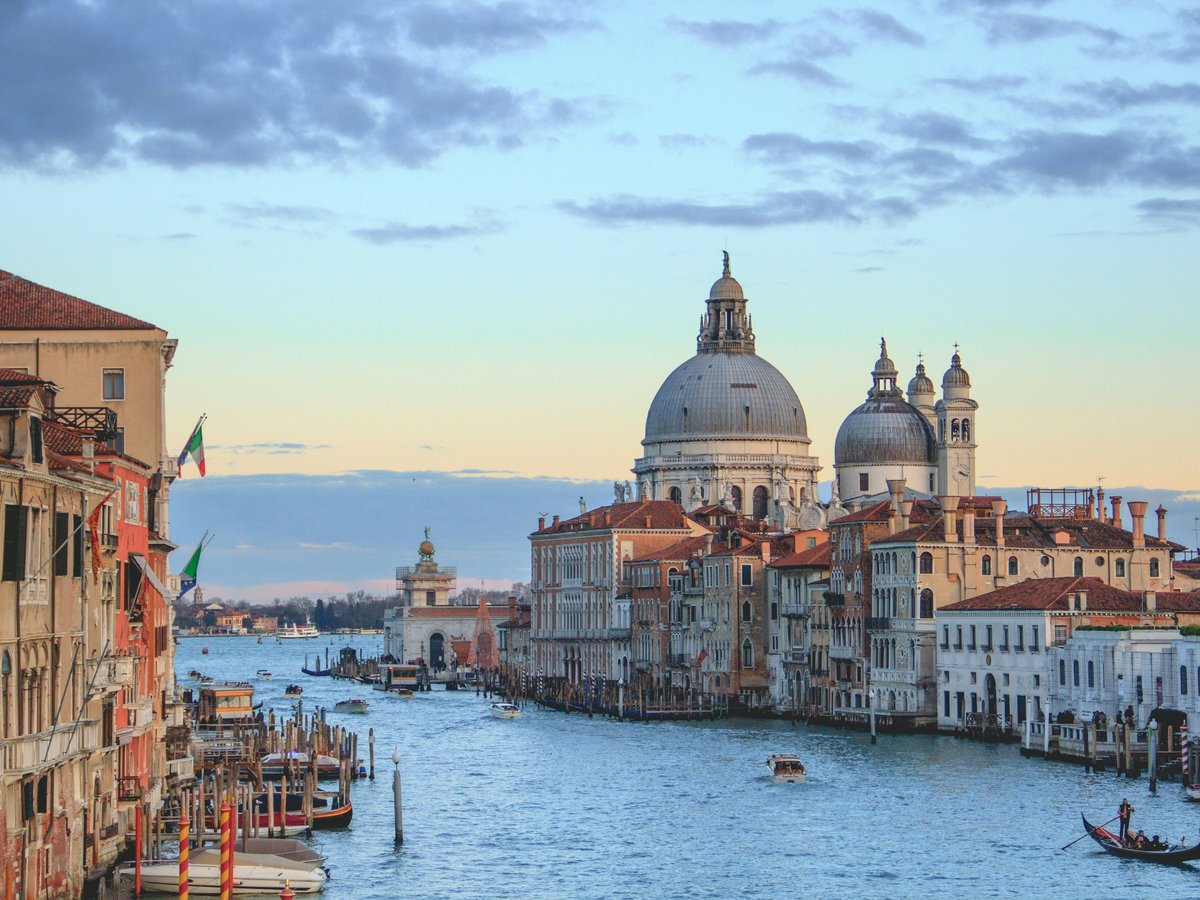
Compare every Italy city in January →
Stay in Venice in January
85 hotels in the Trip.com pool for Venice, from US$26 a night.
Opens Trip.com on Fri 1 Jan to Sun 3 Jan 2027; change the dates there.
January in Venice is cold, damp, and grey. Daytime temperatures sit around 7.8°C (46°F), but the 81% humidity off the lagoon makes it feel several degrees colder. The chill along the Riva degli Schiavoni works through your coat after an hour or two. Fog rolls in off the water most mornings, sometimes thick enough to hide the far side of Campo Santa Margherita. The canals smell less than in summer, which counts for something in Dorsoduro.
The crowds that make Piazza San Marco nearly impassable in July and August are gone. Venice records roughly 30 million tourist visits per year, and January accounts for the thinnest slice. You might walk through Castello at noon. The calli are empty apart from a tabacchi owner and a stray cat. Hotel rates in Cannaregio and Santa Croce drop 40-50% from their summer peaks. The Gallerie dell'Accademia, where the queue can hit 90 minutes in June, takes 10 minutes in January.
Acqua alta, the periodic tidal flooding of low-lying areas around San Marco, still happens in January, though the MOSE barrier system has reduced major episodes since its activation in 2020. Some smaller restaurants in Castello and Cannaregio close for part of winter. Daylight runs from roughly 7:45 to 16:45, which means about 9 hours of usable light. If your idea of Venice involves a sun-warmed terrace and an Aperol Spritz, wait until May.
Why visit in January
- Fewest tourists of the year. Wait times at Palazzo Ducale and Basilica di San Marco drop to near zero, and the popular calli in San Polo and Dorsoduro are walkable without weaving through tour groups.
- Hotel rates drop 40-50% from summer peaks. Three-star rooms in Cannaregio and Santa Croce tend to cost roughly half of what they run in July.
- Winter fog transforms the city into something genuinely eerie and photogenic, particularly along the Fondamente Nove waterfront and across the northern lagoon toward San Michele island.
- Opera season at Teatro La Fenice runs through January with performances 4-5 nights per week, and upper-box seats are among the most affordable options on the calendar.
Worth knowing
- Cold, damp air at 7.8°C (46°F) with 81% humidity makes extended outdoor walking uncomfortable after 2-3 hours without warming up in a café or museum.
- Acqua alta flooding still occurs in January. You may need rubber boots to cross Piazza San Marco on some mornings, though the MOSE barriers have reduced severe events since 2020.
- Daylight is limited to roughly 7:45-16:45, which cuts outdoor sightseeing to about 9 hours per day.
- Some restaurants and shops in residential sestieri like Santa Croce close for part of January, which narrows dining options outside the San Marco tourist core.
Best for
Think twice if
January is Venice's coldest month. The average high reaches 7.8°C (46°F) and the low drops to 1.1°C (34°F), though the 81% humidity off the Adriatic makes both feel several degrees colder. Fog is common, particularly in the mornings, and can persist all day. Rainfall averages 73mm across about 8 rainy days, typically as steady drizzle rather than heavy downpours. Frost is possible overnight, particularly in the last 2 weeks of the month. Wind off the lagoon adds a sharp edge to the cold, especially on the exposed Riva degli Schiavoni and Fondamente Nove waterfronts.
Seasonal caution
- Acqua alta (tidal flooding) can occur in January, particularly during strong sirocco winds from the southeast. The MOSE barriers have reduced major flooding since 2020, but moderate events still happen 2-4 times per month. Download the Acqua Alta Venezia app or check Centro Maree forecasts daily.
- Overnight temperatures regularly drop near or below freezing at 1.1°C (34°F), and wind chill off the lagoon can push the felt temperature below -3°C (27°F). The exposed walkways along Fondamente Nove and the Zattere waterfront are particularly cold.
Year-round climate
Averages from the last 5 years.
| Month | Avg high (°C) | Avg low (°C) | Rainfall (mm) |
|---|---|---|---|
| Jan | 8 | 1 | 73 |
| Feb | 10 | 3 | 49 |
| Mar | 13 | 5 | 77 |
| Apr | 16 | 8 | 85 |
| May | 21 | 14 | 149 |
| Jun | 27 | 19 | 57 |
| Jul | 29 | 21 | 84 |
| Aug | 29 | 20 | 74 |
| Sep | 24 | 17 | 116 |
| Oct | 19 | 12 | 104 |
| Nov | 13 | 6 | 85 |
| Dec | 9 | 3 | 57 |
Holidays and festivals in January
Public holidays
- New Year's Day(Capodanno)1 January 2027
- Epiphany(Epifania)6 January 2027
Best things to do in January
Opera at Teatro La Fenice
cultureVenice's legendary opera house runs a full January program, typically 4-5 performances per week. The restored 18th-century interior is worth the visit on its own. The gilded tiers and red velvet seats feel particularly fitting on a cold, dark Venetian evening.
The opera season is in full swing, and January's low tourist numbers mean better seat availability than spring or autumn performances.Booking tipBook through the La Fenice website at least 2 weeks ahead. Check for matinee performances on Sundays.
Gallerie dell'Accademia without crowds
cultureThe Accademia holds the most important collection of Venetian painting anywhere, from Bellini and Giorgione to Titian, Tintoretto, and Veronese. In January you can stand alone in front of Bellini's San Giobbe Altarpiece for as long as you want.
Summer queues of 60-90 minutes disappear entirely. You might share a gallery with 3 or 4 other visitors.Bacaro crawl through San Polo and Dorsoduro
foodVenice's bacari are small wine bars serving cicchetti, the Venetian version of tapas. A winter bacaro crawl hits differently than summer. You duck in from the cold, stand at the counter with a glass of Prosecco or an ombra de vin, eat 3 or 4 small plates, and move on. The warmth inside the tiny rooms feels earned.
No waiting for space at the counter, and the winter menu tends toward heavier, warmer dishes like polpette and baccalà mantecato.Murano glass factory visits
cultureThe glass-blowing workshops on Murano island are a 10-minute vaporetto ride from Fondamente Nove. You can watch master glassblowers shape molten glass at roughly 1,000°C. The heat from the furnaces is genuinely welcome in January.
Fewer tour groups mean more time to watch the artisans work without being herded through. Some workshops do close, so check ahead.Booking tipConfirm opening hours before visiting. Some smaller workshops close for the first 2 weeks of January.
Fog photography along the northern lagoon
outdoorThe morning fog on the lagoon creates conditions that photographers travel specifically to capture. The view from Fondamente Nove toward San Michele and Murano dissolves into grey. Gondolas appear and disappear. The vaporetto lights glow diffuse through the mist.
January has the highest frequency of fog days in Venice. Clear mornings are the exception, not the rule.Palazzo Ducale and the Bridge of Sighs
cultureThe Doge's Palace is one of the finest Gothic buildings in Europe. The Sala del Maggior Consiglio holds Tintoretto's Il Paradiso, one of the largest oil paintings in the world at roughly 22 by 7 meters. The itinerari segreti (secret itineraries) tour shows the prison cells and hidden administrative rooms.
January queues are minimal, and the secret itineraries tour, which has limited capacity, is far easier to book.Day trip to Burano
outdoorBurano is a 45-minute vaporetto ride from Fondamente Nove. The island's houses are painted in bright primary colors that stand out sharply against January's grey skies. The Museo del Merletto documents Burano's lace-making tradition dating to the 16th century.
The colored houses photograph better against overcast skies than in flat midday summer light. The island is quiet enough to feel like a fishing village rather than a tourist attraction.Evening passeggiata along the Zattere
outdoorThe Zattere is the long south-facing waterfront in Dorsoduro, looking across the Giudecca Canal. In January, locals still walk it in the early evening. The sunset, when visible, lights up the facade of the Redentore church on Giudecca island.
Without summer crowds, the Zattere reverts to its neighborhood function. Sunset falls around 16:45 in early January, so you don't have to stay out late.What to eat in January
On menus now
Risotto al radicchio
The signature winter primo in Venice and the Veneto. The radicchio's bitterness softens into the rice, and the dish turns a deep purple-red. Worth ordering at any traditional trattoria in San Polo or Dorsoduro.
Baccalà mantecato
Salt cod whipped with olive oil into a pale, creamy spread, served on grilled polenta at cicchetti counters. It appears year-round, but in January it feels right, eaten standing in a warm bacaro while the fog sits outside. Cantina Do Spade in San Polo has been serving it since 1488.
Pasta e fagioli
A thick, starchy bean-and-pasta soup that Venetians eat as a full meal in winter. The local version uses borlotti beans and often ditali pasta. Served in nearly every trattoria in Castello and Cannaregio from November through February.
In markets
Radicchio rosso di Treviso (tardivo)
The long-leafed late variety hits its peak in January after the first frosts. The leaves have a bittersweet crunch you won't find in summer radicchio. Look for it grilled, in risotto, or raw in salads at restaurants across the Veneto.
Festival food
Pinza della Befana
A dense cornmeal and dried-fruit cake baked for Epiphany on January 6. Bakeries and pasticcerie across Venice stock it through the first week of the month. Drier than panettone, closer to a polenta cake with raisins and figs.
Fritole
Fried dough balls with raisins, pine nuts, and sometimes custard filling. Traditionally a Carnival sweet, but bakeries and pasticcerie in Venice start making them in late January as Carnival approaches. The texture sits somewhere between a doughnut and a fritter, dusted with powdered sugar.
Regular events in January
Epiphany (La Befana)Free
January 6 marks the end of the Italian holiday season. In Venice, a costumed regatta on the Grand Canal features rowers dressed as La Befana, the gift-bringing witch of Italian folklore. The race starts near the Rialto Bridge.
January 6Post-holiday sales (Saldi invernali)Free
Winter sales begin in early January across the Veneto region. Shops along the Strada Nova in Cannaregio and the Mercerie near San Marco offer markdowns on clothing, leather goods, and Murano glass.
Early January through mid-FebruaryBest places this January
Basilica di San Marco
landmarkThe 11th-century Byzantine basilica with over 8,000 square meters of gold mosaics on the ceiling. January means you can look up without being pushed forward by the crowd behind you. The narthex mosaics depicting Genesis are easy to miss in summer.
San MarcoScuola Grande di San Rocco
museumTintoretto spent 23 years painting the interior of this confraternity building. The upper hall contains 60+ paintings, including his massive Crucifixion. Quieter and less visited than the Accademia even in summer. In January it is often nearly empty.
San PoloLibreria Acqua Alta
shopA bookshop in Castello that stores its inventory in gondolas, bathtubs, and waterproof bins to protect against acqua alta. The back courtyard has a staircase built from water-damaged books. Quirky, but genuinely fun for 20 minutes.
CastelloFondamente Nove waterfront
viewpointThe long northern waterfront faces the cemetery island of San Michele and, beyond it, Murano. On foggy January mornings, the islands appear and vanish. The vaporetto stops here for Murano, Burano, and Torcello.
CastelloRialto Market (Mercato di Rialto)
marketThe fish market and produce stalls near the Rialto Bridge have operated on this site since 1097. January brings winter produce from the Veneto mainland, including radicchio, cavolo nero, and artichoke hearts from Sant'Erasmo island.
San PoloChurch of Santa Maria dei Miracoli
landmarkA small Renaissance church from the 1480s, clad in polychrome marble. Pietro Lombardo designed it as a jewel box. Sits on a quiet canal in Cannaregio, away from the main tourist routes. Rarely crowded in any season. In January, sometimes you're the only visitor.
CannaregioPeggy Guggenheim Collection
museumModern art museum in Peggy Guggenheim's former home, the Palazzo Venier dei Leoni on the Grand Canal. The collection includes works by Pollock, Ernst, Magritte, and Dalí. The sculpture garden facing the canal is chilly but pleasant on clear January afternoons.
Dorsoduro
Your packing checklist
Tick items off as you pack. Your progress saves in this browser.
All packed — have a great trip.
Insider tips
The Acqua Alta Venezia app from Centro Maree gives 48-hour tide forecasts with predicted water levels at Punta della Salute. Check it each morning. If the forecast shows below 80cm, flooding is unlikely. Above 110cm, parts of Piazza San Marco go under.
Vaporetto line 1, the slow boat down the Grand Canal, is one of the best experiences in Venice and costs the same as any other ride. In January, you might get a seat at the open stern. The stretch from Ferrovia to Rialto passes under 3 of the canal's 4 bridges.
The traghetto gondola crossings still operate at a few points along the Grand Canal. They cost a fraction of a tourist gondola ride and last about 90 seconds. The one near the fish market at Rialto runs most mornings.
For a warm lunch away from the tourist circuit, try the residential streets behind Campo Santa Margherita in Dorsoduro. The square itself has a neighborhood feel even in summer. In January, it's where local university students and residents go.
Churches in Venice typically close from 12:00 to 15:00. Plan museum visits for the afternoon and churches for morning or late afternoon to avoid finding locked doors.
Avoid these mistakes
- Packing only sneakers. Venice's stone paving becomes genuinely slippery in the rain, and even moderate acqua alta means standing water in low-lying campos. Waterproof boots are not a precaution, they're a necessity on at least a few January days.
- Assuming everything is open. Some family-run restaurants and artisan workshops in Castello and Santa Croce close for 1-3 weeks in early January after the holiday season. Check hours before crossing the city for a specific spot.
- Not checking the acqua alta forecast. Moderate flooding is manageable with boots and route adjustments, but getting caught on the wrong side of a flooded campo in leather shoes turns the day uncomfortable fast.
- Skipping the islands because it's cold. Burano and Murano are worth the vaporetto ride even in January. The glass furnaces on Murano are warm, and Burano's colored houses look their best under grey skies.
- Relying on outdoor dining. Most canal-side terraces are closed or empty in January. Plan for indoor meals and indoor sightseeing breaks every 2-3 hours to warm up.
Practical tips for January
January in Venice calls for planning around short daylight and weather. Sunrise is around 7:45 and sunset around 16:45, so pack your outdoor sightseeing into those 9 hours. Book museums and indoor attractions for the darker hours after 17:00 when possible. The Palazzo Ducale, Gallerie dell'Accademia, and Peggy Guggenheim Collection all close by 18:00 or 19:00 depending on the day, so check schedules. Vaporetto water buses run on a reduced winter timetable with longer waits after 21:00, especially to the outer islands. Buy a 24-hour or 48-hour vaporetto pass rather than single tickets. Bring cash for small bacari and cicchetti counters, as some still don't take cards. Wi-Fi is widely available in hotels and cafés, but spotty in the calli. Download offline maps before you go.
FAQ
Is January a good time to visit Venice?
It depends on what you want. January is cold, damp, and dark by late afternoon. But it is also the quietest and cheapest month, with virtually no queues at major museums like the Gallerie dell'Accademia and Palazzo Ducale. If you're comfortable with indoor-heavy sightseeing and layered winter clothing, January reveals a Venice that most tourists never see.
How bad is acqua alta flooding in January?
The MOSE barrier system, operational since 2020, has reduced severe flooding events significantly. Moderate acqua alta still happens 2-4 times per month in winter, typically covering the lowest points of Piazza San Marco with 10-20cm of water. The city sets up raised walkways (passerelle) for pedestrians. Download the Acqua Alta Venezia app for 48-hour forecasts.
Are restaurants and attractions open in January?
Major museums and landmarks stay open year-round, though some operate on reduced winter hours. The Peggy Guggenheim Collection, for instance, is closed on Tuesdays. Smaller family-run restaurants and artisan workshops may close for 1-3 weeks after the holidays. Restaurants in the San Marco tourist core and along the Fondamenta della Misericordia in Cannaregio tend to stay open throughout.
What should I wear in Venice in January?
Waterproof boots are the single most important item. The combination of rain, acqua alta, and slippery stone paving makes them essential. Layer wool or synthetic base layers under a waterproof coat. A warm hat, gloves, and scarf are necessary for the exposed waterfronts. Dress for 3-4°C rather than the official 7-8°C average, because the humidity makes it feel colder than the thermometer reads.
Can I still take a gondola ride in January?
Gondoliers operate year-round, though some stations near San Marco reduce their hours in winter. You'll find fewer gondolas waiting at the popular pickup points, but rides are still available. The experience is arguably more atmospheric in fog, though considerably colder. Bring a blanket or wear your warmest coat.
Things to Do in Venice in January
 Free cancellation
 Murano & Burano Islands Guided Small-Group Tour by Private Boat
Day trip: 5 hours, free cancellation.
via Viator
Venice In a Day St Mark's Doges Palace Gondola Ride and City Tour
Cruise: 4.5 hours.
via Viator Free cancellation
 Venice Basilica Doge Palace Gondola and History Gallery
Cruise: 3.5 hours, free cancellation.
via Viator Free cancellation
 Venice Islands: Murano Glass & Burano Colors-Guided Visit
Day trip: free cancellation.
via Viator Free cancellation
 Skip-the-Line: Doge's Palace & St. Mark's Basilica Fully Guided Tour
City tour: 2 hours, free cancellation.
via Viator Free cancellation
 Venice Like a Local: Food, Wine & Spritz Tour with Traghetto Ride
Cruise: 2.5 hours, free cancellation.
via ViatorFind a flight to Venice
Live fares to Venice appear here once cookies are accepted.
Last verified by automated review (v1.7.2) on . What is automated review?