Compare every Italy city in February →
Stay in Venice in February
85 hotels in the Trip.com pool for Venice, from US$26 a night.
Opens Trip.com on Fri 5 Feb to Sun 7 Feb 2027; change the dates there.
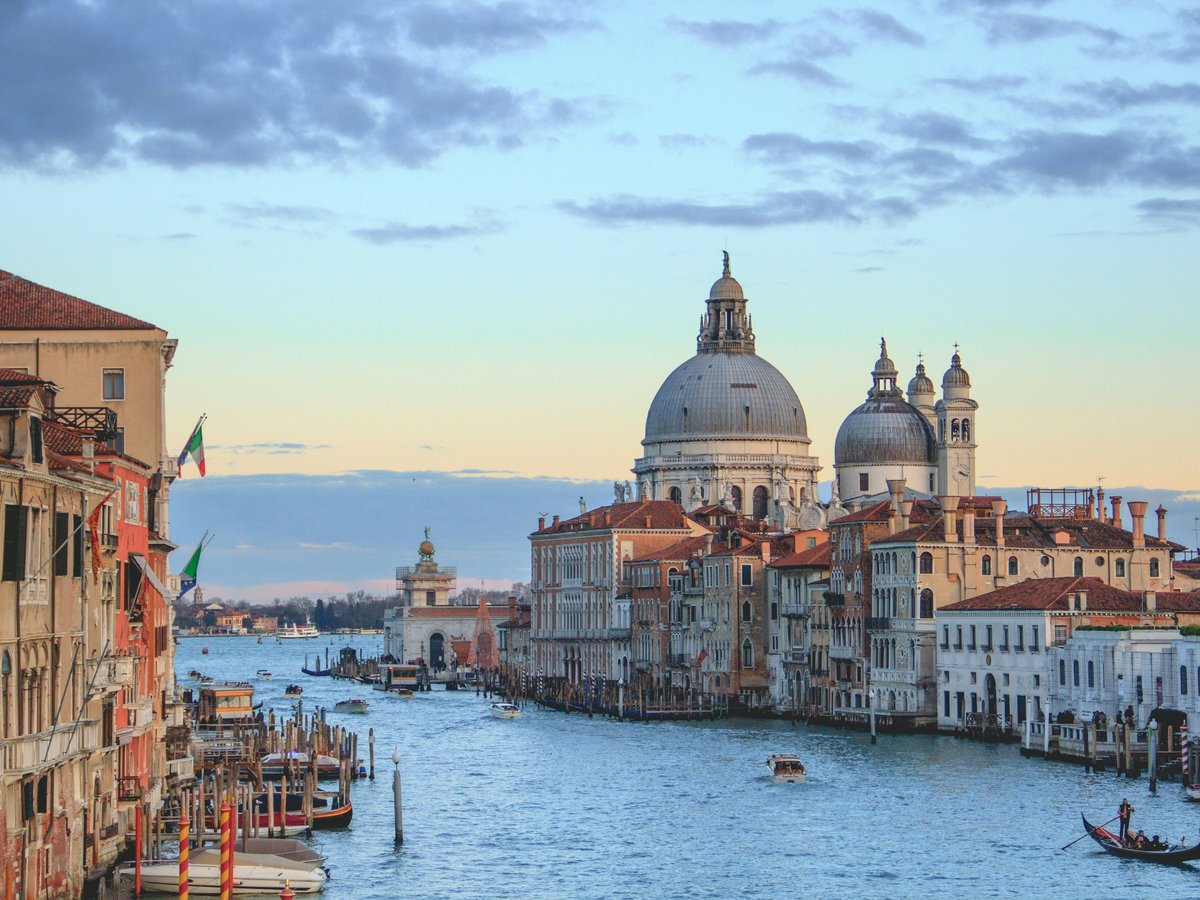
February in Venice means one thing above all else. Carnevale di Venezia, the city's 900-year-old masked festival, takes over the streets, squares, and canals for roughly two to three weeks leading up to Shrove Tuesday. The rest of the month is quiet, cold, and damp, with daytime highs around 10°C (50°F) and lows that dip to 2.7°C (37°F). That split personality defines the February experience. During Carnival, Piazza San Marco fills with elaborately costumed figures, hotel rates double or triple, and the city feels like a film set. Outside those dates, Venice empties out to a degree that surprises most visitors. You might have the Gallerie dell'Accademia nearly to yourself on a Tuesday morning in early February.
The trade-off is real, though. Venice in February is cold in a way that seeps into your bones. The lagoon humidity, sitting around 81%, makes 5°C feel closer to freezing. Acqua alta, the periodic flooding that sends seawater over walkways in low-lying areas of San Marco and Dorsoduro, still occurs in February, though less frequently than in November or December. The city puts out raised walkways called passerelle, but if you're not prepared with waterproof boots, a flood event turns a pleasant morning into a soggy ordeal. That said, there is something genuinely atmospheric about Venice in winter fog, with fewer tourists and the canals reflecting pale grey light. It tends to reward the traveler who packs properly and plans around the weather rather than fighting it.
Why visit in February
- Carnevale di Venezia is one of Europe's most distinctive festivals, with masked processions, the Volo dell'Aquila over Piazza San Marco, and the Festa delle Marie parade through San Pietro di Castello. Attending it is a genuinely singular experience.
- Outside Carnival dates, early February is one of the quietest periods of the year. Visitor numbers drop roughly 60-70% compared to summer, and popular sites like the Palazzo Ducale and Basilica di San Marco have minimal queues.
- Hotel rates in non-Carnival weeks of February can run 40-50% below the summer average. A 3-star hotel near Rialto that charges 200 EUR per night in July might go for 90-110 EUR in the first week of February.
- The winter light over the lagoon creates photographic conditions that summer's haze and crowds make nearly impossible. The low sun angle in February, rising around 7:15 and setting by 17:30, casts long shadows across the canals and facades of Cannaregio and Dorsoduro.
- Seasonal Venetian food peaks in winter. Radicchio di Treviso, risotto di go, and Carnival pastries like frittelle are available fresh from bakeries across the city, at prices locals pay.
Worth knowing
- The cold is damp and persistent. At 81% humidity and highs of 10°C (50°F), February in Venice feels colder than continental cities at the same temperature. Wind off the lagoon makes outdoor dining or extended walking uncomfortable without proper layers.
- Acqua alta remains a risk through February, though flooding events typically happen 2-3 times per month. The MOSE barrier system has reduced major floods since 2020, but minor events still send 10-15 cm of water across Piazza San Marco and parts of Dorsoduro.
- During Carnival weekends, Piazza San Marco and the streets between San Marco and Rialto become extremely congested. Hotel prices in the San Marco and San Polo sestieri can reach summer-peak levels or higher for Carnival Saturday nights.
- Daylight is limited. Sunrise is around 7:15 and sunset by 17:30, giving roughly 10 hours of usable daylight. Some smaller churches and galleries reduce their winter hours or close entirely on weekdays.
Best for
Think twice if
February is the tail end of Venice's coldest stretch. Daytime highs average 10°C (50°F) and overnight lows sit around 2.7°C (37°F), though clear nights can push below freezing. Rainfall is relatively low at 49mm across about 5 rainy days, making February one of the drier months. That said, the 81% humidity and the lagoon wind create a penetrating cold that the numbers alone don't convey. Fog is common in the mornings, particularly over the canals in Cannaregio and around the Fondamenta Nuove, usually lifting by late morning.
Seasonal caution
- Acqua alta flooding can still occur in February, sending seawater over low-lying walkways in San Marco, Dorsoduro, and parts of Santa Croce. Check the Centro Maree forecasts daily. The MOSE barrier system has reduced major events since 2020, but minor flooding of 10-15 cm above normal still happens 2-3 times per month.
- Overnight temperatures occasionally drop below 0°C (32°F) during clear-sky cold snaps, making bridges and stone walkways slippery with frost in early morning.
Year-round climate
Averages from the last 5 years.
| Month | Avg high (°C) | Avg low (°C) | Rainfall (mm) |
|---|---|---|---|
| Jan | 8 | 1 | 73 |
| Feb | 10 | 3 | 49 |
| Mar | 13 | 5 | 77 |
| Apr | 16 | 8 | 85 |
| May | 21 | 14 | 149 |
| Jun | 27 | 19 | 57 |
| Jul | 29 | 21 | 84 |
| Aug | 29 | 20 | 74 |
| Sep | 24 | 17 | 116 |
| Oct | 19 | 12 | 104 |
| Nov | 13 | 6 | 85 |
| Dec | 9 | 3 | 57 |
Headline events
Carnevale di Venezia
Approximately 2-3 weeks before Shrove Tuesday, typically mid-to-late February depending on the Easter calendar
Venice's signature festival, running for roughly two to three weeks before Shrove Tuesday. Masked revelers in period costumes fill Piazza San Marco, the canals host decorated boat processions, and private masked balls take place in historic palazzi like Palazzo Pisani Moretta and Ca' Vendramin Calergi. The festival has roots going back to 1162, was revived in its modern form in 1979, and now draws an estimated 3 million visitors over its run. The opening ceremony features the Volo dell'Aquila, where a costumed figure descends on a zip line from the Campanile di San Marco to the piazza below.
Best things to do in February
Attend Carnival events in Piazza San Marco
festivalWatch the Volo dell'Aquila opening ceremony from Piazza San Marco, where a costumed figure descends from the 99-meter Campanile on a wire. Browse the masked figures posing for photos along the arcades of the Procuratie. The piazza becomes a stage, and the free, open-air events run daily during Carnival's final 10 days.
Carnevale di Venezia happens only in the weeks before Lent, and Piazza San Marco is its epicenter. This spectacle does not exist at any other time of year.Booking tipNo booking needed for the public events in the piazza. Arrive by 9:00 on the final Sunday to secure a viewing spot near the Campanile for the costume competition.
Visit the Gallerie dell'Accademia without summer crowds
cultureThe Accademia holds the most important collection of Venetian painting in the world, with works by Bellini, Titian, Tintoretto, and Veronese. In February, particularly on weekday mornings outside Carnival dates, you can stand alone in front of Veronese's Feast in the House of Levi, a 13-meter canvas that summer visitors see over a wall of heads.
Summer visitor counts at the Accademia can exceed 3,000 per day. In early February, daily attendance drops below 500, and you might share a gallery with 2-3 other people.Booking tipBook online at least a day ahead to skip the ticket line, even in low season. The museum is closed on Mondays.
Walk the Fondamenta Nuove in morning fog
walkingThe north-facing waterfront of Cannaregio, running from the Gesuiti church east toward the Ospedale, looks directly out over the lagoon toward the cemetery island of San Michele and, on clear days, Murano. In February morning fog, the islands dissolve into grey, and the vaporetto emerges from nothing. The walk runs about 800 meters and is one of the most atmospheric stretches in the city.
February fog conditions along the northern lagoon are more frequent than any other month. The combination of cold water temperatures and warmer-than-freezing air creates persistent morning mist that lifts by 10:00 or 11:00.Explore the bacari of Cannaregio for cicheti and ombra
food and drinkThe traditional Venetian bar crawl, called a giro d'ombra, means moving between small bars called bacari, ordering a glass of house wine (an ombra, typically 2-3 EUR) and small plates of cicheti. Cannaregio has a dense concentration of them along the Strada Nova and around Campo dei Mori. In February, the locals outnumber tourists at places like Al Timon and Vino Vero, and the atmosphere is more neighborhood bar than tourist circuit.
In summer, the popular bacari are packed 3-deep by 18:00. In February, you can lean on the bar at most spots without a wait, and the cicheti selection tends to feature heartier winter dishes like polpette and sarde in saor.Booking tipNo reservations at bacari. Start around 17:30 for the best cicheti selection before items sell out.
Tour Palazzo Ducale and the Itinerari Segreti
cultureThe Doge's Palace is Venice's most historically significant building, and the Itinerari Segreti (Secret Itineraries) tour takes you through rooms not included in the standard ticket. You'll see the torture chambers, the lead-roofed prison cells (the Piombi, from which Casanova escaped in 1756), and the administrative offices behind the grand halls. The tour runs about 75 minutes.
The Secret Itineraries tour has a strict cap of 25 people per session. In summer, it sells out weeks ahead. In February, you can often book 2-3 days before, and the smaller group sizes make for a better experience.Booking tipBook the Itinerari Segreti online at least 3 days ahead. It runs in Italian and English on alternating sessions.
Take a vaporetto to Burano on a clear February day
day tripThe island of Burano, about 40 minutes by vaporetto Line 12 from Fondamente Nove, is known for its brightly painted fishermen's houses and lace-making tradition. In February, the colors of the houses against a pale winter sky photograph differently than in summer's harsh light. The island's population is around 2,700, and on a February weekday you might encounter fewer than 100 other visitors.
Summer visitor numbers on Burano can exceed 5,000 per day, which overwhelms the narrow streets and makes photography difficult. February offers the island close to how residents experience it.Booking tipCheck the ACTV vaporetto schedule. Line 12 runs roughly every 30 minutes from Fondamente Nove, but winter schedules sometimes reduce frequency after 16:00.
Attend an evening performance at Teatro La Fenice
cultureVenice's principal opera house, rebuilt after its 1996 fire, runs a full winter season through February. The 2025-2026 season has typically included at least one major opera production in February, often Verdi or Puccini. The interior, with its gilded tiers and blue velvet seats, is itself worth the visit. Seats range from around 30 EUR in the upper gallery to over 200 EUR in the stalls.
February falls in the heart of La Fenice's main opera season. The winter programming tends to feature the house's strongest productions, and tickets are easier to secure than for the gala performances in November or December.Booking tipBook tickets on the Teatro La Fenice website at least 2 weeks ahead for weekend performances. Weeknight shows are often available a few days before.
Rent a Carnival costume and mask for a day
experienceSeveral ateliers in Venice rent full period costumes and masks for Carnival. Atelier Nicolao in Cannaregio and Atelier Flavia in San Polo are two established workshops where you can rent a full 18th-century Venetian costume for a day. Prices typically start around 150-250 EUR for a basic rental. You then wander the city in costume, which is both surreal and surprisingly participatory. Strangers stop you for photographs.
Costume rental is a Carnival-only experience. Outside the festival period, wearing a mask in Venice is technically restricted by municipal ordinance, with exceptions only during Carnival.Booking tipReserve your costume at least 2-3 weeks before Carnival. Popular sizes and elaborate designs book out early.
What to eat in February
On menus now
Risotto di go
A traditional Venetian lagoon dish made with goby fish from the shallow waters around the city. The tiny fish are simmered into a broth, then the rice is cooked in it. The flavor is briny, delicate, and specific to the lagoon. February is deep in goby season. You'll find it at restaurants like Trattoria alla Madonna near Rialto and some of the bacari in Castello.
Baccalà mantecato
Salt cod whipped with olive oil into a creamy spread, served on grilled polenta at nearly every bacaro in Venice. It is a year-round staple, but winter is when the dish feels most appropriate. The combination of warm polenta and rich, salty fish against the cold lagoon air outside is deeply satisfying. Cantina Do Spade in San Polo has served a well-regarded version for decades.
In markets
Radicchio di Treviso IGP
Late-harvest radicchio from the fields around Treviso, about 30 km north of Venice, reaches its peak sweetness after the January frosts. In February, you'll see it grilled, in risotto, or raw in salads at restaurants across the city. The long, slender leaves have a bittersweet flavor that softens considerably when charred over high heat.
Festival food
Frittelle veneziane
The defining Carnival pastry. These fried dough balls come in three main styles. The plain frittelle veneziane are studded with raisins and pine nuts. Others are filled with crema pasticcera or zabaione. Every pasticceria in Venice makes them from roughly January through Shrove Tuesday, and locals argue seriously about who makes the best ones. Tonolo in Dorsoduro and Rosa Salva near Campo Santi Giovanni e Paolo are two names that come up often.
Galani
Thin, crisp fried pastry strips dusted with powdered sugar. Also called crostoli or chiacchiere in other parts of Italy. These appear in bakery windows across Venice from late January through Carnival and disappear the day after Shrove Tuesday. They shatter when you bite them, scattering sugar across your coat. Worth it.
Castagnole
Small, round fried dough balls, denser than frittelle and often coated in granulated sugar. Some versions are filled with ricotta or custard cream. They are a Carnival staple across the Veneto, not only Venice, and you'll find bags of them at market stalls near Rialto for 3-5 EUR.
Regular events in February
Festa delle MarieFree
A historical procession re-enacting a medieval tradition where 12 young women, selected by public vote, parade in period costume from San Pietro di Castello to Piazza San Marco. The event dates back to a 10th-century custom and was revived in 1999. It typically takes place on the Saturday before the final Carnival weekend.
Saturday before the final Carnival weekend, usually mid-to-late FebruaryVolo dell'Aquila (Flight of the Eagle)Free
The Carnival opening ceremony in Piazza San Marco, where a performer in costume descends on a cable from the top of the 99-meter Campanile to the piazza floor. Originally called the Volo dell'Angelo, the tradition dates to the 16th century. It marks the official start of Carnival's final week of open-air events.
The Sunday opening the final week of CarnivalCorteo sull'Acqua (Water Parade)Free
A procession of decorated boats along the Grand Canal, typically held on the first Sunday of Carnival. Costumed rowers in historic vessels travel from the area near Piazzale Roma to the San Marco basin. The best vantage points are from the Rialto Bridge and the Fondamenta along San Polo.
First Sunday of the Carnival periodFesta Veneziana sull'AcquaFree
An evening water festival held in the Cannaregio canal district, with illuminated boats, music, and food stalls along the Fondamenta della Misericordia. The event typically draws locals and visitors to a part of Venice that tourists rarely explore in depth.
Typically one evening during the first Carnival weekendBest places this February
Piazza San Marco and the Procuratie
squareThe ceremonial heart of Carnival and Venice itself. During the festival, the piazza hosts daily costume parades, the Volo dell'Aquila, and the Marie competition. Outside Carnival dates, February's low visitor count means you can photograph the Basilica's mosaics and the Campanile without the summer crowds that fill the square shoulder to shoulder. Early morning, before 9:00, the piazza is often nearly empty.
San MarcoScuola Grande di San Rocco
museumContains Tintoretto's greatest cycle of paintings, 60 canvases covering the walls and ceilings of three floors. In February, you might be the only visitor in the upper hall, standing beneath the Crucifixion (1565), which measures over 5 by 12 meters. The winter light through the windows illuminates the paintings differently than summer's brighter, flatter glare.
San PoloFondamenta della Misericordia in Cannaregio
waterfrontA long canal-side walkway in the northern part of Cannaregio, lined with bars and small restaurants. In February evenings, locals gather at spots like Al Timon, which puts barrels outside for standing and drinking even in cold weather. The Festa Veneziana sull'Acqua typically uses this stretch for its illuminated boat procession during Carnival.
CannaregioCampo Santa Margherita in Dorsoduro
squareThe social square of the Dorsoduro sestiere, surrounded by university buildings and local bars. In February it stays lively with students from Ca' Foscari university, and you'll find a produce market on weekday mornings. It is one of the few campi that feels like a neighborhood gathering place year-round, not a tourist stop.
DorsoduroLibreria Acqua Alta in Castello
bookshopA bookshop near Campo Santa Maria Formosa that stores its inventory in gondolas, bathtubs, and waterproof bins because the shop floods regularly during acqua alta. The staircase made of water-damaged encyclopedias looks out over a back canal. In February, the shop is less crowded than its summer peak, when the line can stretch down the calle.
CastelloPunta della Dogana
museum and viewpointThe triangular tip of the Dorsoduro sestiere where the Grand Canal meets the Giudecca Canal, now housing the Pinault Collection of contemporary art in a restored customs warehouse. The views from the tip take in San Giorgio Maggiore, the lagoon, and the Palazzo Ducale across the water. In February fog, the view shifts to an atmospheric grey that collapses distance. The museum itself tends to have strong winter exhibitions.
DorsoduroRialto Fish Market (Mercato di Rialto)
marketThe fish market near the Rialto Bridge has operated since 1097 and runs Tuesday through Saturday, typically wrapping up by noon. In February, the stalls display winter lagoon catches including cuttlefish (seppie), mantis shrimp (canocchie), and the small gobies used in risotto di go. The adjacent produce market has winter greens including radicchio di Treviso and artichoke hearts (castraure appear later, in April).
San Polo
Your packing checklist
Tick items off as you pack. Your progress saves in this browser.
All packed — have a great trip.
Insider tips
The cheap rubber overshoes (stivali) sold at tourist shops near San Marco for 10-15 EUR leak at the seams after a few hours. If you expect serious acqua alta, buy the taller, reinforced version from a hardware shop in Castello or Cannaregio for about 25 EUR. They last the whole trip.
Carnival's costumed figures congregate in Piazza San Marco, but the most photogenic backdrops are in the quieter streets of Dorsoduro and Santa Croce. The narrow calle near Campo San Giacomo dell'Orio, with its weathered brick and canal reflections, produces more atmospheric costume portraits than the tourist-packed piazza.
For frittelle, skip the heavily promoted shops near San Marco and walk to Pasticceria Tonolo on Calle San Pantalon in Dorsoduro. The line is mostly locals, and they sell out by early afternoon during Carnival week. Arrive before 10:00.
The vaporetto 24-hour pass costs about 25 EUR and is almost always better value than single tickets at 9.50 EUR each. If you're staying 3 or more days, the 72-hour pass at 45 EUR pays for itself in roughly 5 rides.
February sunset over the lagoon, viewed from the south side of Giudecca facing back toward Dorsoduro and San Marco, is one of Venice's least-known vantage points. Take the Line 2 vaporetto to Giudecca Palanca and walk east along the Fondamenta. You'll likely be alone.
Avoid these mistakes
- Packing only fashion shoes and no waterproof footwear. Acqua alta can develop within hours based on wind direction and tidal patterns. Checking into your hotel in dry conditions and waking to flooded streets is a common February scenario. Once your shoes are soaked with cold lagoon water at 9:00, the rest of the day is miserable.
- Booking hotels during the final Carnival weekend without realizing prices have tripled. The Saturday before Shrove Tuesday is one of the most expensive nights of the entire year in Venice. Shifting your visit to the first Carnival weekend, or to pre-Carnival dates in early February, can save 50-60% on accommodation.
- Assuming all churches and museums keep summer hours. Several smaller churches in Venice, including some with important paintings, close to visitors between 12:00 and 15:00 in winter or open only on select days. The Chorus Pass churches maintain reduced winter schedules. Check specific hours before walking 20 minutes across Castello to find a locked door.
- Wearing a costume mask outside the official Carnival period. Venice has a municipal regulation restricting face-covering masks outside Carnival dates for security reasons. Tourists occasionally arrive in early February, before Carnival has officially started, wearing masks and find themselves asked to remove them by police.
Practical tips for February
Book accommodations 4-6 weeks ahead if your dates overlap with Carnival, particularly for the final weekend. Pre-Carnival early February needs less lead time, often 1-2 weeks for good rates. The ACTV vaporetto system runs on winter schedules with reduced frequency on some lines after 21:00. Download the AVM Venezia app for real-time vaporetto tracking. Most restaurants in tourist areas stay open through February, but some neighborhood trattorias in Castello and Santa Croce close for 1-2 weeks in early February before Carnival brings business back. If you're attending a masked ball at one of the private palazzi, formal dress codes apply under the costume, and you'll need to arrange water taxi transport as most venues on the Grand Canal are only accessible by boat. Venice's Marco Polo Airport (VCE) connects to the city center via the Alilaguna water bus (about 15 EUR, 75 minutes to San Marco) or by land bus to Piazzale Roma (8 EUR, 25 minutes). Water taxis run about 110-130 EUR for the direct boat transfer. In February, the Alilaguna tends to be uncrowded, making it a pleasant and affordable option.
FAQ
Is February a good time to visit Venice?
February is a good time if you're drawn to Carnival or want to see Venice without summer crowds. The weather is cold, with highs around 10°C (50°F) and persistent lagoon humidity, so it's not a month for casual wandering in light clothing. If you time your visit to overlap with Carnevale di Venezia, you'll experience one of Europe's most distinctive festivals. If you visit early February before Carnival starts, you'll find some of the lowest hotel prices and emptiest museums of the year. The main risk is acqua alta flooding, which can disrupt walking routes on 2-3 days during the month.
What is the weather like in Venice in February?
Expect daytime highs around 10°C (50°F) and overnight lows near 2.7°C (37°F). Rainfall averages 49mm spread across about 5 rainy days, making it one of Venice's drier months. The humidity sits at around 81%, which makes the cold feel more penetrating than the numbers suggest. Fog is common in the mornings, particularly along the northern lagoon edge in Cannaregio. Clear days are genuinely beautiful, with sharp winter light over the canals, but you'll want proper layers and a windproof jacket for the lagoon breeze.
Is Venice crowded during Carnival in February?
During the final Carnival weekend, particularly the Saturday before Shrove Tuesday, Piazza San Marco and the routes between San Marco and Rialto are genuinely packed. Venice receives an estimated 100,000 or more day visitors on peak Carnival days. However, even during Carnival, the crowds thin dramatically once you move into Cannaregio, Castello, or the quieter parts of Dorsoduro. The opening weekend of Carnival and weekday events tend to be far more manageable than the closing weekend.
How much does it cost to visit Venice in February?
February has a sharp price split. In the first week, before Carnival, hotel rates in central Venice can drop to 80-120 EUR per night for a decent 3-star property, which is 40-50% below summer rates. During the final Carnival weekend, the same room might cost 200-350 EUR. Dining prices stay relatively stable year-round. A sit-down lunch for two with wine runs about 50-80 EUR at a mid-range trattoria. Vaporetto passes cost 25 EUR for 24 hours. Museum entry fees don't change seasonally, with the Palazzo Ducale at about 30 EUR and the Accademia at about 12 EUR.
What should I pack for Venice in February?
The essentials are waterproof boots (for acqua alta flooding), a windproof and water-resistant jacket, warm layers in wool or synthetic fabrics (cotton stays damp in the 81% humidity), a scarf, gloves, and a hat. Bring a compact umbrella for the occasional rain shower. If you're attending Carnival events, you might want a mask or basic costume elements. Pack layers you can remove indoors, as churches and museums are heated to 20-22°C while it's 5-10°C outside. The Centro Maree app on your phone is as important as any physical item. It forecasts acqua alta 48 hours ahead.
Things to Do in Venice in February
 Free cancellation
 Murano & Burano Islands Guided Small-Group Tour by Private Boat
Day trip: 5 hours, free cancellation.
via Viator
Venice In a Day St Mark's Doges Palace Gondola Ride and City Tour
Cruise: 4.5 hours.
via Viator Free cancellation
 Venice Basilica Doge Palace Gondola and History Gallery
Cruise: 3.5 hours, free cancellation.
via Viator Free cancellation
 Venice Islands: Murano Glass & Burano Colors-Guided Visit
Day trip: free cancellation.
via Viator Free cancellation
 Skip-the-Line: Doge's Palace & St. Mark's Basilica Fully Guided Tour
City tour: 2 hours, free cancellation.
via Viator Free cancellation
 Venice Like a Local: Food, Wine & Spritz Tour with Traghetto Ride
Cruise: 2.5 hours, free cancellation.
via ViatorFind a flight to Venice
Live fares to Venice appear here once cookies are accepted.
Last verified by automated review (v1.7.2) on . What is automated review?