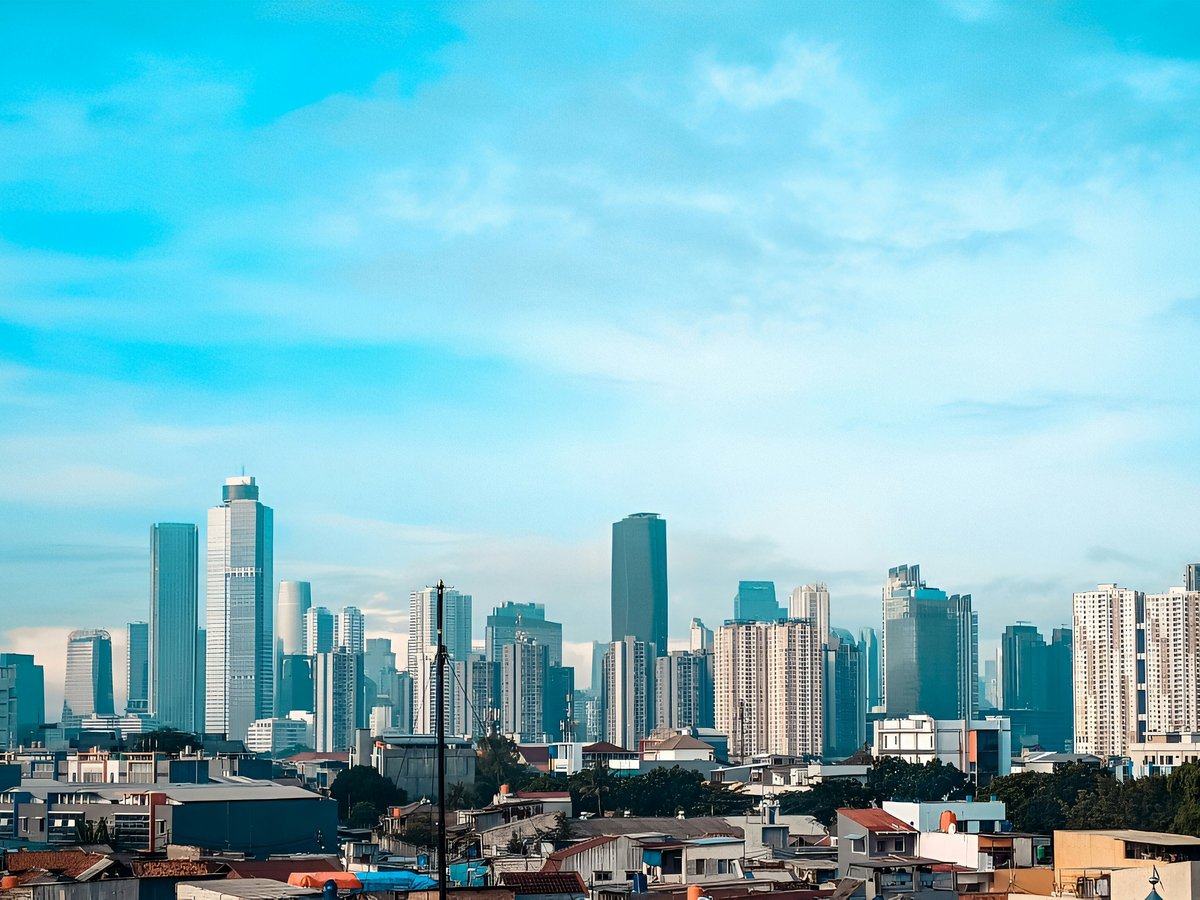
Stay in Jakarta in March
125 hotels in the Trip.com pool for Jakarta, from US$12 a night.
Opens Trip.com on Fri 5 Mar to Sun 7 Mar 2027; change the dates there.
March in Jakarta means monsoon. The city sits deep in its wet season, with heavy afternoon downpours that arrive most days between 2 p.m. and 4 p.m. and turn low-lying streets near the Ciliwung river into temporary canals. The humidity clings to your skin the moment you step outside, and the overcast mornings feel warm and heavy before the storms even start. Banjir, the flooding that Jakarta has dealt with for decades, remains a real possibility in neighborhoods like Kampung Melayu and parts of Jatinegara. This is not theoretical rain. It is the kind that fills your shoes in 30 seconds flat.
The other factor shaping a March visit depends on the Islamic calendar. In the mid-2020s, Ramadan overlaps with most of March, which means daytime dining options shrink as neighborhood warungs close until sundown. The final days of the fasting month bring Eid al-Fitr (Lebaran), triggering the massive mudik exodus. Millions of Jakartans leave for their hometowns. The normally gridlocked Sudirman corridor becomes eerily quiet for 3-5 days. If you're prepared for that rhythm, it's a rare window into the city at its most reflective. If you're not, the shuttered storefronts can feel disorienting.
There is one headline draw. Jakarta International Java Jazz Festival fills the JIExpo arena in Kemayoran during the first weekend of March, bringing international headliners and Indonesian jazz acts to multiple indoor stages. It's one of the largest jazz festivals in the Southern Hemisphere, regularly drawing over 100,000 attendees across three days. For music fans, that weekend alone makes a rainy March trip worth considering.
Why visit in March
- Jakarta International Java Jazz Festival draws world-class performers to JIExpo Kemayoran, making the first weekend of March one of Southeast Asia's premier live-music events.
- Wet-season hotel rates along the Thamrin-Sudirman corridor typically drop 30-40% below July and August peaks, and occupancy stays low enough that last-minute bookings work fine.
- Ramadan night markets (pasar takjil) appear across the city at sundown during the fasting month, offering seasonal sweets and snacks like kolak and onde-onde that you won't find outside this period.
- The rain scrubs Jakarta's air, so particulate levels in March tend to be noticeably better than during the August-through-October agricultural burning season.
Worth knowing
- You will get rained on nearly every day, with afternoon storms lasting 60-90 minutes that paralyze traffic across Central and South Jakarta.
- Banjir affects low-lying neighborhoods along the Ciliwung most years between January and March, occasionally closing major roads and forcing detours for days at a time.
- During Ramadan, many smaller restaurants close between sunrise and sunset, limiting midday options for visitors in residential areas like Menteng and Blok M to mall food courts or hotel dining rooms.
- The persistent humidity amplifies what the thermometer reads, making even moderate afternoon temperatures feel significantly hotter than the numbers suggest.
Best for
Think twice if
March sits at the tail of Jakarta's wet monsoon, though the tail still has teeth. Expect rainfall of 279mm spread across roughly 29 days, meaning near-daily storms that typically arrive in the mid-afternoon as sudden, theatrical downpours. Mornings tend to start overcast but dry, with temperatures climbing from about 23.9°C (75°F) at dawn to 30.8°C (87°F) by midday. Humidity averages 84%, which makes the heat feel considerably worse than the numbers suggest. Nights stay warm. You won't need a sweater. The rain cools things by perhaps 2-3 degrees for an hour, then the steam comes off the asphalt and the thick air returns. Compared to January's 331mm, March shows the monsoon losing some intensity. April's 205mm represents a meaningful improvement, and by August the city receives only 99mm. If you can push your trip by even one month, you'll notice the difference.
Seasonal caution
- Flooding is Jakarta's most serious March hazard. Low-lying areas along the Ciliwung river, particularly Kampung Melayu and parts of Jatinegara, flood in most years between January and March. In severe years, floodwaters reach 1-2 meters and close major roads for days at a time.
- Lightning storms accompany many afternoon downpours. Jakarta records among the highest lightning-strike densities in Southeast Asia. Move indoors or under solid shelter when thunder begins, not a tree or open-sided warung.
- Standing floodwater conceals open drainage channels, broken pavement, and debris. Waterborne illness risk rises during prolonged flooding. Avoid wading through standing water in older neighborhoods.
- Dengue fever cases in Jakarta typically rise during the wet season from January through April, driven by Aedes mosquitoes breeding in standing rainwater. Apply DEET-based repellent in the evenings, particularly in greener districts.
Year-round climate
Averages from the last 5 years.
| Month | Avg high (°C) | Avg low (°C) | Rainfall (mm) |
|---|---|---|---|
| Jan | 30 | 24 | 331 |
| Feb | 30 | 24 | 292 |
| Mar | 31 | 24 | 279 |
| Apr | 32 | 24 | 205 |
| May | 32 | 24 | 190 |
| Jun | 31 | 24 | 166 |
| Jul | 32 | 23 | 102 |
| Aug | 33 | 23 | 99 |
| Sep | 33 | 24 | 133 |
| Oct | 33 | 24 | 177 |
| Nov | 32 | 24 | 246 |
| Dec | 31 | 24 | 269 |
Holidays and festivals in March
Public holidays
- Good Friday(Wafat Isa Almasih)26 March 2027
- Easter Sunday(Paskah)28 March 2027
Headline events
Jakarta International Java Jazz Festival
First weekend of March (Friday through Sunday)
One of the largest jazz festivals in the Southern Hemisphere, held annually at JIExpo in the Kemayoran district. The 3-day event features international headliners alongside Indonesia's deep jazz, fusion, and soul scene across multiple indoor stages. Attendance regularly tops 100,000 over the weekend. The indoor venue makes the monsoon irrelevant once you're inside.
Best things to do in March
Attend Jakarta International Java Jazz Festival
musicThree days of performances across multiple indoor stages at JIExpo. Past lineups have mixed international R&B and soul acts with Indonesia's own jazz scene, which runs deeper than most visitors expect. The covered venue means the monsoon stays outside while you move between stages.
The festival happens exclusively in early March. This is a date-locked event with no equivalent in any other month of the year.Booking tipBuy tickets at least 3 weeks ahead. Saturday daily passes sell out first. Multi-day passes offer better per-day value and include access to the smaller stages where surprise sets appear.
Explore the National Museum of Indonesia (Museum Nasional)
cultureSoutheast Asia's oldest museum, established in 1778, houses Indonesian textiles, Hindu-Buddhist sculpture, and ethnographic artifacts across two buildings near Merdeka Square. The newer wing has solid climate control and modern exhibition design that rewards a 2-3 hour visit.
Daily rain makes indoor cultural sites essential for afternoon planning. The museum fills the storm window perfectly, and wet-season weekdays see thinner crowds than any other quarter.Booking tipVisit on a weekday morning when school groups are fewer. The textile gallery on the upper floor is often nearly empty.
Walk Kota Tua at dawn
sightseeingJakarta's old Dutch colonial quarter around Fatahillah Square holds the Jakarta History Museum (Museum Fatahillah) and several smaller galleries in renovated VOC-era warehouses. The cobblestones, shuttered facades, and quiet canal bridges feel like a different century from the glass towers a few kilometers south.
Early morning walks before 8 a.m. catch the mist from overnight rain softening the light across the square. The air is cooler, the crowds haven't arrived, and the wet stone surfaces photograph well in overcast conditions.Booking tipMuseum Fatahillah opens at 9 a.m. Tuesday through Sunday. Arrive at the square by 7 a.m. for uncrowded photos, then duck into the museum when doors open.
Browse Ramadan takjil markets at sundown
foodFrom roughly 3 p.m. to the evening call to prayer during Ramadan, temporary street markets spring up across Jakarta selling break-fast snacks. The stretch along Jalan Panjang in West Jakarta and the stalls near Benhil station are among the largest. Non-Muslims are welcome to buy.
These markets only exist during the fasting month, which overlaps with March in the mid-2020s. They vanish entirely after Eid and won't reappear until the following Ramadan.Booking tipNo booking needed. Arrive around 4 p.m. for the widest selection before the maghrib rush empties the stalls.
Visit Masjid Istiqlal during Ramadan iftar
cultureSoutheast Asia's largest mosque, completed in 1978, sits directly across from Jakarta Cathedral. The marble-floored prayer hall accommodates over 100,000 worshippers. At iftar during the fasting month, thousands gather to break fast together in the courtyard and surrounding grounds.
The communal iftar at Istiqlal is a singular atmosphere available only during Ramadan. Non-Muslim visitors are welcome to observe respectfully with modest clothing and head coverings for women.Booking tipArrive 30 minutes before sundown. Cover shoulders and knees. Entry is free.
Spend a rainy afternoon at Taman Mini Indonesia Indah
cultureThis 150-hectare cultural park in East Jakarta, opened in 1975, reproduces traditional houses from all of Indonesia's provinces around an artificial lake shaped like the archipelago. It's enormous, a bit theatrical, and genuinely educational about the country's regional diversity.
Wet-season weekdays thin out the crowds that normally pack the grounds, giving you room to wander between pavilions. The covered indoor museums and regional houses offer rain shelter as you move through the site.Booking tipGo on a weekday. Rent one of the small electric carts at the entrance to cover the grounds efficiently.
Day trip to Kepulauan Seribu on a calm day
natureThe chain of small islands in the Java Sea north of Jakarta offers white sand, warm-water snorkeling, and a stark contrast to the city. Pulau Pari and Pulau Tidung are the most accessible from Muara Angke harbor, reachable by speedboat in about 90 minutes.
Island resorts drop their rates significantly during wet season, and you might have a beach to yourself. Calm windows between storms still appear. The gamble pays off with uncrowded reefs and shoulder-season pricing.Booking tipBook the boat 2 days ahead and confirm the morning of departure. Operators cancel in heavy rain or high swells. Build this into the middle of your trip, not day one, so you have rebooking room.
What to eat in March
In season: fruit
Rambutan
The hairy red fruit hits peak ripeness from December through March. By late March the season is tailing off, so prices drop and vendors pile them high at Pasar Minggu and fruit carts across South Jakarta. The sweetest ones have thin, papery skin that peels easily and translucent flesh with a clean floral sweetness.
Duku
Small, translucent-fleshed fruit with a sweet-tart flavor that peaks between September and March. By the end of the month the season is winding down, so grab them early from Pasar Santa or fruit sellers in Kebayoran Baru before the last batches sell through.
On menus now
Soto Betawi
Jakarta's signature beef and offal soup in a creamy coconut-milk broth. Available year-round, but the rainy season makes a steaming bowl feel essential. The richness of the broth and the warmth of the spice hit differently when you're drying off after a 30-minute downpour. Established spots in Kebon Sirih serve it from early morning.
Street food peaks
Takjil assortment
The Ramadan break-fast snack genre covers es buah (fruit ice), kurma (dates), onde-onde (sesame glutinous rice balls), and gorengan (assorted fried bites). Pasar takjil stalls materialize around 4 p.m. during the fasting month and vanish after maghrib. The variety in a single market can top 40 items.
Festival food
Kolak pisang
Banana simmered in palm sugar and coconut milk, served warm. This sweet appears at every Ramadan pasar takjil at sundown, from street carts in Tanah Abang to proper restaurants in Menteng. The palm sugar lends a deep caramel note that smells like evening prayer.
Ketupat with opor ayam
Woven palm-leaf rice cakes served with chicken braised in a mild, spiced coconut-milk gravy. This is the defining Eid al-Fitr dish. Families prepare it on Lebaran morning, and restaurants serve it for the week after. The coconut broth has a pale turmeric warmth that smells like the holiday itself.
Regular events in March
Cap Go Meh in GlodokFree
The 15th and final night of Chinese New Year celebrations. In Jakarta's Chinatown, this means lion and dragon dances winding through narrow streets, lantern displays at Vihara Dharma Bhakti, and firecrackers that are technically illegal and universally ignored. The date follows the lunar calendar and lands in March only in certain years (March 3 in 2026). Check the Chinese calendar for your travel year.
15 days after Chinese New Year (falls in March approximately every 3-4 years)Eid al-Fitr (Lebaran)Free
The end of Ramadan triggers Indonesia's largest annual holiday and the massive mudik exodus. Millions leave Jakarta for their home provinces. Most small businesses close for 3-7 days. Major roads empty. The city becomes remarkably quiet. In the mid-2020s, Eid falls in late March, shifting roughly 11 days earlier each Gregorian year (expected around March 20-21 in 2026).
Shifts annually with the Islamic calendar (late March in 2026, mid-March in 2027)Nuzul al-QuranFree
A national public holiday marking the anniversary of the Quran's first revelation, observed on the 17th of Ramadan. Government offices and many businesses close. Mosques hold special recitation events throughout the day and evening.
17th of Ramadan (falls in March in the mid-2020s)Best places this March
Kota Tua
historic districtThe former heart of colonial Batavia, centered on Fatahillah Square with its cluster of museums in renovated Dutch-era buildings. March mornings bring a soft, misted light from overnight rain that suits the weathered facades. The covered museum interiors offer shelter once the afternoon storms roll in. The wet cobblestones add a melancholy atmosphere that sunny months lack.
Kota TuaGlodok
neighborhoodOne of Southeast Asia's oldest Chinese settlements, dense with herbal medicine shops, temple incense, and food stalls serving bakmi and bakso. The covered market alleys stay dry during downpours, making Glodok a practical and atmospheric rain-day option. If Cap Go Meh falls in March, the neighborhood transforms with lantern decorations and street performances for several days.
GlodokMerdeka Square and the National Monument
landmarkThe 1-square-kilometer park surrounding Monas, the National Monument completed in 1975, is Jakarta's geographic and symbolic center. The monument's observation deck offers wide views, though March overcast can soften the horizon. Visit in the early morning when the grass is still wet and the air has its coolest edge of the day.
GambirPasar Santa
marketA repurposed traditional market in Kebayoran Baru that has become a food and creative hub. The upper floors house small vendors selling vinyl records, vintage clothing, and single-origin coffee. The covered structure makes it a natural rain retreat, and the food stalls range from Padang rice plates to Japanese curry.
Kebayoran BaruKemang
neighborhoodSouth Jakarta's tree-lined, expat-leaning neighborhood concentrates art galleries, international restaurants, and cafes with reliable air conditioning along Jalan Kemang Raya. In March this is where you retreat when the humidity becomes too much. The coffee shops keep their doors open straight through the afternoon storms.
KemangRagunan Zoo
natureJakarta's 140-hectare zoo, founded in 1864, sits in South Jakarta under mature canopy trees that provide genuine shade. The Schmutzer Primate Centre houses orangutans and gorillas in semi-natural enclosures. March weekdays are quiet enough that the animals are more visible and the paths less congested. Go before midday to beat both the heat and the rain.
Pasar MingguMasjid Istiqlal and Jakarta Cathedral
religious siteThe largest mosque in Southeast Asia faces a neo-Gothic Catholic cathedral across a shared plaza, a deliberate piece of urban planning symbolizing Indonesia's pluralist founding philosophy. During Ramadan, the mosque grounds come alive at sundown with communal iftar gatherings, while the cathedral's quiet courtyard offers a contrast in atmosphere steps away.
Gambir
Your packing checklist
Tick items off as you pack. Your progress saves in this browser.
All packed — have a great trip.
Insider tips
The afternoon rain follows a pattern you can nearly set your schedule to. Most days it arrives between 2 and 4 p.m. in Jakarta and clears by 5:30 p.m. Plan museum visits and mall time for that window, then save outdoor walking for mornings or the post-storm early evening.
During Ramadan, the most reliable midday eating strategy is a mall food court. Grand Indonesia and Plaza Indonesia on the Thamrin corridor operate every restaurant through the fasting month with no closures. Neighborhood warungs are hit or miss, but mall dining never stops.
If Eid al-Fitr falls during your stay, the 2-3 days after Lebaran are the quietest Jakarta gets all year. Normally gridlocked roads become nearly empty. You can drive across the city in 20 minutes instead of 2 hours. Worth experiencing if you happen to be in town.
Grab-bike (ojol) is the fastest transit in March flooding, when cars and buses bog down in standing water. Motorbike drivers know the dry routes through each neighborhood. Budget double the normal travel time for any car journey on storm days.
Pasar takjil vendors along Jalan Panjang in West Jakarta and near Benhil station offer better variety and lower prices than those clustered near tourist-facing hotels. Arrive around 4 p.m. and follow the local office workers to the best stalls.
Avoid these mistakes
- Scheduling a full outdoor day without a rain fallback. March delivers storms on nearly every day of the month. Every outdoor plan needs a covered alternative within a 5-minute walk, or your afternoon evaporates under a shopfront awning watching the water rise.
- Booking a Thousand Islands trip on day one without checking marine forecasts. March seas can be rough enough to cancel speedboat departures from Muara Angke. Build the island day into the middle of your itinerary with a flexible rebooking window.
- Assuming all restaurants operate on normal hours during Ramadan. First-time visitors sometimes walk 30 minutes through residential Menteng looking for lunch only to find every warung shuttered until sundown. Check whether your dates overlap with the fasting month and plan your midday meals around malls or hotels.
- Wearing closed leather shoes. They will be soaked and possibly ruined within your first day. The standing water that pools on Jakarta's sidewalks after afternoon storms makes leather a guaranteed loss. Waterproof sandals or quick-dry sneakers are the only sensible option for March.
Practical tips for March
Book accommodation along the MRT line (Lebak Bulus to Bundaran HI corridor) to avoid Jakarta's worst traffic, which becomes significantly more unpredictable during flooding. The MRT runs regardless of weather conditions. If your trip overlaps with Ramadan, expect government offices to close early by mid-afternoon, and banks may reduce hours during the final week before Eid. Dress modestly in residential neighborhoods during the fasting month, covering shoulders and knees as a courtesy even though it is not legally required for non-Muslims. The Soekarno-Hatta Airport rail link to BNI City (Sudirman Baru) station operates on the same schedule year-round and avoids the flood-prone toll road that connects the airport to Central Jakarta. Book this over a taxi if you're arriving during a rain event. Check the BMKG (Badan Meteorologi, Klimatologi, dan Geofisika) forecast each morning. They issue district-level flood warnings that can save you from getting stranded in a neighborhood with rising water. Most Jakarta hotels will store luggage for a late checkout during Eid week when guests depart early for mudik.
FAQ
Is March a good time to visit Jakarta?
Honestly, March is one of the weaker months for visiting. It ranks roughly 10th out of 12 for the year, deep in the wet monsoon with near-daily storms and significant flooding risk. The dry season from June through September is considerably more comfortable and predictable. That said, if you're building a trip around the Java Jazz Festival in early March, the trade-off makes sense. The rain tends to fall in afternoon bursts rather than all-day sheets, so mornings remain usable for sightseeing.
Does it rain every day in Jakarta in March?
Nearly. Historical averages show precipitation on 29 of 31 March days, but that figure is less terrifying than it sounds. Most days bring a heavy 60-90 minute afternoon downpour, typically between 2 p.m. and 5 p.m. Mornings are usually overcast but dry, and evenings often clear into warm, steamy calm. You can accomplish a full morning's sightseeing before the first drops fall if you plan around the pattern.
Is Jakarta safe for solo travelers in March?
Jakarta scores 5.2/10 for solo-traveler safety (see the TTDI Solo-Safety Index), and March's wet conditions add a practical layer of risk beyond the baseline. Flooding can strand you in unfamiliar neighborhoods, standing water hides broken pavement and open drains, and motorbike-taxi rides on wet roads carry more hazard than in dry months. Stick to main roads during heavy rain, avoid wading through floodwater, and monitor BMKG weather warnings for your specific district each morning.
What is Ramadan like in Jakarta for tourists?
Non-Muslim visitors can eat and drink normally during Ramadan, though your options narrow during daylight hours as many neighborhood warungs close until sundown. Mall food courts, hotel restaurants, and Glodok's non-halal eateries stay open throughout the day. The genuine upside is the evening iftar culture, with takjil snack markets appearing city-wide from mid-afternoon and the communal breaking of fast at major mosques drawing thousands. Be aware that the holiday ending Ramadan sees widespread business closures and a dramatically quieter city for several days.
Is Jakarta crowded in March?
Less than most months. March falls in the wet season, which suppresses international tourism compared to the drier months from June through October. The Java Jazz Festival weekend creates a temporary spike around the Kemayoran venue, but the rest of the city feels calmer than the annual average. If the Eid holiday lands in March, Jakarta becomes remarkably empty as millions leave for home provinces, giving you uncrowded roads and short restaurant queues for a few extraordinary days.
Things to Do in Jakarta in March
 Free cancellation
 Active Volcano, Rice Field, Hot Spring, Fruit market, Tea Plantation with Lunch
Day trip: free cancellation.
via Viator Free cancellation
 Private Car Charter in Bali with an English-speaking Driver
Day trip: free cancellation.
via Viator Free cancellation
 Private Full-Day Guided Tour: Explore Jakarta’s Top Highlights
Day trip: free cancellation.
via Viator Free cancellation
 Bali Jungle Swing Experience Full Activity
Outdoor experience: free cancellation.
via Viator Free cancellation
 Jakarta Half-Day Sightseeing Tour To Modern City and Old Town
Day trip: free cancellation.
via Viator Free cancellation
 Jakarta Bogor Botanical Garden, Waterfall and Rice terrace, Lunch
Outdoor experience: free cancellation.
via ViatorLast verified by automated review (v1.7.2) on . What is automated review?