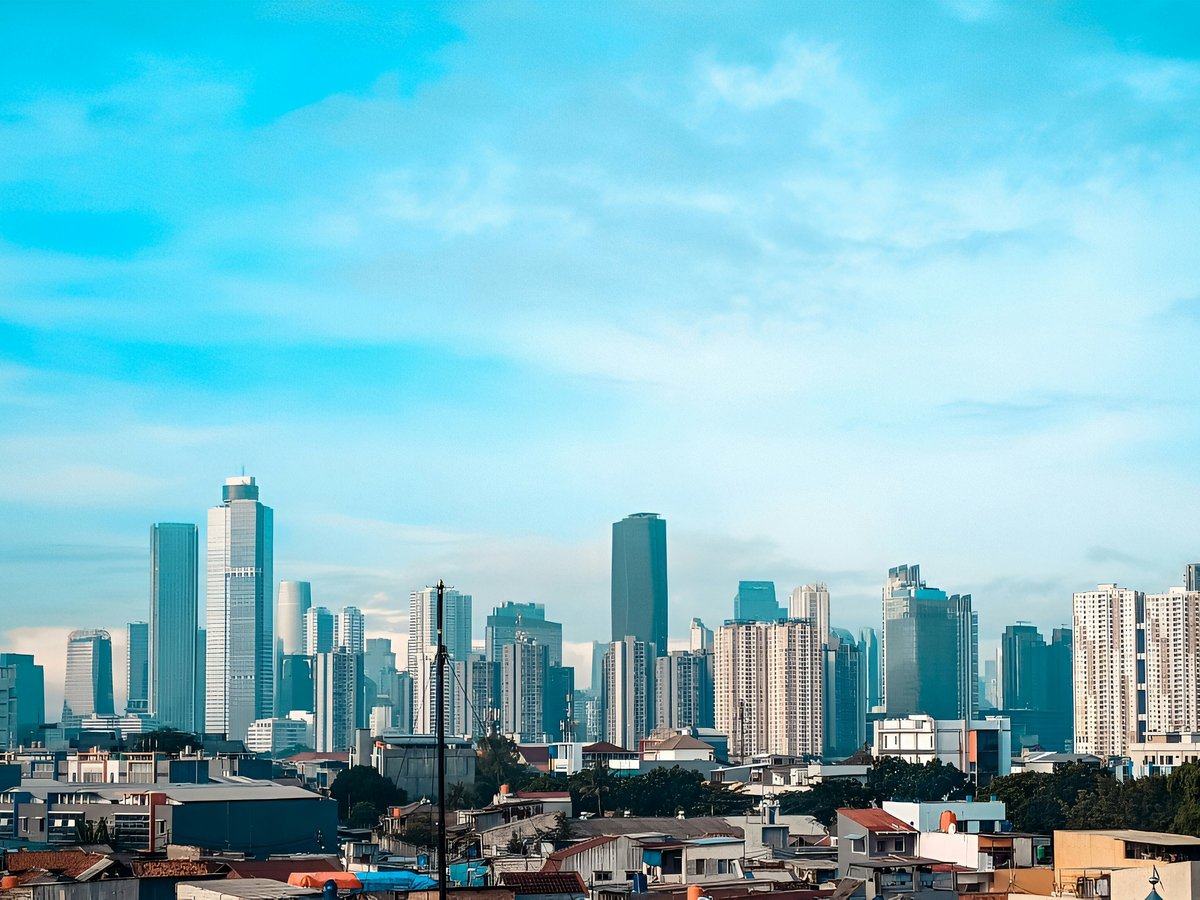
Stay in Jakarta in February
125 hotels in the Trip.com pool for Jakarta, from US$12 a night.
Opens Trip.com on Fri 5 Feb to Sun 7 Feb 2027; change the dates there.
February lands in the thick of Jakarta's wet season, and this month tends to show it. With roughly 292mm of rain spread across about 26 days, it is the second-wettest month after January. Afternoon storms roll in around 14:00 most days, sometimes dropping 40mm in a single hour over neighborhoods like Kampung Melayu and Pluit, where streets can sit under knee-deep water for hours. Daytime temperatures reach about 30°C (86°F) and nights stay near 24°C (75°F), which sounds manageable on paper. Factor in 85% humidity, though, and even a 5-minute walk to the TransJakarta stop leaves your shirt clinging.
The month's cultural anchor is Imlek, the Indonesian Chinese New Year celebration. Depending on the lunar calendar, Imlek and the 15-day festival period that follows it fall in late January through early March. In years when the holiday lands in February, the Glodok district fills with barongsai (lion dance) troupes, temple ceremonies at centuries-old kelenteng, and the warm, sticky-sweet smell of kue keranjang being steamed in neighborhood kitchens. The celebrations are a reminder that Indonesia has the largest ethnic Chinese population in Southeast Asia outside of China itself, a community whose traditions were suppressed by government decree from 1967 until 2000.
To be fair, February does reward the visitor who plans around the rain. Morning hours before noon are often clear, hotel rates drop well below the July and August peak, and attractions like the National Museum of Indonesia, founded in 1778, feel practically empty compared to dry-season crowds. But calling this a good time to visit would be dishonest. If you have flexibility, wait for June through September.
Why visit in February
- Hotel rates across Jakarta drop significantly below the dry-season peak in July and August, with deals especially visible along the Thamrin and Menteng corridors.
- Crowds thin out at major sites. You might find yourself nearly alone in the Jakarta History Museum on a Tuesday morning.
- Imlek celebrations in Glodok bring one of Southeast Asia's more distinctive Chinese New Year atmospheres, with street performances, temple offerings, and festival food stalls running for roughly 2 weeks.
- Rambutan and mangosteen hit peak season at traditional markets like Pasar Mayestik, where quality tends to be higher and selection broader than in the dry months.
Worth knowing
- Near-daily rain through most of the month, with totals among Jakarta's highest of any month. Waterproof gear is not optional.
- Urban flooding in low-lying areas along the Ciliwung River and in North Jakarta can strand visitors for hours and disrupt transit routes across the city.
- The humidity makes outdoor sightseeing genuinely uncomfortable, especially between 11:00 and 16:00 when heat and moisture peak together.
- Dengue mosquito activity rises with the standing water left by daily storms. Jakarta's health department typically logs higher case counts from January through March.
Best for
Think twice if
A heavy, saturated month. Morning skies might look deceptively clear, but by early afternoon clouds tend to build fast over the Java Sea and push inland. The rain falls warm and arrives in dense sheets that reduce visibility to a block or two. Between storms, the air sits heavy and still, and the smell of wet pavement mixes with exhaust and the sweetness of ripening fruit from roadside vendors. Nights offer slight relief but rarely feel cool.
Seasonal caution
- Jakarta floods regularly in February. Low-lying districts along the Ciliwung River and in North Jakarta can see water levels rise 30 to 60cm above street level within hours of a heavy storm. Monitor local flood alerts through the BPBD Jakarta (regional disaster agency) channels.
- Dengue fever risk peaks during the wet season. Standing water creates breeding conditions for Aedes aegypti mosquitoes. Use repellent with at least 30% DEET, especially around dusk.
- Lightning strikes accompany many of the afternoon thunderstorms. Jakarta sits in one of the world's higher-density lightning zones. Avoid open areas like Merdeka Square during active storms.
Year-round climate
Averages from the last 5 years.
| Month | Avg high (°C) | Avg low (°C) | Rainfall (mm) |
|---|---|---|---|
| Jan | 30 | 24 | 331 |
| Feb | 30 | 24 | 292 |
| Mar | 31 | 24 | 279 |
| Apr | 32 | 24 | 205 |
| May | 32 | 24 | 190 |
| Jun | 31 | 24 | 166 |
| Jul | 32 | 23 | 102 |
| Aug | 33 | 23 | 99 |
| Sep | 33 | 24 | 133 |
| Oct | 33 | 24 | 177 |
| Nov | 32 | 24 | 246 |
| Dec | 31 | 24 | 269 |
Best things to do in February
Imlek celebrations in Glodok
culturalThe Petak Sembilan area transforms during the Chinese New Year period. Barongsai troupes perform in front of shophouses, incense smoke drifts from kelenteng doorways, and temporary food stalls line the narrow lanes. The atmosphere is dense, loud, and feels worlds apart from Jakarta's usual character.
Imlek falls in late January through February depending on the lunar calendar, and the 15-day celebration period is the only window for these events each year.Booking tipNo booking needed. Arrive in the late afternoon for the best overlap of daylight and active performances.
Museum circuit through Kota Tua
cultureThe old Dutch colonial district houses the Jakarta History Museum in the former Stadhuis, the Wayang Museum with its shadow-puppet collection, and the Fine Arts and Ceramics Museum, all within a 10-minute walk of each other around Fatahillah Square. The buildings themselves, dating from the 17th and 18th centuries, are arguably more interesting than the collections inside.
Rain makes outdoor plans unreliable, and these indoor museums benefit from February's thinner visitor counts. You can spend 3 to 4 hours moving between all three without encountering the crowds that pack Fatahillah Square on dry-season weekends.Seasonal fruit tasting at Pasar Mayestik
foodThis traditional market in Kebayoran Baru is where middle-class Jakartans shop for fresh produce, textiles, and spices. In February, the fruit section expands with peak-season rambutan, mangosteen, salak (snakefruit), and duku. The colors are intense, the vendors typically allow tasting, and the selection is broader than at supermarkets.
Several tropical fruits peak between December and February, making this the best window for variety and ripeness at Jakarta's traditional markets.Booking tipArrive before 09:00 for the widest selection. The market thins out by early afternoon.
Third-wave coffee crawl through Menteng and Cikini
food and drinkJakarta's specialty coffee scene has grown rapidly, and the tree-lined streets of Menteng and the art-gallery corridor along Jalan Cikini Raya host several independent roasters. The beans often come from Toraja, Flores, or Aceh, and the baristas tend to know their origins. A rainy afternoon spent moving between 3 or 4 cafes is one of the more pleasant ways to wait out a February storm.
February's afternoon downpours make indoor, seated activities the practical choice, and Jakarta's cafe culture rewards lingering rather than rushing.Taman Mini Indonesia Indah indoor pavilions
cultureThis 150-hectare cultural park in East Jakarta, opened in 1975, contains 27 provincial pavilions showcasing architecture, costume, and crafts from across the archipelago. The indoor exhibits remain fully accessible in rain, and the park's scale means even on busy days each pavilion feels spacious. The Javanese and Balinese pavilions tend to hold the most detailed displays.
Wet-season visitor numbers drop noticeably, giving you room to explore pavilions that feel cramped during the August school-holiday rush.Booking tipWeekday mornings are emptiest. Budget at least half a day for the main pavilions.
Evening street food on Jalan Sabang
foodThis one-block stretch near Menteng fills with food stalls after dark. The February evening air cools slightly after sunset, and steam rises from soto and nasi goreng carts while the sound of sizzling satay carries across the sidewalk. Jalan Sabang has been a food street for decades, with vendor turnover low enough that regulars recognize stalls that have been there since the 1990s.
Rain typically clears by early evening in February, and the post-storm air feels a few degrees cooler than the midday peak, making outdoor eating more comfortable.Booking tipNo booking needed. Stalls open around 17:00 and the best selection runs from 18:00 to 21:00.
Ancol SeaWorld aquarium
familyThe indoor aquarium at Taman Impian Jaya Ancol in North Jakarta holds around 3,500 marine species, and the jellyfish gallery is surprisingly well designed. For travelers with children, this is the most reliably rain-proof full-day activity in the city. Jakarta scores 5.8/10 for family friendliness (see the TTDI Family-Friendliness Index), and SeaWorld is one of the reasons.
February rain makes Ancol's outdoor beach areas unappealing, but the indoor aquarium becomes the default family outing. Weekday visits in the wet season are notably quieter than holidays.Booking tipWeekday mornings draw the smallest crowds. Avoid Sunday visits when local families fill the main galleries.
What to eat in February
In season: fruit
Rambutan
Peak harvest runs December through February. Look for the variety called rambutan rapiah, which tends to be sweeter and pulls away from the seed more cleanly. The hairy red shells should feel slightly soft, not dry or brittle. Vendors set up along Jalan Raya Bogor in the Pasar Rebo area, and prices run well below convenience-store rates.
Manggis (mangosteen)
The thick purple rind hides translucent white segments that taste like a cross between lychee and peach. February sits in the tail end of mangosteen season on Java, and market vendors sell them by the kilogram at seasonal rates.
On menus now
Soto Betawi
Jakarta's signature beef-and-coconut-milk soup hits differently in the rainy season, when the warmth and fat content feel like exactly what a damp afternoon calls for. The Betawi original uses both coconut milk and cow's milk, giving it a richness you will not find in soto versions from other Indonesian cities. Stalls along Jalan Sabang in Menteng serve it through the day.
Festival food
Kue keranjang
Sticky rice cake tied to the Imlek season, sold in red-wrapped cylinders across Glodok and Petak Sembilan, typically steamed between banana leaves. The texture is dense and chewy with a light sweetness, and the smell of the steaming banana leaf is a sensory marker of the holiday period in Jakarta's Chinese quarter.
Lontong Cap Go Meh
A Peranakan rice-cake dish traditionally served on the 15th day after Chinese New Year. The lontong comes bathed in a spiced coconut-based sauce with hard-boiled eggs, tofu, and sambal. Family-run warungs in the Glodok area prepare it during the festival period, though availability depends on whether Cap Go Meh falls in February that year.
Regular events in February
Imlek (Chinese New Year)Free
Indonesia's national public holiday celebrating the Lunar New Year. Temple ceremonies, family gatherings, and public festivities concentrate in Glodok and Petak Sembilan.
Late January to mid-February, depending on the lunar calendar (2027: February 6; 2028: January 26)Cap Go Meh at Petak SembilanFree
The 15th and final day of the Imlek festival period, marked by street processions, tatung (spirit medium) performances in some years, and communal meals. Petak Sembilan becomes the focal point, with temporary stages and food vendors filling the lane.
15 days after Chinese New Year (2027: approximately February 20)Hari Pers Nasional (National Press Day)Free
Commemorated annually with industry gatherings and public events organized by the Indonesian Press Council. Jakarta typically hosts parallel events at media offices and press clubs alongside the main ceremony.
February 9Best places this February
Glodok
neighborhoodThe historic Chinese quarter of Jakarta, centered around Petak Sembilan lane and the surrounding market streets. In February during Imlek, red lanterns hang from building facades and the air carries incense and the smell of frying sesame balls. Even outside the festival period, the apothecaries, fabric shops, and family-run noodle stalls feel like a different city from the glass-tower Jakarta along Jalan Sudirman.
West JakartaFatahillah Square and Kota Tua
historic districtThe former heart of Dutch Batavia, surrounded by colonial-era buildings housing the Jakarta History Museum, the Wayang Museum, and the Fine Arts and Ceramics Museum. The square itself collects water during heavy rain, but the museums stay open. Morning visits before the first downpour let you see the cobblestones dry.
Kota TuaPasar Santa
marketAn indoor market in Kebayoran Baru that has evolved into a mix of vintage clothing stalls, vinyl record shops, and small food vendors. The covered structure is completely rain-proof, and the crowd skews young and local. February's slower pace means more room to browse.
Kebayoran BaruMerdeka Square and the National Monument (Monas)
landmarkThe 132-meter obelisk completed in 1975 dominates a 1-square-kilometer public square in Central Jakarta. The observation deck offers views across the city on clear mornings. Inside the base, a museum tells Indonesia's independence story through 51 dioramas. In February, aim for early morning before the clouds build.
GambirKemang and Senopati cafe district
neighborhoodTwo adjacent streets in South Jakarta where independent cafes, galleries, and restaurants cluster. The neighborhood moves at a slower rhythm than central Jakarta, and February's quieter foot traffic makes it feel even more relaxed. Several spots here offer covered rooftop seating with views over the residential tree canopy.
South JakartaNational Museum of Indonesia (Museum Nasional)
museumIndonesia's oldest and most extensive museum, with collections spanning prehistoric artifacts, Hindu-Buddhist statuary from Java and Sumatra, and ethnographic textiles from across the archipelago. The newer wing has improved climate control, which matters in February when the outdoor humidity makes older gallery spaces feel damp.
Gambir
Your packing checklist
Tick items off as you pack. Your progress saves in this browser.
All packed — have a great trip.
Insider tips
February mornings in Jakarta are often clear until about 13:00. Experienced visitors front-load outdoor plans before noon and switch to malls, museums, or cafes once the clouds start building. This pattern is reliable enough that locals plan around it without thinking twice.
The MRT line running from Lebak Bulus to Bundaran HI operates through most flood events and is the most predictable north-south connection in the city. TransJakarta busway corridors, by contrast, flood out on certain northern routes and can suspend service with little warning.
If Imlek falls during your visit, check whether Cap Go Meh also lands in February. The 15th-day celebration at Petak Sembilan is more visually dramatic than the New Year day itself, with larger street processions and more food stalls.
Grab and Gojek motorcycle taxis navigate flooded streets faster than cars, and drivers know the detour routes through neighborhoods like Cikini and Menteng when main roads go under. In heavy rain, surge pricing hits cars harder than motorcycles.
Avoid these mistakes
- Scheduling outdoor excursions for after lunch. February's heaviest rain arrives in the afternoon and can drop significant volumes in a single hour. A planned walking tour of Kota Tua at 15:00 will likely end with you sheltering under an awning watching Fatahillah Square fill with water.
- Booking accommodation in North Jakarta near Ancol to save money. While rates are lower there, this is the most flood-prone part of the city, and a single heavy storm can cut road access to central Jakarta for hours. Menteng, Kebayoran Baru, or the Sudirman corridor sit on higher ground.
- Packing only closed-toe shoes. Sidewalks and road crossings collect standing water even in areas that do not officially flood, and leather or suede shoes will not survive a week of this. Waterproof sandals as your primary walking shoe is the pragmatic choice.
- Assuming Imlek celebrations happen on the same dates each year. The lunar calendar shifts the holiday by roughly 10 to 11 days annually, so Cap Go Meh might fall in February one year and March the next. Confirm the specific year's dates before planning around the festival.
Practical tips for February
Download the Gojek and Grab apps before arriving. Both show real-time traffic conditions and serve as your primary transport in a city where hailing street taxis is unreliable in the rain. The BMKG, Indonesia's meteorology agency, posts daily rain forecasts that Jakarta residents check habitually during the wet season. Most shopping malls along Jalan Sudirman open at 10:00 and close at 22:00 daily, functioning as reliable shelter during storms. Grand Indonesia and Plaza Indonesia near Bundaran HI are connected by pedestrian bridges, so you can move between them without stepping outside. If Imlek falls during your visit, many Chinese-Indonesian-owned shops in Glodok and the wholesale district of Mangga Dua close for 2 to 3 days around the holiday. Jakarta scores 5.2/10 for solo-traveler safety (see the TTDI Solo-Safety Index), so exercise standard caution with belongings on public transit and in crowded markets, particularly during festival periods when pickpocket activity tends to rise. Carry a photocopy of your passport rather than the original, and keep the original locked at your accommodation.
FAQ
Is February a good time to visit Jakarta?
Honestly, it is one of the worst months. February sits deep in Jakarta's wet season, with near-daily downpours and some of the heaviest total rainfall of the year. Street flooding disrupts transit and outdoor plans carry a high risk of interruption. If you have schedule flexibility, the June through September dry season offers dramatically better conditions. That said, if Imlek falls in February, the Chinese New Year celebrations in Glodok add cultural weight that no other month provides.
Does Jakarta flood in February?
Yes, and it should factor into your planning. Low-lying areas along the Ciliwung River and in North Jakarta flood regularly during the heavier storms. Water can rise well above street level within a couple of hours. The city's drainage infrastructure has improved over the past decade but still cannot handle peak wet-season volume. Stick to higher-ground neighborhoods for accommodation and keep the MRT as your backup transit plan.
What is the weather like in Jakarta in February?
Hot and sticky, with little variation day to day. Temperatures hold steady in the low 30s Celsius (upper 80s Fahrenheit) during daylight, and overnight lows stay in the mid-20s Celsius (mid-70s Fahrenheit). The humidity rarely drops below 80%, making even moderate heat feel oppressive. Rain arrives almost daily, usually building after midday and dropping hard for a few hours before easing by evening.
Is Jakarta crowded in February?
Less than usual. February falls in the middle of Jakarta's low tourist season, and domestic travel slows after the December and January school holiday period. You will find shorter lines at attractions, easier restaurant bookings, and lower hotel occupancy across most of the city. The exception is Glodok during Imlek week, when the Chinatown district fills with celebrants from across the greater Jakarta area.
What should I wear in Jakarta in February?
Lightweight, breathable fabrics that dry quickly. Synthetic or bamboo-blend tops perform better than cotton, which stays damp in the humidity. Waterproof sandals or quick-dry shoes are more practical than closed footwear, given the near-certainty of walking through standing water at some point. Carry a packable rain jacket rather than relying on an umbrella alone, since storms often bring wind. If visiting temples or mosques, keep long pants and a covering scarf in your daypack for dress-code requirements.
Things to Do in Jakarta in February
 Free cancellation
 Active Volcano, Rice Field, Hot Spring, Fruit market, Tea Plantation with Lunch
Day trip: free cancellation.
via Viator Free cancellation
 Private Car Charter in Bali with an English-speaking Driver
Day trip: free cancellation.
via Viator Free cancellation
 Private Full-Day Guided Tour: Explore Jakarta’s Top Highlights
Day trip: free cancellation.
via Viator Free cancellation
 Bali Jungle Swing Experience Full Activity
Outdoor experience: free cancellation.
via Viator Free cancellation
 Jakarta Half-Day Sightseeing Tour To Modern City and Old Town
Day trip: free cancellation.
via Viator Free cancellation
 Jakarta Bogor Botanical Garden, Waterfall and Rice terrace, Lunch
Outdoor experience: free cancellation.
via ViatorLast verified by automated review (v1.7.2) on . What is automated review?