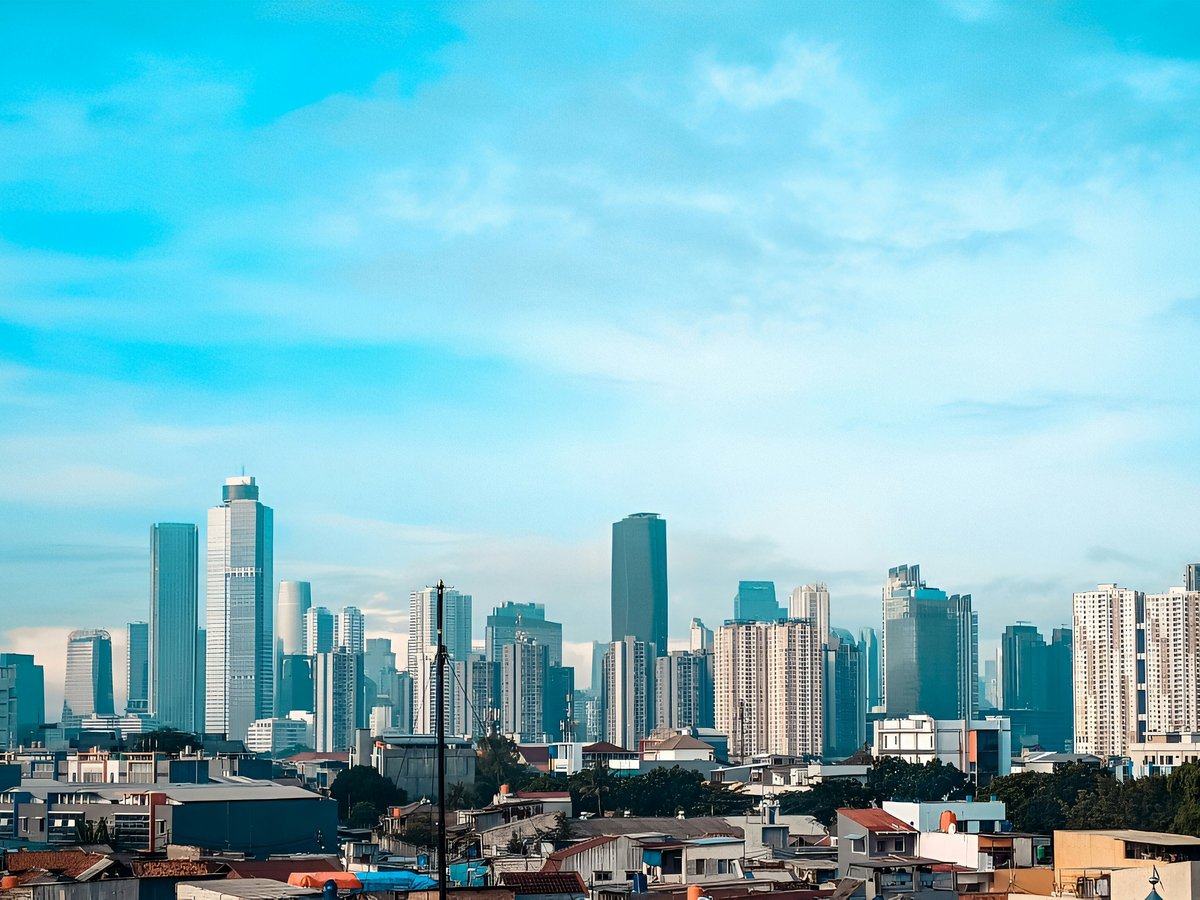
Stay in Jakarta in September
125 hotels in the Trip.com pool for Jakarta, from US$12 a night.
Opens Trip.com on Fri 3 Sep to Sun 5 Sep 2027; change the dates there.
September in Jakarta lands at the tail of the dry season, and the single most important thing to know is the haze. Smoke from agricultural burning across Sumatra and Kalimantan can drift into the city without warning. Air quality sometimes drops past AQI 150 and stays there for days. Some Septembers bring nothing worse than Jakarta's baseline smog. Others fill the air with a burned-grass smell, leave a gray film over Merdeka Square, and coat your morning coffee with a taste of ash. Temperatures typically reach 32.8°C (91°F) by afternoon and drop to 23.7°C (75°F) after dark, with humidity that feels more sticky than dangerous.
That said, September remains one of Jakarta's more manageable months. The dry-season window means more reliable outdoor days than the November-through-March period. Crowds thin out after the August school-holiday rush, so walking Kota Tua's sun-bleached colonial lanes or grabbing a table in Kemang gets noticeably easier. Maulid Nabi Muhammad SAW, the Prophet's birthday, falls during this month. The celebration fills neighborhoods from Cempaka Putih to Tanah Abang with processions, communal prayers, and food stalls.
The honest picture is a month that rewards flexibility. Clear days put Jakarta's outdoor side within reach, from Fatahillah Square's colonial facades to the forested paths inside Ragunan Zoo. Haze days push you toward air-conditioned galleries, Menteng's cafe streets, and the malls along Jalan Thamrin. The typical September pattern delivers warm, bright mornings with clouds or brief rain building after 14:00.
Why visit in September
- Rainfall drops well below wet-season levels. Full outdoor days are realistic, and afternoon showers rarely last beyond 40 minutes.
- Crowds at sites like the National Monument and Jakarta History Museum thin out after August's school-holiday rush.
- Accommodation rates sit below the annual average, with wider availability than the December-January peak.
- The Maulid celebrations open communal food stalls in residential kampungs that tour groups rarely reach.
Worth knowing
- Haze from agricultural burning is impossible to predict more than 48 hours out. A clear forecast can deteriorate to AQI 150+ overnight, and there is no reliable way to plan around it in advance.
- Jakarta's baseline air quality is poor even without the seasonal haze. Central areas near Jalan Thamrin typically read AQI 80-120.
- The 11:00-15:00 window is punishing for outdoor walking. Afternoon heat combines with the humidity to make even short distances tiring.
Best for
Think twice if
September sits in the second half of Jakarta's dry season, which runs from June through October. The city receives 133mm across 18 rainy days, well below January's 331mm peak. Showers concentrate between 14:00 and 17:00. They fall hard for 20 to 40 minutes, then the sky clears. Mornings start warm and often hazy. Humidity averages 76%, lower than wet-season peaks but still enough to dampen your shirt during a 20-minute walk through Blok M.
Seasonal caution
- Monitor Jakarta's Air Quality Index daily via the IQAir app or aqicn.org. Readings above 150 mean limiting outdoor exposure, especially for morning exercise or long walks. The haze can appear overnight and persist for 3-5 days.
- The heat index regularly exceeds the thermometer reading. A typical September afternoon at 33°C can feel like 38-40°C in direct sun due to the combined heat and humidity. Limit midday outdoor exposure to 30-minute intervals.
Year-round climate
Averages from the last 5 years.
| Month | Avg high (°C) | Avg low (°C) | Rainfall (mm) |
|---|---|---|---|
| Jan | 30 | 24 | 331 |
| Feb | 30 | 24 | 292 |
| Mar | 31 | 24 | 279 |
| Apr | 32 | 24 | 205 |
| May | 32 | 24 | 190 |
| Jun | 31 | 24 | 166 |
| Jul | 32 | 23 | 102 |
| Aug | 33 | 23 | 99 |
| Sep | 33 | 24 | 133 |
| Oct | 33 | 24 | 177 |
| Nov | 32 | 24 | 246 |
| Dec | 31 | 24 | 269 |
Best things to do in September
Walking tour of Kota Tua
sightseeingJakarta's colonial-era Old Town centers on Fatahillah Square, with the Jakarta History Museum, Wayang Museum, and Bank Indonesia Museum within a few hundred meters of each other. Dutch-era warehouse facades line Jalan Kali Besar along the canal.
Dry conditions and thinner post-August crowds make the 2-3 hour walking route comfortable. November through March floods these cobblestones regularly.Booking tipGo before 10:00 to beat both the heat and the domestic tour groups that arrive by midday.
Day trip to Kepulauan Seribu
outdoorsThe Thousand Islands sit 1-2 hours by speedboat from Ancol marina in North Jakarta. Pulau Tidung and Pulau Pramuka offer snorkeling, cycling, and near-empty beaches on weekdays.
Calm seas during the dry season mean fewer cancellations and better underwater visibility than the December-March swell.Booking tipBook the speedboat at least 3 days ahead for weekend departures from Ancol. Weekday boats run half-full.
Morning visit to Ragunan Zoo
natureOne of Southeast Asia's oldest zoos, established in 1864, spread across 140 hectares in South Jakarta. The Schmutzer Primate Centre houses orangutans, gorillas, and gibbons in semi-open enclosures.
Dry ground and temperatures below 30°C before 09:00 make the large grounds walkable. Wet-season mud turns the unpaved paths into a slog.Booking tipArrive at the South Gate entrance by 07:30, before school groups fill the primate centre.
Street food crawl through Glodok
foodJakarta's Chinatown centers on Jalan Pancoran and Jalan Kemenangan, where vendors sell kue cubit, bakso, and Hokkien-style noodles from pushcarts and shophouses open since before dawn.
Dry evenings mean outdoor stalls operate without rain covers blocking the walkway, and the cooler post-sunset air makes the narrow lanes comfortable.Sunset drinks in SCBD
nightlifeThe Sudirman Central Business District cluster along Jalan Sudirman and Jalan Rasuna Said has rooftop bars on the upper floors of office towers. Views stretch across South Jakarta's skyline toward the Thousand Islands on clear evenings.
Clear dry-season evenings reveal a skyline that monsoon-season clouds usually hide. When the haze stays away, the light turns gold over West Jakarta around 17:30.Booking tipReserve a table for Friday or Saturday sunset by Wednesday. Walk-ins get bar seating only.
Explore Taman Mini Indonesia Indah
culturalA 150-hectare cultural park in East Jakarta, built in 1975, with pavilions representing each of Indonesia's provinces. The grounds include a cable car, regional museums, and a freshwater aquarium.
The outdoor pavilions and gardens are comfortable in September's dry conditions. The park requires 4-5 hours on foot, which is punishing during wet-season downpours.Booking tipGo on a weekday. Weekend crowds from Jakarta families push the cable car line past 45 minutes.
What to eat in September
In season: fruit
Duku (langsat)
Small, translucent fruit that peaks from August through October in Java's markets. The Palembang variety tends to be sweetest. Street vendors around Pasar Minggu sell them by the kilo.
Kedondong (ambarella)
Tart, crunchy fruit that appears in Jakarta's rujak and sambal during the dry months. Vendors near Pasar Santa tend to carry the freshest specimens.
Manggis (mangosteen)
Purple-skinned fruit with translucent white segments. September catches the tail of mangosteen season in Java. Quality varies late in the harvest, so squeeze the shell before buying at Pasar Kramat Jati or any traditional pasar. It should give slightly under thumb pressure.
What to drink
Es cendol
Shaved ice with pandan-flavored rice-flour jelly strands and palm sugar. The dry September heat makes this the default 3pm reset at any warung along Jalan Sabang or Jalan Jaksa.
Festival food
Bubur sumsum
Smooth coconut-milk porridge in the Betawi style, topped with palm sugar syrup. September's early-month celebrations bring a wave of fresh batches to street carts near major mosques, noticeably richer than the everyday warung version.
Dodol
A traditional Betawi confection of coconut milk and palm sugar, dense and chewy, wrapped in banana leaf. Vendors around Condet and Setu Babakan prepare fresh batches during the national holiday week, and they taste noticeably different from the packaged supermarket version.
Regular events in September
Maulid Nabi Muhammad SAWFree
Indonesia's national holiday honoring the Prophet Muhammad. Residential kampungs organize communal feasts and children's parades, and mosques host special prayer services from morning through evening.
Early September 2026 (12 Rabi al-Awal; exact date follows the Islamic lunar calendar)Hari Olahraga Nasional (National Sports Day)Free
Annual sports celebration held on September 9. Gelora Bung Karno Stadium, built in 1962, typically hosts free community fitness activities, fun runs, and exhibition matches across its 280-hectare complex.
September 9Art Jakarta
Southeast Asia's prominent contemporary art fair held at Jakarta Convention Center. Galleries from across Indonesia, Singapore, and the Philippines exhibit and sell works over 4 days. The fair attracts collectors and tends to sell out preview-night passes early.
Late August to early September (dates shift annually)Best places this September
Kota Tua (Fatahillah Square)
historic districtJakarta's colonial-era Old Town centers on this Dutch-era square. September's dry conditions mean the cobblestone plaza is walkable and surrounding cafes set out their outdoor seating without the rain covers that block the facades in wetter months.
Kota TuaTaman Suropati
parkA small, shaded park in Menteng ringed by colonial-era mansions and outdoor art installations. Morning walks here feel noticeably cooler than the surrounding streets, and September's dry mornings keep the stone benches usable by 07:00.
MentengNational Museum of Indonesia
museumSoutheast Asia's oldest museum, established in 1778, houses Indonesian archaeological and ethnographic collections across two buildings. The air-conditioned galleries serve as a natural retreat on haze days, with enough depth for 3-4 hours of browsing.
GambirPasar Santa
marketA repurposed traditional market now home to specialty coffee roasters, vinyl record stalls, and small-batch food vendors. Weekday afternoons are quiet enough to browse properly and chat with the roasters about Javanese single-origin beans.
Kebayoran BaruAncol Dreamland waterfront
waterfrontNorth Jakarta's coastal recreation area stretches along Jakarta Bay. The dry season calms the water enough for reliable Kepulauan Seribu boat departures, and the boardwalk is pleasant for a morning walk before the 10:00 heat builds.
Ancol
Your packing checklist
Tick items off as you pack. Your progress saves in this browser.
All packed — have a great trip.
Insider tips
The best soto Betawi in Jakarta is debatable, but the stalls along Jalan Falatehan in Blok M and the warung cluster near Pasar Cikini in Menteng are where locals eat. Skip the hotel restaurants' versions.
Grab or Gojek is faster than the MRT for most cross-city trips in September, when drier roads mean less flooding-related congestion. But the MRT between Lebak Bulus and Bundaran HI is still faster during the 17:00-19:00 rush along Jalan Sudirman.
If haze hits, check the IQAir app before committing to outdoor plans. Readings change hourly. Below AQI 100 is manageable for walking; above 150 means stay indoors or in air-conditioned transit.
Istiqlal Mosque, Indonesia's largest, opens to tourists between prayer sessions. Go between 10:00 and 11:30 when access is easiest and the main hall is quiet enough to appreciate the 45-metre dome.
The weekend flower and bird market on Jalan Barito in Kebayoran Baru is a wall of jasmine, orchids, and caged songbirds. Go before 08:00 when vendors are still setting up and the heat has not built yet.
Avoid these mistakes
- Planning a full outdoor itinerary between 11:00 and 15:00. September's clear dry-season skies mean stronger UV than cloud-covered wet months, and the heat index pushes past 38°C. Schedule indoor stops for those 4 hours and save outdoor sites for early morning.
- Assuming September traffic will be lighter because it is not peak season. Jakarta's commuter traffic runs year-round, and school being in session adds morning congestion along Jalan Sudirman and Jalan Gatot Subroto. Build 90 minutes of buffer into any airport transfer.
- Missing the Maulid Nabi public holiday. Banks, government offices, and many shops close for the entire day. Handle currency exchanges and administrative tasks beforehand.
Practical tips for September
Book accommodation along the MRT corridor between Lebak Bulus and Bundaran HI for efficient access to Jakarta's spread-out attractions. September's shoulder-season rates make central locations more affordable than in peak months. Carry small-denomination Rupiah notes for street vendors in Glodok and Kota Tua, where digital payments remain patchy. Friday prayers, typically 11:30-13:00, close mosques to tourist visits and cause traffic spikes near Istiqlal. Plan museum visits around that window. Download Grab and Gojek before arriving, as both apps handle car taxis, motorcycle ojek, food delivery, and parcel logistics. Jakarta scores 5.2/10 for solo-traveler safety (see the TTDI Solo-Safety Index), so use ride-hailing after dark rather than walking unfamiliar streets.
FAQ
Is September a good time to visit Jakarta?
September ranks among Jakarta's top four months for visiting. It sits in the dry season with manageable rainfall and post-August crowd levels. The trade-off is the seasonal haze gamble, which varies year to year and cannot be predicted weeks in advance. If you are flexible with outdoor plans and carry respiratory protection, the month rewards with lower costs and easier logistics than peak season.
What is the weather like in Jakarta in September?
Warm and mostly dry, with short afternoon rain bursts that typically clear within an hour. Mornings start warm and can feel hazy on affected days. The midday sun is intense, and combined with the humidity, outdoor activity between 11:00 and 15:00 gets tiring fast. Evenings cool slightly but remain warm enough for outdoor dining without any extra layer.
Is Jakarta crowded in September?
Less so than in August when school holidays pack domestic tourist sites, or December-January when year-end holidays bring the annual travel peak. You'll share the National Monument and Kota Tua with fewer tour buses, and restaurant reservations in Kemang and Menteng are easier to secure on short notice.
Is Jakarta family-friendly in September?
Jakarta scores 5.8/10 for family friendliness (see the TTDI Family-Friendliness Index). September's dry conditions make outdoor sites like Ragunan Zoo and Taman Mini more practical than in the wet season. Mind you, the midday heat and potential haze require careful planning around rest breaks and air quality checks. Children with asthma or respiratory sensitivity should carry protection.
How do I get around Jakarta in September?
Ride-hailing apps Grab and Gojek are the practical standard for most trips. The MRT runs from Lebak Bulus to Bundaran HI and is the fastest option along the Jalan Sudirman corridor during rush hours. September's drier roads mean slightly less flooding-related congestion than the wet months, but Jakarta's traffic remains heavy at peak hours. Allow 90 minutes or more for any cross-city car trip during the 07:00-09:00 and 17:00-19:00 windows.
Things to Do in Jakarta in September
 Free cancellation
 Active Volcano, Rice Field, Hot Spring, Fruit market, Tea Plantation with Lunch
Day trip: free cancellation.
via Viator Free cancellation
 Private Car Charter in Bali with an English-speaking Driver
Day trip: free cancellation.
via Viator Free cancellation
 Private Full-Day Guided Tour: Explore Jakarta’s Top Highlights
Day trip: free cancellation.
via Viator Free cancellation
 Bali Jungle Swing Experience Full Activity
Outdoor experience: free cancellation.
via Viator Free cancellation
 Jakarta Half-Day Sightseeing Tour To Modern City and Old Town
Day trip: free cancellation.
via Viator Free cancellation
 Jakarta Bogor Botanical Garden, Waterfall and Rice terrace, Lunch
Outdoor experience: free cancellation.
via ViatorLast verified by automated review (v1.7.2) on . What is automated review?