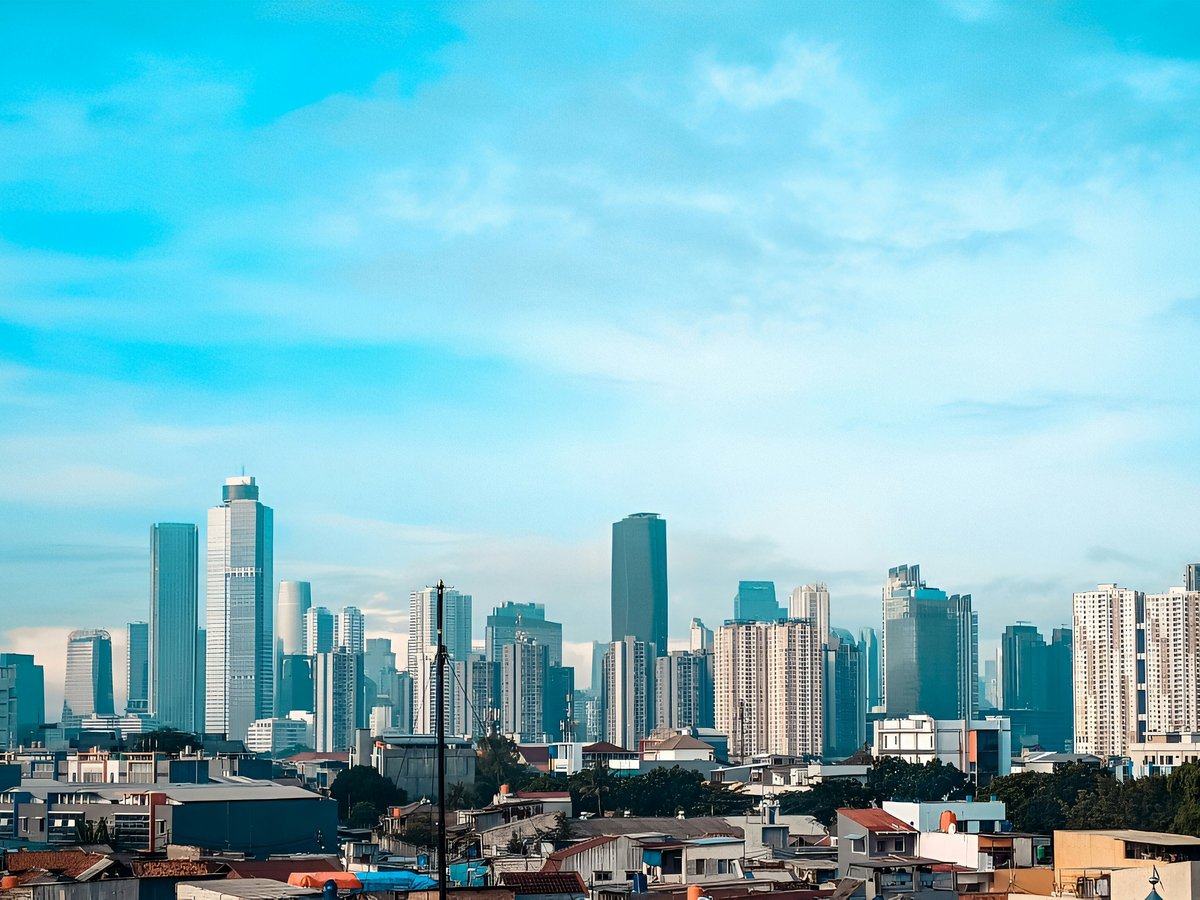
Jakarta stretches roughly 660 square kilometers across Java's northern coast, from the old port at Sunda Kelapa down to the southern suburbs near Ragunan. Five administrative cities divide the metro, and they feel like different towns stitched together by TransJakarta corridors and toll roads. North Jakarta hugs the Java Sea with its fish-market humidity and container-port diesel. Central Jakarta orbits the broad public park that anchors the government quarter. West Jakarta covers the Dutch-era old town, where colonial warehouses sit half-renovated next to motorcycle repair shops. South Jakarta sprawls through shopping malls, gated residential compounds, and the expat restaurant strips around Kemang and Senopati. East Jakarta is the most residential of the five, though Taman Mini Indonesia Indah, a cultural theme park that opened in 1975, pulls weekend crowds from across the metro.
The city's main axis runs north-south along Jalan Sudirman and Jalan MH Thamrin. The MRT's first 16-kilometer line, which opened in 2019, turned the Sudirman-to-Blok M corridor into Jakarta's one properly connected transit spine. TransJakarta's BRT covers more ground, with dedicated bus lanes on over 250 kilometers of routes. That said, peak-hour gridlock in Jakarta still eats 2-3 hours of a commuter's day. A 12-kilometer trip can take 20 minutes at 6am or 90 minutes at 5pm. Jakarta's tropical heat barely varies by month. A September afternoon currently sits at 33.7°C. The feels-like temperature reaches 38.3°C. Where you base yourself in Jakarta determines how much of each day you lose to traffic and how far you walk in that heat to reach air conditioning.
Neighborhoods
-
Kota Tua
Kota Tua sits on the footprint of old Batavia, which served as capital of the Dutch East Indies from 1619 until 1949. Taman Fatahillah, the central square, is ringed by warehouses from the early 1700s with shuttered windows and peeling pastel facades. The Jakarta History Museum occupies the 1710 Stadhuis on the square's south side, and its meter-thick walls keep the interior noticeably cool even when the street outside hits the mid-30s. Street vendors sell es selendang mayang, a layered pink-and-green sweet drink, from carts along the Kali Besar canal. On a Saturday afternoon Taman Fatahillah fills with rental bicycles and portrait photographers. On a Tuesday morning you might find only pigeons and a couple of museum staff hosing down the cobblestones.
- Best for
- History buffs, photographers, half-day outings from the hotel districts in South Jakarta
- Key streets
- Taman Fatahillah square, Jalan Kali Besar Barat along the old canal, Jalan Pintu Besar Selatan for Chinese-Indonesian street food
-
Menteng & Gambir
Menteng was planned in the 1910s as a Dutch garden suburb, and the bones still show. Streets like Jalan Diponegoro and Jalan Imam Bonjol run under dense rain-tree canopy. Art Deco houses and embassy compounds sit behind wrought-iron gates along these lanes. The streetscape feels quieter than most of Jakarta. You'll catch frangipani scent drifting over the garden walls in Menteng's residential lanes. North of Menteng, the Gambir district holds the government core. Merdeka Square, at roughly 1 square kilometer, sits at the center. The National Monument rises 132 meters from the middle of that park and was completed in 1975. The National Museum of Indonesia, on the square's western edge, traces its founding to 1778 and holds one of Southeast Asia's largest archaeological collections. Merdeka Palace, the official residence of Indonesia's president, borders the square's northern side. The Cikini strip along Jalan Cikini Raya, at Menteng's eastern edge, clusters galleries, indie cinemas, and the Taman Ismail Marzuki arts complex.
- Best for
- Culture-focused travelers, upscale stays within walking distance of the museum quarter, quiet residential evenings
- Key streets
- Jalan Diponegoro, Jalan Imam Bonjol, Jalan Cikini Raya for galleries and street food, Jalan Surabaya for its flea market
-
Sudirman, Thamrin & SCBD
This is Jakarta's corporate spine. Glass towers climb 40 to 70 stories along Jalan Jenderal Sudirman and Jalan MH Thamrin. The SCBD cluster sits between Jalan Sudirman and Jalan Senopati, packed with international hotel chains, rooftop bars, and Japanese izakayas at street level. Grand Indonesia and Plaza Indonesia, two connected malls near the Bundaran HI roundabout, anchor the northern end. The corridor bleeds south into Senayan, where Gelora Bung Karno Stadium has stood since the 1962 Asian Games. Jakarta's digital-nomad suitability scores 7.2 out of 10 (sourced from TTDI's editorial rubric), and much of that rating traces to this corridor with its fast WiFi, co-working spaces in every mall, and the MRT running underneath. On Sunday mornings Jalan Sudirman closes to cars for Car Free Day. The 8-lane road fills with joggers, carts selling bubur ayam, and aerobics classes blasting dangdut music from portable speakers.
- Best for
- Business travelers, luxury hotel stays, digital nomads who want fast connectivity and walkable MRT access
- Key streets
- Jalan Jenderal Sudirman (the full 5-kilometer stretch), SCBD Lot 11-14 for restaurants and rooftop bars, Jalan MH Thamrin near Bundaran HI for shopping malls
-
Kemang
Kemang has been Jakarta's expat neighborhood for decades. Jalan Kemang Raya runs about 3 kilometers with international restaurants, cocktail bars, and boutique shops with English-language signage. The side streets east toward Jalan Bangka smell like charcoal-grilled satay from the roadside stalls, and hold cheaper warungs squeezed between residential gates. Mind you, Kemang floods. The area sits in a low basin with poor drainage, and during the December-to-February wet season the main road can flood knee-deep for hours. Hotels along Jalan Kemang Raya tend to sit on raised ground, but it is worth checking recent flood reports before booking a street-level guesthouse in the Kemang Dalam lanes. At night the Kemang Raya strip gets loud, with live music from spots like Eastern Promise and Paulaner Brauhaus spilling into the humid night air.
- Best for
- Expats on short stays, nightlife seekers, foodies who want international variety beyond Indonesian cuisine
- Key streets
- Jalan Kemang Raya (main strip), Jalan Kemang Selatan for quieter dining, Jalan Bangka for budget Indonesian street food
-
Kebayoran Baru & Blok M
Kebayoran Baru was Jakarta's first post-independence planned suburb, laid out in the early 1950s with wide boulevards and uniform lot sizes. The mature rain trees along Jalan Wijaya and Jalan Melawai give the area a settled canopy that newer districts cannot match. Blok M, at the neighborhood's commercial center, is the busiest node. Blok M Square holds budget clothing stalls on the ground floor and food vendors upstairs. The MRT station at Blok M is 15 minutes from the Sudirman business corridor, and that proximity makes Kebayoran Baru one of the cheapest well-connected bases in Jakarta. A monthly kos-kosan along Jalan Falatehan starts around 2,500,000 IDR. Pasar Santa, a 2-story market hall about 10 minutes south on foot, draws weekend crowds for Korean corn dogs, Japanese milk bread, and Batak-style babi panggang on the upper floor. Ragunan Zoo, about 6 kilometers farther south, traces its founding to 1864 and remains one of the most popular family outings in South Jakarta.
- Best for
- Budget travelers, long-stay visitors, anyone who wants MRT access without SCBD corridor pricing
- Key streets
- Jalan Melawai, Jalan Falatehan for budget lodging, Jalan Wijaya for neighborhood restaurants, Pasar Santa for weekend food stalls
-
Senopati
Jalan Senopati is maybe 800 meters long, but it packs in more third-wave coffee shops per block than anywhere else in Jakarta. The smell of pour-over coffee drifts from nearly every shopfront along the Senopati corridor. The area sits in a pocket between the SCBD towers to the north and Kebayoran Baru's residential streets to the south. Houses from the colonial era have been converted into brunch spots with exposed-brick walls, pendant lights, and menus in English and Indonesian. The crowd tends toward Jakarta's creative class and visiting nomads with laptops open on reclaimed-wood tables. Jalan Gunawarman, one block east, mirrors the same feel with slightly lower prices. On weekday mornings the street is quiet enough to hear the call to prayer from Masjid Agung Al-Azhar about 1 kilometer south.
- Best for
- Coffee culture, remote workers on a short Jakarta stay, couples who prefer a calmer pace than the Kemang nightlife strip
- Key streets
- Jalan Senopati (the main strip), Jalan Gunawarman for slightly cheaper dining, the connecting lanes between both streets for tucked-away Japanese and Korean restaurants
-
Kelapa Gading
Kelapa Gading sits in North Jakarta, about 15 kilometers from the Sudirman business corridor. The population skews Chinese-Indonesian, and you'll hear more Hokkien and Mandarin in the food courts here than in most other parts of the city. Mall Kelapa Gading, one of Jakarta's largest shopping centers, anchors the commercial district. The food scene in Kelapa Gading is the real draw. Jalan Boulevard Raya and the streets behind the mall are lined with Chinese-Indonesian bakeries, seafood restaurants, and late-night noodle stalls. After dark the Kelapa Gading streets smell like pork broth and sesame oil. That is distinctive in Jakarta, a Muslim-majority city where halal dining dominates most other neighborhoods. Accommodation tends to run cheaper than South Jakarta, with 3-star hotels along Jalan Boulevard Raya starting around 400,000 IDR per night.
- Best for
- Chinese-Indonesian food exploration, budget accommodation in North Jakarta, travelers who do not need daily access to the Sudirman corridor
- Key streets
- Jalan Boulevard Raya, Jalan Kelapa Gading Boulevard, the food stall cluster behind Mall Kelapa Gading's east entrance
-
PIK (Pantai Indah Kapuk)
PIK sits on reclaimed land along Jakarta's northern coastline and feels like a different city. The development is recent, with apartment towers, themed restaurant streets, and shopping clusters mostly built within the last 15 years. PIK Avenue and the surrounding food streets draw weekend crowds from across Jakarta for Chinese-Indonesian seafood, Japanese barbecue, and Thai-style hotpot. The architecture leans toward glass-and-marble mall aesthetics, and the air conditioning inside hits harder than in the older districts around Kota Tua. A salt-tinged breeze from the Java Sea reaches the waterfront promenade. PIK 2, an extension to the east, is still under active construction. Jakarta International Stadium, home ground of Persija Jakarta, sits in the nearby Tanjung Priok district and is reachable from PIK in about 20 minutes outside peak hours. Worth noting, the area has only two main access roads. Friday or Saturday evening traffic can add 45 minutes to a trip that takes 15 on a weekday morning.
- Best for
- Families with children, travelers who prefer newer infrastructure and air-conditioned dining, weekend food tourism
- Key streets
- PIK Avenue, Pantai Indah Kapuk Boulevard, the restaurant rows along the PIK 2 waterfront development
FAQ
Which Jakarta neighborhood is best for a first visit?
The Sudirman-Thamrin corridor works well for most first-time visitors. You get MRT access, walkable malls, and hotels across every price bracket along a 5-kilometer stretch. Menteng is a solid alternative if you prefer quiet residential streets and walking distance to the museums around the government park. Both areas connect to Kota Tua in about 30-40 minutes by TransJakarta or taxi.
Is Jakarta safe for solo travelers?
Jakarta scores 5.2 out of 10 for solo-traveler safety (see the TTDI Solo-Safety Index). Petty theft and taxi scams are the main concerns, particularly around tourist landmarks and major transit hubs. Ride-hail apps like Grab or Gojek remove most fare-scam risk. The Sudirman-Blok M MRT line is well-lit and heavily used until about 11pm. Kemang and Senopati feel safe after dark by Jakarta standards, though poorly lit side streets anywhere in the city deserve common-sense caution.
Where should families with children stay in Jakarta?
Jakarta scores 5.8 out of 10 for family friendliness (see the TTDI Family-Friendliness Index). The Sudirman corridor and PIK are likely the most practical bases. Sudirman's malls have play areas and family restaurants within air-conditioned reach of the MRT. PIK's newer infrastructure and themed food streets tend to work well with younger children. For day trips, the cultural-park complex in East Jakarta covers Indonesian provincial traditions across dozens of pavilions, and the long-established zoo south of Blok M makes for a half-day outing through shaded grounds.
Is Jakarta welcoming for LGBTQ+ travelers?
Jakarta scores 1.5 out of 10 for LGBTQ+ friendliness (sourced from TTDI's editorial rubric). Indonesia has no national anti-LGBT legislation outside Aceh province, but public attitudes in Jakarta lean conservative. Open displays of same-sex affection draw attention in most neighborhoods. Some venues in the Kemang and Blok M areas have historically been more tolerant, though none openly market themselves as LGBTQ+ spaces in the way that bars in Bangkok or Taipei might.
What is the best Jakarta neighborhood for street food?
Kelapa Gading and the Blok M area likely offer the best concentrated street-food scenes in Jakarta. Kelapa Gading specializes in Chinese-Indonesian dishes, from pork noodles to sesame-crusted breads. The streets around Blok M and Pasar Santa cover a wider range, from Javanese gudeg to Padang-style rendang. Jalan Sabang near Menteng is another well-known evening food street, with sate ayam and martabak stalls open until midnight. At current rates, 1 USD converts to roughly 17,700 IDR, which means most street-food plates fall between 15,000 and 45,000 IDR.
Last verified by automated review (v1.7.2) on . What is automated review?