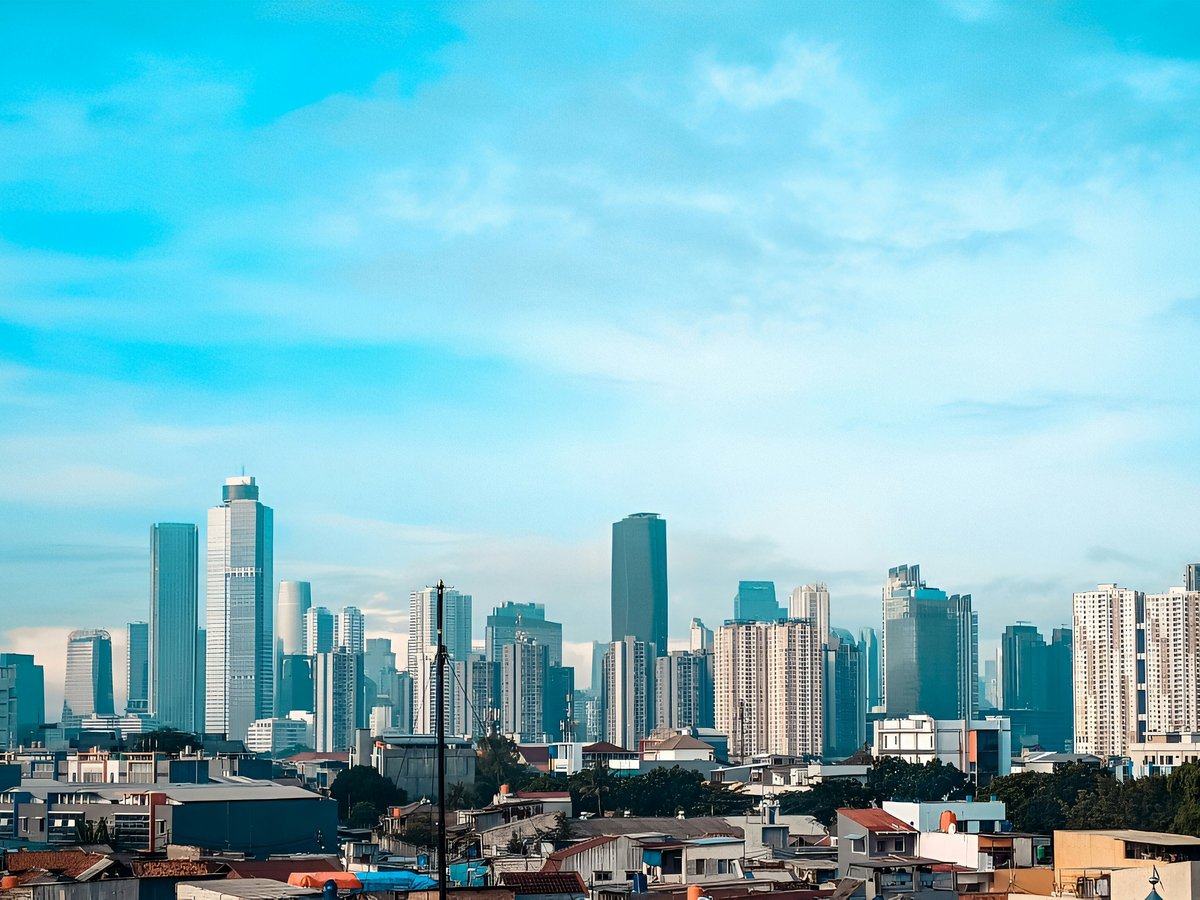
Stay in Jakarta in November
125 hotels in the Trip.com pool for Jakarta, from US$12 a night.
Opens Trip.com on Fri 6 Nov to Sun 8 Nov 2026; change the dates there.
November is when Jakarta's wet season hits its stride. The city receives roughly 246mm of rain across about 26 days, nearly 70mm more than October. Temperatures reach around 32°C (89°F) by midday and drop only to about 24°C (75°F) at night, while humidity hovers near 82%. The air hits you the moment you step outside, thick and warm and still. You will sweat through your shirt before reaching the lobby.
To be fair, this is not Jakarta's worst month for rain. January dumps over 330mm, and February is nearly as wet. November mornings still tend to stay dry until noon, which gives you a workable window for walking around Merdeka Square or through the tree-lined streets of Menteng. The storms arrive in concentrated afternoon bursts, rarely lasting more than 3 hours, and typically clear by early evening. Shopping malls along Sudirman and in Senayan fill up as locals move life indoors. The restaurant strip in Kemang does not slow down.
This is not the month to pick if you have flexibility. July through September offers half the rainfall at similar temperatures. But if November is what your schedule allows, Jakarta does not stop for the rain. Hotel rates sit below the December holiday premium. You might catch the tail end of Jakarta Fashion Week at Senayan City. And the Hari Pahlawan ceremonies at the National Monument on November 10 add a civic dimension that dry-season visits lack.
Why visit in November
- Hotel and guesthouse rates sit below the annual average, with the December holiday premium still weeks away. Properties across Menteng and Kebayoran Baru that need advance booking during dry season often have walk-in availability.
- Mornings tend to stay dry until around noon, leaving a reliable 5-to-6-hour window for outdoor sightseeing. The overcast light softens the harsh glare that makes midday photography difficult in drier months.
- Wet-season comfort food reaches its peak. Warm soto, bajigur, and wedang ronde appear on more street carts and warung menus than at any other time of year, especially along Pecenongan and in the Glodok neighborhood.
- Tourist crowds thin noticeably at major attractions. Monas and the Kota Tua museum cluster see fewer weekday visitors than during the July-to-September dry season.
Worth knowing
- Afternoon downpours hit on most days, often turning low-lying streets into shallow rivers. North Jakarta and areas near the Ciliwung River are especially flood-prone.
- High humidity compounds the daytime heat, making outdoor walks physically draining by late morning. Even the 500-meter walk from Bundaran HI station to Grand Indonesia can leave you winded before noon.
- Road traffic slows dramatically during storms. A ride from South Jakarta to Kota Tua that takes 40 minutes on a dry day can stretch past 2 hours when streets flood.
- Day trips to the Thousand Islands (Kepulauan Seribu) become unreliable. Boat operators cancel crossings during heavy rain and rough seas, which hit more frequently this month than in any dry-season period.
Best for
Think twice if
Warm and persistently damp across the full month. Mornings start overcast but usually hold dry until around midday before afternoon thunderstorms roll in, dropping heavy rain for 1 to 3 hours. Evenings tend to clear but stay muggy with minimal breeze. Flash flooding hits canal-adjacent streets and underpasses after sustained downpours, though water typically recedes within a few hours. The heat index regularly pushes past 36°C (97°F) around midday.
Seasonal caution
- Flash flooding affects low-lying areas in North Jakarta, particularly around Pluit and Kampung Melayu, after sustained downpours. Underpasses along major roads can fill to waist depth within minutes during severe storms. Avoid walking through standing floodwater, which mixes with sewage and debris.
- Dengue-carrying mosquito populations increase as standing water from early wet season rains provides breeding habitat. Risk is higher near parks, canals, and poorly drained residential areas. Apply repellent with DEET consistently, especially at dawn and dusk.
Year-round climate
Averages from the last 5 years.
| Month | Avg high (°C) | Avg low (°C) | Rainfall (mm) |
|---|---|---|---|
| Jan | 30 | 24 | 331 |
| Feb | 30 | 24 | 292 |
| Mar | 31 | 24 | 279 |
| Apr | 32 | 24 | 205 |
| May | 32 | 24 | 190 |
| Jun | 31 | 24 | 166 |
| Jul | 32 | 23 | 102 |
| Aug | 33 | 23 | 99 |
| Sep | 33 | 24 | 133 |
| Oct | 33 | 24 | 177 |
| Nov | 32 | 24 | 246 |
| Dec | 31 | 24 | 269 |
Best things to do in November
Morning walking tour of Kota Tua
cultureThe old Dutch colonial quarter around Fatahillah Square holds some of Jakarta's most photogenic architecture, with 17th-century facades and narrow streets. The cluster includes the Jakarta History Museum, the Wayang Museum, and the Fine Arts and Ceramics Museum, all within 200 meters of each other.
Mornings are the dry window in November, and overcast skies create soft, even light for photographing the colonial facades. Fewer tourists during the wet season means less crowded frames.Booking tipArrive by 8am to get the square mostly to yourself before school groups arrive around 10am.
Evening street food crawl on Pecenongan
foodThis food corridor roughly 1km north of Monas comes alive after 6pm with dozens of stalls selling martabak, nasi goreng, sop kaki kambing, and grilled seafood. The strip runs about 500 meters and peaks around 9pm.
November's afternoon rain typically clears by 6pm, and the slightly cooler post-rain air makes outdoor eating more comfortable than in dry-season heat. Wet-season comfort foods dominate the stalls.Booking tipNo booking needed. Go on a weeknight for shorter lines at the most popular martabak stalls at the south end of the strip.
Visit the National Museum of Indonesia
cultureFounded in 1778, this is the oldest museum in Southeast Asia, housing over 140,000 artifacts spanning Indonesian prehistory through the colonial period. The Gedung Arca wing holds Hindu-Buddhist stone carvings from across the archipelago.
A strong rainy-afternoon destination. Weekday visitor numbers drop noticeably compared to the dry season, giving you more space with the collection.Booking tipThe museum closes at 4pm. Arrive after lunch when the rain starts and spend the afternoon inside.
Dawn visit to Ragunan Zoo
natureEstablished in 1864, this 140-hectare park in South Jakarta is home to Komodo dragons, Sumatran tigers, and orangutans. The grounds include mature tropical forest canopy that provides natural shade.
Wet-season rains make the foliage dramatically lush and green compared to the dry months. Morning temperatures before the storms are more comfortable for walking the park's extensive trails.Booking tipGates open at 7am. Weekend mornings draw families from across the city, so go on a weekday for quieter paths.
Betawi or Sundanese cooking class
foodSeveral cooking schools in Kemang and South Jakarta teach visitors to prepare soto betawi, gado-gado, and rendang using fresh market ingredients. Classes typically last 3 to 4 hours including a market visit.
Rainy afternoons are ideal for indoor activities, and fresh galangal, torch ginger, and pandan are at peak availability during the wet season.Booking tipBook 3 to 5 days ahead for weekend classes. Weekday sessions often have smaller groups.
Hari Pahlawan commemorations at Monas
cultureHeroes' Day brings flag-raising ceremonies, military parades, and wreath-laying events to the National Monument and Merdeka Square. The ceremony honors Indonesia's independence fighters, particularly the 1945 Battle of Surabaya.
A fixed annual national commemoration unique to this month. The ceremonies offer a window into civic life that visitors rarely encounter at other times of year.Booking tipNo booking needed. Arrive early in the morning for the main ceremony. Roads around the monument close to traffic.
Antique and textile market browsing on Jalan Surabaya and Pasar Baru
shoppingJalan Surabaya in Menteng is Jakarta's antique market street, lined with stalls selling colonial-era furniture, wayang puppets, and vintage maps. Pasar Baru, about 2km east, is a partially covered 19th-century textile market with ground-floor food stalls.
Both are partially or fully sheltered, making them practical wet-season destinations. Tourist foot traffic drops in November, and some antique dealers on Jalan Surabaya negotiate more readily when business is slower.Booking tipPasar Baru is busiest on weekends. Jalan Surabaya operates daily but some stalls close by 4pm.
What to eat in November
In season: fruit
Rambutan
The wet season harvest begins in November, with vendors along Jalan Mangga Besar and at traditional markets selling bundles fresh from Bogor orchards. Look for bright red skin and translucent, juicy flesh.
Duku
The tail end of duku season from South Sumatra and Java means these small, sweet-sour fruits are still available at morning markets through mid-November. They bruise quickly, so buy and eat the same day.
On menus now
Soto Betawi
Jakarta's signature coconut milk and beef soup, a Betawi staple. Locals gravitate to warm soups during the rainy season, and November warung menus feature it more prominently than in drier months.
Street food peaks
Wedang ronde
Glutinous rice balls in a warm ginger-and-pandan syrup, sold from pushcarts that multiply across the city during wet season evenings. The ginger heat is genuine and warming on the tongue.
Martabak manis
The thick, folded sweet pancake filled with chocolate, cheese, or peanuts is a year-round Jakarta staple, but Pecenongan's late-night stalls are busiest during the rainy months when cooler evenings draw crowds for dense, warm street food.
What to drink
Bajigur
A Sundanese drink made from warm coconut milk, palm sugar, and ginger. Street vendors in Blok M and across South Jakarta set up more frequently once the rains start. The warmth cuts through damp evenings.
Regular events in November
Hari Pahlawan (Heroes' Day)Free
National commemoration of Indonesia's independence fighters, centered on the 1945 Battle of Surabaya. Flag ceremonies, military parades, and wreath-laying events take place at the National Monument and government buildings across the city.
November 10 (fixed national holiday)Jakarta Fashion Week
Indonesia's largest fashion industry event, featuring runway shows, designer showcases, and trade exhibitions at Senayan City mall in South Jakarta. Events typically run from late October into the first week of November.
Late October through early NovemberHari Guru Nasional (National Teachers' Day)Free
A national observance honoring educators, marked by ceremonies at schools and universities across Jakarta. Not a public holiday, but some government offices observe shortened hours.
November 25 (fixed date)Best places this November
National Museum of Indonesia (Museum Nasional)
museumIndonesia's premier archaeological and ethnological museum, with galleries spanning prehistory, Hindu-Buddhist artifacts, colonial maps, and regional textiles. The newer Gedung Arca wing houses the stone sculpture collection in climate-controlled galleries. A strong choice for rainy afternoons.
GambirFatahillah Square and Kota Tua
historic districtThe old Dutch colonial center of Batavia, with the Jakarta History Museum, Wayang Museum, and Fine Arts and Ceramics Museum arranged around a paved central square. The buildings date to the 17th and 18th centuries. Morning visits beat the afternoon rain.
Kota TuaIstiqlal Mosque
religious siteThe largest mosque in Southeast Asia, with capacity for over 200,000 worshippers. The marble interior stays cool even in November's heat. Open to non-Muslim visitors outside of prayer times, with modest dress required for all.
GambirPasar Baru
marketA partially covered 19th-century market street specializing in textiles, fabrics, and tailoring. The covered sections make it rain-proof, and ground-floor food stalls serve Betawi and Indian dishes. Less touristy and more affordable than Tanah Abang.
Sawah BesarGrand Indonesia
mallOne of Southeast Asia's largest malls, anchoring the Thamrin corridor in central Jakarta. Connected to the Bundaran HI MRT station. During wet season, the mall functions as the city's social center, with hundreds of restaurants, cinemas, and retail floors across multiple towers.
ThamrinRagunan Zoo
zooSouth Jakarta's main zoo, noticeably greener during the wet season than in drier months. The mature tropical canopy provides overhead shelter during light rain. Morning visits before the storms start offer comfortable walking temperatures and thinner crowds.
Pasar MingguTaman Mini Indonesia Indah
cultural parkA cultural theme park opened in 1975 with pavilions representing each of Indonesia's provinces. The indoor pavilions and museums offer rain-proof exploration of regional architecture, textiles, and traditions across the archipelago.
Cipayung
Your packing checklist
Tick items off as you pack. Your progress saves in this browser.
All packed — have a great trip.
Insider tips
TransJakarta BRT buses run on elevated dedicated lanes that stay above floodwater. When taxis and ride-hails sit in flooded traffic, the BRT keeps moving. Download the Tije app for real-time bus positions and route planning.
Pecenongan food street does not open until after 6pm and peaks around 9pm. November rain usually clears by then. The martabak stalls at the southern end of the strip draw the longest lines for good reason.
If Kota Tua floods after sustained rain, the water typically recedes within 4 to 6 hours. Locals time their visits for the morning after heavy overnight rain, when the streets are clear and the colonial buildings look freshly washed in soft light.
Kemang's restaurant strip along Jalan Kemang Raya tends to be quieter on weekday evenings in November. Spots that normally need weekend reservations during dry season become walk-in friendly.
Avoid these mistakes
- Scheduling outdoor activities after noon. The rain window runs roughly 1pm to 5pm on most November days. Visitors who book Kota Tua walking tours or Monas visits for the afternoon end up sheltering under awnings for hours.
- Taking ride-hail taxis during heavy rain and expecting normal travel times. A 40-minute Grab ride from Kemang to Kota Tua can exceed 2 hours when streets flood. Plan around the rain window or take the TransJakarta BRT instead.
- Packing only flip-flops for footwear. Jakarta's flooded sidewalks and underpasses carry debris after storms. Closed-toe water shoes or sandals with rubber soles prevent cuts and slips on wet surfaces.
Practical tips for November
Book hotels in Central or South Jakarta rather than the north, where flooding risk is highest during wet season. The MRT line from Lebak Bulus to Bundaran HI and the TransJakarta BRT are the most reliable transit during heavy rain, since both operate on routes separated from street-level flooding. Most museums close by 4pm, so prioritize morning visits. The Railink airport train from Manggarai station to Soekarno-Hatta bypasses flooded toll roads and runs every 30 minutes. Grab and Gojek surge pricing activates during peak storm hours, typically 2pm to 5pm. If you plan to visit Istiqlal Mosque, long pants and covered shoulders are required for all visitors. Major malls stay open until 10pm and serve as the city's default social space during wet season evenings. Most international flights arrive at Soekarno-Hatta International Airport, roughly 25km (15.5 miles) northwest of central Jakarta.
FAQ
Is November a good time to visit Jakarta?
November is fair at best. It falls squarely in Jakarta's wet season, with daily afternoon storms and persistent humidity. Mornings usually stay dry enough for sightseeing, and hotel rates remain below the December holiday spike. If you have flexibility, the dry season from July through September offers dramatically less rain at similar temperatures.
Does it rain all day in Jakarta in November?
No. Rain typically arrives in concentrated afternoon bursts between about 1pm and 5pm, then tapers off. Mornings are usually overcast but dry, giving you a solid window for sightseeing. Evenings often clear up as well, making outdoor dining along Pecenongan or in Kemang perfectly comfortable.
Is Jakarta safe to visit in November?
Safety conditions in November are the same as any other month. Jakarta scores 5.2/10 for solo-traveler safety (see the TTDI Solo-Safety Index). Standard urban precautions apply year-round. The wet season adds flood-related hazards, so avoid wading through standing water and stick to elevated walkways and transit platforms during heavy rain.
What should I wear in Jakarta in November?
Light, breathable, quick-drying fabrics work best. Cotton stays damp in the moisture and takes hours to dry. Bring a rain jacket rather than an umbrella, waterproof footwear with grip, and a light scarf for mosque visits and heavily air-conditioned mall interiors. Dress modestly when visiting religious sites near Merdeka Square.
Is Jakarta crowded in November?
Less so than dry-season months. International tourist numbers drop during the wet season, and domestic travel eases between the October school holiday and the December year-end break. Malls remain busy with locals regardless of the weather, but major sites like the National Monument and Taman Mini Indonesia Indah see noticeably thinner weekday crowds.
Things to Do in Jakarta in November
 Free cancellation
 Active Volcano, Rice Field, Hot Spring, Fruit market, Tea Plantation with Lunch
Day trip: free cancellation.
via Viator Free cancellation
 Private Car Charter in Bali with an English-speaking Driver
Day trip: free cancellation.
via Viator Free cancellation
 Private Full-Day Guided Tour: Explore Jakarta’s Top Highlights
Day trip: free cancellation.
via Viator Free cancellation
 Bali Jungle Swing Experience Full Activity
Outdoor experience: free cancellation.
via Viator Free cancellation
 Jakarta Half-Day Sightseeing Tour To Modern City and Old Town
Day trip: free cancellation.
via Viator Free cancellation
 Jakarta Bogor Botanical Garden, Waterfall and Rice terrace, Lunch
Outdoor experience: free cancellation.
via ViatorLast verified by automated review (v1.7.2) on . What is automated review?