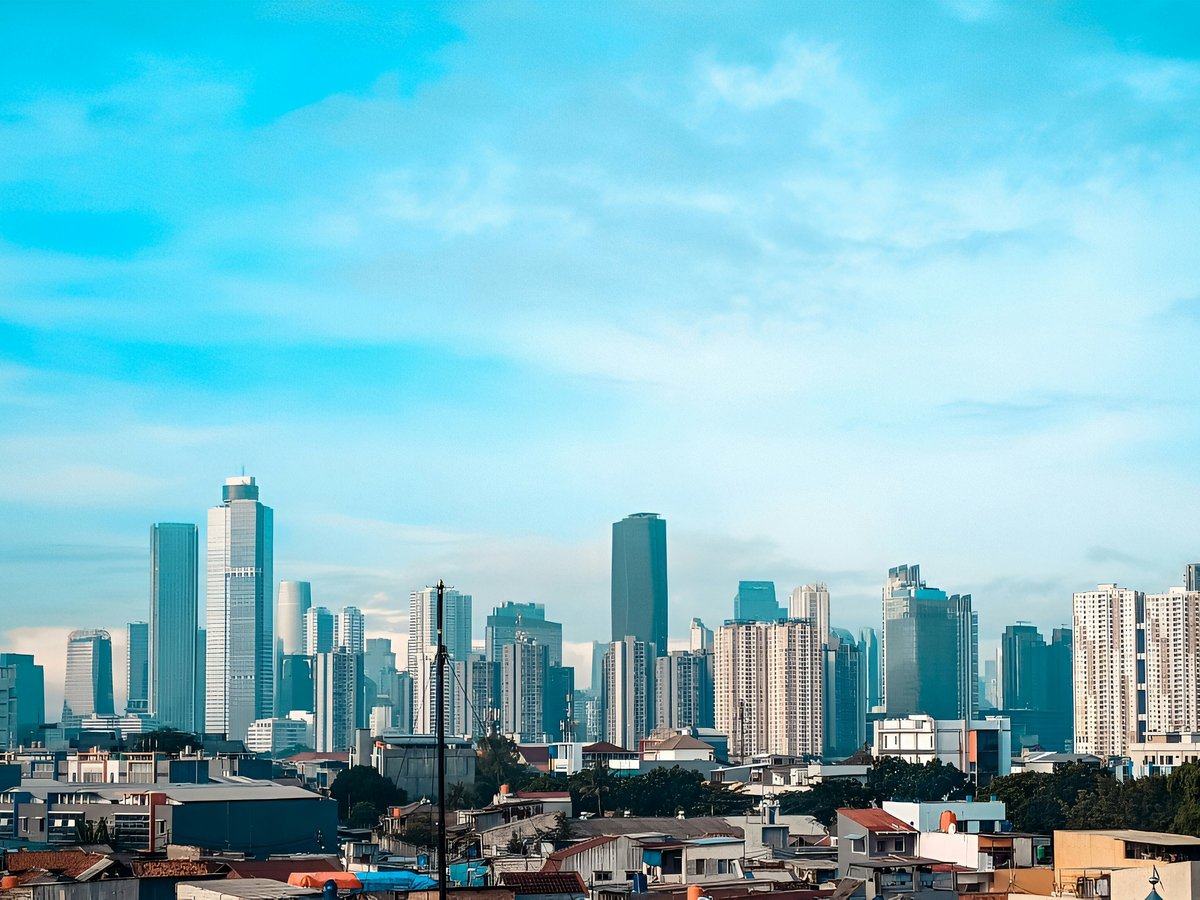
Stay in Jakarta in April
125 hotels in the Trip.com pool for Jakarta, from US$12 a night.
Opens Trip.com on Fri 2 Apr to Sun 4 Apr 2027; change the dates there.
April in Jakarta marks the tail of the wet season, and the single most important thing to know is that it still rains on roughly half the days. The city averages 205mm of rainfall across roughly 14 days this month, with storms typically building between 2pm and 5pm. Thunder rolls toward the Java Sea. The air sits at 84% humidity, and daily highs average 31.6°C (89°F) with lows near 24.0°C (75°F). That combination means stepping from an air-conditioned TransJakarta bus onto the sidewalk of Jalan Thamrin fogs your glasses instantly.
That said, April is measurably better than the months before it. January drops 331mm of rain. February brings 292mm. By April, the dry window between sunrise and early afternoon stretches noticeably longer, and you can plan outdoor mornings around Merdeka Square or the colonial streets of Kota Tua with reasonable confidence. The domestic travel surge tied to Lebaran has typically passed by this point, so hotel rooms and restaurant tables open up across central Jakarta.
Kartini Day on April 21 brings cultural programming to the city's museums, with Museum Fatahillah in the old town among the primary venues. Good Friday and Easter are recognized public holidays in years they fall in April, which happens roughly three out of four years. Beyond those dates, Jakarta's April calendar is sparse. The Jakarta MRT, whose first north-south line opened in 2019, connects Lebak Bulus in South Jakarta to Bundaran HI in the city center in about 30 minutes and runs regardless of weather.
Why visit in April
- Rainfall drops markedly from the January-through-March peak, with longer dry mornings that open a 4-to-5-hour window for outdoor exploration around the National Monument and the Kota Tua museum district
- Hotel and restaurant availability runs high without the capacity pressure of Lebaran or the August independence-week crowds, so you can walk into popular Betawi restaurants in Kemang and Menteng without a reservation
- Overcast skies and periodic rain hold daytime temperatures a degree or two below the dry-season highs recorded in August and September, when Jakarta's concrete amplifies the heat
- Kartini Day cultural programming at museums across the city adds a layer of temporary exhibitions and performances not available in other months
Worth knowing
- Afternoon downpours remain a regular occurrence that can strand you indoors from mid-afternoon onward, and Jakarta's drainage infrastructure struggles in low-lying neighborhoods across North Jakarta
- Persistent high humidity makes any walk longer than 15 minutes uncomfortable, particularly in unshaded stretches around the central square during midday
- The Java Sea coast near Ancol remains murky and rough through the tail of the wet season, ruling out beach side-trips from the city
- Jakarta lacks a trip-defining spectacle in April. The city anniversary falls in June and independence celebrations arrive in August
Best for
Think twice if
April sits at Jakarta's wet-to-dry transition. Mornings start warm and partly cloudy, with convective thunderstorms building on about half the afternoons. When the rain arrives, it comes in heavy bursts that last 30 to 90 minutes, then the pavement and rooftops steam dry in thick, still air. Overnight temperatures stay warm enough that open windows bring limited relief. Roughly half the month's days can stay dry from morning through evening, though predicting which ones in advance is difficult.
Seasonal caution
- Flash flooding affects low-lying areas of North Jakarta and parts of Central Jakarta during heavy downpours. The Ciliwung River corridor through Kampung Melayu and Jatinegara is particularly vulnerable. Avoid underpasses and sunken roads during active storms.
- High humidity combined with temperatures above 31°C produces a heat index that can feel closer to 38°C (100°F). Drink water constantly and limit midday exertion, especially if you are not acclimatized to tropical conditions.
- Urban air quality can deteriorate during still, humid periods when vehicle exhaust and industrial emissions get trapped under low cloud cover. Sensitive individuals should check Jakarta's AQI reading before sustained outdoor exercise.
Year-round climate
Averages from the last 5 years.
| Month | Avg high (°C) | Avg low (°C) | Rainfall (mm) |
|---|---|---|---|
| Jan | 30 | 24 | 331 |
| Feb | 30 | 24 | 292 |
| Mar | 31 | 24 | 279 |
| Apr | 32 | 24 | 205 |
| May | 32 | 24 | 190 |
| Jun | 31 | 24 | 166 |
| Jul | 32 | 23 | 102 |
| Aug | 33 | 23 | 99 |
| Sep | 33 | 24 | 133 |
| Oct | 33 | 24 | 177 |
| Nov | 32 | 24 | 246 |
| Dec | 31 | 24 | 269 |
Best things to do in April
Morning walk through the Kota Tua district
sightseeingThe restored Dutch colonial core of West Jakarta holds the old-town history museum, the Wayang Museum, and the Fine Arts and Ceramics Museum within a 5-minute walk of each other. The cobblestone Fatahillah Square fills with local visitors and street performers by mid-morning.
April mornings are typically dry until noon, giving you a reliable 4-to-5-hour window before afternoon storms can arrive. Overcast light is better for architectural photography than the harsh dry-season glare.Booking tipNo booking needed. Arrive before 9am to beat school groups.
Betawi street-food crawl in Pecenongan
foodJalan Pecenongan near Harmoni transforms into an open-air food corridor after dark, with dozens of stalls and shopfront restaurants serving nasi goreng, martabak, sate, and soto. The strip runs roughly 600 meters and peaks between 8pm and 11pm.
Evening eating in April avoids the afternoon rain entirely. The air cools slightly after a downpour passes, which makes walking between stalls more comfortable than during the dry season's unbroken heat.Booking tipNo reservations. Bring cash in small denominations.
Ragunan Zoo morning visit
natureJakarta's 140-hectare (346-acre) zoo in South Jakarta, established in 1864, holds Sumatran tigers, Komodo dragons, and a large primate collection. The mature tree canopy across the grounds provides natural shelter from passing showers.
The animals tend to be noticeably more active during the cooler, overcast mornings of the late wet season. April's lower visitor numbers mean you share the primate walkways with far fewer people than during the June and July school holidays.Booking tipArrive at the South Gate by 8am. Weekend mornings are busier but still manageable this month.
Kartini Day cultural programming
cultureThe annual national observance honoring the Javanese pioneer of women's education draws exhibitions, lectures, and performances to Jakarta's cultural institutions. The National Museum of Indonesia, founded in 1778, typically holds the largest program.
A fixed-date observance with events concentrated around the 21st. Some institutions extend programming through the final week of the month.Booking tipSeveral museums offer free entry on the day. Confirm schedules a week ahead, as programming varies by year.
Colonial-era walk through Menteng
walkingThe Menteng neighborhood in Central Jakarta features wide, tree-lined avenues built during the 1920s Dutch expansion. Jalan Teuku Umar and Jalan Diponegoro hold art-deco and tropical-modernist houses. Taman Suropati, a small circular park at the district's center, anchors the route.
April's frequent rain keeps the mature trees and garden plantings intensely green, and the overcast light softens the architectural details. A morning start around 7am avoids both the midday heat and the afternoon storms.National Museum of Indonesia (Museum Nasional)
museumIndonesia's largest museum houses ethnographic collections spanning the archipelago's 17,000 islands, including Javanese Hindu-Buddhist stone sculpture, Dayak textiles, and the gold treasure room. The neoclassical building on Jalan Merdeka Barat was expanded with a modern wing in 2007.
Afternoon rains make indoor, climate-controlled activities especially valuable. Weekday afternoons in April are nearly empty compared to the holiday months, and the annual cultural programming adds temporary exhibitions not available at other times.Booking tipClosed Mondays. Audio guides available at the front desk.
Sunday Car Free Day on Jalan Sudirman
recreationEvery Sunday from 6am to 11am, Jakarta closes a 6-kilometer stretch of Jalan Sudirman and Jalan Thamrin to motor traffic. The route fills with joggers, cyclists, and street vendors. It runs from the Hotel Indonesia roundabout south past the Senayan district.
April's early mornings are the coolest part of the day, around 24°C to 26°C, and the event wraps before the afternoon rain window opens. Lower visitor numbers keep the route less congested than dry-season weekends.Booking tipFree. Arrive by 7am for the best atmosphere. Bike rentals available along the route.
What to eat in April
In season: fruit
Nangka (jackfruit)
Java's jackfruit harvest typically peaks from March through June. April catches some of the sweetest specimens at neighborhood markets like Pasar Mayestik in Kebayoran Baru. The flesh ranges from deep yellow to orange, with a sticky-sweet fragrance that carries across the stall rows.
On menus now
Soto Betawi
Jakarta's signature beef soup in a rich coconut-milk and cow's-milk broth, seasoned with nutmeg and lemongrass. Particularly satisfying on a rainy afternoon when the temperature dips a few degrees after a downpour. Vendors along Jalan Sabang serve it through the evening hours.
Kolak pisang
Ripe Kepok bananas simmered in coconut milk and palm sugar until the broth turns golden-brown. Afternoon carts sell it warm, and the banana's creamy texture after slow cooking differs from any other preparation. Widely available during the late wet season when the banana harvest overlaps with comfort-food demand.
Street food peaks
Kerak telor
Betawi egg-and-sticky-rice omelette cooked over charcoal, topped with toasted coconut and dried shrimp. Street vendors fire up their wide pans at cultural events and night markets, and the annual Kartini Day festivities bring extra stalls to the old-town area.
What to drink
Es cendol
Green pandan rice-flour jelly strands in coconut milk with palm-sugar syrup over shaved ice. Cart vendors appear on nearly every block during the humid transition months, and the cold sweetness cuts through the tropical dampness better than almost anything else.
Regular events in April
Kartini Day (Hari Kartini)Free
National observance honoring Raden Adjeng Kartini (1879-1904), a Javanese advocate for women's education and rights. Government offices, schools, and cultural institutions hold events. Women and girls often wear kebaya, the traditional Javanese blouse.
April 21 (fixed annually)Good Friday and EasterFree
Recognized public holidays in Indonesia when they fall in April, which occurs roughly three out of four years. Jakarta Cathedral near Merdeka Square and Gereja Immanuel in Menteng hold major services. Traffic around central Jakarta can be heavier on Easter Sunday morning.
Varies by year. Falls in April approximately three-quarters of the time.Car Free Day (Hari Bebas Kendaraan Bermotor)Free
Weekly closure of the Sudirman-Thamrin corridor to motor vehicles. Food vendors, buskers, community fitness groups, and pop-up markets line the 6km route.
Every Sunday, 6am to 11amBest places this April
Kota Tua (Old Town Jakarta)
historic districtThe preserved Dutch colonial core centered on Fatahillah Square holds five museums within walking distance. Narrow streets and covered arcades provide shelter during sudden showers. The district corresponds to the historical Batavia, former capital of the Dutch East Indies.
Kota, West JakartaTaman Mini Indonesia Indah
cultural parkA 150-hectare cultural park in East Jakarta, founded in 1975, with pavilions representing each of Indonesia's provinces. The outdoor grounds turn intensely green during the late wet season. Covered museums and cultural halls inside the park offer alternatives when afternoon rain arrives.
Cipayung, East JakartaGlodok (Jakarta's Chinatown)
neighborhoodThe narrow streets around Jalan Pancoran and Jalan Kemenangan hold decades-old Chinese-Indonesian restaurants, traditional apothecaries, and Vihara Dharma Bhakti temple. Covered market stalls and shophouses keep you dry during storms. The bakmi (egg noodle) vendors are particularly good after dark when the evening air cools.
Glodok, West JakartaMerdeka Square and the National Monument (Monas)
landmarkThe 75-hectare (185-acre) square surrounding the 132-meter obelisk completed in 1975 works best in the early morning, when joggers circle the perimeter and the observation deck offers views before haze builds. The underground museum covers Indonesia's path to independence.
Gambir, Central JakartaPasar Baru
marketOne of Jakarta's oldest retail streets, covered by a continuous awning that makes it functional in any weather. Fabric merchants, tailors, and Indian textile shops line the 300-meter strip. A reliable rainy-afternoon destination.
Sawah Besar, Central JakartaKemang
neighborhoodSouth Jakarta's expatriate-oriented neighborhood along Jalan Kemang Raya holds a concentration of restaurants, cafes, and small galleries. Covered restaurant patios make this a natural retreat when afternoon storms hit. The area is quieter in April than during the dry season's social calendar.
Mampang Prapatan, South Jakarta
Your packing checklist
Tick items off as you pack. Your progress saves in this browser.
All packed — have a great trip.
Insider tips
The morning dry window before noon is everything in April. Local photographers head to the National Monument grounds before 7am for the softest light and emptiest paths. Front-load all outdoor plans for this window and save museums, malls, and eating for the afternoon.
Grab and GoJek driver availability drops sharply in the first 15 minutes of heavy rain, as every commuter in the city requests a ride at once. If you see dark clouds building, book your ride before the first drops fall rather than waiting.
The connected malls along the Sudirman corridor, including Grand Indonesia and Plaza Indonesia near the Hotel Indonesia roundabout, are linked by covered walkways and the underground MRT station. You can move between them without going outside when storms hit.
Pecenongan's street-food strip is at its best between 9pm and 11pm, after the evening rain has fully passed and the air has cooled a few degrees. The martabak vendors toward the northern end tend to be more local-oriented than those nearer to the Harmoni intersection.
Jakarta's MRT trains run every 5 to 10 minutes and are the fastest way to cover the north-south axis during rain, when surface traffic grinds to a halt. The Dukuh Atas station connects to the airport rail link for Soekarno-Hatta.
Avoid these mistakes
- Scheduling outdoor walking tours for mid-afternoon. By 2pm on many April days, convective thunderstorms are building over the city. Plan outdoor time before noon and shift to museums, malls, or restaurants after lunch.
- Packing only closed-toe shoes. Leather and canvas absorb water and take a full day to dry. Bring at least one pair of waterproof sandals for daily use and keep the closed shoes for indoor evenings.
- Underestimating Jakarta's traffic during rain. A 20-minute dry-weather Grab ride can stretch past 90 minutes once the roads flood. Use the MRT for north-south routes and build large time buffers into any fixed commitment, especially airport transfers.
- Assuming the rain ruins the day entirely. April storms tend to pass within 30 to 90 minutes. Locals treat them as a pause, not a cancellation. Settle into a warung, order a bowl of soto, and wait.
Practical tips for April
Book airport transfers for Soekarno-Hatta International Airport with at least a 3-hour buffer before flight time if departing during afternoon hours, when rain slows the 30km drive considerably. The airport rail link from BNI City station in central Jakarta is rain-proof and takes under an hour. Download GoJek and Grab before arrival, as street-hail taxis are unreliable during storms. The MRT and TransJakarta bus rapid transit system accept contactless payment via Flazz or e-money cards sold at any Indomaret or Alfamart. Modest dress covering shoulders and knees is appreciated at religious sites, and women should carry a light scarf for mosque visits. Most museums close on Mondays. The Kartini Day holiday may affect government office hours, but malls and restaurants stay open. Pharmacies and convenience stores on nearly every block stock basic medications, umbrellas, and insect repellent if you forget to pack them.
FAQ
Is April a good time to visit Jakarta?
April is a fair time to visit. The month sits at the tail of the wet season, with rainfall still heavy enough to produce frequent afternoon downpours, though measurably lighter than the January-through-March peak. Tourist numbers are low, hotels hold shoulder-season rates, and temperatures stay a degree or two below the dry-season highs. If you have flexibility, June through September offers more reliable dry weather and better conditions for all-day outdoor plans.
What is the weather like in Jakarta in April?
Hot and humid with frequent afternoon thunderstorms. Mornings tend to be warm and partly cloudy, staying dry until noon or early afternoon before convective storms build. Rain falls in intense but short bursts, typically between 2pm and 5pm. Expect thick, warm air that does not cool much overnight. About half the month's days can stay fully dry, though the humidity persists regardless.
Is Jakarta crowded in April?
No. April falls between Jakarta's major domestic travel periods. The Lebaran holiday crowds have typically dispersed, and the school holiday surge does not begin until June. International tourism to Jakarta is modest compared to Bali year-round. You will find shorter queues at Kota Tua's museums, available hotel rooms without advance booking, and walk-in seating at most restaurants.
Is Jakarta safe for solo travelers in April?
Jakarta scores 5.2/10 for solo-traveler safety (see the TTDI Solo-Safety Index). Standard urban precautions apply year-round and are not specific to this month. Use ride-hailing apps rather than unlicensed taxis, particularly after dark or during rain. Keep valuables secure in crowded areas like Tanah Abang market. The main April-specific concern is flooding in low-lying neighborhoods during heavy downpours, which can strand pedestrians.
What should I wear in Jakarta in April?
Lightweight, breathable clothing that you do not mind getting wet. Cotton-linen blends or moisture-wicking synthetics handle the tropical humidity and frequent rain best. Waterproof sandals are more practical than closed shoes for daily use. Carry a packable rain jacket rather than relying on an umbrella, which struggles in the gusting wind before Jakarta's storms. A light scarf is useful for mosque or temple visits, where modest clothing covering shoulders and knees is expected.
Things to Do in Jakarta in April
 Free cancellation
 Active Volcano, Rice Field, Hot Spring, Fruit market, Tea Plantation with Lunch
Day trip: free cancellation.
via Viator Free cancellation
 Private Car Charter in Bali with an English-speaking Driver
Day trip: free cancellation.
via Viator Free cancellation
 Private Full-Day Guided Tour: Explore Jakarta’s Top Highlights
Day trip: free cancellation.
via Viator Free cancellation
 Bali Jungle Swing Experience Full Activity
Outdoor experience: free cancellation.
via Viator Free cancellation
 Jakarta Half-Day Sightseeing Tour To Modern City and Old Town
Day trip: free cancellation.
via Viator Free cancellation
 Jakarta Bogor Botanical Garden, Waterfall and Rice terrace, Lunch
Outdoor experience: free cancellation.
via ViatorLast verified by automated review (v1.7.2) on . What is automated review?