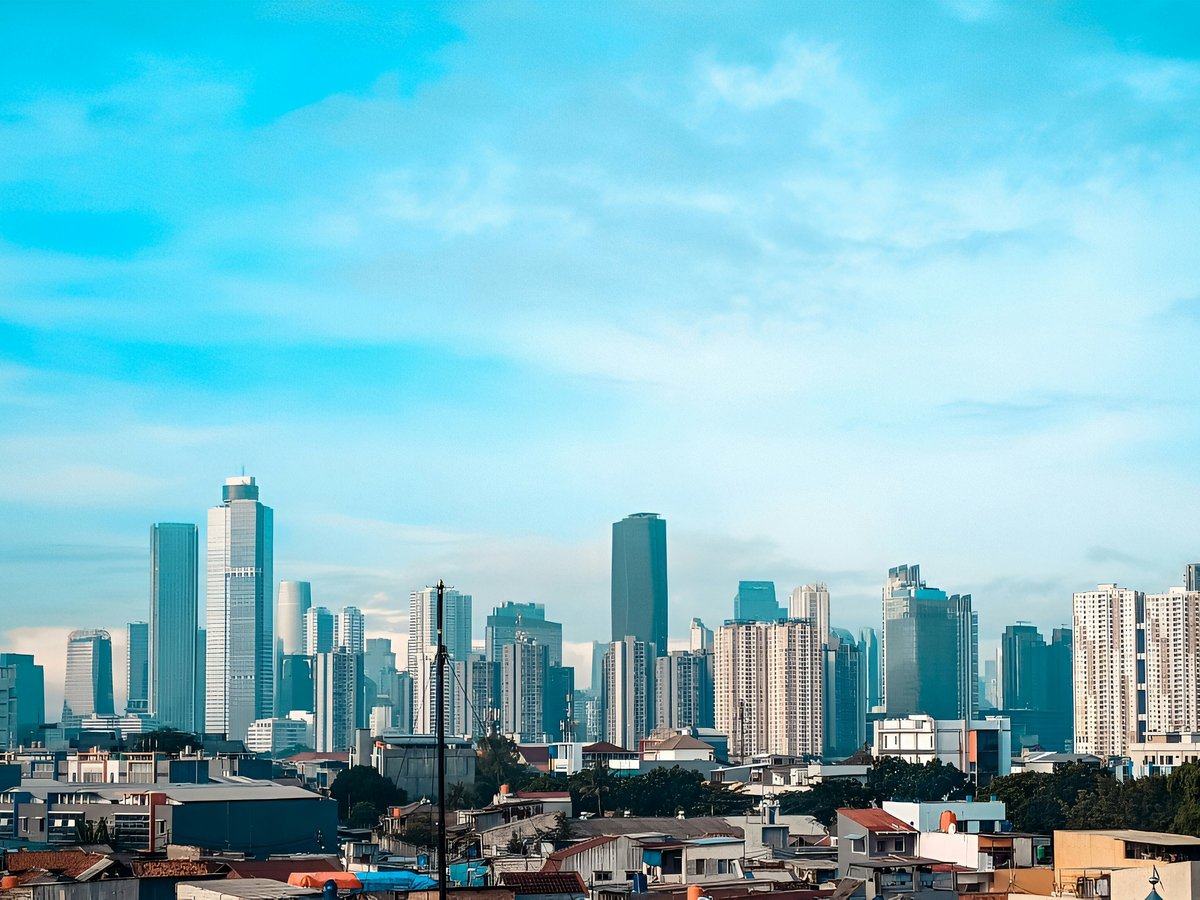
Jakarta tends to get written off as a layover city between Bali flights. That's a misread. The Indonesian capital sprawls across roughly 660 square kilometers with more than 10 million people inside city limits and another 20 million in the surrounding metro. All that density has produced deep layers of free public life that reward anyone willing to walk and sweat a little. The air currently sits around 29°C with 69% humidity, thick enough to feel on your skin the moment you step off the bus. On Sunday mornings, the financial district's main boulevard closes to traffic for a weekly walking and cycling event that draws tens of thousands. The colonial old town of Kota Tua in the north and the leafy Menteng district in the center each hold clusters of free attractions within comfortable walking distance of one another. Religious sites welcome visitors without charge. Parks fill with joggers before dawn. The national art gallery costs nothing to enter any day of the week. Worth noting, the city scores 7.2/10 for digital-nomad suitability (sourced from TTDI's editorial rubric), partly because free coworking-adjacent spaces like public libraries and park pavilions exist throughout Jakarta's sprawl.
Free attractions
-
Merdeka Square
A 1-square-kilometer public square at Jakarta's geographic and symbolic center. The grounds around the 132-meter National Monument (Monas), completed in 1975, are open daily at no charge, though entering the monument's observation deck requires a ticket. Joggers loop the perimeter paths before dawn when the heat is still manageable. The grass fields fill with families on weekends, and food vendors line the southern edge. The gold flame at the monument's peak catches the morning light across most of central Jakarta.
Gambir, Central Jakartalandmark, park -
Istiqlal Mosque (Masjid Istiqlal)
Southeast Asia's largest mosque by capacity, able to hold roughly 200,000 worshippers across its multiple levels and courtyard. Entry is free for visitors of all faiths. You remove your shoes at the entrance and borrow a robe if needed, both provided without charge. The main prayer hall's soaring columns and white marble floors create a coolness that contrasts sharply with the heat outside. The building sits directly across from Jakarta Cathedral, connected by the Terowongan Silaturahmi, a pedestrian tunnel completed in 2021 as a symbol of interfaith dialogue.
Gambir, Central Jakartareligious site -
Gereja Katedral Jakarta (Jakarta Cathedral)
This neo-Gothic Catholic cathedral dates to 1901 and stands directly south of Istiqlal Mosque. Admission is free. The interior has pointed arches and stained glass windows that filter colored light across the wooden pews, with a stillness that feels startling given the traffic noise on the other side of the doors. Visitors are welcome during non-service hours. The twin spires are part of central Jakarta's most recognizable skyline cluster.
Gambir, Central Jakartareligious site -
Galeri Nasional Indonesia (National Gallery of Indonesia)
Indonesia's national art gallery on Jalan Medan Merdeka Timur, free to enter every day it is open, Tuesday through Sunday. The permanent collection holds works by Indonesian modernists like Raden Saleh and Affandi, alongside rotating contemporary exhibitions that change roughly every 4 to 6 weeks. The gallery occupies a colonial-era building with high ceilings that keep the interior cool. Opening receptions for new shows tend to draw Jakarta's art students and collectors on weekend evenings.
Gambir, Central Jakartamuseum, gallery -
Museum Bank Indonesia
A free museum in a restored Dutch colonial building on the western edge of Kota Tua. The exhibits trace Indonesia's monetary history from pre-colonial barter systems through the VOC era to modern central banking, using dioramas, interactive displays, and original currency collections. The air-conditioned marble corridors offer genuine relief from the Kota Tua heat, and the building's architecture alone merits the visit. Open Tuesday through Sunday.
Kota, West Jakartamuseum -
Kota Tua (Old Town Jakarta, Fatahillah Square)
The Dutch colonial core of what was once Batavia. Fatahillah Square is free to walk, and street performers, portrait artists, and rented colorful bicycles crowd the cobblestones on weekends. The surrounding buildings date to the 17th and 18th centuries. The Jakarta History Museum sits on the square's south side and charges a nominal entry fee. The area rewards a slow walk through the side streets, where weathered warehouse facades and the Kali Besar canal give you a feel for the port city this used to be.
Kota, West Jakartahistoric district -
Taman Suropati
A small, shaded park in the Menteng neighborhood, ringed by embassies and colonial-era houses. Bronze sculptures donated by ASEAN member nations line the circular path. The canopy of old rain trees blocks most direct sunlight, making midday visits bearable. Local musicians sometimes practice under the trees in the late afternoon, and the ambient sound shifts from birdsong to acoustic guitar depending on when you show up.
Menteng, Central Jakartapark -
Taman Menteng
A 30-hectare public park built on a former sports field site in central Jakarta. The grounds include walking paths, an amphitheater that occasionally hosts free performances, open lawns, and a children's playground. Morning joggers fill the paths before 7 AM, when the air is still relatively cool. The park's location makes it a natural midpoint between Merdeka Square to the north and Jalan Sudirman to the south.
Menteng, Central Jakartapark -
Hutan Kota Srengseng
A 15-hectare urban forest in West Jakarta that feels surprisingly removed from the city. Dirt trails wind through dense tropical vegetation, and a small lake sits at the center. The air temperature drops noticeably under the tree cover, enough that you register it on your forearms. The forest is popular with birdwatchers in the early morning. Free and open daily.
Kembangan, West Jakartapark, nature -
RPTRA Kalijodo
A public community space in Penjaringan, North Jakarta, built on a site the city government redeveloped around 2016. The area now has a skate park, colorful street murals stretching across building walls, children's play areas, and open-air exercise equipment. The skate park draws a younger crowd most evenings. Free and open daily.
Penjaringan, North Jakartapublic space, street art
Free activities
-
Kota Tua walking route
A 2-to-3 kilometer walk through the old Dutch colonial quarter. Start at Fatahillah Square, head north past the old VOC warehouses along Jalan Kali Besar, follow the canal, and loop east toward Sunda Kelapa harbor where wooden pinisi schooners still dock. The harbor entrance charges a small fee, but the surrounding streets and the view from the bridge over the canal cost nothing. The walk takes about 90 minutes at a slow pace, longer if you stop to photograph the peeling plaster on 300-year-old building facades.
Kota, West Jakartawalking -
Pasar Santa browsing
A repurposed traditional market in Kebayoran Baru, South Jakarta. The ground floor still holds fruit and vegetable vendors, but the upper levels have filled with independent coffee roasters, vintage clothing stalls, vinyl record shops, and small art studios. Browsing costs nothing, and the smell of fresh-roasted coffee from three or four competing roasters fills the corridors. The market is busiest on Saturday afternoons.
Kebayoran Baru, South Jakartamarket -
Jalan Surabaya antique market browsing
A stretch of roughly 400 meters of street stalls in Menteng selling vintage goods, old maps, wayang puppets, Dutch colonial-era coins, and secondhand furniture. Haggling is expected if you buy, but plenty of visitors walk the full length treating it as an open-air museum of Indonesian material culture. The stalls are busiest on weekend mornings.
Menteng, Central Jakartamarket -
Merdeka Square perimeter morning walk
The path around the square measures roughly 4.5 kilometers. Early risers join a rotating crowd of joggers, tai chi groups, and families before 7 AM. The morning light catches the gold flame at the top of the National Monument, and the air carries the scent of cut grass from the groundskeepers' work. Free and unfenced.
Gambir, Central Jakartawalking, exercise -
Street art trail around Kalijodo and Penjaringan
Murals cover building walls throughout the Penjaringan area in North Jakarta. They extend well beyond the RPTRA Kalijodo public space into surrounding residential lanes. Some reference Indonesian political history, others are purely visual experiments. The area is best explored on foot during daylight hours. No admission, no guided tour needed.
Penjaringan, North Jakartastreet art, walking -
Gelora Bung Karno Sports Complex grounds
The grounds of this sports complex, which opened in 1962 for the Asian Games, are free to walk and jog through even when no events are running. The complex covers about 279 hectares and includes tree-lined paths, open plazas, and views of the main stadium's distinctive bowl shape. Weekend mornings bring a large community of runners and cyclists who loop the internal roads.
Senayan, South Jakartawalking, exercise
Free events
-
Car Free Day (Hari Bebas Kendaraan Bermotor)
Every Sunday, 6 AM to 11 AMEvery Sunday morning, a roughly 6-kilometer stretch of Jalan Sudirman and Jalan Thamrin closes to motorized traffic from 6 AM to about 11 AM. The boulevard fills with joggers, cyclists, street food vendors, buskers, and impromptu aerobics classes blasting music from portable speakers. The atmosphere sits somewhere between a community fitness event and an open-air festival. Tens of thousands of Jakartans participate weekly.
Jalan Sudirman and Jalan Thamrin, Central Jakarta -
HUT DKI Jakarta (Jakarta Anniversary)
Annually around June 22Jakarta's birthday falls on June 22 each year. The city government typically organizes free concerts, traditional Betawi cultural performances, and public events around Merdeka Square and Kota Tua for several days around the date. Betawi music, lenong theater performances, and ondel-ondel giant puppet processions fill the streets. The specific schedule changes annually, but the event itself has been running for decades.
Merdeka Square, Kota Tua, and various city locations -
Galeri Nasional Indonesia exhibition openings
Varies, roughly every 4 to 6 weeksThe national gallery's rotating exhibitions open with free public receptions that draw a mix of art students, established collectors, and curious walk-ins. New shows go up regularly, with schedules posted on the gallery's official channels. The opening-night energy is noticeably different from a quiet weekday visit.
Jalan Medan Merdeka Timur No. 14, Gambir -
Kota Tua weekend street performances
Weekends, primarily Saturday and Sunday afternoonsFatahillah Square draws street musicians, traditional puppet performers, and buskers on weekend afternoons and evenings. The performances are informal and free to watch. Quality varies, but you might catch a skilled keroncong ensemble or a solo angklung player among the crowd. The colonial-era square provides an atmospheric backdrop that the performers seem to know how to use.
Fatahillah Square, Kota Tua -
Independence Day celebrations (Hari Kemerdekaan)
Annually on August 17August 17 brings neighborhood-level competitions and public gatherings across the city. Panjat pinang (greased pole climbing), sack races, and kerupuk-eating contests fill residential streets with cheering crowds. The formal ceremonies take place near Merdeka Palace. Some public museums waive entry fees for the day. The neighborhood events tend to be participatory, and visitors are generally welcomed in.
Citywide, with formal ceremonies near Merdeka Palace
Navigating Jakarta's free offerings on foot
Jakarta is not a walking city in the way that European capitals are. The heat, the uneven sidewalks, and the distances between neighborhoods make full-day walking impractical. That said, the free things worth doing cluster in a few distinct pockets that are each walkable on their own. The Gambir cluster puts the national gallery, Istiqlal Mosque, and Jakarta Cathedral within a 15-minute walk of each other around the Merdeka Square perimeter. Kota Tua in the north covers Fatahillah Square, Museum Bank Indonesia, and the canal district in about 2 kilometers of walking. And the Menteng cluster connects Taman Suropati, Taman Menteng, and the Jalan Surabaya antique stalls in a pleasant 30-minute loop under tree-shaded streets. Between these pockets, TransJakarta buses cost 3,500 IDR per ride, which at the current rate of roughly 17,820 IDR to the dollar works out to under 0.20 USD. The MRT line runs north-south through central Jakarta for between 3,000 and 14,000 IDR depending on distance. Neither is free, but both are close to it. The city's solo-traveler safety score sits at 5.2/10 (see the TTDI Solo-Safety Index), so sticking to populated areas during daylight is a reasonable approach. For a fuller breakdown of getting around, see https://en.wikivoyage.org/wiki/Jakarta#Get_around.
What is not free but often appears on free lists
A few Jakarta attractions show up on zero-budget guides online but do charge entry. The National Museum of Indonesia on the western side of Merdeka Square, founded in 1778, has a modest entry fee. The collections of ethnographic and archaeological material inside are strong, but the museum does not belong on a strictly free list. Taman Mini Indonesia Indah, the cultural theme park in East Jakarta that opened the same year as the National Monument, has had shifting entry policies. After a government-led renovation, the general park grounds opened up, but individual pavilions and rides charge separately, and policies have continued to change. Ragunan Zoo in South Jakarta, dating to 1864, has one of the lowest zoo entry fees anywhere in Asia but is still not free. If you're visiting with children, Jakarta scores 5.8/10 for family friendliness (see the TTDI Family-Friendliness Index), and these near-free paid attractions tend to be the best-value options for younger visitors. For a broader list of what to see regardless of cost, see https://en.wikivoyage.org/wiki/Jakarta#See.
Free Jakarta for the budget-conscious nomad
Jakarta has a growing number of free or open spaces where you can sit down with a laptop. Perpustakaan Nasional Republik Indonesia (the national library) on Jalan Medan Merdeka Selatan offers air-conditioned reading rooms with free Wi-Fi. The building, opened in its current 24-story form in 2017, has upper-floor reading rooms with views over central Jakarta. You won't find the cafe-style seating of a commercial coworking space, but the quiet and the connectivity work. Some cafes in the Kemang and Senopati neighborhoods tolerate long stays with a single coffee purchase, though that edges beyond the zero-budget line. Mind you, the LGBTQ+ friendliness score for Jakarta currently sits at 1.5/10 (sourced from TTDI's editorial rubric), which is relevant context for nomads evaluating the city as a longer-term base. For practical coping information including money and connectivity, see https://en.wikivoyage.org/wiki/Jakarta#Cope.
FAQ
Is Jakarta safe enough to explore on foot for free activities?
Jakarta's populated commercial and tourist areas, particularly around Merdeka Square, Kota Tua, and Menteng, are generally safe during daylight hours. Petty theft can occur in crowded spots, so keep valuables secured. Sidewalk quality varies sharply from one block to the next, so wear proper shoes. The free attractions described above sit in well-trafficked areas. For current safety advice, the Wikivoyage Jakarta guide at https://en.wikivoyage.org/wiki/Jakarta#Stay_safe covers the specifics.
What is the best day of the week for free activities in Jakarta?
Sunday mornings are the clear pick. Car Free Day transforms the Sudirman-Thamrin corridor into a pedestrian zone starting at 6 AM, and the energy is hard to replicate on other days. Kota Tua is liveliest on weekends with street performers in Fatahillah Square. Weekdays tend to be quieter at parks and the national gallery, which some visitors prefer. The Galeri Nasional Indonesia is open Tuesday through Sunday.
Are Jakarta's mosques and churches free to enter for non-worshippers?
Istiqlal Mosque welcomes visitors of all faiths at no charge. Modest clothing is expected, and loaner garments are available at the entrance. Jakarta Cathedral similarly admits visitors for free outside of active services. Both buildings face each other near Merdeka Square and are connected by the pedestrian tunnel described above.
Is there free beach access in Jakarta?
Jakarta's coastline is heavily developed and not known for beach quality. The Ancol Dreamland complex in North Jakarta has beach areas, but entrance requires a gate fee. The newer Pantai Indah Kapuk (PIK) 2 development has some publicly accessible waterfront stretches. To be fair, the water quality along Jakarta's northern coast is not comparable to Bali or Lombok. If beaches are a priority, Jakarta is likely the wrong city for that particular free activity.
What free food experiences exist in Jakarta?
Browsing Jakarta's traditional markets costs nothing, and the sensory experience alone is worthwhile. The smell of fresh spices at Pasar Mayestik, the visual density of Pasar Tanah Abang's textile stalls. Free food samples are not a consistent cultural practice at Jakarta markets the way they might be in some other countries. Street food is extraordinarily cheap but not free. For food districts and signature dishes, the Wikivoyage guide at https://en.wikivoyage.org/wiki/Jakarta#Eat covers the neighborhoods.
Can I visit Merdeka Palace for free?
Merdeka Palace is the official residence of the President of Indonesia and is not regularly open to the public. The building and its grounds are visible from the northern edge of Merdeka Square, and that exterior view is free. Occasionally the palace grounds open for Independence Day ceremonies or special public events, but there is no routine visitor access. The square itself, which surrounds the National Monument grounds, is the free attraction in that area.
Last verified by automated review (v1.7.2) on . What is automated review?